Many quickly recognize that the payments industry had an exceptional decade and a half, often citing how innovative and exciting the industry has been during that time. However, a closer analysis will easily showcase that innovation is a part of the payments industry’s DNA. Going back to the late 1940s, the introduction of the first credit card led to subsequent iterations offering new conveniences to consumers worldwide. Individuals today cannot be bothered by carrying cash. Now, a person simply swipes a phone next to another machine, and viola, a payment has been made.
Now the payments industry is on the cusp of the next iterative era. We have different technologies. Societies at large are shifting away from cash. In fact, everything seems to be moving towards a single device, the smartphone. These tiny devices pack the power to put someone on the moon into your pocket. Simultaneously, the economy has been in an expansionary phase for well over two years, with consumers looking to spend, confident from the ensuing wealth effect. As a result, money has flowed freely into the payments industry driving tremendous change by entrants equipped with technological prowess, spawning a new industry; FinTech.
In this article, we explore the rapidly developing payment industry trends of 2022 that are likely to shape consumer behaviors for decades to come.
Further adoption of digital payments

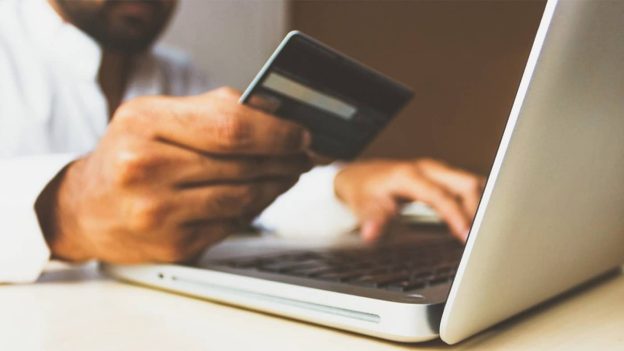
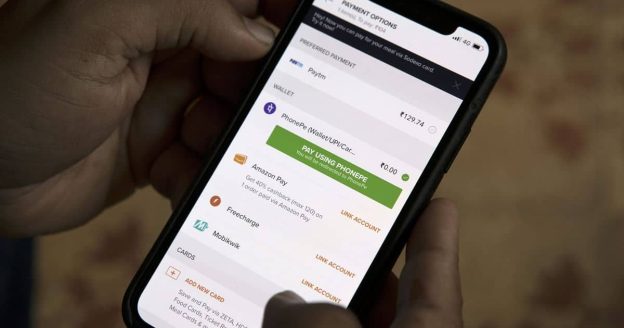
Another trend that will likely continue in 2022 for the payments industry is the ongoing adoption of digital payments or cashless transactions. Consumers had been slowly shifting away from cash for some time. Block, formerly known as Square, PayPal, and Venmo, all addressed specific pain points allowing the smallest of transactions to be processed via non-cash means.
Just as these innovations were becoming mainstream, smartphones were also becoming ubiquitous and more powerful. Companies had started to take advantage of technologies such as near field communication (NFC) and tokenization that now allowed for the safe storage of financial details. Merchants had also started upgrading their systems with the pertinent point of sale terminals equipped to handle NFC payments.
Then, to command more consumer attention, companies traditionally classified as technology started encroaching on the payments industry. Apple, Samsung, and other major tech companies began developing digital wallets that customers can use to make payments. Then in 2015, Google announced that it had hired Ruth Porat, a finance industry veteran, as the company’s next CFO. Universities began to notice a growing trend among MBAs to work for tech companies rather than Wall Street.
Consumers’ preference to not use cash is the payment industry’s supply-side economics. The majority of Generation X, 56%, would rather shop online than go into a mall. That percentage goes to two-thirds when looking at just the Gen Z demographic. Overall, more than 80% of the 25-44 age cohort prefer NOT to use cash. Of course, the last couple of years forced people to shop online rather than go out. Once individuals were introduced to the convenience and ease with which they could shop online without cash, it had a lasting impact on their shopping habits. After growing 50% to $870 billion in 2021, eCommerce is expected cross $1 trillion this year.
Buy Now Pay Later

Although the air has come out of some of the most highly inflated valuations of buy now pay later (BNPL) companies, the payment trend is increasingly gaining traction among customers. The drop in values is motivated by both headwinds experienced by the overall market and increased competition in which retailers and strategies by companies that aim to start offering their BNPL solutions and cut out the middleman.
BNPL is precisely what the name suggests. Customers can buy a product now and pay up later. A third party, such as Klarna, serves as an intermediary between the buyer and the seller, offering the financing to the customer, paying for the product thoroughly to the manufacturer, and usually extracting a small discount on those products. This trend has been a win-win-win. Companies like Apple and other major businesses experience increased sales while allowing consumers of all types to facilitate purchases they may not have otherwise been able to make. Meanwhile, an entirely new subsection in the payments industry has been launched.
But there are risks. Many industry watchers point to the dark connotations of BNPL solutions. Many may equate it to a less exploitive pay-day loan industry of the digital era. Also, there has been limited oversight of the industry. Although BNPL allows consumers to punch above their weight class by letting them make purchases they would otherwise may unable to afford, those sounding alarm bells warn of individuals being put in debt traps without any traditional guardrails. There is no reporting of BNPL transactions, so creditors cannot effectively foresee the liquidity clouds that are gathering for households.
For BNPL, 2022 may be the year where there is a fundamental change in regulation. Consumer Financial Protection Bureau may start mandating centralized reporting of BNPL transactions like other credit transactions to the credit bureaus.
The payment industry heavyweight incumbents are looking to expand their product offerings to include BNPL. Last Year, Block paid $29 billion for Australian BNPL solutions provider Afterpay. A few months later, PayPal bought the Japanese firm Paidy for $2.7 billion. This year, Apple announced its own BNPL service through Apple Pay. With all these dynamics in play for the payments industry, BNPL is expected to continue to thrive in 2022.
Integrated Payments will be the game changer in Customer Experience
The customer experience will be the biggest game-changer. Apart from technology, the most significant trend percolating organically within the payments industry is the focus on the customer. That has led to the survival and growth of companies that have shunned long wait times, sordid sales practices, and convoluted legalese in their terms and conditions.
Social media and online reviews have been responsible for this phenomenon. However, the technology companies have not modeled this customer-centric behavior. As a result, existing tech giants or even new startups looking to leverage their tech expertise that foray into payments this year must have the customer front and center.
Language preferences will need to be considered. That means that payment methods accepted by merchants must conform to how customers want to pay, not vice versa. As a result, payments will begin to start integrating into SaaS environments. So the likes of Salesforce.com and Automattic, which have large customer platforms offer integrated payments, leveraging their existing trust with customers to easily showcase the convenience of that process. Payment settlement without having to leave that SaaS environment after entering your payment credentials once is agnostic of the payment type, whether that’s a card, a digital wallet, a P2P account, or any of the numerous mobile wallets.
Banks will also leverage this trend to offer their version of a one-stop shop for account management of cash, any number of cards, possibly even cryptocurrencies, while providing financing, insurance, forex, or trade financing through their app. Every company, whether JPMorgan or Adobe, will look to embed payments to offer a holistic customer experience.
The Super App
There is a more significant reason for companies trying to embed payments into their environments. It is the same reason that the likes of Apple, Google, and other tech companies have a great interest in the payments industry. It is a race for platform supremacy. These companies want to be the first to become a Super App in a region.
A super app is an app that combines the most commonly used functions of a smartphone into one app. To become a super app usually requires three main parts, social media, shopping, and payments. Once these three main common uses are combined, super apps become a self-sustained and self-contained ecosystem that guarantees an indisputable level of eyeballs that the super app can control at will.
There are already examples of Super apps outside of the US. Tencent’s Wechat app in China commands over 1 billion users[MF1] . Another example is Singapore-based Grab. The company used to be a ride-hailing app and then evolved into offering other services and becoming Southeast Asia’s juggernaut Super app.
The Super app decides the best vendor for any tertiary service customers need. The super app decides which is better for the consumer: Uber or Lyft, DoorDash or GrubHub, UPS or FedEx, Walmart or Amazon. So, one of the best chances one has to ensure their app doesn’t get voted out by the kingmaker is to become the kingmaker yourself quickly. That’s why Facebook wanted to launch a digital currency[MF2] . Shopify has its own Payment solution. As do HubSpot and Salesforce.com . Even Adobe has an integrated payments system.
Apple, PayPal, and Block already have many pieces of the puzzle. PayPal has payments processing, a peer-to-peer payments app (Venmo), and has now entered the foray of BNPL with the acquisition of Paidy. Block is similar. The company processes payments and lets customers trade cryptocurrencies, has a P2P payments app called CashApp, and has also waded into BNPL with its purchase of Afterpay. Apple has the iPhone that controls the app store ecosystem, thereby the eyeballs of the billion most influential people in the world with significant discretionary incomes. The company has Apple Pay and just launched its own BNPL solution.
All these three companies now need the social media peg of the Super App stool to become a lifestyle mainstay. Jack Dorsey, the co-founder of Block, is also the co-founder of Twitter. Some have contemplated [MF3] he should turn these step-children companies into conjoining twins. Also, PayPal was rumored to be buying Pinterest [MF4] late last year.
To become a super app in China or other parts of Asia or Europe would be great. But the ultimate prize is to do it in the US, the largest economy in the world. Becoming a super app here would be the equivalent of the next trillion dollars in market capitalization unlock for that company. 2022 will be the year in which these payment industry heavyweights, which are so very close to that unlock, will look to cement super app status.
Real-time payments
Speed of payment processing and completing a transaction has been at the forefront for several years now. We started to shorten the time of peer-to-peer transactions within specific platforms such as Venmo and Cash App to almost real-time. Even time for retail payment processing has improved to next-day funding and, very recently, same-day financing. These are indeed exceptions at present, and the rule is still payments take almost three days to settle and have payments received by the merchant.
The good thing is that real time payments have become the norm rather than the exception and seem to be on the horizon. The technology behind real time payments has been in place for 50 years. It is already implemented in many parts outside of the US. In 2019, the Federal Reserve launched an initiative called FedNow. The program will let merchants, consumers, and financial institutions carry out business as usual. The backend rails work in tandem to share payment details, authenticate them, and settle payments in real-time. FedNow will be available around the clock, every day of the year.
The benefits of real-time are clear. The lines between cash and cashless transactions blur while eliminating cash handling headaches for both merchants and consumers, especially since the system is always available. But there are risks that will need to be considered and mitigated. We already hear of the swath of the population that is unbanked. By inviting technology into payments, those problems may be exacerbated. Also, the costs associated with implementing this infrastructure for financial intermediaries are unclear. As a result, it may be unclear how the adoption of FedNow may be impacted.
FedNow is expected to be fully operational in 2023, and over 200 financial institutions are currently working with the Federal Reserve on the project.
Security

Security sounds like one thing that tops the list of trends every year. Each year brings an additional set of new trends and challenges, risks, and at least one major security scare that keeps everyone at the edge of their seats. 2022 was ushered in with a warning by the US President to beware of Russian cyberattacks in response to economic sanctions levied on the country by the international community, led by the US. Cyberthreats emanating from Russia is not new. The government has for years engaged in cyber attacks on Ukraine. The country is believed to be behind the 2020 SolarWinds hack, which, over several months, compromised sensitive data of significant firms worldwide as well as the largest government agencies, including the US Department of Homeland Security and the US Treasury Department.
Cyber espionage at a sovereign level is not the only threat. Year after Year, major business and technology titans report of security lapses compromising data impact millions, if not billions, or personal records. In 2021, Facebook reported a data breach affecting 533 million people [MF5] worldwide. The year before that, the world learned that Microsoft had accidentally leaked the company’s customers’ online records of more than 250 million. In 2019, the 11th largest bank in the US by asset size at the time, Capital One Financial, disclosed that the company experienced a data breach in which over 100 million customers’ personal account information was hacked.
Some of the largest, most technologically advanced companies and government agencies succumb to often small-time nefarious actors who identify and exploit obscure technology loopholes. As a result of these ongoing and persistent threats, security remains at the top of mind for governments, businesses, and consumers alike. This is even more pronounced as the payments industry wades into technologies and trends still in their infancy, such as cryptocurrencies, mobile wallets and payments, and mass adoption of cashless transactions.
The payments industry has been fashioned by decades of innovations. The trends that brought the industry to this juncture are likely to continue at an exponential rate. Society adopts digital payments at an accelerated pace, and merchants continue to adjust their business models to these changing dynamics. You wouldn’t be wrong if you believed the spending habits of consumers had changed dramatically. The truth is that consumers’ living habits have changed. Both living habits and working patterns have converged into a single device. Technology has propagated that, and the resulting payment advancements have further facilitated it. The payments industry in 2022 will further cement trends that have been developing over the past decade and have started to really flourish in the past couple of years. However, companies must remember that feedback from the consumer will be vital to their success. Those consumers will form the trends, so market research seeking their feedback will be critical.
[MF1]https://en.wikipedia.org/wiki/WeChat
[MF2]https://www.ft.com/content/cfe4ca11-139a-4d4e-8a65-b3be3a0166be
[MF3]https://www.economist.com/business/2021/03/13/should-jack-dorsey-combine-twitter-and-square
[MF4]https://www.bloomberg.com/news/articles/2021-10-20/paypal-said-to-explore-purchase-of-social-media-firm-pinterest
[MF5]https://about.fb.com/news/2021/04/facts-on-news-reports-about-facebook-data/