Tag Archives: blockchain

ERP Trends

Top ERP Trends to Watch in 2023

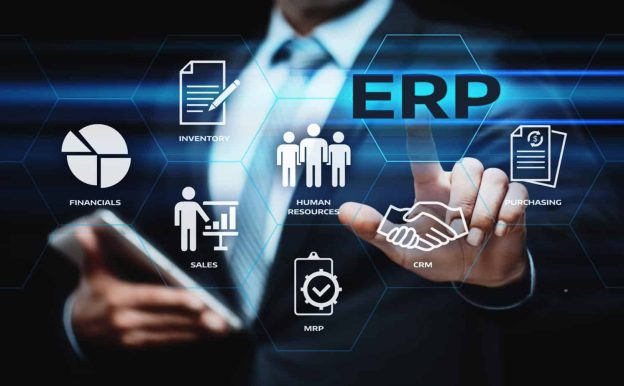
An ERP is the backbone of business operations. It helps with every function you can think of; Operations, Sales, Customer Support, Marketing, and internal supporting teams such as HR, Legal, and IT. If you’re using an ERP such as the one offered by NetSuite, even the Finance department can be integrated into a single environment.

The type of ERP a business uses is mainly determined by the size of the business, what industry the company operates in, and the future strategy and goals; is the business planning to grow further or is already at a specific sweet spot? However, there are certain functionalities that enterprises must focus on that are absolute for an effective ERP deployment. These include whether the ERP is cloud-based, whether it has a mobile application, what different teams the ERP can serve well, or how much integration an ERP can facilitate.

Often businesses deploy an ERP in segments, some core departments are onboarded first, and the rest follow. That can also impact the type of ERP a company chooses to use. Below we look at an ERP, its many benefits, and the top ERP trends to watch for in 2023. We highlight what is essential for businesses and the latest cutting-edge ERP product offering that various solutions providers are at the forefront of.

What is an ERP?

erp

ERP, also known as Enterprise Resource Planning, has its root in supply chain management systems used by manufacturers called Materials Requirements Planning (MRP). MRPs are mainly used to plan around inventories efficiently and manage production based on supply and demand. Similarly, an ERP helps companies manage financial resources where businesses record transactions and accounting entries in the general ledger and oversee accounts receivables, payables, and payroll. An ERP also has a robust financial reporting functionality offering rich insight into specific operations and the overall health of a company.

The ERP Trends to Watch in 2023

The Cloud and Hybrid Deployment Model

With over 20 years of companies offering cloud-based services or ERP solutions, it’s hard to imagine that not all ERPs today aren’t cloud-based. Chief Technology Officers worldwide say that over 50% of all IT spending this year will be on cloud computing. So that means that some portion of the nearly 50% that isn’t cloud-related will go towards traditional IT spending, such as servers and on-premise data centers. These house on-premise software deployments, including ERPs.

There have been legitimate reasons for businesses not to shift to the cloud, including security, resiliency, and whether data storage on the cloud is hosted in another country.

However, on-premises ERPs carry their own set of risks. How much and for how long do security and Support exist or legacy operating systems running these ERP systems? Can they find staff to manage these systems easily, and do the costs of doing so outweigh the cost of migrating to the cloud?

In a nutshell, businesses are still in the midst of a transition to the cloud. However, the shift has accelerated. Work dynamics are changing as more employees work from home, making ERPs that aren’t on a cloud riskier and untenable.

That’s not to say that the on-premises deployment model will completely disappear. A hybrid approach still makes sense for many businesses. Resiliency is a big concern as service outages by cloud service providers, however brief, can wreak havoc on businesses.

Mobile

mobile erp

Mobile was once viewed as a tertiary feature that was more gimmicky than nice to have. Over time, it started to become a value add. Today, given the changes in how we work and the advancements in mobile devices such as tablets, mobile is becoming the de-facto standard. As employees work from anywhere and work shifts to the cloud, a mobile iteration of an ERP is an absolute must from any service provider.

The mobile version of an ERP offers tremendous productivity by allowing customers to access it from anywhere at any time. Second, besides the user interface, the underlying technology isn’t that different from the regular version of the ERP since they’re both cloud-based.

Furthermore, a mobile ERP may be better than a traditional ERP as it allows customers to quickly capture and upload receipts or other transactions that need to be recorded in real-time. This goes beyond productivity and more into the realm of user adoption and compliance with timely expense report filings.

Finally, we’re all well aware of one of the best benefits of ERP, enhanced decision-making based on all the data gathered and easily and intuitively presented. As customers are further inclined to adopt the usage of an ERP motivated by the real-time benefits of mobile functionality, businesses will also see improvements based on quicker data capture and resulting analytics and reporting.

Artificial Intelligence

artificial intelligence

No product escapes the mention of Artificial Intelligence (AI) or similar terms such as Machine Learning (ML), Robotic Process Automation (RPA, and the like. And an ERP is no exception. No, AI won’t be taking over human tasks entirely in 2023, but it is viewed as a tool to drive productivity by automating the more mundane and repetitive tasks of customers.

Recurring deprecation expenses for assets can be recorded automatically based on their specific duration. Transactions can be automatically recorded in the applicable expense accounts based on precedents. Also, the ERP can execute relevant alerts and reminders for tasks such as asset revaluations, and receivables follow-ups, among others.

Furthermore, as more businesses use a subscription-based revenue model, they can automatically send periodic invoices for that subscription fee, record the transaction and process the payment without human interaction.

Increasingly, AI is used to identify internal audit red flags, client credit risks, and product sales recommendations based on customer personas and use cases. We predict that ERPs will leverage AI to streamline the customer experience further. Upon closing a sale, AI will allow businesses to generate invoices, onboard customers autonomously, and even recommend renewal price increases based on relevant factors.

The adoption of AI in ERP offers unprecedented efficiency by delivering automation, interactive advisory-type reviews, eliminating mundane and repetitive tasks, and reducing mistakes.

A blurring of the lines between ERP and CRM

customer relationship management

In a way, you can call it the flywheel effect. Businesses have been successful with ERPs and CRM, Customer Relationship Management, software for over two decades. CRM was the first cloud-based business targeting companies with a new way of connecting and collaborating internally and introducing an entirely new paradigm on the customer experience.

Salesforce.com improved how companies supported, marketed, sold to, and conducted email campaigns outreaches to customers. The use of CRMs allowed all these functions to leverage data by setting up a single repository of all forms of interactions with existing and potential customers.

The data allowed companies to recalibrate messaging in a very targeted manner. Today, there isn’t only a sales or marketing team or a customer service team. Now, we have an exact science devised around the client: Customer Experience. As businesses captured the best practices for marketing to customers, sales processes, onboarding, and continuous hand-holding after the close via Support, they decided to codify these processes into an entirely new business practice, known as the customer lifecycle. Today, Sales, Support, Customer Success, and Account Management teams are all integrated and easily able to collaborate with one another.

Will all the intelligence available from a CRM, it is surprising that such systems are still a world apart from the ERPs used at firms. Shouldn’t the high-touch nature of a client, as evidenced by the CRM, factor into the contribution margins? Can the ERP calculating those margins easily capture that data for a CRM?

Companies like NetSuite have started offering unified solutions for both CRM and ERP. It is the logical next step to leverage the combined data sets of both systems. With an integrated offering, businesses can target customers based on specific financial benchmarks. Although businesses may already be able to see the total contract values of their customers or have a good gauge on the customer’s lifetime value. However, can companies easily calculate and access gross margins for each client using disparate ERP and CRM functions?

Shorter-Term Contracts

The subscription revenue model has become omnipresent in the business community in the last fifteen years. Companies in numerous industries have widely adopted this business model. There is a subscription offering for shaving razors and luxury watch rentals – so it’s not just applicable to SaaS businesses. Similar to the subscription model, the ensuing dynamic will be shorter-term contracts. Nothing delineates pricing models like a challenging economic environment. It is much harder for businesses to stop paying for a $2,000 monthly enterprise license than to cancel a $25,000 annual subscription.

With the annual subscription model, customers are locked into longer cycles when they may need certain tools for specific projects. A common question customers ask during an economic downturn is if the company has a monthly payment option for their product or service. Even in the event that the business intends to renew services for the entire year, the shorter-term contract offers customers the flexibility to manage their liquidity in uncertain times.

There is some silver lining to these changes. For all the benefits of shorter-term contracts, customers are willing to pay more for the product. Annual contracts can require a hefty upfront cost that requires shorter-term payments. Customers are willing to pay for the agility and flexibility offered by short-term contracts. Furthermore, shorter-term contracts are a great way to showcase all the use cases and benefits of an ERP or any other product. It is an excellent way for companies to get their foot in the door and let the service level win customers over and limit churn.

Integrated Payments

ERPs with integrated payments systems allow customers to check out quickly and process payments that are already on file, securely stored on the ERP. There are multiple benefits to this feature. First, it speeds up the checkout process. The decreased friction in the sales cycle translates into a higher likelihood of closing the transaction. Second, all this manifests into better cash flows for merchants.

Finally, integrated payments can allow merchants to offer customers to pay online and pick up their merchandise from their store locations. Host Merchant Services has a long history of partnering with NetSuite as a third-party payment processing ERP’s API tool CyberSource. HMS easily connects to the integrated platform and manages the end-to-end payment lifecycle, starting from the invoicing process all the way through to payments and reconciliation.

Blockchain

blockchain

Blockchain has been all the rage lately and is repeatedly touted as the next technology breakthrough that will have a lasting impact on businesses and consumers. Blockchain is distributed and immutable ledger that records transactions and the tracking of both tangible and intangible assets of both companies and individuals.

Blockchain has remarkable potential because it can provide instant access to members of a network permissioned to access all data on the distributed ledger. The blockchain allows customers to access orders placed, payments made, production, inventory, sales, and every other business function, in real-time.

There are practical applications of blockchain for an ERP. For example, Walmart is looking to implement invoice recording, payments, and dispute resolution via the blockchain. Their existing supply chain is already being recorded on the blockchain by linking their delivery fleet’s GPS data to their incoming freight.

Invoicing is another segment of their operation that companies will shift to the blockchain over time. So if there is a dispute related to invoices or the quality of goods received, the blockchain offers immediate insight by accessing the entire digital trail. Still, it can also diagnose the root cause of substandard quality by pinpointing specific production centers. All functions offered by an ERP can easily be shifted onto the blockchain. So, it won’t be long before an ERP is provided solely on the distributed ledger.

Security

There have been a lot of concerns around security, especially for businesses with all the personal and financial data they can access. Plus, the security threats wreak the most havoc with data being compromised, leading to considerable damages resulting from a loss of trust, reputational damage, and most likely lawsuits. One of the best ways for businesses to prepare is to have an ERP with a full scope of security protocols in compliance with the most stringent industry standards.

These standards are a perfect way for merchants to build loyalty among their customers. Numerous brands have clients willing to share their payment details with the likes of Amazon and Apple, given the strong security settings and the use of tokenization to process their transactions, usually in a single click. Customers seldom ever have to reenter their payment information after doing it the first time. It becomes a virtuous loop; customers enter their payment once and never have to do it again. Since they never have to enter their payment details at a particular platform or merchant, they consistently choose to shop on that merchant’s site. This phenomenon of customer loyalty has been greatly documented in a Wharton study on Amazon’s one-click patent and business process[MF1] .

There are numerous SaaS offerings, such as the NetSuite ERP, which is cloud-based and has all the latest security settings, patches, and updates fully implemented and continuously updated as new releases are made automatically. Since the NetSuite ERP also offers integrated payments solutions, the latest payment security standards comply with PCI DSS (Payment Card Industry Data Security Standard). These standards include the Card Code Verification (CVV2), and Address Verification Service (AVS), among many others.

There are many great features that an ERP now offers. It can significantly enhance collaboration and efficiency in businesses that use ERP. Numerous vendors, such as NetSuite, understand the far-reaching impacts robust security protocols have on finance functions and operations. These measures can also enhance customer experience by offering an integrated payments solution.

An ERP is not suitable for all businesses. Even businesses that do deploy an ERP have different needs and use cases that drive their decision-making. The past few years have been essential for merchants as more have started businesses in industries where an ERP can offer tremendous benefits. Furthermore, ERPs themselves have implemented many features and functionalities that are increasingly useful to businesses, including cloud-based SaaS offerings, mobile functionalities, and integrated tools for multiple teams such as Sales, Support, and Marketing to enable enhanced collaboration. As businesses consider their needs for ERPs, it is vital to keep a watchful eye on all the latest trends of 2023.


[MF1]https://knowledge.wharton.upenn.edu/article/amazons-1-click-goes-off-patent/

Blockchain Technology

How Blockchain Technology Is Fixing Payments Today and What Comes Next [2025 Update]

The challenges that come with payment for items are plentiful. It takes a while for some payments to go through, plus it is tough to trace some deals. Cross-border payments are also burdensome, as people have to go through many legal obstacles to move funds. The potentially expensive fees can also be a burden, plus it might take longer to manage some transactions.

But there is hope, as blockchain technology is helping to simplify payments. Blockchain systems make it easier for people to move their payments. Whether it entails general payments or cross-border transactions, the blockchain system will make it easier for people to facilitate whatever they want to manage.

Payment efforts are challenging, as various banks and other financial groups have various terms for work. The overly centralized nature of money makes it so that people can manage payments through specific platforms. The varying rules, rates, currencies, and other terms make many deals harder to manage than necessary.

How Does The Blockchain Technology Works

Blockchain technology is already prominent today, and it will continue to be worth watching in the future. The potential for the industry is strong, but it will require technical support to ensure it can stay active.

How Does The Blockchain Technology Work

A blockchain-based system provides a convenient approach to handling payments. A blockchain works by allowing parties to interact with one another over a decentralized network.

The two entities that are managing the funds will send their private and public keys out in a transaction. The keys confirm the identities of the people handling the money.

The blockchain transfer is then confirmed by the two parties. Their transaction will be recorded on the blockchain, which is run by a countless number of nodes that will manage data. The content is easy to track, plus it cannot be removed from the ledger after it works.

A Stable Transfer of Data

A Stable Transfer of Data

The blockchain deal works with a consistent currency or another asset. The transfer is easy to follow, as the process doesn’t have to utilize any exchanges, fees, or other obstacles. Since the blockchain is decentralized, it is easy for the system to work in more markets. There’s no need to rely on the specific rules set by one party.

An Open Network

An open network will work on the blockchain. An open network allows people to use whatever forms of technology they wish to utilize. The blockchain is interoperable with many other systems and markets, providing a convenient design for work.

A Modern Approach to Paying

The G20 has been looking for a way to modernize cross-border payments for years. Blockchain technology will help make this possible. By providing a new way to manage money, underserved markets will have more accessibility to handling funds. It becomes easier for people to interact and manage payments with one another when a blockchain system works.

The digital assets that move will also be backed by fiat currency. The value of the assets will vary surrounding the fiat currency. But the total can be worthwhile if managed well enough. The transfer process lets people facilitate payments without having to exchange currencies for their payment needs.

Reduced Risk

The greatest part of the blockchain system is that it works without much of a risk. The problem with traditional payment methods is that they can feature limits for how they operate. Not all people will have access to the technology necessary for some payments.

The centralized nature of traditional payment solutions can also be a concern. One party might handle all the payment data in a centralized environment. However, the data could be vulnerable to hacking and other threats.

A blockchain system is sensible, as it reduces risk and makes payment transfers open to everyone. The setup does not require any additional materials for work. The two sides can use one of many software programs to access the system as well. They can find many online, although there’s always the option to download something new if necessary.

A Duty of Care

The security of the blockchain also makes it easier for transactions to stay secure. The blockchain operates on various nodes, ensuring the network always stays active.

There’s also a duty of care for the blockchain. All nodes will ensure the blockchain stays intact. All transactions must flow through as accurately and safely as possible without risking possible losses on the market. The effort ensures all transactions work well and that everyone has a plan for whatever might work at any time.

What’s Next For the Blockchain?

What’s Next For the Blockchain?

Blockchain systems will be critical for success when handling funds. But the future of the blockchain will be even more exciting to watch. There are many noteworthy points that could work soon:

  • Renewable energy can help facilitate blockchain transactions without spending lots of time managing the work. The increased power needed for keeping the blockchain active can be challenging to manage, plus it may be expensive after a while.
  • The open nature of the blockchain makes it where most software programs that manage blockchain activities are open-source solutions. More parties can use these to facilitate payments without spending more money on infrastructure.
  • Banks and other legacy financial service providers may start working with blockchain systems. They could settle transactions in minutes instead of in days. Such transfers would be for intra-country efforts, but it will still be worthwhile.
  • A blockchain sandbox may work where people can produce new blockchain apps and platforms as they wish. They can create new platforms for handling money that might fit unique needs. But the effort requires technical knowledge, and testing may also be necessary for the work.

Blockchain technology will be worth exploring as the payment industry evolves and moves forward. Blockchain support will help people handle funds in moments while removing obstacles. It will provide a distinct approach to handling money that can work in moments and provide a sensible solution for an operation that everyone will appreciate managing in any situation.

generation z business concept 109099249

Gen Z Millennials’ Changing Preferences Drive Financial Technology

Technology and trends change with each generation, a point that is true about millennials. The millennial generation has some unique preferences surrounding how they handle their finances that are different from what other people have used in the past. These points are especially true for credit cards. Millennials have unique ideas for what they want out of their cards.

The Most Intriguing Developments

There are many notable developments surrounding what millennials prefer for their finances:

  1. Close to half of all millennials prefer to use credit cards to complete their transactions.
  2. Traditional cash payments aren’t as prominent as they used to be. About 12 percent of millennials use cash as their preferred method for paying for items.
  3. About 40 percent of millennials use debit cards for their payment needs. The total is a drop from nearly 60 percent a few years back.
  4. Millennials are more likely than others to use mobile apps for their financial needs. They often use mobile apps to make deposits.
  5. Millennials are interested in doing business with traditional financial institutions. But they especially appreciate the ones that will invest in technology systems and setups.
  6. People have been completing balance transfers on their cards a little more often than they used to. Some of these transfers may come from debt-related issues.

Can They Cover Their Balance Statements?

There’s a good concern over whether millennials can cover their balance statements when paying off their credit cards. But the Motley Fool-associated Ascent website found in a recent survey that most people do cover their balance statements every month. About 60 percent of consumers say that they pay off their balances on their cards each month.

But slightly less than 20 percent of the respondents in that survey said that they pay the minimum balances on their card bills. The point is a concern, as people who cannot pay off their expenses will be subject to high interest charges. It would also take longer for people to pay off their entire balances if they don’t cover them soon enough.

What Do Millennials Want In Their Credit Cards?

The credit card industry is especially evolving, as it is looking to adapt to the unique needs that customers have when making purchases. Millennials are showing unique thoughts surrounding their credit cards. They want various things in their cards, including these points:

  • Most millennials are looking for cash back offers on their cards.
  • Millennials also want cards that don’t have annual fees.
  • About a quarter of millennials want credit cards with low interest rates. While the number of those who pay their minimum balances is relatively small, those who do this are probably more likely to look for cards with these lower rates.
  • Credit-related perks are prominent among millennials. These include points like credit monitoring and fraud protection support.
  • Purchase protection is also critical among many card users. Return protection and extended warranty support are among the most popular points people can utilize.

What Types of Cards Do Millennials Want?

An average millennial will have about two credit cards in one’s name. The number is on par with other older generations, although baby boomers are more likely to have three cards.

Millennials have unique attitudes surrounding the cards they want:

  • Store-specific cards aren’t as popular among millennials as they are with baby boomers. But they are still convenient for those who want something to pay for purchases at one site, especially since some come with special shopping benefits.
  • Airline and travel cards are still popular with millennials. These cards allow people to earn rewards for travel purchases.
  • Millennials do not think about whether card issuers are as widely accepted as others. They may be more willing to accept cards from any particular network out there.

Smartphones Will Especially Be Critical

Millennials use smartphones more than other generations. Financial technology will likely evolve and update to meet the needs that millennials hold. This work can include linking credit cards, bank accounts, and other investment items to apps people can access on their devices.

Millennials will prompt businesses to start making their financial services available anywhere. The effort will include providing quick access to accounts and other details while also offering consistent alerts. The fraud and purchase protection alerts that credit card companies offer today are examples of how they communicate with their customers more often.

Will Banks Compete?

While millennials are influencing changes in the financial technology and credit card industries, there are worries about whether banks can adapt to the needs people hold. Companies like PayPal and Stripe have been growing in prominence thanks to how easy it is for millennials to access these services. But traditional banks have been worried about whether their systems are going to be interesting to millennials.

The general worries that banks have is that they might be seen by millennials as being inflexible and incapable of managing their needs. Millennials might also consider these banks as being too regulated and strict.

Banks and other traditional financial service providers will need to adapt to the unique needs that millennials hold. They will need to do a few things to make their efforts more viable:

  • They will need to offer more protection and coverage for clients. This work can include monitoring transactions and activities and providing alerts as necessary.
  • Mobile access will be critical for traditional companies to consider. Mobile access can include providing apps that link people to their accounts from anywhere.
  • The ability to integrate with multiple platforms will be essential. Banks and other groups that can integrate with social media systems and various tech items will be easier for millennials to trust and support.
  • Decentralization may also be a necessity. Blockchain technology has made decentralized transactions more appealing. Banks could start working with cryptocurrencies and other blockchain-related assets, although they must also watch for the risks associated with these before they start.

Millennials are changing the credit card and financial technology industries. The ways these fields will continue to change will be interesting for people to watch as time progresses.

nft non fungible token acronym made with golden numbers conceptual 3d rendering 213903885

Would You Buy a Non-Fungible Token? Understanding What You’re Buying

The odds are you may have heard about non-fungible tokens or NFTs lately. People are selling these NFTs to others and are making significant amounts of money from these sales.

NFTs entail sales for various virtual objects, from videos and audio files to social media messages. But while you can buy an NFT, that doesn’t mean you’re going to own something outright and prohibit people from buying or selling that item.

The concept of the NFT is confusing in itself. What is an NFT, and why would someone buy the rights to that video of a guy skateboarding while drinking cranberry juice with Fleetwood Mac playing in the background? Here’s a brief guide to help you get through the clutter.

What Is An NFT?

A non-fungible token or NFT is a digital ownership certificate. The token states that you are the sole possessor of a digital item. The digital content could be anything from a GIF to a message on Twitter.

The digital content can still be copied and reproduced as people wish. But by owning an NFT, you are confirming you’re the owner of the original copy.

You can prove your ownership because the NFT links to a blockchain. The blockchain will record your transaction and confirm you are the original owner of something. Each NFT has a unique blockchain that traces the ownership of the item.

Each NFT works on the Ethereum blockchain system. The Ethereum setup provides a decentralized approach to tracking data.

In short, you will claim by buying an NFT that you are the owner of something. But that doesn’t mean you are the only person who can use that item. There is still a potential for the value of your NFT to rise after a while, although there are no guarantees this will happen.

What Does An NFT Cost?

The value of a non-fungible token will vary surrounding whatever you purchase. Some groups have been selling NFTs for cheap. The National Basketball Association has an NFT product called Top Shot that lets you trade digital cards that play videos. People can purchase digital cards highlighting their favorite NBA players. These cards work as NFTs and are available for a few dollars.

But some NFTs can end up becoming extremely valuable. Some digital cards in the NBA’s Top Shot program have traded for tens of thousands of dollars. These include cards showcasing LeBron James, Ja Morant, and Zion Williamson laying down slam dunks.

The most noteworthy example of a high-value NFT comes from Everydays: The First 5,000 Days, an image file created by an online artist known as Beeple. The NFT sold at an auction for $70 million. Twitter CEO Jack Dorsey also sold an NFT of his first tweet on the platform for a few million dollars.

Are These NFTs Functional?

There’s a potential that many NFTs may be functional for things other than collecting. The NBA’s Top Shot NFT program may be utilized for gaming purposes soon. The NBA hopes these NFTs can be collected and used by people in upcoming tournaments for a planned mobile game.

Another example comes from filmmaker Kevin Smith announcing that his next film will be sold as an NFT. The move assumes that the only way people can watch his movie is if people purchase copies of that film as NFTs.

Intellectual Property Worries

As intriguing as NFTs may be, there is a worry surrounding intellectual property law. Many NFTs infringe upon intellectual property rights, as people are creating NFTs out of things they did not create.

For example, a person could take a piece of art someone created and posted online and then sell it as an NFT for one’s profit. The original artist might not have any control, nor would that person get any money from the sale.

There is no stopping people from engaging in intellectual property violations at this moment. People could accept NFTs as being viable if there was a way to keep these violations under control. How this point will work remains unknown.

People who create these NFTs can still respectfully alter their content to keep any properties they don’t own from being visible. You read earlier here about how someone could buy an NFT of a viral video showing a man skateboarding while drinking cranberry juice. That video was sold as an NFT for about $500,000. But the Fleetwood Mac song that was playing in the background is not included. The Ocean Spray brand name is also obscured from the cranberry juice bottle. These were removed to avoid any potential legal issues surrounding the band or the juice company.

The Negative Environmental Impact

One concern surrounding NFTs involves the environmental impact of these tokens. An NFT is stored on an Ethereum-based blockchain. The NFT will remain active as the Ethereum system continues to operate.

But the increasing rise of blockchain technology has required additional processing power to ensure all chains stay functional and active. The processing power produces significant amounts of energy. The effort triggers a substantial carbon footprint as a result.

The Ethereum system is planning on moving to a new power system later this year. The new setup will produce less energy, although it’s unclear how much of a reduction will happen. The negative environmental impact that NFTs could have on the world could keep it from being taken seriously in some places. It could keep NFTs from becoming more mainstream.

Should You Buy An NFT?

NFTs can be interesting and unique investments. But there are also problems surrounding how they will be accepted worldwide. It is hard to predict where the NFT market will go in the future.

You can buy an NFT if you wish, as many of them aren’t as expensive as you would assume. But be cautious when doing so, as purchasing an NFT can be risky. There are no guarantees the value of whatever you’re purchasing will rise. There’s also the potential someone might break ownership laws with an NFT.

Hot Fintech Trends Emerging from the Pandemic

Hot Fintech Trends Emerging from the Pandemic [2023 Update]

The pandemic has been harsh on our financial infrastructure and has brought sea changes in the fintech industry. Fintech companies started coming to the forefront since the previous year, helping to shape digital payments.

In the previous year, people have taken to online shopping in large numbers, and today, almost every buyer is looking for contactless payment modes. As 2020 was approaching its end, the next one has already begun forming a new era with a promising future for the fintech world.

According to research conducted by the deVere Group, the coronavirus pandemic has been a major cause of the rapid growth of fintech apps, the usage of which increased by 72% in Europe.

The situation is similar in the US too, where around 73% of Americans are now viewing fintech tools and solutions as the new normal, as per another report. What’s more, 67% of the American shoppers have planned to continue using fintech apps for managing their day-to-day finances even in the post-COVID-19 period.

Experts have predicted the acceleration of the more fintech trends that are believed to impact every financial area, ranging from making transactions to banking. Some of the top fintech trends for 2023 are:

Digital-Only Banks

The rise of digital-only Fintech banks is one of the recent trends that made headway in 2020. Digital-only banks is the name given to those banks that offer several virtual banking solutions. These include crypto payment gateways, P2P transfers, contactless MasterCard providing free transaction fees, international remittance, and the ability to purchase different cryptocurrencies, such as Bitcoin, Litecoin, Ethereum, etc.

Digital-only banks are extremely convenient to consumers as it eliminates waiting in long queues, tedious paperwork, and the need to make frequent visits to the bank. This trend is expected to gain momentum in 2023, which in turn, would reduce the number of bank visitors.

Because of this new trend in banking, the number of people visiting banks physically is predicted to drop by 36% from 2017 to 2023. Some of the top reasons to go digital-only with your banking are:

  • You can reset pins right from your home.
  • You can manage your expenses conveniently.
  • They offer quick balance review features.
  • Enjoy instant bill payments on-the-go by snapping pictures.
  • Digital-only banks come with real-time data analytics.

Blockchain

The cutting-edge technology of Blockchain has transformed the fintech world completely. Since one can make payments faster and more securely, financial institutions like banks can confidently adopt Blockchain technology to stay ahead of the competition. It also comes with low processing fees and has a global reach.

According to a Business Insider Intelligence report, nearly 48% of the banking representatives believe that Blockchain technology will significantly impact the banking industry in 2021 and the years to follow.

The US and China are the leading users of Blockchain technology, which ensures its fast adoption in other markets across the world. Blockchain makes sure that all cross-border payments and the data stored are safe and secure.

One vital aspect of Blockchain is its new philosophy of decentralized finance that works on minimizing centralized procedures. The reason why Blockchain is so popular is its highly protected environment. Once your data is recorded into its system, it is extremely difficult for hacklers or malicious users to modify or access that data.

RPA

Robotic Process Automation, or RPA, refers to the process automation technology that uses digital workers or software robots to automate several tasks, thus saving time and human labor. RPA is designed to manage repetitive business processes using software robots that can fully or partially replace manual operations.

Since the process involves software robots and other digital workers, it is error-free, fast, and more accurate. The RPA technology has been largely beneficial for the financial service industry, as it improves the entire organizational efficiency in a more cost-effective manner.

Additionally, financial institutions can automate several back-end office tasks, including customer onboarding, security checks, trial balancing, account maintenance and closing, mortgage processing, credit card processing, and the list is endless! With RPA, banks can automate their core processes, thus saving time to focus on other vital areas.

Artificial Intelligence and Machine Learning

Banks across the world have started embracing AI to handle their day-to-day operations. According to Autonomous Research, AI is predicted to reduce 22% of the operational expenses of financial institutions by the year 2030. In short, banks will be able to save around $1 trillion by incorporating Artificial Intelligence technologies into their processes.

Artificial Intelligence and Machine Learning go hand-in-hand, since the algorithms of both have the ability to record each transaction with utmost preciseness and accuracy. What’s more, AI can be used to manage and mitigate the increasing cybersecurity risks and threats, as it can identify fraudulent activities immediately.

Besides, AI and ML, together, have tremendous capabilities of managing your customers through top-notch client service solutions, such as Chatbots. With such rapid growth in AI technologies and their increasing adoption by numerous industries, banks, and other financial institutions will soon implement them for better customer service.

Biometric Security Systems

In the face of rising cybercrime cases, customers are looking for more secure payment environments, since digital transactions are more of a necessity than a trend in this pandemic crisis. Therefore, companies in the fintech industry are implementing new ways to offer more secure payment infrastructures, such as biometric security systems.

Biometrics like fingerprint authentication, facial recognition, etc., is the best way to add an extra layer of protection and security to one’s payment solutions. Biometric systems help consumers to be confident while making digital transactions.

Since the current COVID-19 restrictions have made it necessary to go contactless, or more specifically cashless, biometrics is the need of the hour. However, contactless biometrics like face ID recognition is having a higher adoption rate in COVID-19 times, while the touch-based fingerprint reading market is witnessing a downfall.

Open Banking

Open banking is a revolutionary technology that enables users to manage their money more efficiently and get the best deals on products and services. It helps consumers make smarter and more cost-effective buying decisions while also accessing all their accounts in one place.

Open banking is a practice of sharing one’s financial information between authorized service providers at the users’ consent. The technology enables banks and Fintech companies together, allowing seamless data networking across multiple institutions.

Experts and industry leaders predict that open banking will reshape the banking sector as we know it. In fact, a report has proven that open banking has already generated $7.29 billion in the year 2018. The numbers are expected to hit $43.15 billion by 2026!

Open banking has the potential to benefit various banking and other financial institutions, consumers, fintech workers, API industry figures and app developers, and even underserved markets.