Tag Archives: black friday

Customer Service: Tips From a Friend [2023 Update]

Today The Official Merchant Services Blog begins a special two-part series on Customer Service. A previous blog focused on how important Customer Service is for a business during the holiday shopping season. We are currently in the midst of one of the busiest holiday shopping seasons on record, according to the early sales data that has been reported. So to bolster your efforts, we’re going to highlight information and advice brought to our attention from our friends over at Software Advice.

Fellow industry blogger Lauren Carlson ran a two-part series at Software Advice dealing specifically with customer service and the holidays. It’s an insightful series that begins with offering advice on how to prepare your customer service department –– namely your help desk –– for the rigors of increased business from holiday shopping.

And What Are Those Tips?

Carlson’s article was timed for the lead up to Black Friday, but much of its advice is still extremely relevant to merchants facing the rest of the season. After all, the questions that get asked at your help desk aren’t going to subside until after the holidays. Or as Carlson says, the guidelines she gives “if done, can prevent potential chaos and better prepare your agents to handle the spike. This translates to happier customers during the holidays, who will turn into repeat customers once the wrapping paper has settled.”

The first tip given is to create a holiday specific FAQ list. Carlson states that the types of questions a lot of help desks get hit with during the holiday season can vary from the normal questions that get asked the rest of the year and as such, suggests brainstorming and coming up with a list ahead of time to prepare. Due to timeliness, that may no longer be a viable option for a lot of merchants. But by now, you may have a pretty good handle on the varying questions that you were hit with on Black Friday and all through Cyber Week. Which brings us to the best advice found in the first tip: “Post the simpler questions up on your site to avoid spending time on those calls.”

This can be done to enhance the e-commerce experience, getting it out to your customers and providing them with both information that they need, and a click through into your site. Or this can be done just for your own help desk’s internal sanity, having a quick reference guide on hand for when they are barraged with these questions that make your list. As Carlson states, this type of list “will enable agents to resolve a majority of issues on the first call.” And it will be useful for the duration of the season, preventing your staff from having to scramble to find answers even as it gets to be late into the shopping season.

Cross-training to Stay Prepared

The next tip Carlson offers is to cross-train your staff. She cites Matt Trifiro, Senior VP of Marketing at Assistly who explains that cross-training your employees can help you reduce the need for hiring seasonal staff. Carlson says of cross-training: “Much like athletes cross-train to improve the whole body, companies can train every employee – from receptionists to accountants – to be a support agent, improving support across the entire organization.”

This is a great tip for merchants looking to weather the holiday shopping blitz but not go through the process of training seasonal help that they have to let go a short time later. It’s also a quick way to deal with support issues that may have just now cropped up well after Black Friday. Host Merchant Services itself utilizes that same philosophy in its own customer support structure and finds that it does help a business be more responsive and more effective at handling support issues year-round.

Carlson maps out the plan for cross-training your staff, suggesting that a merchant should equip all their employees to answer basic questions customers may have. Then Carlson says merchants should set up an escalation procedure for situations that require additional steps or expertise. This will create a smoother flow for service during the high traffic times of the holiday shopping season.

Communication Has Many Channels

The next tip Carlson gives revolves around communicating when your business is on its own holiday. A lot of Merchants, such as restaurants, have a different set of hours as the actual holidays approach. Carlson suggests merchants should communicate clearly and consistently with their customers about any downtime or time where the business is unavailable during the holiday shopping season. And in 2011, there are quite a lot of avenues in which to communicate this information: “Alert customers on every possible medium (website, Facebook, blog, Twitter, voicemail) of your seasonal hours and availability. Communicating this clearly will help avoid confusion and, more importantly, dissatisfaction.”

This information also applies to any other Merchant needing to reach out to its customers –– including adding extra service hours during holiday shopping like a lot of retailers do. Social media sites like Facebook, Google+ and Twitter are amazing tools available for customer interaction and can help you keep your customers up to date on all the latest developments your business goes through during the holiday shopping season.

Support Your Support Agents

The final tip Carlson gives for merchants to prepare their customer support help desk for the holiday shopping rush is to have a plan in place that will offer support for those who are your support agents. Carlson states: ” Help desk and support center employees will be very busy and likely very stressed during the holidays. Savvy companies will invest a lot of energy into supporting their agents via rewards, bonuses, in-office R&R, etc.”

Having something concrete in place that defuses stress and gives your support team some focus or incentive can help your business navigate through the increased stress and tension that holiday shopping can place on a business. This falls in line with Host Merchant Services’ own partnership protocols in the e-commerce section of its services –– where the company’s goal is to take the stress and burden of merchant services off of the business and onto the the merchant services provider. This enhances the overall partnership by making it less stressful for both partners. The same applies to customer service, especially during a time when the increase in business can exponentially increase stress.

Even though Black Friday has passed, this increased stress will continue to build. So it’s definitely not too late to consider implementing some sort of program or incentive to give your support staff both a tip of the hat for its hard work and a goal to strive for that will keep them going through the rest of the holiday rush.

Conclusion

Lauren Carlson offers some rock solid advice for customer support during the holiday shopping season. Many of the tips are easy to implement and do not take a lot of added time investment to get working. Host Merchant Services is always looking for useful insight on customer service to pass along to merchants. Quality customer service helps build long-term relationships with your customers, and can keep them coming back to you long after the holiday shopping season is over. Tomorrow The Official Merchant Services Blog will take a look at part two of Carlson’s series.


Customized E-Commerce

The Official Merchant Services Blog switches its focus today back to e-commerce. After the boom in mobile phone usage this past weekend from Black Friday on through Cyber Monday, it’s becoming increasingly clear that smartphones and mobile internet users are becoming very important parts of the  e-commerce industry. As such, businesses that utilize e-commerce need to consider including the mobile phone element in their online shopping capability.

This increase in the importance of mobile usage –– most notably mobile payments –– is leading many e-commerce businesses to develop mobile apps. These mobile apps let those businesses customize their service and stay in touch with their consumers who prefer to connect via mobile networks. The trend is moving e-commerce mobile solutions away from the traditional Wireless Application Protocol (WAP) sites. That’s a paradigm shift in the industry. E-commerce businesses are developing and designing their own applications –– or at the very least branding their own versions of mobile apps.

Applications Over Surfing

E-commerce leaders are finding out that users prefer using a mobile application instead of going to a business through their mobile phone’s web interface. This article from The Hindu Business Line quotes Amarjit Batra of OLX.in as saying: “We found users more comfortable in having a mobile application than opting for mobile web search or using WAP sites.”

This change in e-commerce puts an emphasis on having payment gateways accessible across different mobile platforms. To put it simply, a business with a mobile payment aspect to its e-commerce presence needs to have a mobile payment system compatible with Android, iPhone and Blackberry.

Host Merchant Services is staying ahead of this curve, offering a series of customizable e-commerce solutions to its merchants. Included in that package are mobile payment services apps that work on both iPhone and Android. HMS keeps its options flexible so that its merchants can tap into the rapid growth in mobile payments.

Mobile is Key to E-Commerce

This growth is looking like a trend for businesses in the burgeoning mobile payments market. Juniper Research is often cited as predicting the Mobile Payment Industry is going to blossom from a $240 billion industry to a $670 billion industry by 2015. This makes it very helpful for businesses to recognize consumer behavior in terms of their mobile device usage. Google Analytics provides a great free source of tracking for e-commerce merchants to monitor traffic from mobile devices. That’s a great first step for a business to determine what kind of mobile payment option or customization might be needed for the e-commerce a merchant is already doing. At least get an indication if there is a need for mobile payments or a customized and branded mobile app for your business.

The move towards individual businesses dabbling in their own branded app development also extends from the fluid nature of the industry as it grows and evolves. With so many different companies –– Google, PayPal, Visa to name some of the giants –– all coming up with their own variation on mobile payments, the flexibility to customize and brand their own version of mobile payment services is extremely important for all players involved in the process. This includes merchants themselves as well as merchant services providers.

Stitching it all Together

Besides just crossing platforms between the major mobile carriers, the applications being developed need to integrate web services and payment options into the solution. Essentially the goal is to make e-commerce seamless for mobile users as well as internet users. The whole range of potential business needs to be taken into account with a business’ e-commerce package. And that’s why the focus is on customization.

Sachin Singhal, e-commerce expert for Naaptol, underscores this in the Business Line article when he told them: “A mobile app is more user-friendly than having a WAP site. However, integrating the payment window with it makes the application complete.”

Host Merchant Services has been aware of this trend from its beginning. And that’s why the company offers powerful tools to its merchants that help them complete this integration –– giving them an across the board e-commerce solution that caters to mobile users and internet surfers alike. HMSPay and HMSExpress are both important elements that allow the company to capitalize on this trend and give online businesses the flexibility they need to cater to the huge growth happening in mobile payment sector.

Merchant Tips to Keep Business Booming [2023 Update]

As a merchant, things should be off and running for you right now. Black Friday has come and gone. Small Business Saturday has burned brightly. And Cyber Monday has counted its clicks. Holiday Shopping Season 2011 is officially underway no matter what metric you use to note the start.

The Official Merchant Services Blog is here to help you maximize on the rest of the shopping season. Just because Cyber Monday has come and gone, doesn’t mean your e-commerce solution is on cruise control. This is the time of year that payment processing bulks up as consumers still rush to find those perfect gifts for loved ones and friends.

It remains important to help continue to drive traffic to your website or through your front door, and keep the holiday shopping flowing. We’re going to offer you some tips on how to maximize that business and ride the wave of the holiday blitz.

Hire More Help

Whether you are running your business completely online, through a brick and mortar storefront or  both, the holiday shopping season will add a lot more sales for you to process. And that adds more strain and stress to your daily operation. Don’t be afraid to hire more staff, even temporary staff, to help see you through the season. The long-term benefits of a smoother, customer service friendly, holiday shopping season will offset the cost of the new help. And as numbers keep rolling in from Black Friday and its subsequent shopping focused events, it looks like 2011 is going to be brisk and bustling with business.

Give Your Customers Incentives

Just because the big “deal” hunting days are over, doesn’t mean the incentives stop for you. Continue to come up with new incentives to give your customers. Find new deals and new programs you can tie into the holiday shopping season. Seasonal coupons? Gift Certificates? Gift cards and loyalty programs? Bonuses for specific payment, such as Host Merchant Service’s Add Discover on Discover Program? All of these are ideas that can help you continue to attract more business through the holiday shopping season.

Continue to Push Marketing Campaigns

Small Business Saturday offered a lot of free and useful marketing materials. Black Friday practically markets itself. But the rest of the Holiday Shopping Season is wide open for marketing campaigns –– long and short term. Now’s the time to consider something quick and flashy like a coupon ad through Groupon or Living Social. Be creative and keep pushing the marketing. It will continue to drive your business through the holidays.

Pay Attention to Pricing

Black Friday and Cyber Monday sales figures show that shopping is very healthy right now as consumers have hit the ground running with their holiday shopping lists. But many consumers themselves keep reporting to the media that they’re being much more savvy this year. They’re looking for the best deals and comparison shopping. The boost in online and mobile shopping –– which makes comparing prices as easy as opening a new tab and clicking a button –– has consumers looking at the price tag. So roll up your sleeves and do your homework. Now is the time where you find out what pricing adjustments you need to make (raising or lowering them) to stay competitive against the deals being offered. Just as it’s become easier for your customers to comparison shop, it’s also easy for you to stay on top of prices.

Keep Your Eyes Open

The internet is being used by your customers. And you can use it too –– for a lot more than just staying on top of what your competitors are pricing goods and services at. Learn what strategies and campaigns they are doing. Or what strategies and campaigns other businesses that aren’t competitors are doing. Be open to finding any extra information that can give you an edge. You can do this web surfing or participating in social media like Facebook or Twitter or even just talking to your customers face to face when they walk into your store.

These are just a few quick tips that barely scratch the surface of what you can be doing to keep this holiday sales boost going. What other ideas have you heard of? What ideas have you seen, or used, that haven’t been working? Do you think the brisk sales will continue or will the holiday shopping season start to fade quicker? Feel free to share any comments you might have on the topic.

E-Commerce: Cyber Monday [2023 Update]

Today is Cyber Monday. And The Official Merchant Services Blog has been running a series on the Holiday Shopping Season that has basically been building up to today. Previous blog posts predicted that Online Shopping was beginning to really bit into Black Friday sales and that a general shift in consumer shopping habits was taking place. We had discussed that holiday shopping was beginning earlier and earlier each year due to the convenience of online shopping and the prevalence of deals to be had before Black Friday. We also pointed out that Cyber Monday had entrenched itself as a follow-up to Black Friday.

And judging by my own e-mail box today, Cyber Monday is taking no prisoners this year. I found deals from Amazon, LivingSocial and Newegg all waiting for me when I woke up. Each of these were targeted to my own buying habits too. So they got my attention.

Clicks Take it to the Bricks

Another thing that got my attention: The numbers coming in for Black Friday itself. As this article from Bloomberg stated quite clearly: “Online shoppers didn’t wait around until Cyber Monday to start their holiday shopping.”

The article references statistics from an IBM research unit called Coremetrics, and states that 20% more consumers shopped online this Black Friday than did last year. The data collected also states that 39% more online shopping happened on Thanksgiving Day itself. The ease of online shopping is infiltrating the traditional brick-and-mortar retail event and Host Merchant Services’ analysis of this year is holding true –– sales numbers across the board rose from 2010, so overall Black Friday had a boost for retail, but clicks from e-commerce continue to grow and cut into the sales from bricks.

Black Friday Was Still a Boom for Retailers

In fact, this article from Internet Retailer details some of the strong sales numbers from Black Friday: “Sales were also strong at bricks-and-mortar stores, reports ShopperTrak, which monitors traffic and sales at major malls and retail chains. Total Black Friday retail sales rose 6.6% year over year to $11.40 billion, while foot traffic increased 5.1%.”

Looking Toward the Future

The Black Friday business blitz also revealed some healthy news for another topic Host Merchant Services has been covering this year: Mobile Payments. According to this article from Seeking Alpha, mobile payments business increased 500% from 2010 on Black Friday. According to the article, PayPal mobile reported the huge increase, coming in at 511% to be exact. PayPal Mobile also noted that there was a 350% increase in mobile shopping on Thanksgiving 2011 when compared to 2010.

According to numbers from the aforementioned IBM research, 17.37% of all consumers used a mobile device on Black Friday to visit a retailer’s site. And 9.73% used a mobile device to make a purchase. The Seeking Alpha article quoted Amanda Pires from PayPal. Pires suggested that this year’s holiday is proving to be the largest mobile holiday shopping season PayPal and eBay has ever seen, and then quoted Pires directly as stating: “The retailers that are taking advantage of mobile shopping are going to win. We expect mobile shopping to continue to be strong throughout the holiday season.”

This is good news for Mobile Payments, as Host Merchant Services research has shown in the past that there have been some bold predictions for growth in Mobile Payments, but that the services were slow in taking hold this year in the U.S. Growth like the numbers cited from Black Friday 2011 should fuel more positive momentum for that consumer payment option.

What is Cyber Monday?

Cyber Monday is the Monday immediately following Black Friday. This day was created by companies who wanted to recommend people to shop online. What started off as a promotional strategy has quickly become one of the biggest online shopping days of the year. It is also the easiest way for analysts to break down the “clicks vs. bricks” battle of online shopping strength compared to retail store shopping strength.

What are the benefits of Cyber Monday?

  • Extremely last minute deals, since you’re online and can go right up to the very last second of the deal.
  • Online only deals, as e-commerce sites specifically target your business they offer deals online that you can’t find in brick and mortar stores.
  • Shop anytime you want, which is extremely attractive to consumers as they get to work shopping into their schedule.
  • Convenience of shipping, which is the ultimate thing that online will always have over retail. Just a couple of clicks and none of the hassles.
  • Greater range of shopping, which means consumers aren’t limited to places they can reach in their local area. Online shopping is worldwide.
  • Compare prices. As an online shopper you can pretty much just tab right over to the competition to directly compare prices.
  • Coupon or promo codes. Just like retail stores, coupons and promo codes fuel even bigger savings online.
  • No waiting in line. Back to the convenience, it can’t be stressed enough how much easier it is to shop online because of simple things like not having to stand in line.

E-Commerce is Thriving

All of the benefits of Cyber Monday play right into the bustling e-commerce industry. E-commerce continues to grow as it becomes a more and more accepted and convenient method of holiday shopping. Cyber Monday is today. The deals are most likely sitting in your email box as well. Click your way around and see what’s available. Holiday shopping is shifting rapidly and the power of e-commerce and online shopping solutions need to be embraced by merchants since consumers are embracing them so readily.

Merchant Services: Black Friday is Here

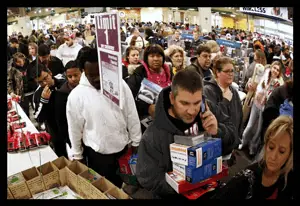
Let the shopping season begin! Black Friday is here, and the traditional marker for holiday shopping is off to an unusual start for 2011. The Official Merchant Services Blog is taking today’s blog entry to give you a bit of a roundup on the event.

It Started Early

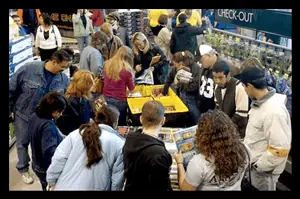
The first sign that this year’s Black Friday was going to be different than others was that it got started earlier than ever. Crowds lined up for midnight openings at Best Buy, Target, Kohl’s and Macy’s as retailers angled to get first crack at consumers’ tight holiday budgets. Wal-Mart opened even earlier at 10 p.m. and Toys ‘R’ Us started at 9 p.m. The Holiday Shopping season, as reported by The Official Merchant Services Blog previously, has been adversely affected by online shopping and e-commerce. Statistics show that shoppers — using the convenience of clicks over the late-in-the-year discounts of bricks — had been starting their holiday shopping as early as May and as late as August. The kicker being, Black Friday was potentially going to lose some of its draw. So this year retailers pushed and pushed and pushed, edging the event right into Thanksgving Day — well evening — itself.

Consumers Are Out in Force

Right now there are contradictory reports coming in about how successful this move was for retailers. One article from CNN suggests moving Black Friday into Thanksgiving was a success. The article quotes Tom Julian, president of Tom Julian Group, a retail consultancy in New York as saying: “Taking Black Friday into Thanksgiving Thursday has proven successful.”

The article then goes on to say: “Despite some backlash against such early store openings on Thanksgiving Day, the move seemed to pay off. At some Target stores, lines were more than twice as long as last year, according to the company. Men’s Angry Birds pajamas were one of the biggest sellers, along with televisions, game systems and cameras, spokeswoman Kristy Welker said.”

The article pointed out that lines at Sears, KMart, Macy’s and Toys’R’Us were all longer than previous years and business was ready to boom.

The Impact Might Not Be High

Despite the good numbers and fast start for Black Friday this article from CBSNews and its Early Show says that this year’s holiday shopping season could be a “bit of a bust.” The article takes a look at the big-picture of the economy and tries to see how even with a fast start, 2011’s Holiday Shopping Season could end up being a negative. The article stated: “this year, it might take more than one Black Friday to get retailers – and the U.S. economy – out of the red. Quijano added on ‘The Early Show,’ that while analysts project a 2.8 percent increase in Black Friday sales this year, that’s actually smaller than 2010, which saw a 5.2 percent boost.”

The article suggested consumers are wary and though they may be out in force, their shopping habits are more selective than usual: “In a national survey by the National Retail Federation, more than 50 percent of those who plan on shopping said they will wait to see if this weekend’s bargains are worth getting out and fighting for.”

And the article quoted Marshal Cohen, chief retail analyst of NPD group, a marketing research services firm as saying: “There is no stimulus package, there is no jobs program, there is no tax rebate that the president’s put on the table, so it’s really up to the consumer to go toe the line themselves.”

Black Friday: Is It Worth It?

That brings us to this Digital Trends article, which suggests that Cyber Monday — and overall the convenience and growing popularity of e-commerce itself — is going to really cut into retail shopping and Black Friday in a big way this year and in the coming years. The article states: “Not only have brick-and-mortar retailers felt the push of Cyber Monday sales, but some companies like Amazon and eBay are beating in-store retailers to the punch by opening for business Thanksgiving morning. The lure and ease of the Internet has also evolved e-commerce and altered the shopper’s frame of mind, which all might be heralding the end of Black Friday as we once knew it.”

The article puts it simply that the lines and the hassle of sidewalk and mall shopping on one day of the year doesn’t give enough value to consumers when stacked up against the ease of click shopping online. The deals aren’t big enough compared to what shoppers find online. And there just isn’t any fighting that needs to be done to get to the products. No one shoves you out of the way when you slide your mouse or type in a browser menu bar.

Don’t Forget Groupon

Beyond the convenience factor, there’s also the fact that the deals on Black Friday are not as compelling as they used to be. And that’s because sites like Groupon and Living Social have been consistently blitzing consumers all year long with deep discount savings day in and day out. The Holiday Shopping Season is no exception. And so now consumers have a lot more options than just standing in line at BestBuy at midnight fighting over an item. They can shop around on the web and find something that may save them more and avoid the line entirely.

In Conclusion

It looks like this year’s Holiday Shopping Season has gotten off to a strong start. Black Friday is nowhere near being “dead.” It’s just that the numbers indicate this may be a really good year for shopping overall. Because of that, despite an increase in sales this year Black Friday’s impact might still be getting watered down. In other words, yeah, the numbers will be up for Black Friday, but that could just be a byproduct of all numbers being up this quarter. Holiday Shopping booms all over. And Black Friday numbers benefit. But many still feel that e-commerce is going to continue to grow faster and faster, eating into brick-and-mortar retail numbers. The Bricks vs. Clicks battle still seems to favor the clicks.

Host Merchant Services, payment network provider of both retail processing services and an entire lineup of customizable e-commerce solutions tailor made to a merchant’s specific needs, is able to help you maximize your potential in both areas. We can help you navigate through the busy bustle of holiday shopping and find the transaction processing services that serve you best.

Superior Customer Service

As we close in on the Holiday Shopping Season, customer service becomes more and more important. That’s not to say customer service was unimportant prior to now; it’s just that most businesses –– e-commerce ventures as well as brick and mortar stores –– see a large increase in consumer activity during the Holiday Shopping Season. Any customer service mistakes that get made in this time period end up being magnified due to the time of year.

As part of its ongoing series about Holiday Shopping, The Official Merchant Services Blog wanted to take a moment to examine customer service.

By The Numbers

It’s important to not let customer service fall to the wayside in favor of more direct methods of obtaining profits. While marketing campaigns and aggressive sales techniques can see quick results in black and white numbers, customer service is the foundation for maintaining a long-term sales relationship. The old adage about how it costs more to acquire a new customer than it does to retain an old one is what’s at work here. A 2010 MediaPost report indicated that U.S. businesses lose approximately $83 billon each year as a result of poor customer service. The report also indicated that 71 percent of U.S. customers have ended a business relationship based on poor customer service. The report also noted that poor customer service has an impact on a business’ competition –– the study cited by MediaPost found that 61 percent of customers surveyed said that they take their business to a competitor when they end a relationship with a company due to poor customer service.

Do Not Panic

While those numbers from that survey are compelling, our first bit of advice is: Do Not Panic. Just like Customer Service is a long-term relationship building tool, it’s also an aspect of your business that you can take your time building. So even if you hit a few customer service snags on Black Friday, or there’s some pitfalls for your e-commerce business’ customer service on Cyber Monday, it’s not time to panic. Take it easy, and keep the focus on the long-term goal of quality customer service.

Anecdotes and Analysis

We’ve all experienced horror stories that back up the numbers cited above. It could be something as simple as walking into a store looking to purchase a specific product and not receiving any assistance. I’ve had this happen to me quite a lot when walking into a specific retail chain near where I live. I’ve gone there multiple times looking to purchase printer cartridges. And each time I have trouble finding the specific type I’m looking for and it seems I can never get an employee to even ask me if I need help. It’s made me stop going there and I now buy my printer supplies online instead.

What horror stories have you experienced? What’s the worst customer service incident you’ve encountered? Has it affected your approach to your own business and the customer service you provide?

Make Good Customer Service a Habit

Host Merchant Services makes customer service a part of their core business philosophy. It’s part of the Payment Network Provider’s overall goal to bring trust to the payment industry. And it’s part of why this merchant services blog exists. The company wants to share information with customers as well as potential customers, and take the time to explain the confusing aspects of the payment processing industry. Customer Service defines the approach to the customer relationship; it’s why Host Merchant Services makes guarantees such as no contracts and no termination fees; it’s the basis for how Host Merchant Services offers free terminals to our merchants.

Merchant Services and Payment Network Providers need quality Customer Service

Defining Good Customer Service

Using that background in customer service focus, Host Merchant Services offers some easy tips to help you enhance your customer service:

Make a Good First Impression

A customer’s first contact with your business should be a positive experience, no matter if that contact is a telephone call, an internet click through or face to face.

Real People Over Automated Responses

Contact between customers and potential customers hinges on interaction between real people. This applies mainly to the way your business takes phone calls or handles internet contact. Try to cut down on phone trees and automated telephone recordings with confusing menus. For your e-commerce businsess, make sure your website is designed well and easy to navigate. Give your visitors a convenient hub to continue to visit. And make sure you clearly mark how to contact you for customer service related issues.

Be honest, Offer Facts

Do not sugarcoat things when dealing with your customers. While it may be uncomfortable to deliver bad news, customers and potential customers prefer honest and factual information. Trying to sugarcoat things makes them feel like you are being manipulative and will have a negative impact.

Get Back To People

Follow up with people who contact you. Delays in returning voicemails, neglecting e-mails, not responding to posts to your twitter, are all negatives in customer service. If someone takes the time to try to contact you, the best thing you can do to maintain good customer service is to get back to them promptly.

Work With Your Customers

When you do interact with your customers via phone calls, e-mails or face to face, remember to work with them –– not against them. Listen to what they are telling you. They contacted you with a concern, so take in their information. Be polite. Most customer service issues revolve around customer complaints. But if you listen to them and are polite with them, you take a huge step forward toward getting their issue resolved. Customers want to be heard, and they want you take action on their behalf. Even if you can’t do exactly what they want, the process is there for you to help them feel like they are valuable to your business.

Stick To Your Plan

That’s the basics of it. It’s really just a process that involves you interacting with your customers on a human level. Getting back to them promptly. Giving them your focused attention. And doing what you can to make them feel like they are valuable to your business. This is all about building a long-term business relationship. So while you may experience an increase in the static you get from irate customers through November and December, if you stick to a plan that focuses on customer service and relationship building, you will navigate through the storm of the Holiday Shopping Season.

We want to hear from you. What does good customer service mean to you? Better yet, what does it mean to your customers? When they define good customer service, does your business immediately come to their minds? What are some tips you would offer for obtaining excellent customer service?

Merchant Services: Why You Need a Processor

The Official Merchant Services Blog functions on the logical premise that our readers are interested in the topics we cover, most notably merchant services. We strive to bring you useful news, tips, and insight that can help you as both a merchant and a consumer. That means that sometimes we delve into complex topics, like our multipart series on Payment Gateways. And other times we tackle newsworthy topics, like Google+ being opened up for business pages.

But today we’re going to get down to the basics and discuss the very heart of merchant services: Credit Card Processing. Credit cards, the plastic payment solution has become the most convenient form of payment for countless consumers. Why is it important for merchants to give their customers the option to pay with a credit card –– specifically on that merchant’s web site? Here are 10 of the top reasons we think credit card processing is an important option for merchants:

  • Competitive Advantage: If your business has the most options and the most flexible payment systems, you have an edge over your competition.
  • More Sales: Data collected on consumers shows that credit card owners buy 25 times more merchandise than customers who pay cash.
  • Cashless Society: We’re not there yet, but the trend in online shopping and electronic payment systems indicates that credit card and debit card processing are quickly becoming the preferred methods of payment. This will take center stage in business news next week when Black Friday goes right up against Cyber Monday.
  • Convenience: One of the primary reasons credit and debit card transactions are becoming so popular is because buying goods online with just a few mouse clicks is extremely convenient to consumers.
  • Impulse Sales: Credit Cards give customers the freedom to buy on impulse, spending money on previously unplanned merchandise. Cash is finite and in the pocket. But plastic lets customers reach beyond what they have in hand.
  • Enhanced Advertising: Customers are more likely to shop at businesses that accept their credit card. As such, they tend to look for and read ads from businesses that accept their credit cards first over other ads.
  • Steadier Sales: Credit Card business has less peaks. Cash using consumers buy heavily on payday and just before holidays, but credit card using consumers make purchases whenever they need to.
  • Larger Volume: Accepting credit cards helps merchants attain higher unit sales and extra orders.
  • More Expensive Merchandise: Credit card customers are sometimes less conscious of slight price differences. They are more likely to spend a bit extra at a merchant simply because they accept their form of payment instead of seeking out wholesalers or discounters who do not accept their credit card.

We’re interested in your feedback. What other reasons would you add to this list?

Tips and Terms

Revenues generated by credit card use are fast approaching the $200 billion mark. Your business can benefit  by offering credit card payment processing. To understand the process better, we’re going to define some of the important terms involved in credit card processing and give some insight into how it all works:

Acquirer – a bank, which is often a 3rd party provider, who processes and settles merchant credit card payments.  This can be a bank providing your merchant account or a service that provides it to your processing company.  The acquirer works with the credit card issuer.

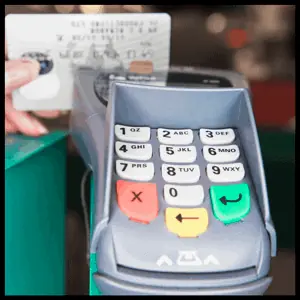
Authorization – is the first step that happens after the credit card is swiped.  The purchase and card information are sent to the acquirer who, in turn, sends the same information to the credit card issuer.  The credit card issuer then accepts or declines the transaction.  If accepted, an authorization code is generated and the purchase transaction is continues to the next step, namely: batching.

Batching – is the review process done by a merchant on all credit card transactions for the business day.  The review process involves ensuring all credit card transactions are authorized and signed by the cardholder.  After the review process, the merchant sends the information as a batch to the acquirer to receive clearing for payment.

Cardholder – he is the customer as specified on the credit card, the customer so to speak.

Card network – these are networks that act as an intermediary between the acquirer and the issuer.  Card networks transfer the information originating from the acquirer to the issuer about the purchase.  This happens in the authorization process.

Clearing – the third step in the payment process which happens after the acquirer sends the batch information through the card network to the issuing bank.  The card network acts as a router depending on the credit card issuer found on the purchase detail.  This process permits revenues for both the issuing bank and the card network called the interchange fee.  After deduction of interchange fees, the issuing bank sends the information back to the acquirer through the same card network used.
Discount fee – this fee is paid for by merchants to the acquirer to cover processing costs.

Funding – the fourth step in the credit card payment process.  This involves the acquirer sending back the transaction information to the merchant less the discount fee.  The merchant receives the remainder of the payment and is now considered paid.  This generates the cardholder’s billing statement and accounts are funded appropriately.

Interchange fee – the fee charged by card networks and card issuers to the merchants.  This fee is regulated to about 1 to 3 percent of the total purchase amount and covers the costs associated with credit card acceptance.

Issuer – the financial institution who issues credit card products to its customers.  Examples of major issuers include Discover, Amex, Visa and Mastercard.

A Step By Step Guide

And finally, to get an easy to read visual guide on how Credit Card Processing works, please visit the Host Merchant Services article archive here:

How Credit Card Processing Works

Getting Ready for Holiday Shopping

The Official Merchant Services Blog would like to wish everyone a very happy Halloween. As we speed our way into the last stretch of 2011, the holidays are going to zoom into view. Holiday shopping season officially tends to start on Black Friday. But in recent years, the boom in online shopping has holiday shoppers no longer traditionally adhering to the official shopping season trends. A 2010 survey conducted by Google and OTX found that 35% of internet users start their holiday shopping prior to the end of summer, months ahead of Black Friday.This trend is only continuing to grow as consumers find online shopping convenient to their shopping habits, easy to do, and the wide selection lets them find great deals on price.

This boom in e-commerce continues on past Black Friday. Cyber Monday, a marketing term coined in 2005 to describe a big push with incentives to shop online days after Black Friday, set records in 2010. According to a Star Tribune article from January 16, 2011, Cyber Monday sales rose 16 percent from 2009, and topped $1 billion overall –– marking the first time Cyber Monday hit the billion dollar mark. The record setting didn’t stop on Monday, according to comScore, a company that tracked the sales figures between November and December for the e-commerce industry. Sales on Thanksgiving Day were up 28 percent from the previous year, and overall e-commerce sales topped $32 billion in the holiday shopping period, a 12 percent rise from 2009. Even Black Friday, brick and mortar stores’ biggest holiday shopping day of the year, saw a 9 percent rise in e-commerce to $648 million.

“This trend isn’t going away in 2011. Some preliminary predictions are suggesting that this year’s holiday shopping season is going to be robust, and online shopping will continue its rise in the eyes and wallets of consumers. You can see that e-commerce is heavily predicted to boom in the next four years through previous articles posted by Host Merchant Services. And while The Official Merchant Services Blog prepares to give you ongoing coverage of the holiday shopping season’s impact on the E-Commerce industry, we’re going to take some time to give merchants some helpful tips to get prepared for 2011:

  • Start early. With your promotions and your sales, start getting the marketing as well as the products or services out there to your customers as early as you can. As seen with the statistics above, online shopping is not beholden to the Black Friday start date. Online shoppers make their lists, check them twice as soon as brick and mortar shoppers and start looking for deals from spring on through the rest of the year.
  • Check and re-check your process. Make sure your online shopping cart is running smooth. The biggest draw of e-commerce for many consumers is convenience. So it’s very important for your online shopping experience to be hassle free to the users of your website.
  • Consider your product line. With online business as booming as it is, it can be easy for your site to get lost in the crowd as shoppers surf around. Consider offering something your competition can not offer. A unique item. An eye-catching deal. Basic marketing plan, but even in the e-commerce industry, the basics still work.
  • Gift certificates are a big holiday item, and that does not stop online. In fact tomorrow’s blog post is going to look at something specific to this year’s shopping season that takes gift certificates and gift cards a step forward in terms of convenience for holiday shoppers. One thing to remember about gift certificates is the post-holiday business they drum up for you. They are purchased during the holiday season, but get used after the holidays, giving your online store the potential to attract other purchases beyond the capacity of the gift certificate in the slower sales month of January.
  • SEO and Keyword choices should be focused on with your advertising. Consumers gift shop online using search engines. You want to do everything you can to get your site in front of them when they search for these gifts. The focus of your e-commerce solution for your business should be an online store that your customers can find easily and then use conveniently. This will get them coming back to your site.
  • Free shipping. This is something that if you can offer, you should strongly consider offering to your customers. It is a big boost for the e-commerce industry leaders each year that they can offer free shipping to holiday shoppers.

Those tips are just scratching the surface of things you can do to prepare for the holiday shopping season. It’s certainly not too late to get ready for the business rush that holiday gift-giving provides each year. Host Merchant Services provides e-commerce solutions to our merchants that will let them take payments smoothly and efficiently. And The Official Merchant Services Blog will continue to provide insight on how merchants can maximize this opportunity.