Tag Archives: bitcoin

federal reserve facade 2 779123

Fed Chair Remarks Further Distinguish Between Cryptocurrency and Digital Dollars

Digital dollars have become very popular among people discussing currency affairs and issues as of late. These dollars are unique digital representations of liabilities as listed in dollars. Such dollars can entail Federal Reserve Notes, bank deposits, and many other liabilities.

Many people might figure that digital dollars and cryptocurrencies are one in the same. Cryptocurrencies are often seen as representations of physical currency. But the Federal Reserve Chair recently remarked that cryptocurrencies aren’t intended to be basic commerce tools like digital dollars. Rather, he says that the crypto market is speculative and impossible for people to predict.

digital dollars

But whether the digital dollar will be a viable asset in the future remains uncertain. The Fed continues to assert that fiat currencies are more valuable. It would take more effort for the United States to try and enter the digital dollar industry.

Remarks Against Cryptocurrencies

Chairman Jerome Powell talked about cryptocurrencies during a virtual panel meeting with the Bank for International Settlements. He said that cryptocurrencies are too volatile and are not useful stores of value. He also said that these currencies aren’t backed by anything, suggesting that these currencies are substitutes for gold instead of for the dollar.

digital dollars - Remarks Against Cryptocurrencies

Powell stated that the dollar is strong against “private cryptocurrencies.” He feels that Bitcoin and other similar currencies haven’t done much in trying to supplement fiat currency.

His remarks prompted the value of Bitcoin to enter a downturn. The currency’s value fell to about $56,500 after his address. The currency had been trying to break its current resistance and go past the $60,000 mark. As of the afternoon of March 25, Bitcoin has slipped to a value of about $52,000.

The changes in the market come amid many conflicting attitudes towards the currency. Bobby Ong, the chief operating officer for CoinGecko, remarked in an interview with TheStreet.com that Bitcoin has a realistic chance of reaching $100,000 this year. But Bank of America also published a recent report saying that Bitcoin is too impractical and that it takes too long to handle transactions with that currency.

Could Cryptocurrencies Be Outlawed?

The odds of cryptocurrencies being outlawed in the United States are minimal. But the fact that Jerome Powell referred to them as “private cryptocurrencies” isn’t helping the market. That term was also used in a bill in India that aims to ban private currency offerings. The Indian bill would make it where only notes issued by the country’s central bank would be legal.

While the Fed may not be overly supportive of cryptocurrencies, many other financial services providers in the United States are okay with them. PayPal, Visa, MasterCard, and some top American banks have been supporting cryptocurrencies as of late.

digital dollars - Could Cryptocurrencies Be Outlawed

There’s also the consideration of financial service providers learning towards the account-to-account relationships that people often have in crypto-based platforms. While many financial service providers focus on making profits through interest rates, fees, and other expenses, an approach involving closer relationships might be more viable for people to follow. People could produce a trust-based approach to work that is easy to follow and entails many unique ideas for operation.

Possible Digital Dollars

It is possible that digital dollars could be made available in the United States. These dollars directly link with various traditional currencies. Powell says that these digital dollars are an improvement over cryptocurrencies, but he doesn’t feel that fiat-backed crypto options are as viable as people like to believe.

Financial service providers have been hesitant to support the idea of a CBDC or central bank digital currency. A currency of this type would eliminate controlling parties who can manage banks, credit card transactions, and other activities. Such parties are necessary for ensuring all transactions that go through are safe.

A CBDC works differently, as the Federal Reserve has the right to control interest rates and send funds directly to consumers. Such CBDCs work mainly in cases where a country can handle its funds without relying on any outside parties for assistance. The United States is a large enough country to where it could go at it alone if desired, but the odds of the country going that far in the effort aren’t as great as people like to assume they would be.

Illegal Activity Considerations

While Jerome Powell didn’t specifically mention anything about illegal activities when talking about his concerns over cryptocurrencies, that point remains a worry. Treasury Secretary Janet Yellen remarked a month earlier that cryptocurrencies are likely being used less for transactions and more for managing illegal finance activities. The increased electricity and energy needed for facilitating cryptocurrency transactions and mining efforts is another worry that the American government and financial sector hold.

Digital dollars could be distinguished from cryptocurrencies for how they could be safer. Since digital dollars may be linked a little closer to traditional currencies, it becomes sensible for transactions to go forward. These deals are faster and safer and are less likely to be utilized for illegal purposes. It would also be cheaper and more energy-efficient to handle these currencies than if other solutions were utilized here for different intentions.

What Would It Take For America To Use Digital Dollars?

It is possible that the United States could utilize digital dollars soon, but there are too many issues to note. Powell stated in his meeting that the Fed isn’t trying to get into digital dollars right now. He says that Congress and the Biden administration would need to support digital dollars if they were to move forward. A substantial buy-in from the public would also be necessary, and whether the public is supportive of the concept remains uncertain.

The United States would need to focus on safety and transparency when looking at digital dollars and how they can work. The American dollar remains the world’s top reserve currency, meaning the country wouldn’t benefit much if it tried to be the first to go after using digital dollars for any intention. Sticking with fiat currencies appears to be the path the country is sticking with at this point.

paris france april 16 2018 bill gates at the elysee palace 179611700

Bill Gates Cautions Investors on Bitcoin

Bitcoin has become one of the world’s top investment options. People are flocking to this cryptocurrency for many reasons, from the currency being simple and easy to use to it becoming more commonplace in society. Bitcoin’s value has experienced a dramatic rise in the last few years, with it reaching more than $50,000 as of late.

But not all people are as excited about Bitcoin. Microsoft founder Bill Gates warned people that they should be cautious when investing in Bitcoin. He specifically warns that just because Tesla’s Elon Musk has managed to spend massive amounts of money on Bitcoin doesn’t mean everyone else should.

Gates spoke with Bloomberg reporter Emily Chang about the growth of Bitcoin. This effort was part of an extensive interview surrounding many topics in the investment and economic fields. Gates argues in his interview that Bitcoin isn’t always as useful as people wish, but it could become viable if it made changes that would dramatically alter its functionality.

The Musk Consideration

Elon Musk’s Tesla company recently acquired $1.5 billion worth of Bitcoin. But while Musk is worth an immense amount of money, his move was still risky. The price of Bitcoin dropped by 20 percent in two weeks after he announced his purchase. Bitcoin dropped by $12,000 in that timeframe, causing Musk to lose hundreds of millions of dollars.

Gates remarked that Musk has access to high-end trade management efforts that most investors cannot afford to utilize. He said that people shouldn’t follow the optimism posed by Musk’s move, warning that most people are billionaires like he is. Gates feels that many people brought into investment manias don’t have enough money to spend on some things, making it harder for them to stay profitable.

While Gates has concerns about Bitcoin, Elon Musk still continues to be one of the world’s top supporters of cryptocurrencies. He has been talking about them on social media more often as of late. Musk has also been talking extensively about Dogecoin, a cryptocurrency made mainly as a joke.

Musk’s enthusiasm has helped the industry, especially since he has a significant social media following and plenty of fans. But Gates warns that Musk can afford to lose money in the crypto field, as he is one of the world’s richest people.

Inefficiency For Transactions

Gates talked in his interview that Bitcoin may not be as viable of an investment as people wish due to its inefficiency. While the ability to manage anonymous payments online sounds appealing, that doesn’t mean it will always work. By allowing anyone to make payments without proving their identities, it becomes harder for transactions to go through as well as people wish.

Energy Consumption Is a Worry

One problem Bill Gates brought up surrounding Bitcoin is the immense amount of energy necessary for producing the currency. Bitcoin has a high rate of energy consumption due to its massive blockchain and the extensive effort for mining more tokens. As time progresses, the process for producing tokens becomes more complicated. The anonymous transactions it produces also aren’t reversible, making it harder for the blockchain to remain streamlined.

Gates has been speaking out about climate change in recent years. He has stated that cryptocurrencies can be dangerous, as the extra energy needed to produce them can be a threat to the environment. The cost of the currency is rising, but the rise in the cost to produce the currency could become a problem depending on how it evolves and how the price changes.

Anonymity Worries

Another problem Gates has about Bitcoin and other currencies is that they are anonymous. While anonymity is a marketing point for such currencies, Gates says that many people who use these currencies do so with malicious intent in mind. These people can engage in tax evasion and money laundering, and some may fund terrorist activities worldwide. People use currencies because the lack of transparency ensures they are hidden, helping them get away with their work.

Gates has claimed that people have been harmed in many forms through cryptocurrencies. He did not give any specific examples, but he has suggested that the features of Bitcoin make it a prime target for people to use when transferring funds for nefarious purposes.

What Can Be Done?

Gates says that cryptocurrencies can be viable in the future, but they must change to stay that way. Gates feels that currencies need to be more transparent, plus transactions should be reversible. He also argues for some semblance of centralization surrounding these currencies. The work would focus on making the currency valuable to people while also being safe, plus it could eliminate the negative stigma that comes with parts of the currency.

These ideas are different from what current currencies are built upon, but Gates finds it necessary for some currencies to make these changes if they wish to be successful. Gates’ interview shows there are many concerns with Bitcoin and that it can be a very high-risk option for investing, even if it is something that could be viable.

Current Updates on Bitcoin

Bill Gates’ remarks on Bitcoin come as the cryptocurrency continues to be one of the most interesting investment options around. Bitcoin holds a value of about $53,000 on the market. The total has been consistently growing in the past twelve months. The value was around $30,000 at the start of the 2021 calendar year. The currency also saw a peak of nearly $58,000 in February.

But the increased popularity of Bitcoin has also caused it to become extremely volatile, as Musk’s loss shortly after his announcement shows. Bitcoin had a value of about $57,000 on February 21. But that value dropped to $45,000 a week later on February 28.

The volume for Bitcoin can also shift based on who buys and sells the currency. Bitcoin has a 24-hour trading volume of at least $50 billion on most days. Trading also occurs worldwide, often making it tough for people to predict what happens next.

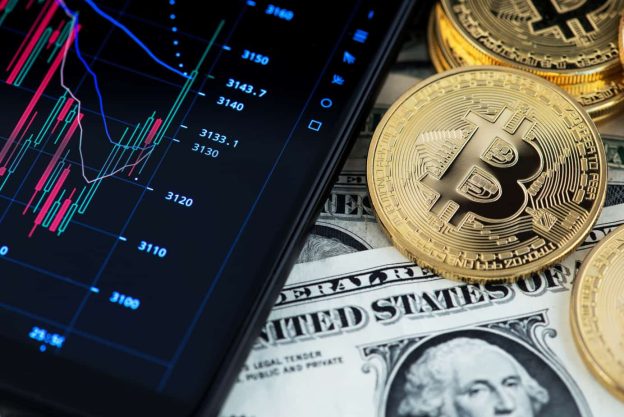
bitcoin cryptocurrency and banknotes of one us dollar next to mobile phone showing candlestick chart 142334515

Square Buys $170 Million Worth of Bitcoin

Bitcoin continues to remain one of the most intriguing investments on the market. Bitcoin has seen a massive rise in its value in the past year. Its value has risen from $30,000 at the start of 2021 to nearly $50,000 in March. Bitcoin also had a record high value of about $57,000 in late February.

One of the largest American financial service providers around is doubling down on its support for Bitcoin. Square announced it had purchased $170 million in Bitcoin. The total equals approximately 3,500 BTC as of March 4.

Much of Square’s support for Bitcoin comes as Cash App customers have helped boost the company’s revenue. Cash App is a mobile payment system developed by Square. Cash App consumers have been trading Bitcoin more than ever, leading to Square doubling its revenue in the fourth quarter of 2020. Cash App helps facilitate Bitcoin transactions to make them easier to run, helping boost peoples’ involvement with the currency.

Square’s purchase is the second such move the company has made. Square purchased $50 million in Bitcoin in October 2020. The total was about one percent of their assets. The company purchased Bitcoin, believing it would be a more viable currency for future international transactions. Bitcoin had a value of about $12,000 at the time.

Bitcoin now makes up about five percent of Square’s assets. These include its cash, securities, and cash equivalents.

Square is the latest company to focus on Bitcoin to diversify its investments and to bring in a potentially higher return on its cash. Other companies like Tesla have been investing in these currencies in the last few years. Tesla particularly acquired more than $1.5 billion in Bitcoin in early 2021, making it where Tesla’s share price is directly linked to Bitcoin’s value.

But the rise of Bitcoin for Square and others comes at high risk. Bitcoin is one of the most volatile investment options on the market today.

Statistics For Square

Square reported a few prominent statistics for Bitcoin and its Cash App use. These points are parts of why Square has invested so much money in Bitcoin:

  • Square reported there were about 36 million monthly Cash App users as of December 2020.
  • At least a million Cash App users bought Bitcoin for the first time in January 2021.
  • At least three million Cash App users utilized Bitcoin payments on the app in 2020. These include people who either purchased or sold Bitcoin.
  • The company’s fourth-quarter revenue from 2020 was $3.16 billion. The total is more than double the $1.31 billion it had in the fourth quarter of 2019. The value is also slightly over the $3.1 billion forecasts from industry analysts.
  • At least half of the quarterly income came from Bitcoin.
  • Square had a minimal customer acquisition cost in 2020. The company spent less than $5 per user. The effort is a sign of the company’s viral marketing efforts helping make it easier for the company to reach more people.
  • More money is flowing through Square’s platforms from both its mobile payments and its traditional storefront kiosks. The gross payment value in 2020 was $32 billion, a $4.6 billion rise from the prior year.

Cash App has also shown it is more viable to Square than its traditional seller business platform. Square had slightly less than $1 billion in revenue from its seller business platform in the fourth quarter of 2020. Part of the move could be due to many physical stores not being open and people focusing on online payments. But contactless payments and the simplicity of Cash App have helped, especially as people become more invested in the currency.

Focusing on Simplifying Bitcoin Efforts

Bitcoin trades are easy to complete with Cash App. Square developed the app to help people transfer funds, and its cryptocurrency feature helps people acquire Bitcoin and others in moments. The company focuses heavily on ensuring people can acquire these currencies while also helping them learn more about how they work. By providing these details, trading efforts can become more viable and accessible.

Stimulus Checks Helped

One reason why Square saw a significant amount of activity in 2020 came as Americans used Cash App to pick up their government stimulus checks. Americans were using Cash App to facilitate the collection process and to ensure they had the funds they needed as soon as possible. The app’s ability to convert funds to Bitcoin and other cryptocurrencies also helped people become more aware of these currencies and how they function.

How Square Stock Is Changing

Square’s Bitcoin investment has helped the company’s stock value rise in the past year. Square trades on the New York Stock Exchange with the symbol SQ.

Square has a value of about $215 as of early March 2021. The stock value grew from $65 in May 2020 to $150 in October 2020. The value went over the $200 mark in November and has stayed over that total since.

Square reports that its net income went from $391 million in the fourth quarter of 2019 to $294 million in the fourth quarter of 2020. Much of this may be due to the increased infrastructure necessary for keeping Square operational. But the ongoing growth of Square and the increased value of Bitcoin will help the company continue to grow and become useful for traders to explore.

Are There Risks?

There is one risk associated with Square’s move. While Square feels confident in Bitcoin, it remains one of the most volatile investments on the market. Bitcoin has a potential to rise or fall by thousands of dollars in value each day. Any investor who is interested in Bitcoin or any other similar investment should watch for the risks associated with doing so.

But the growth of Square and Cash App through Bitcoin shows how appealing the currency will be for many. Expect Square to become a more prominent company as it continues to support one of the most noteworthy trends on the market.

Twitter CEO Backs Cryptocurrency Startup

The Wall Street Journal has been reporting this week that CEO of both Twitter and payment processing company Square, and longtime advocate of Bitcoin, Jack Dorsey has been a prominent investor in the two-year-old company CoinList during their Polychain Capital-led $10 million funding round.

What is CoinList?

Bitcoin Online E-commerce CryptocurrencyCoinList was founded in San Francisco two years ago in 2017 with the aim of helping startup companies raise capital through the sale of cryptocurrency. They made waves almost out the gate during the cryptocurrency boom in ICOs (initial coin offerings) when tokens were exchanged for the money the companies were raising. With the roller coaster-like sudden rise and fall in Bitcoin, the market for ICOs blew up with it before it then bombed.
As the CEO of payments company Square, Dorsey has had Bitcoin of his own for some time, and has often advocated the positives of the cryptocurrency. Square recently announced that they will be introducing a new cryptocurrency service of their own called Square Crypto, as they also revealed that in the second quarter of 2019 alone they generated as much as $125 million in Bitcoin revenue.

The Future of Bitcoin

Despite being a fond advocate of Bitcoin, Dorsey said recently to the Australian Financial Review “[Bitcoin is] not functional as a currency. The peaks and troughs are like an investment asset and are equivalent to gold. What we need to do is make it more usable and accessible as a currency, but it’s not there yet.”

He did add, however, that he thinks Bitcoin can and will eventually grow and become more widely adopted by the online community by saying, “I think [Bitcoin is] the best because it’s been the most resilient, it’s around for 10 years, it has a great brand and it’s been tested a bunch. As I look at all cryptocurrencies that could fill that role of being the native currency for the internet, [bitcoin is] a pretty high probability.”

CoinList will aid new startups in raising money through token sales, and will then use that cash to build a new exchange platform they’re calling CoinList Trade. Along with CoinList Trade, they’ll also set up a cryptocurrency wallet, according to the Wall Street Journal.

Banks Are Hoarding Bitcoin to Protect Against Hackers

On October 21, 2016 there was a DDoS attack that efficiently shut down several internet services for an extended period of time. Some of the websites include Github, Twitter, Spotify, The New York Times, Pinterest, Netflix, and many, many others. As a precaution in case of further attacks, banks are now stockpiling Bitcoin to pay off hackers if an attack is underway. Bitcoin are the preferred currency of online criminals due to their anonymity and difficulty to trace.

The reason the hackers were able to take down so many different websites at once is because they attacked a DNS hosting company, Dyn. Many popular and high-traffic websites use Dyn, and this made the attack much stronger than launching it on each website individually.

Banks have taken notice of the recent attacks, and now some are looking at several different options of how to minimize losses that may incur from said attacks. While no policy has been confirmed as of now, it appears that many banking companies believe that a bribe in the form of the online currency may cost them less money than suffering an attack.

It is currently unknown which particular businesses are taking this route, and it may remain that way for the foreseeable future. Only time will tell if this pay off method will be a worthwhile option. There is some worry that this kind of negotiation will cause more criminal groups to increase threats and attacks in hopes of making easy money, but hopefully that is not the case. Depending on what happens in the future, other companies, not just banks, may look into bartering with Bitcoin as well.

Here Comes CoinSummit! [2023 Update]

Today marks the start of CoinSummit San Francisco, a two-day event ”connecting virtual currency entrepreneurs, angel and VC investors, hedge fund professionals and others who are looking to learn and network in the virtual currency industry.” CoinSummit will take place on March 25-26 2014 at the Yerba Buena Center for the Arts in San Francisco.  Many in the bitcoin community have been waiting for this event for a while.

The event with feature notable entities in the virtual currency community that include Marc Andreessen of Andreessen Horowitz, Brian Armstrong of Coinbase, Nic Cary of Blockchain.info, and Tony Gallippi of BitPay.

The Official Merchant Services Blog has been tapped into the ongoing saga of Bitcoin since this article in November — delving into the fascinating gimmick of Bitcoin mining. Traversing the ups and downs of this unstable and chaotic currency led to the crazy month of February and then the fall of Mt. Gox. Since that fateful day, the virtual currency industry has been scrambling. And now we have this much anticipated summit of industry experts discussing the details and potential future of BitCoin and its competitors.

Don’t Miss a Moment of the Action

For those interested, a live stream of the event begins at 9 AM Eastern time today, and can be viewed here.

Points of Interest

So some of the things we’ll be hoping the Summit delves into are: The Mt. Gox crisis, its aftermath and the future of the currency exchange. Of course industry insiders are all going to be sharing their thoughts, rants and frustrations about MtGox. Many will be raging about the losses incurred by the public and so many bitcoiners, and how badly Mark Karpeles has handled this debacle. But more importantly the issue of malleability will be explained and also how the currency and its exchanges can survive well into the future.

Which leads right into the fact that the crisis didn’t imply a complete price crash for BTC, even after hundreds of millions of dollars in permanent losses. How will exchanges guaranty transparency? Audits? Open balance sheets? These are critical issues if Bitcoin is to be adopted by mass markets. So let’s hope the summit dives right into the answers for those questions.

And then there’s the heavyweight presence to consider. The “big 4″ (Coinbase, Blockchain.info, Bitstamp, and BitPay) will all be present at this summit through its founders. Let’s see if the industry leaders explain their current strategies and growth trends.

The competitors also have some spotlight. Ripple, DogeCoin, Litecoin, and Ethereum will be pitching the advantage of alternative options, but also talking about the future of Bitcoin through smart contracts and smart property, two functionalities many think will catapult BTC prices to new levels.

That’s a quick roundup of what to expect at CoinSummit San Francisco.

Mt. Gox

The Doom of Mt. Gox [2023 Update]

February was the month that the all-seeing eye of the media turned its lidless gaze upon Bitcoin and the craggy peaks of Mt. Gox, the Japanese Bitcoin exchange site. Almost half a billion dollars went missing from Mt. Gox, the exchange was rocked, Bitcoin was scorched, and the site went bankrupt.

The Official Merchant Services Blog has been tapped into the ongoing saga of Bitcoin since this article in November — delving into the fascinating gimmick of Bitcoin mining.

Wait, What is Bitcoin?

Bitcoin is a virtual currency introduced in 2008 by a programmer or group of programmers under the name Satoshi Nakamoto. It has no central issuing authority and uses a public ledger to verify encrypted transactions. The flashy shiny aspect of it is it’s a currency that can be bought, sold and mined electronically. The famous internet comic strip Penny Arcade defines Bitcoin for its readers here.

Wrapped Bitcoin

In 2013 the currency captured the imagination of the virtual and business worlds by soaring in value, rising from $10 to $1,200 per coin. It surpassed the value of gold at its peak. And then i crashed down to $500.

The currency was also embroiled in the huge Silk Road scandal as federal authorities seized millions of dollars worth of Bitcoins when it shut down the notorious black market web site the Silk Road.

The real trick of Bitcoin and why it’s so fascinating to payment processors is that it’s a cryptographic protocol, or crypto-currency. The protocol creates unique pieces of digital property that can be transferred from one person to another. It’s essentially the legitimization of microtransactions linked to actual monetary value. Each Bitcoin is defined by a public address and private key, both long strings of numbers and letters giving it a unique identity in virtual reality. In addition to its digital fingerprint, Bitcoins also have a place in a public ledger. This blockchain gives the Bitcoin a physical identity. So Bitcoins bridge the virtual and the physical.

Mt. Gox: Hackers Gonna Hack

Hacker

But no matter how elegant and ingenious the actualization of Bitcoin is, the currency apparently can be hacked.

  • On February 25, Mt. Gox, the leading Bitcoin exchange located in Tokyo Japan shut down. It had discovered that hundreds of thousands of Bitcoins had gone missing, and more than $400 million had been stolen.
  • On February 28, Mt. Gox filed for bankruptcy and said it was under orders not to pay its debts. The exchange publicly apologized to users for “causing so much inconvenience.”

February was actually filled with problems for Mt. Gox and Bitcoin, as we reported previously.

Everything from Russia banning Bitcoins to China half embracing it just piled onto the Bitcoin craze. And then the hack and the bankruptcy happened. Since then, pieces of code showing parts of Mt. Gox’s Bitcoin source have cropped up around the web according to VentureBeat. Mt. Gox set up a phone support line but that got blitzed. Two other sites vied to fill the void of Mt. Gox, with BitStamp edging out BTC China for the title of largest Bitcoin exchange — for now. And then things got funny weird.

Virtual Theft

Mt. Gox

The authorities are now tasked with investigating the crime. And well, there’s this book, Halting State by Charles Stross, written in 2007. The premise of the book seemed so novel back then: A police officer is called to the offices of a big corporation because a robbery was reported. The robbery as it turns out took place in a virtual world, as the company runs a video game system with virtual currency. And then the novel goes on to explore technology, and how it is quickly evolving to affect the physical world from the virtual world. It was set just a few short years in the future.

And here we are, a few short years into the future, and authorities are investigating the theft of real value currency stolen from a virtual environment.

The amount of coins hacked and stolen from Mt. Gox amounts to about 6 percent of the entire Bitcoin market in circulation. And law enforcement is now tasked with trying to find the identity of the perpetrators — which may seem like an obvious and standard step in the investigative process. But it’s Bitcoin, which is famous for its anonymity and unregulated status. So authorities are filing subpoenas to Mt. Gox to gather information about how the virtual currency is transferred and converted into dollars. While stuck investigating even the basics of how the model works, authorities haven’t even gotten to the stickier situation of how Bitcoins are designed to be untraceable and finding the phantom thieves who stole the strings of encrypted numbers may not happen.

Leaving a half billion dollar hole in an industry that’s already proving to be volatile and susceptible to hacking.

The Bitcoin Roller Coaster

Back in November, The Official Merchant Services Blog dove into the Bitcoin currency craze with an in-depth look at Bitcoin mining.
Bitcoin, introduced in 2008 by a programmer or group of programmers under the name Satoshi Nakamoto, has no central issuing authority and uses a public ledger to verify encrypted transactions. It is a virtual currency that can be bought, sold and mined electronically.

The Hammer is Dropped

We focused on the technological gimmick that is Bitcoin mining – essentially powering multiple computers to create the virtual currency from virtually nothing. The rest of the media since then has been concentrating on the other aspects of Bitcoin, including its use as a money laundering tool. In that same month of November, Federal prosecutors in New York filed charges against Ross William Ulbricht for running the Silk Road website, where customers allegedly used Bitcoins to buy and sell drugs.

And on February 9, Florida stepped into the spotlight concerning virtual currency and money laundering. Bitcoin traders. Florida prosecutors have charged three men, saying that their use of a site called localbitcoins.com violates laws against unlicensed money transmitters, according to a report in the Krebs on Security blog.

Bitcoin Banned in Russia

More bad news for Bitcoin came from Sochi Olympics host country Russia. The country banned Bitcoin altogether. Russia’s Prosecutor General’s Office recently made its stance on Bitcoin abundantly clear. “Systems for anonymous payments and cyber currencies that have gained considerable circulation — including the most well-known, Bitcoin — are money substitutes and cannot be used by individuals or legal entities,” the office said in a recent press release reported by Reuters. Any use of Bitcoin will be considered “potentially suspicious,” as the Russian government has linked Bitcoin usage to illicit activities.

Russia is only the latest country to release a statement detailing its position on Bitcoin. In early December, China barred financial institutions from using Bitcoin, though it didn’t ban the currency outright. In late January, Canada released a statement that said Bitcoin is not legal tender in the country. Countries like these have expressed skepticism in Bitcoin not only because of its links to money laundering, but also for its overall volatility.

Market Troubles

Bitcoin has plunged more than 8 per cent after a Tokyo-based exchange halted withdrawals of the digital currency, citing technical malfunction. Mt. Gox, a popular exchange for dollar-based trades, said in a blog post it needed to “temporarily pause on all withdrawal requests to obtain a clear technical view of the currency processes.”

It promised an “update” – not a reopening – on Monday, February 10, Japan time. Bitcoin exchange Mt. Gox said customers can take out cash “as normal” and it’s working to resolve technical issues that prompted it to halt withdrawals of the digital currency.

“It’s not about cash at all, only about Bitcoin,” Michael Keferl, a communications officer for Tokyo-based Mt. Gox, said. “There is a problem in the way transactions are verified.”

Things then rebounded. The price of Bitcoin rose 0.3 percent to $683.66 at 9:07 a.m. London time, according to the CoinDesk Bitcoin Price Index, which averages prices from exchanges including Mt. Gox.

Bitcoin App Dropped by Apple

On February 5, Apple struck a blow against Bitcon. The Blockchain app, downloaded 120,000 times during its two years in Apple’s iTunes App Store, was the most popular way for people and companies to transfer bitcoins from one another. Apple removed it from the store on February 5. Blockchain immediately shot back with a statement, accusing Apple of getting overly aggressive with future competitors. Apple is rumored to be developing its own mobile payment system.

And Speaking of …

With the crazy ups and downs of Bitcoin, one thing is undeniable: Virtual currency is a profitable new marketplace. Which means Apple isn’t the only group trying to develop their own alternative. An untraceable currency called Zerocoin is being designed by Johns Hopkins University researchers to compete with other virtual moneys such as Bitcoin. The researchers say that if virtual currencies are going to exist, there should be one that provides the same kind of privacy that people have when exchanging traditional forms of money.

What Does This all Mean?

The virtual currency movement has the potential to be the next stage in the evolution of payments and transaction processing.
Advocates say such digital currencies, made possible by complex computer formulas, will eventually be widely embraced by users who want to exchange money instantly and directly, without a bank as middleman.

While it may seem like the wild west in terms of security and long term viability, the concept of virtual currency is actually well in line with what we’re already surrounded with as consumers. By and large we continually swipe plastic through card readers when we buy everything from a coffee at Wawa to a down payment on a new automobile. So a paperless and coinless world is already one in which we exist. It’s not hard to envision a next step where the currency itself is virtual.

But that does leave security issues which are relevant and real. Relying on even the best encryption still leaves risk and susceptibility to fraud.

However, it seems governments are still playing catch up to the technology itself. Focusing on money laundering and the instability the anonymous exchange of currency brings to the banks themselves, as well as the sale of illegal goods and services. All of which are certainly part of their purview. It’s just a weird transition period as the infrastructure of the old school banking system doesn’t seem all that prepared to deal with the fluidity of a virtual currency snaking through the world’s consumers.

In short, it’s an interesting time to bear witness to the evolution of money and the marketplace. Governments will catch up with virtual currency. And consumers will embrace convenience more and more until we face a world that may actually give up on paper and coins completely, in favor of your PIN numbers and some encryption codes that store the value of you.

How Does Decred Work?

Bitcoin Craze Generating Big Profits For Some [2023 Update]

Bitcoin is a topic that most people who spend time on the Internet have heard about. A Bitcoin is not a tangible coin like traditional currency. It is a virtual currency that can be bought, sold and mined electronically. For Andreas Kennemar and Marcus Erlandsson, an idea involving Bitcoins turned out to be beyond profitable.

Mining Computers

In the short span of four days, Kennemar and Erlandsson earned $3 million in revenue. How did they do this? KnCMiner, their company, does not actually own the virtual coins or trade them. Instead, they crafted a computer that is designed to mine the currency online. At $7,000 per unit, these computers are certainly more of an investment than the average desktop or laptop. During the second week of November, KnCMiner sold off all of its inventory when Bitcoin prices were skyrocketing. In a record four minutes, the men made an impressive $600,000.

How To Mine Coins

At first mention, the idea of mining a virtual currency may sound like an easy treasure hunt game to the average person. However, the process is very complex. Without the right electronic tools and equipment, mining a Bitcoin is difficult for a regular computer. There are several cryptographic puzzles that must be solved, and the average computer does not have the ability to compute them. This is where the two men who created the mining computers developed their idea. They used a special chip, which is called an Application-Specific Integrated Circuit or ASIC.

To build a coin, a computer has to calculate an encryption problem that is called SHA-256. The graphic card or ASIC does the processing, and the algorithm must be solved in order to create new coins. The process is commonly called solving a block. When a computer is successful in creating new Bitcoins, it will be verified with other processing computers in the network. The first person to solve a new block is the one who receives the coins. Currently, there are 25 Bitcoins per block with a limit of 3,000 per day before it becomes significantly harder to produce more coins.

The idea of this virtual currency certainly provides opportunities for creative people to make money, but some detractors also argue that the system is flawed or unsustainable.  If anything, the value of a Bitcoin has certainly proven volatile.  Here at “The Official Merchant Services Blog” we’ve covered a variety of aspects concerning virtual currency. We delved into tokenization just recently, which facilitates the processing of payments by creating virtual tokens instead of storing cardholder data in a way that is susceptible to breaches and hacks. We have also covered aspects of micro-transactions and how video games embrace both the concept of virtual currency and the sale of virtual items for real currency. Bitcoin and the ongoing developments in Bitcoin mining takes these concepts to a whole new level of depth and economic intrigue. We will continue to monitor and report on the Bitcoin story as it unfolds.