Tag Archives: Apple

gafam the biggest companies in information technology 209504587

Big Tech Earnings Reveal Big Ideas For What’s Next In Commerce

Some of the top entities in Big Tech recently released their latest earnings reports. Amazon, Google, Microsoft, Apple, and Facebook all performed beyond what analysts predicted. Analysts also predict these earnings reports will highlight a greater emphasis on commerce soon. All of these entities have distinct plans for what they will do with their investments.

Ongoing Growth For Amazon

It is no surprise that Amazon is still growing in prominence. Amazon saw about half its revenue come from product sales. The company’s revenue rose by nearly a third to about $57.5 billion this past quarter. The company’s service portfolio also saw a 50 percent increase in revenue to $51 billion in the past quarter. The service portfolio includes Prime Video subscriptions and Amazon ad sales.

But Amazon Web Services saw a drop in its operating income in the first quarter. AWS had $4.2 billion in operating income, which is less than the 75 percent profit burden it had last year. But AWS’ income is still significant enough to make a substantial difference in how the business operates.

Amazon is expecting further growth, although its growth rate in the second quarter will likely slow by about a quarter. Amazon will still be raking in money, as it will likely see operating profits of at least $4 billion in that period.

The development comes as Amazon prepares for a significant transition. Founder and CEO Jeff Bezos will be departing from his position this summer, but he will remain an executive chairman with the company. AWS CEO Andy Jassy will replace Bezos as the company’s CEO. Whether there will be any other surprise announcements from Amazon remains uncertain, but Bezos’ influence will likely remain a constant at the company.

Amazon’s growth is no surprise, as the company continues to be a strong force in today’s economy. Amazon has been a company that people rely on for many reasons. The possible new things that Amazon will have to offer and its next innovations will be worth spotting, especially as they could make Amazon an even more profitable company.

Facebook’s Hope

While Amazon is continuing with business as usual in the commerce industry, Facebook has plans to enter the commerce field. Facebook promoted in its earnings report that the company has more than a billion Marketplace users. Facebook also plans on using virtual and augmented reality programs to help facilitate digital commerce activities.

Facebook has plans to boost its digital commerce activities. These include efforts on the Facebook and Instagram platforms alike. One potentially involves retailers being capable of directly selling products to people through their Facebook and Instagram profiles or feeds.

Facebook continues to be in the news for how it operates and how it regulates its content. But Facebook will soon start focusing more on commerce activities without relying too much on the communication features that people often expect to find through the company. This development will be something to watch for when looking at possible investments.

What Google Wants

Alphabet, the company that runs Google, also wants to do more in the commerce industry. Alphabet has reduced product listing fees on Google’s shopping section. The company has also reduced commission fees for sales facilitated by the Google shopping search feature. Google’s moves are helping people use the system while making it easier for them to manage various transactions while online.

Alphabet reports that its commerce efforts are working through a combination of traditional searches, Maps listings, and YouTube reports. People are searching for local businesses on Google more than ever, making Google a more viable solution for search needs. Google frequently updates its systems to make its data more visible and useful, especially when showcasing some of the specifics surrounding different businesses in local areas.

Google has also been helping businesses with omnichannel marketing. Retailers and other companies can use all of Google’s features to reach customers. They can use the Maps feature to highlight their locations and list their products on Google’s shopping search results. Retailers can also pay extra to advertise on Google and to have their products or services be the top results on searches. The system allows retailers to become more visible to everyone, providing further growth.

Google also has partnerships with PayPal and Shopify, two of the most prominent online shopping systems. Google’s work with these entities will make it easier for people to market their products and for customers to pay for their orders.

Microsoft and Apple Are Competing Well

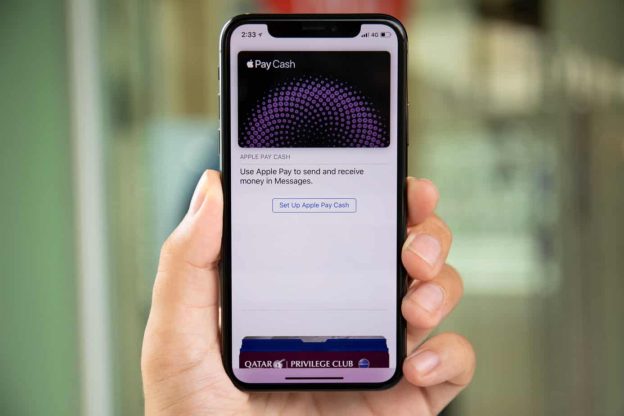
Microsoft and Apple may be direct competitors, but they are both alike in how they want to reach more people through commerce. Apple regularly reviews different commerce opportunities through its products, including how its products can support NFC transactions and various apps provided by retailers. The Apple Pay contactless payment system has especially become a necessity for many retailers to have.

Microsoft’s commerce work also deserves notice. Microsoft has been highlighting its MS Cloud development and how it can help businesses organize their operations online.

Microsoft is also buying its way into the commerce field by purchasing the online communications system Discord. Microsoft is spending nearly $10 billion on its acquisition. The total is a fraction of the company’s $2 trillion market cap, but it shows how committed Microsoft is in finding ways to expand.

Microsoft also recently purchased Nuance Communications, a healthcare technology firm. The acquisition of Nuance will help Microsoft enter more healthcare-related activities. Nuance particularly focuses on artificial intelligence and speech recognition systems. The potential for Microsoft to use Nuance’s technology for more things could be worth watching, especially when looking at how it continues to thrive in the digital environment.

A Strong Future For All

The Big Tech companies have shown that they are all looking to grow further, and they are ready to use the commerce industry to make it happen. They will become more ubiquitous and inviting for all investors to explore as they look for growth opportunities that they could utilize.
Starbucks Mobile App

Is Apple Pay Really More Popular Than the Starbucks Mobile App? [2023 Update]

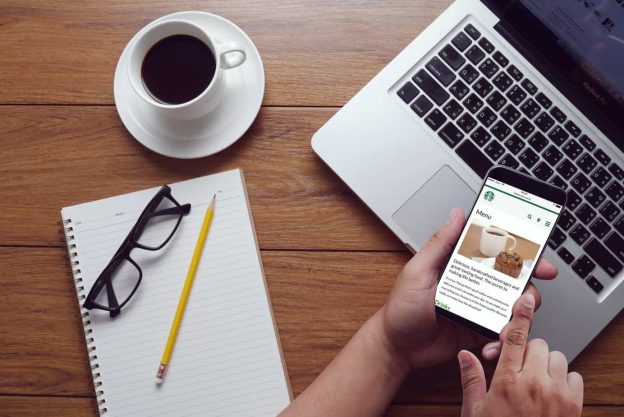
According to an October report published by eMarketer, a respected online publication dedicated to the digital marketing industry, the mobile payments service known as Apple Pay is now more popular than its counterpart developed by the Starbucks Coffee Company. Since about 2014, the Starbucks app, which started off as a digital version of its successful gift and rewards card, had been the most widely used mobile payments platform in the United States, but statistics crunched by eMarketer indicate that this is no longer the case.

Top Mobile Payment Apps

Mobile Payment Apps

More than 27 million purchase transactions and payments were settled with Apple Pay in 2018, a figure that eMarketer expects will increase to 30.3 million by the end of 2019, thus representing a 47.3% share of the “contactless” or Near Field Communications (NFC) payments market. It should be noted that Apple Pay is accepted at Starbucks, whereas the Starbucks mobile app only works at the company’s retail locations equipped with NFC point-of-sale terminals.

The holiday shopping season happens to be very busy for Starbucks, particularly with its pumpkin spice flavors and often controversial choice of coffee cup designs, but this will not allow the company to retake its place atop the mobile payments totem pole. The number of active Google Pay users, who are those making at least one NFC payment within a six-month period, will climb to 12.1 million, less than half of Starbucks mobile app users, who can easily be assumed to be even more active because such is the nature of delicious caffeinated beverages and tasty gourmet treats. Samsung Pay comes in at third place with 10.8%, just a sliver of the market share it holds in places such as South Korea.

Both Companies Benefit

For payment processing analysts, comparing Apple Pay to the Starbucks app is an apples to oranges situation. While it is true that Apple now commands nearly 50% of the American NFC payments market, Starbucks is the true leader because this is a mobile app that can be installed in iOS and Android devices; in fact, it worked on Windows Mobile devices until about 2017. As for Apple Pay, the popularity of the iPhone is what is really boosting this digital wallet, and it could be argued that the Apple Card, which is a very recent product still being rolled out, will likely enhance Apple Pay.

It could be argued that the new Apple Card could very well be the factor that can realistically propel Apple Pay past Starbucks. There is one thing that coffee lovers enjoy as much as coffee itself, and that is being rewarded for their good taste; this is where the Starbucks mobile app excels, and it is what the Apple Card is going for. The current cash-back rewards program offered to Apple Card holders is pretty standard; should Apple spice it up with greater rewards for using the card in conjunction with Apple Pay, it would entice greater use of this iOS digital wallet. In the end, providers of payment processing services stand to benefit from this competition.

Amazon & Apple May Have Pushed Their Luck

The Amazon-Apple Partnership Triggers an FTC Antitrust Investigation

While Amazon offers a marketplace for buyers and sellers from around the world to find one another, the company also controls who sells major brands. For example, if you found a new pair of Nike sneakers for less than $100 at a discount store, you could not turn around and sell them on Amazon for a significant profit – unless Amazon “ungates” you. Amazon limits the number of sellers who can sell Nike along with many other brands and “gates” everyone else. Sellers must jump through hoops to make it through this exclusive gate to commerce.

Enter Apple to the Amazon Stage

Apple’s recent partnership with Amazon and the resulting ousting of Apple product refurbishing businesses caught the eye of the Federal Trade Commission. While the stated intention of Apple selling its products directly to consumers via the Amazon site was to prevent counterfeit Apple products from making it onto the marketplace, Amazon has left some Apple product resellers out of the loop. Not only are the Apple product resellers out of an Amazon gig, but consumers who could buy refurbished Apple products at a fraction of the cost of new Apple products no longer have access to these resellers.

Certified by Apple = Priced by Apple

Amazon did give the Apple resellers two months’ notice before forcing them off of the platform. And certified Apple resellers are able to continue selling refurbished Apple products – certified by Apple, no less. Apple along with other big brands on Amazon will only authorize resellers who charge a specified minimum amount, which will be a lot higher than the non-authorized resellers were willing to charge. Consumer payment bridges the difference.

Does this sound like a “restraint of trade” or an “attempted monopolization”? Such wording can be found in our country’s antitrust laws. This is when the FTC started paying attention to how Amazon and Amazon’s partner brands like Apple control who sells what and for how much on the site.

While Amazon didn’t completely ban third-party sellers from Apple reselling, the company did only offer an “Amazon Renewed” option to resellers who purchase $10 million in annual inventory, a barrier to entry for the average Apple refurbished product reseller, including small businesses, as well as individual sellers.

Enter FTC to the Amazon Stage

The FTC is now carrying out an antitrust investigation into the online marketplace giant. In addition to this latest antitrust investigation, the FTC along with European regulators are taking a closer look at Amazon’s practice of using its proprietary sales data against competitors.

Along with the FTC, the Justice Department is also investigating Amazon, and eight states, as well as App Store customers and developers, are suing Amazon.

FTC Tech Task Force

The FTC created a Tech Task Force in February to focus on anti-competitive practices on tech platforms. At least one member of this task force interviewed an Amazon refurbished Apple product reseller who was squeezed off of the platform as a result of the Amazon-Apple initiative launched last fall. 

The FTC is also investigating Facebook’s acquisition of Instagram and WhatsApp. Ultimately, consumers and the general public pay the price of tech giants leveraging their control over the marketplace to increase profits while decreasing competition.

iPhone and NFC issues

The iPhone and NFC issues [2023 Update]

Apple’s Latest iPhone 5S and iPhone 5C Lack NFC Support, Market Setback Expected

The iPhone and NFC issues can lead to a market setback. The sphere of influence of the iPhone apparently extends into industries that develop products for mobile payments. Mobile credit card processing and various merchant services, including various point-of-sale applications, are also influenced by Apple’s decisions. The close relationship between these technologies is most visible in the market for mobile payments.

Specifically, there is a lack of near-field communication, or NFC, support inside the iPhone 5. The absence of this capacity could delay the standardization and adaptation of associated applications. This restriction is already creating waves, which are rippling throughout Western Europe as well as North America; however, Asian markets are not expected to sustain any substantial impact.

Apple’s main competitors fully embrace NFC technology, and the mobile credit card processing market is also doing very well. This situation certainly begs the question: Is this a part of a larger marketing strategy, or did Apple simply drop the ball when developing compatibility for merchant services?

Facilitating mobile credit card processing and other instant transactions does not constitute small potatoes, so it is worth taking a closer look at the situation.

iPhone and NFC issues – Motives and Methods

iPhone and NFC issues - Motives and Methods

Two items seem to be present and capable of driving the decision to scrap the addition of NFC compatibility within the iPhone. First, it is possible that Apple might be attempting to undercut certain competitors. Since these products are targeted at initiating a new method for making fast and secure mobile payments, there could also be a conflict of interest lurking in the background.

Apple could also be attempting to establish a position of influence in the market for merchant services by changing the company tune only when outcry for their support reaches a high point. In addition, Apple has elected to develop the iPhone technology by using iBeacon, which employs similar transmission functions, but it is done via Bluetooth Low Energy or BLE.

Analysts observe that this single decision could put certain product developments for processing mobile payments behind for at least two years. Retailers have certainly responded by delaying their financial commitments for relevant point-of-sale devices and supporting products.

Since several alternatives to NFC are already in development, it seems like a stretch of the imagination to assume that this move is indeed strategic or even deliberate. Perhaps Apple is simply unresponsive to the various market dynamics created by its key decisions; however, this decision could also be motivated by its desire to control the technology and shift market dynamics with iBeacon. Only time will reveal the details.

About NFC

About NFC

One remarkable technological innovation that has transformed our interaction with devices is NFC! Abbreviated as Near Field Communication NFC has gained attention in years, particularly in the realm of ecommerce business. So, what exactly is NFC? How does it work its enchantment?

What is NFC?

NFC, also known as Near Field Communication is a technology that enables devices to communicate and share information within distances. It works on the principle, of Bluetooth and Wi-Fi connections by utilizing radio frequency waves. However, what makes NFC unique is its ability to establish a connection by bringing two devices close together.

Unlike communication methods that require complicated setup processes or pairing codes, NFC allows for seamless interaction with just a tap or touch. This convenience has made NFC widely popular across applications such as payments, ticketing systems, smart home automation, and data transfer between smartphones.

One of the features of NFC is its compatibility with existing infrastructures. Many modern smartphones already come equipped with an integrated NFC chip that enables users to make payments using wallets like Apple Pay or Google Wallet. Additionally, businesses can utilize NFC-enabled point-of-sale terminals for transactions without the need for cash or physical cards.

NFC tags are another aspect of this technology. These small adhesive stickers can be programmed with instructions such as launching apps connecting to Wi-Fi networks or even triggering actions, on your device when tapped against them.

NFC is a way of communicating that makes it easier for devices to connect through close interactions. Its flexibility and user-friendly nature make it a valuable tool, for improving user experiences in industries and everyday situations alike.

Use Of NFC

One of the applications of NFC is for making mobile payments. With a tap of your smartphone or smartwatch, you can conveniently and securely make purchases at stores and restaurants without having to take out your wallet.

Another purpose of NFC is to transfer data between devices. By touching two devices together you can easily share photos, videos, contacts, and more. No need for cables or complicated setup processes.

NFC also finds its usefulness in access control systems. Imagine the convenience of entering your office building or hotel room by tapping your phone on a reader. This eliminates the need for keys or swipe cards. Provides a seamless experience.

Moreover, NFC tags have the ability to automate tasks on your device. For instance, you can program an NFC tag in your car to automatically launch navigation apps or enable Bluetooth connectivity with a tap using your phone.

In addition, to these applications, NFC technology is also being incorporated into marketing strategies. Brands are leveraging this technology to offer engaging interactions, for their customers through posters and product packaging. These interactive elements can activate content when touched with a device that supports Near Field Communication (NFC).

As demonstrated by these examples Near Field Communication has a range of applications, in our lives. It enables us to make payments share files, access buildings, and even enhance marketing initiatives. The potential seems limitless!

How Does NFC Interact With My Device?

How Does NFC Interact With My Device?

When you tap your smartphone against another NFC-enabled device like a payment terminal or another phone the two devices establish a connection. This connection enables them to exchange information without any delay.

The interaction between your device and the NFC-enabled one happens because of fields. When the devices come close to each other their antennas generate these fields that facilitate communication between them.

Once the connection is established data can be transferred between the two devices. This could include making payments at stores or sharing files like photos and videos between smartphones.

One of the things about NFC is its simplicity. There’s no need, for setups or passwords – just a simple tap is all it takes to initiate communication.

It’s worth noting that both devices involved in an NFC transaction must have hardware and software for it to work correctly. Fortunately, most modern smartphones already come equipped with NFC capabilities.

NFC interacts with your device by utilizing fields generated by antennas. It makes things easier, such, as paying and sharing files by creating connections, between devices that work together with a simple tap. So the time you come across that NFC” symbol on a device you’ll have an understanding of its functionality!

Know more about NFC here.

Apple’s Passbook to replace Gift cards

Today the Official Merchant Services Blog, along with the rest of the world, will take a look at the new iPhone 5 being debuted in California today.  Specifically, we will look at one of the new iOS 6 features called Passbook.

Passbook is a new app, exclusive to iOS 6, the feature lets users store and quickly retrieve electronic versions of tickets, boarding passes and merchant cards all in one place according to executives at the WWDC 2012 today.

The app aims to replace almost all paper tickets, coupons and plastic gift cards that might be taking up space in a user’s wallet.  Apple already has partnerships with a number of airlines, retailers and venues including Virgin Air, Delta, and Starwood Hotels.

In a demo, senior Vice President of iPhone software Scott Forstall showed how to use the app with a San Francisco Giants baseball ticket.  The feature will also work with Starbucks and Apple Store gift cards.  Adding to its already intriguing features, the app is dynamic, so users will be notified of any flight delays or gate changes. Users can also be alerted when near a movie theater that they have tickets to or rewards points that can be redeemed.

The app uses a special QR code that can be scanned by the participating retailer to redeem that ticket or coupon. Done with a particular card in Passbook? A virtual shredder “shreds” it on screen.

Is it a mobile wallet?

Well no, Apple hasn’t announced any kind of payment feature yet for the Passbook app, but don’t rule that out just yet.  With the migration towards digitizing all of this info, as well as the time and location based triggers that give you what you need, when you need it this app is the one to watch in the festival of new software coming out of Cupertino, CA.

Passbook will roll out along side iOS 6 on September 19th, and the iPhone 5 will be begin shipping September 21st. As usual, we here at Host Merchant Services will keep you updated with all of the breaking news in the mobile payments world.

Visa’s V.me, a new breed of mobile wallet

The Official Merchant Services Blog again looks into the mobile wallet world today, by introducing the new product from Visa, Inc. called V.me.  Last week we discussed in detail the BarclayCard mobile wallet system, which has come here to Delaware at participating locations in Newark and Wilmington.

Visa plans to roll out its own version of a mobile wallet solution by the end of this year.  Although the Card Issuer is the largest in the world, the entrance seems late in a game filled with tough competitors.  Visa has been testing a beta of the program with five large online retailers.  Buy.com, Bidz.com, Cooking.com, Modnique and PacSun are the retailers currently offering the e-commerce side of the service on their web sites.  Customers have the option when checking out to sign up for the program, set up the account and add a card, all without leaving that merchant’s site. Buy.com went live with V.me first in May; the others followed suit a few months after.

The program will eventually allow mobile device users to pay for goods from participating merchants at physical locations, most likely by the end of 2012.  V.me uses a ‘hybrid’ security system of the device’s secure element, as well as cloud servers to store customers’ card credentials.  This technique is reportedly more secure than the Isis system of storing card information directly on a device’s SIM card.  In August, Google decided to upgrade to a cloud based system of storing card data, however they kept reliance on the phone-based element to house a prepaid virtual card that initiates transactions and identifies users.

Visa will also include a location-based offers service with V.me, that will likely use geo-tagging to identify customers most visited locations, and market offers accordingly.  Competitor Google Wallet, while nearly a year old, has struggled due to the reliance on NFC-based technology that is not wide spread enough yet.  Other companies such as Apple Inc., and MasterCard have also announced their entrance into the mobile payment game.  Apple, with its Passbook wallet feature expected in the new iOS 6 will feature QR code reading technology.  MasterCard announced a mobile wallet program in May, called PayPass wallet service that claims to be open to third parties for development and flexible to a wide variety of payment brands.

In summary, Visa’s V.me is one of the mobile wallets that I’ll be eagerly waiting for, however it seems a long way off from implementation now. For Delawareans, Barclays’ Barclay Card Mobile Wallet app seems to be the only one to hit the ground running here in the First State. A watchful eye will be kept on this close race of Banks, Card Issuers and Credit Card Processors to see who will be the one to win Mobile Wallet Dominance.

Virtual Gifting [2023 Update]

The Official Merchant Services Blog continues its series focusing on the upcoming holiday shopping season and how the e-commerce industry is shaping the future of shopping. Yesterday we looked at Mobile Gift Cards and studied their potential to be a popular gift giving idea. They can end up being extremely easy to use and very convenient for shoppers in a pinch, turning the process into a few simple clicks and an e-mail away from delivering a gift card the recipient can then use instantly, no matter the distance between gifter and giftee.

Today we’re going to look at what was a burgeoning gift giving idea last year, that we predict will continue to build steam and become a major choice in holiday shopping ideas: Apps. Smartphones are obviously a very popular part of peoples’ everyday lives. And with that comes the apps that fuel their usage. This makes virtual gifting of those apps a viable and useful purchase option for consumers looking to give someone that perfect, albeit tiny, little gift that they know the person will enjoy. Be it a fun game like Angry Birds or Words With Friends or Plants vs. Zombies, or something more functional like a flashlight or Facebook messenger app, virtual gifts are fast becoming stocking stuffers. And as such, both Android and Apple have created a gift-giving functionality for their apps.

Here’s a story that ran in India’s The Business Standard giving tips and advice on which apps that may work as stocking stuffers for Apple and Android users. The article states: “Mobile applications or apps can keep tablet PC and smartphone users engaged for hours. With hundreds of apps releasing every day, these are the best gift this season for your app-addict friends or family members.” 

List of Virtual Gift Ideas

Virtual Gift Ideas

For iPhone users, the article runs through the process of either using their iTunes gift card service or using their “gift” button to virtually gift an app. It then suggests a short list of gift ideas:

  • Tweet Speaker, an app that lets users hear their twitter tweets in a hands free, convenient process that avoids having to finger through the updates.
  • LoopyHD, a music app that lets aspiring mobile DJs and musicians record music loops, merge them, import them and keep them all in sync.
  • Bobo Explores Light, an interactive learning tool that takes children on an educational journey to discover how light interacts with the world.

For Android users, the article details how Amazon has an Amazon App Store for Android ready to go.  The article states: “Amazon’s Appstore in fact puts Android within striking distance of the iTunes store for the first time, from a functionality and desirability perspective. Amazon’s Appstore gift cards, which you can email, send via Facebook, or even print out for any amount. This way you can give the gift of apps to other Android users, or provide your kids with an app allowance of sorts. To redeem, simply enter the card’s code value while purchasing the app from Amazon store.”

The Android Apps that are suggested are the Paper Camera App that gives you preview functionality through a viewfinder, and the Easy Tether app that lets you siphon off the internet connection from your phone to your computer.

As smartphones ingrain themselves more and more into our society, virtual gifting is going to become a much more commonplace activity. Driving the strength of e-commerce higher and higher. So just be aware that the holiday shopping season of 2023 is going to keep that business sector thriving.

Steve Jobs passes away 2011

Steve Jobs 1955-2011

Steve Jobs, Apple co-founder and former CEO of the company, passed away Wednesday October 5, 2011. Apple’s website posted this as a remembrance:

“Apple has lost a visionary and creative genius, and the world has lost an amazing human being. Those of us who have been fortunate enough to know and work with Steve have lost a dear friend and an inspiring mentor. Steve leaves behind a company that only he could have built, and his spirit will forever be the foundation of Apple.”

The impact Jobs had on the payment processing industry is still being defined even now after his passing. Mobile Payments are a booming sector in payment processing, and technology is still being developed and tweaked and polished to harness the revenue potential that some predict will blossom by billions of dollars in the next four to five years.

And the iPhone that Jobs helped Apple launch is a key element in mobile payments. Host Merchant Services‘ own mobile payment solution, HMSPay uses an iPhone application to function. The iPhone, the iPad, the iPod are three of Jobs’ greatest legacies and innovations. These items that Jobs brought forth into the world are still only at the beginning of their use in terms of payment processing and its evolution.

You can find out more about Steve Jobs and his life from these links: