Author Archives: hostmerchantservices

Replace Credit Cards With Microchips

Swedes Replace Credit Cards With Microchips [2023 Update]

Sweden is known for its technological advancements and may soon become the first cashless society as 80% of all transactions involve credit card processing with many Swedes no longer carrying cash at all. Now, thousands of Swedes have taken technology one step further by implanting microchips under the skin to replace credit cards and even house keys, gym membership cards, and more.

The microchips are designed to improve convenience and make everyday activities faster and easier. Since 2015, over 4,000 Swedes have already had the small microchips implanted into their hands.

What is a Microchip?

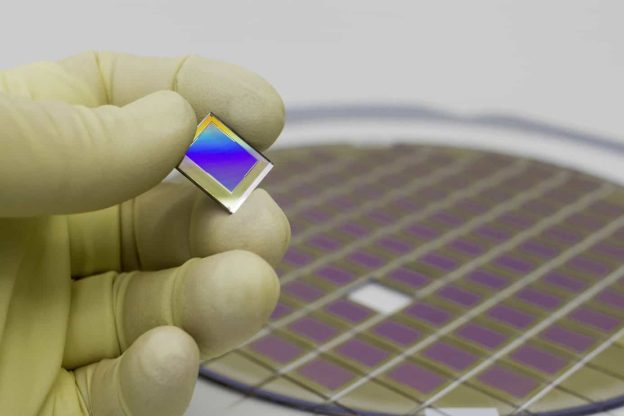
The microchips are about the size of a grain of rice and they’re implanted in the fleshy part of the hand between the forefinger and thumb. They work a lot like a smartwatch and digital wallet rolled into one. The chips can be used to monitor health vitals, replace keycards, and store credit card information.

Features of Microchip

The feature that has really helped the microchips take off is the ability to pay for goods in a store with a quick swipe of the hand (literally). In this way, the chips can be considered the ultimate type of mobile payment by skipping the smartphone entirely. The chips use near-field communication (NFC) technology that’s also used in contactless credit card processing and even pet tracking technology.

The microchips aren’t just for making payments; they can replace membership cards at the gym, passcards at the office, and house keys for a home equipped with a smart lock. The chips can store emergency contact information, event tickets, and even train tickets. Sweden’s SJ national railway company even supports the system with a microchip reservation service. Train conductors can scan a passenger’s hand after they buy a ticket online and register the ticket on their microchip.

Jowan Österlund, a former body piercer, pioneered the microchip technology and considers it safe and practical. The technology itself isn’t new, however. Implantable NFC microchips date to 1987 when they were developed for livestock and pets.

Of course, security and privacy concerns have been raised. Some critics worry that the microchips will gather a mass of incredibly personal data that may fall into the wrong hands. The invasive nature of the implant, as well as the cost, will obviously make it difficult to replace if the payment account on the chip is stolen.

The microchip trend certainly makes sense in Sweden, however, a country that has adopted technology faster than almost any other nation. Coins and notes account for just 1% of Sweden’s economy today. As the country moves toward a cashless economy, financial crimes like bank robbery have plummeted. In 2008, there were 110 bank robberies throughout the country compared to just 2 in 2018. Cash is increasingly being viewed as obsolete.

It’s likely that Sweden’s long-standing history of sharing personal information has helped with the acceptance of microchips in the nation. Sweden is famous for its unique open society which offers easy access to residents’ phone numbers, birthdates, addresses, and even financial information. You can look up a license plate to view vehicle information, search for someone’s name to view their address and job information, and even find out the salaries of other Swedes with a simple phone call.

Molly Bloom to be keynote speaker at WSAA

The Western State Acquirers Association (WSAA) is an organization that provides financial institutions, independent sales organizations, and other businesses involved in the payment processing and merchant services industries within the with up-to-date, industry-related education. Part of this effort is hosting a yearly conference in Palm Springs, CA that offers inspiration and education to the attendees. For the 2019 conference, WSAA has invited entrepreneur and author Molly Bloom to be the keynote speaker.


Molly bloom has quite a background. She went from training to be an Olympic skier, which was a dream ended due to injury, to being the head of underground poker games that attracted noted names such as Leonardo DiCaprio and Tobey Maguire. Molly Bloom has been called a “poker princess” for her former high-stakes underground gaming empire. 


Bloom’s empire eventually ended when it was the subject of a raid as part of an investigation into one of her players. It was the wild ride surrounding this poker empire and the subsequent arrest that served as the basis of her 2014 memoir ‘Molly’s Game: The True Story of the 26-Year-Old Woman Behind the Most Exclusive, High-Stakes Underground Poker Game in the World’. The book was later turned into a movie starring Jessica Chastain.


Molly Bloom’s story has gained the attention of a variety of noted names. Among them was Ellen DeGeneres who interviewed the now author and speaker in November of 2017. With such an incredible and inspiring story of entrepreneurship, bravery (including a confrontation with the Russian mob), and rebuilding her life after adversity (both the ski career-ending injury and her arrest for the underground poker games), it is not a surprise that the WSAA decided to choose Bloom as the speaker for its 2019 conference, which is to be held September 18-19 at Omni Rancho Las Palmas Resort and Spa in Palm Desert, CA. 


At the conference, Bloom, while not being directly involved with the payment processing and merchant services industries, will offer attendees insight and inspiration during her keynote address. It will be part of an overall itinerary that has been designed to support the educational needs of the acquiring business community. Though Molly’s address may not be directly about the merchant services industry, rest assured there are many other speakers featured at the conference who will speak to trends and news to do with payment processing and other merchant service-oriented topics. A full schedule can be found at https://westernstatesacquirers.net/.


The 2019 conference is part of the association’s ongoing commitment to the payments business community. This will be the 16th year for the conference and slated to be one of the greatest so far. Host Merchant Services is excited to be exhibiting and hopes to see all of you at booth #7. 

WSAA HMS booth #7

What is NFC? Everything you need to know about Near Field Communication and Contactless Payments

What is NFC (Near Field Communication)?

Near Field Communication, commonly referred to as NFC, is a form of wireless communication used to connect smartphones, tablets, and other mobile devices such as smart watches. In the payments industry it allows a user to wave their smartphone over a credit card machine to make a payment rather than swiping or inserting a credit or debit card. Payments made using NFC are commonly referred to as “contactless payments”. The symbol for NFC is shown below.NFC contactless payments symbol

How is NFC used to make a payment?

To use NFC to make a contactless payment you must A) have a smartphone that has NFC capabilities, which most smartphones do, and B) an electronic wallet such as Apple Pay or Google Pay. There are many electronic wallets on the market. 

To use the mobile wallet:

  1. Open your app and select the card or account you want to use.
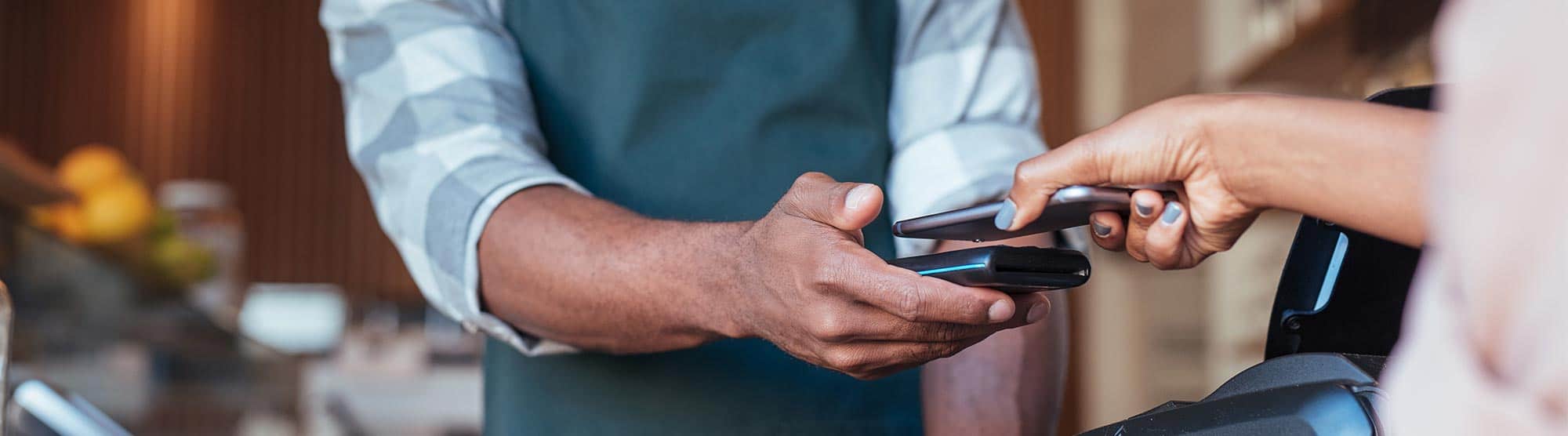
  2. When it is time to pay, slowly wave your phone across the credit card machine. You should be within an inch.
  3. Your phone will vibrate and confirm the transaction. That’s it!

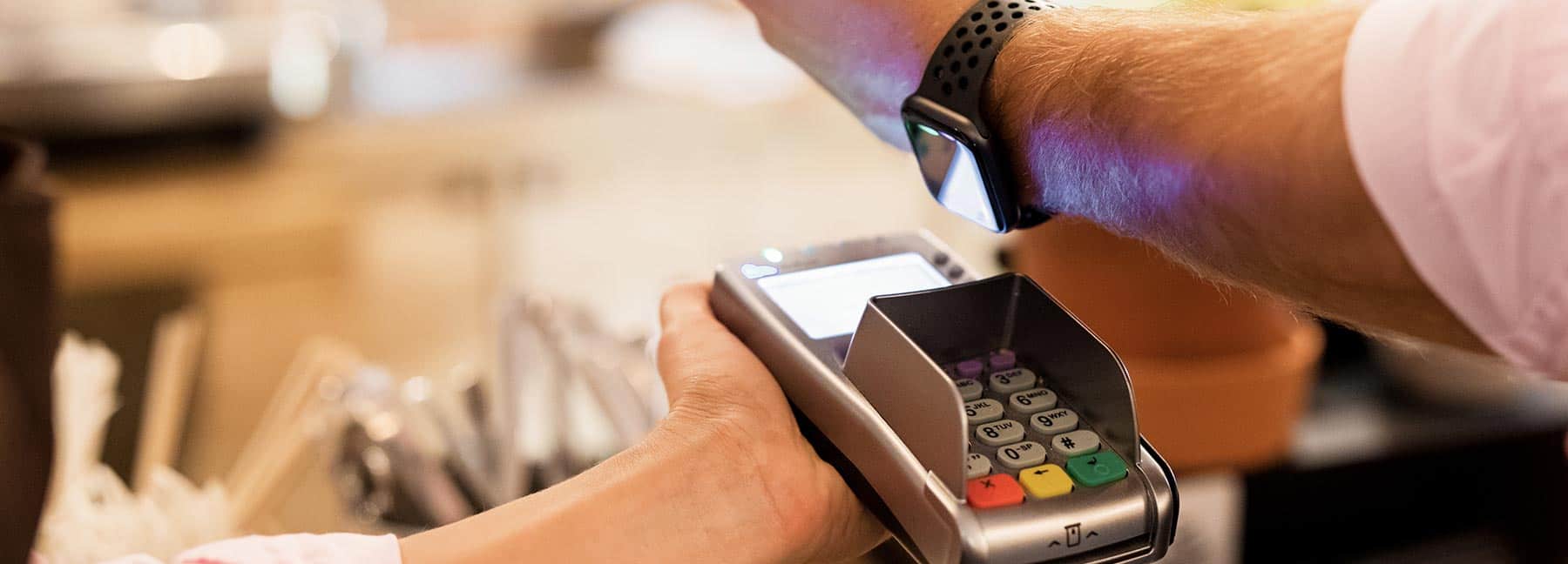
Some smart watches have NFC capabilities as well. To use your smartwatch instead, swipe your watch within range of the terminal for step #2.

NFC contactless payment smart watch

Which payment apps use NFC?

There are many electronic wallets that have NFC (contactless payment) functionality. The most popular are Apple Pay and Walmart Pay. That being said, new electronic wallets are constantly coming out. Other popular apps include Paypal, Samsung Pay, and Visa PayWave. Most major banks have or are creating their own contactless payment apps, many of which they are integrating into their standard banking apps. and even T-mobile has an NFC enabled mobile wallet now. 

Does it cost more to use NFC to pay?

No, there are no additional charges to the card holder OR the merchant (business). I know what you’re thinking- Then how is it profitable to the mobile app companies to provide contactless payment apps? The NFC enabled electronic wallet companies make money by receiving  a cut of the profits directly from the major card brands. This model prevents either the card holder or the merchant (business) from incurring additional fees.Contactless Payment Processing Terminal

Are NFC Payments Secure?

Yes, NFC payments are just as secure and safe as using a credit card. Depending on the security you use on your phone they can be even safer such as requiring a thumbprint to unlock. So, if you are comfortable with using a credit or debit card for a particular transaction, then you should feel just as secure using NFC.

Where can I use NFC to make payments?

NFC enabled credit card machines, while common, are not “everywhere” yet. Every day more and more businesses upgrade their systems and soon It will be a major form of payment in the United States. Internationally there are many places, such as Australia and Europe, that NFC is much further along in the adoption process and much more common. When traveling in Italy, for instance, NFC payments are so prevalent that you could practically leave the debit and credit card at home (don’t do that, of course. I say that to communicate the true extent to which it is being used over there.)NFC payments (near field communication)

It’s all about NFC payments

In conclusion, NFC is a form of wireless communication that is used to make payments from your smart devices by waving them over the credit card machine instead of swiping a card. Common apps that support NFC payments are Apple Pay and Google Pay. NFC payments are simple and secure to use, and while it’s not quite as popular in the United States as it is in other places, it’s becoming more mainstream every day. So, go ahead and check it out you have nothing to lose except.. well… your regular wallet because you won’t have a need for it anymore.

Host Merchant Services Partners with FFL Boss

 Host Merchant Services, an ISO/MSP of Wells Fargo Bank, recently partnered with FFL Boss. The alliance is big news for firearms dealers, as the companies combined can now provide dealers with a plethora of approval and purchasing options from the convenience of a single service.

FFL Boss is a software developed by TAD Software. The platform is specifically designed for firearms dealers to make the process of purchasing firearms more streamlined and convenient for both the consumer and the dealer. FFL Boss ensures dealers are meeting ATF (Bureau of Alcohol, Tobacco, and Firearms) compliance by ensuring automated records keeping, automation of form 4473, electronic signatures, and inventory tracking. FFL Boss can also help dealers with background checks, transfers, and verifications. The software runs on a cloud-based platform and is designed to be used on any device, be it a computer, tablet, or phone, making FFL Boss the perfect solution when dealing at gun shows or online.

firearm dealer

Host Merchant Services [HMS] is a payment processing company that offers business tools, credit card machines, and point-of-sale (POS) processing. HMS offers low-cost payment processing with no hidden fees, and they also provide all of the tools to make payment processing convenient and mobile. Being second amendment friendly, HMS provides low-risk credit card processing to FFL and accessory merchants which is not common amongst payment processors. Additionally, HMS provides a month to month service with no termination fees and no obligation making their payment processing a great match for firearms businesses.

Host Merchant Services proudly supports firearms dealers, and partnering with FFL Boss has allowed Host Merchant Services to build a key partnership that gives merchants the ability to safely and securely sell firearms. The sale of firearms is often considered a high-risk transaction, which is why security measures need to be in place and consistent at all times. The partnership allows for this security, as FFL Boss is designed to ensure compliance and verification, while Host Merchant Services provides tools to ensure safe and secure, low-risk payment transactions.

firearm permit

With the partnership between Host Merchant Services and FFL Boss, this means a seamless and paperless process from the background check to the purchase to registration, all ATF-compliant with digital bound books, inventory tracking, and sales accounting. Access these services from any device, and use them anywhere, even on the go.

Both FFL Boss and Host Merchant Services are up-to-date on the latest technology and are always improving their services and remaining compliant with regulations and industry standards. All POS terminals and software provided through Host Merchant Services are compliant with EMV technology, and the partnership between FFL Boss and Host Merchant Services was put together with security in mind. For more information about FFL Boss Software please visit https://www.fflboss.com/. For information on low-risk payment processing for firearm businesses give HMS a call at (877) 517-4678 or visit our firearms merchant account information page here.

Safely Process Payments Over the Phone

By giving customers the option to pay over the phone at the moment of the sale, you eliminate the need to send invoices or email links to payment pages. This doesn’t mean that all of your payment processing should be done over the phone, but taking payments definitely complements e-commerce and point-of-sale (POS) payment processing, giving you and your business more flexibility.

Phone transactions have taken a backseat to e-commerce, and the primary reason for this is security. E-commerce and in-person transactions have more built-in security features that may be lacking in phone transactions. Essentially, phone transactions are known as “card not present” transactions, since you are unable to see the cardholder or the card itself. As technology increases, merchants are required to have the latest security and technology to prevent fraud and theft. Since 2014, the liability has shifted from banks to merchants if it can be shown security measures weren’t appropriate for credit card processing. This makes phone transactions murky, but there are ways to ensure security even over the phone.

To take payments over the phone, you will want to have a virtual POS service where you can manually enter card information as it is given to you. The better your POS service, the more secure the credit card processing will be, Host Merchant Services makes sure you have a service with the latest security and technology. HMS also works with mail-order merchants and provides solutions for phone orders.

When taking information, make sure you get the complete card number, the expiration date, the name that is on the card, the CVV number on the back of the card, and the complete address and phone number associated with the card. You won’t be able to get a signature, so you’ll need to document that the order was placed via phone on the signature line.

If the information does not match, the best practice is to deny the order. This is very important in today’s growing threat of cybercrime and identity fraud, where not being security-minded with consumers’ personally identifiable information or PII can get merchants into a lot of financial trouble.

Cover yourself and your business by requiring signatures for any deliveries. This will not only be a way to get a signature, but it is an extra security device that can help you identify criminals if incidents of fraud occur. You should also track delivery as well. All of this gives you a paper trail to be used as evidence that you did your due diligence with regards to compliance and security.

If you’re still unsure of phone transactions, the best solution would be to email customers an invoice so they can pay online.

This POS is Vital for Your Business

Total Systems or TSYS is a payment processing company out of Columbus, GA. They are largely responsible for back-end merchant services and credit card processing, and they’ve recently merged with Global Payments. The merger has broadened their scope, making them one of the largest payment processing companies globally. With the new launch of their Vital platform, TSYS is becoming a giant in the merchant services industry, easily competing with their competitors such as Square and PayPal.

Vital is a cloud-based point-of-sale (POS) service that can be used across multiple devices. Offering flexibility of use, Vital is answering the needs of business persons and entrepreneurs in an ever-changing global environment that continually breaks the rules of how people conduct business transactions. Traditional merchants can have their large screen or laptop attached to a cash drawer for processing transactions at one particular location, while entrepreneurs on the go can use tablets or cell phones with a wireless card reader for processing payments, all equipped with the latest technology in a cloud-based format that can update to accommodate the most recent changes to industry standards, regulations, and technology.

Flexibility is a major selling point of Vital, as it can be separately customized for employees and supervisors. Vital also offers essential functionality such as a time clock, inventory tracking, pricing and the ability to offer discounts, and much more. Flexible function set up allows for business owners with employees to ensure security and minimize mistakes.

The Vital POS has powerful back-office customization. Because it’s cloud-based, owners and entrepreneurs can access Vital from any device, anywhere. The back office allows for management reports, inventory tracking, price control and discounts, and business scalability.

Depending on your needs and preferences, Vital is available in three platforms. In today’s ever-changing business world where the traditional rules keep being challenged, Vital offers solutions to help your business grow without confinements.

The first Vital POS offering is known as Vital Mobile, and it is the ideal solution for entrepreneurs on the go. Processing payments are handled with a wireless, portable EMV (which stands for Europay, MasterCard, and Visa) chip reader that complies with the latest banking recommendations for security and privacy.

The second Vital POS offering is Vital Plus, which is a great option for a small business owner who desires portability and function. The Vital Plus platform comes with a proprietary handheld portable card reader that can also take cash and digital wallets like Apple Pay and Google Pay. You or your employees can walk around the store with the handheld device, freeing you up to talk to customers and make more sales.

The final Vital POS offering is Vital Select, which is a full-service platform with a stand-alone device that more resembles a register. Vital Select allows merchants and employees to take tips, split orders, use different stations for payment processing, accept payments in restaurants at the table, track employee performance, and generate inventory reports that break down how well each product is selling.

If you’re interested in these products a Host Merchant Services specialist can be reached at 877-517-4678.

The $21.5 Billion TSYS and Global Payments Merger

Total System Services (TSYS) and Global Payments are the latest merchant services and payment processing technology giants to announce the completion of a merger transaction, one that is part of an ongoing consolidation trend among giants not only in the electronic payments space but also in the financial technology sector. Earlier this year, Fiserv merged with First Data Corp., and Fidelity National did the same a few months later with the acquisition of WorldPay.

TSYS is a Georgia company with annual revenues averaging $4 billion; it has a presence in 13 countries and manages about 13,000 employees. Global Payments is similarly engaged in payment processing technologies and has a payroll of about 11,000 employees, but it has a larger international footprint in 32 countries. Both companies are listed on the New York Stock Exchange, and their business models present many similarities, thus making this merger transaction very even in financial terms. The $21.5 billion deal was largely welcomed by analysts who follow the merchant services industry because it will increase competition between a handful of payment processing giants.

Both companies have indicated that this merger will help them save about $300 million per year; this cost savings largely represents cutting down on competitive marketing campaigns, but a more significant aspect of this move is related to the technological improvement of the merchant services offered by the companies. TSYS may have an edge in terms of software solutions, but Global Payments is known for its greater ability to acquire merchants around the world, particularly small business operators. This combination of business models is interesting because it suggests that these two companies could go after the market share of competitors such as PayPal and Square, which have been aggressively pursuing micro companies.

With digital payments moving beyond the legacy of MasterCard and Visa card transactions, this is a sector that is ripe for innovation and dominance. The large acquisitions and mergers seen this year suggest that major players are seeking to establish a leadership stake, and they are willing to spend significant amounts of cash in doing so. Needless to say, these companies are also keeping an eye on the rise of cryptocurrencies; for the time being, they present a nice business opportunity in terms of processing, but they could also become a different kind of competitor in the future.

The new chairman of the joint company, Troy Woods, is convinced that the merger means that the new company will become a “payments powerhouse” with which to contend. It is evident from his remarks that Woods is excited that the new company will become a leader in credit card processing and e-commerce solutions.

SwipeSimple Adds Level 2 Interchange Functionality

Swipe Simple adds Level 2 Data

CardFlight, a leading SAAS point of sale company and creators of SwipeSimple POS, announced the addition of Level 2 data acceptance within the SwipeSimple Merchant Web Dashboard. CardFlight is adding this functionality free of charge. Beginning July 1st the new Level 2 Data tools will automatically be added and accessible by any existing merchants. This update adds the ability to track new data sets that enable the transaction to meet Level 2 standards and thus gives the merchant access to the lower card, not present interchange rates.


What is Level 2 Data?

Let’s start from the beginning – interchange rates differ depending on the risk level. For instance, ‘card present transactions’ are deemed less risky than ‘card not present transactions’. Because the merchant is standing face to face with the cardholder in a ‘card present transaction’, card brands deem this to be a low-risk transaction and gives it a standard interchange rate. On the other hand, a ‘card not present’ transaction, such as an online transaction, is viewed as much riskier. Since the cardholder is not physically present and is performing the transaction remotely, the interchange rate is higher due to the risk level. Level 2 is a way to reduce the risk level on ‘card not present’ transactions and thus lower the interchange rate. To qualify for Level 2 data the merchant must collect extra information from the cardholder. The extra data required to qualify for Level 2 interchange rates are the following: standard card information, merchants name, transaction amount, tax amount, transaction date, customer code or invoice number. Supplying this added information lowers the risk level and lowers the interchange rate as well.


How to get Level 2 interchange with SwipeSimple

Beginning July 1st, 2019, the SwipeSimple Merchant Web Dashboard will automatically update to include the ability to collect extra data points that will qualify the transaction for Level 2 interchange. Merchants do not need to take any special steps to be able to use this functionality.


For further information please call our product specialists at (877) 517-4678 opt: 1.


What is an ISO in the Merchant Services Industry?

The merchant services industry entails the following: Business owners pay for processing services through a company that represents Visa or MasterCard. Seeing as credit card processing is key to any operation, choosing who to work with is a vital decision by the business owner. We have to understand that brands like Visa or MasterCard are referred to as Associations. Banking institutions like Citibank, Bank of America and others are what is known as Association Member Banks

An ISO or independent sales organization in the merchant services industry is a third party payment processing company that is authorized to handle accounts for businesses, and they become the key link between the business and the card issuer, namely Visa or MasterCard. Said issuers then proceed to contact the specific bank that issued the card in order to verify there is enough credit available on the account. If said funds are available, those funds are then held for the business that made that transaction.

Merchant service providers must be registered with Visa or MasterCard so as to legally provide credit card processing services under their own name. An individual or a business that wants to become an ISO has to go through an extensive vetting process that covers security as well as legitimacy. The process is both very thorough as well as expensive seeing as they have access to specific card and transaction information. They must be well established, regardless of the size, to be able to become a Visa or MasterCard ISO. Their workforce can vary from a handful to thousands.

A common question that businesses would ask is what is the advantage of working with an ISO versus working with a bank. Usually, businesses find that working directly with banks ends up being more expensive and lacks the flexibility that a third party processor can offer. Contrary to what some might expect, banks are not more secure in their operations either. It becomes a matter of specializing and playing to the strengths of each institution. While a bank has a wide array of responsibilities and services, the ISO can dedicate its resources to facilitate the best merchant and consumer experience.

Would a Mobile Processing Solution Like SwipeSimple Be Good For My Business?

Accepting multiple types of payments is essential to the success of any business. Over the last four years, it’s estimated that 80 percent of American consumers prefer to use a debit or credit card when making transactions in person versus just 14 percent who prefer to use cash.

If you’re not using a mobile processing solution to accept credit cards, you’re missing out on a ton of potential revenue.

Why You Need A Mobile Processing Solution

Rapid advances in technology are occurring every day and savvy consumers notice if you’re still stuck in the cash only era. The simple fact alone that nearly three-quarters of adults currently own a smartphone proves that the world is continually changing.

As a business owner, you must adapt. Beyond increasing your customer base with a new mobile payment processing solution, you’ll also enjoy other benefits, including:

  • Merchant Services Simplicity – SwipeSimple has made the process of mobile payment acceptance easier than ever before. No bulky credit card machines and no slow dial-up Internet connections.
  • Complete Transactions Anywhere – Mobile processing means you or your employees don’t have to stay in one place just to take payments. Process a payment while speaking with another customer about your products.
  • Fast authorizations – Lag time in the payment authorization process is a thing of the past. Enjoy split-second approvals so your customers can be on their way in no time.
  • Manage Transactions – Perform voids or refunds with ease. You can also send digital receipts to your customers.
  • Offline Processing – If you don’t have a reliable internet connection. Not a problem, just enable offline payments and save the transactions for later processing.

Integrate with your own Software

Host Merchant Services is happy to be a provider of SwipeSimple for merchants looking for a mobile option. Mobile payment processing solutions are geared towards making life simple, including third party software integration. Customized integration is available on iOS, Android, Windows and Mac operating systems.

Is this right for my Business?

SwipeSimple has an entire POS system all in one easy to use package. Gain access to your transaction stats, with useful information like average ticket size, total charges and tip collected. Get more details about each piece of SwipeSimple equipment Host Merchant Services has available here!

The great thing about mobile payment processors like SwipeSimple is that any business who wants to accept credit and debit cards can use the system. Whether your business is based online, in a car or in a store, making the switch is the right thing to do.