Author Archives: hostmerchantservices

gun vendor

Visa Continues To Support Mobile Gun Purchases

As the debate in the United States rages on over gun laws, some companies have been taking sides by choosing to take action. Visa, however, is one company that has refused to wade into the political fray. Instead, it has opted to continue along doing business as it has been in regards to mobile payments.


An announcement from the company came in early August that it would not block mobile payments for gun purchases. Visa Chairman and CEO Alfred Kelly made the announcement after back-to-back mass shootings in Texas and Ohio thrust issues surrounding guns back into the news. It is not a change of course for the company; instead, it was merely a confirmation that things will not be changing in regards to gun purchases.


The company’s stance regarding mobile payments for gun purchases is a different one than some of its competition has taken. PayPal and Square have opted to not allow their services to be used for such purchases.

 

gun shop mobile e-commerce purchasesThe rationale expressed by Visa CEO Alfred Kelly as to why the company will continue to support mobile gun purchases essentially comes down to it being simply a matter of not dictating morality to the company’s customers. It is legal for people to buy guns in the United States; therefore, the company will continue to process those purchases- just as it does other things that are legal but may be considered controversial by some.


That is not to say, however, that Alfred Kelly does not hold views regarding gun legislation in the United States. In an interview with CNBC, he expressed an interest in seeing lawmakers do more in regards to gun laws. However, no matter his personal views, he is not currently interested in applying them to the company that he heads up.


The company is not alone in this view, either, in regards to not dictating morality to its customers. Mastercard has also taken a similar stance. Its CEO Ajay Banga expressed similar sentiments as those of Alfred Kelly- refusing to determine what is right or wrong. As far as he is concerned, if it is legal to own an item his company will help customers purchase it.


Meanwhile, CEOs at other companies have taken a less neutral stance regarding guns. Apple CEO Tim Cook is one notable example of this. After the shootings in El Paso and Dayton, he took to Twitter demanding action.  

Visa Pushes for Mobile Payments at 2020 Olympics

The Japanese government and Visa have teamed up in an effort to bring mobile payments to the 2020 Olympics in Tokyo. 

The payment giant is preparing new payment experiences for visitors, athletes, and citizens attending the 2020 Olympics, an effort that will support the “Cashless Japan” campaign that is designed to boost mobile payments to 40% by 2045 from today’s 20%.

Visa is currently working to increase acceptance of digital payments with merchants ahead of the Summer Games, especially in quick-service restaurants and convenience stores, while connecting athletes with the concept. Mobile payments technology will be featured at the Olympic Village, Olympic venues, and throughout Japan in an effort to improve the experience for fans. 

In a press release, the payment network stated that Japan is a unique opportunity with “the world’s third-largest economy” with commerce that “remains predominantly cash-based.” 

About one-fifth of payments in Japan are digital compared with 60% in the United States, 70% in China, and 90% in South Korea, which has one of the highest adoption rates in the world. 

The payment technology sponsor for the Olympics is also planning unique innovations for the Summer Games, including wearable technology, new mobile applications that use digital cards, and biometric payment authentication.Tokyo Olympics Visa Mobile PaymentsThis isn’t the first time the payment giant has worked to improve digital payment acceptance for the Olympics. In 2016 at the Rio Olympic Games, payment-enabled rings were provided to athletes. These rings used NFC technology and microchips made by Gemalto. The rings were water-resistant and did not need batteries or charging. Nearly 4,000 NFC-enabled point-of-sale terminals were implemented for the wearables and also to boost mobile payment acceptance at important Olympic venues in the city. 

The Japanese government and payment network hope that improving access to digital payment technology will give the typical Japanese person more reason to use digital payments in the future. 

Japan has been slowly moving toward the global cashless trend for the last few years. Japan has made the “Cashless Japan” effort such a priority to reduce the need for manpower at retail stores as the country faces a declining and aging population and labor shortage. 

The government has another incentive for boosting digital payment technology: shifting away from cash improves transaction transparency and makes it easier and more efficient to collect taxes. In 1997 after a financial crisis, South Korea was able to successfully push forward cashless transactions to boost its economy and control taxes by offering a tax deduction for credit card purchases, among other incentives. 

In Japan, however, cash has remained king thanks to a low crime rate that allows citizens to feel safe carrying even large amounts of cash, readily available ATMs, and high trust in cash.

E-commerce Trends

Major Upcoming E-commerce Trends [2023 Update]

Payment Methods – Credit Card Processing & Beyond

Making the shopping experience easier for the consumer is the goal of new e-commerce tools. Every year, the e-commerce industry is dynamically transforming, moving in the direction of personalization and new sleeker customer experiences, especially with the increasing integration of AI. Streamlining payment processes and providing multiple avenues of payment are only part of a merchant’s strategy in making paying for products online as easy as possible.

PWA = Progressive Web App

With mobile conversions on the rise – a whopping 55% increase in mobile sales for 2018, eCommerce is shifting. By 2022, it’s predicted retail sales via smartphone will reach $175.4bn. With this shift, retailers are dropping mobile apps for PWA entirely. PWA, or progressive web app, leverages web capabilities to deliver an app-like experience to consumer. Indexed by search engines, URL-accessible, PWA’s are deployed to servers, making the user experience more robust and dynamic.

mobile app e-commerce payments

W3C = World Wide Web Consortium

The W3C, or World Wide Web Consortium – the international community working to ensure the long-term growth of the Web, is aiming to simplify online payments for the sake of decentralization. Allowing browser native UIs to use previously saved data such as an address and card information to make web payments is the ambition of the W3C. “Web Payments” is the name of the standard and will enable consumers to tap a few times versus filling out the same information on every new site.

Multi-Currency

Rather than paying conversion rate fees, consumers now can choose multiple currency options on sites like Shopify. Instead of restrictions via a retailer’s local currency, consumers can use the currency they are accustomed to. Multi-currency options are gradually being rolled out.

Voice-Command Currency

voice-command e-commerce mobile search

With over 20% of search queries made via voice command, e-commerce has a huge opportunity for growth in the order-by-voice future. By 2020, experts predict 50% of searches will be done by voice command and so on. Retailers should start focusing on long-tail keywords and structured product data now to accommodate the future.

B2B = Business to Business

80% of B2B organizations accept orders and payment through their website, according to a BigCommerce survey of 500 such businesses. This data not only indicates the growth of e-commerce payments in B2B industries but also demonstrates the complexity of a B2B e-commerce channel, which also accepts payments via quote, ACH, terms, check, and PO.

Influencers – The Social Media Swipe Up

E-commerce businesses also need to embrace social media influencers and the “swipe to buy” revolution. Not only do e-commerce merchants need to be available by mobile, they need to be available by social – social media that is. If an influencer markets a merchant’s goods and services while marketing their personalities, that merchant better make it easy for consumers to tap to purchase. Social media influencers can make a brand. They shape the future of the social media industry, as well as the social media presence of the products and services.  

Modern E-commerce is the next revolution in the American economy. Exponentially growing and innovating, e-commerce will not wait for merchants who can’t or won’t keep up. Being accessible on mobile devices is only the start for merchants. Catering to the smartphone consumer in a myriad of ways is the only path to success for the modern entrepreneur.

modern e-commerce social media influencers

Top 6 Retail Payment Trends in 2019

Point of Sale and Digital Payment Diversity Keeps Merchants on Their Toes

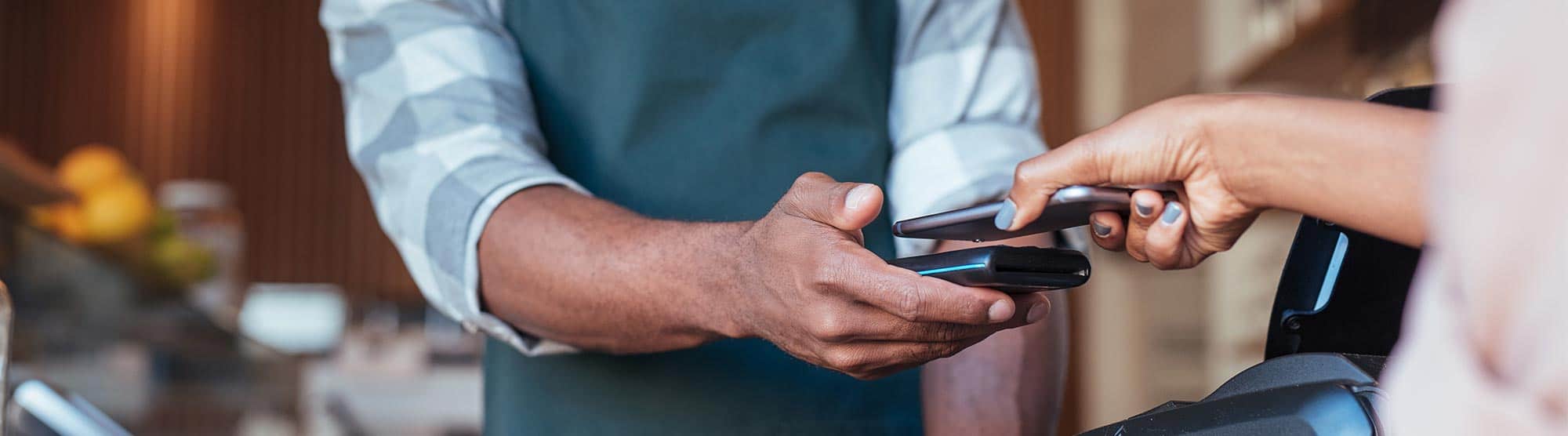
More than halfway through 2019, merchants are responding to the variety of paths consumers are choosing to pay for goods and services. From the mobile point of sale tablets retailers carry around the store to the tap-n-go options from both mobile wallets and contactless cards, consumers are adopting many options in making payments.

What must merchants do to win? Will the retail business flourish in adopting new technologies? To help answer these questions, we’ve assembled the patterns and forecasts that retailers should pay attention to in the coming months.

1. mPOS = Mobile Point of Sale

Payments made via mPOS, either a smartphone or other wireless device, are replacing the traditional point-of-sale terminal. Whether your local clothing store retailer walks up to you holding your potential purchase with a tablet to close the sale or your local coffeehouse spins a phablet toward you for your payment, mPOS is a growing trend offering merchants flexibility, as well as mobility to their paying customers. With the added functionality food trucks and other mobile businesses can have their POS in their pocket and not worry about recording the transactions in their accounting software when they get home.

2. Mobile Wallets

]In addition to big tech offering pay apps, retailers are creating their own app-based payments. Starbucks alone is the leader in all point-of-sale purchase apps, beating out big tech in the mobile wallet ambition. With loyalty programs offering points and discounts, retailers can leverage the consumer drive for convenience. Coffee drinkers like walking into their coffeehouse and picking up their cup of coffee waiting for them.

Mobile Wallet Payment Apps

3. Contactless Payments

Using NFC, near-field communication, or “contactless cards,” allow you to tap and go much like the big tech pay mobile wallet technology. An estimated 100 million contactless Visa cards will be issued in the US in 2019. Instead of taking an average of 30 seconds to insert an EMV chip, contactless only takes 15 seconds, saving 15 seconds per transaction. Many mobile wallets also have this functionality including Apple Pay and Google Pay.  The upgrade to a contactless machine is easy and most good merchant services companies are supplying them for free.

NFC (near field communication)

4. Alexa, Order Me a Pizza

Consumers now want to tell Alexa, Google, or Siri to order and pay for a pizza, handle banking transactions, or pay their bills. Security still has a long way to go with voice-activated mechanisms handling point of sale for merchants. Selling online isn’t just having an ecommerce shopping cart. Integrating into the popular search giants is gaining a ton of traction in the online/convenience shopping community. In doing so, your products can be voice ordered through smart devices. I bet your local competitor isn’t doing that!

mobile voice-activated point of sale

5. Blockchain wallets and Money Transfers

Blockchain, the record-keeping technology behind bitcoin, can track transactions securely while keeping costs in check in machine-to-machine, M2M, exchanges. Security is also the sticking point on this technology thus far. Walmart is integrating blockchain technology into their mobile wallet to make it more secure and save money in transfers, which won’t rely on a third party. While blockchain is still in its early stages for retail it is picking up momentum in the back end of many payment apps.

6. P2P = Peer-to-Peer

Younger generations are turning to mobile apps that allow them to transfer money quickly and easily to one another such as Venmo. From payment for dog sitting to paying half the dinner bill, the next wave of consumers are more comfortable with using P2P payment apps than ever before. Now, Venmo is able to be used as an NFC mobile wallet and can be used the same as Apple Pay in retail locations. Call your merchant services provider to find out how to accept NFC at no additional charge. 

While new alternatives to the point of sale provide seemingly exponential choices in paying for something, most consumers still prefer the traditional methods, namely credit, debit, and cash. Even the most tech-savvy consumer with a mobile wallet in his pocket still carries cash and a credit card.

P2P peer-to-peer mobile payment apps

Visa Introduces APIs for Merchants to Facilitate Installment Payment Plans

Installment payments are currently being used with great success in other countries but it has yet to become prevalent in the U.S. Based on some recent news from Visa, that might soon be changing.

The latest from Visa

e-commerce payment installmentsIn June, Visa revealed its intention to enter the POS installment payment business.  By using APIs, this would allow businesses that accept Visa credit card payments through merchant services to offer installment plans to their customers.


An installment plan is set for a certain duration, during which customers make payments in equal amounts on a schedule, until the payment total equals the purchase price. For example, the classic as seen on tv ads used to say “three easy payments of $19.99” – that was an installment payment structure.


These installment options will be offered by Visa Next, a new website that is expected to become a source of innovative and exciting payment solutions.  This particular product will be available in January 2020.

What this means for merchants and consumers

Visa API merchantBusinesses that use merchant services to facilitate credit card payments will be able to take advantage of this new opportunity.  But how will this benefit them? Good question. 


Giving consumers payment options is always good for business. These installment payment plans are likely to accomplish that because they make it easy and quick to set up the plan. However, this isn’t the case right now. Our standard method, right now, for offering consumers a payment plan involves the consumer getting a loan for the amount of the purchase through a third party lender, and paying it off through them.  


Here’s how it normally goes:


  •     Consumers are given installment options.
  •     They must sign up with a certain provider.
  •     Consumers must complete the application process.
  •     They may or may not get accepted.
  •     If accepted, they can apply their funds to the purchase.
  •     This must be repeated for each different merchant.


With Visa using APIs for installment payments, none of that will be necessary. Customers will simply be given the opportunity to choose a payment plan using an account they already have. 


This will be more convenient for customers, making it easier for them to set up a payment plan, which could increase sales for businesses that offer these plans.

Amazon & Apple May Have Pushed Their Luck

The Amazon-Apple Partnership Triggers an FTC Antitrust Investigation

While Amazon offers a marketplace for buyers and sellers from around the world to find one another, the company also controls who sells major brands. For example, if you found a new pair of Nike sneakers for less than $100 at a discount store, you could not turn around and sell them on Amazon for a significant profit – unless Amazon “ungates” you. Amazon limits the number of sellers who can sell Nike along with many other brands and “gates” everyone else. Sellers must jump through hoops to make it through this exclusive gate to commerce.

Enter Apple to the Amazon Stage

Apple’s recent partnership with Amazon and the resulting ousting of Apple product refurbishing businesses caught the eye of the Federal Trade Commission. While the stated intention of Apple selling its products directly to consumers via the Amazon site was to prevent counterfeit Apple products from making it onto the marketplace, Amazon has left some Apple product resellers out of the loop. Not only are the Apple product resellers out of an Amazon gig, but consumers who could buy refurbished Apple products at a fraction of the cost of new Apple products no longer have access to these resellers.

Certified by Apple = Priced by Apple

Amazon did give the Apple resellers two months’ notice before forcing them off of the platform. And certified Apple resellers are able to continue selling refurbished Apple products – certified by Apple, no less. Apple along with other big brands on Amazon will only authorize resellers who charge a specified minimum amount, which will be a lot higher than the non-authorized resellers were willing to charge. Consumer payment bridges the difference.

Does this sound like a “restraint of trade” or an “attempted monopolization”? Such wording can be found in our country’s antitrust laws. This is when the FTC started paying attention to how Amazon and Amazon’s partner brands like Apple control who sells what and for how much on the site.

While Amazon didn’t completely ban third-party sellers from Apple reselling, the company did only offer an “Amazon Renewed” option to resellers who purchase $10 million in annual inventory, a barrier to entry for the average Apple refurbished product reseller, including small businesses, as well as individual sellers.

Enter FTC to the Amazon Stage

The FTC is now carrying out an antitrust investigation into the online marketplace giant. In addition to this latest antitrust investigation, the FTC along with European regulators are taking a closer look at Amazon’s practice of using its proprietary sales data against competitors.

Along with the FTC, the Justice Department is also investigating Amazon, and eight states, as well as App Store customers and developers, are suing Amazon.

FTC Tech Task Force

The FTC created a Tech Task Force in February to focus on anti-competitive practices on tech platforms. At least one member of this task force interviewed an Amazon refurbished Apple product reseller who was squeezed off of the platform as a result of the Amazon-Apple initiative launched last fall. 

The FTC is also investigating Facebook’s acquisition of Instagram and WhatsApp. Ultimately, consumers and the general public pay the price of tech giants leveraging their control over the marketplace to increase profits while decreasing competition.

HMS to Exhibit at WSAA 2019

The Western States Acquirers Association is a not-for-profit company that holds a yearly conference aimed at educating about trends and new technology in the payments industry. This year’s conference will take place September 17-19th in sunny Palm Springs, CA. Topics covered at WSAA 2019 will include financial services, payment technology, education, and networking. In addition to conference seminars and talks, WSAA will feature a trade show floor with over 100 booths exhibiting everything from new payments technology to new merchant boarding options and new partnership opportunities.


Host Merchant Services, a leading credit card processing ISO, is excited to be exhibiting at this years WSAA at booth #7. Host Merchant Services, also known simply as HMS, will be exhibiting with the purpose of building partnerships with ISOs and Agents, touting a lot of great new boarding options and updates to their already solid Partner Program. HMS is known for expanding services constantly to the benefit of their partners. In fact, their partner program has doubled in size in the past year, and for a good reason.


“Our value to our partners increases for every new relationship we build, product we can offer, or boarding option made available,” says John Burns, Director Of Marketing for HMS. “Our goal is to be the all-around boarding and equipment option for our partners.” Not only do our existing HMS partners love when new offerings are added, it also makes HMS extremely attractive to new partners. “When a relationship with HMS can offer everything a sales agent is looking for they won’t have to deal with the headache of using other companies with a lower quality of service or spreading their deals around,” says Burns. 


On top of constantly expanding product offerings, HMS is also known for their high quality of service to both merchants and partners alike. For example, HMS touts that 95% of all inbound calls are answered by a real person in three rings or less (after the single option that simply asks if the caller is wanting sales or support). In fact, the HMS phone system does not feature a hold queue at all for either merchants or agents. And that’s just the tip of the iceberg. HMS’s internal employee motto is “whatever it takes”, and it shows when you deal with them.


Host Merchant Services is looking forward to meeting with their existing partners and friends made at previous shows across the country as well as building relationships with new friends and partners in the payments space. Booth #7 is definitely a “must stop” booth and will be well worth the drop in. As rumor has it – they may even have the robot back again…WSAA HMS booth #7

What is Walmart Coin?

In an attempt to reduce credit card processing fees, Walmart recently filed an application with the U.S. Patent and Trademark Office to launch its own crypto-currency.  Although it’s too soon to say how far this will go, it’s worth paying attention to.

Walmart Blockchain

The application describes Walmart’s currency as “tied to the US dollars and can be blockchain verified”.  The application also says the currency would be,

 “available for use only at selected retailers or partners. In other embodiments, the digital currency is available for use anywhere. The digital currency can provide a fee-free, or fee-minimal place to store wealth that can be spent, for example, at retailers and, if needed, easily converted to cash” 

Without fees or the need to monitor cash-flow, this could ease the financial burden for those struggling to afford the expenses of banking. Furthermore, the coin could also be beneficial for Walmart’s financial situation, as it would reduce credit card processing fees.

 This digital currency might also make it possible to offer customized deals and rewards for individual customers based on purchase history.

Walmart vs Facebook’s Libra

Facebook has caused quite a stir with its own cryptocurrency plans, which might eliminate credit card processing fees. 

Libra is similar to Walmart’s currency in several ways.  Both are going to be a stable coin and will specifically target those who are not involved in the banking system.

However, there are certain key differences between the two.

First, Walmart intends to keep the currency internal, only allowing it to be used for Walmart transactions.  And unlike Facebook’s collaboration with major companies like Visa and Mastercard, Walmart is not looking to join forces with anyone else.

It would be smart to keep an eye on how this unfolds.  Just because it hasn’t been unleashed yet, doesn’t mean that Walmart’s coin won’t become a reality in the near future.

Top 5 Mobile Wallet Trends to Watch

There are many recent advancements in merchant services and credit card processing, but one in particular that is gaining significant interest is mobile wallets. Once considered only a niche service, mobile wallets have greatly expanded and are now widely used by consumers. In fact, 24% of consumers use mobile wallets for their transactions daily. Mobile wallet transactions exceeded $4.250 billion in 2018 and are expected to reach $13.979 billion by 2022. Innovations and improvements will only continue with advancements expected in security and ease of convenience. Below are the top five mobile wallet trends that merchants, credit card processors and consumers should keep an eye on.

Mobile Banking

The first mobile wallet was created by Apple with their Apple Pay mobile wallet. Other companies came up with their own mobile wallets, like Google Pay and Samsung Pay built by competitors. Banks and other financial institutions are adjusting to cashless transactions and are creating their own digital wallets with notable names like Zelle and Venmo in the industry.

NFC Mobile Wallet Payment

Biometrics

Biometrics have been available for many decades, but were mostly included in high security access systems. The component costs of this technology have dropped significantly making it easier for product manufacturers to include biometrics in smartphones. Fingerprint scanners and facial mapping are now available features in many of today’s phones. This technology helps provide additional layers of security to facilitate mobile wallets and seamless transactions.

Payment Terminals

NFC, or Near Field Communication allows two devices, one a POS system and a smartphone to communicate. Upon checkout, a customer will hold their phone near the terminal and the NFC chip will facilitate the transaction without revealing any card numbers. This technology has enabled greater acceptance of mobile wallets and cashless transactions.

NFC (near field communication)

Artificial Intelligence

While Artificial Intelligence (AI) has had little impact in mobile wallets thus far, the promise of automating and enhancing customer experience is sure to become mainstream. AI can be used for chatbots to help facilitate transactions and to interpret users’ voice commands like with Siri or Alexa. Mobile wallet providers will take advantage of AI to interact with customers in a smarter way and reduce the need for additional staff at businesses.

Blockchain and Cryptocurrency

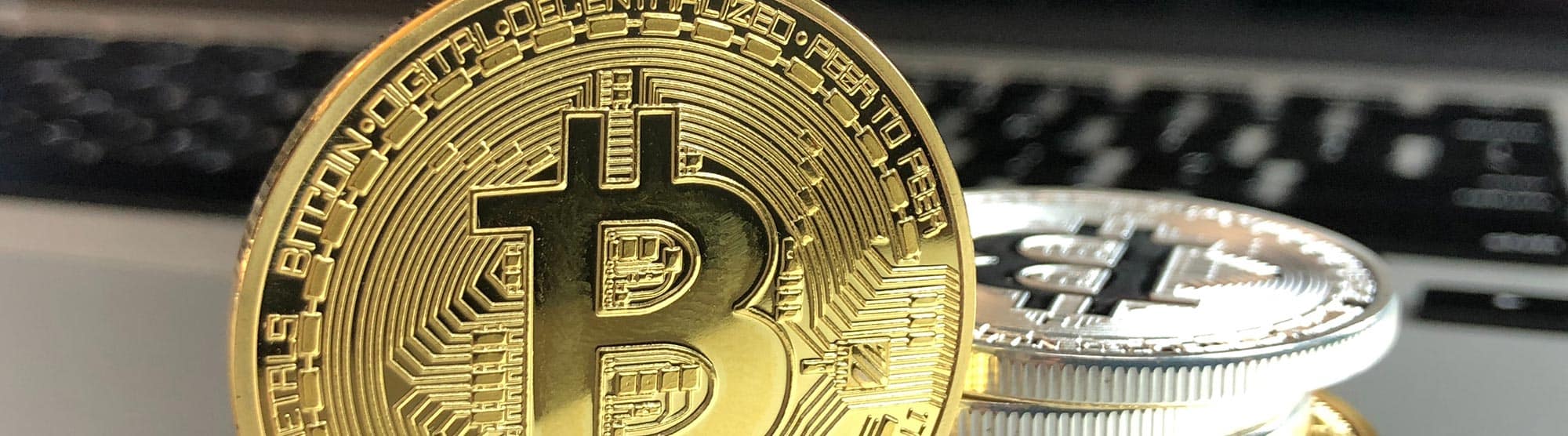
Blockchain technology is used to let people share valuable data in a secure way that can’t be tampered with. While blockchain is the foundation of cryptocurrency, it can also be used separately to facilitate more secure transactions. Broader acceptance of blockchain will drive the enhanced security that leaves many consumers wary of using mobile payments to begin with. Numerous mobile apps already support cryptocurrencies such as Bitcoin and their inclusion into mobile wallets is nearly inevitable.

Blockchain Bitcoin Global Cryptocurrency

Loyalty Programs

Customers always appreciate loyalty programs and business love them for customer retention. Mobile wallets will continue to incentivize consumers for frequent purchases at their favorite restaurants, coffee shops and other retail stores. Look for this trend to definitely continue with broader acceptance of mobile wallets.

These are the top mobile wallet trends to expect over the next few years. Consumers will continue to become more technologically savvy and demand that business take mobile wallet payments.

Customer Loyalty Program

Federal Reserve update its payments system

Federal Reserve plans to update its payments system [2023 Update]

For some time people have been wondering whether or not the federal government would modernize payment processing, and they received their answer this week. The Federal Reserve Board announced that it is going to build a payment processing system that will be able to process payments in “real-time”. The new system has been coined “FedNow” and will make it possible for payments to be processed instantaneously in the U.S. for financial institutions and, thus, their customers.

Federal Reserve Board Announcement

In the announcement, the Federal Reserve Board stated that all people deserve the ability to receive a payment or make a payment in real-time and in a secure manner. They also said that all banks must have the right to offer this service to their customers. Thus the FedNow Service will allow instantaneous payments whether the bank is large or small and no matter where it is located in the country, apparently putting banks on a level playing field.

Many businesses are in favor of the new plan because they feel as if they are at the mercy of the big banks who inherently have too much power. Target, Walmart, small-and medium-sized banks, as well as many technology companies are examples of the entities that feel as if the big banks have had an unfair upper hand. 

Large banks already have the means to offer their customers ways to get paid instantaneously. Such banks include JPMorgan Chase & Company, U.S. Bancorp and Citigroup. These three financial institutions are concerned that an “instant payment processing plan” wouldn’t be accepted right away. On the other hand, smaller banks are afraid that the Federal Reserve will give banks the opportunity to obtain volume discounts, again giving an unfair advantage to the larger banks. 

Another argument against a network operated by the Federal Reserve Board is the fact that it would cause everybody’s payment systems to slow down as they are relying on government systems which historically have a reputation of being slow. Lastly, credit unions and smaller banks are all worried that their personal issues are not of concern to the larger banks, so they are reluctant to become a part of the new system that is owned by big banks. 

One federal official stated that ordinary people are largely in favor of the new system. This is especially true if the person being asked is living paycheck to paycheck. These are people who are charged insufficient funds fees if they have to wait for a payment to be deposited in their bank accounts. Small businesses would also benefit because they would have their funds immediately after they make a sale. As a result, many businesses will no longer need to worry about financing.

In the end, time will tell if the Federal Reserve’s new payment processing system is good or bad for smaller banks. One thing is clear – if the FedNow system works as is proposed there will be many benefits to businesses and debit card users alike.