Choosing a merchant account can be overwhelming. With innumerable fee structures, not to mention growing varieties of payment options, a business can spend full-time hours simply keeping up with the fast pace of credit card processing trends. If you follow the advice from the steps listed below, you’ll be ahead in the merchant account game:
Look for Reviews
When you begin the discovery process with a merchant account provider, seek references and research reviews. Rather than read testimonials on their website or blog, find forums that objectively discuss merchant accounts. Then, follow up by checking online reviews and by contacting one of their customers whose business is similar to yours to determine their satisfaction with services.
Once you have your short list, ask your potential merchant account providers for details and processes regarding your potential Account Manager and the overall customer service staff. When and how is the customer support team available to merchants? You will need a contact name and direct number for assistance at any time.
Avoid Hidden Fees
Due to the complexity of merchant services pricing, it’s easy for payment processors to hide fees in their statements. Terms such as “qualified” and “non-qualified” rates are red flags indicating tiered pricing, which allows the payment processor to determine which transactions don’t qualify for the lower rates.
In order to ensure there are no hidden merchant fees on a sample statement, ask them to explain rates and fees, including ancillary fees. They must be open and honest about their merchant account fees. Check the MasterCard and Visa websites to compare their rates to the rate quoted by the merchant account provider to ensure they’re not quoting a low rate to obtain business. Explicitly request the following: application fee, set up fee, batch fee, statement fee, monthly minimums, PCI compliance fee, IRS fee, and annual fee.
Ask if they bill for additional services. Ask if they auto enroll merchants in free trials that require the merchant to opt out if not interested. Ask if they back-bill for fees versus bill fees in the same month they occur. And ask how often they raise rates.
If you need credit card machines or payment processing devices, ask if they are new or refurbished. Determine if you are buying or leasing the equipment – and what is the cost? Relative to buying, equipment leases are more expensive in the long run. While a credit card terminal can cost a few hundred dollars to buy, a lease can end up costing thousands of dollars over the course of a few years at $30 per month at minimum.
Don’t Be Just Another Residual
Because your merchant services company should view you as a valuable customer, they should increase your payment-processing efficiency, improve your customer service experience, and save your business money. Ask for the payment processing options available. Note whether or not they discuss building long-term relationships with merchants.
Before Signing the Contract
Before signing the contract, learn the termination process. Ask if there is a cancellation fee or early termination fee. Also, determine if the contract automatically renews. Host Merchant Services does everything month to month, no long-term contracts, allowing you to cancel at any point with no fees.
Host Merchant Services
Host Merchant Services can guarantee the lowest rates while providing the best customer service. With no term commitment, no cancellation fees, no hidden fees, and no obligation, HMS provides the highest level of customer service, earning respect from our peers, as well as from our clients. Host Merchant Services will gift you a $50 gift card if we can’t match or beat another price on the market.
Merchants who use the services of credit card processing giant Square, which was founded by a former PayPal executive, can no longer count on flat rates for payment transactions. According to a news report recently published by Bloomberg, Square has rolled out a new fee structure that no longer sticks to the 2.75% in-store transaction charges that the company had in place for years. The fee has been reduced to 2.6%; however, there is now an additional charge of $0.10 per transaction, when the payment amount is $65 and under.
When Will the Change Take Place?
New Square users will be subject to the new pricing structure right away while existing merchants can expect to see the change in early November. In a blog post published by Square in October, the company explained that the new fee schedule corresponds to an effort to align with competitors in terms of transaction costs.
Industry analysts believe that Square is starting to feel the impact of operating costs related to acquiring new merchants, particularly those that have a higher volume of micro transactions. Square is doing business in a sector that sees retailers spending $108 billion every year to accept electronic payments, and the methods the company has widely utilized to sign up new clients include innovative card readers, terminals, mobile apps, and simplified point-of-sale systems; these value-added services, which are heavily geared towards micro companies such as hot dog carts, translate into high operating costs. The $0.10 fee is intended to offset some of these costs, which can hurt a small businesses’ overhead.
Why the Increase?
When compared to other merchant processing companies, the new fee schedule posted by Square is typical; nonetheless, this is a company that has a disproportionate number of users for whom low-ticket transactions are their bread and butter, and they are the ones who are more likely to complain about being charged an extra $0.10. To a certain extent, Square risks losing clients such as the aforementioned hot dog cart operators, coffee shops, and convenience stores, but average retail transactions are estimated to be between $30 and $35. If anything, Square is attempting to gain more new clients, which could be at the expense of their current ones.
According to WCYB, an NBC News affiliate based in Tennessee, small business owners in the region are not happy with the higher fees being charged by Square. The operators of a bakery, a cafe, and a catering provider explained that they will be passing on costs to customers, and they are strongly considering shopping around for a new merchant processor that specializes in small businesses.
Just a couple of weeks before Mark Zuckerberg, co-founder and CEO of the world’s most popular social network, was scheduled to appear before the United States Congress to answer questions about his cryptocurrency ambitions, he received disheartening news from some of the key partners in Project Libra. Payment processing giants such as Visa, MasterCard, PayPal, and Mercado Pago have decided to withdraw from the Libra Association Council, the organization tasked with governance and development of Project Libra’s underlying digital coin.
What is Libra?
As of October 2019, Project Libra mostly exists as a proposal to create a global payment processing system that will primarily serve users of the Facebook, Instagram and WhatsApp networks. The Libra token, along with a cryptocurrency wallet, are the intended pillars of the system, which would ostensibly enable payments, remittances, money transfers, and even investments. Even though Libra is being developed as a blockchain token, it will not be a pure cryptocurrency because it is planned to be centralized; moreover, it will operate as a “stablecoin,” meaning that its value would be pegged to the average exchange of major currencies such as the U.S. dollar, the euro, the pound sterling, and the yen.
There are various ways to interpret Facebook’s goals with Project Libra. On one hand, the prospect of a digital coin that reflect the value of major fiat currencies is certainly innovative; on the other hand, the Libra digital coin would be supported by a robust payment processing conglomerate. The prospective market is measured in billions of prospective users, and this is what attracted the likes of PayPal, Stripe, Visa, and MasterCard in the first place. Although no banks sought membership in the Libra Association after its white paper was published, financial non-profits such as Kiva and Women’s World Banking have expressed interest in making commitments to the project.
What are the Concerns?
On paper, Project Libra seems like a revolutionary idea with a potential to empower millions of people who lack access to traditional banking services. The only Libra prerequisite would be a Facebook, Instagram, or WhatsApp account; the range of benefits would be the ability to send and receive funds, exchange cryptocurrencies, make purchases, complete remittances, and more. The problem with Libra, and the most likely reason major providers of payment solutions have been abandoning the Libra Association, is that American lawmakers, regulators, and officials thus far believe that Facebook is not capable of abiding by “Know Your Customer” and anti-money laundering compliance measures.
Personal data privacy has been another area of concern related to Project Libra, and Facebook has a questionable track record in this regard. Even President Donald Trump has publicly commented on the matter; in July 2019, he posted a Twitter update stating that Facebook should obtain a banking charter if it intends to operate as a bank. Project Libra is also facing scrutiny in France, where regulators do not want to see a digital currency competing against the euro, and in Germany, where a Member of Parliament has stated that Facebook could easily become a shadow bank unless it is regulated.
Resort fees: you think you’ve got a great deal on a hotel, only to find an extra charge slapped on once you get to checkout. For the most part, there’s nothing we can do about it, however Congress has just introduced an interesting new piece of legislation that could see the days of frustrating surprise resort surcharges coming to an end.
What Are Resort Fees?
You decide to book a one night stay at a hotel, and you go to their website or your favorite hotel booking site and see that it’s advertised at $100 per night. You select your room and continue on to the checkout. One you get to the checkout, however, you notice that the price has now increased by an extra $50. When you check the fine print, you discover that it’s the resort surcharge added to your rate.
If this is new to you and you don’t know what a resort surcharge is, you may be somewhat surprised. Essentially, it’s just an extra cost, typically mandatory, that covers a bundle of services that you, as a hotel guest, might come to expect during your stay. Services such as “free” Wi-Fi, pool access, morning newspapers, and more are what tend to be part of the resort fee bundle. Even if you don’t want to use any of these services, you can’t decline the surcharge.
In the year leading to July 2018, these surcharges have seen an increase of as much as 11%, with a 14% increase in the number of hotels adopting the practice. For the vast majority of these hotels, the resort surcharges are not at all optional. In some areas like Las Vegas, virtually every hotel has a resort surcharge.
What’s the Issue with Resort Surcharges?
A Consumer Reports survey that questioned over 2,000 adults taken in 2018 showed that more than one-third had experienced a hidden hotel charge within the previous two years. Many consumers are upset with the lack of transparency and what many consider to be sneaky behavior to lure customers in by making hotel rates appear cheaper than they really are.
Other studies show that people are now beginning to avoid areas notorious for their resort surcharges. Resort surcharges have become shockingly common in tourist-heavy areas with places such as Las Vegas, Walt Disney World, and Times Square, New York ranking among the worst offenders. Places like these are obviously some of the most sought after tourist attractions in the world, and many feel that they use that status to prey on unsuspecting tourists.
What’s the new Legislation?
The Hotel Advertising Transparency Act was introduced to Congress in 2019 by Republican Congressman Jeff Fortenberry of Nebraska and Democratic Congresswoman Eddie Bernice Johnson of Texas with the goal of abolishing add-on resort surcharges, and requiring that hotels are upfront and transparent about showing the full, pre=tax price of a hotel room in their advertised costs. This would include short-term rentals immediately at the time of booking without the resort fees being added at the end.
Several major hotel chains, including Hilton and Marriott, have seen lawsuits brought against them following investigations into their hotel surcharges and pricing practices. In Hilton’s case, it was indeed found that their advertisements of resort surcharges, both online and over the phone, were misleading, deceptive, and even in violation of the consumer protection statute held by the state.
In a $21.5 billion all-stock deal, Global Payments Inc., a global provider of payment processing technology and software solutions, merged with TSYS (Total System Services) to form a pure-play payments company using the name Global Payments, the largest merger of payment technology companies to date. Working with 1,300 financial institutions and 3.5 million merchant locations in more than 100 countries, facilitating credit card processing for more than 600 million cardholders, the merger positions the company to be a leader in owned software, integrated payments, and omnichannel solutions.
TSYS can leverage Global Payments 32-country global reach to access the global markets during a time when e-commerce transnational transactions are on the rise. By focusing on merchant services and payments-related business, the merged company hopes to differentiate itself from the other fintech mergers, according to TSYS CEO Troy Woods. For example, the TSYS Netspend business offers reloadable payment products while the merged company will also engage in consumer solutions and merchant acquiring.
A pure-play payments technology firm, Global Payments’ headquarters is located in Atlanta, Georgia with more than 24,000 employees around the globe, serving countries in North America, Europe, Asia Pacific, and Latin America. Offering global solutions and advanced software, Global Payments offers a technology-enabled strategy to merchant services.
Following the $35 billion FIS acquisition of Worldpay and Fiserv’s $22 billion acquisition of First Data, Global Payments’ acquisition of TSYS is another big fintech merger for 2019. TSYS shareholders will receive 0.8101 of Global Payments shares for each of their own. Global Payments investors will own 52 percent of the new company, leaving the remaining 48% percent to TSYS shareholders. Traded on the New York Stock Exchange (NYSE: GPN), Global Payments is a member of the S&P 500. Global Payments gained 1.0% in premarket trading.
TSYS holds a presence with smaller retail merchants, and Global Payments has a strong hold with restaurants with each providing point of sale (POS) solutions tailored to those industries. Combining TSYS’s strength as a U.S. payment provider with Global Payments’ strength as an international payment provider makes for a stronger whole.
Jeff Sloan will serve as CEO of the merged Global Payments company, Cameron Bready as president and chief operating officer, Paul Todd as senior executive vice president and chief financial officer, and David Green will serve as the senior executive vice president, general counsel, and corporate secretary. Josh Whipple will serve as chief strategy and risk officer while Gaylon Jowers oversees issuer solutions, and Kelly Knutson oversees NetSpend.
“We share a common value of putting people first and will leverage the best of our cultures to preserve and enhance our commitment to all of our stakeholders,” said Jeff Sloan in the press release announcing the merger.
Microsoft have just unveiled their next chapter of Dynamics Cloud Business Apps: Dynamics 365. Dynamics 365 is a new approach to cloud-based intelligent business applications, uniquely allowing brands to create product pages of their own, while having a space available for customer interactions, such as ratings and reviews. The goal of Dynamics 365 is to increase competition with Amazon in the world of e-commerce.
By delivering unique cloud solutions distinct from anything else available on the market, Microsoft Dynamics CRM also complements Microsoft’s other offerings in the e-commerce domain, enabling merchants to both keep in good contact with customers and keep a solid eye on analytics.
What Does Dynamics 365 Offer Merchants?
By delivering cloud ERP medium and smaller sized businesses, Dynamics 365 is designed to transform business processes and improve productivity and output. The service can be accessed from anywhere in the world, including via a web browser or iOS, Android, or Windows apps.
Dynamics 365 offers several benefits to brands:
As a new approach to business applications, Dynamics 365 unifies the current ERP and CRM solutions into a singular cloud service, featuring newly purpose-built apps designed to aid in sales, marketing, and finance.
In order to assist businesses in reaching their goals, Cortana Intelligence and Power BI are embedded into the software along with Azure IoT.
Featuring full offline mode support, Dynamics 365 is truly mobile and accessible at any time, from anywhere on Windows, iOS and Android platforms.
Power BI is integrated in the Dynamics 365 experience, giving insights into each area of business which can be viewed from a central dashboard page.
Dynamic 365 Part of a Growing Trend
Microsoft’s new tool is part of a growing trend of market disruption and business evolution.
Cloud solutions are being adopted across many areas of business. Cloud-based systems offer positive security aspects as well as greater convenience. Cloud-based systems have become the preferred method for running the majority of enterprises.
LoB (line of business) executives in the majority of companies have the say now when it comes to the IT budgets. It was estimated that by 2017 as much as 50% of all IT spending would be out of the control of IT and the CIO. Software vendors will be required to provide applications that address the needs of the LoB executives.
When switching tasks, the average worker loses about 40% of their productivity, costing the global economy as much as $450 billion a year. Companies are now looking to have productivity tools embedded directly within their business processes in a bid to increase productivity.
New technologies are also growing and enabling newer business models at a rate faster than any other seen before. If a company is going to be a success, they’ll need to make sure that their people are able to process and respond quickly to new market changes. If they aren’t flexible and able to change and familiarize themselves with the new directions of business, then it’s game over.
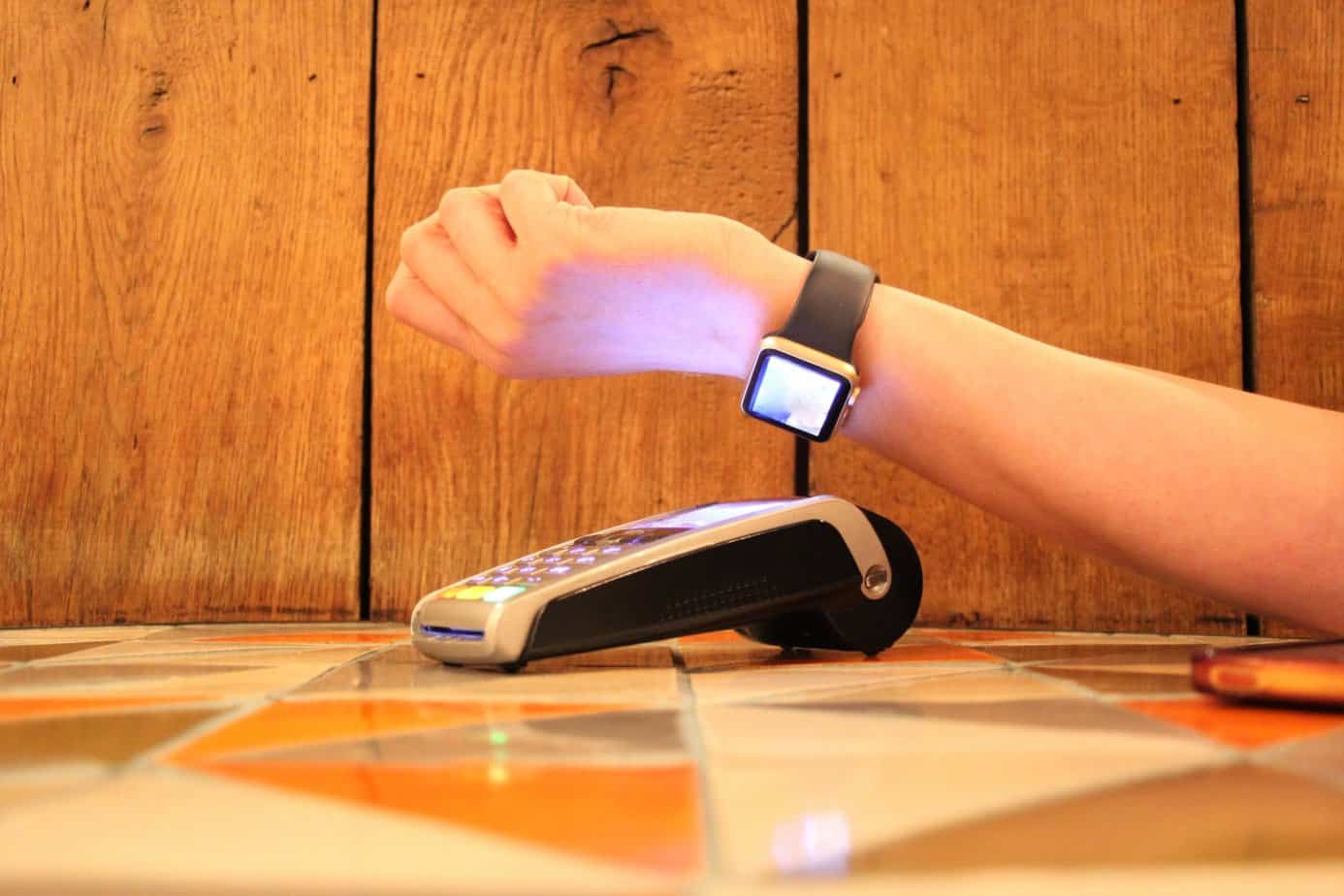
Google Pay allows Android phones, tablets or digital watches to make tap-to-pay purchases. Near field communication (NFC) allows the Android device to transfer the credit card information over to a point of sale system, making transactions fast and easy. By saving your cards to your Google Account, you’ll receive the same rewards and discounts when you use Google Pay as you would with a normal credit card. Google Pay also offers peer-to-peer and online payment services. The following are the stores, apps, sites, and transit systems that accept Google Pay:
Which Retailer In The US Accepts Google Pay In 2024?
A store that accepts Apple Pay or Samsung Pay will also accept Google Pay. You might notice the Apple Pay symbol on store entrances, but it’s often used as a general term for all mobile payments. Apple Pay and Google Pay use the same NFC technology, allowing tap-and-pay transactions.
However, it’s worth noting that not all big names in the US have adopted mobile payments. Some smaller businesses haven’t made the switch, primarily due to the costs associated with NFC terminals provided by banks, which can eat into their profits.
You can use Google Pay to buy goods or services at the following retailers:
MTA Metro-North and Long Island railroads New York metropolitan area
Portland Hop Fastpass
What Is Google Pay?
Google Pay is a digital payment service by Google that allows users to make purchases using their Android devices at physical stores and on compatible websites and apps, including the Google Play Store. In 2023, Google Pay is the most trusted mobile payment app with 25.2 million users in the US alone.
To use it, people connect their credit or debit cards to Google Pay. This linked card is then used for both in-person and online transactions. For payments at stores using Android devices, Google Pay employs NFC to communicate with payment terminals. Additionally, when users are logged into their Google account on the Chrome browser, they can use Google Pay on websites offering this payment option.
How Google Pay Works?
ApplePay, GooglePay, and other contactless payments are gaining acceptance.
To start using Google Pay, download the Google Pay app and link it with your preferred payment method, such as a credit or debit card. While many banks, credit unions, and other financial services support Google Pay, confirming if your specific card is compatible is essential.
Once set up, Google Pay allows you to make online and in-store payments. For in-person transactions, tap your phone on the payment terminal, similar to a contactless card. When shopping online, choosing the Google Pay option at checkout streamlines the process by automatically filling in your payment and shipping details, eliminating the need for manual entry each time you make a purchase.
Safety Features of Google Pay
When transacting with Google Pay, it uses a special encrypted number instead of revealing your credit card details. This adds an extra layer of security.
Plus, if you ever lose your device, you can use Google’s Find My Device feature to erase any important data remotely. For added security, you also have the option to log into your Google Pay account from another device and remove any linked cards or bank accounts.
Understanding Google Pay Fees
Google itself doesn’t impose any fees when you use Google Pay for tap-and-pay or online transactions. However, it’s essential to note that your card issuer might have charges associated with your purchases.
Transaction Charges:
While Google Pay doesn’t have transaction fees, any fees applicable to your physical card usage still stand. For instance, standard interest charges and penalty fees may apply if you use a credit card via Google Pay and don’t clear your bill on time.
However, Google Pay is rolling out some additional “convenience fees” for some specific transactions. As of 2023, the stance Google has around the charges by its application is unclear. Apart from this, there are no charges currently charged by the application Google Pay.
Credit Card Linked With Google Pay:
When you link a credit card to Google Pay, remember that your credit card company might charge the merchant a fee of up to 4%.
Some merchants may then pass this fee to you, adding it to other transaction charges. This could mean you end up paying as much as 6% extra for your purchase. To avoid unexpected costs, asking merchants about fees before using Google Pay is a good idea. A linked debit card or bank account can help sidestep these higher charges.
Using Google Pay Abroad:
If you use Google Pay while traveling or making purchases in a foreign currency, be aware of potential fees from your bank or card provider.
These include foreign fees, typically around 3%, applied to non-USD transactions. Remember that these fees can vary based on the specific card you have linked to Google Pay.
Conclusion
In 2023, Google Pay emerged as a versatile digital payment solution, trusted by millions in the US. Offering convenience across various platforms—from retail giants like Costco and Macy’s to popular apps like Airbnb and Doordash—it simplifies transactions with robust safety measures.
While it generally doesn’t impose fees, users should consider potential card issuer charges and international transaction fees. Overall, Google Pay is a reliable tool for seamless and secure payments across various outlets.
Frequently Asked Questions
Q: Where can I use Google Pay for transactions?
Absolutely! You can use Google Pay or Google Wallet wherever you spot those handy contactless or Google Pay symbols. Keep an eye out for them on the payment terminal screen or cash register during checkout.
Q: Can I use Google Pay for purchases at Walmart in 2023?
Currently, Walmart doesn’t accept Google Pay as a payment method. It’s always good to check for your preferred stores’ most current payment options.
Q: How do I get started with Google Pay?
Setting up Google Pay is a breeze. Locate the app on your phone, and if it’s not already there, just grab it from Google Play. Add your card linked to your Google account by confirming a few details. You can even snap a picture to add a new card. Once everything’s set, unlock your phone, tap, and you’re ready!
Q: Is Google Pay secure?
Absolutely! Google Pay offers enhanced security compared to traditional magnetic-stripe cards. It’s not just convenient; it’s also swift. Unlike chip card transactions that may take a bit, contactless payments with Google Pay process in a flash. Plus, you get a handy payment confirmation on your phone, making it easy to spot any fishy activity. In case of loss or theft, you can lock your device using Android Device Manager, securing your info.
Q: Can Google Pay be used for payments at Target?
Yes, you sure can! Target happily accepts any contactless payment, be it contactless credit/debit cards or digital mobile wallets. Simply tap your contactless card or mobile device over the payment terminal and follow the prompts on the reader screen.
Q: Does Walgreens support Google Pay?
Absolutely! Walgreens is all in for contactless payments. Whether tap-to-pay credit cards, Apple Pay, or Google Pay, they’ve got you covered. Just wave your contactless card or mobile device over the payment terminal and follow the prompts on the reader screen.
Generation Z represents a whopping 32% of the world’s population. As the first “digital native” generation that has never lived without the internet and technology, Gen Z sets itself apart in many ways. When it comes to the world of payments, Gen Z has very different expectations than even millennials and overwhelmingly prefers cashless payments — although with much higher standards for design, convenience, and security than other generations.
How Popular Are Digital Payments?
According to a U.S. Mobile App Report from 2017, 70% of consumers in Gen Z have made app-based mobile payments in the last year, surpassing all other generations. A more recent survey by BillTrust found that 79% of Gen Z responders use a digital payment service at least once every month.
Generation Z Is Price Sensitive
Generation Z, and young millennials too, are much more concerned with price than older adults, and much less likely to show any brand loyalty. As many as 80% of participants said that price was the most important factor to them when making a purchase.
Having grown up during the Great Recession of the late 2000s and early 2010s, many Generation Zers watched their parents struggle, which has led to something of a more frugal and pragmatic attitude. This more price sensitive attitude plays into the strengths of the financial tech companies as they can offer services at a low cost.
Generation Z Cares More About Security
Surveys have also found that Generation Z cares strongly about security, with as many as 33% of respondents to one survey claiming that they would stop dealing with a company immediately were their data breached. On top of this, 67% of surveyed Gen Zers would adopt name brand products when they need to seek assurance that their standards will be met.
Gen Zers hold privacy, ethics, and security seriously and demand transparency when it comes to cashless payments.
Generation Z Isn’t Tolerant of Friction
Having grown up in a world that’s fully accepted digital technology, Generation Z is completely at home with digital and real-life experiences coexisting. Because of this, studies have found that they will expect things to run smoothly, and they will be less tolerant than others when things don’t. With the rise of mobile payments, this plays into this generation’s hands and provides them with a system they’re perhaps more comfortable with.
A clunky user experience or an overly complicated system could be enough to lose this generation as a customer. After years of technological revolution and refinement, this is a generation that expects the best.
What Generation Z Is Looking for in Credit Card Processing
It would seem that what is most important to Generation Z when it comes to payments is a seamless, frictionless experience that fits easily around their lifestyles. This means customized credit card processing and payment solutions, transparency, security, and convenience. Having instant, seamless payments is of huge importance, especially when looking to win their loyalty and trust.
The next platform that caters to Generation Z will likely combine all forms of financial services in one from digital payments and banking to investments and loans to further capture the interest of this digital generation.
Using near-field communication (NFC), a Galaxy smartphone (or even smartwatch) that supports Samsung Pay allows you to make quick and easy retail purchases. All without having to fumble around with your wallet or purse. When you launch the Samsung Pay app on your phone, you simply hold the phone above the credit card terminal and then tap-and-go.
Here’s what really puts Samsung Pay ahead of the competition. Existing card readers recognize Samsung Pay. For terminals that do not support NFC, Samsung Pay also works with MST (Magnetic Strip Technology), enabling consumers to make a contactless payment on a terminal even with the old school magnetic strip technology. The MST technology differentiates Samsung Pay from Apple Pay and Android Pay, both of which are only equipped to use NFC technology. While the other mobile wallet apps are limited to merchants who provide NFC technology, Samsung Pay can be used anywhere traditional credit and debit cards are accepted.
How to set up Samsung Pay:
Open the app on your phone
Scan your credit card
Use your fingerprint or PIN to secure the account along with an authorization code provided by the app
Once you’re ready to use Samsung Pay, swipe up from the bottom of the display
Swipe left or right to choose the card to use
Verify your fingerprint for the app or enter your PIN
Touch the back of your phone on the reader or hover your phone over the reader
Your phone will vibrate indicating payment
The following banks and services support Samsung Pay:
American Express
Mastercard
Visa
Bank of America
Chase
Citi
JP Morgan Chase
PNC
US Bank
Samsung Pay has expanded to the following countries and regions:
Apple Pay allows Apple iPhone 6, 6s, 6, 7, 8, 6 Plus, 6s Plus, 7 Plus, 8 Plus, SE, X, XS, XS Max, XR, and Apple Watches to pay for good and services with a built in NFC chip. While not yet ubiquitous, Apple Pay is getting there. In the meantime, here is a list of the retail stores, apps (both retail and transit), colleges and universities, and nonprofits currently accepting Apple Pay:
You can use Apple Pay to pay for goods at the following stores with millions more:
ACE
Albertsons
Apple
Baskin Robbins
Best Buy
Chick-fil-A
Costco
Crate & Barrel
Disney Store
Duane Reade
Dunkin Donuts
Foot Locker
GAP
Crew
Jersey Mike’s
jetBlue
Levi’s
Macy’s McDonald’s
Nike
Office Depot/OfficeMax
Panera
Petsmart
Pizza Hut
Safeway
Sephora
7 Eleven
Staples
Starbucks
Subway
Target
Trader Joe’s
Walgreens
Walt Disney World
White Castle
Whole Foods
These apps and websites accept Apple Pay, along with many more:
Airbnb
B&H – photo, video, pro audio
Chipotle
Dunkin Donuts
Etsy
Fandango
Groupon
Grubhub
Hotel Tonight
Hotwire
Instacart
Jet
Lululemon
Lyft
MLB
Panera
Seamless
Sephora
Staples
Starbucks
StubHub
Target
Ticketmaster
Wish
Use Apple Pay when using these transit apps:
Caltrain San Francisco Peninsula and Santa Clara Valley
*CTA and Pace Chicago metropolitan area
MBTA Boston metropolitan area
Metrolink Los Angeles metropolitan area
MTA Metro-North and Long Island railroads New York metropolitan area
NJ TRANSIT New Jersey and New York metropolitan area
RTC Las Vegas metropolitan area
RTD Denver metropolitan area
*TriMet, C-TRAN, and Portland Streetcar Portland and Vancouver metropolitan area
Ventra (CTA, Pace, and Metra) Chicago metropolitan area
*Tap and pay via Apple Pay
The following colleges and universities accept Apple Pay:
The University of Alabama
Duke
Oklahoma University
Temple University
*Johns Hopkins University
*Santa Clara University
*Coming later this school year
Donate by way of Apple Pay to the following nonprofits, in addition to others:
American Red Cross
Children’s Miracle Network Hospitals
Chron’s & Colitis Foundation
Global Giving
RED
Jude Children’s Research Hospital
Save the Children
United Way
WNET New York Public Media
WWF
Naturally, these apps that come standard on an iPhone accept Apple Pay:






 If this is new to you and you don’t know what a resort surcharge is, you may be somewhat surprised. Essentially, it’s just an extra cost, typically mandatory, that covers a bundle of services that you, as a hotel guest, might come to expect during your stay. Services such as “free” Wi-Fi, pool access, morning newspapers, and more are what tend to be part of the resort fee bundle. Even if you don’t want to use any of these services, you can’t decline the surcharge.

 As a new approach to business applications, Dynamics 365 unifies the current ERP and CRM solutions into a singular cloud service, featuring newly purpose-built apps designed to aid in sales, marketing, and finance.