Author Archives: hostmerchantservices

The Best Clover Point of Sale Apps for Restaurants

Clover Point of Sale for RestaurantsThe Clover® point of sale system is made for restaurants with the Clover Dining feature built into the system. A robust POS, the Clover restaurant point of sale empowers restaurateurs to manage all aspects of the business from one system. Plus, there’s an abundance of clover apps that liberate restaurant management to pick and choose the capabilities they need from a POS.

Whether your restaurant runs a happy hour, provides takeout service, needs notification of low stock, and everything in between, there’s a Clover app covering your every need. Here are the best Clover point of sale apps for restaurants:

Thrive

Keeping track of your restaurant’s up-to-the-minute social media posts and online reviews, the Thrive app can help you manage – and even drive –  your online presence. Even if you’re notified of a negative comment, the Thrive app empowers your restaurant to address the challenge in a timely fashion. As a bonus, the Thrive app also provides current sales data, as well as sales trends and refund and discount data. The Thrive app is developed and offered for free by Thrive.

Shifts

Providing a timeclock, tip declaration, sales reports, and beyond, the Clover-developed app Shifts enables restaurant management and staff alike to multi-task the record-keeping aspects of running a business. The app is free of charge provided by Clover.

Menufy

Allowing restaurants to offer a takeout menu without the 30% charge often associated with outside delivery services, the Menufy app creates a website exclusively for online orders. And if you already have a website, Menufy will generate a module that can integrate with your site. Charging $1.50 per order for high-volume takeout operations, Menufy is less costly than most takeout services. Offered free from Menufy, the app has high reviews from Clover users.

Woman prints receipt on clover pos systemHappy Hour

By placing menu items or categories of items in a time range, the Happy Hour app streamlines the Happy Hour pricing process and eliminates user error at the point of sale. Free of charge, the Happy Hour app developed by Clover helps restaurants run a smooth Happy Hour.

Ping Me If

The manager’s little helper, the Ping Me If app gives managers a heads up when a specific event occurs, be it a refund, the cash drawer exceeding a specified amount, a discount exceeding a specified amount, and more events that require a manager’s approval or notice. With the Stock app, Ping Me If also alerts managers when an item in stock is running low. Developed by Seven Spaces, the Ping Me If app is $4.99 per month or $.99 per month with the Stock App.

Host Merchant Services and Clover

Host Merchant Services can customize your Clover Point of Sale System to fit your restaurant’s needs. Whether your business requires a robust station including a tablet interface and printer with the option to add functionality or your business only needs a mobile app, turning your phone into your POS, Host Merchant Services offers these and everything in between, including the Mini POS and the handheld POS perfect for a farmers market stand or an intimate restaurant. Along with a variety of Clover apps, Clover provides the flexibility required in the restaurant business.

Offering complimentary express service, Host Merchant Services provides free quotes. Our payment specialists can provide Clover POS pricing that fits your business.

The Clover® name and logo are trademarks owned by Clover Network, Inc., an affiliate of First Data Merchant Services LLC, and registered or used in the U.S. and many foreign countries.


small-medium-business

Rapid Settlements Save SMBs [2023 Update]

We all know that time is money, and in the world of small and medium enterprises, time is intrinsically tied to cash flow. When business owners have sufficient cash on hand, things have a great chance of going smoothly. Once the cash flow is drastically reduced or even depleted, operations suffer even if the promise of a cash injection is somewhere between one to seven days away. We have all heard about American families living from one paycheck to the next; a similar situation is endured by many small business owners, but the time frames tend to be tighter.

Settlement Speed is of the Essence for Small Business Owners

Small business customer paying with debit card

A recent survey conducted by MasterCard illustrates the importance of quick settlements, and providers of merchant services should be paying close attention to what American business owners are going through. More than 60% of small companies start feeling the deleterious effects of waiting around for money to arrive. Imagine a convenience store owner who is left with less than $20 in the register; he may be waiting for a nice $900 transfer from his payment processing provider, but this could take another day or two. The same thing goes for an architect who is stuck waiting for an ACH transaction to switch from pending to available in her bank account.

The reality of access to capital these days is that more than half of all small business owners, particularly retailers, are more than willing to switch to a merchant services provider who offers who offers quick payouts. The bigger names in the payment processing sector are offering faster delivery of funds, and they are hardly alone in this regard. We have already seen credit card processing firms such as Square speed up their payments considerably, and their clients have been signing up for instant payments, which generally cost them more, at a healthy pace. Big financial institutions such as JPMorgan Chase are taking advantage of their status as established financial institutions to speed up payment processing to completion almost in real-time.


Analysts who cover the merchant services and credit card processing sector have been warning about the rise of digital currencies and their potential for instant settlements. In emerging markets, small business owners skip payment processors and deal directly with shoppers who wish to settle purchases from one digital wallet to another. What merchants do in this case is tap the cryptocurrency exchanges to convert their funds into fiat, but this is sometimes faster than waiting on credit card payments to be deposited. In the United States, automated clearing houses are in danger of becoming a relic because even the most nimble providers can take up to 24 hours to complete transactions.

Last Minute Holiday Shoppers Used Store Pickup

in-store pick up illustration

There’s been a new trend among shoppers when it comes to online shopping this holiday season: make the last-minute purchase online and pick it up in-store. It has, in fact, become so popular that both consumers and retailers alike have come up with a trendy new anacronym: BOPIS (buy online pick up in-store), and according to Adobe, BOPIS orders were to see a surge of 39 percent over the 2018 holiday season.

According to Target CEO Brian Cornell, this also leads to more shoppers leaving their shopping to later in December, which led to stronger retail sales overall due to the increase in physical brick and mortar shopping as opposed to shopping that was otherwise done exclusively online. In total, Target saw an increase of more than 5 times in the number of items bought for in-store pick up during the 2019 holiday season than they did in 2018.

According to data put together by Salesforce, when a store’s online site offers in-store pickup as an option, shoppers will start to become more active. In total, retailers who are offering in-store pickup can expect to attract an increase in customers of as much as 48 percent against those that don’t in the final 5 days running up to Christmas.

order online, pick up in storeOverall, a company such as Walmart, for example, will be losing out on money for each digital order. If they are able to convince a customer to make their own way to an actual physical store to collect the item themselves, however, it can start to save Walmart some money. And it all soon adds up.



One of the first companies to adopt the concept of in-store pickups was Nordstrom. Nordstrom’s co-president Erik Nordstrom found that by allowing customers to pay online with their credit or debit card and collect in-store, they could greater engage with their customer base. Recently, Nordstrom has increased its openings of local smaller stores which, while not actually selling any products, allow customers to collect their digital orders.

Major big-box retailers like Target, Walmart and Best Buy are all now offering customers the option to pay online with their credit or debit card and pick up in-store at their convenience. Ultimately, for large name retailers such as these, offering their customers the option to make their purchases online and pick their items up in-store opens up the ability to leverage already existing store infrastructure, teams and tech against any losses made through their digital sales.

In total, holiday sales this year saw a rise of 14.6 percent over the 2018 holiday season, which, according to the NRO (National Retail Federation), way above what was expected and predicted.

Frequently Asked Questions

holiday-sales

Sluggish Holiday Sales for Kohls Despite Help From Amazon [2023 Update]

Historically popular mid-price department stores in the United States have experienced a steady decrease in brick-and-mortar foot traffic over the past several years. The main cause has been a massive shift by consumers from shopping primarily offline to utilizing digital online options and home delivery. Online storefronts have helped department stores make up some lost revenues, but the reduction in on-site/offline shopping has hurt the retail industry. Last year, Kohl’s partnered with Amazon to bring more people into physical stores. The idea was simple: Kohl’s would freely accept, pack and ship returns brought in by Amazon customers and, in return, the traffic would result in impulse purchases and create new, loyal Kohl’s customers, especially over the Q4 holiday season.
retail clothing store that accepts credit and debit cards

Where Did It All Go Wrong?

Earlier in 2019, Kohl’s and industry analysts estimated that Kohl’s would see a certain amount of revenues for Q4. They based the estimate on previous shopping trends and evidence from previous quarters, starting in Q2 with the national returns rollout, that the partnership worked as planned. Yet, Kohl’s relies heavily on seasonal and member discounts and female shoppers. Offering steep discounts during the holidays brought additional people into stores, but fewer women bought apparel. Unsurprisingly, Kohl’s saw plenty of foot traffic, but not the level of expected impulse and other purchases from that traffic. Kohl’s experienced a 0.2 percent drop across November/December as compared to previous years even though it experienced a strong growth trend in Q3 with nearly double the traffic and triple the sales.

Although the full Q4 earnings won’t be released until March 2020, Kohl’s CEO Michelle Gass advised investors on January 9 to expect lower-than-estimated earnings. Some analysts believe that the actual losses are worse than 2008. Kohl’s is pleased by the increase of traffic that has resulted from the Amazon returns. Digital purchases also continue to rise because of the Kohl’s app, but the company must now re-evaluate how to bring female consumers back into stores to buy apparel or find another revenue generator.

Retail clothing merchant account

Why Is This News Important?

A well-known name, massive discounts and even an Amazon partnership isn’t a guarantee of steady on-site, brick-and-mortar traffic and revenues in today’s volatile retail market. Kohl’s ignored warnings about shopping trends and relied too heavily on female apparel purchases. It’s been known for some time now that women are shopping more online through programs that allow them to conveniently try on clothing and shoes at home and then return items they don’t want or need. Kohl’s also didn’t offer more perks to appeal to younger shoppers. Its heavy discounts usually appeal to older consumers who are less like to impulse shop. Mid-price department stores across America are dying not only because of these factors, but also because of competitors, such as T.J. Maxx, Marshalls and Ross, who offer high-end goods at discounted prices far below their own. These buying trends have forced retailers like Kohl’s to offer steep discounts and adapt in various ways to survive. Without adapting, such as by accepting Amazon returns, Kohl’s would have lost far more. J.C. Penny, for example, experienced a 7.5 percent drop in sales over the holidays. According to Mastercard, department stores industry-wide experienced a drop of 1.8 percent.

At Host Merchant Services we hope that this type of news can help our retail merchants understand how they need to adapt their own traffic and sales strategies to survive. We also want these mistakes to help you to learn how to adapt so that you can always reach your estimated revenue goals. For more information, contact us today.

Speed Optimization at the Point of Sale

bartender enters order on point of sale with credit card

While the 2015 fraud liability shift has increased chip card adoption in the United States, consumers and merchants alike still express frustration with a major drawback of EMV technology: slow transaction times at the point of sale.

Unlike magnetic stripe cards, chip cards need to be inserted for a long period of time until the transaction goes through. Transaction times can vary by chip card issuer, POS system, and merchant but may take up to 15 seconds or longer, increasing wait times and slowing down the checkout process.

Chip adoption has been slow; in 2019, just 68% of U.S. merchants who accept cards have adopted chip technology and just 67% of total Visa cards issued are EMV-enabled. Consumer dissatisfaction is just one of the reasons for this slow transition in addition to the cost to merchants to upgrade POS systems. Merchants that are EMV-ready are experiencing significant slowdowns in transaction time.

Chip technology is designed to increase card processing security, not speed; by improving card-terminal authentication and reducing the risk of fraud, chip technology adds to point of sale transaction time.

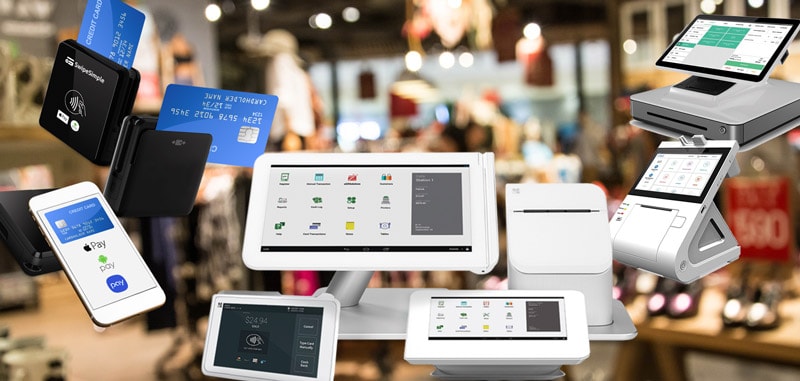
several point of sale systemsQuick Chip and M/Chip Fast: The Card Issuer Response to Slow Chip Transactions

Credit card issuers have responded to slow transaction times with “faster EMV.” Discover, Visa, and American Express offer Quick Chip while Mastercard offers M/Chip Fast. This update mimics traditional magnetic stripe swipes by allowing for pre-dip and faster card removal before the total transaction amount is known while maintaining most of the security benefits of chip technology.

The Quick Chip software update is one of the simplest ways for merchants to optimize transaction times. With the update, the point of sale system retains the chip data while requesting an authorization or ARQC. When the authorization is returned by the card’s chip, the terminal will prompt the customer to remove the card. The authorization may be for a provisional transaction amount of what has been scanned if the process occurs in the middle of the terminal.

The Quick Chip update is only available for merchants in the U.S. and it requires an update of the point of sale software through the processor. It will only work when the system is online as well.

Contactless Payments: A Faster Alternative

Contactless payments are faster than both chip and mag swipe transactions. Contactless chip cards, which offer the same security of chip transactions, offer customers a much faster checkout experience. Most point of sale systems that support chip payments also support contactless EMV payments as well. By offering contactless payments as an option, merchants can give consumers a faster option to pay and reduce checkout times.

CFPB Files Lawsuits Against Student Loan Debt Relief Firms

Student Loan Merchant ServicesThis week, the Consumer Financial Protection Bureau (CFPB), a consumer protection agency created by the Dodd-Frank Act of 2010, has filed lawsuits against a number of people and companies involved in student loan debt relief services.

According to the CFPB, these companies illegally obtained consumer reports, charged illegal advance fees for services, and engaged in many forms of deceptive behavior.

In the complaint, the CFPB alleges that Monster Loans, a mortgage lender named in the suit, violated the Fair Credit Reporting Act (FCRA) by obtaining the consumer report data for millions of consumers with student loans from a credit bureau under the pretense of using the information to offer mortgages. Instead, between 2015 and 2017, Monster Loans sold the reports to student loan debt relief companies to market services. The lawsuit also alleges that Lend Tech Loans violated the FCRA between 2017 and 2019 by obtaining credit bureau reports for consumers to market student debt relief services.

Student working to pay off loanIn addition to violations of the FCRA, the CFPB alleges that several defendants violated the Consumer Financial Protection Act of 2010 and the Telemarketing Sales Rule (TSR) while marketing and providing student debt relief services through deceptive representation about services. Defendants allegedly misrepresented to consumers that their interest rates would be reduced, their credit scores would improve, and the Department of Education would become their loan servicer. Several defendants also illegally charged over $15 million in fees in advance of consumers receiving adjustments to their loans or making payments toward the adjusted student loans.


The CFPB has filed suits against:

  • Mortgage lender Chou Team Realty, LLC doing business as Monster Loans
  • Lend Tech Loans, Inc., an allegedly sham brokerage firm
  • Student loan debt relief companies Docu Prep Center, Inc. (doing business as DocuPrep Center and Certified Document Center); Assure Direct Services, Inc.; Certified Doc Prep Services, LP; Secure Preparation Services, Inc.; Direct Document Solutions, Inc.; and Docs Done Right, Inc.
  • Individuals Thomas “Tom” Chou, Bilal Abdelfattah (also known as Bill Abdel and Belal Abdelfattah), Robert Hoose, Sean Cowell, Jawad Nesheiwat, Eduardo Martinez, Frank Anthony Sebreros, and David Sklar.

The CFPB is seeking an injunction against the defendants in addition to damages, disgorgement of ill-gotten gains, redress for harmed consumers, and civil financial penalties.

The CFPB maintains supervision authority for institutions with over $10 billion in assets with examination and enforcement authority for financial institutions that provide financial products to consumers. The Consumer Financial Protection Act gives the Bureau the authority to protect consumers from abusive, deceptive, and unfair practices while overseeing mortgage lending and servicing. Consumers can also submit complaints about unfair financial practices, products, and security in the financial sector through the Bureau’s database.

Get PCI Compliant

Payment Card Industry compliance refers to a specific grouping of standards that have been set up to help ensure that customer data is being secured uniformly throughout the industry. MasterCard, Visa, Discover, and American Express set up the Payment Card Industry Security Standards Council over 13 years ago in 2006 with a view to helping regulate the credit card industry and maintain the Payment Card Industry standards to hopefully improve the security of transactions and payments.

Why Do I Need PCI Compliance for My Business?Small Business Cash Advance Options

Any business, no matter how big or small and regardless of transaction volume, needs to be Payment Card Industry compliant if they’re accepting payments from credit and debit cards. To be more specific, any company that will be storing, transmitting, or processing credit card information is legally required to be Payment Card Industry compliant. Should a data breach occur, any company that is not fully Payment Card Industry compliant will be subject to steep fines by the Payment Card Industry Security Standards Council. When it comes to smaller-sized businesses, being Payment Card Industry compliant will lessen any liability for your business in the event of a data breach occurring.

How Do I Become PCI Compliant?

In order to become fully Payment Card Industry compliant, a yearly self assessment questionnaire must be completed, along with a quarterly Payment Card Industry security scan which must be passed.

The self assessment questionnaire will include a series of questions that have been designed to assess Payment Card Industry security levels, and depending on how a business is to deal with their payment processing, they will fall into one of several categories.

Additionally, by finding a payment processor that will provide Payment Card Inquiry compliant payment processing, you can ensure that all of your business’ credit card transactions will be secure.

The different types of Self Assessment Questionnaires break down as follows:

A: Card-not-present merchants for whom all cardholder data functions have been outsourced to validated third party service providers with no cardholder data stored, processed or transmitted on the merchant’s systems or premises.

A-EP: Online merchants for whom all payment processing data is outsourced to validated third parties, and who don’t receive any cardholder data through their website, but can, however, impact the transaction’s security. No cardholder data is stored, processed or transmitted on the merchant’s systems or premises.

B: Merchants who only use standalone dial out terminals with no electronic cardholder data storage and/or imprint machines with no electronic cardholder data storage.

B-IP: Merchants who use only standalone terminals that are PTS approved, with an IP connection to the payment processor, and with no electronic cardholder data storage.

C-VT: Merchants manually entering single transactions at a time with a keyboard into a validated third party virtual terminal solution. No electronic storage of cardholder data.

C: Merchants with online payment application systems and no electronic storage of cardholder data.

P2PE-HW: Merchants with hardware only payment terminals, with no electronic storage of cardholder data.

D (Merchants): All merchants not covered by any of the above

D (Service providers): All service providers a payment brand has defined as eligible to complete a self assessment questionnaire.

Qatar Bans Crypto Trading

On December 26, 2019, the Qatar Financial Centre Regulatory Authority (QFCRA) announced via a press release posted to Twitter that virtual asset services were no longer allowed in the Doha-based Qatar Financial Centre Authority (QFC). The QFCRA’s decision essentially cut off more than 500 financial firms and other businesses within that location from crypto trading. The QFCRA cited QFC Law No. 7 of 2005 and Financial Services Regulations (FSR) as the reasons and noted that it will penalize businesses that ignore the ban.

What Is Crypto Trading?

Crypto trading is when businesses purchase, sell and trade cryptocurrency, a type of digital asset that’s processed using secure digital encryption known as cryptography. Businesses who deal in cryptocurrencies trade one type for one or more others types of digital currency or physical non-digital assets like government-approved, legal tender, such as fiat money and commodity money backed by commodities like gold and silver. Crypto trading can also involve the use of cryptocurrency to buy products and services.

What Is the QFCRA’s Official Stance?

The QFCRA considers virtual assets to be any type of alternative digital currencies that aren’t related to fiat currency and other types of regulated “monetary instruments.” The QFCRA defined a virtual assets services provider as any “natural or legal person” who performs virtual asset services. It doesn’t matter if only one person initiates or accepts a transaction either. The QFCRA defined virtual asset services in the tweet to include exchange involving trade of virtual currencies for virtual currencies and fiat money, transfer of virtual assets and any transaction related to sale of virtual assets. It also banned the administration or holding of virtual assets and/or any tools that make it possible to control virtual assets.

Why Is This News Important?

Crypto trading is associated with high risk: It doesn’t require the use of a centralized bank or backing from a government entity. It occurs over decentralized networks using many computers, which means that the typically untraceable transactions are conducted without strict legal and regulatory controls. The exchange rates fluctuate wildly with little-to-no forewarning. Money launderers, tax evaders, thieves, terrorists and others often use virtual assets services to exchange cryptocurrency for fiat money or real-world assets in their criminal dealings. Although many standard fiat and commodity currency transactions are now conducted digitally, those transactions, unlike crypto trading, are heavily regulated, traceable and backed by real-world materials. Merchants need to recognize that they can face steep fines and other penalties in a growing number of countries if they’re caught performing business transactions using cryptocurrencies. For example, China and India have also enacted strict bans in recent years.

At Host Merchant Services, we believe that providing merchants with regular global economy updates can help them to adapt rapidly to changes in payment acceptance and protect them from fines and penalties. We want you to have the information you need to be an informed decision-maker so that you conduct transactions in a legal fashion. We also want to make it clear why we don’t offer certain payment acceptance and processing services. For more information about crypto trading or alternative transaction options, contact us today.

Retail Sales Have Plummeted In Hong Kong

Since March 2019, pro-democracy activists in Hong Kong have been staging massive rallies that often turn violent and destructive. Clashes between protesters and riot control police units have claimed more than 2,500 injuries and millions of dollars in damages. The lucrative tourism and retail industries of Hong Kong have also been deeply impacted; according to data compiled by regulators, sales transactions have plunged by more than $30 billion since November 2019, one of the worst plunges ever experienced by this autonomous region of China.

Hong Kong Digital PaymentsThe worst month for retail sales in Hong Kong was October, which posted a 24.4% drop on an annual basis. Amazingly, market analysts expected an even more calamitous report for November when considering just how violent the protests have turned since October. The resolve of activists in Hong Kong has not shown any signs of abatement; on New Year’s Day, one of the most impressive rallies drew hundreds of thousands out onto the streets of the Kowloon district, and leaders who spoke to international journalists explained that they are not ready to stop until the Communist Party of China gets the message: People of Hong Kong do not want to abandon the democratic system.
For small business owners, particularly retailers, the protests have been disastrous to their bottom lines. Hong Kong is one of the most active markets in terms of digital payments, but this is not an advantage when storefront operators are forced to shut down their establishments, which are often damaged by vandalism during protests. Being a leader in digital payments means little when shoppers are too nervous about visiting stores because they fear protests will get unruly.

At a time when holiday sales in Asia are posting record annual increases, the situation in Hong Kong is dispiriting. Luxury brands such as Louis Vuitton, which rely on purchases by foreign visitors, are closing up stores in some of the busiest districts. As for foreign tourist arrivals, their volume has dropped by more than 55% on an annual basis.

Needless to say, representatives from the Hong Kong Retail Management Association are dismayed by the current situation. A recent survey among retailers revealed that 7,000 business owners are planning on closing up shop over the next six months unless things improve and the protests stop. Sensing that the worst is still to come, government regulators have urged commercial space landlords to put a moratorium on raising lease contracts. A deteriorating retail economy is the last thing Hong Kong would like to experience; thus far, the hardest-hit in this regard have been luxury retailers such as jewelry stores, but thereare fears about protest leaders calling for shopping boycotts in 2020.

Planned Fee Schedule Limits Access to Free ATM Cash Withdrawals in the UK

For many British consumers, using the ATM at their local convenience stores, which are colloquially known as corner shops, is the best way to access bank funds for free. The traditional arrangement consists of banks paying interchange fees to ATM operators; thus allowing account holders to enjoy free cash withdrawals they usually spend at the store, but this is changing to the detriment of consumers.

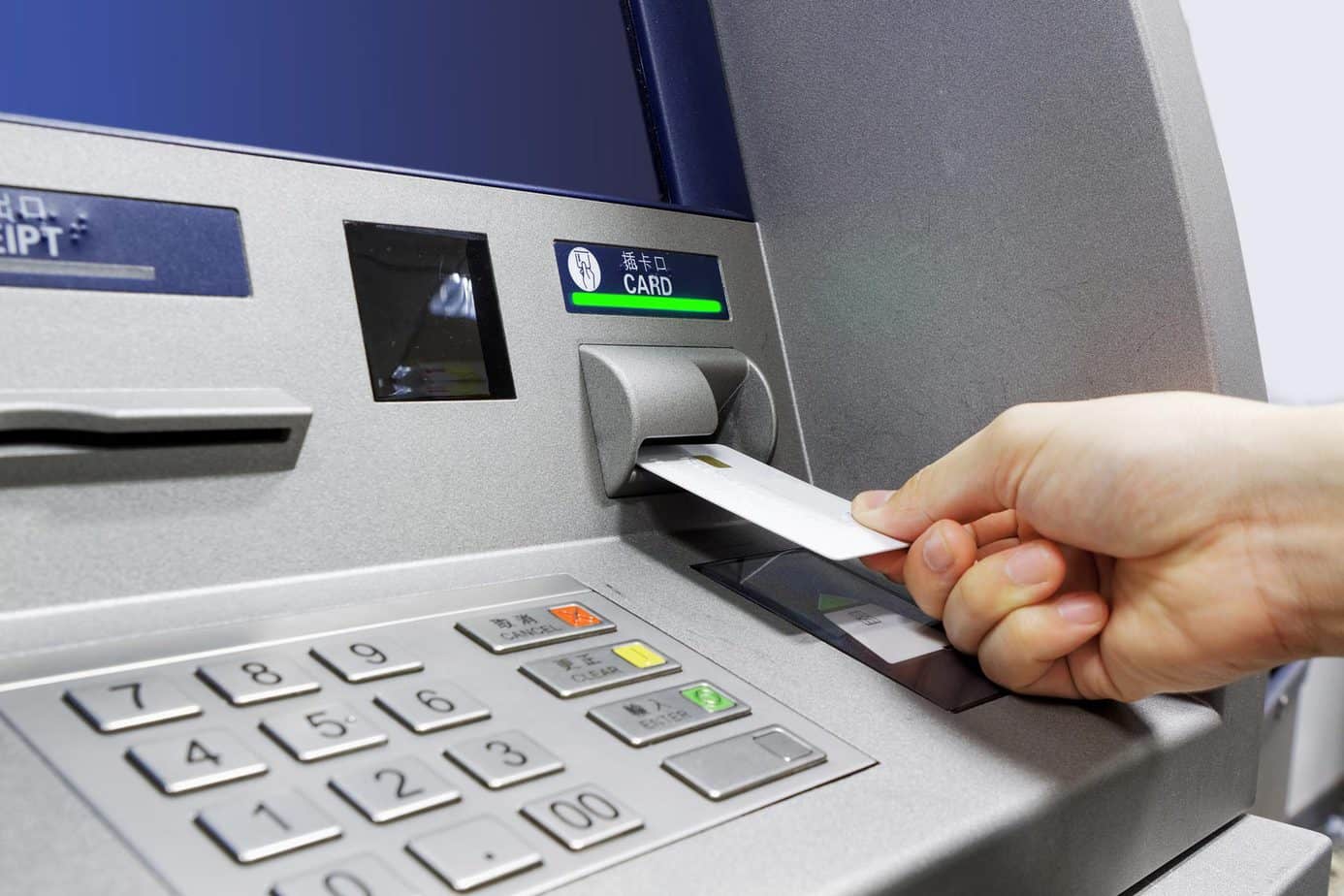
ATM ScamLINK, the business entity that controls the national network of cash machines located within corners shops across the United Kingdom, has sharply reduced the interchange fees, and it is planning even more cuts in the near future. ATM operators have taken swift action to cut their losses by removing machines from corner shops. The Association of Convenience Stores is now urging LINK to scrap the next fee reduction so that ATM operators do not end up removing all their cash machines, particularly in communities where residents do not have easy access to their banks.

The CEO of LINK has pointed out that the use of cash among British consumers has been falling in recent years thanks to the advent of mobile payments, thus doing away with the need of ATMs at corner shops. The ACS argues that mobile payments technology is not the only matter at hand; British banks have been shutting down branches across the country, thus leaving account holders with limited options such as making free withdrawals at local Royal Mail offices, which have also experienced rounds of closures.

There was a time when corner shop operators enjoyed direct profits from ATMs. Over the last few years, however, things have changed to the point of shop owners actually having to pay ATM operators to keep the cash machines in place. Consumer advocates estimate that at least two million individuals rely on cash withdrawals for various reasons, one of them being that not everyone can afford a smartphone with near-field communication features that would allow them to make contact-less payments.

For the payments industry, a strong transition to digital payments instead of cash transactions is good news, but market leaders agree that governments need to contribute with legislation conducive to inclusion, meaning that mobile payments should not be limited to NFC devices. In Commonwealth nations such as Kenya, the issues of ATM access and cashless transactions have been settled with M-Pesa, a mobile alternative to banking that works with just about any cell phone because it uses SMS technology.

One of the keys to ensuring easy access to digital payments is to take into consideration all consumers, even those who feel that they should be able to access cash at nearby locations and with reasonable fee schedules. Shifting all charges onto consumers, banks, or retailers is not the answer.