Author Archives: hostmerchantservices

How Is COVID-19 Transforming E-Commerce Merchants?

How Is COVID-19 Transforming E-Commerce Merchants?

There is no doubt COVID-19 has redefined our life, and its impact could, presumably, last for years. The way we socialize, work, and function has rapidly changed, and so has our buying behavior. Online shopping has become the new norm as consumers are finding it safer and more reliable. Even local businesses are turning to online platforms for sales and services, but the non-essential industry has suffered dramatically. Grocery, medical supplies, healthcare items have experienced a sudden boom while the tourism industry has collapsed. Meanwhile, beauty items, fitness products, and tech retail have seen slow but steady growth.

Many big brands have restructured to meet the changing demands and increase their endurance during the pandemic. Here are a few practical ways to transform in the wake of COVID-19.

1.   Entering New Markets

Corporations such as commercial airlines have entered new avenues to ascertain stable earnings. The unprecedented drop in commercial flights has led to large airlines like Virgin Atlantic, Lufthansa, and many others to switch to cargo flights. Passenger cabins are available for the transportation of grocery and healthcare items.

merchant covid19 e-commerce buying

COVID-19 is rapidly transforming e-commerce by affecting consumer buying patterns.

2.   Switching to Online Platforms

Grocery e-commerce soared during the pandemic as 72% shoppers used their mobile phones to buy household items. Due to this, many retailers and brands have launched user-driven apps and revamped their online stores to improve the online shopping experience. Encryption of personal details has become stringent to support safe and secure payment methods.

3.   Offering Sales and Other Incentives

Many beauty and skincare brands are offering sales and discounts. Around 72% of the top online retailers are running promotional activities to attract consumers. Many luxury brands, including exquisite jewelers, have slashed prices to recoup sales. At departmental stores, markdowns are even steeper for steady revenue.

4.   Setting Up Curbside Pick-ups:

Amidst the COVID-19 outbreak, many businesses have switched to BOPIS (buy online pick-up in-store) and curbside delivery methods. Since early January, around 55% of the consumers placed online orders and opted for BOPIS for convenience and safety. However, the industry is still in its developing stages as we can often see long queues at pick-up points. Digital check-ins and scheduled pick-up times could be a few ways to enhance the experience.

5.   Strengthening Customer Relationships

To strengthen their brand image, many companies are supporting front-line fighters by providing them various incentives. Many cosmetic and alcohol brands have distributed hand sanitizers and protective gear among front-liners such as healthcare providers, law enforcement agents, and other essential workers. It is to show gratitude to those who are putting their lives at risk for our safety.

However, it is still too early to predict the implications as the circumstances are uncertain. The shopping behavior of millions of consumers has changed within just a few months. Besides, time-saving and convenience has put considerable strain on e-commerce merchants. Many are striving to remove friction in online shopping to build a loyal customer base. Nevertheless, there is a consensus among buyers and retailers that old shopping habits will resume once the lockdown ends. This would slow down the growth rate of e-commerce sales, thus giving them ample time to adapt to the new retailing landscape.
Should my Business Adopt Contactless Payments? [2023 Update]

A Guide To Contactless Payments

What are contactless payments, and how do they work? Are they completely safe, and should you opt for the convenience of contactless payments? Over the years, technology has changed, and it has brought innovations in the way we conduct business and also in the way we many things. One of the innovations in technology is contactless payments and the tap and go form of payments. This article will talk about how you can use contactless payments, and it will also help you differentiate between contactless and cashless payments.

Contactless Vs. Cashless Payments

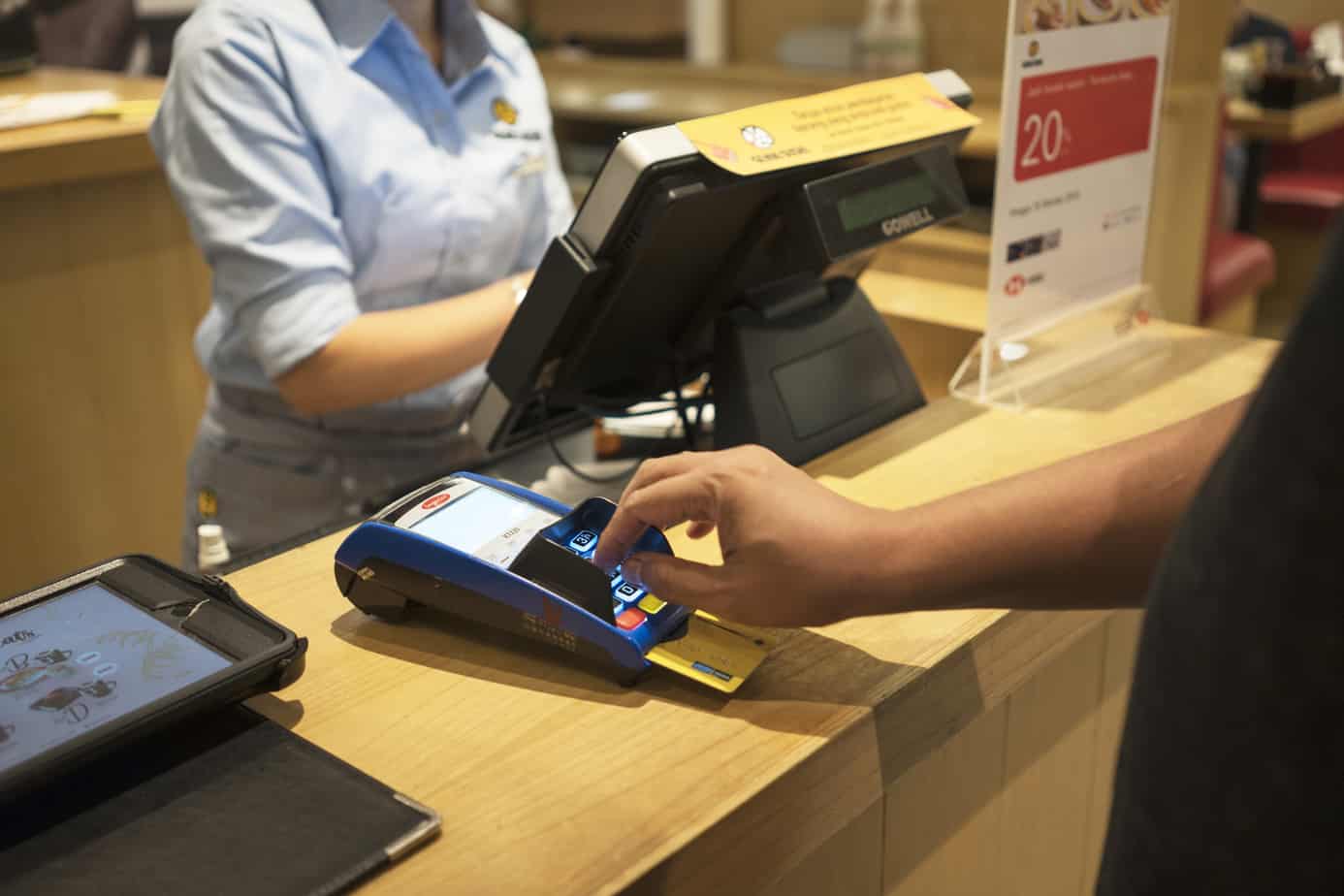
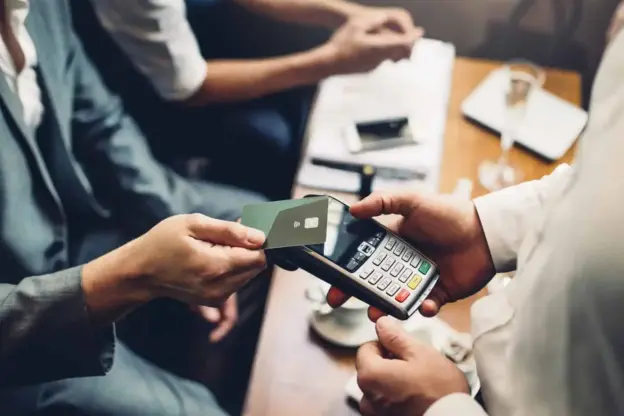
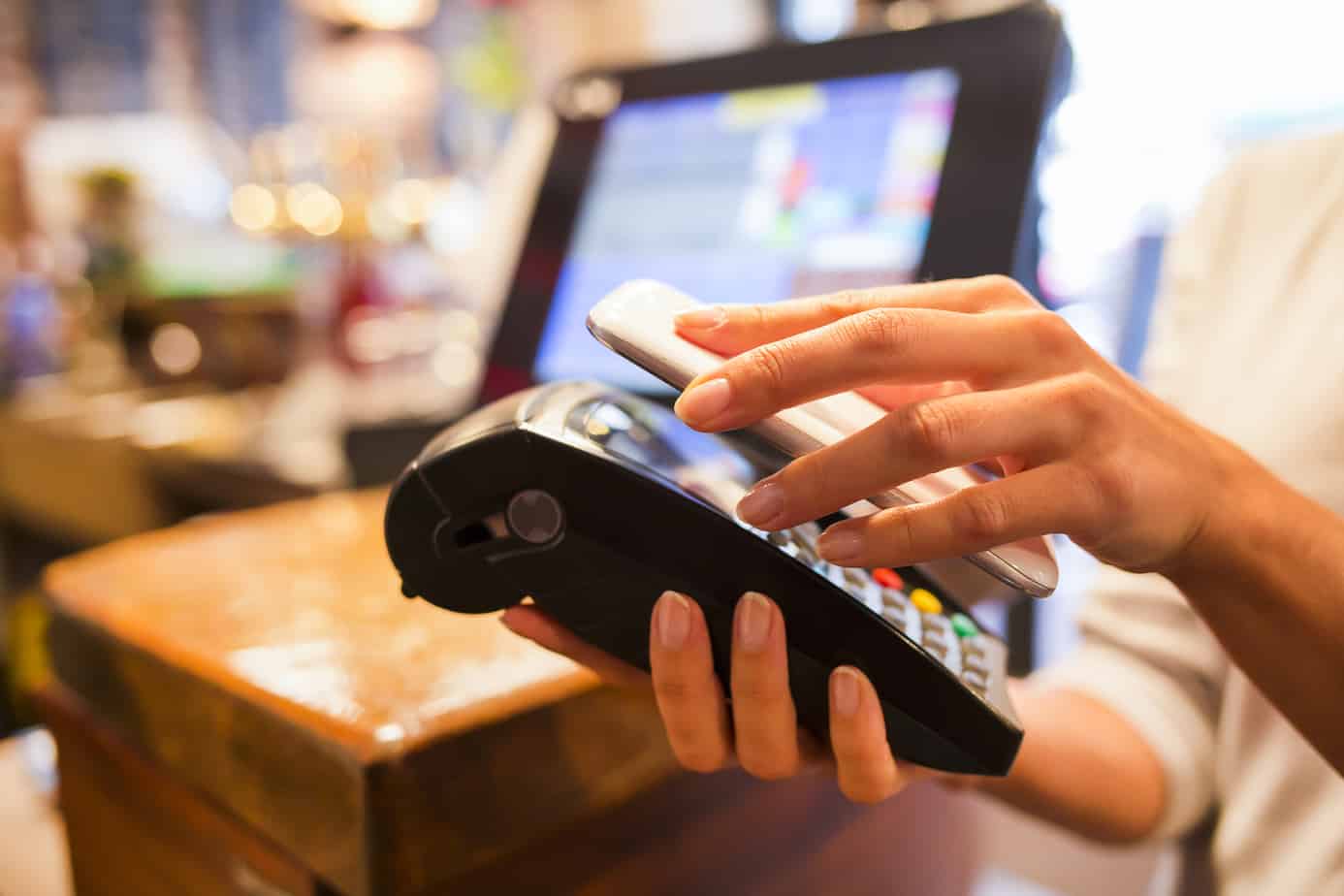
Contactless payments are two terms that are often used interchangeably, but these two terms are very different. Cashless payments are payments that are made without using cash and bank transfers, credit card payments, etc. are all categorized under cashless payments. Contactless payments are the form of payments that use radio frequency identification technology to make payments. Some examples include Apple Pay, Google Pay, and Samsung Pay. Instead of swiping your card, you simply wave your card to make payments, and you don’t require any signature or any pin number entered on the payment terminal. All you need to do is wave your card or smartphone near the payment terminal, and your payment is made. With smart phones, authentication may be required in the form of a pin, facial recognition, or a fingerprint scan.

What Are The Problems With Contactless Payments?

nfc apple pay google pay

Many customers are using contactless payments with their smartphones.

Like every form of payment, contactless payments are not that perfect, and they come in with their own share of problems. With contactless payments, many customers worry about fraud and whether or not their financial information will be safe. The perpetrator needs to gain access to your card to make contactless payments, and in most cases, you are notified by your bank about unusual transactions taking place, and you can easily block that card. Over time, in-person fraud has become more and more challenging to carry out, and most forms of contactless payments are PCI compliant, which protects consumers.

Why Should Businesses Adopt Contactless Payments?

Contactless payments are easy to carry out, and they are also convenient for your customers. Customer convenience is the topmost priority for businesses, and therefore companies should work on adapting measures that help make things easier for their clients. Your clients will think that you have an upgraded and futuristic approach towards the way you do business, and it will leave an overall positive impression. With the advent of technology, there are many more payment options available like Apple Pay and NFC, and many people don’t merely rely on their credit and debit cards for payments. Some customers also use their fitness watches and their wristbands for contactless payments. If you’re thinking about accepting contactless payments, then you should also consider the type of customers your business attracts. If your business attracts people that are more technologically oriented, then installing contactless payment systems can be a good option for your business, but even if not, most contactless payment terminals still allow more traditional payments like EMV chip cards. At Host Merchant Services, most solutions we offer are enabled for NFC and contactless payments at no extra cost, so our merchants are ready when their customers begin adopting these technologies.

Frequently Asked Questions

retail merchant mall

Retail Merchant Trends for 2020

As the effects of the pandemic continue, we’ll likely see more changes in the retail industry. Retail merchants had to make major changes while the economy was shut down, but those changes may continue. Retailers need to adapt to what consumers want and what the economy allows. Today, that means a lot more e-tailing than retailing among other things.

What retail merchant trends should you watch for? Here are some top contenders.

1.Brick-and-mortar locations will remain

Nothing replaces the in-person contact consumers need with a brand or product. In-store is where consumers fall in love. You may not see retailers expanding or new retailers popping up. What you may see, though, are more long-term pop-ups, flagship stores, or community events creating that brand awareness.

2.Quick order fulfillment

Thanks to Amazon Prime, consumers want their products now. They don’t even want to wait 2 days. Retailers must oblige if they want to compete. This means greater forecasting and understanding product cycles. If you can’t fulfill needs/desires quickly, consumers will move onto the business that can.

3.Personalized and streamlined experiences

retail merchants trends 2020

Retail merchant trends are rapidly evolving in 2020.


Retail merchants should use technology to their advantage. You can predict what consumers want using their past search and purchase history. Giving consumers personalized suggestions, or even pre-loaded lists excite consumers. They don’t have to waste time looking around. It also makes them feel ‘special.’ The combination is a win-win for you and your customers.

4.Brandless brands will increase

If consumers learned anything in the pandemic, it’s the value of a dollar. Even before the coronavirus, consumers’ interest in brandless brands increased. Now it’s skyrocketing. Today, consumers want the best bang for their buck. They don’t care as much about the label on the clothing as the quality they get.

5.Direct-to-consumer sales will increase

The direct-to-consumer industry has been around for ages. It may look a little different today, though. D2C companies realize consumers want relationships. They want to see, feel, and touch the items. This leads to ‘shoppable showrooms.’ Consumers can see and touch the products. They can even buy them there with the products shipped directly to them. There’s little overhead for these retail merchants. They use the area to promote loyalty and brand-image rather than carrying products.

6.Use in-store technology to create better experiences

Retailers can’t predict how consumers will react. They also can’t read their minds. They can, however, use beacon and NFC technology. This helps retailers track consumers’ habits while in their store. Customers using store loyalty apps give retailers information on their whereabouts in the store. Stores can compare those whereabouts to the customer’s purchase (or lack of purchases) to make better marketing decisions.

Retail merchants face an ever-changing environment. As the economy opens up, stores will look different. They’ll cater to their e-commerce sector. But they must nurture the in-person customers too. It’s a delicate balance retailers must carry. Following the trends and giving what consumers want is the only want retailers today will survive.

PPP Funds Still Available yet Applications Slowing Down [2023 Update]

PPP funds disappeared in as little as 2 weeks when first released. The relaunch occurred on May 11, allowing more small merchants to take advantage. But, today the funds still exist and applications for the help are slowing down.

What are PPP Funds?

If you haven’t heard, PPP funds or the Paycheck Protection Program is a Small Business Administration Program providing small businesses with financial relief. The program gives employers an incentive to keep employees on payroll rather than letting them go.

With PPP, employers must keep employees on payroll for 8 weeks during the pandemic. The employer must also use the funds for payroll and other important bills, such as rent, mortgage, or utilities. The PPP funds should help keep the business running and employees off unemployment. In other words, it’s an attempt to keep your business open.

Why are Applications Down?

Many small merchants figured out their plan by now. They had their moment of panic when the PPP emptied within 2 weeks, leaving millions of businesses wondering ‘what now?’ That moment is gone. Businesses have done one of two things:

• Closing up shop and cutting their losses
• Created a plan to adapt to the current economy, change their offerings, and move forward

Many businesses think the Paycheck Protection Program has too many ‘unknowns’ and/or requirements. Yes, the loan may be forgiven, but only if you meet strict requirements. Many small business owners wonder if they met those requirements. What if things change?

ppp merchants loan covid-19 coronavirus

PPP is a program designed to assist merchants with maintaining payrolls through COVID-19

Worse yet, if you don’t apply for forgiveness, you must repay the loan. Many small business owners don’t want this extra load on their shoulders right now.

Are Small Merchants Coming Back?

As economies open up, with Georgia one of the first, business owners wonder if they should come back too. Is the largest worry over? Are consumers ready to spend money again?

All small merchants agree on one thing – we have to start somewhere. This may be why PPP applications are down. Business owners don’t want a bailout – they want to get back to doing what they love and that’s serving customers. If they delay things, take PPP and take their time planning, they may miss the boat.

The businesses that put their neck out there and tried it may succeed, leaving those that took the PPP in the dust. Is that where you want to be? Would you rather test the waters and slowly make a comeback on your own? Do you want government regulations breathing down your neck or do you want to reopen your business at your pace, doing what you’re comfortable doing?

PPP is a great opportunity for those that need it, but the numbers show that’s not a lot anymore. Small merchants want their business back. They don’t want another potential debt on their back that they can’t repay. It’s time for businesses to make a plan and see where they go.

nonproft merchant services

The Best Solution for Nonprofits to Accept Credit Card Payments

Are you the owner or manager of a non-profit organization? If so, you may be eligible for lower credit card processing rates than regular businesses. This article will discuss the best solution for non-profits to accept credit card payments: let’s take a look!  As a non-profit, your goal should be to make it easy for people to donate money to your organization. Unfortunately, if you have not taken advantage of non-profit credit card processing rates, you are throwing money away that could otherwise be used towards your cause.

When a credit card payment is processed, one of the main costs is something that is known as interchange. Depending on the type of transaction, there will be a specific rate that goes with it. For instance, if a credit card is a rewards card or a debit card, there are specific interchange categories and fees associated. These costs are collected by the card networks then paid to the credit card’s issuing bank. Another and additional cost involved in credit card processing is a concept by the name of assessments, which are fees that are paid to the various credit card institutions (e.g., Visa, Discover, etc).

accept donations by credit card

Non-profits can benefit from special rates with Host Merchant Services

In addition to this, mark-ups are paid to the credit card processor and these are usually a small portion of the overall processing bill. When it comes to nonprofit payment processing, some fees are unavoidable. However, Host Merchant Services can help you to obtain the lowest possible costs so that more money goes directly to your cause. This is because there are specific interchange categories for nonprofits and you can take advantage of nonprofit interchange rates if your business is registered as a nonprofit.

Every business (whether a for profit or nonprofit business) is given a Merchant Category Code (MCC) when they start accepting payments via credit card. This code can determine  your interchange rates and the good news is that nonprofits can be assigned a special MCC that will allow them to receive very low interchange fees on their transactions.

We can help you to obtain favorable rates for your nonprofit merchant services and this is done using pass through pricing which is essentially the cost plus pricing (or interchange plus). You will therefore pay for only assessments and basic interchange fees on your credit card transactions plus a small fixed markup. This can save you a lot of money in the long run, especially if you receive a lot of credit donations.

With the world moving towards in-person and online payments mostly via credit card and away from cash, if nonprofits can take advantage of low transaction processing rates, they will be in a much better place financially and will have more funds to spend their causes. Host Merchant Services has an excellent reputation and vast experience in assisting nonprofit companies achieving the best possible rates. Our clients often state that working with us is a pleasure and we strive to make the process easy and painless for you.

We will not rest until we are 100% sure that we have the most competitive rates for your nonprofit and we will explain every aspect of the payment structure to you in simple terms. The ultimate goal of a nonprofit company is to have the highest possible portion of every donation go directly to their cause and lower credit card processing rates definitely contributes to this in a big way!

Restaurant Merchants Reopen for Dining as Recovery Gets Underway

Recovery Underway as Restaurant Merchants Reopen for Dining

As the pandemic slows down, restaurant merchants may heat up. It’s a day they’ve been waiting for over the last few months. When the economy shut down and restaurants shut their doors, it was a mad scramble to figure things out. Some restaurants survived on curbside service and delivery, but many had to remain closed.

What’s next now that restaurants reopen for dining?

There will be Smaller Crowds

restaurant merchant services re-open

Restaurant merchants are beginning to reopen amidst strict COVID-19 regulations.

Restaurants opening their doors can’t do so at full capacity. Many can’t even do it at half capacity. It depends on your state’s legislation. The goal is to offer a sense of ‘normalcy’ while maintaining a safe distance. Many states allow only 10 people in a certain amount of square space. All states require at least a 6-foot distance between tables per the CDC guidelines. But many limit their maximum capacity to 20 – 30 percent of normal allowances.

Outdoor Seating will be Popular

The warm summer months give restaurant merchants an advantage. Many offer outdoor seating even if they don’t have designated areas for it. Some states allow the use of the parking lots and other common areas for this purpose. It gives customers a way to ‘get out’ without risks. Customers can enjoy full-service dining in the fresh air and away from others.

Bars Remain Closed

In many states, bars remain closed. The only exception is those bars that can operate outdoors and with a 6-foot distance between tables. No states predict when bars will reopen as it’s harder to social distance in such a close environment.

Curbside Delivery Remains Popular

As restaurants open their doors, to limited numbers of diners, many customers still want the contactless service they’ve enjoyed throughout the pandemic. Curbside delivery was a luxury that only a few restaurants offered pre-pandemic. Now, it’s the norm. Customers don’t want to come in if they don’t have to. This gives restaurant merchants more to think about. Their business model may change from primarily dine-in customers to a heavy curbside delivery demand. With a lower dine-in presence, finding new ways to be profitable is crucial.

Table Barriers may be a Thing

Many restaurant merchants are thinking outside of the box. They know keeping a 6-foot distance between tables won’t keep them profitable. Small areas don’t allow for many tables. Rather than removing tables, these restaurant owners are installing barriers, such as plastic shower curtains. Staff can disinfect the curtains in between tables and run them through the dishwasher each night. All restaurant owners must be creative. If they want to survive, it’s about changing the structure. The restaurants we knew and loved may look different but still offer the same delicious food. Those that adapt to the times and give customers what they want and need will survive. It felt like a never-end cycle, but we’re seeing the other side.

How it looks and who comes out on top is yet to be determined. In the meantime, we can all work together to save our restaurants.

Lenders Dealing with Emerging PPP Loan Fraud

PPP paycheck protection programLast month, a bank in Rhode Island bank was given an application for a $144,050 loan through the Paycheck Protection Program (PPP). PPP is an enormous federal effort that is designated to assist many small businesses that are severely affected by the Coronavirus pandemic. This PPP loan application was made on behalf of a restaurant located in Warwick, R.I. with about 18 staffs boasting an average monthly payroll of a $46,000.
Many suspicions arose after a bank official drove past the building, indicating that the restaurant had been closed before the pandemic. Many dumpsters were seen on the property, and notices ordering the halting of business were seen posted on the door and windows. This formerly popular restaurant had been shut down two years ago and federal prosecutors recently charged two men with conspiracy to commit bank fraud.

The case was the first criminal fraud prosecution related to the Paycheck Protection Program. Industry officials caution that it will likely be one of many charges related to this program. Banks are working hard to tackle misconduct in the $660 billion program, one former official calculated that fraud rates may be as high as 10% to 12%. Derek Cohen, a former federal prosecutor who currently represents white-collar defendants at Goodwin Procter, stated that the rate of fraud increases when government relief programs are assembled rapidly in response to any disaster.

A few weeks ago, many banks started accepting applications from new small business customers. Towards the end of March 2020, the Coronavirus relief law (CARES act) was enacted as the economic destruction caused by the pandemic spread. This law requires the SBA to register loans with the use of Taxpayer Identification Numbers (TINs) in order to stop the same borrower from receiving more than one SBA loan, an issue known as loan stacking.

Immediately after the loan has been submitted, the SBA’s E-Tran system gives a specific application number to the lender that is assumed to reduce most of the dangers of duplicate applications. Meanwhile, questions have arisen about the SBA’s system for examining taxpayer ID numbers. It is theorized that it is possible for fraudsters to manipulate the system and engage in loan stacking.

Recently, the Office of the Comptroller of the Currency held a feedback session with bankers concerning fraud in PPP. Most participants talked on condition of anonymity and stated that there remained a host of problems, such as fraudulent documents and payroll verification. In the course of securing Paycheck Protection Program (PPP) funds, small businesses have encountered difficulty, distress, and an absence of clarity on the rules of the program. The procedure was chaotic for lenders too, leaving the program exposed to fraud amidst an unprecedented SMB stimulus struggle. The urgency with which these lenders were expected to get applications and provide funding created opportunities for fraudsters to take advantage.  Time will tell how many fraudulent applications are caught and prosecuted, but while not perfect, the PPP has provided much needed relief to many small businesses.

Merchant Services and Payments Impacted by COVID19 [2023 Update]

The COVID-19 pandemic and the resulting stay-at-home orders across the globe and country during the past few months has led to a significant reduction in both the number of merchant services transactions and dollar sales in our country. With predictions of a global decline in GDP, there are few bright spots in the economic fallout. One concrete result of the pandemic is a move to touchless transactions in efforts to reduce the spread of the virus.

Cashless Society

merchant cash discount covid19

COVID19 Pandemic Has Merchants Looking for Solutions

After the World Health Organization warned that banknotes may spread coronavirus, they recommended using contactless payments to mitigate the spread. Not to mention, microorganisms can transfer to credit cards at point-of-sale terminals during credit card processing, and PIN pads carry similar health risks. And because retailers had to shut down and sell online exclusively, the use of cash is disrupted due to the shutdown.

Global Scale

Depending on the spread of the virus, the public health response, and the effectiveness of the fiscal, monetary, and broader public response, the global GDP would potentially decline by 1.5% in 2020 after two to three months of economic lockdown in Europe and the United but would decline by 4.7% after a resurgence of the virus in China and continued spread in the United States and Europe.

A slowing global payment-revenue growth is expected to cost the payment industry $165 billion to  $210 billion in 2020 revenue. The net interest-margin component, which is the source of 60% of payments revenues, accounts for 20% of the decline. The transaction component, which is the source of 40% of payments revenues, is responsible for 80% of the decline. A 1.5% economic contraction would lead to an 8-12% reduction in payment volumes.

Local Scale

Due to stay-at-home orders and the close of non-essential businesses, total transactions and dollar sales fell nearly 50% and more than 25% respectively in the weeks following shutdown orders. Active merchants dropped by 25% with more than a quarter of merchants posting no transactions at all. Urban areas showed sales decreasing by 22.5% since the first week of March while medium-sized cities have decreased 26.5%, small cities 26.5%, and rural areas 31.1%.

Despite the drop in card-present sales (nearly 50% drop in March), card-not-present sales only decreased by 15.2%. Sales for on-site technical services such as plumbing, heating, and contractors remains steady perhaps due to stay-at-home restrictions. Also sales between 5 am and 11 am are increasing, accounting for the special hours for seniors and high-risk shoppers, as well as for customers looking to shop outside of traditionally busy hours.

Host Merchant Services

During these turbulent economic times, depend on a stable and reliable payment processor to partner with your business to minimize the impact of worldwide instability. Payment processing should be the least of your concerns. Delivering personalized service and clarity, Host Merchant Services takes the time to explain your payment processing. We want you to understand your monthly statement, and we will ensure that your statement matches our promises during our sales presentation. If you do have questions, you can reach a live representative any time, any day. HMS offers wonderful customer service, as well as great rates.

Host Merchant Services even explains where our profit lies in the pricing structure to be fully transparent in all directions. Pricing fairness and transparency is our strategy in helping our customers find success with their businesses.

E-Commerce Booming Amid COVID-19 Concerns

There has been a lot of talk amongst the business community about the effects of the coronavirus pandemic on the economy. While there has been a downward trend for brick and mortar businesses due to social distancing, e-commerce has seen a rise. While it’s not too surprising considering many people are shopping online for their basic needs, it’s gone far beyond that. It would appear there is an uptick in online sales across the board. This includes essential items just as much as non-essential. People miss shopping and they’ve turned to online merchants to do it. Is it just the pandemic causing the rise in e-commerce? Experts don’t think so and we’ll tell you why below.

Online Shopping is Overtaking Retail Sales

merchant services online ordering

Online sales are booming amid COVID19

If you tell someone that online shopping has gone up during the COVID-19 pandemic, you might be met with knowing glances. It makes logical sense that people are buying online now more than ever. However, this trend actually started before the lockdown orders began. In fact, the initial report from the U.S. Department of Commerce came out in April 2019 and noted that in February 2019, for the first time ever, that the total market share of e-commerce sales was higher than general merchandise. This is a massive indicator that online shopping is not just a fad or only used for convenience, it’s here to stay.

When this report came out, there was a slight increase in e-commerce with a lead over retail stores of less than 1%. Fast forward a year later and the Quarterly Retail E-Commerce Sales Report for the first quarter of 2020 shows e-commerce has increased by 2.4% since the last quarter of 2019 and 14.8% since their initial report last year. That is massive growth and shows that e-commerce is booming amid COVID-19 concerns. However, since this uptrend was already happening long before the pandemic, experts believe it won’t be changing anytime soon.

E-Commerce is Still the Wave of the Future

Online shopping has been around for decades now but it continues to grow and expand at a rapid pace. There are always new products and new ways to sell them. Technology is always evolving and the e-commerce community is both creative and innovative which allows it to keep growing. Recently, Facebook introduced Shops, which will allow businesses to sell their products more easily on the social media platform.

Forbes also recently reported that e-commerce’s share of overall retail sales has now moved past 25%. In this article, Laura Hyland, vice president of e-commerce at Henkel, explains, “Previously, brands pushed customers to purchase these kinds of products in the store. They refused to give Click & Collect as an option. The days of pushing people into stores are over.”

If you’re curious about what specific categories in sales have been booming during the coronavirus pandemic, Forbes reports that bread makers, computer monitors, and even ping pong tables have all seen a huge boost. If you’ve been thinking about starting your own e-commerce business, there has never been a better time to get started. Many online businesses are enjoying a big bump in sales and interest and you could, too! Check out the most popular e-commerce merchants as well as some of our merchant services.

Walmart Combines Shopping and Grocery Apps

Do you grocery shop either in-store or online with Walmart? If you do, chances are you probably make use of their mobile grocery app. If you haven’t already heard, there is an important change that will be taking place if you regularly use the iconic Walmart grocery app.

Loyal Walmart e-commerce customers know that up until now, there was a separate app for groceries and another one for all other products. The standalone Walmart grocery app will begin to be phased out in favor of integration with the store’s main app. This essentially means that both of Walmart’s apps will be combined into a single more effective shopping application. If you use the Walmart grocery app on a regular basis, don’t despair because you will now be able to find everything you need on the main app. This has all been done in order to streamline and simplify processes and you will now no longer have to constantly switch between the apps when conducting your online ordering with Walmart.

Walmart

Walmart is streamlining their shopping app experience.

Users need not worry about creating new accounts or saving their personal details again on the main Walmart app because if you already have an account with Walmart for your groceries, these details will all be available on the main app. Obviously, the main Walmart app looks a bit different from their grocery app but the functionality is basically the same and it will continue to accept payments for groceries, toiletries and much more. The main thing to remember is that Walmart is not trying to make life more difficult for customers but is, in fact, attempting to do the exact opposite.

The Walmart grocery app will be a thing of the past in early June. Therefore, whether you use your Walmart grocery app for grocery deliveries or pick up at the store, you should make sure that you have also downloaded the main app so that you will not be affected. Due to the Coronavirus and people self-isolating as much as they can in the past 2 months, downloads of the Walmart app have reached an all-time high. In fact, Walmart has even overtaken Amazon recently as the most popular shopping app and it shows no signs of slowing down.

Although the number of people downloading an app doesn’t mean that much in the greater scheme of things, if you consider that Walmart sells far more than just groceries, this is really a good sign of great things to come for the retail giant. Research articles have indicated that mobile e-commerce ordering has grown dramatically over the past decade. Unfortunately, some consumers feel that ordering via an app can be a complicated and frustrating process. Walmart has taken these concerns to heart and has tried to make online ordering as easy as possible with the integration of its two apps. Retail experts believe that Walmart has made an excellent decision by deciding to integrate its apps into a single, unified interface. Not only does it benefit the customer, but it also has many advantages for Walmart itself. This is because when Walmart customers do their regular online grocery shopping on the new platform, they will be more likely to see other, non-grocery products that they may be interested in purchasing.

Regardless of whether consumers prefer to support Walmart, Amazon or another supermarket for their grocery needs, experts have predicted that the two main players will continue to be Walmart and Amazon, who will continue to vie for the top position. With online ordering becoming the “new normal” as folks practice social distancing, it is likely that Walmart will see even more growth in this space.