Author Archives: hostmerchantservices

Everything You Need to Know About Contactless Payments During COVID-19

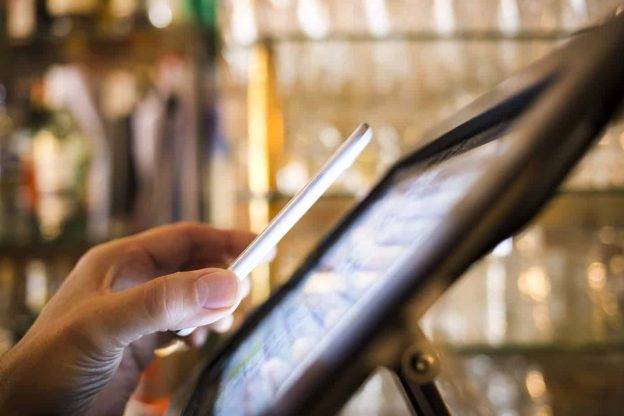
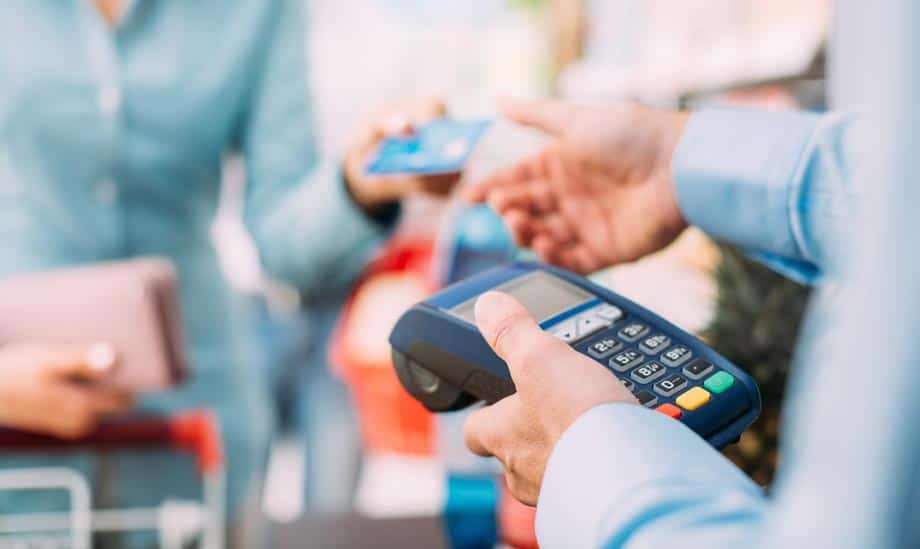
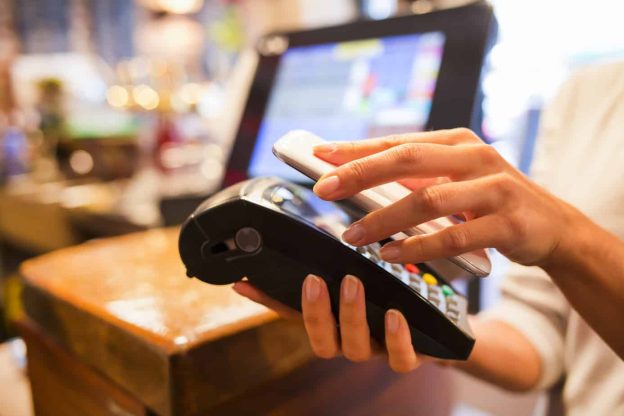
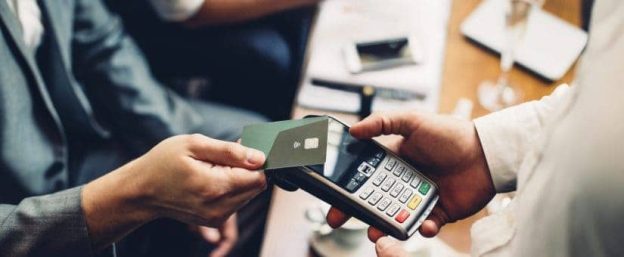
Contactless payments allow consumers to pay for goods or services without needing to physically swipe a card in a machine or pass the card to another person. By tapping a phone or card on or near a terminal, near-field communication (NFC) enables the consumer to transmit payment information without physically touching anything. For a variety of reasons, U.S. consumers were slower than their global counterparts in adopting the technology, but due to the fear of COVID-19 infection, they are quickly catching up.

A new study from Visa shows that more than two thirds of customers say they would switch to businesses now offering contactless payment solutions. And more than three quarters of consumers say they have changed how they pay due, in part, to the COVID-19 pandemic. The study involved a survey asking 250 business owners around the world their view of business operations in a post-COVID world, as well as a survey of 1,000 adult consumers asking about their payment and shopping habits.

And in a MasterCard survey of 1,000 Americans, 51 percent used contactless payments at the point of sale in March or April 2020, and half of those people said the COVID-19 pandemic prompted them to try the technology for the first time. Roughly half of U.S. consumers told MasterCard they’re using cash less, or not at all, due to the pandemic.

The pandemic rushed U.S. consumers to a place where the rest of the world already lived. In 2018, only 3 percent of cards in use in the U.S. were contactless as opposed to 64 percent in the U.K. and 96 percent in South Korea, according to a study by global management consulting firm A.T. Kearney.

The Federal Reserve’s annual “Diary of Consumer Payment Choice” showed cash, which was the #1 payment method last year, came in second to debit cards this year. Credit cards were a close third place.

Here are just a few points regarding contactless payments:

  • Contactless Payment Most Important Safety Measure
    The Visa survey reports 46 percent of consumers believe contactless payments are the most important safety measure for retailers to provide.
  • Signature Required
    One thing contactless payments cannot help are required signatures. Some retailers are still requiring signatures even in the middle of a pandemic.
  • Public Transit
    Contactless payments allow commuters to speed through a subway turnstile versus waiting in line to load money onto a transit swipe card.
  • Digital Coupons & Loyalty Points
    Some grocery stores still require customers type in their phone number to redeem digital coupons and receive loyalty points despite simultaneously offering contactless payments. One workaround is asking the cashier to type in the number.

Consumers are rewarding businesses that put COVID-19 safety measures at the top of their priorities. With more and more consumers adopting contactless payments in response to COVID-19, businesses who offer the technology are finding an increase in demand.

Host Merchant Services

Don’t run the risk of losing out on business: Host Merchant Services can help your business implement contactless payment capability. Depend on a stable and reliable payment processor to partner with your business to minimize the impact of worldwide instability. Payment processing should be the least of your concerns. Delivering personalized service and clarity, Host Merchant Services takes the time to explain your payment processing. We want you to understand your monthly statement, and we will ensure that your statement matches our promises during our sales presentation. If you do have questions, you can reach a live representative any time, any day. HMS offers wonderful customer service, as well as great rates.

Host Merchant Services even explains where our profit lies in the pricing structure to be fully transparent in all directions. Pricing fairness and transparency is our strategy in helping our customers find success with their businesses.
Google Pay to Offer Digital Bank Accounts by 2021

In early August 2020, eight banks in the US have announced that they are partnering with Google to offer digital-first bank accounts directly in the Google Pay app. The partner banks will manage the financial side of these accounts while Google will provide the front-end, intuitive user experience, as well as financial insights exclusive to Google’s digital bank accounts.

Offering built-in budgeting tools, as well as the financial insights, the Google Pay app will launch sometime next year. Known internally as the “Cache” project, the partnership originally started out last year with two financial institutions.

An extension of Google’s original ventures into digital bank accounts from Citi and Stanford Federal Credit Union (SFCU), the partnerships now include six additional banks, namely Bank Mobile, BBVA USA, BMO Harris, Coastal Community Bank, First Independence Bank, and SEFCU.

With the intent to help customers benefit from useful insights and budgeting tools while keeping their money in an FDIC or NCUA-insured account, Google will enable a digital experience that can meet the evolving needs of a new generation of customers.

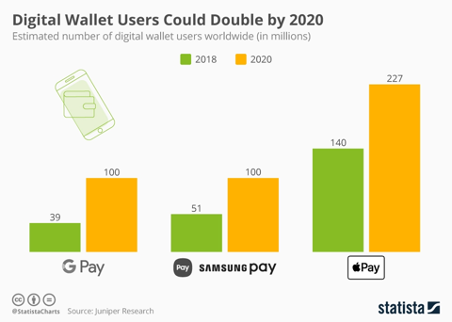
Up from 39 million global users in 2018, Google Pay is estimated to grow to 100 million users this year. Offering a complete digital banking service next year, Google did not indicate whether or not customers will have access to physical debit cards issued either through Google or through its partners.

Google Pay is an app allowing users to pay online or make contactless payments with their phone. Protected with multiple layers of security, paying with Google Pay is a fast and simple alternative to paying with cards. Using an encrypted number instead of your actual card number, Google Pay allows you to pay with your phone while your details stay secure. In addition to enabling rewards programs and cash back programs from a bank or PayPal, Google Pay also enables loyalty programs from chains.

Host Merchant Services

Depend on a stable and reliable payment processor to partner with your business during the upheaval of 2020. Payment processing should be the least of your concerns. Delivering personalized service and clarity, Host Merchant Services takes the time to explain your payment processing. We want you to understand your monthly statement, and we will ensure that your statement matches our promises during our sales presentation. If you do have questions, you can reach a live representative any time, any day. HMS offers wonderful customer service, as well as great rates.

How Will the Pandemic Change the Landscape for Restaurants in the US?

The Coronavirus pandemic has been wreaking havoc on the hospitality industry worldwide. However, some unexpected casualties are on their way for the US as a surprisingly large percentage of its restaurants decline and are forced to shutter their doors permanently.

Due to a mix of lockdowns and social distancing restrictions, many restaurants have frantically tried to adapt their business model to the “new normal.”  Since eateries could only send out their orders through takeout, online ordering, delivery etc. and many were forced to decrease their dine-in occupancy count, the sharp decline had to happen. In fact, experts suggest that the above factors are enough to lead many restaurants to shut their operations.

An Overview of the Current Condition of the US Restaurants

According to celebrity chef Wolfgang Puck, around 25 percent of small US restaurants will never see the light of dawn. He said, “They’re going to stay closed because they ran out of money and the landlords are evicting them. So it’s a really tough time.”

Running a restaurant is a challenge in a healthy economy, let alone managing a tattered one. For a restaurantowner to generate and maximize profits, he/she needs to fill at least 80 to 85 percent of the seats. Only then they can achieve break-even.

Now, with a pandemic-stricken economy, the costs and risks have greatly increased. The food delivery services, such as Uber Eats, keep 15 to 20 percent of the overall restaurant payment bill. Other than this, hosting customers means added costs to ensure that SOPs are followed, and safety measures like hand sanitizers, masks, and shields are available in quantities. However, not every restaurant can survive with these restrictions.

“The reality is not all of these restaurants are going to come back,” says Christopher Gaulke, a lecturer in the food and beverage area at Cornell University’s School of Hotel Administration. “Expectations are that as many as 30 to 40% may not come back, of the independent restaurants, your mom-and-pop-style sit-down [restaurants].”

On the other hand, restaurants like Domino’s and Chipotle, who solely thrived on takeout and delivery, are coping well.

The Takeout Restaurants Are Doing Fine

“Anyone that was in the takeout and delivery game before this has just done incredibly well,” Gaulke points out. “If you look at Domino’s, Chipotle, these chains that had invested so heavily in the technology for enabling third-party delivery or online ordering, etc., they’re all doing well.” Since their dine-in facility was only more or less an extra source of revenue, they don’t feel threatened and aren’t expected to lose everything to the pandemic.

The only way US restaurants can survive the COVID-19 crises is through innovation and working on their ability to adapt. They need to go beyond standard menus and design meal kits to cater to the masses. As Gaulke puts, “We have a company here in town that has started selling meal kits and groceries, as well as pre-made foods.”

Final Thoughts

It is never too late! Restaurants heavily dependent on in-house dining will continue to suffer compared to the delivery and takeout spots. Hence, it is advisable to invest time, energy, and money to redesign the restaurant business models and prioritize delivery, meal or grocery kits, and takeout if restaurants want to remain in the business through the COVID-19 pandemic.

Coca-Cola Introduces New “Pour by Phone” Contactless Technology

Contactless payments have been there since the 1990s, but the COVID-19 pandemic has brought it to the limelight. Moreover, the trend is here to stay for a more extended period, given the circumstances.

Recently, the global beverage brand, Coca-Cola, is all set to add a variant by launching a contactless option for its consumers’ feasibility regarding pouring their beverages. A touchscreen-operated dispenser would deliver around 200 drink options with a simple tap on the smartphone.

According to Chris Hellmann, Coca-Cola Freestyle’s vice president, “All Coca-Cola beverage dispensers are safe with recommended care and cleaning. However, given these uncertain times, people may prefer a touchless fountain experience.”

Speaking of this, this newly launched contactless solution makes selecting and pouring a drink just a few clicks away for consumers.

How Pour By Phone Works

All it takes for the customer is to scan the QR code on display, leading them to the cloud, bringing the Coca-Cola Freestyle user interface to the phones. Following this, they can feel free to select their favorite drink and flavor from the menu. Before making its way to the Coca-Cola, the idea was run through initial testing at Firehouse Subs, Five Guys, and Wendy’s locations in Atlanta.

We intentionally designed this so anyone with a smart device could pour a drink,” Michael Connor, chief architect of the Coca-Cola Freestyle, said in a statement. “When you have a tray or a sandwich in one hand, you don’t want to deal with downloading an app.” He also added that they have invested time and effort and went the extra mile to ensure necessary steps have been taken to make the solution easy and fast and the experience super-reliable.

The Need of the Contactless Technology

By this summer, the software will be available at around 10,000 Coca-Cola Freestyle dispensers. Also, all of the dispensers will be compatible with contactless technology by the year-end.

As per a study from Civic Science, about 65 percent of people going to a restaurant choose to pour drinks on their own than having a waiter do it for them.

It is pertinent to mention that QR code now making waves once enjoyed a maligned status. However, it has managed to come up as the enabler of contactless commerce. This development came in when China-based Alipay and rival Tencent’s started making use of QR code and went to fulfill their endeavor of standardizing it.

Subsequently, a consortium of platforms has emerged normalizing the use of QR codes to process transactions. Walgreens now accepts payment through the platform of Alipay while Apple is upping its game via Apple Pay. In addition to this, even Walmart has also altered its Walmart Pay app to incorporate QR codes and adopt the new touchless technology.

Final Thoughts

Ever since the COVID-19 crises erupted, many experts suggested contactless payments to curb the spread of the virus through cash, debit, or credit cards.

The news of contactless dispensers is another addition as going contactless became the new normal amidst the COVID-19 global crisis considering that many businesses resorted to the contactless payment option. All eyes are now on how these touchless dispensers by Coca-Cola would fair in the coming future.

This Proposal Would Allow Businesses to Get another PPP Loan

Congress has expressed interest in approving the next round of Paycheck Protection Program (PPP) loans. If this happens, small businesses can expect a wave of help coming their way. Following the approval, The Prioritized Paycheck Protection Program (P4) Act is a source of funding for small businesses. Businesses that employ less than 100 people can apply for aid through this program.

However, to be eligible for a second PPP loan, the business must have its first PPP loan entirely spent or near exhaustion. Moreover, they should display a 50 percent loss of revenue amidst the COVID-19 pandemic crisis.PPP paycheck protection program

Small businesses are hopeful that conditions on a second round of PPP funding are not too restrictive.

According to Senator Ben Cardin (D-Maryland), small businesses are facing a tough time, and will continue doing so for the near future. He urged Congress to take immediate action to help the businesses deal with the situation in the most efficient way possible. The lawmakers were quick to realize that the lockdown has been severely affecting small businesses. As the lockdown continues, it will continue to impact the small business community negatively. Hence, the approval is necessary for the second wave of PPP loans.

Cardin, the Small Business Committee‘s ranking member alongside other senators, Jeanne Shaheen and Chris Coons, put forward the bill before the Senate. In the House, U.S. Reps. Antonio Delgado (D-New York) and Angie Craig (D-Minnesota) have introduced a similar bill. Coons, a senator from Delaware, mentioned that the Paycheck Protection Program will enable many employers to seek federal aid. He also added that regardless of the closures coming to an end, numerous Delaware businesses would struggle to survive the damages caused by the recent COVID-19 crisis. The senators will initiate the plan in the upcoming Small Business Committee. The Treasury Secretary Steven Mnuchin assured the senators and expressed his open-mindedness for the idea.

It is important to mention that publicly traded companies won’t be eligible for the loan. Additionally, hospitality and lodging businesses chains can only access to a total of $2 million in loans. The legislation’s topmost priority is smaller businesses, particularly those in the restaurant and hospitality industries, as they have been affected most brutally during this pandemic crisis. The rest is for employers with fewer than ten staff members and businesses in rural areas. On the other hand, Kevin Kuhlman, Vice President of Federal Government Relations (NFIB), states that the 50 percent revenue loss is unreasonable, and it might stir conflict amongst many of its members.

According to him, if a business has had 25 percent or 30 percent revenue loss and not entirely 50 percent, they would still be faced with an existential threat, and their struggle should not be discounted, considering their high fixed costs and money owed to vendors.

Visa Looks to Make Plastic Cards Sustainable

Visa has an ambition to improve the world and minimize its environmental impact. Thus, they are collaborating with the CPI Card Group to produce ‘Earthwise High Content Card’ for Visa cardholders. The credit card, made of 98% upcycled plastic, would enable both contactless and contact payments. Besides this, the aim is to make cards EMV compliant with dual-interface capability.

Contactless Credit Card Payments

A closer look at the credit card’s composition details shows that it comprises a post-industrial upcycled plastic, rPETG. This step makes eliminating plastic waste possible. The material does not come from scrapped plastic. The upcycled approach involves using plastic derived from existing materials or used packaging. An example could be that of the industrial products detracted from the landfills.

Moreover, the company understands the negative impact of issuing more credit cards. Despite the fact that they want more customers, they are taking this step to reduce the damage to the environment. Hence, they took it as their responsibility to make efforts for a sustainable future.

Due to recent guidelines, the use of plastic is under great scrutiny. The rampant disposal of plastics cast a significant impact on the oceans and landfills. This issue requires an immediate solution.

Douglas Sabo, a leading figure at Visa, said that the company does not produce credit cards. However, they realize their responsibility and are collaborating with companies that make cards.

It marks a significant milestone in our pursuit of minimizing the negative impact on the environment. Additionally, he pointed out that the offering will protect the environment and prove beneficial to the payment industry.

The announcement about the introduction of the Earthwise High Content credit card came with a CPI survey. The survey showed that 73% of the participants want financial institutions to operate sustainably. On the other hand, 57% of them said that they are interested in and looking forward to new cards made of recycled materials.

The Other Side of the Coin: Issuers’ Take on the Collaboration

The card’s “life cycle” is the fulcrum of the collaboration between Visa and CPI Card Group as they make it available to numerous FI issuers. The company aims to produce a card with EMV technology while being sustainable. The process will impact the material used as well as distribution of the cards.

The initial feedback has been positive and encouraging from the issuers’ side, and consumers are more than willing to embrace the development owing to its environmental-friendliness.

Walmart and Shopify Team Up On E-commerce Marketplace

The collaboration between Walmart and Shopify is all set to conquer the e-commerce industry. They will provide fierce competition for Amazon, as around 1200 companies selling on Shopify will now be able to sell on Walmart U.S by the end of this year.

shopify payment processing

Shopify’s vice president of product, Satish Kanwar, considers Walmart of size and scale that only a few companies manage to match. He sees the deal as lucrative and fruitful for small and medium-sized businesses that will provide easy access to a whopping 12 million customers visiting Walmart every month.

The partnership between the world’s largest retailer, Walmart, and the e-commerce giant, Shopify, is an attempt to diversify the range of products and expand profitability. Other than this, it is a calculative move by both the companies to have a firm grip on the surge in online shopping because of the COVID-19 pandemic. According to a blog post by Satish Kanwar, their expertise in multi-channel commerce, coupled with Walmart’s reach, will storm the e-commerce industry. Furthermore, the alliance will lead to a better online shopping experience, both for merchants and consumers.

Walmart is No.2 to Amazon in U.S e-commerce space, but it has still suffered losses on occasion. The collaboration will boost both the scale and size of the business and generate more revenue.

Previously, Walmart CEO Doug McMillon expressed dissatisfaction with the way the marketplace was performing and appointed a new executive, Jeff Shotts. He also believed that the company had not done enough to support the marketplace sellers. The restructuring is an attempt to give the marketplace business a sound direction and provide sellers with all the necessary tools and services. In addition to this, he deemed it essential to successfully integrate the online business with its physical stores.

walmart apps online ordering

Both of the companies have been discussing this idea on and off, but only for the past six months have the talks intensified allowing for the plan to finally come to its fruition. They conducted a pilot test before the announcement with numerous Shopify sellers. The experiment turned out well, and Jeff Clementz saw potential in terms of thousands of sellers making their way to Walmart.

The partnership comes with its fair share of risk, but is likely to prove successful considering that Walmart is invite-only. This means it can vet the sellers to avoid any suspicious sellers. In addition to this, it also uses keyword recognition technology and uses machine learning to spot fraudulent sellers.

The Shopify merchants in the U.S will send out their application to Walmart to seek approval of selling. Once approved, their Shopify store will connect to their Walmart Seller Account. This will tie their product catalogs there and create product listings on Walmart. This way, it will be easier to track, monitor, and upgrade the inventory. Moreover, order and inventory management, in addition to the listings, will be in complete harmony.

Accepting Contactless Payments. What You Need to Know.

Your customers don’t want to touch your credit card machine.

It’s nothing personal, they don’t really want to touch anything that they don’t have to these days. Luckily for those of us that still use hand held or counter top credit card machines to either swipe or dip the chip to accept payment, contactless solutions are easy and inexpensive to implement. Chances are, the machine you currently have already has the hardware required to do this, so it might just be a matter of calling your merchant services provider to get instruction on how to enable it and allow your customers to utilize their contactless payment methods on it.

Contactless payment methods come in three common forms. Your customers will either have a smart phone, a smart watch, or an NFC enabled credit card. All of these use NFC, short for Near Field Communication, as the underlying way to perform the transaction. How exactly NFC works is beyond the scope of this article, suffice it to say, it allows your device or card to talk to a properly configured credit card terminal so long as it is within about 1 inch of the reader. It’s easy, it works reliably and it’s reasonably secure.

You might be wondering, ‘if all you need to be is an inch away from a reader, isn’t it possible for someone to get close to my customer and steal their card information?’ Yes and no. While it is technically possible to intercept the signal, the hacker wouldn’t be able to do much with the information. Smart pay devices like Apple Pay do not directly transmit sensitive card holder data in the transaction. Instead, they submit a unique one-time pass code to the credit card reader, which then sends that pass code to a very secure data center operated by your bank. The bank is then able to communicate with Apple to retrieve the actual card information. A process that happens within a fraction of a second and is completely out of scope of the interaction of the customer with the payment device itself.

To start allowing your customers to use contactless payments, start by checking if you’re already setup with it. The best way to check is to read the wording of the credit card machine when it comes time for the customer to give their payment. If it only says “swipe, dip or enter card” when it is ready to accept payment, it might not be setup for contactless. If you see the word “tap” anywhere, you’re already good to go. Find a customer that wants to use their phone, watch or NFC enabled credit card and try it out. It’s nothing more than holding the device within an inch of the face of the credit card machine.

If you don’t see the word “tap” and holding an NFC enabled payment method near the machine does nothing, you still likely do not need to buy a new machine. Now is the time to call your merchant services provider. Either you have a machine made in the last 5 years and it’s just a matter of asking customer service to help you get it enabled, or you’re due for a new machine. Most providers will provide a free terminal replacement. If they don’t, get a new merchant services provider. They fight fiercely to acquire and retain customers, so the relatively small cost of replacing your terminal for free is worth it to them to keep you as a customer. If not, there are plenty of providers out there that will happily give you a modern terminal if you switch to them.

As consumer sensitivity to sanitary habits in the retail environment continue, NFC is a great way for you as a retailer to make sure your customers continue to feel safe making purchases. The security of the payment itself, coupled with the fact that any would-be coronavirus’s can’t make the 1 inch jump through thin air, make NFC the go-to choice for payment acceptance. It’s either already ready to go, or you have a couple of free options to get it setup, you’ve got nothing to lose.

Five Things To Consider When Switching Merchant Services Providers In 2020

Because of the complexity of credit card processing, it’s hard to know when or if to switch merchant services providers. With the added confusion of automatically renewed contracts, equipment leases, and hidden fees, a business may feel it needs to outsource the research on their already outsourced credit card processor. Here are five things to consider when switching merchant services providers:

1. Contracts

Switching Merchant Services Providers

Before making the switch to a new credit card processor, check with your current provider on the status of your contract. You may have transitioned to a month-to-month contract, in which case it’s easy to switch. If you’re still under contract, or worse, your merchant account provider automatically renewed your contract, it still may be worth the potentially hefty cost to break the contract and switch in the long run, depending on the fees you’re currently paying.

2. Equipment

Leasing equipment is one of the least cost-effective aspects of merchant services. If you’re currently leasing equipment, it would be in your business’s best interest to find a new credit card processor that will either sell the equipment to you at cost or – in an ideal world – give you equipment for signing on to their services.

3. Rates & Fees

Interchange fees are confusing, and because of their complexity, many merchant service providers can sneak extra charges into your monthly bill. If your business is using any payment model besides the interchange plus payment model, it is almost guaranteed you are paying more than you need to. The best merchant services at least offer the interchange plus model for pricing. This alone is a reason to make the switch. 

4. Payment Methods & Security

Cyber Security Data Breach Protection

Your merchant service provider should be able to provide the latest security and technology enhancements available. To protect your business from the liability of a fraudulent charge, your credit card terminal needs to be EMV-compliant at the least. Beyond security, depending on your business and clientele, you may even want to offer NFC-based payments such as Apple and Android Pay

5. Customer Service

The person who sold your business your current merchant services contract is not the same person answering the customer service line. If your merchant services provider is not supporting you 24 hours a day, 7 days a week, you may need to look elsewhere. Your business can’t afford to wait on a callback. You need assistance when you need assistance. Not to mention, the customer service representatives should actually be helpful when you call. Try a test run with your current merchant service provider to see how their customer service will help you when you really need it.

Host Merchant Services

Delivering personalized service and clarity, Host Merchant Services takes the time to explain your payment processing. We want you to understand your monthly statement, and we will ensure that your statement matches our promises during our sales presentation. If you do have questions, you can reach a live representative any time, any day. HMS offers wonderful customer service, as well as great rates.

Contactless Payment Trends in 2020 – Apple Pay, Google Pay, NFC, and More

Amidst the global pandemic, many countries are resuming the routine life and easing the lockdown. However, recent studies have shown that around half of the US population is still worried about their health and how shopping, eating, and social interaction can affect it. Therefore, many businesses and shoppers are more inclined to make contactless payments, which has shown a 40% jump in the first quarter of 2020. As the payment trend has grown prominence, NFC-enabled payments across the world can exceed $130 billion within 2020.

What are Contactless Payments and Their Global Outreach?

Contactless payment is a well-encrypted, secure payment mode to buy products or services using NFC (near field communications) enabled devices or cards. When the reader and payment device are near, it activates NFC chips to exchange encrypted data for money transfer. In simple terms, you wave your device in front of an NFC powered payment terminal to make purchases, contact free. But you also require NFC-encrypted payment apps such as Apple Pay, Google Pay, Fitbit Pay, or Samsung Pay on your mobile device to make the contactless payment happen.  Some credit and debit cards also have contactless capability embedded in chips that you can then wave or tap to pay on an NFC enabled reader.

Before the Coronavirus outbreak, this global trend wasn’t prevalent in the US, as only 10% of the consumers were using the technology. Europe however had the largest share in the contactless payment terminal market, due to an increase in smartcard rollouts and technological advancement. According to UK Finance, around 1/3rd of all the card-based payments happened through contactless methods in Q1, 2019. However, the Asian region has been slower to adopt NFC based technologies due to its efficient QR code system that doesn’t require select apps, or POS systems.

Coronavirus – The Driving Force for Contactless Payment in the US

The number of digital wallet users worldwide has doubled in 2020, with Apple Pay and its 227 million users becoming the most prominent, according to the Wall Street Journal.

apple pay google pay samsung pay

https://www.statista.com/chart/19972/digital-wallet-users-double-2020/

The pandemic has redefined consumer priorities, making no-touch payments a necessity. New York Transit Authority laid the groundwork in May 2019, when it announced contactless payments for select subway lines. Being early adopters, they were still pretty late in the global market in relation to other significant metropolises, including London Underground System which adopted the technology in 2014. It is not only public transport, but the worldwide financial industry that relies on contactless payments today. In the Netherlands, every store allows no-touch payment methods, whereas the US didn’t have major adoption for NFC until 2019 when contactless payments increased by 150%.

Meanwhile, food services brands such as Starbucks, McDonald’s, and Dunkin’ led the way with their contactless payment apps. The wearable market also accelerated the adoption rate in the US with the popularity of smart watches and similar devices. The tech-giant, Apple, teamed up with many different brands to improve mobile payment experience. Scooter rental company Bird and clothing retailer Bonobos some notable partners offering NFC-enabled payment to Apple users, without the need for any third-party apps. Small businesses have also reported a 27% growth in the contactless payment made through smart cards and mobile phones.

Nevertheless, card issuers control the widespread adoption of contactless payment in the US. Analysts believe NFC-enabled technology can coexist with traditional card systems and mobile wallets as depicted by tech-savvy nation worldwide.