Author Archives: hostmerchantservices

computer for bitcoin mining and bitcoin coin on a stock market charts 101144504

Cryptos’ Place In Digital Commerce’s “Walled Gardens”

Cryptocurrencies have become controversial for many reasons. These currencies are volatile, and it is hard to tell who will support them and which authorities will refuse to accept them. There’s also a sense of immaturity in some segments, as many people post social media messages bashing some currencies, not to mention some currencies are promoted more as a joke. Increased worries about how cryptocurrencies are contributing to global warming only make things harder for some parties.

There is still a potential for cryptocurrencies to become more valuable in the digital commerce world. The walled garden approach may be a necessity for the industry’s future. It will bring in many retailers who might be interested in doing business with cryptocurrencies.

The walled garden approach entails buyers and sellers getting together through many settings or a singular platform. People can exchange currencies in the environment through one infrastructure that can support all these settings or other features. A digital wallet platform can be essential to the success of the process.

The setup allows for a space where people can handle their assets. While there are rules on who can enter a walled garden ecosystem, the platform still offers a useful system that everyone can follow.

Understanding How a Walled Garden Works

The idea of a walled garden sounds like it is restrictive, what with it being in a closed setup. But the system itself can be advantageous, as it provides a more controlled approach to managing cryptocurrency payments. It can create an organized setup that allows transactions to work effectively and in moments.

A walled garden operates as a closed ecosystem. The end-user is limited to whatever services or apps one can utilize. The end-user will be led towards specific apps or solutions for handling transactions or other activities.

For cryptocurrencies, the walled garden will entail people being limited to using a specific app or exchange to handle currency transactions. The ecosystem will support various cryptocurrencies and can handle as many apps or other platforms as it wishes. The walled garden operator has control over whatever it wishes to program or utilize.

What Organizations Could Use These Walled Gardens?

There are no limits over who could use these walled gardens to keep their setups up and running. One example to explore entails how PayPal is managing cryptocurrencies.

PayPal has an ecosystem where users can link their wallets to Coinbase. Customers can then buy currencies through the exchange. PayPal’s goal is to make these currencies accessible for shopping purposes. Customers can use the crypto items they have in their wallets and use them to pay for items through various participating merchants. PayPal has reported substantial growths in its user base and activities over crypto payments, especially as the system makes it easier for people to complete these payments.

The retailer and auction site eBay also has hopes to establish a crypto walled garden. eBay hasn’t participated in the crypto market since abandoning its support of Facebook’s Libra project a few years back. But eBay has expressed some interest in returning to the crypto field, particularly with an ecosystem that supports crypto payments. The walled garden system would likely entail eBay limiting people over what they can use for collecting crypto funds and moving them. But with eBay having so many retailers out there, the places where people could spend those assets would be varied and diverse.

Will Amazon Take Flight?

Amazon could also start a separate ecosystem where it can handle cryptocurrencies. As the world’s most influential retailer, Amazon has been at the forefront of impacting different transactions in many forms. The potential for Amazon to start accepting more currencies and to use a walled garden that links customers with various entities could be significant.

Upcoming new Amazon CEO Andy Jassy has expressed an interest in entering the crypto industry. But most people who use Amazon Web Services systems use it to manage data and not handle cryptocurrency payments. But AWS will support blockchain transactions soon and could start making use of Bitcoin and other currencies. Such support might push the crypto industry further, especially since Amazon has immense influence over the digital commerce environment.

Some places have already been using cryptocurrencies in their platforms. Newegg has been a longtime supporter of Bitcoin, and Shopify has allowed business operators to accept currencies of all sorts. Shopify even joined the Facebook Libra project, possibly linking it with a new currency that the social media giant might produce someday. Facebook has been trying to produce something new for a while, but whether it will come to fruition remains unclear.

The Walled Garden Is An Evolution

The walled garden approach that so many providers might use shows how the crypto industry has evolved over the years. The walled garden allows for more freedom to manage currencies. While there are rules as to what platforms can work and who people can contact, there is greater flexibility over what assets can work on the platform. More retailers and parties can link with one another if they stay within the same walled garden system.

The walled garden system is an evolution over the Facebook Credits platform from nearly ten years ago. Facebook Credits had a platform that didn’t offer much of an incentive to retailers, keeping it from going far. But today’s new walled garden setup makes it easier for businesses to grow and succeed. They can work with a more thorough infrastructure that includes more trusted sources for funds.

People looking for new ways to spend money should see how the walled garden ecosystem can work when handling cryptocurrencies. The physical and digital fields are uniting, as more people can use cryptocurrencies for payments now than ever before. There’s a great potential for more parties to complete transactions in secure environments. People who are interested in cryptocurrencies will need to see how these could work well soon.


woman pressing on virtual screen and selecting quality management 90298183

How to Implement Virtual Account Management (VAM)

Virtual account management or VAM is one of the most unique trends to explore in today’s banking climate. VAM is a practice where a bank will move transactions in a master physical account to multiple virtual ledgers. These include extra ledgers that work separate from others.

VAM is ideal for many reasons:

  • A bank will manage fewer physical accounts. The bank’s operations will remain consistent even with there being fewer items on hand.
  • There isn’t a need to operate many physical cash sweeps. A bank will have more time to manage other functions.
  • The money the people will invest will be secure. Their funds will be in virtual setups that do not have any physical money in them. The people can access their physical funds by request, but they will not stay in one singular place.
  • A bank will spend less money managing its accounts thanks to there being fewer physical assets to run at a time.
  • People can review their cash positions at any time. They can review their working capital reports in moments.

People can manage their financial decisions in less time thanks to virtual account management. The implementation process requires a few points to ensure it stays functional while still being accessible for everyone’s needs. The work should be about providing freedom and control while ensuring all people in a system understand what works and that they have enough support for their funds.

Review Banking Objectives First

To start, a bank must look at the goals it wishes to attain through virtual account management. It could reach any goal, from reducing physical capital to giving clients more control over their funds. The desire to increase transparency in the workplace is also essential to note. Every bank should have ideas for what it wishes to do with its funds if it wants to be successful and effective in handling its assets here.

Produce a Centralized Account

The VAM process must be fully centralized if the system will work. The bank will divide balances in a deposit account virtually instead of physically.

Each account in the VAM platform should link to a central network. After this, these accounts can use different setups based on unique parameters. The bank can select these parameters, although the client might also have some control over whatever works here. It could choose to incorporate certain payment networks, although a system-agnostic approach is ideal in this case.

Proper centralization is necessary to ensure there are set rules for how people can divide their accounts. Failing to centralize things can result in complicated rules or mixed messages surrounding whatever might work.

Establish Configurations

The virtual accounts must be established with specific configurations that fit the bank’s goal. A bank can create many subledgers surrounding different items:

  • Specific assets may move to some new ledgers. These include checking and savings assets that a customer wishes to divide in separate spaces.
  • Customers can plan additional ledgers for dependents. These include children who will have separate accounts.
  • Loans and other debts may also feature separate sections. Users can review their loan data and figure out how much they need to spend to pay back their dues. The system can also feature a calendar or planner highlighting what someone should be doing when completing one’s payments here.

Virtual account identifiers may also work. A bank can select unique identifiers for each small ledger, although individual clients might adjust them if they wish. The specifics can highlight whatever someone finds suitable for work.

Create New Rules For Each Subaccount

The VAM process also needs new rules surrounding how each sub account can work. A customer can use as many sub accounts as necessary, although they should be easy to control with unique rules for every operation one wishes to plan. A VAM setup can work with different rules for everyone’s needs:

  • Support for multiple currency types is necessary. Fiat currencies are the only ones most parties support, but cryptocurrencies may also work in some situations.
  • New interest rates may also appear in some accounts. These rates can feature different values separate from what one’s regular bank account uses.
  • People can calculate cash flow forecasts for each sub account. New rules for how each one works will be vital to their operation.

The platform should include an interface that lets the client adjust these rules as necessary. It gives the client more control over one’s funds. The effort also helps the business find smart choices for handling money.

Self-Service Helps

One idea for VAM implementation involves producing a self-serve setup. Self-service is necessary for VAM, as customers need access to ensure everything works well.

A self-serve VAM setup can include a platform where the customer can add whatever ledgers one wishes. The system must be programmed where the customer understands what is open and can create something unique and useful.

A System-Agnostic Approach

Banks can utilize various platforms, including multiple payment systems. A proper VAM setup should be system-agnostic, meaning it can work regardless of whatever system someone is trying to use at a time. The system-agnostic approach ensures full accessibility while being universal for all needs that customers may hold.

Accessibility Is Critical

The most significant part of virtual account management efforts is that they allow customers to track all their financial positions in one spot. Each position can work independently from one another. VAM lets people see how their funds are working and gives them control over their experiences, giving them the support they need over their money. The need to implement VAM well and to keep it functional is critical to the industry’s success.

It will be exciting to see how virtual account management plans work. There’s no telling where the field will move, especially since it will not be tough to incorporate the work. But it won’t be too tough to manage if everything works right.

chargeback neon concept self illumination background 178854354

How to Analyze the Root Causes of Chargebacks

Chargebacks are disputed everyday at every business, sometimes they can be difficult but have you ever looked back and analyzed the true cause for the chargeback?  Chargebacks are a common problem for businesses and especially for high-risk businesses. Chargebacks protect the consumer from fraudulent transactions as well as rectify errors from simple miscommunication. It’s not just small businesses that are subject to chargebacks; large, established retail enterprises fall prey to chargebacks as well. As such, it is essential to analyze the root causes of chargebacks carefully. Such analysis may uncover genuine problems with specific areas of operations of a business that may need to be rectified to wrest control over chargebacks.

Below, we explore what chargebacks are, why they are essential to dispute effectively, the root causes of chargebacks, how to analyze these root causes, and what preventive measures to take to prevent chargebacks from occurring.

What are Chargebacks?

Chargebacks are payment disputes the customer raises about a particular charge to their credit card. When a chargeback arises, the issuing bank withholds the funds from the merchant until it decides the accuracy of the transaction. If the bank rules for the business, the funds are released to the merchant. However, if the bank rules in favor of the customer, it reverses the charge on the customer’s credit card. The chargeback process is often a lengthy and cumbersome process that requires a significant amount of documentation and recordkeeping.

Importance of chargeback disputes

Disputing chargebacks is a crucial facet of running a business. There are specific cash flows associated with transactions involved in chargebacks that are suddenly on hold and may not possibly arrive. This becomes even more pronounced because the business has already incurred the costs of manufacturing the product, shipping it out and may now be assessed chargeback fees if the dispute is unsuccessful.

As businesses go through the motions of the dispute, they simultaneously need to get to the root cause of why the chargeback transpired. Everything from fraudulent activities to genuine issues the client raises, analyzing chargebacks’ root causes is vital to tackle recurring problems effectively.

Analyzing chargebacks root causes 

Merchants often revert to focusing on the disputing chargebacks and the revenue lost and how to adjust budgets for the cash flow that will not be coming in. Those are necessary steps for a business to carry out but only the first steps in a series of actions they must take.

There is a lot of information available in the chargeback merchants receive. For starters, merchants can analyze the cause of the transactions being disputed. Reviewing these causes can help merchants get to the root causes of chargebacks in their business. This root cause analysis may uncover that specific changes may be needed in any one of the following areas:

Customer Support – Evaluate whether the customer made any effort to reach out to the support team to rectify any qualms about the product before filing a chargeback complaint with the bank. It is essential to understand the consumer journey and identify any friction that can lead to miscommunication or a lack of communication that manifests into chargebacks unnecessarily.

Delivery – What are the merchant’s processes around the delivery of goods. It may be a bit hard to successfully dispute a chargeback when a child’s Christmas gift ordered a week in advance is received on Easter. Preferred delivery vendor relations may be offering your charge rates but costing you much more in lost revenue and negative customer feedback.

Sales Staff – Having a professional and well-trained sales staff is vital to a robust revenue pipeline and happy clients. If your sales team is overpromising and hyping up expectations of customers that don’t pan out upon delivery, it may be time to revisit your company’s sales tactics. You want to ensure overzealous sales staff aren’t being too aggressive in closing sales that customers end up regretting shortly after purchasing the product, let alone receiving it.

Product – This is a critical facet to consider. There may be a shortcoming with the product that the client doesn’t value as much. Is it a manufacturing or quality flaw? Are there durability issues? Lower quality goods can lead to client dissatisfaction and chargebacks. Furthermore, word of mouth in today’s hyper-social environment can further alienate clients from your company’s products if quality issues lead to chargebacks.

Card Related issues – Was the card valid? Was all the credit card information collected to process the payment? Merchants should carefully review the process in place of collection, verifying, and storing card data to ensure that there aren’t any inefficiencies in that operation leading to chargebacks.

Safeguards around chargebacks

Once businesses understand the true nature of the problems that give rise to chargebacks, they can successfully place safeguards to avoid them going forward. Some examples of safeguards can include:

Appropriate training levels for sales staff to work with clients by partnering with them as trusted advisors instead of looking to close a quick sale and moving on. It may not work all the time and may require changes from the top-down. However, it can reap significant benefits from both a revenue and branding perspective.

Emphasize stellar customer support. This will also require an investment of time and money in training and upskilling your support staff to set the appropriate tone of empathy towards current and future clients.

There are specific technologies merchants can invest in to avoid the chances of fraudulent transactions. These include:

  • 3-D Secure – an online authentication protocol for card not present transactions.
  • Tokenization – a storage mechanism of securing card data being used to process a payment.
  • BIN checkers – used by merchants to ensure the card details used in transactions are legitimate before they process the payments

Understandably, chargebacks are not an easy issue to tackle for businesses. Chargebacks cost real money. Merchants end up paying for chargebacks in many ways; through lost sales, shipping and handling costs borne by them, and chargeback fees by the merchant account provider. The merchant account provider may also start evaluating the merchant as a high-risk business leading to higher payment processing rates.

Sometimes it isn’t in a merchant’s control how a chargeback dispute is settled. However, there is hope and reason to be optimistic and take action on the matter. Merchants have a lot of control over chargebacks arising. By being deliberately proactive and using the steps in tackling chargebacks it will become easier to dispute them. 

business statistics success concept businessman analytics financial chart and graph 88207955

A Review of Wave Accounting Software

Did you know Wave Accounting Software is a free alternative to more expensive accounting software like QuickBooks and Sage? Despite its lack of capabilities, Wave’s boundless expenditure tracking and free invoicing make it a perfect choice for many freelancers. 

Most things in life, including Wave Accounting and Wave’s other free programs such as Wave Invoicing and Payments by Wave, have some limits. In general, its free accounting and bookkeeping software provide freelancers and solopreneurs with accurate, uncomplicated accounting support for the wonderful price of zero dollars.

When you work for yourself, you don’t need to spend hundreds of dollars a month on pricey accounting software. Wave accounting software could be a good fit. It crunches numbers and handles payments swiftly.

In addition to freelancers and independent contractors, Wave might also be utilized by small businesses with employees. Payments for payroll or customer payments are not included. Some of its accounting software is updated with new features, but the corporation is continually making subtle internal tweaks that could improve your day-to-day accounting operations. Customer statements and cash basis reporting are among the new features Wave has implemented since our last study. Earlier this year, H&R Block bought the Wave software company.

What are the other costs to use Wave?

Whereas other firms charge for their services, Wave’s primary accounting operations are free.  Payment processing charges per transaction are 2.9 percent + 30 cents (3.4 percent plus 30 cents per transaction for American Express). Bank payments are subject to a 1 percent fee, with a $1 minimum. As a base service, Wave Payroll costs $35 per month, plus $6 per employee or contract. For freelancers and others who cherish every dollar, Wave’s free status is a big plus.

For small businesses, Wave’s lack of a monthly fee may not be a problem. A four-tiered price structure is available for QuickBooks Online users. If you want to start small, you can do so, and then upgrade to a full-featured version when you need it. QuickBooks Simple Start costs $25 a month, while QuickBooks Advanced costs $150 a month, according to the company’s website. QuickBooks Plus ($70 a month) is the most popular product in the line. They all offer 30-day free trials and 50 percent off the first three months of service.

Great Setup Tools

While registering for Wave, you’ll be taken through Wave’s onboarding process. What is the first step in the setup process? You submit your name, company name, and industry. In the beginning, I chose accounting. Following this, the wizard asks you some questions about your work efforts. Using drop-down choices, you enter your responses before moving on to options such as connecting your bank or controlling your transactions and setting up sales tax, among others. A step that requires further preparation will be directed to this page. Click the Launchpad button to return to the original setup options if you’ve completed all the essential steps in one segment.

About this step, there’s conflicting feelings. If you click on it, you will be sent to your Chart of Accounts. Depending on which categories you create, you can add, amend, or archive the accounts you create. Bank and credit card accounts are a given.    

In addition to utilizing the website’s toolbar and Settings menu to set up Wave, you’re less likely to make a mistake by using the dedicated setup procedure. Around the fact that the settings menu is always available; you can add and change information as needed and read through Wave’s options before you start, especially if you haven’t completed the entire setup procedure.

The fact that Wave is built on data sharing makes it essential that you link to your financial account. You can enter transactions manually, but it’s nearly impossible to run a business this way because you won’t know whether deposits and withdrawals have cleared until your monthly statement comes. Transactions can be downloaded for both corporate and personal use. Use the categories Personal Expenses or Withdrawal and Deposits from Personal to categorize these transactions for bookkeeping purposes. When you log in, the site updates your information every time you log in.

Smooth operation

Simple to use is a claim made by all online accounting services. Wave lives up to its billing and delivers on its promises. In many ways, it’s even easier to use than FreshBooks. While Wave adheres to the concepts of double-entry accounting, it does the grunt labour behind the scenes. As such, QuickBooks Online has the same limitations as QuickBooks Desktop. Although it has a wide range of features, non-accountants may quickly learn how to use it and keep track of their accounts, despite its comprehensive capabilities.

Wave pros and cons

A week-long Starz trial on Amazon Prime is not Wave—you won’t be hit with an unexpected credit card charge a month later because you forgot to cancel. When you sign up with Wave, you don’t need to supply any credit card information; just your email address and a password.

Aside from freelancers and solopreneurs, Wave can also be beneficial to other small business owners. For starters, the company’s payroll plans are affordable: It costs $20 per month to subscribe to Wave’s self-service plan (see below). As a result, if you’re looking to package accounting and payroll, Wave’s full-service payroll plan starts at $35 per month.

There are 14 states in which Wave’s full-service payroll is not available at this time. All 50 states are covered by most other major payroll firms, like Gusto and QuickBooks Online, so if you need payroll tax service, you’ll want to seek elsewhere.

If you’re self-employed, you won’t have to worry about paying your employees. Both freelancers and small-business owners with employees will find that Wave’s only mobile apps are its invoicing and receipt apps, which is a downside for both. It has garnered positive reviews on both the Apple App Store and Google Play (which is pretty rare in the world of small-business accounting apps). You’re out of luck, however, if you were hoping to use Wave to do accounting on the go.

start and fund online boutique

How to Start & Fund an Online Boutique [2023 Update]

Getting to start an online boutique for many aspiring entrepreneurs can be a dream come true. It’s an opportunity to color the lives and styles based on your creativity. However, getting to start a boutique involves a tremendous amount of work that can be daunting, and almost discouraging. You need to find the appropriate retail and warehouse space, acquire the right employees and all the relevant business licenses, and ensure that you have all the proper tax and incorporation paperwork filed with municipalities.

start an online boutique

Of course, with the help of the internet, starting an online boutique is much easier. Business owners can set up eCommerce stores and manage warehouse activities away from populous and in-demand urban centers as the storefront is now online. This degree of freedom can help merchants focus more on securing finances, the appropriate marketing channels, and the design aspect of their work. Whether you’re a serial online entrepreneur or a novice, below we look into what you need to do to start and fund an online boutique.

What’s your niche?

One of the best ways to build brand recognition and clientele is to be known for quality and have the best of something. You need to decide on what that something is. Specializing in a niche market within an online boutique will help focus on one specific small area, as you’ll be in the beginning phase of starting your online boutique.

Focusing on a niche will help to build expertise and further perfect that craft. This can generate cash flows that can fund other ventures as you branch out beyond your niche. A perfect example would be Donna Karan, who started with her Essentials line, which included seven articles of clothing positioned around the bodysuit to be mixed and matched. Donna Karan’s niche was the bodysuit. She later expanded a full clothing line a few years later with DKNY, followed by DKNY Jeans and DKNY for men in the years to follow.

You can grow to have many different design lines under your umbrella, but you need a cornerstone niche to get you started. That is just the beginning – it is the first step. There is still a tremendous amount of work yet to be done.

Start an Online Boutique – Sourcing material

Once you’ve decided on what your niche focus will be, you need to ensure your materials. This is one of the most critical elements for an online boutique. Once online shoppers receive their first order from you, their first impression of your product will be the material they feel. Quality and durability are vital for your branding and one that is expected to remain consistent at the very minimum or improve over time.

Start an Online Boutique - Sourcing material

Developing the proper relations for inventory and materials partners can be beneficial as you may get bulk discounts with some degree of assurance on quality, logistics, and delivery times. Unfortunately, developing this relationship takes a lot of effort and thorough vetting of numerous suppliers, checking hundreds of samples. The result will be the backbone of an online boutique’s operations and branding.

Online Presence

Establishing an online presence for your online boutique will be the next hurdle to cross. Since your online boutique may not have a brick-and-mortar presence initially, your storefront is your website. Merchants need to ensure an intuitively designed website interface guiding potential visitors through the consumer journey from landing to purchase.

There are several other strategies online businesses need to employ to spread the word, such as social media. There are numerous platforms merchants can use to target specific audiences.

Similarly, the online boutique can also set up accounts on popular online platforms such as Shopify, Amazon, or Etsy to reach consumers via established online marketplace brands.

Business Formation and Tax Registration for Online Boutique

Another fundamental requirement that entrepreneurs need to pay keen attention to is the different conditions of business formation. This may require a lawyer to guide you through the process and an accountant for the various financial and clerical paperwork to be completed. You must decide which state you should register your business in, where a company may be required to have a legal presence, etc.

Business owners will also be required to get a Federal Employer Identification Number from the IRS and form the basis of their state-level documentation. There will be requirements for state sales tax registrations that must be filed with respective state departments of finance/treasury. 

Compliance with federal and state-level tax authorities does not stop there. On an ongoing basis, the business will need to collect all relevant state-level sales taxes and file them with the tax bodies. Similarly, if companies hire employees or pay themselves, the applicable payroll taxes will need to be deducted from their paychecks and submitted to state and federal tax departments with their required tax filings.

Finally, businesses will need to ensure they can accept online payments. Merchants should carefully evaluate payment processing services to see that pricing is detailed and straightforward. What type of tertiary services do they offer, online gateways, virtual terminals, assistance in registering, and developing a website? Are there any early termination fees? These are all characteristics of payment processors that merchants would need to consider carefully.

Starting and managing a business is no easy feat. The internet and numerous online marketplaces and platforms have made that task a lot more feasible. Social media has helped eliminate intermediaries and reach consumers directly. Nonetheless, entrepreneurship still requires meticulous planning, a fanatical focus, tremendous grit, and a bit of luck. With hard work and time invested in the right partnerships, online presence, brand development, and compliance with tax regulations and business formation laws, aspiring entrepreneurs can be well on their way to starting their online boutiques.

alphabet letter block in word high risk on wood background 159541643

Why is a Business Considered High Risk For Merchant Services?

High risk businesses are subject to more expensive merchant service charges than others. A business will spend more to process each transaction if it is a high-risk entity. It could also be subject to increased charges. Contract terms for the business could also be restrictive. Some companies may even have some of their revenues tied up in rolling reserves. They may not get those funds in their reserves until weeks after they are paid. 

The issues that come with being a high-risk business for merchant services are significant. But what would cause a business to become high-risk in the first place?

You must be aware of these concerns that can cause a business to become risky for merchant service providers. There’s always a chance you might fall into this category.

High Risk Business For Merchant Services – Top reasons

The Industry May Be Risky

The most common reason why a business can be considered risky is because of its format. Businesses in certain fields are more likely to experience chargebacks, fraud, and other concerns.

High Risk Business - Online electronic sales

Some of the industries that are often high-risk include:

  • Adult product businesses
  • Bail bonds
  • Online electronics sales
  • Debt services
  • Timeshares
  • Telecommunications sales, including for VoIP services or calling cards
  • Travel services
  • Firearm dealers, including those who sell ammunition
  • Software downloads
  • Dating and personal sites
  • Online auctions
  • Multi-level marketing programs
  • General business opportunities; include promotions where someone could invest in a business endeavor that hasn’t gotten off the ground yet

These industries and many others have higher chargeback rates than others. Their financial stability and legality can also be in question in some cases. There’s a chance a company might shut down or become heavily regulated, causing its risk to increase.

The Products or Services Are Questionable

A business can also be a high-risk one if it sells products or services that might be of concern to some merchant service providers:

High Risk Business - selling memberships
  • A company sells expensive items. These include customized vehicle parts, high-end computing systems, and many other high-price things.
  • A business can provide memberships or other items that entail automated recurring billing processes. Billing errors often occur here, thus leading to chargebacks.
  • A business could sell items that banks might ban. These banks could prohibit the sale of certain products or services. While some banks may allow these sales, the fact that others will not do this could increase a company’s risk.
  • Some of the products a website offers can be future deliverables. These include things like event tickets, hotel or transportation reservations, and other things that will be scheduled for later. A business may issue chargebacks or returns for cases where these events are cancelled or the purchaser has buyer’s remorse and wants to walk back the transaction.

These threats are significant ones that can occur among many businesses. A business can review its operations to see what types of items or services it sells to determine its risk.

MATCH Listing

High-risk businesses will be on the MATCH list. The Merchant Alert To Control High-Risk list highlights merchants whose accounts have been terminated in the last five years. The MATCH list highlights companies that have struggled to manage their accounts and have been deemed unable to work with them as desired.

Not Enough Financial Data

A merchant service provider may list a business as high-risk if it doesn’t have enough company financials to review. A business must have enough money to support its chargeback liabilities. A company that doesn’t have enough proof to show it can handle chargebacks will be charged more.

Not Enough Financial Data

This problem is more prominent among newer businesses. But more established companies could also have the same issue. Some businesses may be willing to conceal their financial data to reduce the risk of losing funds.

Poor Credit

A business could also have a poor credit rating. The weak rating may be due to a business running up significant debts and being unable to manage its inventory. A business with a weak credit score may be high-risk due to how it might be unable to manage chargebacks and other threats. A business needs to manage its funds well, or it will be unable to get a better credit rating going forward.

Time In Business

Most business owners don’t assume that the amount of time they’ve spent in business will influence their risk. But businesses that have been around for a while won’t be as risky to merchant service providers. A long-running business will be more established and will have an idea of how it can run its operations. It will be more stable, thus reducing its general risk.

Online Operation

A business can reduce its risk for chargebacks by managing physical card transactions. But companies that don’t see the actual cards these customers use will be high-risk entities.

A business that operates online will complete CNP or card-not-present transactions. These deals allow someone to enter one’s card data online. While a website might offer a secure platform for transactions, there’s always the chance that someone might engage in card fraud. Someone who isn’t the proper customer might take the physical card and enter it into a website for a purchase. The risk of purchase fraud will increase the general risk that the business holds.

Check Your Business Status

Take a good look at your business and see how it operates and functions. Be aware of what it is doing and that you have control over how you operate things. Look at what you sell and how your finances look, especially if you’ve been around for a while. Your review can help determine if your business is a high-risk entity and if you’re going to spend more on credit card processing efforts.

But don’t think that if you’re a high-risk business operator you can’t find merchant services. You can still look for many merchant services that can support high-risk entities. But be advised that you will still pay more for the service than if you were at a lower risk than what someone is often willing to afford or support.

payment with card cash 34477154

What is a Credit Card Imprinter?

A credit card imprinter is a manually operated, non-electronic device that prints the face of your credit card and transfers it to a duplicate slip. After successfully printing your credit card, you sign it, and the owner or dealer tears off the perforated edge, keeps the original copy (above) and provides you with the hard copy (below). 

Credit card printers have earned a dubious reputation as one of the ever-growing ranks of obsolete or near-obsolete items such as cassettes and DVDs, landlines, and movie cameras. Most of these devices were about the same size and shape as a standard handheld adding machine. Most retailers and other businesses in the 21st century use some electronic barcode scanners. But some businesses still need a printer, especially when processing credit cards without a printer.  

Today, several companies use manual credit card devices such as these printers for many purposes, such as when they take a customer’s order and later want or need to enter the card details at a virtual terminal. It also works as a backup option if your electronic credit card scanners fail or a power outage occurs. 

A credit card printer essentially uses a small setup. Your card is secured with a piece of paper; Carbon paper can work if necessary. Typically there are three papers printed at once, so you can give the consumer and the issuer of the card a copy while you keep a copy to yourself. Old school card printers usually came with a personalized badge with your business information and the card data. Both of these features would appear on the same document out of convenience.

Other Concerns About Credit Card Printers and Manual Credit Card Transactions

Keeping a near-complete copy of a customer’s credit card information poses some security issues that you normally don’t need to fear. 

There are no fancy two-factor security and encryption functions here. The retailer makes a physical copy of the customer’s credit card information for further processing. You don’t have to worry about your receipts being hacked, but they can be stolen or copied. Any security should work for your business practices, including details on how they will store this data. 

You may want to keep the receipt for about 180 days, during which the customer can dispute the sale. If the receipts are no longer required, make sure that they are destroyed.

What does a credit card printer do? 

A credit card printer prints your credit card on a duplicate slip. One copy will be given to you and the other kept by the business owner. As the cardholder, you sign the receipt and agree to pay for any goods you purchase during the transaction. The owner sends the information to the bank. The money is then transferred to the merchant account after the lot is processed. Credit card printers are still necessary for many situations, despite advances in recent years. 


How Are Printers Still Used Today? 

Many companies still use credit card printers for a variety of reasons: 
Emergencies: If the company has a power failure, a printer is the only way to complete a credit card transaction. 

Record Keeping: When a small business owner processes credit cards through a virtual terminal, they must obtain the consumer’s credit card information to enter into the system later. A printer is the most efficient way to do this. 

Batch Processing: Small business owners often prefer to process all of their credit cards at once; printers allow the cashier to collect all of the relevant information from each customer and process a single batch at the end of the business day. It then moves to the owner’s merchant account in one transaction. 

Printers and Technology: Records Versus Efficiency 

Processing credit cards with an e-reader is probably the most efficient way of doing business. Printers are still useful when you only want to collect customer data for emergency purposes.

 How Manual Imprinting Machines Work

Manual imprinting machines slide over a reader with carbonless paperwork. The content it reads contains records on the service provider. The machine can use this to review details like the customer’s credit score and the card expiration date. The imprint is created by using the impact of the raised letters and numerals at the face of the credit card onto the carbonless paperwork. Typically, the service provider returns one reproduction of the carbonless shape to the customer, preserving different copies for processing with the credit score card company. 

Reasons to Use Manual Credit Card Imprint Machines 

Although many traders have in large part deserted these imprinters, they nonetheless keep a few advantages. For instance, card imprint machines no longer require energy or an online connection with a modem or Internet link to the credit score card processor. In addition, the physical imprint of the credit card affords traders a degree of safety towards charge-backs. It can help highlight certain particular purchases that someone made, making it harder for someone to try and issue a charge-back. The design ensures the safety of the deal while preserving its general accuracy and security when working well. 

Identity Theft Issues 

A predominant downside to credit card imprint machines is they reproduce a customer’s whole credit card data, including its expiration date and even the CVV that appears on the front or back of the card. Careless dealing of paper receipts leaves clients susceptible to credit card fraud and identity theft. In 2006, the Federal Trade Commission imposed a regulation that called for traders to truncate the numbers of credit cards and to mask the expiration dates on their paper and digital receipts. In addition, many traders require clients to deliver the safety code placed at the lower back of the credit card alongside the credit card quantity and expiration date whilst processing transactions by phone or online connection.

credit card phishing 41526100

What Are the Types of Fraud That Can Result In Chargebacks?

No one wants to think about fraud when dealing with their business plans, but it is a concern that can develop all the same. Fraud can be dangerous, as it can cause someone to request a chargeback because that person didn’t actually do business with you. 

You could lose significant amounts of money from fraud. The losses can come from not only losing money from a chargeback, but also dealing with additional fees for bearing with plenty of chargebacks. You could also lose access to your merchant account if you have too many chargebacks, which could be dramatic and significant if you watch what happens here.

The worst part about fraud is that it can come in many forms. Here’s a look at three types of fraud that can occur in your business, with each of these problems potentially resulting in a chargeback.

Merchant Error

The most common fraud type that can occur in your business is merchant error. This problem happens when a merchant doesn’t handle the proper data.

There are many merchant errors that can occur in your work:

  • There might be an unauthorized recurring payment on a credit card.
  • The product wasn’t delivered on time, or it might have been damaged when getting it shipped out. The customer won’t be able to use the item, thus resulting in a chargeback on the order.
  • The customer might be dissatisfied with the customer service one received.
  • Sometimes an employee might have entered the wrong data when handling an order. That person might enter an excess amount of money, thus resulting in the need for a chargeback to occur.

Criminal Fraud

Criminal fraud is a threat that can happen with many online transactions. The online world has made it easy for people to pretend they are others that they are not. You could experience some significant problems if you aren’t careful enough in trying to manage your funds and keep everything under control.

Criminal fraud can occur for many reasons:

  • Someone stole another person’s credit card. The person may have a physical card on hand, or that someone might have all the data needed for a transaction. This content includes the CVV and the billing address for the card.
  • A person could also use a counterfeit card that features account information that was stolen. Magstripe cards are often counterfeited, but an EMV card could also be manually entered in cases where the card isn’t reading on a device.
  • Someone can also hack a person’s account information to complete a transaction. The hacking typically results in a card-not-present or CNP transaction.

The worst part about criminal fraud is that it doesn’t take much for people to find credit card info. Some people can go on the dark web and download stolen credit card data. They can purchase the data and use it to handle whatever they want to manage.

Friendly Fraud

Not all people who actively commit fraud will do this with criminal intentions in mind. Friendly fraud is a problem that can occur in many situations, and it can be dangerous if not managed well enough.

Friendly fraud is a problem where people are actively engaging in fraud. The main idea is for someone to use a product or service without having to pay for it. While this instance of fraud isn’t as common as what you might find elsewhere, it can be a real concern.

One reason why friendly fraud often occurs is that someone is trying to get around the refund process. A customer might not want to talk with the business, as that might be too complicated. Going through a bank for a chargeback is often an easier process. But even then, the customer might be aware of what one is trying to do and is actively going after the refund.

One other point about friendly fraud involves how many credit card companies offer zero-liability protection. The feature means that a card company isn’t going to declare you responsible for anything that happens if there’s a questionable charge on your card. This feature ensures your protection, but it is also something any cardholder could use to one’s advantage. The person might take the parts to one’s use and try to commit friendly fraud.

Can You Prevent These Problems?

The three types of fraud that can cause chargebacks can be frustrating, but you can prevent them with a few tips. These are all sensible things to see when looking for something that could work in any situation:

  • Provide the best possible customer service to your clients. Answer whatever questions they have about what you are selling, and make sure they feel confident in whatever you provide.
  • Real-time resolution services are critical for all disputes. You can provide real-time data to help identify the customer’s order. You can have this data on hand before the dispute starts, ensuring there are no problems with whatever you might manage at any moment.
  • Be accurate when representing whatever products you sell. Being accurate in what you’re discussing will ensure your customers understand what they are buying.
  • Keep enough evidence for each purchase to ensure you can confirm someone paid for an item in cases where a customer is actively trying to commit fraud.
  • Provide an easy to review merchant descriptor on a credit card bill. Make sure the customer recognizes your name when looking at the chargeback and what you’re trying to list here.
  • Use the proper hardware and software firewalls and protective measures to keep your data secure when going online. You can use these firewalls to prevent outside parties from getting in the way of a setup.

The right measures are critical for ensuring there are no problems with whatever you’re trying to manage at any time. Be sure you look at what you’re getting out of your plans for preventing fraud to ensure there are no concerns coming from any situations that might develop.

EMV Compliance

Guide to EMV Compliance

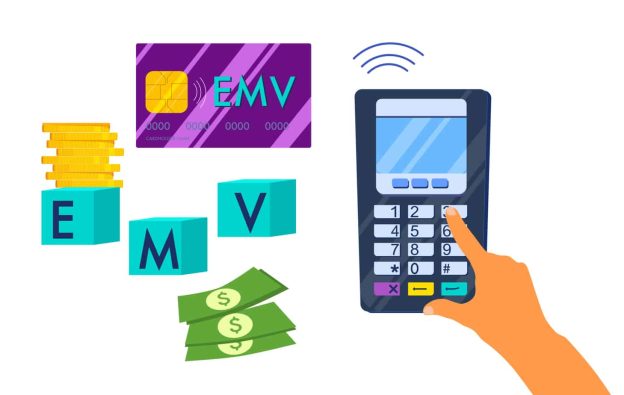
EMV compliance states that a point-of-sale layout can accept EMV-compatible credit cards. The business also has a reader for handling EMV cards. If a customer enters a store and inserts their credit card into a machine slot, that store complies with EMV rules. The store at issue is probably not EMV compliant if it can only accept magstripe payments. 

Compliance with EMV is a global payment technology standard developed by MasterCard and Visa member groups to protect customers against fraudulent transactions. As you might have guessed from the term, EMV stands for Europe, MasterCard, and Visa. The other organizations have also joined in on the EMV standard, which is a more secure choice.

The American Express, Discover, JCB, MasterCard, Union Pay, and Visa member groups in 1993 joined together to create chip technology to protect themselves from the frequent breaches of the 2010s. With the use of Magstripe technology, more people lost their data, and fraudsters became adept. Since magstripe data could work in multiple transactions, theft only required taking the data of a person for a long time before it was discovered. Chip technology addresses such data leakage.

Technology Chip

By assigning separate, anonymous tokens for every transaction through a computer chip, EMV chip technology overpowers the magstripe technology, rendering any data taken virtually useless. The transaction content cannot be utilized at another time.

For numerous transactions, Magstripe data is lucrative to thieves. EMV compliance will not prevent anyone from stealing data, but it will make selling and using that data much tougher than before. That is why the EMV compliance statistics are so outstanding.

Steps to EMV Compliance

EMV compliance for merchants entails upgrading current chip technology hardware. This change must work throughout your entire firm if a transaction that does not employ EMV does not conform to your work. While non-EMV transactions can still be accepted, they are exposed to risk and subject to the same legislation as non-EMV transactions. Note that this applies only to transactions involving the use of a genuine card. For online transactions, the old limits still apply.

You should not only be concerned about obligations. Customers do not like firms with which they are dangerous. It is a terrible experience for customers, and when there is fraud, they generally lose faith in the organization.

The EMV Chip Specification aims to strengthen face-to-face payment transaction security by incorporating components that minimize fraud caused by fake, lost, or stolen cards. The characteristics described in the EMV Chip Specifications are as follows:

  • The chip card system checks that the card is genuine to safeguard both online and offline transactions from counterfeit fraud.
  • Risk management parameters will set the conditions through which the issuer allows an offline transaction and the conditions that compel on-line transactions for authorization, such as exceeding offline limitations.
  • Digital signature of payment data for completeness of transactions.
  • More comprehensive verification mechanisms for cardholder protection against card fraud, plus verification for cases where a card is lost or stolen.

Steps to EMV Compliance

It’s now easier than ever to become EMV compliant. All you have to do now is get a POS system that accepts EMV cards and mobile readers for chip cards.

Steps to EMV Compliance

One of the main advantages of changing to EMV is the ability to combat remittances and avoid paying for both the services provided and the customer’s loss.

If you haven’t already done so, switching to EMV will be the most beneficial, but there are other tactics you can do to support it.

How to Stop Chargebacks

  • Make the switch to EMV right away.
  • Keep a record of all receipts and orders of purchase
  • Prevent fraud with the newest 3DSecure technology from internet technologies, including AVS, card verification, and VISA.
  • Include a tracking number for shipments.
  • Confirm the delivery for the customer.
  • Record information about the customer and previous orders that the person has made.
How to Stop Chargebacks

You Can Upgrade EMV In Moments

You may have postponed EMV updates due to the associated hardware and software costs, but we are pleased to report that switching is easier today. And, regardless of the amount you spend on switching, you’re going to save money in the long term because you can protect chargebacks and avoid further physical transaction fraud.

Why Compliance Is Critical

It’s always an essential subject, but compliance has a direct influence on small and medium-sized enterprises.

In the past, if someone had stolen a credit card and completed a fraudulent purchase, the issuer of the credit card was held accountable. It’s been like this for years until compliance with EMV became a factor.

When a fraudulent transaction is conducted, it works less on the card and more on your failure to use the chip as intended. As a result, liability moves from the issuer of the credit card to the company concerned.

As of October 2018, if you only accept magnetic credit card payments, all fraud-related charges and end-of-story costs will be blamed on you. But EMV compliance ensures you’ll avoid these liability-related issues. The move will probably cover more than the upgrade cost, depending on the business you are running and the average dollar amount for each transaction.

Can EMV Influence Your PCI Compliance Work?

The EMV chip does not comply with PCI compliance rules, nor does it reduce the vendor’s PCI coverage. Whether or not EMV is implemented, compliance with PCI is necessary. To fully protect client information in card transactions, all merchants and service providers must comply with EMV and PCI requirements. Even in combination, these guidelines are not 100% effective against fraud. But the cardholder and the vendor have better protection here than if they were battling alone. EMV and PCI collaborate to enable safe and secure card transactions for traders, customers, and issuers.

etsy com web site selective focus 179906812

Etsy Listing Fees, Shipping Fees & Other Charges: What Does It Cost to Sell Here?

For artists and designers, Etsy is no less than a blessing. It is the best place for creative people to turn their hobbies into an online business. With Etsy, sellers don’t have to worry about paying any rent, taking care of inventory, or even hiring employees to manage their store. 

Sellers on Etsy can only focus on making creative designs. They don’t need to know how to make a website or market their products to people. Etsy does it all for them. 

However, one problem that many sellers face with Etsy is their complex fee structure. We will break down all the different types of Etsy fees so you can have a clear idea of the cost involved before starting your online store on Etsy. 

The Standard and Plus Plans on Etsy

The standard plan does not cost anything monthly. However, there are additional listing fees, payment processing fees, delivery fees, and many other kinds of fees that you need to pay. 

The plus account would cost sellers $10/month. You get all the advantages of the standard plan along with some additional benefits. 

Some of the additional benefits are:

  • 15 free listings monthly (worth $3)
  • $5 Etsy ads credit
  • Special discounts on custom domains
  • Additional tools for better shop customization

Various Fees that Etsy sellers have to pay

Etsy requires the sellers to pay fees for various purposes. Some of the charges are flat fees, while others are percentage-based. We will talk about all of them so you can estimate the cost of running an Etsy store. 

Listing Fees

The fee for listing each item on Etsy is $0.2. It doesn’t mean that you can sell multiple identical items for just one listing fee of $0.2. For example, if you are selling five identical signboards on Etsy, you would have to pay a listing fee of $1 combined for them.

Transaction Fees

Transaction fees in Etsy are different from what sellers pay for payment processors. Transaction fees of 5% per sale are Etsy’s commission for using their platform. The transaction fees don’t cover wrapping and product customization. 

There is also a shipping transaction fee that sellers need to pay. The charge is 5% of the shipping price. 

You don’t have to pay 5% fees on your sales tax if you are from the USA or Canada. For sellers from other countries, additional charges may be applicable on sales tax. 

Payment Processing Fees

Etsy has payment processors you will use if you belong to one of the 36 eligible countries that support the system. The fee for each Etsy payment processing is 3% of the total payment plus $0.25.

If you are not from one of the 36 eligible countries, you can use PayPal or Square, which typically costs 2.9% plus $0.30 processing for each payment.

Etsy Pattern Fees

If you are looking to create an online store, you should check out Etsy Pattern. It costs $15/month and allows you to list products for free for an unlimited time. 

The pattern store links with your Etsy seller account. You can also try it for free for 30 days to see if it suits your needs.  

Square In-Person Selling Fees

Etsy has teamed up with Square to provide sellers an option to collect in-person payment. It is necessary to own a square card reader to be eligible for this option. 

Everything is like usual, except instead of the 5% transaction fees, you would be paying Square processing fees. For each transaction, the Square processing fee is 2.6% plus $0.10.

Currency Conversion fees

Sellers should set the listings in the same currency as their payout currency. However, if sellers don’t do that, the cost of currency conversion is 2.5% of the total amount. 

You can also avoid this if you are using PayPal as a payment processor.

Etsy Ad Fees

You can choose to market your listings on Etsy using in-house ads. The cost for advertisement follows a pay-per-click system. The PPC is determined depending on the demand of the ad space. Sellers have the option to set a maximum budget for each day. The ads would stop running when that budget is reached.

Offsite Etsy Ads

The Etsy offsite ads are a new feature for all to use. It is mandatory for all sellers, and the only sellers who are given the option to opt-out who made sales less than $10,000 in a year. 

The ads are displayed on platforms like Facebook, Google, Bing, and others. The sale counts if someone clicked on an ad for one of your products and buys products from your online shops. 

The fees for these ads can be between 12% and 15%, depending on your sales. For sellers crossing annual sales of $10,000, the fee is 15%, while sellers who make sales below that have to pay 12% advertising fees.  

How can you start your online store on Etsy?

After knowing all the associated fees and you are still willing to open an online store with Etsy, you will need the following things.

Etsy Account

You would need to create an Etsy account. It can be a standard or a plus account. You can then choose the currency for your shop, the name of the shop, and set up other preferences.

Products

You should have products available to list on your Etsy shop. To make an Etsy listing, you would need product photos, title, and product description. 

Billing Account

You need to verify your billing account to confirm your identity and also allow Etsy to charge your fees automatically. 

Payment Account

You can use Etsy’s payment processor, or you can choose other payment processors like PayPal and Square. It is also possible to use the mail to receive payments as checks from your customers. 

Conclusion

Etsy takes care of the many needs of creative design sellers, but are the fees they charge worth it? Is it better to sell on eBay? Those are answers that you have to find for yourself. We hope that our breakdown of Etsy fees helped you get a clear picture of what you would manage.