Author Archives: hostmerchantservices

retailamzn vs wmt

RETAILAMZN vs. WMT – Why People Now Spend More at Amazon Than at Walmart?

The battle between Amazon and Walmart continues as both eCommerce stores keep launching innovative products to build audiences’ engagement. Amazon is expanding its services across international borders. This giant retailer is competing with UPS and FedEx to become one of the leaders in the retail industry in the world. 

Even though its services are not exactly replicating those offered by UPS, Amazon has been supplying 72% of its own products. The retailer started a $1.5 million Air Hub in Kentucky in August 2021 and confirmed that it was all set to expand the same-day delivery operations to the six new towns. They have recently started the last-mile delivery centers in Maryland and Virginia to fulfill the growing demand for same-day delivery services.

Amazon and Walmart: Has Amazon Outperformed Walmart?

Amazon’s multi-channel service is already quite popular among merchants since it covers packaging and shipping services. Currently, Amazon is a large network of over 400,000 drivers, 70 airplanes, more than 30,000 vans, and 40,000 trucks. The figures suggest the success the company has achieved in the past few years and how fast it is growing worldwide.

Walmart, on the other hand, launched the last-mile services in August 2021 in the United States to help small retailers supply their products locally and allow customers to enjoy hassle-free delivery services. The company had opened these last-mile delivery services to cater to the growing demand for the prompt delivery in the States. Walmart GoLocal launched in the US as the company’s effort to increase its sales and satisfy customers relying on same-day delivery. Their delivery services cover approximately 70% of the State’s population currently. The company is expected to grow since Walmart has started investing more in the latest delivery technology, such as drones and fulfillment centers, to cover the entire US population. 

Amazon and Walmart: Sales & Revenues

The surging demand for online shopping due to the COVID pandemic has made Amazon and Walmart the go-to shopping centers for buyers. Amazon reported sales of over $610 billion in the last 12 months, ending in June. Walmart also reported sales of $566 billion for 12 months, ending in July. Walmart, Alibaba, and many other eCommerce giants have implemented the latest technology and launched innovative solutions to outperform other online retailers.

Despite the never-ending competition, Amazon is still one of the popular and leading online retailers globally. The company’s doorstep delivery services and super fast delivery options (the same-day delivery) initially encouraged people to join the online shopping world. Besides, a large volume of products in different categories allowed people to select from a vast range of goods. That drew people’s attention, and as a result, they have continued using Amazon ever since. The customer-centric services and a wide selection of products are two crucial things that have made Jeff Bezos, the founder of this retail giant, one of the wealthiest people in the world.

On the basis of revenue, Amazon has outperformed Walmart. However, the $610 billion sales include the revenues generated by the third-party sellers on Amazon. The company reports only the fees charged to the customers as its total revenue, excluding the actual revenues generated from its merchandise sales. 

Amazon became the first retailer to have outsold Walmart since 1990, which is quite a significant achievement for Amazon. The company has more than 2 million third-party merchants offering their products on Amazon, which is much better than the 100,000 sellers on Walmart. The sales for both platforms jumped during the COVID pandemic all over the world. However, it was Amazon that outperformed all the retail giants in the industry. Walmart reported a high sale, but it was not as much as Amazon’s sales and revenues. 

Which Company Won the Battle of Dominance in the eCommerce Industry?

However, Walmart won the battle between Amazon Stock and Walmart Stock, as the company reported a gain of 4.35% for the year. On the other hand, Amazon Stocks witnessed a growth of 2.5% in the same timeframe. The above stats clearly suggest the neck-to-neck competition between Amazon and Walmart. 

While people are shifting to Amazon for online shopping, Walmart still secures a top rank in the world’s popular eCommerce stores. Both companies enjoy unique perks, for instance, Walmart has the largest number of outlets with a vast majority of Americans living within 10 miles from the retail outlet. Amazon owns 40% of the total eCommerce retail market. So, both are performing well in the retail industries, however, Amazon wins the competition when it comes to revenues and sales. The company has done a tremendous job at supplying goods to people during the pandemic. 

While Walmart did witness a growth in its sales volume and revenues in the previous year, its growth was nothing compared to that of Amazon. Walmart reported an increase in its sales by $24 billion the previous year. For Amazon, the figure has crossed $200 billion (for the same period). Numbers, however, are used as rough figures. Analysts also need to calculate the total sales on Amazon, since Amazon is a network of hundreds of thousands of merchants that offer an extensive range of goods to the public. The company only reports the fees generated from each transaction. Approx 56% of the goods sold on the platform are owned by third-party sellers. 

Bottom Line

Walmart and Amazon are two popular eCommerce retailers that have witnessed unexpected growth during and after the pandemic. Since more and more people have moved to the online shopping trend, these giant retailers have made a significant impact on the retail industry. As far as the sales and revenues are concerned, Amazon has given a better performance than Walmart. The company has opened many warehouses, delivery stations, and has employed a large number of personnel to cater to the customers’ rising demand for fast delivery.

digital assets to make purchases

Many Businesses Plan to Use Digital Assets to Make Purchases in 2023

During the pandemic of 2020, several businesses have started looking for better ways of making payments. They have also gained an insight into the latest payment trends to ensure higher efficiency and avoid issues. That is why there is a rise in interest in digital assets like cryptocurrencies to make payments. This rapid rise in acceptance of blockchain has made it easier to make payments with virtual currencies.

At PYMNTS, the president, Jim McCarthy, said that the perceptions of cryptocurrencies with businesses and consumers had evolved over the past few decades.

In August 2021, the PYMNTS report has revealed that several multinational companies are leaning towards investing in cryptocurrencies. They are not only interested in keeping them as assets, but 50% of surveyed firms have thought of using digital currencies for international payments.

Businesses consider them as spendable currency in addition to their value as an asset. However, it may take time to consider virtual currencies as a reliable part of the payments ecosystem.

Cryptocurrencies- The Intangible Digital Assets

Presently, more than 40% of organizations in the Middle East, the USA, and Africa think of using digital assets for regular purchases. In the past decade, there has been a considerable evolution of business and consumer-related perceptions of virtual currencies. Financial companies have taken steps to carefully watch the trends and statistics regarding the use of cryptocurrencies.

Over 1200 unique virtual currencies are in circulation across the world. Some of them are ephemeral. Still, cryptocurrency is adaptable and will perpetuate due to its secure and resilient nature.  You can use privacy coins to hide your identity on the blockchain. Moreover, supply chain tokens are also useful for operations in different industries.

Cryptocurrencies- Investments Become Easier for Businesses

Several financial institutions have anticipated that there will be an increase in cryptocurrency payments within a very short time. More than 90% of financial banks and institutions have acknowledged that their corporate clients like to use virtual currencies for transactions and investments.

Indeed, virtual currencies are not presently a standard choice for transactions. But, financial institutions, businesses, and FinTechs have taken steps to make it a reality. Some of them have developed a digital infrastructure for a smoother payment process. At present, 10% of financial institutions accept 1 to 2 types of cryptocurrencies.

Applications of Cryptocurrencies for B2B Payments

It is advantageous to choose cryptocurrencies for B2B transactions. For B2B payments, companies mostly use credit cards, checks, wire transfers, and wire transfers. However, there will be a shift in this trend. Conventional transactions are regulated by the government. But cryptocurrencies offer a comparatively safer and more private option.

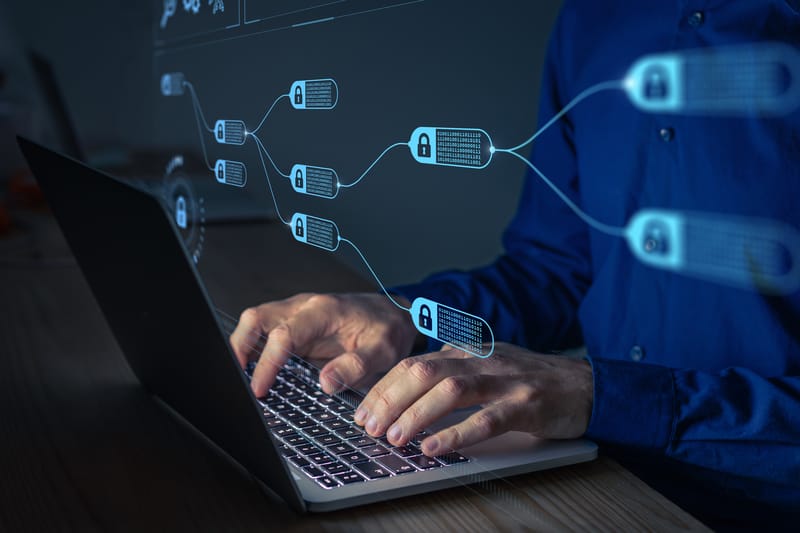
There is no required involvement of banks and financial institutions. The use of blockchain technology is highly important to ensure a distributed ledger system. Cryptocurrency-based transactions are direct and verified with a special algorithm. The implementation of cryptocurrency in modern B2B payments with blockchain technology reduces the risk of fraud.

The shift to cryptocurrency-based B2B payment will create competition between Fintechs and legacy FIs. Cryptocurrency applications for B2B transactions will draw the attention of many companies. Therefore, it has become imperative for financial institutions to stay competitive, as several businesses are getting ready to use digital assets for transactions.

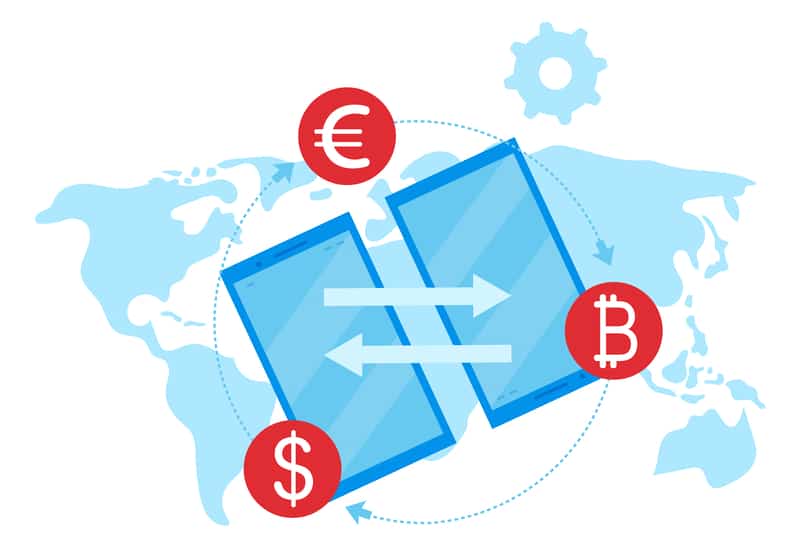
Cross-border B2B transactions will use blockchain technologies and cryptocurrencies, which will become globally acceptable.

It will be simple for cryptocurrencies to move across borders easily. There is no need to involve correspondent banks in the funds transfer. The payment process will be transparent due to the use of technology and a reduction in the reliance on traditional systems.

Financial organizations are feeling pressure to introduce a range of cryptocurrency payment tools. However, they also face challenges while doing it. They have to maintain international standards for digital currency payments. Moreover, some businesses are not sure about the security standards of digital assets.

Different geographical regions witnessed the highest uptake of crypto payments. It mostly includes funds transfers from Asia to the USA and Europe and also from Latin America to Europe.

The use of cryptocurrency in B2B transactions enables marketers to make global payments in different countries with high security. There is no interference from governments and banks. Virtual currencies have emerged as a secure, resolute, and intriguing solution for B2B payment processing in third-world countries and global markets.  

A Few Issues With Innovations

Banks, businesses, and issues have to analyze the future potential of cryptocurrencies from both consumer and B2B perspectives. They must also evaluate the role of blockchain and other similar technologies. 

Market analysts predict that there will be considerable growth and innovations in the coming years. Cryptocurrency will become highly acceptable, but we cannot overlook compliance and regulations.

Overall, it can be concluded that businesses have to understand and embrace the value of virtual currencies in B2B transactions. They can learn something new from other adopters of cryptocurrencies for B2B payments. They also have to know about the potential risks associated with government regulations and volatility.

Cryptocurrencies entered the financial world and signaled the start of a major transformation. The price gains of the digital currency can make it more powerful. Furthermore, blockchain, the major technology behind virtual currencies, may evolve continuously in the coming years. The use of cryptocurrencies in B2B payments will be a viable option. They will ensure protection against fraud and ensure customer data privacy.

uber freight partners with marqeta

Uber Freight Partners with Marqeta and Branch to Offer Faster Payments

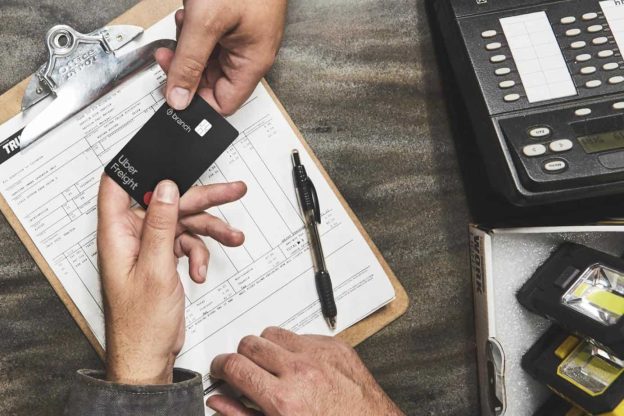
Marqeta is a platform where companies can issue and manage personalized card programs. Recently, it has decided to become partners with Branch, a reputable platform for workforce payments. Uber Freight is partnering with these two giants of the finance industry to streamline its payment process. The reliability and swift payments will bring carrier-first financial services to the transportation and logistics industries through Uber Freight.

Uber Freight provides tools to shippers and carriers. Those tools empower trucking companies to manage their business and their drivers for booking loads. Uber Freight partnered with Branch and Marqeta to broaden its services and increase the pace, control, and visibility of its carrier payment experience.  

Through Marqeta and the digital wallet of Branch, Uber Freight will be able to pay the carriers faster compared to others, while avoiding unnecessary expenditures. Usually, the payable process for accounts is 30 days or more. However, carriers on the Uber Freight platform will get the payment 2 hours after receiving the approval, which is a 99.7%-time reduction.   

According to Renata Caine, SVP of International, Planning and Strategy of Marqeta, the demand for faster payments is increasing, which shows the preference in payment style for the current workforce. He also stated that Marqueta is well aware of the position of Uber Freight in the industry of transportation. The in-depth logistic knowledge of Uber Freight provides an attractive expansion avenue to Marqueta. It will help them bring their newly issued cards and the accelerated payments of Branch into the logistics and transportation industry.  

American Trucking Society has stated in their terms of rules and regulations that the trucking industry of the U.S has the responsibility for the transportation of seventy percent of the country’s goods. In 2020 they earned a profit of up to $879 billion. Driver experiences have remained the same despite the technological advances in the industry.

The purchases made during the COVID-19 pandemic through e-commerce reached a high of $792 billion, based on the sales data reported by retailers.  It puts a tremendous amount of pressure on the companies dealing with the shipping as they are responsible for satisfying their customers. They also have to make improvements in the experiences for carriers delivering their goods.

This partnership is a great solution to work with the rapid increase in the small carriers. It will help provide the carriers a continuous cash flow and give them confidence to make bigger investments. This will support them financially, allowing carriers to run their business smoothly and grow efficiently..  

Quoting Lior Ron, Uber Freight’s Head, the purpose behind its existence was to support carriers of all sizes. By doing this, Uber Freight will allow carriers to get the most out of their workday. They have transparent pricing and have reached a point where they can support the most extensive digital carriers of the world. They are the first logistic company in the market to have such a level of transparency.

They realized that this partnership would enable them to build more tools for carriers as well. This allows them to offer their platform small carriers and businesses, including the small shops and startups. This will give them the benefits of fuel discounts, faster payments, and other benefits which are usually reserved for larger carriers and businesses. Uber Freight has touted their ability to provide small carriers a competitive edge and to allow them to grow their businesses rapidly.

The digital wallet of Branch helps facilitate faster payments. It offers secure financial services, which is excellent for carriers because it helps their business grow. It also includes a checking account insured by FDIC. Branch issues a commercial card made especially for enabling the most rapid settlements in the trucking industry for carriers. 

The Branch-powered Uber Freight Card is free to use by the company’s carriers. It will allow them to access funds in the Branch digital wallet with ease and reward drivers with fuel bonuses to help them with their largest expense.

The CEO of the Branch, Atif Siddiqi, said that Uber Freight is doing a great job in creating high standards for logistics and trucking industries. He was satisfied with the considerable visibility and customization it offers carriers in load booking. Atif Siddiqi believes that entrepreneurs will benefit significantly from these new partnerships and technologies. It will enable faster payments and improve cash flow for both carriers and drivers within the system.

Branch’s optional cards and digital wallets assist companies in making payments to contractors on the spot and helping them bring access relevant information in a convenient manner. These optional cards and digital wallets enable users to have a more consistent and streamlined experience with payments.

There are several benefits for contractors that will sign up directly with Branch. They will get access to their zero-fee account, receive payments on the completion of their job instantly, and get finance tools to manage their cashflow. 

smbs benefit from credit relief from automation

SMBs benefit from Credit Relief from Automation

2020 has been a devastating year for businesses all around the globe. But even in 2021, we can see the aftershocks of the pandemic wreaking havoc on businesses. Companies are going bankrupt left and right as cash inflow is not enough to keep the business viable. 

But with these troubles, a new wave of innovation in the financial markets are digitizing services. SMB (small and medium-scale business) owners and employees of those businesses can benefit significantly from it.  Back when Fintech was not as active as today, the only option for small business owners was to get money from their friends or a very high interest loan from a less than reputable provider.

Banks did not cater to small businesses the way they did for their larger, more established clients. Therefore, there wasn’t an accessible channel for small and medium scale businesses to acquire capital. Disreputable lenders made high profits because businesses had no alternatives, and the companies kept struggling to survive.

Accounts Receivable (A/R) automation is the recent Fintech trend that saves small and medium businesses considerable revenue and simultaneously protects customers. Traditionally, invoices, returns, and disputes were handled manually by employees hired by the company.

Why is A/R Automation so Necessary for SMB?

Having employees for A/R was inefficient because of three main reasons. Firstly, the employees had to be paid a salary for performing their duties. Secondly, it burdened customers as they had to make a phone call during specific office hours of the business. Thirdly, invoices entered manually were more prone to errors.  Automating A/R helps save the time and money of both the customer and the company in the long run. 

One significant way A/R automation brings money to the business is by receiving more payments through clients. Usually, customers leave invoices unpaid as they don’t have the time or plan to pay them later and forget about them. In this case, a single employee cannot follow up on every customer to get the invoices paid.

With automated A/R, the client can receive a gentle reminder of an unpaid invoice. Furthermore, they can avoid having to call the business to make the payment through a manual process. Online banking and payments have made it much easier and quicker to pay in just a few clicks. This inflow of cash is critical to the health of a small business.

Automation improves efficiency through the simple concept that a client will be more willing to make a payment if it is easy to pay. It gives power to the client to pay wherever and however they want. The efficient process does not take much of their time, and they have less reason to delay the payment.

Customers have preferred ways of receiving payment notifications. Some might like getting it through e-mail. Others might choose notifications from an application on their phone. A few may feel easier with a text message. Communicating the information the right way is an essential step in speeding up the payment process. If a client receives a notification through a channel they are uneasy with; the payment will take longer.

Automated accounts and receiving processes can learn the ways every customer prefers the notification. Automated messages can be sent with a specific ‘pay now‘ button. These systems allow the customers to make the payment only in a few clicks. Effortless methods of payment solve the critical cash inflow problems of a small business through efficiency. 

Businesses have reported receiving their payments up to fifteen days quicker on average than did previously. 

Automation in SMB Loans

These significant improvements in business protocols originated with the first Fintech startups that offered a new channel for businesses to acquire capital. While the interest rates for the loans were high, they were better than having no source at all. 

Inspired by these Fintech startups, Bobley, the CEO of Ocrolus, started thinking of ways to improve this further. Even though credit was now accessible to SMBs, manual analysis of all the bank statements and receipts of a business to validate their loan was a tedious and inefficient process.

Ocrolus introduced a platform that would process the receipts instead of manual labor that usually did it. Not only did this process reduce the cost of processing a loan, but it reduced human errors too. In competition to Ocrolus, several other Fintech establishments came up with their version of automated loan processing.

Banks did not know of the technology to underwrite small businesses accurately; this was why banks hesitated to give loans to small businesses. But with the emerging Fintech options, banks were now more eager than ever to work with smaller companies. Now, options like Square and PayPal were more accessible to these businesses too.

The rapidly growing market for loans to SMBs has increased competition among lenders too. Growing demand means increased opportunities that everyone wants a part of. One of the many intriguing options for SMBs is the ‘proactive loan.’ Through this, businesses get a loan before they even need it. Companies can plan their future expenditures and use ‘proactive loans’ to balance out their cash flow.

Shifting to an Automated Platform

Not all automated platforms are equal. Research is crucial in choosing the right platform. The system should have a robust cashless payment system other than integrating existing A/R software and electronic billing. Several features in automated A/R systems allow businesses to boost their revenue. Ensure that the system accounts for late fees, processing fees, and other such fees that affect the business’s finance.

Reviews are critical to judging how good a system is before getting it. Businesses need to make sure to thoroughly research before they get into A/R automation. SMBs need to provide extensive customer support as customers adapt to the new system.

When done right, automation can be the salvation of a business that is struggling with breaking even. Most companies that fail in the U.S. are due to cash flow issues. Automation has almost become a necessity to survive the competition of modern financial markets.

bnpl services

29M People Have Used BNPL Services in the Past Year

Buy now, pay later is the new craze when it comes to the present trends of the payment industry. The BNPL market has grown exponentially in the Asia-Pacific region recently. These services allow customers to split a more significant payment into smaller ones that they can pay over some time.

Businesses faced a very polarizing effect when the pandemic struck the world back in 2020. Some business models faced immense depressions and went bankrupt, while others flourished. The e-commerce and digital payment sectors were amongst the sectors that benefited.

Despite the tremendous success of cashless and online business models, FinTech saw a decline in revenue. Now, companies are resorting to new business tactics to gain traction as the economy stabilizes and expands. BNPL services are amongst the recent trends that are becoming popular as the world recovers from the pandemic.

Even PayPal intends to cash in on this burgeoning trend. Paypal wants to acquire a Japanese BNPL service known as Paidy. This decision came as a result of their rival, Square acquiring AfterPay, another buy now, pay later firm from Japan. The excessive growth has gotten its share of criticism too. Regulators are pressing these firms to ensure that the customers don’t take on more loans they can afford to pay.

A recent survey of around 2200 people showed that customers prefer the convenience that BNPL provides them with. Customers are getting BNPL on lesser-priced items, too, not just on big-ticket ones. Consumers state that using BNPL services is much easier than getting a loan for the same purchase.

In the past year, 29 million consumers from the U.S. have used the buy now, pay later services, and 59% of them even agree to accept these services from a third-party provider. It is a desirable option for people living a paycheck to paycheck lifestyle. Through BNPL, they can afford vacations and other expensive purchases that they usually cannot pay for up front. 

A personal finance company called Credit Karma recently showed that U.S. consumers have already started to fall short on their BNPL payments. Around 72% of those consumers had a decreased in their credit score too. The most prone to miss their payments were younger consumers, especially Gen Z and the millennials.

The problem with these payments is that they do not have the same impact that a regular purchase does. People quickly buy stuff that they would never purchase when paying in full. The consequences seem less dire, but that also the cause of trouble. 

Most consumers that use BNPL payments purchased an item of $500 and less. Gen Z is the most likely to make low-cost BNPL purchases. Half of the purchases by Gen Z are even less than $100.

Regardless, BNPL payments still seem to grow in popularity every day. For a considerable forecast period, they seem to show no signs of slowing down!

sezzle bread partner on loan program

Sezzle, Bread Partner on Loan Program

Bread, a division of Alliance Data Systems Corporation, recently announced its partnership with Sezzle (a fintech payment transfer company that transforms consumer shops). Alliance Data System is a leading provider of payment solutions, loyalty, and data-driven marketing. It provides customized solutions to improve consumers’ behaviors while looking forward to business profitability and growth for well-known brands. 

The strategy behind the partnership of Bread and Sezzle is to offer the pay-over-time installment loan product of Alliance Data’s Bread through the merchant network of Sezzle. 

Sezzle will support the deep underwriting of Bread and their installment loan product in reaching the customers interested in buying big-ticket items. Also, it will provide a comprehensive suite of products to its merchant partners.

Bread, acquired by the Alliance in the year 2020, provides a smooth checkout experience to its customers. It is also referred to as the highest-rated Buy Now, Pay Later (BNPL) platform. Bread is a digital payment platform that is white-labeled and works alongside the Sezzle. It will provide the Sezzle, its more than forty thousand merchants, and its future partners a considerable variety of options at the checkout.

Charlie Youakim, the CEO of Sezzle claims that Sezzle has recognition as the B Corp certified business. Its primary goal was to empower its shoppers financially by giving them transparent and best-in-class experiences. It also focuses on financial education, credit building, sustainability, ethical partnerships, and social good, which will be an essential factor for their next-generation consumers. 

He also explains that the reason behind providing the solution of Bread’s installment to the customer is to have their Buy Now, Pay Later success. They also want to upgrade their product suits and add more lending options in their installments. This up-gradation will provide a variety of ways for big-ticket shoppers to pay.

The installment loans of Bread include the appropriate terms for qualifying customers, and certain loans come with the plan of 3 to 48 months having the interest rate nearly equal to 0%, compliments the buy now, pay later product of Sezzle. This also helps both businesses grow simultaneously. This partnership will help Bread generate loans using its Comenity Capital Bank.

According to Val Greer, Chief commercial officer and EVP of Alliance data, their approach towards their product is based on the consumer lens. This methodology of Alliance symbolizes the strength of its installment product and gives its customers a user-friendly experience. Also, the agreement between the Sezzle and Bread enables their mutual growth and reach, and it provides tools for success to more merchants. 

At the beginning of 2022, Sezzle, a merchant network including merchants like Bass Pro and Target on the client list, is expecting to get the availability of Bread to merchants.

peer to peer payments

Risks and Scams Associated with Peer to Peer (P2P) Payments [2023 Update]

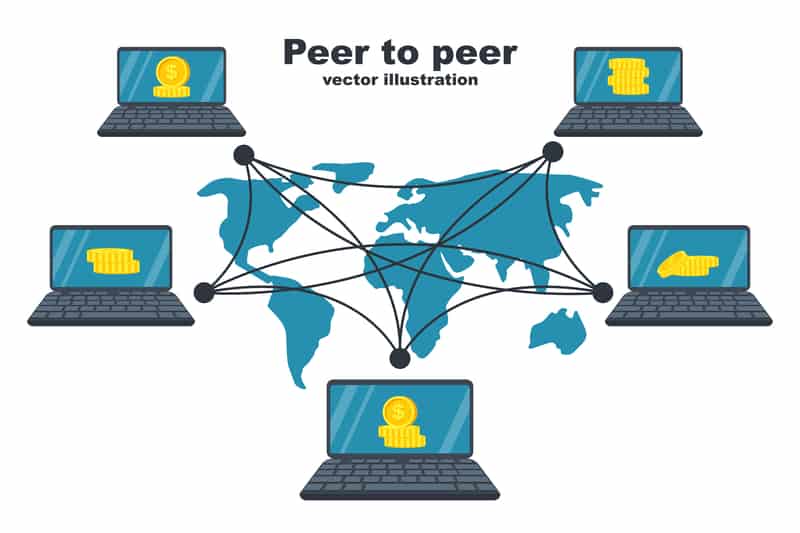
Modern consumers are now leaning more towards digital technologies to pay retailers and friends. They look for remote purchase options and contactless transactions. Today, P2P payment platforms have drawn attention due to the latest trend of paying with the digital method. These P2P technologies have become popular due to their capabilities of faster digital transfer of funds. The faster payment is surely advantageous for both customers and entrepreneurs. But are these P2P payments safe? Are there any potential risks of making a P2P payment? The fact is that there are fraudsters introducing risk to your transactions.

As customers have started accepting P2P apps for payments, scammers have identified tricks to take advantage of this trend. That is why several P2P companies have warned their customers to be careful while making payments for the purchase of products and services. In some cases, legitimate transactions may go wrong when you have entered a misspelled name and incorrect mobile number. Your funds can reach the wrong person’s account.

Are P2P Payments Risky?

The most commonly chosen P2P options are Zelle, Cash App, Venmo, Google Pay, Apple Pay, and PayPal. As per the latest data from PYMNTS, Zelle has found an increase in transactions by more than 200% in 2019. Almost 70% of USA citizens are presently using P2P services. Although these popular platforms have technological advancements for security, there is a risk of scams. Scammers will try to learn your sensitive personal details and persuade you to transfer funds to them. Therefore you must always transfer money only to people you know and trust. 

Preventing the Dishonest Attempts of Fraudsters

Cybercriminals make some dishonest pretenses and try to gain your trust. They pretend to be some certified tax officials to convince you to send money via the P2P apps.  Moreover, fraudsters can post scam Craigslist advertisements to claim they are sellers of some items. In this way, they ask you to make an upfront payment using the P2P app. Then, they will receive your money without delivering the products. Be cautious to avoid falling prey to fraudulent schemes. In many cases, consumers are tricked into completing transactions that are not legitimate. According to a survey, more than 40% of P2P app users responded to classified ads and sent money to several strangers.

P2P services providers are trying hard to solve these issues and alleviate risks by educating every consumer about the potential risks. Some P2P apps include pop-up alerts to warn users while sending money to unknown recipients.

Furthermore, several P2P app providers have removed the feature of one-click transactions. They encourage consumers to review payments multiple times before clicking on the Send button. Consumers must take time to analyze their choices, identify errors and send confirmations.

It is one of the best ways to keep fraudsters from accessing the payment platforms and confusing legitimate consumers.

App providers also need to identify when consumers are dealing with false identities. Scammers may create P2P accounts by stealing others’ credentials. Payments providers have to choose financial partners to help consumers in their efforts to detect fraud.

A Popular P2P App and Potential Risks

PayPal’s Venmo has an integrated social networking system. This feature may cause privacy issues. Your Venmo transaction will undergo public scrutiny. As the information can go public, Venmo users have a risk of scams.

Venmo enables you to adjust your privacy settings and prevent details from getting disclosed to the public. Venmo has also presented a tutorial for using the privacy settings.

Before using P2P platforms, it is better to be familiar with common threats-

Stolen identities– When a stranger signs up for P2P payments with your identity, it can result in application fraud. The intention of the stranger is to pull money from your account. Moreover, he will use your name for creating an account.

Consumer scams– While someone tries to sell products by pretending to be a real seller, it can lead to consumer losses. When buying any product from Facebook Marketplace, Craigslist, and any other platforms with a high level of fraud, you have to be careful. You must choose a trusted seller to buy an item.

Smishing scams– The major purpose of phishing is to steal your password. Some scam sms (text) messages ask you to click the link and send personal information or login. Scammers frequently try to create a sense of urgency to induce a mistake when the victim feels pressured. These messages and links may appear to be harmless. The scammers will apply the social engineering techniques to gain access your peer-to-peer payment account and other financial accounts.

2-step authentication scam– Fraudsters can pretend to be bank officials and send you several fake alert messages. They will send you codes and ask you to verify accounts. You must not pay attention to the 2-factor authentication code sent by fraudsters. Do not send the secret code to any other person. After receiving your code, the scammers will access your account. In most cases, financial institutions do not ask for any sensitive details via email, phone calls, and messages. 3-digit debit card codes, PINs, and other verification codes must not be shared.

Tips to Keep Away From P2P Frauds

  • Check the fraud protection policies of the chosen P2P app. Learn about what protections are available and how you can be reimbursed in the event you become a victim.
  • Be careful of businesses accepting payments only via P2P apps.
  • Connect your app to your credit card and not your bank account and debit card. A credit card has better protection when you do not receive the services and products.
  • Verify the chosen recipient’s details 
  • Do not send and accept P2P payments from strangers.
  • Try to create a strong password.

Although real-time payments with P2P platforms are slightly risky, you can avoid scams with some precautionary steps. The app providers are trying their best to safeguard customers from fraudsters. Cybercriminals may continue applying tactics to cause data breaches. However, you must be cautious while making payments using P2P apps.

pax technology raided by fbi

Point of Sale Manufacturer Pax Technology Raided by FBI

Federal agents raided the Florida headquarters of PAX Technology, a Chinese producer of point-of-sale systems used by millions of companies and merchants worldwide. According to KrebsOnSecurity, the raid is related to allegations that PAX’s computers were used in cyberattacks on U.S. and European Union targets. 

PAX Technology Inc., headquartered in Shenzhen, China, has more than 60 million point-of-sale terminals in use throughout 120 countries. Earlier today, WOKV.com in Jacksonville, Florida, reported that FBI and Department of Homeland Security (DHS) investigators raided a PAX Technology facility in the area.

Krebs on Security

In the online newsletter “Krebs on Security,” an article published Tuesday, detectives informed a local radio station that they were conducting a “court-authorized search” at a Pax warehouse in Jacksonville, Fla. They claimed that the search was conducted by personnel from the Customs and Border Protection division of the U.S. Department of Homeland Security and the Naval Criminal Investigative Service (NCIS). Brian Krebs, a former Washington Post writer, reports and writes at Krebs on Security.

According to Krebs, citing a “reliable source,” the Federal Bureau of Inquiry opened an investigation when a “large” U.S. processor inquired about “abnormal” network traffic coming from Pax terminals. According to the source, U.S. processors discovered that the terminals were being used as a “storage of malicious files” and “command and control” system for attacks and data collection. Krebs notes, however, that the source was unable to provide details regarding the “abnormal network behavior” that caught the FBI’s notice.

PAX Technology

Several days ago, KrebsOnSecurity learned from a reliable source that the FBI initiated an investigation against PAX after a large U.S. payment processor inquired about odd network packets emanating from the company’s payment terminals.

According to that source, the payment processor discovered that the PAX terminals were being used as a malware “dropper”,a store for dangerous files as well as “command-and-control” sites for staging assaults and gathering data.

“The FBI and MI5 are undertaking a thorough probe into PAX,” a source said. “A large payment processor in the United States started enquiring about network packets coming from PAX terminals and was given no satisfactory replies.”

KrebsOnSecurity contacted the CEO of PAX Technology. The firm has not yet returned requests for comment.

Software Hacks

According to the source, two large financial institutions, one in the United States and another in the United Kingdom have already begun removing PAX terminals from their payment infrastructure, a claim confirmed by two separate individuals.

“According to my sources, there is technical evidence of how the terminals were employed in assault operations,” the person stated. “The packet sizes do not correspond to the payment data these devices should be delivering, nor do they correspond to the telemetry these devices may show during software updates. PAX is now asserting that the probe is motivated by racial and political animosity.”

The insider was unable to provide specifics on the unusual network activities that sparked the FBI’s inquiry. However, it’s worth noting that point-of-sale machines and the underlying technology are recurring targets of hackers.

It is fairly unusual for malicious software to hack payment terminals remotely and cause them to gather and transfer stolen information. Indeed, several of history’s largest cyberheists involved point-of-sale malware, including the 2008 Heartland Payment Systems breach, which exposed 100 million payment cards, and the 2013-2014 Target, Home Depot, and other retailer breaches, which resulted in the theft of approximately another 100 million cards.

Even if it were shown publicly today that the company’s technology posed a security risk, I’m guessing few merchants would move quickly to address the issue in the near term. The PAX Technology probe comes at a perilous moment for merchants, many of which are preparing for the hectic Christmas shopping season. Additionally, worldwide shortages of computer chips are generating significant delays in the procurement of new devices.

On Tuesday, October 26, 2021, PAX Technology, Inc. was unexpectedly visited by the Federal Bureau of Investigation (FBI) and other government authorities in connection with an alleged investigation.

PAX Technology is unaware of any improper behavior by itself or its employees and is in the process of retaining counsel to help in determining the facts surrounding the inquiry.

Separately, we are aware of media claims about PAX Technology’s products and services being insecure. Security is a top priority for PAX Technology. PAX Technology, like always, is vigilant for any risks in its surroundings. We are devoted to continuing to provide safe and high-quality software systems and solutions.

Conclusion

As the digital world evolves at a breakneck pace, and there are several methods for our program to be hacked, If companies have complete security in addition to a smooth checkout, they will continue to purchase at your business. Security must be everyone’s primary responsibility, not only because they have personally experienced such incidents but also to prevent future occurrences.

test novi

Facebook Launches Localized Pilot to Test Novi

Facebook has been teasing its users with the launch of their digital wallet Novi for about two years now. Finally, they have unveiled their pilot to test it out with users in Guatemala and the USA. Facebook has had significant troubles in their ventures to expand into the crypto market. Diem, their planned cryptocurrency, is still facing problems getting approved. They are using the Pax Dollar, a stablecoin, to aid the launch instead.

The Pax Dollar has been operating in the USA successfully for over three years. As per Facebook executives, the stablecoin is excellent in terms of the protection of consumer information. The pilot aims to unveil the digital wallet’s customer care and operational capabilities before launching it on a larger scale. The payments chief of Facebook claims that they are launching the wallet to aid family members in transferring funds to each other across different countries.

While they are using a different currency for the pilot, execs at Facebook claim they still fully support Diem. Facebook plans to launch it with Novi as soon as they get approval from regulatory authorities. 

The news immediately went viral and made headlines in the crypto community. The announcement was received as a huge one as it was a significant development by Facebook in the crypto market. However, the popularity of the news doesn’t mean it was well-received by its critics too.

Voices in favor of and against Novi are almost equally common on social media. The most significant point opposing the launch of the currency is privacy. Even the voices in favor of the currency are thoroughly concerned about this factor. It is widespread news that Facebook has been on the backburner of the government because of its privacy-related issues. So it was natural that concerns about how Mark Zuckerberg will use such sensitive information would arise.

Voices against the currency want answers on the decentralization of the wallet and guarantee of absolute user privacy. Supporters of the wallet claim that any advancement in cryptocurrency and blockchain is a win in the name of privacy and the future of financial services. 

Lawmakers urged Facebook to abandon the pilot program as they cannot trust Facebook to handle the privacy of its users. They believe that the history of their inability to keep their consumers safe is reason enough. Despite the backlash, Zuckerberg’s activities don’t reflect the idea of going back on its pilot program. Facebook plans to change its name to own its new role in the financial market. They plan to rename it to the metaverse. Mark Zuckerberg plans to announce the renaming at their annual Connect Conference on the 28th of October.

restaurant credit card fraud

Restaurant Credit Card Fraud & Chargebacks: What Operators Need to Know

The growth of online orders has led to more sales for many restaurant owners. Online transactions helped many businesses to survive in the middle of the pandemic. When dining restrictions were enforced, many restaurants turned to third-party apps or built their own websites to generate orders online.

While online orders meant more sales, it came with an unprecedented problem for the food industry. The rise in online orders came with a rise in chargebacks. Between 2016-2017, chargebacks grew by 179%. Restaurants already operate on a tight profit margin and these chargebacks can bring serious harm to their business.

An extreme example of this is a Los Angeles restaurant called Spoon by H. Their customers were disheartened to hear that they were closing their business. The reason behind their demise was surprising to hear for everyone. They said that they had to close their business due to a high number of chargebacks.

They just didn’t have the resources to fight so many claims. The chargeback claims became more and more frequent and it became a routine activity for them to fight these claims. It became next to impossible for them to operate their business under those conditions. Eventually, they had to call it quits.

What happened to Spoon by H is an extreme example for sure. But it goes to show how easily these chargebacks and fraudulent claims can cause the demise of your business. All restaurant owners need to be ready to fight against it.

Why is This Happening?

Before the rise of online orders, restaurants didn’t really have to deal with chargebacks. The employees of the restaurant usually had a chance to solve customer issues before they made a transaction. In the worst-case scenario, they would have to compensate for the customer’s meal. But no transaction would take place and so there was no chance of any chargebacks to happen.

But since the way of doing business has changed and online orders became popular, the scenario is completely changed now. New threats have arrived with this rise of online orders that have not been seen before in this particular industry.

With options like BOPUS (Buy Online, Pick Up in Store) ordering, customers make the payment online via their credit card or other payment methods. And then they go on to pick up the order from the restaurant. They don’t have any direct transactions with the restaurant. The transaction happened online and that leaves room for the customers to initiate a chargeback.

BOPUS was a great way for saving food vendors from going out of business during the pandemic. It also gave customers a safer and quicker option of getting their food. But even now, as the restrictions on dining are no longer in place, those options are still available to customers.

Even restaurants that don’t generally get customer complaints are now busy fighting chargebacks. It’s so common that there is a term for it. These activities are called “Dine and Dash”. 

Friendly fraud accounts for about 60-80% of the chargebacks that restaurants are facing. But why are so many chargebacks happening? Because it is easy for the customer to do so. They are dealing with a faceless screen and it is much easier to deal with a phone screen than real people. If the same customers were to dine in a restaurant, they would be surrounded by the employees of the restaurant. It would be evident that their decisions have a real impact on people. Also, they won’t make ridiculous claims in an open environment that they can from their phone.

The other reason behind such a high number of chargebacks is that these claims are easy to make. Customers can claim that the wrong person picked their food, they delivered it to the wrong address, the package was damaged on the way, and so on. These claims will be hard for the restaurants to fight and falsify. Because in most cases, the delivery guys aren’t even employees of the restaurant.

Consequences of Chargebacks

The monetary losses are obviously the biggest downside of chargebacks. Restaurants lose up to twice the original transaction amount if they are hit with a chargeback. There is always the threat of being kicked off by your payment processor as well. Payment processors tend to consider businesses that have more than 1% chargebacks to be high risk. So, a high number of chargebacks can also cause your account to be closed and stop you from doing business online altogether.

How Do Restaurant Owners Fight This?

Since most of the friendly fraud claims are difficult to prove wrong, the fight won’t be easy. It is genuinely hard to differentiate between fraudulent and legitimate claims because many parties are now involved in the transaction and order delivery. But the fight needs to happen on two fronts. First, the number of chargeback claims has to be kept to a minimum, and secondly, you need to be prepared to fight the claims that are occurring.

To keep the fraudulent chargebacks at a minimum, you can use great tools to spot these claims. There are a lot of anti-fraud tools that will screen and reject suspicious transactions that seem to be fraudulent. If you figure out a pattern that the fraudsters are following, you can put them under suspicious activity and prevent the transactions from happening in the first place. 

A lot of fraudulent claims are made under options like the food was delivered to the wrong address or person. You can make it mandatory for the customers to show you their ID when they are receiving their delivery or picking up their order from the store.

If you take these steps, the number of claims will drop by a great extent. However, fraudsters will always find innovative ways to challenge you. If you find that a decent number of claims are still making their way through, you have to think of dedicating more resources to fight this problem. Designating a Chargeback Represent Team whose purpose will be to detect and fight these fraud claims can be an idea worth considering for you.

In the end, you may have to accept that this is a new consideration for doing business. These new channels come with their own set of challenges, and chargebacks are one of the biggest issues restaurants face. We will have to be quick to adapt to these changes and put security measures in place. The tips shared will help you to keep the fraudulent claims to a minimum.