Author Archives: hostmerchantservices

Top Commerce and Payment Trends to Watch in 2025

Top Commerce and Payment Trends to Watch in 2025

In 2024, the payment and commerce industry saw significant growth, led by the growing usage of eCommerce platforms and a steady demand for payment gateways. FinTech companies were busy improving and perfecting consumer payment options and offering them more convenient ways to pay at the point of sale.

In 2025, merchants must focus on future commerce and payment trends to keep up with the evolving market. Businesses must take essential steps to stay competitive in the fierce market and adapt to innovations shaping the industry in the coming year.

An Overview of Commerce and Payment Trends to watch for in 2025:

1. AI-Driven Transformation in Payment Systems

AI was at the center of every conversation across industries this year – so we will start this list with AI trends in the market. AI, or artificial intelligence, will reshape how payments work in 2025. The key areas where AI can significantly leap this year are security and customer convenience.

Fraud detection will become more prevalent in the market with the help of AI. Earlier businesses that were hesitant to adopt robust fraud detection systems will be more willing to do so, mainly because of the cost efficiency caused by the widespread usage of AI in 2024.

These AI fraud detection systems efficiently monitor real-time transactions to flag suspicious transactions. They are specifically targeted at high-risk areas like cross-border payments. For example, Swift plans to launch an AI-based anomaly detection service in January 2025 to help banks identify and prevent potential financial crimes during international transactions.

Visa has already shown the impact of AI in reducing fraud. In 2023, the company used AI to block 80 million fraudulent transactions, protecting $40 billion globally.

AI also simplifies regulatory compliance by automating processes to ensure that transactions meet local and global rules. This reduces the effort required from businesses to stay compliant. Additionally, payment apps with AI-driven personal finance features offer users real-time, tailored advice to help them manage their money better.

By 2025, AI will improve the security of payment systems and make them more efficient, accessible, and user-focused.

2. Digital Payments will Keep Evolving with Consumer Needs
Digital Payments will Keep Evolving with Consumer Needs

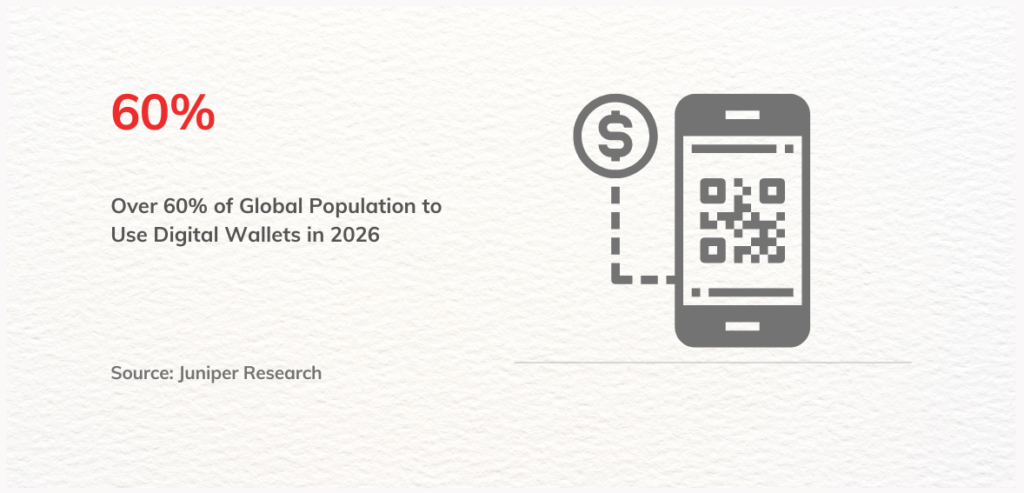
Innovations in digital payments are progressing quickly, with notable growth across various methods. According to a 2024 report, 92% of U.S. consumers used some form of digital payment in the past year, reflecting a steady rise in adoption. Globally, the digital payments market is expected to grow at an annual rate of 11.79% between 2023 and 2027, with total transactions projected to reach $14.79 trillion by 2027.

Consumer preferences play a major role in shaping digital payment trends. Whether online or brick-and-mortar, businesses can boost sales and improve customer convenience by offering digital payment options. Choosing the right methods requires understanding the specific needs of the target audience.

Tap-to-Pay Usage Increases

Contactless payments, especially tap-to-pay, are becoming more widespread. In the first quarter of 2024, 79% of in-store transactions globally were completed using tap-to-pay, a 5% increase from the last quarter of 2023.

Growth in QR Code Payments

QR code payments are also gaining traction. In 2022, 89 million Americans used their mobile devices to scan QR codes for payments, a 26% rise compared to 2020.

Rise of Buy Now, Pay Later (BNPL) Services

Buy Now, Pay Later services are extending their reach beyond retail. In 2024, 40% of consumers used BNPL options at least once. Gen Z and millennials are the primary drivers and are attracted to flexible payment terms.

3. Growth and Impact of Payment Orchestration Platforms

Payment orchestration platforms help merchants manage multiple payment processors more effectively, improving transaction success rates with features like smart routing. This functionality redirects failed transactions to alternative processors, increasing approval rates and enhancing overall payment efficiency.

The global market for payment orchestration platforms has grown substantially. Valued at $1.2 billion in 2023, it is expected to reach $6.3 billion by 2032, growing at an annual rate of about 19%.

Several factors drive this growth. The increasing complexity of payment systems requires solutions that streamline operations and efficiently handle multiple payment methods. Features like smart routing improve payment success rates, while integration with options like local payment methods and Buy Now Pay Later services reduces fees and enhances customer satisfaction.

The industry’s shift toward the ISO 20022 standard further supports adopting payment orchestration platforms. This global standard aims to improve interoperability and efficiency in payment processing. Key milestones include the Fedwire Funds Services’ adoption of ISO 20022 messaging formats by March 2025 and the SWIFT network’s full migration by November 2025.

Payment orchestration platforms are well-equipped to align with these developments, enabling merchants to integrate standardized messaging formats and access a wider range of payment options.

4. Unified Apps and Integrated Financial Solutions

“Super apps,” which combine multiple services within a single platform, are becoming more popular outside East Asia, with significant growth expected in North America and Europe by 2025. This rise is fueled by embedded finance, allowing non-financial platforms to integrate services like payments, lending, and insurance, offering users greater convenience and streamlined experiences.

In Western markets, private companies are in charge of creating these comprehensive platforms. For instance, fintech firms like Revolut have expanded their services to include banking, wealth management, cryptocurrency trading, and more, positioning themselves as all-in-one financial apps. Similarly, companies like Klarna, known for Buy Now Pay Later services, are broadening their platforms with features such as price comparisons, cashback offers, and banking capabilities. Trade Republic, a German neobroker, is moving toward a full-service financial platform by introducing salary and bill payment services and applying for a banking license in Spain.

As super apps evolve, embedded finance remains a driving force, allowing seamless integration of financial tools into existing platforms. The convenience of having multiple services in one app aligns with growing consumer expectations for simplified digital experiences. Businesses aiming to enter this space must prioritize user-friendly interfaces, navigate complex financial regulations, and implement strong security measures to protect user data. With increasing demand for integrated solutions, the development of super apps in Western markets is expected to expand rapidly.

5. Rise of Unified Commerce Platforms for Seamless Digital Shopping Experiences

Rise of Unified Commerce Platforms for Seamless Digital Shopping Experiences

In response to the growing demand for integrated digital shopping experiences, businesses are turning to unified commerce platforms to streamline back-end operations. These platforms consolidate various sales channels, such as physical stores, online shops, mobile apps, and social media, into a single system. This integration allows companies to manage inventory, process payments, fulfill orders, and oversee customer interactions more effectively.

A unified commerce approach provides significant benefits. It enhances the customer experience by delivering consistent and personalized interactions across all channels, meeting modern consumer expectations for connected shopping experiences. Centralizing back-end processes improves operational efficiency by reducing redundancies and increasing data accuracy. Additionally, unifying data enables real-time insights into sales performance and customer behavior, which supports informed decision-making.

6. Impact of Open Banking on Real-Time Payments and A2A Transactions

Open banking, which involves the secure sharing of financial data between banks and authorized third-party providers through APIs, significantly improves the efficiency of real-time payments. By enabling direct account-to-account (A2A) transactions, open banking supports faster payment authorizations and settlements, addressing the increasing demand for speed and transparency in financial transactions.

The global value of open banking transactions is set to rise dramatically, with projections increasing from $57 billion in 2023 to $330 billion by 2027, reflecting widespread adoption. In the UK alone, transaction values are expected to grow from $13.6 billion in 2023 to $82 billion by 2027, showcasing a similar upward trend.

A2A payments are also expanding rapidly. In global e-commerce, these payments are predicted to grow at a CAGR of 14% between 2023 and 2027, solidifying their role as a key payment method. On a broader scale, the volume of A2A transactions worldwide is projected to increase from 60 billion in 2024 to 186 billion by 2029, representing a 209% growth.

The real-time payments market is also experiencing significant growth, with global transaction values forecasted to reach $22 trillion in 2024. The rapid adoption of instant payment solutions highlights the transformative potential of open banking integration, which offers faster, more transparent, and more efficient payment systems to meet the evolving needs of consumers and businesses.

7. Rise of Embedded B2B Payments
Rise of Embedded B2B Payments

Embedded payments, which have already transformed consumer transactions, are now significantly impacting B2B payments. Companies can enhance payment efficiency, automate billing processes, and improve client interactions by integrating payment processing directly into business platforms. The embedded finance market is witnessing rapid growth. Its global value was estimated at approximately $83.32 billion in 2024 and is projected to grow at a CAGR of 32.8% from 2024 to 2030.

Specifically, embedded B2B payments are becoming increasingly prominent. Revenue from embedded B2B payments in platforms is expected to rise from $1.9 billion in 2021 to $6.7 billion by 2026. The adoption of embedded payments in B2B transactions offers several advantages. It improves efficiency by automating invoicing and payment reconciliation, reducing errors and saving time. It also enhances the customer experience by offering a unified payment process within the platform, boosting customer satisfaction and loyalty. Additionally, embedded payments create new revenue opportunities by enabling businesses to provide financial services such as lending or subscription billing.

Conclusion

Technological advancements and evolving consumer preferences will shape the payment and commerce landscape in 2025. As businesses adapt to the rise of AI-driven systems, digital payment methods, and embedded financial services, staying ahead of these trends will be key to meeting customer demands and ensuring operational efficiency. The growth of AI in fraud detection, the expansion of digital payment options, and the increasing popularity of Buy Now, Pay Later services highlight the industry’s shift towards greater convenience and flexibility.

Meanwhile, innovations in payment orchestration platforms, super apps, and open banking will redefine how transactions are processed, paving the way for more integrated, secure, and efficient financial ecosystems. As these developments continue to unfold, companies must remain agile, adapting to the changing landscape to stay competitive in a fast-evolving market.


paypal merchant fees rise

PayPal to Raise Pricing for Merchants

PayPal, a leading digital payments platform, has announced plans to increase fees for US merchants using certain services, effective January 13, 2025. Since Alex Chriss became CEO in September 2023, PayPal has focused on profitable growth. PayPal merchant fees are expected to rise in 2025, and the company justified the decision by stating that the updated pricing aligns with the value provided to merchants.

The updated pricing will affect the merchant using Braintree and PayPal services – including buy now, pay later (BNPL) payments, virtual terminal payments, debit and credit card payments, and other alternative methods.

Key Takeaways
  • Fee Increases Across Services: PayPal will raise fees for specific services starting January 13, 2025, including Buy Now, Pay Later (BNPL), Virtual Terminal, and Advanced Credit/Debit Payments.
  • BNPL Fees See the Largest Hike: The fee for PayPal’s BNPL service will increase to 4.99% plus $0.49 per transaction, reflecting the rising demand and value of flexible payment options among consumers.
  • Impact Varies by Merchant Size: Larger merchants may negotiate customized rates to minimize the impact, while smaller and mid-sized businesses may face more direct effects due to standard pricing.
  • Competitive Context: Despite the increases, PayPal’s BNPL fees remain competitive compared to rivals like Afterpay and Klarna, which charge merchants higher transaction rates.

PayPal Merchant Fees: Raise in 2025, Citing Improved Services and Changing Market Conditions

PayPal Merchant Fees: Raise in 2025, Citing Improved Services and Changing Market Conditions

Last week, PayPal announced its plans to renegotiate fees for U.S. merchants using specific services, effective January 13, 2025. PayPal spokesperson Nicole Cutler stated that to adapt to shifts in the economic environment and include new features for customers, PayPal has revised its pricing for U.S. PayPal business accounts and U.S. Braintree accounts.

PayPal justifies these fee increases by pointing to the additional features and innovations it has introduced to support merchants and promote growth.

Cutler stated that PayPal routinely assesses its pricing to reflect current economic conditions, industry changes, and the value its products offer customers. In recent years, PayPal has introduced new features and innovations to improve merchant support and facilitate expansion.

The upcoming changes will affect several of PayPal’s services:

  • PayPal Pay Later: The fee for merchants offering PayPal’s BNPL service will rise from 3.49% plus $0.49 per transaction to 4.99% plus $0.49. This adjustment reflects the growing popularity and value of BNPL options among consumers.
  • Virtual Terminal: The cost of using PayPal’s virtual terminal will increase from 3.09% to 3.39%. The virtual terminal allows merchants to process credit card payments without the physical card present, facilitating phone or mail orders.
  • Advanced Credit/Debit Payments and Alternative Payment Methods: Fees for these services will increase from 2.59% to 2.89%. This change aims to represent better the enhanced features and support PayPal has introduced in recent years.
The upcoming changes will affect several of PayPal's services:

BNPL has gained popularity, enabling them to spread the cost of products and services into manageable payments over time. Companies like Afterpay and Klarna, which started providing these options to merchants, have become significant figures in the payment industry over the last ten years. The company notes that, despite the increases, its BNPL fees remain competitive. For instance, Afterpay, owned by Block, charges merchants 6% per transaction plus $0.30, while Klarna’s rates are around 5.99% plus $0.30.

These fee revisions will influence merchants differently based on their operational scale and transaction frequency. Larger enterprises often possess greater bargaining authority, allowing them to lessen the consequences of standard rate hikes. On the other hand, smaller and mid-sized businesses may feel a more pronounced effect due to their reliance on standard pricing structures.

Businesses employing PayPal’s BNPL options could encounter increased per-transaction costs tied to these adjustments. Still, enduring consumer interest in adaptable payment methods may offset these expenditures through expanded sales volume and stronger client loyalty.

In 2021, PayPal raised its fees for online transactions to 3.49% plus a fixed fee of $0.49. This adjustment applies to payment services such as PayPal Checkout, Venmo payments, etc.

What Should Merchants Consider?

What Should Merchants Consider?

Merchants should evaluate how these fee changes will affect their operations and consider strategies to manage potential cost increases:

  • Assess Service Usage: Review the current PayPal services and determine if they remain the most cost-effective options for the business.
  • Explore Negotiation Opportunities: Larger merchants may have the opportunity to negotiate customized rates with PayPal, potentially mitigating the impact of fee increases.
  • Consider Alternative Payment Processors: Exploring other payment processors with competitive rates might be beneficial depending on transaction volumes and business needs.

About PayPal

PayPal Holdings, Inc. is a leading technology platform focusing on digital payments, serving consumers and merchants worldwide. The company offers various products, including PayPal, Credit, Venmo, Braintree, Zettle, Xoom, Honey, Hyperwallet, and Paidy. These products support a variety of transactions, such as purchases and personal transfers across multiple channels. Customers can access these services using payment methods like bank accounts, PayPal balances, credit lines, and credit cards.

Founded in 1998 and based in San Jose, California, PayPal operates across about 200 markets globally and handles a large volume of payment transactions. By the end of 2023, the company reported having over 426 million active accounts for consumers and merchants, with a total payment volume of more than $1.53 trillion for that year.

In addition to payment processing, PayPal offers financial solutions such as working capital and business financing, further establishing its role as a full-service financial services provider. PayPal’s commitment to innovation and customer service remains a key factor in its position as a leader in the digital payments industry.

Conclusion

PayPal’s planned fee increases for 2025 reflect its focus on aligning pricing with the value of its enhanced services and adapting to evolving market conditions. While larger merchants may have opportunities to negotiate rates, smaller businesses could face more significant impacts from these changes.

To mitigate costs, merchants should assess service usage, explore alternative providers, or negotiate with PayPal where possible. As consumer demand for flexible payment options like BNPL grows, businesses may find that the benefits outweigh the added costs. PayPal’s decision highlights broader industry trends, where service upgrades and competitive pressures drive pricing adjustments among payment processors.

Unbanked Americans Are at Their Lowest Level on Record

Unbanked Americans Are at Their Lowest Level on Record

In 2023, the proportion of American households without a bank account fell to 4.2%, or roughly 5.6 million households, marking the lowest rate recorded since the Federal Deposit Insurance Corporation (FDIC) began tracking this data in 2009. This information comes from the FDIC’s annual National Survey of Unbanked Americans and Underbanked Households, which gathered data from nearly 30,000 households in June 2023.

The report highlighted a significant reduction in the number of unbanked minority households—by about 50% since 2011—yet these rates are still notably higher among families with lower incomes, less education, and those that are Black, Hispanic, disabled, or led by a single parent. Despite the improvements, unbanked rates for minority groups continue to be substantially higher compared to White households.

Key Takeaways
  • Lowest Unbanked Rate on Record: In 2023, the percentage of unbanked U.S. households dropped to 4.2%, the lowest since the FDIC began tracking in 2009. This represents about 5.6 million households, reflecting a consistent decline over the past decade.
  • Persistent Disparities Among Minority Groups: While the overall unbanked rate has decreased, significant gaps remain. Unbanked rates are higher among Black (10.6%), Hispanic (9.5%), and American Indian/Alaska Native (12.2%) households compared to White households (1.9%).
  • Economic and Educational Factors Impact Access: Lower-income households, those with less education, and households with disabled members are more likely to be unbanked. For example, 21.8% of households earning below $15,000 and 19.7% without a high school diploma need banking access.
  • Growing Role of Mobile Banking and Digital Finance: Mobile banking use has surged, with nearly half (48.3%) of banked households using it as their primary method. Additionally, trends in cryptocurrency and Buy Now, Pay Later (BNPL) services reflect evolving household financial behaviors.

Unbanked Americans – Trends and Disparities in U.S. Banking Access and Financial Services

Unbanked Americans - Trends and Disparities in U.S. Banking Access and Financial Services

In 2023, only 4.2% of U.S. households, approximately 5.6 million, did not have a bank or credit union account, a slight decrease from 4.5% in 2021 and a significant drop from 8.2% in 2011. This decline follows the economic impact of the 2008-2009 financial crisis.

Tracking these figures helps ensure more Americans access banking services and affordable credit, which, according to some federal officials, supports a stronger, fairer economy.

Jeffrey Weinstein, a senior research economist at the FDIC, noted that although progress has been made, improvement is still needed, especially in specific population segments.

In 2023, disparities in banking access among different ethnic groups persisted: 10.6% of Black households, 9.5% of Hispanic households, and 12.2% of American Indian or Alaska Native households were unbanked, compared to 1.9% of White households. Despite a significant reduction since 2009, the rates for minority groups are still markedly higher.

Unbanked rates are also elevated in lower-income households, those with less education, those with disabilities, households with fluctuating monthly incomes, and single-parent households. For example, in 2023, 21.8% of households earning below $15,000 were unbanked, compared to just 0.7% of households earning at least $75,000. Households with a disabled working-age member had an unbanked rate of 11.2%, higher than the 3.7% rate for households without a disabled member.

banking

Among households without a high school diploma, 19.7% were unbanked, compared to 0.8% among those with a college degree.

The latest FDIC report has identified new trends in Americans’ use of banking services. The report found that 48.3% of households with bank accounts use mobile banking to access their accounts, an increase from the last survey. Over the last ten years, the number of U.S. households that use mobile banking has increased almost ninefold.

Additionally, the percentage of households that prefer using bank tellers for their primary banking needs has slightly increased since 2021.

The FDIC report indicates that 76.4% of households possess a credit card, making it the most commonly used mainstream credit product. Conversely, 15.7% of households lack access to mainstream credit, often because they lack a credit score with national credit reporting agencies, which complicates obtaining credit when needed.

For the first time, the survey included data on Buy Now, Pay Later short-term loans, with 3.9% of households using this option. Additionally, 4.8% of U.S. households engaged with cryptocurrencies or digital assets in the past year, with 92.6% holding these assets as investments and only 4.4% using them for payments. It was more frequent for households earning $50,000 or more annually to hold cryptocurrency as an investment. Conversely, households earning less than $50,000 were more likely to use cryptocurrency to send or receive money.

Conclusion

The decline in unbanked American households to a record low of 4.2% in 2023 reflects significant progress in expanding financial access. However, persistent disparities among minority and lower-income groups remain a challenge, highlighting the need for targeted efforts to close these gaps. Economic factors, education levels, and disabilities substantially affect banking accessibility.

The increasing adoption of digital banking, cryptocurrency, and alternative financial tools underscores the evolving landscape of personal finance. Continued monitoring and policy interventions are essential to ensure equitable access and foster a more inclusive financial system for all Americans.

Barclays Bank Negotiating to Offload 80% Stake in Merchant Acquiring Unit

Barclays Bank Negotiating to Offload 80% Stake in Merchant Acquiring Unit

Barclays Bank is currently negotiating with Brookfield Asset Management to transfer 80% of its merchant acquiring division. The valuation of this Barclays division remains a point of contention, with estimates ranging between less than $1 billion and $2.5 billion. These talks are still in progress, and a final agreement is not yet on the horizon.

Reports indicate that setting a price has been problematic, as potential investors are cautious about the initial costs. In December 2023, Barclays decreased the valuation of this business by £300 million. Additionally, Global Payments’ recent purchase of Barclays’ affiliate Takepayments might affect future revenues.

Key Takeaways
  • Barclays’ Strategic Move: Barclays is negotiating to sell an 80% stake in its merchant acquiring division to Brookfield Asset Management while retaining a 20% interest. This potential sale is a key part of Barclays’ strategy to streamline operations and refocus on core banking activities, marking a significant shift in its business structure.
  • Valuation Challenges: The division’s valuation has proven inconsistent, ranging between $1 billion and $2.5 billion. In December 2023, Barclays reduced the unit’s value by £300 million ($392 million), complicating investor confidence.
  • Industry Competition and Context: The merchant acquiring sector faces intense competition from fintech firms like Adyen and Stripe. This competitive landscape, coupled with the potential modernization Brookfield’s involvement could bring, aligns with broader industry trends in which traditional banks adapt or divest to stay competitive.
  • Brookfield’s Role: With extensive asset management experience and recent payments industry ventures, Brookfield will invest in upgrading Barclays’ payment systems. Immediate cash payments are unlikely, as Brookfield focuses on long-term development and operational improvements.

Barclays Nears Deal to Sell Majority Stake in Payment Division to Brookfield

Barclays Nears Deal to Sell Majority Stake in Payment Division to Brookfield

Barclays Bank is nearing a deal to sell 80% of its merchant acquiring division to Brookfield Asset Management while keeping a 20% interest. The value of this part of Barclays’ business is estimated to be between less than $1 billion and $2.5 billion.

This division of Barclays processes payment transactions for companies, allowing them to receive customer card payments. It has encountered stiff competition from fintech firms such as Adyen, Stripe, and Dojo, which have introduced new payment technologies. As a result, Barclays has been assessing ways to improve this unit’s performance and market value. The negotiations are happening at a time when Barclays is performing well, led by CEO CS Venkatakrishnan. Last December, the bank indicated that it was considering its strategic options for the operation of this payment and had reduced its valuation by £300 million ($392 million).

It is important to note that Barclays is unlikely to receive a cash payment upfront; Brookfield would take on expenses related to expanding and updating the business.

Valuation issues have been problematic for Barclays, as potential investors are reluctant to invest heavily in a recently devalued business. In December, Barclays lowered the business’s valuation by £300 million. Furthermore, Global Payments’ acquisition of Barclays’ partner, Takepayments, has added complexity to the deal, potentially impacting revenue streams.

Brookfield will not provide immediate financial compensation for the acquisition. Instead, it must invest significantly in improving its products and updating outdated payment systems.

This deal reflects Barclays’ continuous strategy of refining its business model and concentrating on its core business or businesses with more growth potential. In 2024, Barclays sold its German consumer finance business and Italian mortgage portfolio, indicating a strategic shift towards core banking activities. The partnership with Brookfield is expected to provide the merchant-acquiring unit with the necessary resources and expertise to compete.

Brookfield Asset Management, a Canadian firm managing over $825 billion in assets, has experience in the payments industry, notably through its acquisition of Network International in 2023. Brookfield’s involvement is anticipated to bring strategic insights and investment to modernize Barclays’ merchant acquiring unit.

The European payments sector has encountered challenges, with companies such as Nexi, Adyen, and Worldline facing revenue issues. Barclays’ decision to restructure its payments business highlights a broader trend in the industry, where traditional financial institutions are either partnering with or divesting from specialized firms. This shift aims to adapt to technological advancements and increasing competitive pressures.

About Barclays Bank

About Barclays Bank

Barclays Bank US is a subsidiary of the British universal bank Barclays and provides various financial services in the United States. These include credit cards tailored for individuals and small businesses, installment loans, online savings accounts, and CDs. Furthermore, Barclays Bank US extends to corporate banking, investment banking, and wealth management. As part of its parent company’s global operations, Barclays Bank US aligns with the broader objective of focusing on the financial needs of its customers, clients, and communities worldwide.

About Brookfield Asset Management

About Brookfield Asset Management

Brookfield Asset Management (BAM) is a leading global alternative asset manager with investments in various asset classes, such as real estate, infrastructure, renewable energy, private equity, and credit. BAM provides a broad spectrum of investment products and services tailored to public and private clients, including private funds, listed issuers, and public securities. Additionally, it delivers structured transaction services and offers platforms that assist businesses and governments in reducing their carbon emissions.

BAM serves a diverse client base, including public and private pension plans, endowments, foundations, sovereign wealth funds, financial institutions, insurance companies, and private wealth investors. The company operates globally, with corporate offices in the Americas, Asia Pacific, and EMEA. Its headquarters are in Toronto, Ontario, Canada, and it has locations in the US, UK, Canada, China, India, Australia, UAE, Brazil, and Colombia.

Conclusion

The potential sale of an 80% stake in Barclays’ merchant acquiring unit to Brookfield Asset Management reflects Barclays’ strategic shift toward core banking operations and growth areas. Despite valuation challenges and competitive pressures, the partnership with Brookfield could bring essential resources and expertise to modernize the division, potentially enhancing its future performance.

This move highlights broader industry trends where traditional banks collaborate with specialized firms to adapt to evolving market demands. If finalized, the deal could strengthen Barclays’ focus on its primary business, which holds significant growth potential, while positioning the payment division for future competitiveness.

Utah Minimum Wage

Goldman Sachs Digital Assets Plans to Separate Its GS DAP® Technology Platform Into an Independent Entity

Goldman Sachs is taking steps to transform institutional trading by implementing blockchain technology. The company announced its plan to spin off its wholly owned technology platform, GS DAP®, from its Digital Assets division into a separate entity owned by the industry. This move is pending regulatory approval.

In addition, Goldman Sachs has initiated a partnership with major industry players to highlight the collective effort to utilize distributed ledger technology throughout financial markets. The GS DAP platform, developed by Goldman Sachs’ Digital Assets business, is tailored to support the requirements of participants in digital capital markets.

Key Takeaways
  • GS DAP® Spin-Off Initiative: Goldman Sachs intends to separate its blockchain-enabled GS DAP® solution from internal operations, establishing it as a stand-alone entity collectively owned by industry participants. This approach supports cooperative efforts throughout the financial sector while easing worries over exclusive oversight.
  • Strategic Partnerships: The bank has partnered with Tradeweb Markets Inc. to integrate trading and liquidity services across the fixed-income spectrum. This partnership combines traditional financial mechanisms with blockchain technology to improve market connectivity and create new business opportunities.
  • Focus on Permissioned Blockchain Technology: GS DAP® operates on permissioned distributed ledger technology (DLT), which provides controlled access for institutional participants and ensures compliance, privacy, and scalability in financial markets.
  • Broader Blockchain Adoption: This effort reflects a continuing movement toward incorporating blockchain approaches into financial applications. This can be seen in GS DAP®’s achievements involving major projects—the distribution of tokenized bond instruments—and its work with the Canton Network trial, designed to assess instantaneous reconciliation and alignment across financial frameworks.

Goldman Sachs to Establish GS DAP® as an Independent Blockchain Platform

Goldman Sachs to Establish GS DAP® as an Independent Blockchain Platform

Goldman Sachs plans to spin its proprietary blockchain-based technology platform, GS DAP®, into an independent, industry-owned entity. This move is a strategic effort to enhance collaboration among financial institutions and foster broader adoption of blockchain technology in the financial sector. Pending regulatory approvals, the transition is expected within the next 12 to 18 months.

GS DAP®, for Goldman Sachs Digital Asset Platform, leverages blockchain technology to enable various financial services, including issuing digital bonds and managing tokenized assets. By spinning off GS DAP® into a separate entity, Goldman Sachs aims to eliminate the hesitancy of using platforms owned by potential competitors and create a more neutral, widely accessible platform.

First conceived inside the Digital Assets group at Goldman Sachs, this platform has proven essential in facilitating key operations, including arranging a €100 million tokenized bond for the EIB (European Investment Bank). This accomplishment underscores GS DAP®’s effectiveness in managing intricate, large-scale deals while meeting every necessary regulatory standard.

Making GS DAP® an industry-owned solution reflects a broader trend toward using permissioned distributed ledger technology (DLT) in financial markets. Unlike public blockchains, which allow users to participate in and verify transactions, permissioned blockchains have control mechanisms to restrict who can participate in the network, making them more suited for institutional use where privacy and compliance are paramount.

Matthew McDermott, the global head of Digital Assets at Goldman Sachs, expressed that the firm believes permissioned distributed technologies represent a significant shift in financial markets and is actively showcasing its practical advantages.

Goldman Sachs has partnered with Tradeweb Markets Inc. as the initial strategic partner for its platform. This partnership will integrate Tradeweb’s trading and liquidity services across the fixed-income spectrum, aiming to generate new business opportunities for the Goldman Sachs Digital Assets Platform.

Tradeweb is a leader in electronic trading platforms, and their involvement is expected to bring valuable expertise in integrating traditional financial market mechanisms with new blockchain-based technologies.

digital security

The potential separation of GS DAP from Goldman Sachs marks a move towards developing a distributed network. This network is designed to improve interoperability among users efficiently and effectively. Making GS DAP an independent entity separate from Goldman Sachs aims to create a specialized, enduring structure that advances the future of digital financial services.

Matthew McDermott commented that implementing distributed technology solutions for various financial market players could transform market connectivity and infrastructure flexibility and open up new commercial possibilities for buyers and sellers. He emphasized that this development is a critical progression in the industry as they expand their digital asset services for clients.

Chris Bruner, TradeWeb’s CPO, indicated they intend to create and introduce a platform to provide expanded accessibility, integrated capabilities, and stronger liquidity across today’s financial arenas. The overarching goal is to incorporate fresh attributes into this environment, refining operational frameworks while strengthening interconnectedness.

The spin-out of GS DAP® is part of Goldman Sachs’ dual strategy of advancing its blockchain capabilities while continuing to grow its overall Digital Assets business. The bank remains actively involved in the digital assets market, evidenced by its substantial activity in Bitcoin ETFs, and plans to resume Bitcoin-backed lending operations.

This strategic move by Goldman Sachs aims to advance the adoption of blockchain technology across the financial industry and drive innovation, efficiency, and transparency in financial markets.​

Goldman Sachs participated in a pilot project concluded in March with thirty-six other entities, aiming to challenge prevailing views on the application of blockchain technology in conventional finance.

Called the Canton Network, this initiative brought together fifteen asset management firms, thirteen banking institutions, four organizations handling custody services, three trading exchanges, and the stablecoin provider Paxos Trust Co. Its primary goal was to examine a privacy-oriented open blockchain platform designed for real-time transaction processing and immediate system-to-system reconciliation.

The results demonstrated that blockchain technology can enhance the efficiency and synchronization of financial applications while complying with security, data privacy, and asset control regulations.

Institutional interest in cryptocurrencies has risen markedly this year due to significant developments in the sector, such as the approval of spot bitcoin exchange-traded funds and the election of Donald Trump, who has positioned himself as a cryptocurrency supporter. Recently, Trump appointed former PayPal executive David Sacks as the AI and crypto czar.

About Goldman Sachs

Goldman Sachs Under Fire: What CFPB's Probe Means for Banking and Payments

Goldman Sachs Group, Inc. is a global leader in investment banking, securities, and investment management, offering various financial services. The company is organized into four main business segments: Global Markets, Investment Banking, Consumer & Wealth Management, and Asset Management. The Global Markets segment provides trading and investment services, helping clients buy and sell financial products and managing risks and funding. The Investment Banking segment offers financial advisory services. It assists both public and private clients globally in raising capital to enhance and expand their operations and providing financing solutions to corporate clients.

The Consumer & Wealth Management segment provides tailored financial planning and advisory services to help individual clients meet their financial objectives. The Asset Management segment delivers services designed to maintain and increase client’s financial investments. Marcus Goldman established Goldman Sachs in 1869 and is based in New York, NY.

Conclusion

The planned spin-off of GS DAP® into an independent entity underscores Goldman Sachs’ commitment to advancing blockchain technology and fostering collaboration within the financial industry. By transforming GS DAP® into an industry-owned platform, the company seeks to address concerns about proprietary control while creating a neutral framework for digital asset management and tokenized transactions.

This initiative highlights the growing importance of distributed ledger technology in reshaping financial markets. With partnerships like the one with Tradeweb Markets, Goldman Sachs aims to bridge the gap between traditional financial systems and blockchain-based innovations, improving market connectivity, efficiency, and transparency.

As blockchain solutions gain acceptance in the financial sector, Goldman Sachs positions itself as a leading participant in guiding this shift. It uses its expertise and partnerships to support the adoption of digital assets responsibly and effectively.

Ghost Tap

Payment Systems at Risk: “Ghost Tap” NFC Attacks Enable Payment Cash-Out by Criminals

A critical issue is the use of a new method involving near-field communication (NFC) by cybercriminals to withdraw large amounts of money from victims’ accounts. This tactic, known as Ghost Tap, enables criminals to execute remote financial transactions using stolen payment card details facilitated by a local accomplice.

The Ghost Tap cybercrime operation is reportedly responsible for significant global losses from mobile payment platforms like Google Play and Apple Pay. This latest method allows criminals to distribute NFC card data to collaborators across the globe, enabling widespread financial theft.

Key Takeaways
  • Exploitation of NFC Technology: The “Ghost Tap” technique uses NFC to enable remote financial fraud, allowing cybercriminals to conduct unauthorized transactions without possessing the victim’s physical card or device.
  • Global Accomplice Network: Criminals distribute stolen payment card data to money mules worldwide, who act as proxies to complete transactions at retail locations, complicating detection and prevention efforts.
  • Sophisticated Malware Integration: These attacks often start with mobile banking malware that steals credentials and one-time passwords, enabling the linking of compromised cards to digital wallets like Apple Pay and Google Pay.
  • Detection Challenges: Ghost Tap attacks are hard to identify because they mimic legitimate transactions, involve geographically dispersed accomplices, and often use small amounts to avoid triggering fraud detection systems.

Cybercriminals Exploit NFC Technology with “Ghost Tap” for Remote Financial Fraud

Cybercriminals use a new “Ghost Tap” technique to exploit NFC (Near Field Communication) technology for fraudulent financial transactions. This method lets them make unauthorized purchases using stolen payment card details linked to mobile payment platforms like Apple Pay and Google Pay—all without needing the victim’s card or phone.

NFC is a wireless communication system that works within a short range of about 4 centimeters. It’s widely used for contactless payments, allowing devices like smartphones or credit cards to communicate with payment terminals. NFC operates at a frequency of 13.56 MHz and supports data transfer speeds ranging from 106 to 848 kbit/s. Its simplicity and convenience have made it popular in mobile payment systems.

The Ghost Tap approach has its roots in earlier technologies like NFCGate, an application initially developed by students at the Technical University of Darmstadt in Germany. NFCGate was meant to study NFC communications but was later misused by criminals. The app allowed the relay of NFC signals from payment cards, enabling transactions from a distance. Ghost Tap takes this concept further, allowing cybercriminals to remotely process payments without direct access to the victim’s device or card.

Ghost Tap’s subtle nature makes it particularly tricky to detect. Criminals don’t need continuous access to the victim or their devices. Instead, they rely on “money mules” who act as intermediaries to interact with point-of-sale (POS) terminals and complete the fraudulent transactions.

Cybercriminals often start these attacks by tricking victims into downloading malicious mobile apps to steal sensitive banking information. These apps target login details and one-time passwords (OTPs) through phishing emails, fake websites, keylogging, malware programs, or by manipulating the victim directly using social engineering tactics. Once installed, the malware can intercept OTPs sent via text messages or app notifications, allowing criminals to take over accounts or link stolen cards to mobile payment systems.

After obtaining the card details, the attackers add the card to a digital wallet like Google Pay or Apple Pay. They then use customized versions of tools like NFCGate to set up a communication link between their device and the device of a “money mule”—a person they’ve recruited to carry out financial transactions. This connection makes it look as if the mule’s device is the actual cardholder’s device. The mule can then use the stolen card details to make purchases or withdraw money at payment terminals without triggering alerts or deactivations by the bank.

In this type of cyber attack, the person acting as the “money mule” goes to different stores to make purchases. They use data sent over a special connection that relies on NFC technology, which allows devices to communicate when they’re close to each other. A relay server set up by the attackers helps the mule’s device talk with the attacker’s device in real-time. This setup lets the mule make purchases without needing the actual physical card, essentially allowing unauthorized transactions undetected.

Threatfabric, a company that identified its adoption by street-level criminals and coined the term “Ghost Tap,” reported that a cybercriminal possessing a stolen card could initiate transactions from a different location, even from another country, and use the same card across various locations within a brief timeframe.

How do you detect ghost tap attacks and counter them?

Detecting Ghost Tap attacks can be difficult for several reasons, making them a significant challenge for banks and fraud detection systems.

  • First, these attacks make the fraudulent transactions look like they come from trusted devices. Because the transactions appear legitimate, it becomes incredibly hard to identify any unusual behavior that might suggest fraud. To the bank or payment processor, everything seems normal.
  • Second, the people carrying out these transactions, known as “money mules,” often operate in different locations. This geographical spread means the fraudulent transactions don’t happen in one area, making it tough to notice patterns that could help identify the attack. For example, a transaction might happen in one country, followed by another in a completely different place, adding layers of confusion to the investigation.
  • Lastly, the attackers are smart about keeping their transactions small. By making only minor purchases, they avoid triggering alarms in fraud detection systems, often set up to look for unusually large or suspicious spending. These small, low-risk transactions fly under the radar, allowing the criminals to carry out their schemes without drawing attention.

Financial institutions and consumers can adopt several key measures to counter Ghost Tap attacks. Enhanced monitoring is essential; institutions should closely watch for unusual activities, such as cards linked to unfamiliar devices, especially those connected with known malware.

Behavioral analysis offers another layer of protection by using behavioral biometrics to detect deviations from typical user behavior, which can help identify potential fraud. Consumers also play a critical role by staying vigilant—regularly reviewing account statements for unauthorized transactions and promptly reporting any suspicious activity to their banks. Additionally, updating mobile devices and payment applications can guard against security vulnerabilities that attackers might exploit.

Conclusion

The emergence of “Ghost Tap” NFC attacks highlights a significant and evolving threat to modern payment systems. Cybercriminals can conduct remote financial transactions without a physical card or device by exploiting NFC technology and leveraging stolen payment card details. The involvement of global accomplices further complicates detection and prevention efforts.

As this method becomes more sophisticated, it underscores the urgent need for enhanced security measures in mobile payment platforms and stricter monitoring of NFC transactions. Financial institutions and consumers alike must stay vigilant and adopt proactive strategies to mitigate the risks posed by these advanced cyber threats.

Point of Sale Market Outlook for 2025

A point-of-sale (POS) system is an essential tool for your business. It serves multiple functions beyond processing payments. It helps manage inventory, customer interactions, sales, and reporting from one platform. While POS systems have evolved significantly from traditional cash registers, they continue to be a focus of technological advancements. This blog will discuss key trends in the point-of-sale market projected for 2025. This information will assist you in making well-informed decisions about buying a new system, negotiating with suppliers, or upgrading your current setup.

What Is a POS system?

Point of Sale Market Share 2024

A point-of-sale system, or POS system, includes both hardware and software designed to process payments swiftly. However, its capabilities extend beyond payment processing. A POS system can also manage inventory, handle customer relationships, and generate sales reports.

Fundamentally, a POS system acts as the operational hub for physical stores, with various models available to suit different types of businesses.

Key elements of a POS system include hardware and software components that work together to facilitate efficient transactions:

Hardware Components

  • Card Reader: This device processes payments by reading the card details and swiping, tapping, or inserting the card. Some POS terminals can also serve as card readers, and certain software allows mobile phones to function in this capacity.
  • POS Terminal: This is the primary device used for processing sales. It can be a computer, tablet, mobile phone, or a specialized POS terminal. This terminal runs the POS software and connects to various other hardware elements.
  • Barcode Scanner: This device speeds up the checkout process by scanning product barcodes, which helps reduce errors and input product information quickly.
  • Receipt Printer: It prints physical receipts detailing customers’ purchases. Many modern systems also offer the option to send digital receipts via email or text.
  • Cash Drawer: This drawer is connected to the POS terminal and opens automatically upon cash payment processing. It securely stores cash from transactions securely.

These hardware components are often available as separate devices, though some suppliers provide integrated terminals that include a card reader, receipt printer, and barcode scanner.

Software Components

  • POS Software: This is the core application that operates the POS system, which can be installed on the device locally or accessed via the cloud.
  • Customer Relationship Management (CRM): This component stores customer data such as purchase history, preferences, and contact details, which helps provide personalized service and implement effective marketing strategies.
  • Inventory Management: Not all POS systems include inventory management, but those that do can track stock levels, automatically update quantities as sales occur, and alert when stock is low.
  • Sales Reporting: This feature generates detailed reports on sales trends, employee performance, and other crucial metrics. While all POS systems include reporting functions, the complexity and insights vary, ranging from simple daily sales summaries to intricate analytical reports.

Current Overview of the Point-of-Sale Market

Current Overview of the Point of Sale Market

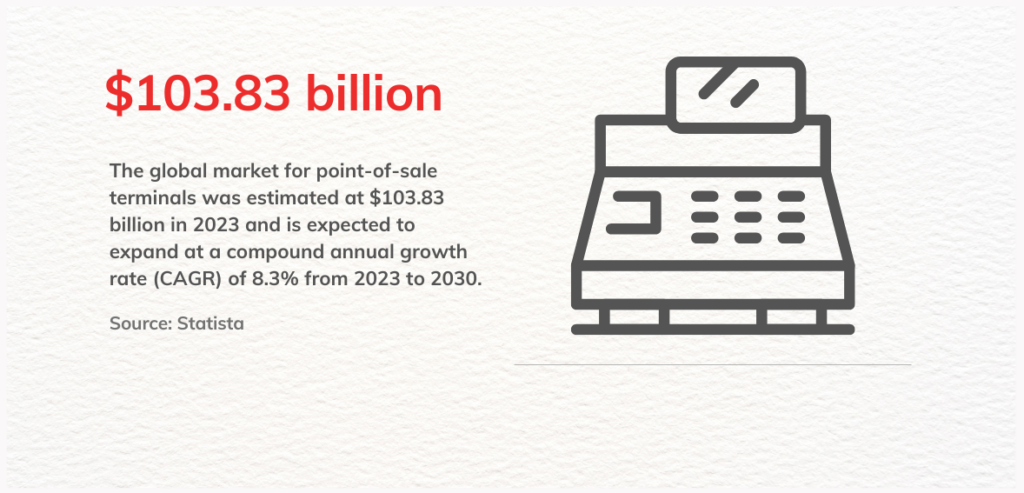
The POS market is growing significantly worldwide, with projections showing continued strong growth. In 2023, the global market was valued at about $29.02 billion and is expected to rise to $33.41 billion in 2024, reaching approximately $110.22 billion by 2032. This represents an annual growth rate of about 16.1% over the forecast period.

In the U.S., the POS market was valued at $4.97 billion in 2022 and is predicted to grow to $5.61 billion in 2023, with estimates suggesting it will reach $13.49 billion by 2030. This corresponds to an annual growth rate of 13.3% during the forecast period. The growth is primarily driven by the increased use of digital payment methods and mobile wallets, which improve the overall user experience.

Several factors are driving this market growth, such as the increase in NFC and contactless payments, government initiatives promoting digital payments, and quick developments in payment technologies. Additionally, the retail sector gains significantly from using advanced POS systems, which save time and costs and provide immediate data on sales performance.

Key Trends Shaping the Growth of POS Market Outlook

Key Trends Shaping the Growth of POS Market Outlook

1. Cloud-Based POS Systems Are Taking Over

The way we use POS systems is changing fast. By 2025, it’s expected that most businesses will use cloud-based POS systems. These systems are great because they let you run your business from anywhere and keep your data the same across different locations. Cloud POS systems can handle it all, whether it’s a small family-owned shop or a big franchise with multiple locations. They’re easy to grow with your business, secure your data well, and are cheaper to keep up. In 2020, over 60% of new POS system purchases were cloud-based, popular especially among retailers and restaurants.

Cloud POS systems let you see your sales and stock information in real time, which is crucial for managing your business well. You can use these systems on any device that connects to the internet, whether running a single store or a chain of restaurants. This flexibility is great for today’s shopping and dining environments, adapting to varied buying behaviors like finding a product online and buying it in a store or vice versa.

2. AI Enhancements in POS Systems

Artificial intelligence (AI) has changed the way retail works. By 2025, AI will revolutionize POS systems, making shopping more personal, business operations more efficient, and decision-making smarter through predictive analytics and automation. About 15% of U.S. businesses use POS systems with AI capabilities, and around 40% plan to start using AI-based POS systems within the next year.

In 2021, nearly 40% of retailers whose customers are aged 18 to 24 have adopted AI-driven POS systems to meet customer expectations better and boost their sales.

AI in POS systems will enable dynamic pricing, adjusting prices in real-time based on the market and customers’ actions. This flexibility helps businesses keep up with market changes, keeps customers happy by offering fair prices, and helps retailers increase their sales.

Additionally, AI-driven POS systems will take over key business tasks like managing inventory and processing transactions, saving time and reducing mistakes. These systems can handle complicated tasks like accepting payments across different platforms, including online and through mobile apps, making everything more streamlined.

For customers, AI means more personalized shopping experiences. AI can analyze data from past purchases and browsing habits to provide custom recommendations and special offers. This personal touch builds stronger customer loyalty and drives sales by targeting marketing more effectively.

3. Growth and Adoption of Contactless Payments Technologies

global market share of pos

The popularity of contactless payments is soaring, especially with technologies like Near Field Communication (NFC), which make transactions easy and secure. By 2026, the market for contactless payments is expected to be worth about $100 billion, a 15% increase each year from 2020. This growth is fueled by more people using mobile and wearable tech, the addition of biometric security features, and more smartphones equipped with NFC.

As digital payments evolve, sectors like retail, transportation, and hospitality quickly adopt these technologies to make transactions faster and improve customer satisfaction. In 2021, 67% of retailers provided at least one form of contactless payment, up from 40% in 2019. Additionally, over 80% of consumers have utilized NFC contactless payments. The adoption of these methods is facilitated by the common use of integrated POS terminals, which support various payment options, including mobile payments and card transactions. This shift is influenced by the demand for enhanced security and quicker transaction processing.

4. The Impact of Mobile Payments on the POS System Is Still On!

By 2025, mobile payments are expected to be essential at POS terminals, driven by technological advances and changing consumer tastes. The adoption of mobile payment methods like Google Pay, Apple Pay, and Samsung Pay has transformed transaction processes by offering both convenience and improved security through biometric authentication and tokenization. This shift is particularly notable among younger customers who value speed and convenience in their financial transactions.

The mobile POS payments market is expected to grow substantially. Transaction values are forecasted to reach $10.85 trillion in 2024 and grow at an annual rate of 16.72%, reaching about $23.50 trillion by 2029.

Additionally, further developments in POS technology will likely emphasize mobile and contactless payment options to meet increasing consumer demand. Businesses are advised to upgrade their payment systems to support mobile and contactless transactions, positioning themselves to serve customers increasingly turning to digital wallets and contactless payment methods.

5. Industry-Specific POS Systems Are Gaining Traction

POS systems are becoming more specific to industries such as retail, hospitality, and healthcare. Companies want systems that meet their unique needs.

In retail, POS systems now include features like inventory tracking, loyalty programs, and customer relationship management. These systems can handle many transactions simultaneously and work well with other retail technologies to make operations smoother and improve the customer experience.

For restaurants and hotels, POS systems are being developed to better manage orders, handle payments, and improve customer service. Common features now include managing tables, taking online orders, and handling reservations. These systems help make service faster and more accurate, which makes customers happier.

In healthcare, POS systems focus on billing patients, processing payments securely, and connecting with health management systems. They are designed to run smoothly and meet strict rules.

Industries like manufacturing are also getting POS systems made for their needs. These systems help manage complex inventories, increase productivity, and provide detailed information that helps make business decisions.

6. Rise of Subscription-Based POS Software Solutions

Point of Sale withdrawal

More businesses, especially small—to medium-sized ones—are choosing subscription-based POS software to save money upfront and increase flexibility.

For smaller businesses, paying for these systems monthly or yearly is easier than paying a lot all at once. These systems also update regularly, have better security, and can adjust to how much the business needs them. They are starting to include more features, like managing inventory, maintaining customer relationships, and analyzing data. These features help businesses understand how they operate and their customers’ actions. The trend towards these cloud-based systems is expected to continue as they bring many benefits to businesses.

7. Self-Service Kiosks and Automated Checkouts Are Changing the Retail Game

Self-service kiosks and automated checkout systems are changing the way stores operate. In 2023, the market for these systems was worth $4.62 billion, and it is expected to grow to $15.49 billion by 2032. This growth, which will happen at a rate of 14.42% each year, is due to the greater need for automation to smooth store operations, cut labor costs, and make shopping more convenient for customers.

Stores are using these systems to speed up the shopping process, lessen wait times, and reduce the need for cashiers. Checkouts are becoming more advanced, with features like motion sensors and AI to recognize items better and interact with customers. This not only speeds up the checkout but also helps prevent theft and fraud by improving security.

8. Integrating POS Systems with Loyalty Programs for Enhanced Customer Engagement

Modern POS systems are often combined with loyalty programs, making tracking rewards easier and offering customized deals that keep customers coming back. By 2025, this integration will become essential for businesses offering a smooth and personalized checkout experience. Loyalty programs are not just for rewarding frequent customers; they also help businesses gather important data about what and how customers buy. This information is useful for creating better marketing strategies and promotions.

These integrated systems update data across different sales channels in real-time, smoothing transactions and improving the shopping experience by instantly rewarding customers and acknowledging their loyalty. They also connect directly with CRM systems and other business tools, making business operations more unified and efficient. This connectivity gives businesses more detailed insights into customers’ preferences and behavior.

Conclusion

As the POS market advances, businesses have opportunities to enhance their operations through smarter, more efficient, and customer-centric systems. Trends such as adopting cloud-based systems, AI integration, mobile payment technologies, and industry-specific solutions highlight the evolving needs of diverse sectors. The growing focus on automation, subscription-based models, and loyalty program integration demonstrates the shift toward seamless functionality and improved customer engagement.

By staying informed about these developments, businesses can better align their strategies to meet future demands, ensuring that their POS systems remain an asset in achieving operational excellence and customer satisfaction. Whether upgrading existing systems or investing in new solutions, understanding the trends shaping the market in 2025 will help make informed, strategic decisions.

Senate Probe Visa, Mastercard Executives Regarding Swipe Fees

Senate Probe Visa, Mastercard Executives Regarding Swipe Fees

At a hearing titled “Breaking the Visa-Mastercard Duopoly: Bringing Competition and Lower Fees to the Credit Card System” on November 19, 2024, the Senate expressed concerns about card interchange fees, commonly called swipe fees. They argued that these fees financially strain consumers and businesses, increasing prices for goods and services. The hearing focused on Visa and Mastercard’s market control and highlighted how swipe fees affect merchants and customers.

As consumers increasingly use credit and debit cards over cash, and as the volume of purchases requiring payment networks grows, swipe fees have become more significant for retailers. These fees are a percentage of each transaction taken by the payment networks, impacting the cost of doing business.

Key Takeaway
  • Market Dominance and Fee Concerns: Visa and Mastercard control approximately 80% of the U.S. credit card market, significantly influencing interchange fees. Senators criticized this “duopoly” for imposing high costs on merchants, often passed on to consumers through higher prices.
  • Impact on Small Businesses: Small business owners highlighted the financial burden of swipe fees, one of their largest expenses. Senators emphasized that these fees strain businesses and reduce their competitiveness.
  • Legislative Proposals for Competition: The bipartisan CCCA seeks to lessen Visa and Mastercard’s market dominance by mandating that banks with assets exceeding $100 billion offer alternative payment networks. Critics caution about possible unforeseen consequences, while supporters contend that this would reduce prices for retailers and customers.
  • Defenses and Counterarguments from Visa and Mastercard: Company representatives defended the fees necessary to maintain payment system security and infrastructure. They argued that reducing fees or imposing alternatives could harm competition, limit consumer choice, and increase operational costs.

Senate Examines Interchange Fees and Visa-Mastercard’s Market Dominance

Senate Examines Interchange Fees and Visa-Mastercard's Market Dominance

Interchange fees are costs merchants incur each time a customer uses a credit or debit card to purchase. Card networks like Visa and Mastercard in the United States determine these fees, which typically range from 1% to 3% of the transaction amount. By contrast, European regulations limit these fees to 0.3% for credit card transactions.

Last month, the Senate Judiciary Committee held a hearing to discuss concerns over Visa and Mastercard’s dominant market position, often called a “duopoly.” Members of the committee, spanning both Republican and Democratic parties, pointed out that this market dominance leaves retailers and small businesses with little power to negotiate these fees.

Senator Dick Durbin of Illinois, the committee chair, highlighted the unusual consensus across the political spectrum, noting that both very conservative and very liberal members agree on the need to address this issue.

Visa and Mastercard hold about 83% (over $1 trillion) of the general-purpose credit card market in the U.S., with nearly 576 million cards issued. This dominant position allows them to set interchange fees with little competition, increasing merchant costs. These costs are frequently passed on to consumers as higher prices for goods and services.

In 2023, Visa and Mastercard assessed merchants more than $100 billion in fees, primarily interchange fees, according to research presented to the committee by Senator Dick Durbin.

During the hearing, South Carolina Republican Senator Lindsey Graham expressed uncertainty about her stance, stating that she remains unconvinced that the fees are set with consumer interests in mind.

Senator John Kennedy from Louisiana questioned Visa’s senior advisor, Bill Sheedy, on why CEO Ryan McInerney did not personally attend the hearing. Kennedy emphasized the need for dialogue, warning that Congress might intervene if the issues are not resolved. He expressed concern over how high prices are affecting Americans.

Senator Peter Welch from Vermont criticized the interchange fees as excessively high and pointed out that the CEOs of Visa and Mastercard each earn over $20 million a year. He stated that these practices are detrimental to small businesses in the U.S.

interchange fees

Senator Josh Hawley characterized Visa and Mastercard’s behavior as monopolistic and collusive, noting that they control approximately 80% of the market. He stressed that such dominance is unsustainable.

The hearing also included statements from small business owners and executives at Visa and Mastercard.

Small business representatives shared their experiences with the financial challenges caused by high interchange fees. Chris Callahan, co-owner of Battenkill Books in Cambridge, New York, highlighted that swipe fees represent one of the largest expenses for small retailers, significantly affecting their financial health.

Senator Durbin and Senator Roger Marshall from Kansas introduced the bipartisan Credit Card Competition Act (CCCA) to address this conflict. The bill proposes that banks with assets over $100 billion must include an alternative payment network in addition to Visa and Mastercard on their cards.

Senator Durbin explained that this legislation would give small businesses the necessary options to manage costs better. They could continue using Visa or Mastercard and absorb the high interchange fees, which are often one of their largest expenses, or they could opt for a more affordable alternative.

During the Senate hearing, representatives from Visa and Mastercard defended their fee structures, emphasizing that interchange fees fund essential infrastructure and security measures that benefit merchants and consumers.

Bill Sheedy, senior advisor to Visa’s CEO, explained that interchange fees are primarily bank-to-bank payments for credit and debit transactions, with the direction of the fee varying in certain cases, like ATM transactions. He stressed that Visa aims to maintain these fees at reasonable levels to ensure the smooth functioning of transactions, which is crucial for its business. Over the past five years, Visa has invested $11 billion in enhancing cybersecurity and has prevented $40 billion in fraudulent transactions.

Meanwhile, Linda Kirkpatrick, Mastercard’s President of the Americas, argued in her testimony that the proposed CCCA would actually reduce competition by imposing unnecessary controls on a functioning system. She asserted that the legislation could disadvantage Mastercard in favor of American Express, reduce consumer choices, and not necessarily benefit merchants.

She referenced the 2010 legislation capping debit card fees, which did not result in lower prices for consumers as intended. Kirkpatrick also highlighted the emergence of companies like PayPal, which offer consumers and merchants more options and encourage competitive ecosystems. She cautioned that the proposed bill would necessitate reissuing hundreds of millions of cards and developing new infrastructure to accommodate different merchant routing options, incurring billions in costs.

swipe fees

In 2010, the Durbin Amendment, part of the Dodd-Frank Act, was enacted to cap debit card interchange fees for banks holding over $10 billion in assets, aiming to reduce costs for merchants accepting debit cards. Despite this, credit card interchange fees have not been similarly regulated, leading to continued discussions and proposals for comparable regulations in the credit card industry.

High interchange fees indirectly affect consumers as merchants typically offset these costs by charging higher prices for goods and services. Additionally, the limited competition in the credit card network market can inhibit innovation and reduce options available to consumers. Supporters of the Credit Card Competition Act believe that pumping more competition would help decrease fees, potentially lowering consumer prices and offering choices in payment processing methods.

In March, Visa and Mastercard agreed to a $30 billion settlement designed to decrease their swipe fees by four basis points over three years. However, this settlement was overturned by a federal judge in June, who stated that they (Visa and Mastercard) could afford to offer better reductions. Additionally, Visa is currently toiled in a legal battle with the Justice Department, which filed a lawsuit against them in September. The lawsuit accuses Visa of unlawfully monopolizing the debit card payment networks.

Conclusion

The Senate hearing underscored bipartisan concerns about the impact of high interchange fees and Visa and Mastercard’s concentrated market power. Lawmakers, small business owners, and legal experts highlighted the financial burden these fees place on merchants and consumers. While Visa and Mastercard defended their fee structures as necessary for maintaining security and infrastructure, critics argued for increased competition to reduce costs.

The introduction of the Credit Card Competition Act represents a potential legislative step toward addressing these concerns, but its broader implications on the industry remain a subject of debate. This issue will likely continue to garner attention as stakeholders push for a balance between innovation, affordability, and fair competition.

payment trends 2025

Payment Trends to Prepare for in 2025

2025 is expected to be an important year for the payments industry, driven by new technologies, evolving regulations, and changing consumer needs. Artificial intelligence (AI) will continue to be crucial in transforming the sector, but it is only one among many trends that will shape how businesses and consumers manage payments. Developments such as increased automation in digital payments, the expansion of embedded financial services, and potential deregulation allow more types of banking transactions as Trump prepares to take office next year.

This blog outlines several major trends redefining the payments field as we move into the next year. Whether you are involved in payments or financial services or looking to start or expand your business in FinTech, this blog provides valuable insights to help you and your company prepare for what lies ahead.

Top Payment Trends That You Should Know

AI to Become a Central Focus in FinTech in 2025 and Beyond

artificial intelligence

Artificial Intelligence (AI) is now a critical component in the financial technology sector, enhancing numerous functions with its ability to handle large datasets quickly. This technology improves fraud detection, automates regulatory compliance, and tailors user experiences. AI’s role extends to customer service and marketing, improving security against fraud through advanced AI models, including generative AI. Data show a marked rise in the use of AI within financial services. A 2024 survey reported that 65% of organizations have adopted AI in at least one area of operations.

Additionally, 91% of financial services companies actively explore or use AI in their systems. Among these, 55% are investigating generative AI for tasks like generating reports and enhancing customer interaction.

Generative AI is used to create content and compile investment research, helping streamline tasks and lessen the need for manual labor. In fraud prevention, AI evaluates transaction patterns to detect and halt suspicious activities. For example, the Commonwealth Bank of Australia uses AI to monitor 20 million transactions daily, sending alerts to over twenty thousand retailers to reduce fraud-related losses.

AI-powered chatbots and virtual assistants efficiently manage customer queries, shorten response times, and raise the quality of service. JPMorgan Chase has introduced a generative AI tool, the LLM Suite, to boost its team’s productivity. AI also supports real-time oversight and reporting, which helps financial firms meet regulatory demands and manage risks more effectively. This technology is increasingly used to streamline compliance operations, improving overall business efficiency.

The influence of AI in fintech is set to grow, with forecasts suggesting that the AI market within this sector will surpass $50 billion by 2029. Financial institutions will likely boost their investment in AI technologies to enhance operational efficiency, better customer experiences, and stay competitive in a quickly changing market.

Deregulation, More Competition, Introduction of Crypto Policies, CFPB Scrutiny, and More — All Under Trump’s Reign

Blockchain.com Plans at Attracting Crypto Whales for Seeking Bitcoin Millionaires

Donald Trump’s election as president is expected to significantly impact the payments industry, particularly in areas such as stablecoins, earned wage access policies, and federal antitrust priorities. As the industry experiences rapid changes, the administration’s actions in terms of legislation and regulation will be key in shaping the future of digital payments and cryptocurrency initiatives.

The administration will also influence the competitive environment between emerging fintech companies like Stripe and Block and established corporations such as Visa and Amazon.

Consumer Financial Protection Bureau (CFPB) Leadership Changes

Despite attempts by some conservative lawmakers to dismantle the CFPB, a recent Supreme Court ruling has confirmed that the agency will continue to operate. Under Trump’s presidency, it is expected that there will be significant changes in leadership and policy direction at the CFPB.

Current Director Rohit Chopra is likely to be replaced before the end of his term, enabling Trump to nominate a successor who aligns with his administration’s goals. With the Senate under Republican control, the confirmation of this new leader is probable.

Potential Rollback of CFPB Rules

Unimplemented rules might be reconsidered or reversed. For example, the stocks of buy now, pay later (BNPL) companies recently surged, reflecting investor expectations that Trump’s CFPB would ease proposed BNPL regulations.

The future of the agency’s open banking rule is also in question, particularly following resistance from the industry. However, Republican support for open banking may keep this rule active under the new administration.

Cryptocurrency Policies

Trump has expressed support for cryptocurrency during his campaign, aiming to make the U.S. a major center for cryptocurrency activities. His position is likely to increase cryptocurrency ownership and enhance crypto payments’ adoption. After his election, Bitcoin’s price hit a record high, almost touching $100,000 before settling at $95,000, signaling strong consumer interest in cryptocurrency during his presidency.

Stablecoins, specifically from specialized cryptocurrency markets, play a significant role in mainstream financial systems. By 2025, stablecoins are expected to be widely used for daily transactions, especially in cross-border payments, because they offer fast, transparent, and cost-efficient transaction methods. This adoption is mainly due to their stability, achieved through collateralization and algorithmic adjustments, making them a dependable choice for financial planning and transactions.

Several major financial institutions have already started using stablecoins within their operational frameworks. JPMorgan Chase, for example, employs its blockchain-based JPM Coin to improve settlement processes and manage liquidity. BBVA uses the USD Coin (USDC) to facilitate real-time currency exchange and custody services. In Japan, leading banks such as MUFG, SMBC, and Mizuho use stablecoins in Project Pax to enable trade payments without depending on traditional correspondent banking networks.

The use of stablecoins is expected to increase significantly with the development of regulatory frameworks that boost confidence in these digital currencies. By 2025, the transaction volumes of global stablecoins are expected to reach trillions of dollars, making them fundamental elements of international payment systems.

Regulation of Junk Fees and Credit Card Interest Rates

The Biden administration’s CFPB tried to eliminate junk fees, such as credit card late fees and other charges considered burdensome to American households. On this issue, Trump’s proposals may show some alignment. He proposed a temporary 10% cap on credit card interest rates during his campaign.

Additionally, Vice President-Elect J.D. Vance sponsored the Credit Card Competition Act, which would have required banks issuing credit cards to offer an alternative network to Visa or Mastercard for processing transactions. However, reports suggest Vance has since rescinded support for this proposal.

Embedded Expansion

How Embedded Payments Are Shaping the Future of B2B Transactions

The term “embedded” is crucial in today’s financial innovations, especially in payment systems. This method integrates financial services directly into various platforms, improving user experiences and operational efficiency.

Embedded finance brings financial services such as payments, lending, insurance, and banking into non-financial platforms. This allows users to access financial services within their applications, removing the need to switch between different platforms. For example, ride-hailing apps that offer in-app payment options are a clear demonstration of this model.

The use of embedded finance is growing rapidly, with estimates predicting that the U.S. market will expand at a compound annual growth rate (CAGR) of 23.8% from 2024 to 2029.

In the early 2010s, companies like Uber pioneered the idea of “invisible” payments, where transactions are processed without the user’s active involvement at the point of sale. This idea has developed into “embedded” finance, where financial services are integrated smoothly and an integral part of the user journey, increasing engagement and satisfaction.

However, simply adding financial services to platforms is not enough. The focus now is on ensuring these services operate effectively and meet user expectations. A Payrix study points out that embedded payments’ success depends on minimizing disruptions for the customer, thus enhancing the overall user experience.

The future of embedded finance suggests that its integration is merely an initial step. The priority now lies in how these services are executed and the additional benefits they deliver to users. As technology progresses, we can anticipate more innovative uses of embedded finance, increasingly integrating financial services into daily activities.

The Rising Need for Customized Payment Solutions

The Rising Need for Customized Payment Solutions

As we approach 2025, consumer demand for payment solutions that cater to their unique preferences and behaviors is noticeable. In response, companies are using data-driven approaches to customize payment interactions to improve operational efficiency, enhance privacy protections, and boost customer acquisition and retention.

Customizing payments goes beyond mere convenience; it’s about developing user-focused experiences that resonate with consumers. Companies use detailed item-level data to provide payment options that match individual purchasing patterns. AI plays a crucial role in this shift, enabling businesses to sift through extensive data sets to discern customer preferences and behaviors, thereby supporting the delivery of customized payment experiences.

The benefits of customization also impact customer acquisition and retention. According to a Statista report, 80% of global business leaders recognize that customizing experiences to customer preferences increases spending, while 62% noted a positive effect on customer retention. Payment processors and neobanks that successfully employ customization strategies can stand out in a competitive market. By providing customized payment solutions, these entities can forge stronger, lasting connections with their customers, addressing the changing expectations of Millennials and Gen Z consumers.

A2A Payments Will Continue to Grow

A2A Payments Will Continue to Grow

Unlike traditional card-based transactions, A2A payments facilitate direct transfers between bank accounts, cutting out intermediaries and potentially reducing transaction costs. Particularly in emerging economies, A2A adoption is accelerating. In India, the Unified Payments Interface (UPI) has drastically increased digital transactions, reaching nearly 15 billion in August 2024 alone. Brazil’s Pix payment system, launched by the central bank, now dominates retail transactions, making up over a third of the total. In China, platforms like Alipay and WeChat Pay have added A2A capabilities, noticeably decreasing the reliance on cash. These systems are favored for their speed, low costs, and security, benefiting consumers and businesses.

Meanwhile, developed markets have been slower in adopting A2A payments, generally preferring digital wallets like Apple Pay and Google Pay. However, the development of real-time payment infrastructures such as the U.S. FedNow and The Clearing House’s Real-Time Payments (RTP) network is changing this trend. Additionally, businesses are increasingly drawn to A2A payments to bypass card processing fees and access funds more quickly, and consumers are seeking more accessible and user-friendly payment options.

Looking forward, the A2A payment sector is expected to see significant growth. Juniper Research predicts that the value of global A2A transactions will increase from $1.7 trillion in 2024 to $5.7 trillion by 2029, a 230% rise. Furthermore, the Capgemini World Payments Report 2025 suggests that A2A instant payments may reduce the growth of card transactions by 15-25%, indicating a major shift in payment methods. This expansion will likely affect cross-border and business-to-business transactions, with regulatory discussions and pilot programs initiated in 2024 setting the stage for considerable advancements in 2025.

Various monetization strategies could prove lucrative for businesses developing payment applications. These include offering premium features for a fee, charging a small percentage per transaction, engaging in affiliate marketing, introducing in-app purchases and membership fees, and selling source codes and APIs to other developers.

M&A Activity will Rise Among AI-Focused FinTechs

Ways FinTech Is Revolutionizing Cross-Border Payments

The fintech sector is seeing a significant rise in mergers and acquisitions (M&A), fueled by the adoption of AI and the drive for technological innovation. In 2023, the value of M&A deals reached approximately $58.8 billion in fintech investments worldwide, outstripping other types of investments within the industry. Companies are actively purchasing firms with advanced AI expertise to strengthen their technology infrastructure, exemplified by Robinhood’s acquisition of Pluto, an AI-driven fintech firm.

AI is pivotal in enhancing the efficiency of post-merger integrations, helping companies simplify operations and manage increasingly complex payment ecosystems effectively. This growing consolidation trend is altering the competitive dynamics of the fintech landscape, necessitating that companies adapt their strategies to stay competitive.

Role of Digital Wallets in Payments Is Expanding

Digital Wallet growth infographics and data

Source: Juniper Research

Digital wallets are currently seeing a dramatic increase in usage, expanding their functions beyond simple payment processing to include aspects of digital identity management. This broadening of capabilities transforms how users interact with financial systems and digital platforms.


Regarding e-commerce and point-of-sale (POS) transactions, digital wallets have emerged as the preferred payment method. In 2023, they accounted for around 50% of the global e-commerce transaction value, expected to increase to 61% by 2027. Similarly, digital wallets constituted about 30% of the global POS transaction value in 2023, outperforming credit and debit cards. Projections for 2027 suggest that digital wallets will facilitate around 46% of all POS transactions, translating to an estimated $19.6 trillion in spending.

The European Union is actively developing the European Digital Identity Wallet in response to these trends. This tool will allow EU citizens and businesses to verify their identities and exchange electronic documents across member states. Furthermore, major companies like Apple are integrating digital identity capabilities into their wallet applications, enabling features such as the storage of digital driver’s licenses.

Fraud Prevention Still a Critical Issue

digital sales fraud

Merchants increasingly focus on fraud prevention and regulatory compliance as they confront new challenges in the payment landscape. Around 63% of merchants view fraud prevention as their top concern, closely followed by regulatory compliance, which concerns 60%.

Fraud prevention has become a critical issue as the rise in online transactions has led to more sophisticated fraud tactics. Alongside this, merchants must navigate complex and ever-evolving payment regulations, which demand significant resources and expertise. Cybersecurity is another major concern, with 46% of merchants worried about threats that could result in data breaches and financial losses. Additionally, 44% of merchants report difficulties integrating AI into their systems despite its potential to enhance fraud detection and operational efficiency. Furthermore, cross-border transactions present challenges for 10% of merchants, such as dealing with currency conversion and varied regulations.

To address these issues, merchants are enhancing their payment strategies to balance consumer demands for convenience and flexibility with the need to tackle fraud and ensure compliance. This includes investing in advanced fraud detection systems, keeping up-to-date with regulatory changes, and implementing secure payment technologies.

Web 3.0 to Change the Scene of the Payments System

The Rise of Contactless Payments and Innovations for 2024

The next evolution of the internet, Web 3.0, is set to significantly alter the landscape of payment systems by incorporating advanced technologies such as blockchain, artificial intelligence (AI), and decentralized finance (DeFi). These developments aim to craft smarter, more personalized, and more secure user payment experiences. Web 3.0 uses AI and machine learning to improve payment processes in several ways.

For instance, through natural language processing (NLP) and voice commands, users can initiate payments using voice instructions, simplifying transactions and enhancing the user experience. Additionally, systems can now analyze past payment behaviors and preferences to offer personalized payment recommendations and deals that meet individual user needs.

DeFi, a key aspect of Web 3.0, leverages blockchain technology to offer decentralized financial services that promote inclusivity by providing access to financial services without traditional intermediaries. It also supports the creation of innovative financial products. For example, tokenizing real-world assets and developing yield-bearing stablecoins are expanding opportunities within the DeFi ecosystem. The global market for Web 3.0 is anticipated to experience substantial growth, with projections suggesting a CAGR of 49.3% from 2024 to 2030.

Conclusion

As 2025 approaches, the payments industry is on the cusp of significant transformation driven by technological advancements, regulatory shifts, and evolving consumer demands. Artificial intelligence, embedded finance, and customized payment solutions will play key roles in shaping the future, enhancing efficiency and security while meeting individual preferences. Meanwhile, changes under the new U.S. administration, especially in cryptocurrency policies and financial regulation, will create new business opportunities and challenges.

Additionally, the rise of direct account-to-account transfers, expanding use of digital wallets, and developments in Web 3.0 indicate a more integrated and decentralized payment ecosystem. As competition intensifies, businesses must adapt to these trends by investing in innovative solutions and robust fraud prevention strategies to stay ahead. Understanding and preparing for these changes will be crucial for companies to remain competitive and responsive in this dynamic environment.

Restaurant Holiday Outlook for the 2024 Holiday Season

Restaurant Holiday Outlook for the 2024 Holiday Season

The holiday season presents a significant opportunity for restaurants to boost customer traffic and sales. Studies show that 66% of consumers prefer catering their entire holiday meal, while 89% are open to ordering just the main course from a restaurant. These trends highlight the growing demand for convenience during the holidays, creating a prime environment for restaurants to capitalize on.

Successful restaurant operators recognize the value of aligning their offerings with holiday dining trends to build brand visibility, attract new customers, and drive revenue. With 80% of diners willing to try a new restaurant when offered a discount or promotion, leveraging holiday-specific deals can attract new patrons and encourage customer loyalty. This restaurant holiday outlook explores the opportunities available during the 2024 holiday season.

consumer data for restaurants during holidays

Source: Auguste Escoffier School of Culinary Arts

Restaurant Holiday Outlook and Consumer Spending

Mixed signals characterize the economic environment in 2024. While inflation rates have moderated, prices remain elevated, leading to cautious consumer spending. The term “vibe-cession” has been coined to describe this scenario, where consumers possess purchasing power but are selective in their expenditures, focusing more on essential items over discretionary spending.

Holiday sales forecasts reflect this cautious sentiment. Bain projects a 3% growth, Deloitte estimates between 2.3% and 3.3%, and the National Retail Federation anticipates a 2.5% to 3.5% increase—which equates to $977.6 billion to $989 billion. These figures fall below the pre-pandemic average growth rate of 5.1%, indicating tempered seasonal expectations.

Restaurant Holiday Outlook and Consumer Spending

Consumer Dining Preferences: Customers Balancing Between Home Meals and Restaurant Visits

Recent surveys reveal shifts in dining preferences during the holidays. A study by 84.51° indicates that 52% of consumers plan to reduce spending on restaurant dining, opting instead for home gatherings and grocery purchases. This trend suggests a pivot towards home-prepared meals, with consumers seeking cost-effective ways to celebrate.

Conversely, data from Tock shows that 68% of diners intend to engage with restaurants and bars during the holiday season, with over 60% planning to visit these establishments on New Year’s Eve. This indicates that while some consumers are cutting back, a significant portion still values dining out as part of their holiday experience.

Trends in Outsourcing Holiday Meal Preparations

Trends in Outsourcing Holiday Meal Preparations

Restaurants are experiencing increased demand for catering and takeout options as consumers look to simplify holiday preparations. Offering curated holiday menus for home consumption has become a strategic approach for many establishments. Catering services are expected to increase demand by 20-25% as more families opt for professionally prepared meals for gatherings. Offering diverse and customizable catering options can help restaurants meet this growing need.

Plus, 70% of consumers prefer online ordering for holiday catering. A seamless online catering ordering system can cater to this preference and boost sales. Consumer preferences for outsourcing holiday meals vary:

  • Main Courses: 89% prefer to buy the main course from restaurants.
  • Side Dishes: 86% prefer to buy side dishes.
  • Appetizers: 74% prefer to outsource appetizers.
  • Whole Meals: 66% would rather buy the entire meal.
  • Desserts: 63% prefer to buy desserts, such as pies.

Despite the trend toward outsourcing, desserts are still the least likely to be purchased from restaurants, indicating a strong attachment to traditional homemade dessert recipes. The reasons consumers choose to rely on restaurants during the holidays include:

  • Supporting Local Businesses: 88% see ordering from restaurants as a way to support local businesses.
  • Reducing Stress: 82% say that buying prepared foods reduces holiday stress.
  • Maximizing Family Time: 78% believe it allows for more quality time with family by reducing the time spent on cooking and cleaning.

How Much Do People Plan to Spend on Holiday Meals Out?

In 2024, Americans’ dining habits have shifted, showing distinct spending patterns and preferences changes, particularly during the holiday season. A survey from US Foods reveals that the average monthly spending per person on dining out has climbed to $191, up from $166 in 2023. This increase is primarily attributed to inflation affecting menu prices. In a shift from previous years, women now spend 33% more on dining out than men, compared to 2023, when men spent 19% more.

The survey also breaks down the spending per individual meal:

  • $10–$20 per meal: 50% of respondents
  • $21–$30 per meal: 24%
  • $31–$40 per meal: 11%
  • $41 and above per meal: 15%

These figures show that most Americans generally spend between $10 and $30 per meal when dining out.

Which Holiday Foods are Consumer Favorites?

Which Holiday Foods are Consumer Favorites?

Recent surveys have provided updated insights into Americans’ favorite holiday dishes, highlighting traditional preferences and emerging trends.

Thanksgiving Favorites

A 2024 survey revealed the following top Thanksgiving dishes:

  • Turkey: Preferred by 74% of Americans, turkey remains the centerpiece of Thanksgiving meals.
  • Mashed Potatoes: 67% of respondents enjoy mashed potatoes as a staple side dish.
  • Stuffing: Favored by 64%, stuffing continues to be a traditional accompaniment.

Interestingly, cranberry sauce was identified as the least favorite dish, with 27% of participants expressing a dislike for it.

Christmas Preferences

For Christmas, roasted potatoes were the most popular dish, winning 76% of head-to-head matchups. Mashed potatoes followed closely at 75%, with turkey at 73%.

Regional Variations

Regional differences also influence holiday food preferences. For instance, apple pie is most favored in the Northeast, with 50% listing it as their top dessert, while pecan pie finds more support in the South, with 40% favoring it.

These insights suggest that restaurants should focus on traditional dishes like turkey, mashed potatoes, and stuffing during the holiday season to align with consumer preferences. Offering regional favorites can also cater to local tastes. Depending on clientele interest, less popular options, such as duck (33% favorability) and goose (28%), might be included selectively.

Additional Trends in Holiday Dining

Additional Trends in Holiday Dining

The holiday season is critical for the restaurant industry, presenting opportunities and challenges. In 2024, restaurants are poised to experience significant growth in online sales, catering services, and gift card purchases. However, operators must adopt strategic measures to enhance customer experience and operational efficiency to capitalize on these trends. Several notable trends are shaping holiday dining in 2024:

  • Increase in Online Sales

Online holiday sales are projected to rise by up to 24% year-over-year, driven by consumers’ preference for convenience during the busy season. This surge underscores the importance of robust online ordering systems and user-friendly digital platforms.

  • Experiential Dining:

Despite economic pressures, consumers are willing to invest in unique dining experiences. Restaurants offering special holiday-themed events or exclusive menus are attracting patrons seeking memorable outings.

  • Health and Safety Priorities:

Ongoing health concerns continue to influence dining choices. Establishments emphasizing safety protocols and offering flexible dining options, such as outdoor seating or private dining areas, are more likely to appeal to cautious consumers.

  • Rise in Gift Card Sales

Gift card purchases are anticipated to grow by 15-20%, making them a valuable revenue stream. Promoting both digital and physical gift cards can capitalize on this trend.

  • Increased Use of Technology

Around 50% of businesses plan to utilize technology to monitor deliveries and manage the holiday rush efficiently. Implementing integrated restaurant solutions can streamline operations and enhance customer satisfaction.

  • Preference for Online Catering Orders

A significant 70% of consumers prefer online ordering for holiday catering. A seamless online catering ordering system can cater to this preference and boost sales.

Operational Challenges and Strategies

The restaurant industry faces several operational challenges during the holiday season:

  • Labor Shortages: Staffing is critical, impacting service quality and operational efficiency. Investing in employee retention strategies and leveraging technology to streamline operations are essential.
  • Supply Chain Disruptions: Fluctuations in supply availability can affect menu offerings and pricing. Maintaining strong supplier relationships and adopting flexible menu planning can help mitigate these disruptions.
  • Technological Integration: Adopting AI and automation transforms restaurant operations, from reservation systems to personalized marketing. Embracing these technologies can enhance customer engagement and operational efficiency.

Conclusion

The 2024 holiday season presents both opportunities and challenges for the restaurant industry. While cautious consumer spending and a preference for home-cooked meals may temper expectations, there remains significant potential in catering, takeout, and special dining experiences. Restaurants can capitalize on these trends by offering targeted promotions, enhancing online ordering systems, and curating holiday-specific menus that reflect traditional favorites and regional preferences. Addressing operational challenges, such as staffing and supply chain disruptions, through strategic planning and technology integration will be crucial for success. By aligning their offerings with evolving consumer needs, restaurants can attract new patrons, strengthen customer loyalty, and drive revenue during the holiday season.