Author Archives: hostmerchantservices

occ by hsu

OCC by Hsu -Stablecoins Boosting Innovation Upon Regulation

There are several ways of going through the lines of the speech to talk about the concept of stablecoins. It was made at a financial conference by Acting Comptroller of the currency, Michael Hsu. 

A major fact is that he has genuine concerns about the overall potential damage to the entire economy. However, it will not preclude some power play. 

Even after its broader title, Hsu has talked about the concept of ‘The Future of Crypto-Assets and Regulation.’ He shared his talks at the British American Business Transatlantic Finance Forum. The discussion took place on January 13, 2022 and was primarily focused on stablecoins. It is a type of cryptocurrency that is known for maintaining a balance with the US Dollar or even other fiat currencies. This is achieved by backing the tokens on a one-to-one basis with the US Dollar and other liquid forms of investments.

Another major difference from previous comments was that Hsu has started observing stablecoins as an important instrument that will serve a functional place in the modern financial market. At least he is accepting it to be so.

Statements Put Forth by Hsu

A major list of signs reveals ‘cryptocurrency going mainstream rapidly’ – ranging from the impressive $2 trillion market cap and the ever-growing NFT or Non-fungible Token popularity, to the widespread adoption of the modern cryptocurrencies amongst minority and underbanked consumers. Hsu added that bank regulation will be giving credibility to the stable aspect of stablecoins by enabling improved innovation in the modern crypto market while making given innovations highly durable.

In another interview given to CoinDeskTV two months ago, Hsu added that the ever-evolving nature of cryptocurrencies is not something one would want out of stablecoins. Hsu said that you would want your money to be reliable and stable. You would want the same in good times as well as in bad times, while not having to think about it constantly. If you are highly innovative in the given space, you will obtain a wide range of outcomes. 

As far as the Forum is concerned, Hsu referred to the broader crypto market as quite exciting, and added that the market is responsible for presenting a wide spectrum of opportunities for financial institutions and banks. He also noted that the overall risks, the pace of modifications, and the general lack of standards as well as controls in the crypto market recommend that a careful and cautious approach is warranted. 

The biggest risk as perceived by Hsu is the overall potential of running on cryptocurrencies that are similar to the one that was driven by Bear Stearns in 2008. It was a run that he observed first-hand from different positions at the Securities and Exchange Commissions & the Treasury Department. He offered details on how things will end up in the case that buyers lose faith in stablecoins and instead redeem tokens for fiat. 

He also highlighted the important role of the stablecoins in the crypto trading world. He referred them to as the oxygen of the cryptocurrency system and highlighted the critical role of stablecoins in facilitating and supporting constant growth in DeFi or Decentralized Finance. 

Understanding the Elbow Room

So what is this all about? One potential answer could be that he is elbowing his way into the major fight between the CFTC (Commodity Futures Trading Commission) and the SEC over who will be getting control now that congress is ultimately getting concerned about regulation of the crypto market.

It is possible to understand that runs will turn out to be damaging in the fact that they do not discriminate between individuals deserving to bear losses and those that are innocent. In the given context, he added that it was especially a true reflection of the banks in 2008. 

Hsu added that a stablecoin run will not directly impact those who might have invested in them. There would be some form of collateral damage, which will continue growing as long as the crypto market continues expanding. Thankfully, he added, there will be an effective tool towards mitigating the risks –including bank regulation and others. It would ultimately offer credibility to the stable aspect of stablecoins. It would offer investors confidence that even in times of crisis, reserves will be present there. It would be ultimately examined and overseen by bank supervisors and even backstopped by the central bank. 

This is wherein Hsu will be working upon his innovations. He even argued that the regulation of stablecoin issuers in the form of banks would enable more innovation in crypto. It would make the given innovations more durable. He added that as innovations will be thriving in uncertain environments, strong foundations can be helpful –particularly when it comes to trust and money.

Understanding the Stablecoin Problem

A wave of cases related to crypto enforcement will involve successful crypto companies in the United States of America and the opening salvo from the United States regulators that try to ensure grips with the immense growth of the DeFi and crypto ecosystem. The respective enforcement actions are paired with a dedicated stablecoin report offering the recommendation that Congress will take action towards requiring stablecoin issuers to the institutions of insured depository or banks. It also suggests forthcoming actions from the respective bank regulators for defending the regulatory perimeter. 

open banking trends

Open Banking Trends for 2022

Open banking is a phenomenon that is rapidly maturing across the world.

The gradual shift towards an open data economy seems inevitable. It is possible that the future will be a marketplace that is characterized purely by platforms that take advantage of enhanced data flows in order to offer relevant, personalized services to customers and businesses.

Initially, this shift was felt most keenly in the banking sector. However, the full spectrum of financial services is now beginning to accept open banking as the status quo, and there will be a series of trends that will mark 2022.

Understanding these trends and developments is vital for maintaining proper control over the open banking industry and ensuring that a business does not fall behind. 

  1. Trust Will Lead

The first significant prediction for 2022 is that marketplaces will be constructed around the concept of trust.

Sharing and referral fees will become a significant source of revenue for both banking and non-banking institutions. The majority of banking users are more reassured by a peer-reviewed service than they are by the hollow promises of a corporation.

It’s also the case that customers will react positively towards services that have been approved by a trusted provider. Any mishandling of customer data or bad business practices will instantly erode that trust, so building an effective, strong relationship based on faith in services will be vital. 

  1. Integration

2022 may well mark the year that the boundaries between different industries begin to blur.

Simply put, it’s entirely possible that non-banking institutions will begin delivering financial services and integrating their ecosystems through APIs. 

The other end of this is that banks may also expand into non-banking services. Ultimately, the prevailing opinion is that rather than having separate providers for different services, there will be one trusted provider that customers use for everything.

This transition into singular services will force businesses and providers to adapt. It is no longer just enough to offer a specific service; there will now be a need to provide multiple services that seamlessly integrate with each other. 

  1. Customer First Focuses

If open banking is going to succeed, then there must be a focus on putting the customer at the center of the financial process.

In the past, banking providers have acted with a degree of detachment, delivering services that they consider to be profitable for customers and corporations alike. However, this may no longer be the case.

The whole point of open banking is that it breaks down some of the barriers between different data streams and allows the customer to use the data to make crucial decisions. Corporations and providers must create an environment where this is possible because otherwise, customer retention will fall. 

Ultimately, open banking should not be seen as a brand new method of delivering services but instead should focus on presenting itself as a tool that can be used to improve the customer relationship and ensure faster, more accessible ways of doing things. 

  1. Open Banking Payments Surge

As open banking continues to develop, it’s highly likely that there will be a surge in usage.

As a concept, open banking is getting faster and more developed. Simple, easy payments are becoming the best way to pay for things, and there are benefits and every part of the process. Customers, merchants, payment providers, and operators are all benefiting from the use of open banking.

As the industry reaches maturity, many businesses and companies will begin using open payments as a method of purchasing, as it is now mature enough to have a support system in place that will allow the freedom to make purchases as customers choose to do so. 

  1. Increased Financial Inclusion 

Financial inclusion is something that is set to be another big trend in 2022. It’s estimated that 1.7 billion people all across the world don’t have a bank.

It is a major problem that open banking has the potential to try and solve. By creating cost-effective, personalized, reliable services for people, the number of people that join the financial world will grow.

It was never just a case of making services for people to join; it was about making services that were inclusive. Open banking is one of the most inclusive services available, and it does work for attracting people who don’t necessarily have any other way to bank. 

  1. General Growth

It probably goes without saying, but open banking will continue to grow substantially over 2022.

As the industry continues to mature and grow, it’s easy to see how people will develop brand-new confidence in the world of open banking. It’s no longer justified; instead, it has a robust support system in place and is developing new processes and policies every day.

As a trend, open banking can only continue to grow. The more people that pay attention to it, the bigger it gets, and the bigger it gets, the more it continues to grow. It’s a very circular method of progress, but an effective one nonetheless. 

Open banking helps to bypass many of the conventional issues surrounding modern banking. By breaking down the boundaries between different forms of data, a more personal form of banking can develop. 

Final Thoughts 

Open banking is one of those things that will allow people to push forward and develop a personal relationship with their finances that wasn’t previously available. 

The industry is growing at an impressive clip – what started out as an idea just a few years ago is now becoming a fully-fledged industry. Recognizing the trends of online banking is vital for getting the best results possible, and it will allow businesses to make wise decisions over the year. 

It will be interesting to see exactly how 2022 develops open banking and how it will move into 2023. Growth is guaranteed, but there is also a growing sense of inclusion that is hard to ignore. This is a method of doing things that is new, innovative, and friendlier for many than conventional banking has been – it’s difficult to tell how popular that will be.

e commerce trends for 2022

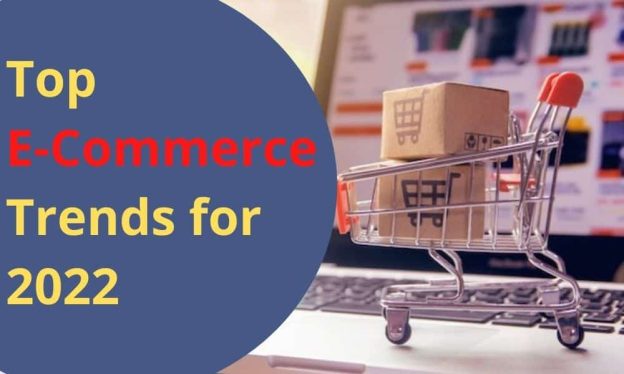
Top E-Commerce Trends for 2022

2021 saw many businesses engaged with continuing the growth of e-commerce. The entire year was about digital transformation, but 2022 will focus differently. The emphasis will now be on customer expectations and differentiation.

Understanding the e-commerce trends for 2022 is essential for a business to thrive. E-commerce sales are expected to be at least $1 trillion, so a keen awareness of these trends will be vital. 

The following are some of the prevalent e-commerce trends for 2022, and a business wishing to thrive should implement all of them.  

  1. Flexible Payment Methods

Flexible payment methods will be a core part of 2022 regarding e-commerce. Customers will want to select the payment method they prefer when checking out.

A business with a diverse selection of payment methods is more likely to encourage shoppers to spend, cut back on cart abandonment, and build trust between themselves and the customer.

Interest-free finance is also set to become more popular, as the option to schedule a payment solution spread out over months is appealing when dealing with larger purchases.

  1. Mobile E-Commerce Platforms

Using a mobile device to navigate the world of online retail is becoming the norm. More people are starting to use their smartphones to shop online, which means that any business looking to thrive in 2022 will need to focus on mobile e-commerce. 

This trend means there is a need for a mobile-optimized site, potentially a mobile app for e-commerce, getting text notifications to update customers on deliveries, and generally, a more significant focus on mobile content than has been seen in previous years. 

  1. Sustainable Business Practices

Sustainability may have been regarded as a fad during the first few years of its popularity. However, this is no passing trend, and sustainable business practices now form the backbone of decision-making when purchasing.

Every business, regardless of industry or retail, is expected to engage in sustainable practices. Whether this is choosing to work with materials that can be sustainably sourced or donating to organizations that seek to protect the environment, sustainable practices will ensure popularity.

The modern customer is conscious of environmental conservation and emphasizes purchasing from similar brands in ethics and values. A business that can capitalize on this in 2022 is a business that will succeed. 

  1. B2B E-Commerce

Recently, there has been a change in the way B2B selling works. Once upon a time, it was all about complicated orders via the phone or even paper catalogs. This is not the case now. Instead, there is a focus on digital shopping experiences, which are made better with smooth back-end processes, as well as customer service that has been digitally enhanced.

To remain in the competitive industry, a business will need to make sure that B2B selling is done via the digital realm. It’s no longer just enough to have a shopping experience that works through catalogs and orders via the phone. When selling to other businesses, there will be a need to focus on the same level of digital quality that customers can get in an ordinary B2C shopping experience.

  1. Loyalty Schemes

The world of e-commerce grows every year.

Therefore, it’s logical to assume that the industry will become more competitive with each passing year. Businesses will need to find a new angle, a new way to engage with customers and retain them.

The prevalent way that businesses are achieving this is through loyalty rewards and programs. The premise is functionally simple. A customer makes a purchase and automatically signs up for a loyalty program. The more goods that they purchase from that company, the more rewards that they earn.

This simple act of rewarding loyalty helps retain customers and reduce the number of shoppers who go elsewhere. It also means that there is no need to cut prices or take a loss to maintain sales.

  1. Video Marketing

Video marketing is a sales tactic that has grown every year. It is becoming more and more popular all the time, and it’s not difficult to see why.

Video marketing allows for concise and precise information for a prospective client or customer. A video that is no more than 20 seconds in length can convey enough information to convince a customer to make a sale, and it’s far more likely to be engaged with than a line of text.

Video marketing is dynamic, energetic, and showcases modern technology. It allows lots of information to be very quickly absorbed and is a growing part of a robust marketing strategy. Any business that wants to thrive in e-commerce would be wise to examine video marketing and implement it into everyday life. 

  1. Social Media 

Social media is a necessary evil for most e-commerce companies. It can be incredibly polarizing, divisive, and even controversial, but its effectiveness as a marketing tool cannot be ignored.

Many customers now use social media to decide what products to buy. The power of social media as an influencing tool has been well documented, but there are still many businesses that are slow to implement it into an existing strategy.

Having an active social media presence is critical for encouraging customers to check out sales, deals, new products, offers or to build a positive relationship with prospective buyers. Big platforms like Instagram and Twitter are free to sign up and provide an excellent social media presence. 

Final Thoughts 

E-commerce is an industry that has been growing from day one, and it is continuing to develop with each passing year. The industry is only becoming more competitive as more companies venture into every area to carve out a place as a top seller.

Keeping up with the latest e-commerce trends is vital for successfully thriving in a competitive industry. 2022 will have a unique set of challenges, and 2023 will bring different directions besides, but to reach 2023, it is necessary to master 2022.

point of sale trends

Top Point of Sale Trends for 2023

The point-of-sale system, or POS, is a business tool that has carved a respectable niche. 

To say a POS system is invaluable would not be an exaggeration. The system has eclipsed the conventional cash register because it does more than just track a sale. 

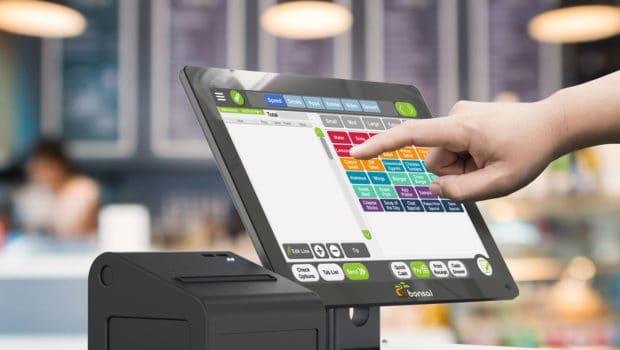
A POS system can do things like take care of employee schedules, collect data and track inventory across different sales channels. It’s essential to track POS trends across 2023. 

  1. No More Tethers

In a typical retail environment, transactions take place at the checkout counter. However, by using a modern POS system, this restriction is no longer in place. Businesses aren’t even limited to their store. 

Mobile POS systems let people place orders outside the store, on the street, or at a trade show. Companies can even send employees around the store with handheld devices and fulfill sales on the spot for customers. 

A POS system with no tether is one which allows customers to place an order for delivery or order something to pick up in the store. There are very few limits with this too. 

More than 50% of retailers accept that implementing additional delivery and pickup choices for customers was a priority for 2021, and there’s strong evidence this will continue into 2023. 

  1. Alternative Payment Methods

New payment methods are entering the mainstream industry every day. The modern customer is one who wants to choose how they pay for things, and they like having plenty of options. 

Alternative payment methods represent an excellent way for a POS system to shine. The flexibility of the system means that it is capable of handling multiple payment methods all at once. This means that there is greater versatility in terms of how people pay for things, which helps to secure more sales and drive-up customer retention.

At the end of the day, a business must adjust to meet the needs of the customer, rather than the other way around. This means that those businesses which do implement alternative payment methods in conjunction with a POS system are far more likely to see more significant numbers in terms of sales.

  1. Using Data Analytics 

The strength of a good POS system is the use of analytics. Because a system can take continuous inputs of data, it can use that to make a comprehensive set of analytics. 

Analytics is a core part of a business because they provide essential information about how certain areas of the company are doing. Analytics allow for informed decisions to be made, which means that it is possible to act in a methodical way to improve areas that are clearly lacking.

Because a POS system is constantly tracking data, it is in a solid position to deliver quality analytics. 

  1. The Cloud 

The advantages of a POS system, like, for example, personalized shopping experiences and omnichannel software, rely on different parts of the same system all sharing data. Typically, this is accomplished via the use of cloud software. The servers are run by the POS company themselves and accessed by the users via the internet.

The majority of POS companies have an obligation to make sure that servers are kept up-to-date or secure and have provisions for individual businesses. This makes it easy for software to be updated and more convenient for companies that can’t afford a server by themselves.

Therefore, it’s probably not any great surprise that cloud-based technology is going to be a continuing trend for POS systems. Considering that the POS cloud market is one that is projected to have a $6 billion growth by 2025, it’s important to invest in cloud technology early. 

  1. Omnichannel Services

Any service that is omnichannel in nature is one that will merge everything together. E-commerce, social sales, mobile sales, and in-person services will all be fused into one cohesive strategy, which has an emphasis on customer relationships.

Now, this is not a new trend by any stretch, but the POS system does make this entire process a lot easier, and it’s something that has been implemented many times.

It can be used in a wide selection of different ways. For example, this kind of strategy can be used to create nonlinear pathways to making purchases. So, regardless of whether a customer learns about the products a business has through Instagram or through the website, the purchase point is the same.

It also means that e-commerce is used as an extension of the traditional brick-and-mortar shop. Think of everything being used as one big strategy, with different platforms and ways to buy working seamlessly together. 

  1. Personal Shopping 

It’s possible for a POS system to collect enough data to create personalized shopping experiences for customers.

At the very core of its programming, the POS system is designed to collect and manage data. Therefore, it can use this data to generate personalized suggestions for products and services. If customers consent to the handling of their data in this fashion, the system can automatically generate a recommended product or a service that has been used by other people within their demographic.

Personalized shopping is not new, but the main difference now is that it has very rarely been utilized by a POS system, but this is becoming a trend for 2023 and beyond.

Final Thoughts 

The point-of-sale system is something that is growing every year. It is reaching incredible levels of proficiency and usage, which means the businesses who are smart will start to implement it sooner rather than later.

Having access to software which has been designed to generate the best results is vital. It’s no longer the case that customers take a traditional sales journey to get to purchasing an item, so the system used to fulfill sales has to be modern. 

Thankfully, the modern POS system is up to the challenge, and a sensible business will look into investing in the technology for 2023 and beyond. This kind of software will only become more popular as time goes on, so there’s never been a better opportunity. 

walmart will partnering with health pioneering ai company

Walmart Helps Support Healthcare Personalization Technology

Walmart will be partnering with Health at Scale –a pioneering Artificial Intelligence (AI) company for connecting the employees of Walmart with respective providers that best suit their specific health needs and healthcare history. 

The platform of Health at Scale makes use of AI and Machine Learning to offer patients personalized recommendations for providers. It is achieved by modeling which provider will be offering better outcomes on the basis of the individual health characteristics of the patients.

The tools will be made available to the associates of Walmart along with their families that are enrolled in the dedicated health plan of the company at select locations. 

Bringing About a Revolution Through Personalization

Lisa Woods, Vice President of Walmart Benefit Division US, explains that personalizing the treatments and services to individual needs is the next major step in the healthcare sector. It also serves to be a major part of Walmart and its commitment towards helping associates and their respective family members come across such amazing doctors who are responsible for delivering top-quality care and the best value in the community. 

She added that the company is excited to unfold this collaboration with Health at Scale and the company is eager to witness the impact that other innovative benefits like this will depict on the associates along with their healthcare outcomes and experiences. 

The technology will be integrating with the search engine of the health plan administrator of Walmart and its virtual care referrals. The platform makes use of Machine Intelligence for identifying providers who have successfully treated patients with similar characteristics as well as care needs. The platform also leverages relevant patient health data by determining which patients are at a higher risk of adverse effects and recommending particular providers to the patients when they need it most. 

Zeeshan Sayed, CEO at Health at Scale, explains that coming across the right provider is one of the most crucial health-specific decisions a patient is required to make. It is also one of the most challenging. As patients analyze the providers who are in isolation, they might ignore that the given provider can be either a bad or a good match for subsequent patients. The aspect that is really needed to be optimized is the match of patient and provider. 

He added that Health at Scale is excited to work in collaboration with Walmart, its associates, and their families in specific locations with the help of smart and hyper-personalized provider matches for reflecting a deeper understanding as well as respect for the personalized health needs. 

Dependence of the Healthcare Industry on AI

The healthcare industry and leading organizations are increasingly relying on AI-based solutions and tools along with other revolutionary technologies for offering personalized healthcare experiences to the patients.

George Van Antwerp, Managing Director at Deloitte, in a statement told Fierce Healthcare that personalizing the consumer experience in the healthcare sector is going to be vital for developing relevant patient trust amongst the biggest players of the healthcare industry. 

He added that it is about understanding the end consumers and being able to deliver a personalized group of experiences while blending the Omni-channel strategy. Based on the location, the particular disease, the overall benefit coverage, and the existing dynamics of the patients, the solutions can help in determining the best path for the patients towards choosing the best way to support maximum healthcare. 

Walmart and Its Efforts Towards Improving Patient Base

Walmart continues improving its patient base since the time the retail giant has stepped into the healthcare sector in 2019. In the modern era, the retail giant continues offering a new range of dedicated services in telehealth, primary care, discounted pharmaceuticals, and so on. 

As a matter of fact, the largest competitive advantage of the chain is its widespread national presence. It is known to operate across over 5,000 locations in the United States of America. 

Marcus Osborne, Former Senior Vice President, Walmart Health, recently spoke at the HLTH 2021 Conference. In the conference, he said that the business will continue building out its Omni-channel care services that aim at addressing individual needs of the end consumers. 

He added that he comes across information about how Americans simply do not engage in their overall health. He often thinks that it is not any challenge of the individual. If people will not be engaging, you have not created the solution for allowing them to engage. They simply do not wish to engage.

Healthcare Providers to Make Use of Deep Data for Delivering Improved Patient Outcomes

The healthcare business currently is not that well. The aftermath of the global pandemic on the overall practices, respective issues related to uncollected medical debt, varying modes of care, and the ever-changing patient expectations are making primary stakeholders worried. 

Digital transformation is going to serve as the ultimate cure. From offering improved patient experiences at the dedicated point of care to bringing about RPA (Robotic Process Automation) and other technology for bearing behind the scenes, digital transformation is going to serve as the remedy that is required by the healthcare industry. 

Payments that are integrated into the digital front door of the providers serve to be a highly valuable long-term solution for the healthcare industry because now it is possible to take the payments while registering the clients and processing the revenue cycles – all in a single digital experience. 

Data remains critical to the process. It offers capabilities that expand the respective frontiers for healthcare providers. As an increasing amount of granular data becomes accessible and available, you will observe messaging around the concept of digital front-door personalization and precise medicine. It is personalization that will be impacting us the most. To achieve the same, access to relevant data is required. The healthcare sector is going to be a data-driven industry. Through the right use of automation, it is possible to create the right type of experience that is highly convenient.

tesla tries dogecoin as payment

Tesla Tries Dogecoin as Payment, Report Says

Per a recent report, Tesla will be allowing individuals to purchase some of its branded products and services with the help of the cryptocurrency Dogecoin. It was reported through a tweet made by the billionaire Elon Musk –CEO of Tesla. It is a highly sought-after move that has been initiated several months after the company went on to briefly experiment with allowing its consumers to pay for electric cars with the help of bitcoin. 

A Breakthrough in the Modern Payment Industry

Recently, Musk had given an interview with the famous Time Magazine where he had been referred to as the Person of the Year. In the interview, Musk revealed that dogecoin has been regarded as the best cryptocurrency for transactions because it helps in encouraging people towards spending rather than hoarding it as a ‘store of value.’ 

The billionaire reported that even though it came out as a joke, Dogecoin has been better suited for handling larger volumes of multiple transactions. On the other hand, bitcoin has not been regarded as a reliable substitute for transactional currency. This is because its transaction volume is quite low and the overall cost per transaction is quite high. 

Billy Markus, the founder of Dogecoin, is going ahead with endorsing the opinion and tweeted that Musk (who also co-founded PayPal) is well-aware of monetary terms and regulations. Dogecoin was launched as a joke cryptocurrency in 2013. Its name was created through inspiration by the Shiba Inu Dog and it became quite a viral sensation throughout the world. 

In May, the overall value of Dogecoin increased to reach the record high of 69 cents after it was heavily promoted by Elon Musk on different social media platforms. 

Collaboration of Dogecoin with Tesla’s Products for Payments

In March, Bitcoin had reached its record-high value after Musk had made the announcement that bitcoin will be used for purchasing the electric vehicles of Tesla. During the announcement, the option was only made available to buyers in the United States of America, but the company went ahead with expanding its plans to other countries in 2021. 

However, during May, the electric car giant suddenly stopped accepting the cryptocurrency for payments regarding the purchase of electric vehicles after Musk expressed concerns regarding the overall carbon footprint and high energy usage of the cryptocurrency. 

Musk Says Dogecoin is Better Than Bitcoin for Buying Products

Musk has invested in Dogecoin in addition to Bitcoin. However, as per Musk’s statements, Dogecoin has significant benefits over Bitcoin and other types of cryptocurrencies. He perceives Dogecoin as a better cryptocurrency option for ensuring transactions. 

In the recent interview, Musk revealed that on fundamental grounds, Bitcoin is not a relevant and reliable substitute for transactional currency. 

While bitcoin supporters would agree on the fact that the asset serves to be a reliable store of value, they would also argue on the fact that it has been designed to serve as the relevant peer-to-peer financial system. Therefore, it can be utilized for transactions. They cited solutions including the one in which El Salvador had made Bitcoin a legal tender. 

While Musk is harsh on Bitcoin, he still has doubts that it will be successful in replacing fiat currency in the coming times and said that he is not a huge hater of the notion of fiat currency like most others in the cryptocurrency world.

As per Musk, there are several benefits with cryptocurrency in relation to fiat currency. This is because fiat currency is diluted by government rules and regulations. It also turns out to be a tax burden on the individuals, especially those possessing cash savings with the dilution of the overall money supply. 

Still, financial experts continue viewing cryptocurrency as a risky, volatile, and highly speculative investment. Therefore, it is recommended to make investments only when you are prepared to lose them. 

Tesla and Its New Payment System 

Tesla is all set for testing the all-new payment option for the cryptocurrency Dogecoin. The DOGE payment scheme was added for testing some days ago and a software engineer revealed that the company was indeed testing the available option. 

Tree of Alpha revealed that the code had already been present in the recent JavaScript files that Tesla makes use of for processing payments. However, a part of Dogecoin has been forced to return the null value irrespective of what occurs so they will never show. It is a way of testing code in the process of production.

This implies that the adoption of Dogecoin for payments towards purchasing Tesla products is a hidden feature that is not seen by many. Musk added that the company had planned on seeing how it will go towards accepting Dogecoin payments. 

Musk has always maintained an affinity for Doge and Crypto. He has also gone ahead with investing in a meme-themed crypto along with other cryptocurrencies including Ether and Bitcoin. 

The project of accepting Dogecoin as the mode of payment for the purchase of Tesla cars and services is now observing the presence of a team of board and advisors. It is regarded as a Trailmap for helping with redesigning the site while eventually making a POS or Point of Sale decentralized application for making it a usable form of a currency.

The Manifesto has been an attempt at capturing everything that the community wants from the available dogecoin project. It should be something that the entire world can use for paying rent or even buying a coffee.

cryptocurrency tech trends

Cryptocurrency Tech Trends to Watch in 2022

While 2021 was quite volatile, it was a successful year for cryptocurrencies. The overall success can be attributed to institutional and retail investors.

In the modern era, the cryptocurrency market has been capitalized from a value of $800 billion to reach $2.2 trillion by the end of the year. It will include some coins performing astronomically in use and price. This increase is distributed evenly across the entire cryptocurrency economy.

Riding the current wave, Ethereum and Bitcoin have advanced to record their highest-ever revenues this year. Within the ecosystem of Ethereum, we are also observing alt-coins, including Polkadot and Solana, powering the indices significantly. With ongoing gossip about the potential of Bitcoin to become the most valuable global asset in 2022, the entire world is watching cryptocurrency and its technology.

Here are some top cryptocurrency technology trends to look out for:

Institutional Adoption of Bitcoin

In September 2021, El Salvador made headlines when it became the first-ever country to accept Bitcoin as legal tender.

Additionally, the nation has managed to develop a dedicated plan for building a separate ‘Bitcoin City’ close to the Colchagua Volcano. Here, geothermal energy will be utilized for powering the city along with its crypto mining operations.

Australia is also in preparation for a significant overhaul of the crypto regulations. It has come up with a new licensing framework and centralized retail bank digital currency. In the banking sector, Morgan Stanley became the first-ever US bank towards offering its wealth management clients dedicated access to Bitcoin funds.

Bitcoin Going Green

The ever-rising demand for Bitcoin has become an increasing concern for environmentalists across the globe. This is because crypto mining – especially bitcoin mining – tends to be energy-intensive in overall design. It depends on the efforts of some decentralized array of top-performance computers (referred to as miners) around the globe, consuming an unsustainable amount of energy.

2022 will observe significant cryptocurrencies, including Bitcoin and Ethereum, and looking for greener solutions. For example, there is the possibility of transitioning to a minimum energy-consuming proof-of-stake consensus algorithm from the ongoing proof-of-work blockchains.

Thankfully, several technology companies have come up together to create greener cryptocurrencies and make the blockchain more energy-efficient in the coming future.

NFTs to Grow Exponentially

NFTs became one of the major game-changers in the blockchain industry in 2021. However, it is still expected to be one of the most disruptive technologies in the world.

Experts say that NFTs and their entire ecosystem are a significant trend to watch for in 2022. The NFT space continues growing into industries that aim at helping individuals to companies to artists and all in between.

This development has led to creating a dedicated marketplace for digital properties and it is estimated that the market for tokenized assets in Europe is expected to grow to reach $1.5 trillion in the span of the next three years.

Tokenization is the process of assigning unique digital tokens for representing ownership to different types of digital assets – whether it is equities or debt, real estate, bonds, collectables, art, or copyrights.

As we look ahead, 2022 will observe the augmented NFT 2.0 model. It will be less about modern art and more about advanced utility and access to desirable and exclusive communities.

Crypto and NFTs Powered by Web 3.0

Currently, Web 2.0 is powered by high-end disruptive technologies like social networks and mobile internet. However, Web 3.0 is expected to break into the all-new frontier by adopting new concepts like deeper web technologies and blockchain.

These technologies are designed to offer users control of the respective data while making the internet more decentralized, secure, and verifiable.

The principles that surround Web 3.0 are in alignment with what has been thought of as third-generation technology. Web 3.0 technology was introduced by Gavin Wood –the Co-founder of Ethereum. As such, the technology has gained an excellent reputation.

Blockchain technology gives the all-new iteration of the internet power and capability. Here, people can control respective data and bounce from social media to shopping, email, and others with the help of a single personalized account. Moreover, it helps create a public record on the dedicated blockchain.

Blockchain in the Metaverse

Recently, the Metaverse has gained a lot of attention. Microsoft and Facebook stake respective claims in the high-end virtual universe. The technology is powered by virtual reality and augmented reality possibilities.

The term ‘Metaverse’ was given an introduction by Neal Stephenson, who envisioned the same in his novel ‘Snow Crash.’ He thought of virtual, life-like avatars congregating in real-life 3D VR-based environments in the novel.

Crypto, NFTs, and the entire blockchain technology will serve as the keys to expanding the metaverse. At the same time, the ownership of utilities, identities, and access to environments will remain at the core of the virtual world. In addition to crypto serving as the possible tender, NFTs will also majorly develop identity, social experiences, and community in the metaverse.

Surprisingly, it will enable like-minded individuals to come up with communities to share experiences, develop parallel economies, and create content together.

In this context, Rod Hall – Senior Equity Analyst at Goldman Sachs – added that metaverse is the only technology capable of uniquely identifying any virtual object independent of the central authority. Therefore, identifying and tracking ownership will be important in understanding how this revolutionary technology works.

Conclusion

The latest trends will improve the value of cryptocurrency and its technology in 2022 and beyond. With new regulations, multiple investment opportunities, advanced technologies, and leading companies launching accurate solutions, investors are pretty excited about trading in digital assets in the coming year.

nft collection shopverse

Shopping.io Launches NFT Collection Shopverse

Shoppping.io is serving as the first-ever e-commerce platform allowing its users to buy major hubs with the help of more than 200 cryptocurrencies. Lately, it has made itself proud by expanding the product catalog and launching its NFT collection, known as the Shopverse.

In December 2021, Shopping.io announced its adventure-filled and daring experience in the field of Metaverse. It is achieved by introducing the Genesis NFT-based line –Shopverse.

It will serve as the first NFT for including benefits while shopping at leading online e-commerce destinations –like Walmart, Amazon, eBay, Home Depot, and others. In addition, the NFT will serve as the pass for exploring an entirely virtual world behind the working of Shopping.io. Finally, it aims at unraveling how a modern mall can be constructed and launched in the unexplored world of Metaverse.

It is possible to look for exploration, adventure, and happening nightlife. During such experiences, Shopping.io will be accompanying you to one of the significant events in the online e-commerce world and helps create a unique experience as it allows NFT holders from the Genesis collection. It also helps in renting customizable display cases during the early stages of the entire Metaverse.

The Metaverse regards itself as one of the busiest prospects of all time  because of the presence of hundreds of thousands of people who come over to make new friends and go through the virtual worlds almost daily. It serves to be the ideal opportunity for owning a store in the ever-expanding virtual world for both consumers and businesses.

Shopping.io is a company launched by e-commerce experts. You can join its impressive community of 100 000 users across the globe and build the future together while enjoying the wide range of benefits of executing the Shopverse NFT.

Benefits for Shopverse NFT Owners

There will be many utilities for Shopverse users having a wide range of benefits, including:

  • Access to lucrative gifts
  • NFT holders will have access to the special 24-hour whitelist period for specific exclusive collections of Shopping.io NFT
  • NFT holders will receive an additional 1 percent discount on Shopping.io
  • NFT holders will also have access to specialized Shopping Auctions. It is an exclusive feature of Shopping.io.
  • There will be special access to the daily offer section on Shopping.io.
  • NFT holders will receive beta access to exclusive shopping concierge
  • Filly commercial rights to the NFT
  • Invitations to exclusive sections of the Metaverse with other famous Metaverse communities

Delivering an Unparalleled Experience to End Users

In what has been observed as one of the most significant events in e-commerce, Shopping.io will be walking alongside end-users to deliver a unique and unparalleled experience to the NFT holders. NFT holders can look forward to renting out customizable storefronts during the early stages of the Metaverse.

The Metaverse has served as one of the most trafficked online zones and is committed to bringing together individuals or groups that look forward to making friends or exploring unique virtual worlds.

ArbelArif, CEO at Shopping.io, states that the company aims to build the first-ever e-commerce platform that will be ruling in the Metaverse.

Metaverse and E-Commerce –What Can You Expect?

Ever since the term ‘omnichannel’ has become the ultimate buzzword in the world of retail, we have observed brands striving to come up with consistent experiences between brick-and-mortar, e-commerce, and social media.

However, things are a lot easier said than done. The process of catering to every possible shopping journey will require the advanced technology stack and the total unification of data across every possible touchpoint. Even popular retailers have been struggling to coordinate effectively.

This is why some brands have undertaken the step of coming up with something entirely new  – the concept of dynamic, integrated, and functional digital stores for bringing together the best aspects of both offline and online.

The concept of virtual shopping has entirely transformed the e-commerce space from static product catalogs to real-time experiences. It allows customers to take a walk around the store, enjoy 3D-rendered store displays enabled by VR & AR technologies, and so more. It is regarded as the first step towards bridging the gap between the convenience & ease of online shopping and the overall immersiveness of physical retail.

Offering Greater Personalization

Personalization is rapidly becoming a significant aspect for most brands to build customer loyalty. Around 80 percent of consumers reveal that they will be buying from a company offering customized experiences, and three-quarters of customers find the concept of ‘living customer profiles’ highly valuable to the entire shopping journey.

However, personalization in e-commerce mostly stops at the point of discounts or product recommendations. This helps in boosting the process of conversions but it will not motivate the customers to dig deeper into the brand’s ecosystem or be involved in the science behind the product catalog.

Stronger Community Engagement

In the modern marketplace, wherein recommendations and social proof from fellow customers tend to be more effective than any other type of marketing, e-commerce brands look forward to gaining significantly by investing in initiatives related to community building. Through customers actively participating in the activities related to a brand, you can look forward to building a highly symbiotic relationship to stay in touch with your brand’s fans.

Where brands relied on influencer events and PR activations, the Metaverse has developed new opportunities for brands who wish to receive more customers under the virtual roof. In addition, logistics geography had once constrained wherein events and other public health relations; it is now possible to launch immersive experiences to all.

cvs health ceo help fuel thefts

Online marketplaces, according to CVS Health CEO, help fuel thefts

Karen Lynch, Chief Executive at CVS Health, revealed that the drugstore chain is working with experienced attorneys general on the matter and that the company is pushing Congress to help towards ending a series of robberies taking place on online marketplaces.

On Power Launch by CNBC revealed that the company had observed a rise in organized crime scenarios. Although this may have limited impact on CVS, online marketplaces have experienced accelerated theft where people are capable of anonymously selling and profiting from stolen items.

She added that such people are criminals and that thefts are indeed impacting the stores and their operations. Moreover, these people take the company’s products off the shelf and then put the same online. The company must stop this from happening.

Sale of Stolen Products Online

Some major retailers, including Autozone, Home Depot, and Target, have also called upon famous national leaders to fight the sale of counterfeit or stolen items online. A group of such companies – including CVS – has come with a letter of support for ensuring legislation, but it would need proper verification of third-party sellers on leading online retail marketplaces.

There are other retail chiefs as well, including Corie Barry – CEO of Best Buy – and others. They have spoken about the prevalence of such organized crimes in the online scenario. In a recent CNBC interview, Corie added that some thieves have even gone ahead with buying items like guns or crowbars as they continue stealing consumer electronics from the offline shelves. She added that the crimes could impact the overall retention and recruitment of employees in an existing market that is already tight for labor.

Best Buy revealed that the company is locking up some of its merchandise and continues working with retail trade groups while hiring security guards at some stores. In some branches of CVS stores, products remain under the lock & key mechanism, with only the employees of the store having the ability to unlock them.

Recently, CVS organized its first-ever investor day since the pandemic, and Lynch, along with other company leaders, has revealed how they will be converting CVS into a centralized hub. Here, Americans can opt for a broad spectrum of healthcare services – ranging from diabetes management to annual health checkups.

Shares of CVS could touch the 52-week high value of $97.66. The shares have been up by as much as 43 percent this year and  were trading up by 5 percent lately. To top it all, CVS also takes pride in giving out more than 50 million COVID vaccines. It has also successfully carried out over 29 million tests for the coronavirus between the period of the pandemic and November’s end. Around 85 percent of Americans live within the perimeter of 10 miles of around 1 CVS store.

CVS Expanding Its Healthcare Services

CVS Health – a leading health insurer and drugstore chain – revealed during its Investor Day 2021 presentation that its overall sales are expected to grow as the company continues expanding its healthcare services. In addition, the company is committed to its quest to make the industry of healthcare easier to afford and more accessible.

Karen Lynch, the all-new CEO of CVS Health, said in a statement during the Investor Day 2021 presentation that the company is quickly adapting to the changes in overall consumer habits, and it continues riding the existing momentum to boost consumer trust since the advent of the global pandemic.

CVS has ended up handing out multiple vaccine shots and vaccines, bringing about 32 million new customers to the respective CVS stores. Lynch added that the market for the company is only ripe for the change that it is capable of delivering.

CVS Healthcare and Its Plans for the Future

CVS has recently outlined its plans for home healthcare and subscription services as an integral part of the shift towards introducing new healthcare services and products. In addition, Aetna, an insurance firm, and Caremark, a pharmacy benefit manager, have recently acquired the company.

CVS has plans to close around 900 stores in the next three years. It also has a vision of around three types of stores – two of such stores will be putting healthcare services and products more at the forefront. Lynch has referred this to as a part of the plan of reimagining CVS locations in the form of healthcare destinations, and has alluded to acquisitions and partnerships.

Lynch regards mental health as an ‘unmet requirement.’ and added that CVS would be addressing this in the respective transition.

Recently, Microsoft and CVS Health announced an initiative to bring forth Microsoft Azure’s cloud computing platform together with relevant CVS data for creating personalized healthcare options for over 100 million CVS customers.

market growth outlook for point of sale systems

Market Growth Outlook for Point of Sale Systems in the US

The United States (US) restaurant POS (Point of sale) terminals market is estimated to increase at a rate or CAGR of 6.85 percent in the forecast period of 2021-2030. Several factors like the increasing preferences of people towards eating food away from home, the increasing number of restaurants across the United States of America, and the wide range of benefits that promote the increased use of POS systems contribute towards driving market growth.

The United States restaurant Point of Sale terminals market is expected to obtain a total revenue of around $8510 million by the end of 2030. There will be a rise in total revenues to $4290 million in 2020.

Different Segments of the US POS Market

The United States restaurant Point of Sale market is divided into various segments. This includes segmentation based on deployment mode, POS system type, region, restaurant type, and enterprise size. Furthermore, depending on the type of the POS system, the market is effectively segmented into portable or mobile POS terminals, cloud POS systems, conventional POS systems, self-service kiosk POS systems, and so on. Of the given options, a portable or mobile POS system is expected to reach the highest revenue of more than $3610 million by the time of 2030, an increase of the revenue of $1690 million during 2020.

As far as geographical analysis is concerned, the market can be categorized into West US, North East US, Middle US, and South US. By 2030, the market in the southern United States is estimated to possess the highest revenue value of around $2860 million. It will increase the value by around $1430 million during 2020.

Some of the noteworthy leaders in the United States restaurant POS systems market are Cybrosys Technologies, Amber Systems Technologies, Toast Inc., Square Inc., BrewPOS, Lavu Inc., Clover Network Inc., Oracle, and PAR Technology Corp.

Growth of the Global POS Industry

The market size for the global POS industry is expected to reach around $9.9 billion by 2027, and will raise an overall market growth of 22.8 percent CAGR during the current forecast period.

The development of cloud-based POS solutions takes place on the cloud’s rapid scale-up and scale-down concept. This enables business organizations to include or remove services at any time to meet the end customers’ needs. Businesses are expected to pay only for their services. This helps save money to ensure future-proofing and fail-safe processes as required by  traditional on-premise POS systems.

In addition to this, the solution provider will also consider the overall upkeep and maintenance of cloud-based POS solutions. This will enable business owners to concentrate on the core competencies.

The overall growth of the market is expected to witness exciting prospects. This is because most small-scale businesses are going forward with the installation of cloud-based payment systems for customer administration, staff, inventory, and order. The requirement for cloud-based POS will be accelerated by the overall increase in consumer utilization of contactless and mobile-based payments. In April 2020, around 51 percent of customers in the USA made use of contactless payment systems. Such payment solutions included tap-to-go credit cards and mobile wallets.

The overall increasing popularity of digital payments allows many business enterprises –including healthcare, retail, and restaurants- to implement high-end advanced payment solutions. To improve the overall customer experience and stay competitive in the market, the respective industries are progressively embracing cloud-based POS solutions.

Analysis of the COVID-19 Impact

Due to the shutdown of restaurants and businesses, the COVID-19 pandemic had a minor impact on the market growth of cloud-based POS solutions during the first two quarters of 2020. Consumers are motivated to acquire crucial things online because of strict restrictions and lockdowns. This offers them the contactless option for shopping and paying. Businesses will be thus encouraged to embrace high-end solutions capable of integrating digital payment, and mobile ordering capabilities as the concept of online shopping continues becoming more popular.

Cloud-based POS systems help merchants, retailers, and business owners to deploy and meet multi-payment effectively while fulfilling channel requirements of the management of large-scale inventories and other core business processes.

The adverse impact of the global pandemic has been prevalent in other economic sectors across different countries. Some limitations affect the auto, manufacturing, hospitality, aviation, and retail sectors. Due to this, the rapidly-growing digital payment sector –closely associated with the respective industries, has undergone damage. Factors like the shutdown of stores, reduced discretionary consumer spending, travel bans, and others have significantly impacted digital payments. It has eventually slowed down the overall demand for cloud-based POS solutions.

Component Overview

The market is categorized into services and solutions based on the component. The services help businesses in ensuring successful client relationships, which is achieved by offering ongoing support throughout the operations. Organizations benefit from such services by streamlining the respective market operations, enhancing market project execution, and improving resource utilization.

Conventional POS systems charge some software license costs on a per register basis. Contrary to the traditional POS systems, SaaS serves as a type of partnership component in which a monthly fee is paid instead of any upfront charges. Future upgrades, backups, software upgrades, and support are included in the monthly payments.

Enterprise Size Overview

Depending on the size of the business, the market is categorized into small & medium, and large enterprises. In addition, there is the provision of simple tools by the suppliers to SMEs to help them manage projects, assets, and people. These are also helpful in assisting SMEs in entirely using the software solution that has been delivered. The use of cloud-based POS solutions amongst SMEs is estimated to increase in the coming years and will allow SMEs to gain access to a significant market share across the forecasted period.