Author Archives: hostmerchantservices

Best Restaurant Accounting Software for 2023

Best Restaurant Accounting Software for 2023

As a restaurant owner or manager, you have a lot on your plate. From managing your team and serving delicious meals to keeping track of your financials, there is always something to be done. That’s where restaurant accounting software comes in. But with so many options available, how do you choose the best restaurant accounting software for 2023 that you need? That’s where we come in.

In today’s digital age, having a reliable and efficient system in place for managing your financial information is crucial for the success of your business. In this article, we will review some of the top restaurant accounting software options for 2023 and discuss the key features and benefits of each. We’ll cover everything from basic accounting functions like tracking sales and expenses to more advanced features like inventory management and real-time reporting.

Whether you’re running a small cafe or a large chain of restaurants, there is a software solution that can meet your needs. So, if you’re looking to improve the financial health of your business and streamline your operations, read on to learn more about the best restaurant accounting software for 2023.

What’s restaurant accounting software?

Restaurant accounting software is specifically designed for managing the financial aspects of a restaurant business. It includes the same types of modules as standard accounting systems but is optimized for the unique needs of the restaurant industry. Many programs integrate with other systems, such as POS, tax management, cost tracking, and payroll. These integrations help streamline various aspects of restaurant management and make it easier to track and analyze financial data.

How We Made The List?

When we compiled this list of the top bookkeeping software for restaurants, we considered many factors to ensure that we were recommending high-quality options that would meet the needs of our readers. Some of the key criteria we used in our evaluation included functionality, integrations, ease of use, and value.

Functionality

Functionality is an important consideration when choosing restaurant accounting software. We looked for software that offered a range of features specifically tailored to the requirements of the restaurant industry, including POS, payroll, payable accounts, and taxes. We also considered the overall level of functionality offered by each software program, looking for options that could handle a wide range of tasks and help streamline the financial management of a restaurant business.

Integrations

Integrations are another critical factor to consider when choosing restaurant accounting software. Many businesses use a range of different systems to manage different aspects of their operations, and it’s important to select software that can easily integrate with these other systems. We considered the number and popularity of integrations available for each software program, as well as the ease of setting up and using these integrations.

Ease of Use

Ease of use is also an important consideration when choosing restaurant accounting software. Automation and streamlining can make repetitive and time-consuming tasks faster and easier to accomplish, and we looked for software that was intuitive and simple to set up and use. This is especially important for small businesses needing more dedicated IT staff to handle technical issues.

Value

Finally, we considered value when evaluating our list of the best bookkeeping software for restaurants. We looked at the prices of each software program and compared them to the features and functionality offered. While getting what you pay for is important, we also wanted to recommend options that offered good value for money and didn’t break the bank.

Best Restaurant Accounting Software For 2023

We’ve compiled a list of the top five restaurant accounting programs for operating your restaurant business:

  • QuickBooks Online
  • Restaurant365
  • MarginEdge
  • Xero
  • Davo

QuickBooks Online

QuickBooks
image source QuickBooks

QuickBooks Online is a powerful accounting software platform that is not specifically designed for the restaurant industry. However, its sophisticated reporting features, scalability, and portability make it an attractive option for restaurants, particularly when combined with POS systems and other tools.

QuickBooks Online can perform a variety of operations on its own, including issuing purchase orders, monitoring time and inventory, managing multiple locations, handling bill and invoice confirmations, and generating profit and loss statements.

It also allows you to construct reports based on up to 40 distinct tracking categories, including location and sales channel. The Advanced subscription includes limitless tag groups, which should be plenty for most small businesses.

While QuickBooks Online is an excellent accounting software platform, it does not provide a complete restaurant management solution. This implies that restaurant owners and managers may need to spend more time locating and configuring connections with other restaurant management solutions and determining how to personalize reports for their individual needs.

QuickBooks Online provides excellent reporting features, but tailoring them to the unique needs of a restaurant business may necessitate more effort.

Pros

  • When opposed to other restaurant-specific software, it is highly affordable.
  • Excellent catering project accounting
  • Immediately share your records with an outside accountant.
  • Separately track classes and places

Cons

  • There is no support with staff scheduling.
  • Custom print templates are difficult to produce

Restaurant365
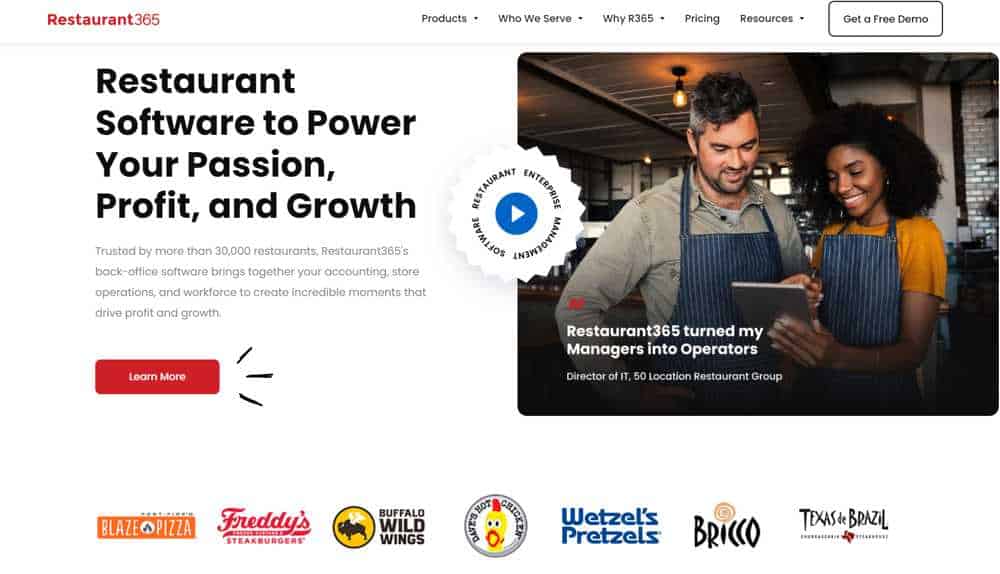
Restaurant365
Image source: Restaurant365

Restaurant365 is a comprehensive restaurant management platform that offers virtually all of the functionalities a restaurant business could need to stay on top of its finances and manage its team effectively.

 It is a popular choice among restaurant owners and managers due to its wide range of features and ease of use. One of the key advantages of Restaurant365 is its integration with the best POS systems, which helps to streamline operations and eliminate the need for double data entry. It means that your financial data is automatically recorded and updated in real-time, making it easy to get a clear picture of your business’s economic performance.

Whether you’re running a small cafe or a large chain of restaurants, Restaurant365 is a powerful tool that can help you manage your business more efficiently and effectively.

Pros

  • Very complete, assisting in the expansion of sales, management of food prices, and labor optimization.
  • Separately track revenue and spending by location.
  • A restaurant-specific platform designed to address the issues of restaurant management.

Cons

  • This system is expensive, with the basic accounting package beginning at $289 monthly. The most preferred package, which includes accounting, management, scheduling, and other features, costs $399 per month when paid annually.

MarginEdge
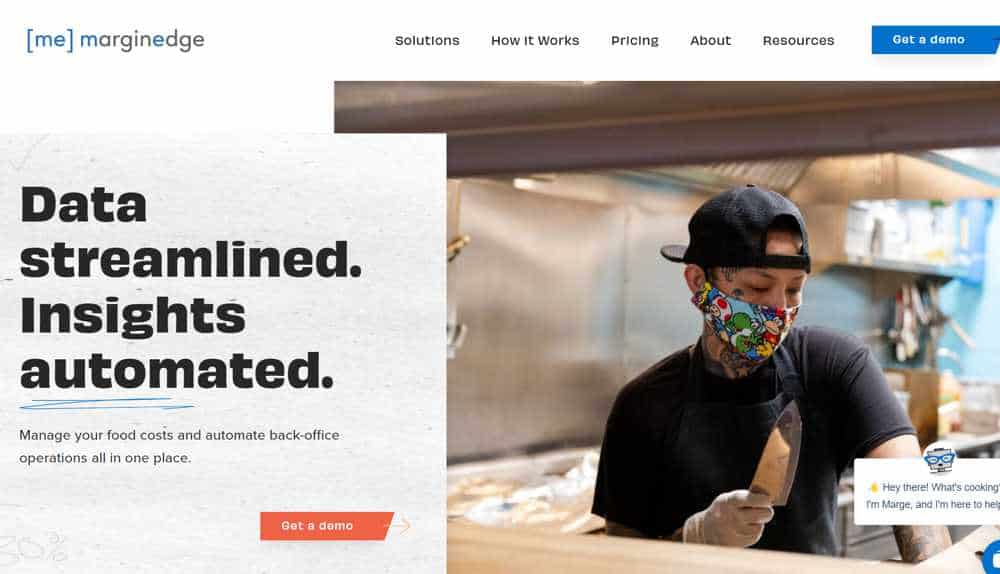
MarginEdge
image source: MarginEdge

MarginEdge is a restaurant management system that strongly emphasizes invoicing, food expenses, and inventory control. It is a powerful tool that helps restaurant owners and managers track and manage these critical aspects of their business, ensuring they have the information they need to make informed decisions.

 While MarginEdge is not a standalone accounting system, it integrates seamlessly with popular accounting software programs such as Sage and QuickBooks. This allows users to take advantage of the advanced financial management capabilities of these systems while also benefiting from the specialized features and functionality of MarginEdge. By integrating with these systems, MarginEdge helps to customize and optimize them for the unique needs of the restaurant industry, making it easier for users to track and analyze their financial data.

Pros

  • Straightforward pricing
  • Integration with other software
  • Automatically recalculates the pricing of recipes based on the most recent invoice prices.

Cons

  • There is no option for employee scheduling.

Xero
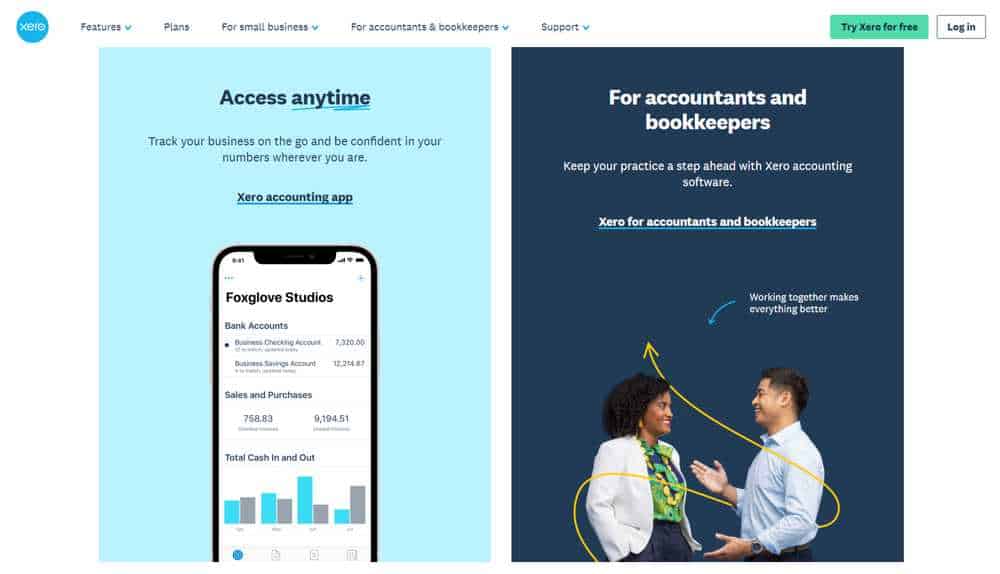
Xero
image source: Xero

Xero is an excellent solution for small businesses because of its low cost and comprehensive feature set. This cloud-based system comes with a variety of features, including fixed asset management, which enables owners to determine depreciation, payrolls, revenue and expense monitoring, vendor bill payments, online bookkeeping, real-time money management, reconciliations, and invoicing. In addition to it, there is a smartphone app.

Xero has a low starting price of only $11 per month, and this price already includes 20 invoices, 5 bill entries, bill capture, and receipts, as well as bank reconciliation. The cost of the following step is $32 monthly, which is significantly more than the cost of the most comprehensive plan, which is $62 monthly. Because it can easily interact with hundreds of other applications, Xero is a wonderful choice for restaurant owners who are currently using different software to manage their establishments.

Pros

  • The easy-to-use mobile app gives you access to all of your accounting tools no matter where you are.
  • Maintain an accurate inventory count and use your collected data to generate invoices and orders.
  • It allows you to create reports and communicate with your accountant on those reports.

Cons

  • Since the system was not developed with restaurants in mind particularly, certain features may not meet your requirements and will require adjustment upon onboarding.

Davo
Davo
Image source Davo

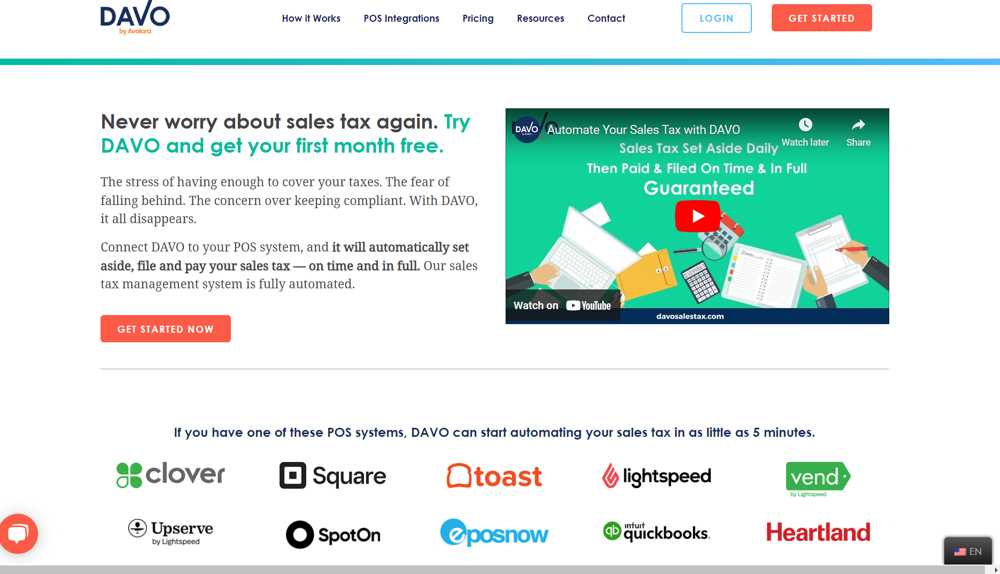
Restaurant operators will find Davo to be an invaluable tool for managing sales taxes. Even though it is not a full accounting program, it may be combined with your point of sale system or other accounting software to provide you with a more complete set of capabilities.

Davo pulls information from your POS and calculates your sales tax. Additionally, it can automatically submit and pay sales taxes, simply move sales tax to a protected holding account, and give daily reports. It is a data recovery technology hosted in the cloud and provides prompt service. Each location adds an additional $39.99 per month to the total cost.

Pros

  • Compatible with all of the leading point-of-sale systems
  • Put away the sales tax daily

Cons

  • It’s not an entire accounting system by any means.

Conclusion

In conclusion, it is essential for restaurant owners and managers to have a reliable and efficient system in place for managing their financial information. Restaurant accounting software is specifically designed to meet the unique needs of the restaurant industry. It can help streamline various aspects of restaurant management, from tracking sales and expenses to generating reports and analyzing data.

When choosing the best restaurant accounting software for your business, it is essential to consider factors such as functionality, integrations, ease of use, and value. In this article, we reviewed some of the best restaurant accounting software options for 2023 and discussed the key features and benefits of each. Whether you’re running a small cafe or a large chain of restaurants, there is a software solution that can meet your needs and help improve the financial health of your business.

how to choose a bank for your small business

Choosing a Bank For Your Small Business: How Do You Make Your Decision?

Starting and running a small business can be a challenging and rewarding experience, but it also requires a lot of careful planning and decision-making. One crucial decision that small business owners must make is choosing the right bank to partner with. So how to choose a bank for your small business?

There are many factors to consider when choosing a bank for your small business, including your business type, financial needs, and long-term goals. The following are some key considerations to keep in mind when choosing a bank for your small business.

How To Choose A Bank For Your Small Business?

Evaluate Your Business Needs Before Choosing a Bank For Your Small Business

Choosing a bank that can meet your business’s specific needs and goals is essential for a small business owner. To help you narrow down your options, consider the following factors:

  • If your company relies heavily on cash transactions, you may look for a bank offering in-person banking services and supporting cash deposits. This can be especially important if you don’t have much experience with electronic payments or if your customers prefer to pay with cash
  • Sole proprietorships and contractors may benefit from a bank that offers account integrations and tech tools that can help streamline their financial management processes. For example, you might look for a bank that automatically categorizes expenses, invoicing and payment tracking, and other features that can help you stay organized and efficient
  • If your business has international clients or is in multiple countries, look for a bank that offers low fees on international wire transfers. This can help you save money on currency conversion and other expenses associated with cross-border transactions

Identify important factors

how to choose a bank for your small business

Services offered

The first thing to consider when choosing a bank for your small business is the types of services offered. Do you need a bank that provides loans and credit lines to help you finance your business? Do you need a bank that offers online and mobile banking options to manage your finances? Consider the specific needs of your business for a bank that provides the services you need.

Charges

It’s important to carefully review the costs associated with the bank you are considering. Look for a bank that charges reasonable fees for the services you need, and avoid banks that charge high prices for things like ATM usage or account maintenance.

Interest rates

If you need to borrow money to finance your business, you’ll want to pay close attention to the interest rates different banks offer. It’s best to choose a bank that offers competitive interest rates on loans and credit lines, as this can help you save money in the long run.

Customer service

effective customer service

Good customer service is vital for any business, especially for your bank. Find a bank that is responsive and helpful when you have questions or concerns, and consider reading customer reviews to get a sense of how different banks treat their customers.

Location and convenience

Finally, consider the location and convenience of the bank you are considering. If you are frequently on the go, look for a bank with multiple branches or ATM locations to make it easier for you to access your accounts and conduct business. Alternatively, if you prefer to do your banking online, consider a bank that offers a solid online and mobile banking experience.

Scalability and support

As a small business owner, choosing a bank that can accommodate your growing financial needs is essential. One way to do this is by opting for a bank that offers tiered business checking and savings accounts.

These accounts typically offer higher transaction and cash deposit limits for a higher monthly service fee. This can be a good option for businesses anticipating increased transaction volumes in the future, such as those planning to expand.

In addition to tiered accounts, it’s also a good idea to look for a bank that offers a range of business loan options. This can be especially important if you need funding to support the growth and development of your business. By choosing a bank that offers a variety of loan options, you can ensure that you have access to the financing you need to achieve your business goals.
Experience

Choose a bank that understands the specific needs and challenges of your industry. Some banks have expertise in particular sectors and offer products and services tailored to those industries. For example, consider working with a bank specializing in investing if you’re in the real estate business. These banks often offer account options and loan products designed explicitly for managing real estate finances.

Similarly, if you operate in a different industry, such as healthcare or technology, look for a bank that has experience serving businesses in those sectors. By choosing a bank with specific expertise in your industry, you can be confident that you are getting financial products and services tailored to your needs.

Understand the types of banks

Debt Collection And Tax Season Concept With Deadline Calendar Remind Note Coins Banks Calculator On Table 107164409
  • Traditional banks are a common choice for small businesses seeking a range of banking products and services. These banks typically have a network of branches and offer a full range of business banking options
  • Online banks and banking solutions are a good option for small business owners who want to save on fees and are comfortable conducting all their banking transactions online. These banks often don’t have physical branches, which means they may not offer certain services like cash deposits
  • Credit unions are financial institutions that operate as non-profit organizations, serving their members rather than customers. They are often smaller than traditional banks and may cater to members who meet specific criteria. However, many credit unions now allow anyone to join by paying a small donation fee.

Conclusion

Once you have considered these factors, it’s essential to take the time to do some research and compare different banks for small businesses to see which one is the best fit for your small business. This may involve visiting multiple banks in person, speaking with bank representatives, and reviewing online resources to understand what different banks offer.

Ultimately, the right bank for your small business will depend on your specific needs and goals. By considering the abovementioned factors and researching, you can choose a bank that will be a strong partner for your business and help you achieve your financial goals.

benefits of EFT and ETA in medical billing

What Is EFT and ETA in Medical Billing? What Are The Benefits?

Electronic Funds Transfer (EFT) and Electronic Remittance Advice (ETAor ETA) are electronic methods used in medical billing to securely transfer payment and related information between healthcare providers and payers. This article discusses the benefits of EFT and ETA in medical billing.

EFT allows for the direct deposit of payments into a provider’s bank account, while ETA provides for the electronic transmission of payment explanations, or “remittance advice,” to providers.

These methods can save time and reduce errors in the billing process, as well as provide more timely payment for providers. Additionally, using EFT and ETA in medical billing can streamline administrative tasks and reduce costs for providers and payers.

What is EFT?

EFT, short for Electronic Funds Transfer, is a digital method employed by healthcare organizations to securely transfer funds to providers’ accounts to pay for medical services.

The EFT message comprises crucial details such as the amount to be paid, identification of both the payer and payee, bank account information of both parties, routing numbers, and the date of payment.

It is a streamlined way for health plans to make payments to providers, eliminating the need for paper checks and reducing the chance of errors. Moreover, it enables more timely payments and streamlines administrative tasks for providers and payers.

EFT in medical billing can be a highly beneficial tool for streamlining payments to your practice. It eliminates the need for paper checks or in-person interactions by facilitating electronic transfers between payers and patients.

With EFT, particular features like patient payment tools within your practice management software (PMS) would be functional. It simplifies the payment process, making it more efficient and convenient for patients and your practice.

What is ETA?

An ERA, or Electronic Remittance Advice, is a digital explanation provided by health plans to providers detailing the payment of a claim.

It includes information on how the health plan has adjusted charges, considering various factors such as agreements with the provider, secondary payers, coverage under the benefit plan, and the patient’s expected copayments or coinsurance.

It serves as a clear breakdown of the claim payment, making it easier for providers to understand and reconcile their billing. This digital method is more efficient, accurate, and faster than traditional paper-based methods.

ERA in medical billing can provide an in-depth breakdown of a patient’s claims, including information on claims that have been paid or denied and the final status of the claim. It also includes the adjusted amount that the patient owes.

Although the name includes the word “advice,” it is essential to note that the information provided in the ETA is mandatory and not just a suggestion.

It serves as a clear and concise summary of the payment status of claims, enabling providers to reconcile their billing and understand the payment process more accessible.

Benefits Of EFT And ETA In Medical Billing

Benefits of ETA

medical merchant services

There are several advantages to using ETA in medical billing, including saving time for administrative tasks and faster payment processing. Some of the critical benefits of ETAinclude the following:

  • Streamlining the billing process: ERAs are electronic, making them easy to create and send. This saves time for front-office staff, who can focus on other tasks, such as patient interactions
  • Reducing errors: The high volume of claims processed in the medical industry can lead to mistakes when dealing with EOBs (Explanation of Benefits) manually. ETAreduces the frequency of errors, resulting in a more comprehensive and accurate set of billing communications
  • Improved grouping: With EOBs, billing and payment details are sent to patients after each encounter. ETAallows you to group the patient’s claims into one communication, making receiving the payments more efficient
  • Clear distinctions between unpaid and paid encounters: With ERA, it is easier to follow which of the patients have and hasn’t paid, resulting in more realistic accounts receivable records
  • Streamlined denials management: With ERA, denials, and approvals can be grouped, making it easier to focus on denied claims that need to be resolved for faster revenue
  • Analytics and reports: ETAplatforms often include tools that provide insights into how well the practice collects patient payments, allowing for performance improvements
  • Faster patient collections: ETAis trackable, making it easier to follow up with patients behind on payments and receive payment sooner

Benefits of EFT

EFT

EFT (Electronic Funds Transfer) can significantly improve medical billing processes in several ways, including:

  • Increased cash flow: By eliminating the delays and obstacles associated with paper payments, EFT paired with ETA(Electronic Remittance Advice) enables patients to know what they owe and pay it immediately, resulting in more timely costs for providers
  • Clear identification of paid services for EFT with ETAautomatically links patient payments to the corresponding services, eliminating the need to manually file EOBs (Explanation of Benefits) to match costs to services
  • Digital records: EFT makes paper payments that require extra effort to link and track together and an easy-to-follow electronic payment trail, whereas This results in a more accurate and organized client account history
  • Enhanced security: EFT provides built-in cybersecurity, protecting against breaches and reducing the risk for both the practice and patients
  • Improved overall financial performance: The benefits of EFT, when combined, can lead to improved financial performance for the practice, including faster payment collection and better tracking of unpaid bills
  • Medical billing services: Implementing EFT and ETAcan be costly and time-consuming, so some providers may outsource these tasks to third-party services to take advantage of the benefits of EFT without the added burden

Conclusion

medical merchant service doctors

EFT (Electronic Funds Transfer) and ETA(Electronic Remittance Advice) are electronic methods used in medical billing to securely transfer payment and related information between healthcare providers and payers.

EFT allows for the direct deposit of payments into a provider’s bank account, while ETA provides for the electronic transmission of payment explanations, or “remittance advice,” to providers.

These methods can save time and reduce errors in the billing process, as well as provide more timely payment for providers. Additionally, using EFT and ETA can help to streamline administrative tasks and reduce costs for providers and payers.

EFT and ETA can also improve the cash flow, easier identification of services paid for, no manual EOB filing, digital accounting records, payment search tools, payment security, and overall financial improvements.

Overall, EFT and ETA can be valuable tools for medical practices looking to improve their billing processes, increase efficiency, and enhance the patient experience.

does my business need to use niche software

Does My Business Need To Use Niche Software? Will It Benefit My Company?

As technology continues to advance and our world becomes increasingly digital, software providers are branching out and focusing on specific niches. By specializing in a particular set of customer requirements, these companies are able to enter new markets and create targeted solutions that align with their target audience. However, as competition increases in these niche markets, companies need to understand how to grow in a sustainable way. This raises the question, does my business need to use niche software to stay competitive and meet the specific needs of our customers?

Many software companies make the mistake of believing that rapid expansion is the only path to success. However, to truly thrive in a niche market, companies should prioritize honing their messaging, thoroughly measuring their performance, establishing a strong team, and keeping customers satisfied. By focusing on these fundamental building blocks, companies can minimize customer churn, produce high-quality products, and position themselves for long-term growth.

In the software industry, there is often a push for rapid growth and constant innovation. While it’s important to stay agile and take advantage of new opportunities, the key to a successful business is steady long-term growth.

What’s a Business Niche?

does my business need to use niche software

A business niche refers to a specific area or market segment that a company specializes in. It is a focused area of business that a company can target and serve better than its competitors. A niche market is a subset of a larger market with unique needs and characteristics. A company that targets a niche market is able to provide specialized products, services, and solutions that cater to that specific market’s needs.

The niche market is not as competitive as a general market and allows a company to establish itself as a specialist in that area. Business niches can range from industry-specific, such as catering to a specific sector of the healthcare industry, to demographic-specific, such as providing services and products to a particular group of age or income level.

Why is it Vital to Find a Niche Specific Software for Your Business?

What is An ISV Partner

When it comes to business, being a “jack of all trades” can actually be a drawback. Specializing in a specific area, or finding a niche, can be the key to long-term success for small business owners. By focusing on a specific target market, you can establish a loyal audience, develop a consistent revenue stream, and build a more focused business.

Building a loyal customer base

One of the main advantages of defining a business niche is the ability to attract and retain a dedicated customer base. By catering to a certain group of clients, you can increase the likelihood that they will choose your company over the competitors. Your niche enables customers to recognize your brand and product, as well as recognize that your offering meets their demands. It can lead to repeat business, positive word-of-mouth, and invaluable customer loyalty.

Minimizing competition

Another advantage of finding a niche is that it reduces competition. By focusing on a niche market, you quickly set yourself apart from businesses that target the mass market. You may instead focus on producing an excellent product and service without having to compete with established brands. This might help you generate a loyal consumer base and build a more substantial reputation.

Reducing marketing costs

Marketing efforts are also more cost-effective when you focus on a niche. By understanding your target audience, you can create targeted campaigns that are more cost-effective than broader marketing initiatives. Niche marketing enables you to develop a stronger relationship with your target audience and establish more intimate connections, which can lead to improved results.

Demonstrating expertise

Specializing in a specific area also allows you to establish yourself as an expert in your field. Rather than offering just another generic service or product, you may distinguish yourself as an industry expert and thought leader by having a company niche. This allows you to differentiate yourself from the competition, acquire appropriate customers, and develop credibility. This can lead to increased sales and a more successful business.

Increased profits

Finally, catering to a niche may improve profit. By focusing on a specific market, you can charge higher rates for your products or services due to supply and demand. This can be a great way to increase revenue and grow your business.

In summary, finding a niche for your small business is crucial for creating a steady revenue stream, establishing a loyal audience, and building a more focused company. The benefits of identifying a niche include attracting and retaining a dedicated customer base, reducing competition, being cost-effective in marketing, demonstrating expertise, and increasing profits. By determining your specialization and differentiating yourself from the competition, you can set your business up for long-term success.

Does my Business Need to Use Niche Software?

Accounting Software for Your Freelance Accounting Company

Whether or not your business needs to use niche software depends on your company’s specific needs and goals. Suppose you are operating in a particular industry or market and are looking to target a specific set of customers. In that case, niche software may be necessary to meet their unique needs and stay competitive.

 On the other hand, if you are operating in a more general industry or market, general-purpose software may be sufficient. Consult with experts in your industry or a software specialist to understand the best options for your business.

How to Find a Niche Specific Software for Your Business?

Finding niche specific software for your business can be done by following these steps:

  • Understand your business needs: Identify the specific problems you need to solve and the specific tasks you need the software to perform.
  • Research your market: Look for software that caters to your specific industry or market segment. Look for industry-specific software providers with experience in your field and a proven track record of success.
  • Identify your target audience: Understand the demographics and characteristics of your target audience, and look for software that caters to those specific needs.
  • Analyze your competition: Look at what your competitors are using and see if there are any areas where you could differentiate yourself.
  • Evaluate software options: Research and evaluate different software options based on your specific needs and the needs of your target audience. Look for software that has a good reputation, positive reviews, and a strong user base.
  • Test the software: Once you have identified potential software options, test them out to see how well they perform and fit with your business.
  • Make a decision: Once you have completed your research and evaluation, make a decision on the best software for your business.

Conclusion

In conclusion, the question of “does my business need to use niche software?” is an important one for companies in the constantly evolving software industry. While rapid expansion may seem like the only path to success, companies must prioritize building a solid foundation, including honing messaging, measuring performance, and keeping customers satisfied. By focusing on these fundamentals, companies can minimize customer churn, produce high-quality products, and position themselves for long-term growth.

Additionally, by identifying a niche market and targeting a specific audience, companies can establish loyal customers, reduce competition, and lower marketing costs. Finding the right niche software for your business can help you stand out in your industry and meet the unique needs of your target audience. So it’s important to take the time to research and understand the benefits of using niche software and how it can help your business to grow sustainably in the long run.

zelle scam

How To Defend Your Business Against Email Scams

Business email scams, also known as business email compromise (BEC) scams, are a type of cybercrime that involves criminals sending fraudulent emails to businesses or individuals to trick them into releasing sensitive information or transferring money.

These scams can be devastating for businesses, as they can result in financial losses, damage to reputation, and legal issues. This article will discuss what business email scams are, how to defend your business against them, and what to do if you have been targeted by one. We will also look at the future of business email scams and what we can expect in the coming years.

What is a Business Email Scam?

Business email scams, also known as business email compromise (BEC) scams, are a widespread and frequently occurring form of cybercrime. Criminals behind these scams send fraudulent emails to businesses or individuals, intending to trick them into revealing sensitive information or transferring funds.

BEC scams are notoriously sophisticated, often involving the use of fake websites and email addresses that are designed to look genuine. These scams can have severe consequences for businesses, potentially leading to financial losses, damage to reputation, and legal issues. It is crucial for companies to be aware of these scams and to take steps to protect themselves against them.

Some common types of business email scams include:

Phishing scams

These scams involve criminals sending fake emails that appear to be from legitimate sources, such as banks or government agencies, to trick the recipient into giving out sensitive information, such as passwords or log in credentials.

Invoice scams

One common type of business email scam involves criminals sending fake invoices to businesses, often requesting payment for goods or services that were never received. These scams can be extremely convincing, with the criminals going to great lengths to make the invoices appear legitimate.

They may use logos and branding similar to the business they are targeting and may even forge the signature of an honest employee.

Executive impersonation scams

These scams involve criminals pretending to be high-level executives within a company and sending emails to lower-level employees requesting sensitive information or money transfers.

Lottery scams

In this type of scam, criminals send emails claiming that the recipient has won a large sum of money in a lottery and requesting personal information or a fee to receive the winnings.

How to Defend Your Business Against Email Scams

There are several steps that businesses can take to protect themselves against business email scams:

  • Train employees on recognizing and avoiding scams: Employees must know the various types of business email scams and how to identify them. This can be done through training programs and regular reminders to be cautious when receiving emails from unknown sources
  • Use spam filters: Many email programs have built-in filters to help identify and block fraudulent emails. It is essential to regularly update these filters to ensure they effectively block new types of scams
  • Verify the authenticity of emails: If you receive an email from a colleague or business partner that seems out of character or unusual, it is vital to verify the email’s authenticity before taking action. You can do this by contacting the sender directly or checking with other colleagues to see if they have received the same email
  • Use strong passwords: It is crucial to use strong passwords for all accounts, including email accounts, to prevent criminals from accessing your accounts and using them to send fraudulent emails
  • Enable two-factor authentication: Enabling two-factor authentication (2FA) on your accounts can add an extra layer of security by requiring an additional piece of information, such as a code sent to your phone, before allowing access to an account

What Should I do if a Business Email Compromise Scam has Targeted me?

If you believe that a business email scam has targeted you, there are several steps you should take:

  • Do not respond to the email: Don’t respond to it or click on any links within it, as this can potentially give the scammer access to your account or personal information
  • Contact the relevant authorities: If you have received a fraudulent email claiming to be from a government agency or financial institution, don’t contact that organization directly to verify the authenticity of the email. You should also report the scam to the relevant authorities, such as the Federal Bureau of Investigation (FBI) or the Internet Crime Complaint Center (IC3)
  • Change your passwords: If you believe that your accounts have been compromised, you need to change them as soon as possible to prevent further access by the scammer
  • Monitor your accounts: Keep a close eye on your accounts and report any suspicious activity to the relevant authorities and your financial institution
  • Protect your personal information: Be cautious about giving out personal information, such as your social security number or bank account information, to anyone, even if they claim to be from a legitimate organization

What is the Future of Business Email Scams?

beware of scams 209135546

Business email scams will likely continue to evolve and become more sophisticated. Cybercriminals are always looking for new ways to trick people into giving out sensitive information or transferring money. They are likely to continue to find new ways to do so.

To protect against these scams, it is essential for businesses to stay up to date on the latest threats and to implement strong security measures, such as training employees on how to recognize and avoid scams, using spam filters and two-factor authentication, and regularly updating passwords.

Conclusion

Business email scams can devastate businesses, resulting in financial losses, damage to reputation, and legal issues. To protect against these scams, it is crucial to train employees to recognize and avoid them, use spam filters and two-factor authentication, and verify the authenticity of emails before taking action.

If a business email scam has targeted you, it is crucial to report the fraud to the relevant authorities and take steps to protect your accounts and personal information. Business email scams will likely continue to evolve, so businesses must stay updated on the latest threats and implement strong security measures to protect against them.

Recession-Proof Your Business

How to Recession-Proof Your Business

A business cannot thrive on its own. If the market trends are good and growing most businesses benefit from that growth. But, during a recession or slow down every business gets impacted, regardless of their size and industry. People get jobless during the recession. They have less money to spend and thus they buy fewer things. As a business owner, what can you do to avoid the damages due to recession?

Fortunately, there are many ways to recession-proof your business so that it won’t fail just because of a general economic downturn. Read on to learn how to keep your business thriving despite the economic recession.

As a business owner or manager, it is important to keep a watch on the market trends. A recession doesn’t ever hit all of a sudden, there is typically a gradual process and there are ample signs that can indicate that the recession is imminent. When it hits, you can follow any or all of these six practical solutions that have helped defend countless businesses in various industries throughout previous recessions. You need to first analyze the benefits of these solutions and then implement then into your business.

How do Recessions Impact Small Businesses?

When a recession hits, all types of companies get affected. But, small businesses suffer the most. The biggest reason for this is that the owners of small businesses often do not have multiple sources of income. Larger companies have many options to survive the recession. They have large reserves that they can use to sustain or they have multiple income streams that keep them afloat during bad times. They have big teams of talented people who can help them create policies and strategies to survive the recession.

Small businesses need to take care of themselves and these six important tactics can help them to recession-proof their business.

6 Ways to Recession-Proof Your Business

Talk to suppliers and partners

For small businesses, their core strength is their suppliers and partners. As soon as you see the signs you need to implement the first strategy. And that is to talk to your partners and suppliers so that your business gets the required material and money to sustain the recession.

Remember, when a recession hits your competitors might lower their prices to stay ahead or capture the market. Are you prepared for that? Will you be able to stay in profit after lowering your product or service cost? To lower your selling price you need to first lower your production cost. So suppliers of raw materials to your business are crucial.

Sometimes, you might need to upgrade your technology to lower your production cost. Your partners needs to be on board to invest in those upgrades. In short, your partners and suppliers need to be on the same page based on the decisions that you want to make.

Create an emergency fund

2023 trends for global payments

A financial cushion is a sensible business investment, particularly for smaller businesses that can’t quickly tap debt markets in the same way that a large enterprise might be able to do. Having financial backup during a recession is even more important.

Establish a cash reserve that can pay up to six months’ worth of basic needs, such as payroll, inventory, and utility payments, in the event of a financial emergency. You can gain a head start by aggressively collecting the receivables owed to you. You can also try to find out investors who can help in improving the technology so that you can stay ahead in the market. This will help in two ways – you will get extra funds and at the same time, you will be technologically prepared to beat the competition during the recession.

Reduce cost

Since overhead costs are expenditures that are always incurred, regardless of the amount of revenue, they provide a particular challenge during a period of economic contraction.

The overhead costs can be cut drastically. When a company is on a growth trajectory company tends to increase its overhead costs. During difficult times overhead costs should be reduced as a priority.

Renegotiating with vendors that offer you various types of services is one way to reduce costs. Renegotiating contracts with suppliers, switching to a different vendor for services such as office cleaning or communications, or decreasing or eliminating bonuses for staff members are a few examples of renegotiation. Eliminating travel and leisure expenses and outsourcing various works can also help in reducing costs.

Outsourcing can save many infrastructural costs and help you stay in the competition. Finding ways to minimize overhead costs before an economic downturn can not only help your business survive but also improve overall efficiency with less staff and resources.

Uncertain Situation Due To Lack of A Strategy

Disrupt the Payments Industry

Small firms face heightened levels of uncertainty during recessions. This usually happens if the businesses have not prepared themselves beforehand for the recession. Recessions are not always bad for business and can often present many companies with valuable opportunities. But the only condition is to have a concrete strategy before the recession hits.

Build strong relationships with people and brands you know

customer relationship

Any business – big or small – faces less damage during a recession if they have a strong bonding with the customers. If your customers are loyal and have faith in your products and services they will stay with you during bad times too.

If you haven’t thought about it until now then start connecting with your customers on a personal level today. You can come up with multiple strategies to do so. But, the end goal is to keep your customers happy and content.

Your customers also face many difficulties during a recession. Having a good relationship with them will help you understand their challenges and prepare a strategy to cope with the same. For example, reducing price, or offering a subscription package that offers free services for some period of time can help your customer stay in a comfortable zone.

Recession-Proof Industries

There are many industries that are called recession-proof industries. For example health or education industries. If you are in this segment of the business then you won’t face the brunt of the recession like other industries. If you can switch to any such types of segments then you should do it now.

If switching is not possible then diversify the products/services you offer to connect with these industries. Thus during recession, your products or services from these segments will keep you afloat.

Conclusion

A recession can have a significant impact on any industry, regardless of the financial health of your company. While it is impossible to escape a recession, some steps may be taken to safeguard your company from the effects of the consequences.

You can do many different things to shield your company from the effects of a recession, such as increasing the effort you put in, diversifying the products and services you offer, or investing in more environmentally friendly technology.

Top DeFi Trends for 2023

Top DeFi Trends for 2023, 2024, and Beyond

DeFi stands for decentralized finance. In the past year, we’ve seen an explosion of new DeFi projects and initiatives launched worldwide. These DeFi trends aren’t something that will go away anytime soon. We are now entering peak DeFi – a decentralized financial ecosystem is now widely recognized as inevitable and imminent.

The global financial crisis has made it clear that no single institution can be trusted to safeguard money or manage risk responsibly in any given economy. As a result, we are seeing more and more people moving their assets from banks into digital currencies like Etherium and Bitcoin.

These emerging trends show how DeFi has become more than just a niche community of enthusiasts; it has become mainstream – at least among savvy coders who understand the need for decentralized systems over centralized ones.

What is Decentralised Finance (DeFi)?

Decentralized finance (DeFi) is financial services built on decentralized technologies like blockchain. DeFi allows users to create financial products and services that are not controlled by any single entity.

For example, a decentralized lending platform would allow borrowers and lenders to enter into a contract without needing a financial institution to facilitate the transaction. On a broader level, decentralized finance refers to the idea that financial services are best offered outside traditional financial institutions such as banks and venture capital firms.

The Importance of Decentralized Financial Infrastructure

Decentralized financial infrastructure is crucial to empowering people and businesses in a way they have never been empowered before. In the past, the centralized system was necessary because it was the only way to scale and distribute services to a wide range of people. But now, with the advent of blockchain technology and smart contracts, there is no reason for financial services to be concentrated in a few hands

Especially when managing finances like lending. Decentralized financial infrastructure will pave the way for fairer, more transparent, and more accessible systems managed by all stakeholders, not just a select few.

Top DeFi Trends for 2023, 2024, and Beyond

Uniswap

Uniswap is one of the industry’s biggest and most well-known DEXs, and it is a must-have tool with most DeFi investors. Uniswap, first and foremost, allows traders to swap cryptocurrency tokens securely and conveniently, with lower fees than centralized exchanges. Users can also generate passive revenue by putting their tokens in liquidity pools.

uniswap
image source

To set the price and execute deals, Uniswap employs an AMM approach that depends on smart contracts. As a result, the platform is completely decentralized, with no intermediaries involved.

Uniswap, like Aave, can ease crypto trading through liquid pools, which are puddles of user-contributed funds locked in smart contracts. These funds facilitate consumer purchases and sales of various cryptocurrency pairs.

A minor fee is collected with each activity on Uniswap and dispersed among the pool’s liquidity providers. This approach is mutually beneficial because traders can exchange tokens with fewer fees, and those who supply liquidity may receive points for doing so.

Aave

image source

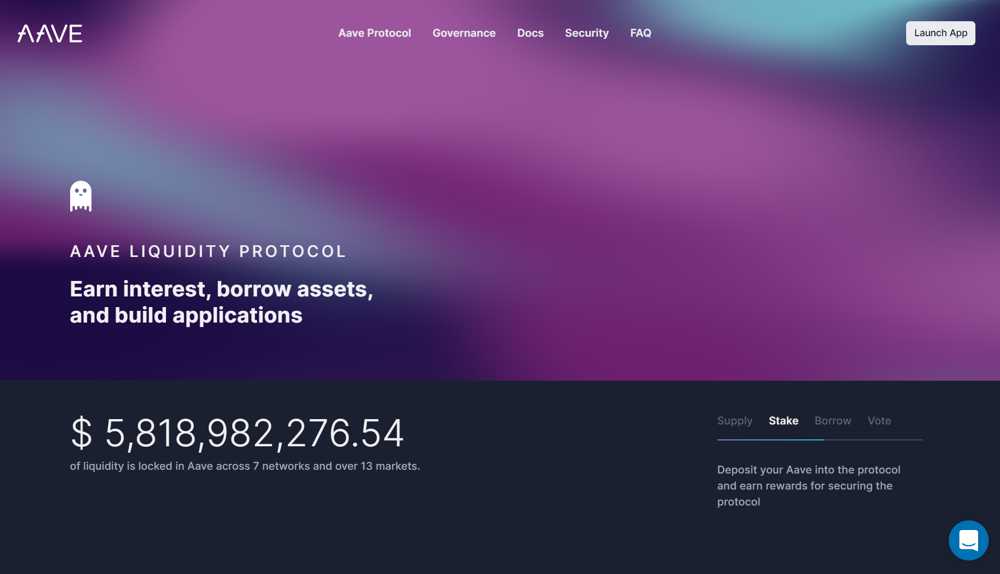
There is no more famous and identifiable brand in the DeFi industry than Aave and with good cause. Aave has evolved into among the most reputable sites for Defi, providing a secure environment for consumers to borrow and lend cryptocurrency and hard assets without any middlemen or brokers.

The concept behind Aave’s platform is straightforward: users who extend credit to one another are rewarded with interest, while users who do not are penalized. Ethereum was used as the base for and accepted all any ERC-20 coins, but additional blockchains, such as Fantom, Avalache, and Harmony, have been added. Its community runs through an autonomous body where AAVE-registered users vote on important issues.

Aave provides DeFi clients with a variety of alternatives, with over 30 pooled for Ethereum-based commodities and different markets on other platforms.  There are other lending pools available for physical assets like freight bills and real properties.

Aave gives these pools due to the announced partnership with Centrifuge, using DeFi solution that helps companies to tokenize specific data assets. These tokens then are openly sold, operating in a manner akin to treasuries and receiving a steady income.

Orbs

image source

The infrastructure layer on which the DeFi protocols function is just as crucial as the protocols themselves, which is why Orbs Network is working to function better. Orbs pays itself as an accessible, distributed blockchain infrastructure layer to speed up DeFi applications across many chains.

Orbs will be regarded as a distributed backbone that enables additional DeFi capabilities by collaborating with established Layer-1 blockchains, including Ethereum and Layer-2 networks like Polygon.

It builds a tiered infrastructural stack for DeFi, allowing decentralized apps to benefit from Orbs’ increased execution services. As a result, developers can create more advanced DeFi apps.

Orb’s Open DeFi Notification system, which offers up-to-the-second notifications on the most significant on-chain events, is an excellent example. Orbs have released a new, distributed Time-Weighted protocol, which can accommodate new order kinds for DEXs as well as Automated Makers.

TWAP is frequently employed in automated trading in the conventional financial industry. Traders utilize a time-weighted average cost to reduce the market impact of large orders. Orders are broken into smaller trades, each executed at defined time frames over a specified time.

Alliance Block

images source

AllianceBlock is the designer of a complete DeFi technology that caters not only to those who wish to borrow, lend, and stake crypto but also to programmers of other DeFi initiatives. It provides permissionless KYC/AML and proof of identity, compliant peer-to-peer and NFT services, cross-border compliance, an on-chain or off-investment data API, and more, in addition to its decentralized investment solutions.

Rachid Ajaja and Matthijs de Vries created AllianceBlock in August 2018, when interest in ICOs, or first coin offerings, was growing. The founders were motivated to devise a method to make cryptocurrency investments more transparent, equal, and fair. Since then, AllianceBlock has broadened its scope and strives to bridge the gap between DeFi and traditional financial instruments provided by banks, including loans, bonds, savings, and capital accumulation.

Avalanche

Avalanche is again a promising option for DeFi’s future due to its cryptographic protocol application and revolutionary blockchain approach. AVAX’s blockchain is based on a fundamentally different approach to scaling. Around the blockchain’s magical triangle. Avalanche depends on a blockchain of three threads, with one strand representing each scalability, decentralization, and security.

Compared to Ethereum, this makes payments faster, cheaper, and more ecologically friendly. Avalanche uses the consensus technique. Avalanche is a smart contract framework that enables decentralized applications. An all-purpose coin that aspires to dethrone Ethereum. Avalanche might benefit from its swift and efficient chain, particularly in the DeFi industry.

Conclusion

The next 10 years are likely to bring many more decentralized financial services. This has already started to happen, but it will likely become even more widespread as the technology becomes more accessible and people understand its benefits. The tech behind DeFi is rapidly improving, which means we are likely to see more and more impressive financial services being offered in a decentralized way.

small business saturday

When Is Small Business Saturday 2023: Strategies to Prepare Your Small Business

Small Business Saturday is an annual shopping event that is typically on the first Saturday of November. It’s a day dedicated to supporting small businesses and local shops. Small Business Saturday has grown into an international movement, with more than 700 independent communities coming together to support local businesses in their area.

Small Business Saturday isn’t just another marketing gimmick or sales gimmick. It’s an opportunity. It’s a perfect time and opportunity to introduce your business to potential customers, especially if you have been operating as a local business.
Small Business Saturday gives you a great chance to show your potential customers who you are, what you do, and why they should support you by shopping at your store. Read on for five ways to help you prepare for Small Business Saturday, so your business can welcome customers from all over with open arms!

When is Small Business Saturday 2023?

First, let’s chat about when Small Business Saturday falls. This year, the event will fall on November 25th, but remember that the date can vary from year to year. So you’ll want to make sure you mark your calendars for this year! There are many reasons that you should get ready for this event now.

When it comes to smaller enterprises, even a little bit of exposure may go a long way. Small Business Saturday is the best opportunity you’ll have all year to showcase your own small business as well as the others in your town.

In the United States, the Saturday following Thanksgiving is designated as “Small Business Saturday,” which is an event that takes place annually. After the worldwide recession of 2010, American Express was one of the first companies to pioneer this practice, which is now widely used throughout the United States and the rest of the world.

This way, you’ll have time to prepare and promote your strategy. Otherwise, you might not have enough time to get everything together before the big day. And because Small Business Saturday is just around the corner, you will want to ensure that you’re prepared. You don’t want to wait until the last minute to start promoting your event.

Strategies to Prepare Your Small Business

Make sure your social media presence is on point

good quality content for social media

First and foremost, you’ll want to ensure that your social media presence is on point. This includes your posts, images, and overall social media presence. You want to make sure that your posts are consistent with your business and that they are also appropriate for your audience. Now, you don’t have to post on social media every day.

Limit your posts to once a week or every two weeks. This way, your posts will be consistent but not overwhelming to your audience or followers. You can also use images to your advantage. Not only do images help engage your audience and customers, but they’re also essential for posting on social media.

Host an exclusive sale for Small Business Saturday

sales selling commerce cost marketing retail sell concept
Sales Selling Commerce Cost Marketing Retail Sell Concept

If you’re hosting an exclusive sale for Small Business Saturday, you will want to ensure that you advertise this sale on your social media pages and other marketing outlets. Ensure you also include start and end dates to avoid customer confusion.

If you have a brick-and-mortar store, consider putting up signs inside your store to promote your exclusive sale. Make sure that your signs are clear and concise. You can also create a page on your website to host your exclusive sale. This way, potential customers can learn more about the sale and even sign up for an email list to get additional information about the sale.

Create a printable shopping list

master card match list

You can create a printable shopping list to entice your customers to shop at your store. This shopping list will include products or items you sell at your store. You can post this list on your social media pages or your website.

The great thing about a printable shopping list is that it can apply to any business, regardless of industry. It can be used for small businesses, major brands, and everything. You can even make the shopping list interactive.

You can ask customers to check off which items they’d like to purchase. Or you can ask them to comment on what they’d like to purchase. This will help you gauge what your customers are interested in purchasing at your store.

Offer free delivery or handling for Small Business Saturday

You can offer free delivery or handle on Small Business Saturday if you want to entice customers to shop at your store. This is an excellent way to show customers that you care about their purchases and overall shopping experience.

You can also consider offering free delivery to customers who spend a certain amount of money or who purchase certain items. Or you can offer free delivery on certain items at your store.

Free delivery or handling is a great way to entice customers to shop at your store. They’ll know that you care about their shopping experience and want to make it as easy as possible.

Get creative with your marketing and advertising

Now, when it comes to getting creative with your marketing and advertising, you can do various things. You can write blog posts about why you Shop Small or support Small Business Saturday. You can also consider sharing stories from your customers. You can also write and publish customer reviews.

Don’t just write reviews from customers who love your products and services; also, get customer feedback from less than satisfied people. By getting creative with your marketing, you’ll be able to engage your audience in a new way and show that you care about your customers.

Create a Small Business Saturday sale

Last but not least, you can create a Small Business Saturday sale. You can decide how long your sale will last. It may last through the entire month of November. This way, customers know you’re hosting an ongoing sale throughout the month. You can also consider offering free shipping on all orders for a duration of time.

This is another great way to entice customers to shop at your store and to support small businesses. You can also consider offering a percentage off certain items at your store. You can even consider hosting a contest where customers can win discounts or free items.

Conclusion

Now that you have an idea of what Small Business Saturday is, you can prepare for when it rolls around again, and give yourself ample time to implement your marketing strategy. Later this year will be an an excellent opportunity to attract new customers and get your brand name out there.

You can do this by providing amazing deals and discounts, hosting events in-store, or even offering free delivery on purchases. It is never a bad time to prepare for Small Business Saturday. If you follow these tips, your business will be thoroughly prepared for the upcoming shopping event.

JPMorgan

Mastercard and JPMorgan Launch Pay By Bank-Streamlining ACH Payment

In the world of payments, the need for efficiency is greater than ever. Transactions, where someone hands a cashier a bill and receives change, are not only slow, but they’re also expensive. That’s why more businesses are adopting digital payments as an alternative to cash, cards, and coins.

Between mobile wallets like Apple Pay, Google Pay, and Samsung Pay, contactless payment methods like EMV-enabled stickers and NFC-enabled POS terminals, and peer-to-peer payment apps like Venmo and Zelle, consumers now have plenty of options when it comes to making fast, frictionless payments. Unfortunately, the same cannot be said about the numerous third-party processors that must get involved for many of these services to work seamlessly together.

To address this gap in the market for streamlined payments between financial institutions and merchants, known as “last mile logistics,” JPMorgan Chase launched a new Pay by Bank program.

What is Pay By Bank?

Pay By Bank is an initiative from JPMorgan Chase that allows merchants to accept credit card payments through the bank’s payment gateway. Instead of using merchant services provided by a third-party processor, businesses with a Chase account can use this new feature to accept payments from Chase cardholders without ever having to touch a credit card.

Pay By Bank allows Chase cardholders to pay with their bank account rather than a credit card, making for a seamless and frictionless payment experience. While the feature is currently only available for Chase cardholders, Pay By Bank also has the potential to streamline payments for people who don’t bank with Chase.

How Does Pay By Bank Work?

When Chase customer uses Pay By Bank to make a payment, their funds are instantly transferred from their bank account to the merchant. Card data is never stored on the merchant’s POS system, and no transaction details are ever transmitted to Chase.

Using tokenization, Pay By Bank generates a unique payment code for each transaction. This tokenized payment method means merchants never receive customer account information, providing added security and privacy. Payment codes are generated when a customer initiates a transaction, so they can’t be used again.

Because Pay By Bank processes funds directly between a customer’s bank account and the merchant, it doesn’t require card readers or NFC terminals. Merchants can accept payments from all customers, regardless of whether they have a credit or debit card.

Benefits of Pay By Bank

Pay By Bank
  • Instant, real-time payments – Unlike credit cards, funds move directly from a customer’s bank account to a merchant’s bank account in real-time. This means businesses don’t have to wait weeks to receive payment, and there’s no risk they’ll be charged a fraudulent charge
  • No risk of chargebacks – Unlike credit cards, bank-to-bank transfers don’t require a customer to dispute a charge. This means there’s no risk of chargebacks, which can greatly reduce the profit a business makes from each sale
  • No need for card readers or NFC terminals – If a customer doesn’t have a credit or debit card, they can still use Pay By Bank to make a payment. This eliminates the need for card readers or NFC terminals, which may be incompatible with certain devices, such as Apple devices

Drawbacks Of Pay By Bank

  • No rewards or cash back – Unlike credit cards, Pay By Bank offers no rewards, cash back, or frequent flyer miles. This means businesses that offer products and services that are often purchased by frequent travelers, such as airlines and hotels, will have to find other ways to incentivize customers
  • Limitations on certain services – While credit cards can be used to purchase just about anything, Pay By Bank is limited to online and phone purchases. This will make it difficult for businesses that rely on in-person sales to accept payments
  • Requires a Chase account – While Pay By Bank is a convenient way for Chase customers to make payments, it’s not an option for people who don’t use this bank

Is Pay By Bank A Good Solution For Your Business?

Suppose most of your customer’s bank with Chase, Pay By Bank is likely a good solution for your business. However, if most of your customers bank elsewhere, Pay By Bank may not be a good choice. Instead, consider a partner processor that offers many payment options, including bank-to-bank transfers.
Partner processors work with a variety of financial institutions to seamlessly accept payments from a wide range of customers. Partner processors also commonly offer a variety of value-added services, such as automated fraud detection and chargeback mitigation, that help merchants keep costs low and profit margins high.

When it comes to regular payments like rent, utilities, transactions to the government, education, insurance, and universal healthcare, where ACH is counted as the principal payment channel, Pay-by-Bank has a significant amount of untapped potential that billers may leverage to make life easier for their customers.

Billers whose customers already paid with ACH can integrate the Pay-by-Bank solution offered by J.P. Morgan on their current payment page. Customers can choose to “Pay-by-Bank” when they are checking out. At this point, they could be urged to discover the bank, verify themself using the authentication process that is familiar to them from their bank (such as a biometric scanner), and share their account details with JPMC so that the payment can be processed on the biller.

This year, J.P. Morgan, as well as Mastercard, are managing their Pay-By-Bank service with a limited number of merchants and billers in the United States. They anticipate expanding the service in 2023.

Conclusion

Pay By Bank is a new and convenient way for Chase cardholders to make payments. While this feature will likely appeal to many customers, it’s not an option for those who don’t bank with Chase. If most of your customers bank with Chase, Pay By Bank will likely be a good solution for your business.

Open banking allows businesses and individuals to share their information safely. These experiences range from new payment methods to protection and zero-friction giving, bringing the pledge of digitalization to more individuals. Pay-by-Bank is another innovation that open banking has made possible.

With the purchase of Vocalink in 2017, Mastercard was able to bring its years of experience and knowledge in the payments industry into account-based transactions. However, if most of your customers bank elsewhere, Pay By Bank may not be a good choice. Instead, consider a partner processor that offers many payment options, including bank-to-bank transfers.

Shift4 Launches New Payments Platform

Shift4 Launches New Payments Platform for eCommerce Businesses

As the market for eCommerce continues to grow, there are more opportunities than ever to set up an online store and sell your products directly to customers. However, with so many different platforms available, finding one that is right for you and your business can be tricky.

If you’re considering setting up an eCommerce store, you will need a platform that makes listing your products and handling payments easy. There are plenty of different eCommerce software options out there, but not all of them will meet all your needs as a small business owner. Now, Shift4 launched its new payments platform for eCommerce businesses which can be a game changer.

In this blog post, we’ll look at why shifting from the traditional eCommerce model is so important for businesses today and why the Shift4 Platform is great solution if you want to move fast, grow big, and stay lean.

Importance of eCommerce

To better understand why eCommerce is so important today, it’s worth taking a brief look at online shopping history. Shopping online has become increasingly popular over the past few decades, but it wasn’t until the 1990s that online retail started to take off.

Early online merchants like Amazon and eBay set the standard for eCommerce, with customers able to browse products online and pay for them conveniently and easily. With the rise of mobile internet access, online shopping has become increasingly convenient, with consumers able to shop from anywhere at any time.

Moreover, a report by The Boston Consulting Group found that online consumers will increase by 50% over the next five years, which is great news for online merchants. All of these factors make online shopping an incredibly important part of the retail sector, with eCommerce growing at a rate of about 18% each year.

Right Platform for Your Business

As you’re looking for the best eCommerce platform for your business, there are a few key things that you should look out for. Firstly, you must ensure that your chosen platform has a great user experience that enables you to build your store quickly and easily.

This will enable you to get your store up and running as quickly as possible, especially if you plan to sell products during the holiday season. You will also want to ensure that your chosen platform is designed for scalability. This is important for two reasons.

Firstly, you should ensure that the eCommerce platform you choose is reliable and robust so that your sales don’t suffer from any issues with the platform you’re using. Secondly, the more customers you attract to your platform, the more sales you can make. An eCommerce platform that is designed for scalability will be able to handle the increased traffic that will come as your store grows and expands.

The newly released online payments platform from Shift4 enables businesses to quickly and easily develop a checkout page that can be personalized according to their needs and integrated on any site page by using only a few lines of code. The user interface of this form is straightforward and optimized for use on mobile devices. It also supports many card kinds and more than 160 different currencies.

In addition, it is compatible with a diverse selection of payment models, such as one-time payment, part dependent and subscription, hybrid billing models that include both one-time fees and monthly rates, and variable pricing for pay-per-use pay-per-user marketing strategies. The platform also has sophisticated anti-fraud technologies that can protect companies from chargebacks and stop fraudulent transactions.

3 Tips to Grow Your eCommerce Business with Shift4

If you’re thinking of setting up a new eCommerce business, there are a few things that you can do to ensure that your store is a success. Firstly, it’s important to ensure that your store is easy to navigate and that users can quickly and easily find what they’re looking for quickly and easily.

You will need to spend some time on your product descriptions, making them as detailed and attractive as possible so that potential customers will be drawn to your products. Secondly, you will need to work hard to build your brand.

This will help set you apart from your competitors and give your store an identity that will attract new customers. Finally, you will need to keep growing your sales as your store expands. This means you must keep investing in your marketing efforts to attract more customers and keep your existing customers happy.

Shift4 Platform benefits

The Shift4 eCommerce platform offers several benefits for businesses of all sizes and industries. One of the most important advantages of using the Shift4 platform is that it’s easy to start. This means that you can set up your store quickly to start selling your products as soon as possible.

The Shift4 platform is also fully customizable, so you can change your design and add new features as your business grows. Another advantage of the Shift4 platform is that it is easy to scale up.

As your business grows and you start attracting more customers, you can easily increase your capacity to handle larger orders and more traffic. The Shift4 platform is secure, so your customers can shop confidently, knowing their data is protected.

Shift4: Great Choice for Small Businesses

Shift4 eCommerce payment platform launched
image source

Overall, the Shift4 eCommerce platform is a great choice for small businesses. It’s easy to start, so you don’t have to worry about long-term contracts or tricky setup procedures. It also offers several great features that will help you to sell more products, from marketing tools to payment options.

Finally, the Shift4 platform is scalable, so as your business grows, it will be ready to handle more traffic and larger volumes of orders without any problems. Overall, the Shift4 platform is a great choice for small businesses that want to get started selling their products online quickly and easily.

Conclusion

If you’re a small business owner looking to set up an online store, it’s important to make sure that you choose the right eCommerce platform. It’s best to find a platform that is easy to use and customize, offers great functionality, and is scalable so that it can grow with your business. The Shift4 eCommerce platform is a great choice for small businesses, offering several benefits, such as a user-friendly interface and easy setup.

The importance of maximizing profits cannot be overstated, particularly in light of the current uncertain economic climate. People look at their bottom lines when things are tight, as Itzkowitz put it. By doing so, they aim for new levels of efficiency and place emphasis on the use of automation to achieve this goal.

According to the three executives who spoke with PYMNTS, platforms are necessary for optimizing integrations and embedding services into software that manages customer relationships. This enables businesses to concentrate on their primary operations.