Author Archives: hostmerchantservices

Crypto.com

Crypto.com Rolls Out US Institutional Exchange

On January 21, 2025, Crypto.com, a Singapore-based cryptocurrency exchange, announced the launch of its institutional-grade Crypto.com Exchange in the United States. With this strategic move, Crypto.com will expand into the US market by offering institutional and advanced traders a technologically advanced cryptocurrency trading platform featuring deep liquidity and ultra-low latency.

Crypto.com allows users to trade 480 trading pairs and 300 cryptocurrencies in ultra-low latency. The platform, optimized for responsiveness and speed, has industry-leading compliance and security features and offers a personalized experience with a customizable widget-based design, which lets users drag and drop components like order books and charts.

Key Takeaways
  • Crypto.com has launched its new US Institutional Exchange. It offers advanced trading with deep liquidity and ultra-low latency.
  • The platform supports 480 trading pairs and 300 cryptocurrencies and features a customizable, widget-based interface for a tailored experience.
  • Institutional traders benefit from advanced order types, efficient fiat funding, and robust API integrations – all of which ensure smooth, high-frequency trading.
  • The relaunch comes amid a cleaner and more supportive US regulatory environment. This positions Crypto.com as a strong competitor in the institutional crypto market.

Crypto.com Expands Institutional Offerings with New US Exchange Relaunch

Crypto.com Expands Institutional Offerings with New US Exchange Relaunch

Image source

Since cryptocurrencies became a mainstream topic over the past decade, institutional investors – including hedge funds, asset managers, family offices, and pension funds – have acknowledged their potential as portfolio diversifiers. Unlike retail investors, the institutions often require advanced trading systems, deep liquidity, advanced order types, and rigorous security measures. Over the past few years, the institutional segment has seen an influx of players and capital.

This demand has driven exchanges to innovate and offer tailored solutions that address the specific needs of these high-stakes investors. As policymakers work to provide a framework that ensures market integrity while fostering innovation, institutional players have become more confident in committing significant capital to crypto markets. Crypto.com’s new platform is a timely response to market conditions, offering features designed with the institutional investor in mind.

Crypto.com has long been a major player in the digital asset ecosystem, catering to millions of retail users across the globe. However, the company has steadily evolved its offerings to meet the more sophisticated demands of institutional traders. The new US Institutional Exchange is the culmination of years of testing, iteration, and technological investment – first piloted in an early version in 2022 and later suspended in 2023 due to “limited demand.” With renewed regulatory optimism and better product capabilities, the platform is making a grand re-entrance into the US market.

Kris Marszalek, CEO of Crypto.com, highlighted the company’s focus on technological innovation, highlighting that significant investments have been made in improving the technological infrastructure and banking connections of the Crypto.com Exchange since its preliminary testing in the US in 2022. He noted that the company devoted considerable time to developing the right product globally for institutional and sophisticated users. Marszalek voiced great enthusiasm about the complete rollout of the exchange in a market that remains a focal point of their optimism – the US.

One of the cornerstones of any institutional trading platform is liquidity. Crypto.com has leveraged its global presence to deliver “deep liquidity” across more than 300 cryptocurrencies and 480 trading pairs. For institutions, deep liquidity ensures that large orders can be executed without significant market impact. In addition, the platform offers ultra-low latency. Ultra-low latency is essential for high-frequency trading thanks to a cutting-edge matching engine that can scale to support up to 64 million transactions per second with an impressive 370-nanosecond matching latency. This level of performance ensures that traders can execute orders quickly.

Beyond liquidity, the new exchange offers advanced order types, enabling traders to implement complex strategies. The platform accommodates every trading style, from limit and market orders to more sophisticated options like stop-loss, GRID, DCA (dollar cost averaging), and TWAP (time-weighted average price) orders. The user interface is highly customizable. It features a widget-based design, allowing traders to tailor their trading dashboard by dragging and dropping elements such as charts, order books, and market data streams.

For institutional traders, the ease of funding accounts and moving capital in and out of the exchange is paramount. Crypto.com’s new platform simplifies this process by allowing direct Fedwire transfers from local US bank accounts. Plus, users can fund their accounts using a “USD Bundle” that supports flexible withdrawals in both US Dollars and USDC at a strict 1:1 ratio without incurring additional conversion fees or spreads. These features are designed to lower the friction often associated with large-scale fiat-to-crypto conversions, thus streamlining the trading process.

Institutional clients frequently rely on advanced technological integrations to automate and optimize trading. In recognition, Crypto.com has equipped its platform with robust API support (including FIX 4.4, WebSockets, and REST APIs) that can handle the demanding needs of high-frequency traders. The exchange also offers premium services such as tailored OTC trading, exclusive fee incentives through Market Maker and VIP Programmes, and 24/7 dedicated client support. These white-glove services ensure institutional users receive the same professional support level as in traditional financial markets.
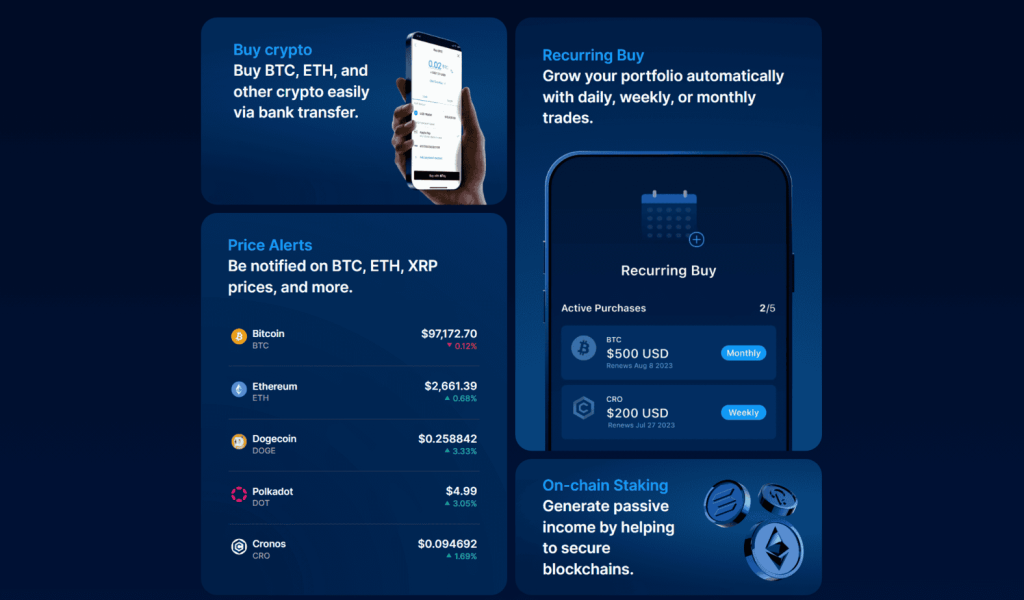
Your crypto journey starts here

The institutional exchange relaunch is happening when the United States regulatory environment shows signs of transformation. With President Donald Trump’s recent inauguration and new signals from agencies such as the SEC – most notably, creating a dedicated crypto task force – the future for digital asset regulation appears to be looking good.

The cryptocurrency industry has faced ambiguous regulatory scrutiny for years, and companies have faced uncertainty regarding compliance and legal interpretations. Crypto.com had a turbulent relationship with US regulators, even filing a lawsuit against the SEC after receiving a Wells notice. However, recent developments (including Trump’s 2025 win) suggest a paradigm shift. Institutions are now more confident in entering the digital asset market, and the new administration is signaling a willingness to work with industry stakeholders to develop clear, comprehensive regulations.

A representative from Crypto.com expressed confidence that the incoming administration will collaborate with the sector to establish transparent regulations aimed at consumer protection and leveraging industry advancements. This anticipation of more transparent regulatory frameworks is a crucial driver for the exchange’s relaunch, as it is anticipated to increase institutional involvement in the cryptocurrency market.

Recognized as one of the top three global spot trading platforms, Crypto.com Exchange emerged last summer as the leading USD-based crypto exchange, offering some of the most competitive BTC and ETH spreads. It also has an attractive fee structure with maker fees starting at 0%, and users can unlock additional rewards through various activities – making it a cost-effective and competitive option compared to other US-based exchanges.

The US is regarded as North America’s largest and most influential cryptocurrency market. With approximately 70% of crypto activity in the region involving transfers of over $1 million, the need for a robust, secure, and compliant institutional exchange has never been greater. The new Crypto.com Exchange is set to compete head-to-head with other prominent institutional platforms offered by companies like Kraken, Coinbase, and Gemini.

US users eligible for Crypto.com Exchange can start onboarding by visiting Crypto.com/Exchange or using the Crypto.com Exchange app. Meanwhile, retail investors in supported US regions will continue to access services through the Crypto.com App.

About Crypto.com
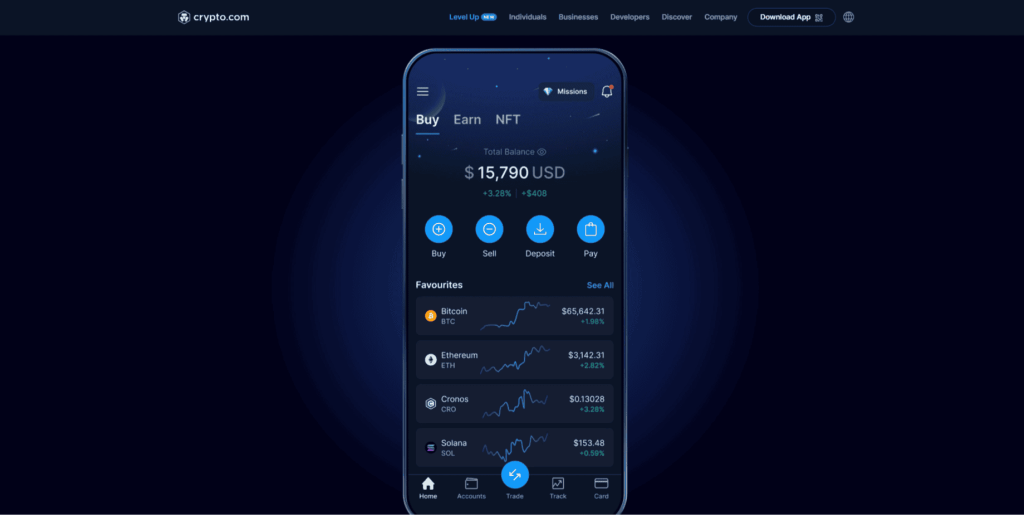
About Crypto.com

Founded in 2016 by Bobby Bao, Gary Or, Kris Marszalek, and Rafael Melo, Crypto.com is a prominent cryptocurrency platform based in Singapore. It has quickly diversified its services, offering a dynamic mobile app, an extensive crypto exchange, a DeFi wallet that users control, an NFT marketplace, and a prepaid Visa card. The company’s vision, “Cryptocurrency in Every Wallet™,” has propelled its growth from 10 million early users to over 100 million globally, underpinning its commitment to security, regulatory adherence, and privacy.

Crypto.com also stands out for its extensive marketing and high-profile partnerships, including acquiring naming rights to the Crypto.com Arena and collaborating with top sports teams and entertainment events. This strategy has helped to elevate the profile of digital currencies. The company continues to evolve, adding institutional trading platforms and crypto derivative products to its offerings, thus further merging traditional financial services with blockchain technology.

Conclusion

The launch of Crypto.com’s US Institutional Exchange reflects the growing demand for advanced cryptocurrency trading platforms tailored to institutional investors. With features such as deep liquidity, ultra-low latency, and customizable trading interfaces, the platform is designed to meet the needs of high-frequency traders and large-scale investors. Including direct fiat funding, advanced API integrations, and premium client services further strengthens its appeal in a competitive market.

This expansion comes when regulatory clarity in the United States is improving, making it a strategic move for Crypto.com to establish itself as a key player in institutional crypto trading. As competition intensifies among major exchanges, Crypto.com’s technological advancements and regulatory alignment position it well for long-term growth in the US market.


Jetblue

JetBlue Becomes First Airline to Accept Venmo

JetBlue became the first airline to accept Venmo as a payment option for booking flights on its website. Customers can quickly pay securely using Venmo balance, linked debit/credit cards, or linked bank accounts on jetblue.com. And the option will soon roll out on its mobile app as well.

This move is especially beneficial for customers wanting to avoid third-party applications (and charges imposed by them) and looking to book flights with JetBlue directly. Like any other airline, if you book flights directly on the JetBlue website or mobile app, you can grab flight tickets at the lowest prices and with discounts and promotions. Also, when you book directly with JetBlue, you earn 2x TrueBlue points and become a part of points pooling.

Key Takeaways
  • JetBlue has become the first airline to integrate Venmo as a payment option for booking flights. It marks a significant step towards more modern, digital payment solutions to simplify and customize travel journeys – which JetBlue intended.
  • Customers can book flights using Venmo balance, linked credit or debit cards, or bank accounts via the Venmo platform. This method of payment is more secure and efficient than traditional payment options.
  • Venmo as a payment option on JetBlue is only available on its website for now. JetBlue has shared its plan to add Venmo to its mobile application shortly.
  • Specific features of Venmo, like the Groups feature, will simplify the tracking and splitting of shared expenses. Features like this will significantly improve the experience for travelers booking group trips and reduce common pain points in managing travel costs.

‘Just Venmo Us,’ Says JetBlue as It Becomes First Airline to Accept Venmo for Flight Bookings

 JetBlue as It Becomes First Airline to Accept Venmo for Flight Bookings

In a significant move, JetBlue Airways has become the first airline to accept Venmo as a payment option for flight bookings. The airline announced on January 21, 2025, that with this move, customers in the US will be able to purchase flight tickets using their Venmo balance, linked debit/credit cards, or bank accounts when booking directly through JetBlue’s website. This Venmo integration will soon be launched on JetBlue’s mobile app in the coming months to add convenience to frequent flyers.

JetBlue’s Chief Digital and Technology Officer Carol Clements noted the company’s commitment to enhancing the booking experience. Carol mentioned that the airline always seeks methods to simplify the booking process via their website and mobile app. By adding Venmo as a payment method, they aim to provide a seamless option for customers who appreciate the convenience of using the Venmo platform.

Venmo’s integration is particularly beneficial for group travelers. Venmo’s “Groups” feature lets users track, split, and manage shared expenses. This simplifies the financial aspects of planning trips with friends or family.

Talking about it, John Anderson, Senior VP and GM of Consumer at PayPal highlighted that travel includes the destinations you visit and the companions and shared experiences. John added that the new feature allowing Venmo payments for JetBlue flights and the option to manage travel expenses through Venmo Groups helps address common challenges related to shared costs from booking to returning home.

With Venmo’s integration into JetBlue’s payment options, many airlines may soon follow the same path. This move also sheds light on companies adopting digital wallets to meet consumer demand for convenient and secure transactions. Other major airlines, such as American, Delta, Southwest, and United, already accept payments through PayPal, Venmo’s parent company.

jet blue

For travelers, using Venmo to book flights offers several advantages:

  • Convenience: Eliminates the need to enter credit card details manually, streamlining the booking process.
  • Security: Provides a secure transaction platform, reducing the risk of exposing sensitive financial information.
  • Expense Management: Facilitates easy splitting and tracking of costs among group travelers.

To use Venmo for booking a JetBlue flight, customers can select Venmo as their payment method during the checkout process on jetblue.com. The process will be similarly straightforward once the feature is available on the mobile app.

This development is part of JetBlue’s ongoing efforts to leverage digital technology to personalize and simplify the travel journey. In September 2024, the airline introduced new features to its mobile app, including a countdown to boarding on the lock screen of the phone and more accessible gate information.

Customers booking flights directly via jetblue.com or the JetBlue mobile app will receive the best available fares and exclusive perks. These benefits include access to JetBlue’s fare options, exclusive fare sales, and promotional offers not available through third-party vendors. Additionally, travelers can earn 2x the TrueBlue points. They can pool in the points, enjoy a seamless selection of seats and upgrades with Even More® Space, and enjoy round-the-clock direct access to JetBlue’s customer service.

The airline continues to explore additional revenue streams. Last fall, JetBlue revealed plans to launch its first-ever airport lounges in Boston (Boston Logan) and New York (JFK), and earlier, the company announced the addition of new routes.

About JetBlue

JetBlue Airways Corporation, established in August 1998 and beginning its flight operations in February 2000, is a prominent American airline with its main office in Long Island City, New York. By 2021, it was ranked as the sixth-largest airline in the U.S. JetBlue operates more than 1,000 daily flights to over 100 locations throughout the United States, Latin America, the Caribbean, Canada, and Europe. The airline is known for prioritizing its passengers, providing perks such as complimentary in-flight entertainment, free snacks, and ample legroom to ensure a pleasant and comfortable journey.

Under CEO Joanna Geraghty’s leadership in February 2024, JetBlue has initiated significant changes to enhance its high-end services. This includes the introduction of first-class seats and the establishment of exclusive lounges in New York and Boston. Additionally, the airline is refining its network strategy by eliminating less lucrative routes to focus on core markets, especially tourist spots on the U.S. East Coast. These changes reflect JetBlue’s ongoing commitment to excellence and customer satisfaction amidst the dynamic challenges of the airline industry.

About Venmo

About Venmo

Image source

Established in 2009, Venmo is a U.S.-based mobile payment service that facilitates quick and secure user transactions. Initially designed to help friends split bills and share expenses, Venmo has evolved into a comprehensive financial tool under the ownership of PayPal since 2013. Users can link their bank accounts, debit, or credit cards to Venmo accounts, enabling seamless transfers via a user-friendly mobile app. A distinctive feature of Venmo is its social component, where transactions can be accompanied by messages and emojis and shared on a social feed, enhancing the user experience by combining financial transactions with social interactions.

Over the years, Venmo has expanded its offerings beyond peer-to-peer payments. Introducing business profiles allows merchants and entrepreneurs to accept payments directly through the platform, providing a polished profile and professional perks tailored to business needs. Additionally, Venmo offers a Mastercard Debit Card, enabling users to spend their Venmo balance at any location that accepts Mastercard in the U.S. The platform has also ventured into cryptocurrency, allowing users to buy, hold, and sell digital currencies within the app. As of 2021, Venmo handled $230 billion in transactions and generated $850 million in revenue, reflecting its significant growth and widespread adoption.

Conclusion

JetBlue’s decision to accept Venmo as a payment option marks a shift toward more flexible and digital-friendly transactions in the airline industry. By allowing customers to book flights using Venmo, JetBlue caters to travelers who prefer mobile payment solutions and streamlined expense management, particularly for group bookings.

With the feature already available on its website and set to expand to the mobile app, JetBlue is reinforcing its commitment to enhancing the booking experience. As digital payment methods become more common, other airlines may follow suit, further integrating modern financial tools into travel planning.

Top Clover Tips and Tricks

Top Clover Tips and Tricks for 2025

Clover has evolved into more than a simple point‐of‐sale system. It is now considered an all-in-one system that streamlines operations, boosts sales, and enhances customer engagement. Business owners turn to Clover’s ecosystem of apps, reporting tools, and integrations to work smarter, not harder.

This blog uncovers some fantastic clover tips and tricks to leverage to maximize efficiency, drive better revenue, and prepare your business for the future.

Maximizing Clover Tips and Tricks in 2025: Beyond Payment Processing to Business Growth

Clover’s journey from a basic payment processor to a multifaceted business management solution has been remarkable. Today, it is a dynamic platform combining sleek hardware options with a prosperous software application suite for diverse industries. With innovations continually rolling out, 2025 presents a pivotal moment for businesses to reassess how they use Clover to gain a competitive edge.

Over the past few years, Clover has expanded its capabilities to encompass everything from employee scheduling to inventory management, customer feedback, and beyond. This evolution means the platform is now more about strategic business growth than processing transactions. In 2025, with the increasing complexity of consumer demands and market competition, optimizing every facet of your Clover system can help you:

  • Improve operational efficiency: Automate routine tasks, streamline order processing, and reduce manual errors.
  • Enhance decision-making: Leverage real-time analytics to make data-driven business decisions.
  • Boost customer satisfaction: Personalize the customer experience through loyalty programs and targeted promotions.

Best Tips and Tricks for Clover in 2025

Top Clover Tips and Tricks for 2025

Optimizing Clover Apps for Maximum Efficiency

The Clover system is renowned for its dynamic ecosystem of third-party apps, which significantly enhance the functionality of your business operations. To optimize the use of Clover apps, consider implementing several best practices. Firstly, curate your app portfolio by identifying the core needs of your business, such as inventory management, employee scheduling, and customer loyalty, and select apps that specifically address these areas. It’s crucial to avoid app overload as installing too many apps can slow down your system and complicate workflows; instead, aim for a streamlined set of apps that integrate well. Additionally, regularly review the performance of each app by monitoring transaction speed, reliability, and customer feedback to ensure they provide maximum value.

Secondly, leverage integrated workflows by using apps that enhance data management between sales, inventory, and customer relationship management (CRM) modules. This integration reduces manual data entry and errors. Apps that automate routine tasks, such as recurring orders and automated stock reminders, should also be considered as they free up staff to focus on customer service and growth strategies. Furthermore, with the increasing shift towards mobile transactions, ensure your apps are optimized for mobile use, which is essential for businesses that require mobile sales capabilities or inventory checks.

Lastly, keep abreast of new app releases in Clover’s App Market to continually enhance your system with innovative tools that meet emerging business challenges. For example, Time Clock, a free tool, significantly simplifies workforce management.

The app is essential for managing a range of employee-related tasks. It allows for easy clocking in and out of employees, tracks both cash and credit card tips, and creates timesheets ready for payroll. Additionally, it aids in scheduling staff, handling time-off requests, and managing shift trades. It even sends reminders to employees an hour before their shift starts. Time Clock by Homebase frees up your time to concentrate on providing excellent service and ensuring customer satisfaction.

Using Data as a Driver for Your Business Strategies

Everyone today understands the power of data (thanks to advancements in artificial intelligence, machine learning, and big data analytics) – it’s the backbone of smart business decisions. Clover’s enhanced reporting tools provide detailed insights into sales trends, customer behavior, and operational efficiency.

With Clover, you can create dashboards that display your key performance indicators (KPIs). You can customize these dashboards to highlight metrics like average transaction value, peak sales periods, and inventory turnover. And using Clover’s real-time analytics features, businesses can easily monitor sales trends as they happen. This allows you to make immediate adjustments, such as ramping up staffing during unexpected busy periods.

You can even compare current data with historical trends to identify seasonal fluctuations or shifts in consumer behavior. Use these insights to plan marketing campaigns, manage inventory, and adjust pricing strategies.

Advanced reporting techniques play a crucial role in maximizing the utility of your data within the Clover system. Implement segmented reporting by dividing data into categories such as product type, sales channel, or customer demographics, which helps pinpoint specific areas that require improvement. Set up automated reporting schedules to ensure detailed reports are generated and distributed to key stakeholders regularly, keeping decision-makers well-informed without needing manual intervention. Additionally, if Clover’s built-in analytics do not fully meet your needs, consider integrating third-party business intelligence tools for more profound insights or more sophisticated data visualization.

Several strategies can be particularly effective when it comes to utilizing data for marketing and customer engagement. Data on customer purchase history can be used to create targeted promotions personalized to individual preferences, which can enhance customer retention and increase sales. Analyze the effectiveness of your loyalty programs by looking at which rewards encourage repeat business and adjust your programs based on this performance data. Furthermore, set up feedback loops that collect customer feedback directly through Clover interfaces, allowing you to continuously refine your service and product offerings based on customer input. These approaches ensure that you leverage data effectively to drive business success.

Pro Tip: Are you looking to understand your financial status better? Stock Reporting provides visual summaries of crucial metrics such as quantity sold, revenue, cost, and profit while also tracking factors like breakage or loss. For in-depth customer analytics, Insights Unlocked can reveal unexpected findings. Relying on solid data is essential for identifying trends and opportunities that allow you to manage your business with optimal efficiency.

Enhancing Customer Experience With Clover

A modern POS system should streamline operations and significantly enhance the customer experience. Here’s how Clover can help you create a more engaging and efficient customer journey:

a. Speed and Accuracy at Checkout

To enhance transaction efficiency, ensuring that your staff is proficient in using Clover’s rapid transaction features is crucial. A smooth checkout process minimizes wait times and boosts customer satisfaction. Clover supports a variety of payment methods, including contactless and mobile payments, which cater to tech-savvy customers and help reduce transaction friction. Additionally, utilizing Clover’s error-checking features can help catch issues in real-time, reducing the need for refunds or corrections that might otherwise disrupt the customer experience.

Consider this another common scenario: it’s late, the supply stores have closed, and you’ve just run out of receipt paper, potentially slowing down your operations. With the Order Paper app, you can avoid this inconvenience. You can order inexpensive paper rolls for any of your Clover devices in just three clicks, with free shipping directly to your business. This simple app offers significant convenience and ensures you can continue working without interruption.

b. Personalization and Loyalty

Utilize Clover to develop comprehensive customer profiles that capture purchase history, preferences, and loyalty points. This information can be leveraged to tailor interactions and offers, making them more personal and relevant to each customer. Additionally, consider implementing or refining loyalty programs that reward your frequent shoppers. Clover’s integrated tools can help you manage these programs effectively and efficiently.

For communication strategies, take advantage of the customer data housed in Clover to send targeted communications, such as personalized email newsletters or SMS promotions. These customized messages drive repeat business and build a loyal customer base.

The Clover Gift Cards app offers a robust solution for creating and managing your own branded gift cards. This service allows you to produce cards featuring your company’s logo. Within the app, you can easily add funds to cards, redeem them, and monitor their usage in real-time, enhancing your promotional and loyalty strategies.

c. Omnichannel Experiences

Integrate your in-store and online sales channels using Clover to create a unified system. This integration ensures that customer data is consistent across all platforms, simplifying the seamless service process.

Additionally, take advantage of Clover’s support for mobile and self-service kiosks, which empower customers to independently explore product options, place orders, and make payments. These features not only reduce bottlenecks but also enhance customer satisfaction. You can also utilize Clover’s interfaces to collect immediate customer feedback post-transaction. This immediate feedback is invaluable for quickly adjusting and improving your services.

Customizing Clover for Your Business Needs

Every business is unique, and Clover excels in adapting to each specific operational need. Customizing your Clover setup can significantly enhance your operational efficiency and user experience. Start with interface personalization: adapt the Clover interface to reflect your brand and operational priorities through custom menus and layouts.

Customizing Clover for Your Business Needs

This customization makes it easier for staff to access frequently used functions and reduces training time. Establish role-based access for user profiles to improve security and streamline experiences by ensuring employees only see necessary functions. Additionally, configure custom alerts and notifications to inform you about critical events like low inventory levels or high sales activity, enabling you to address potential issues proactively.

Tailoring workflows is another strategic customization. Modify the order-taking process to suit your service style, whether a fast-casual setting or a high-end boutique, ensuring the system aligns with your operational nuances. Integrate Clover with scheduling and task management apps that fit your business structure to reduce administrative overhead and boost staff efficiency. Also, consider using Clover’s robust API to integrate with other systems, such as accounting software or supply chain management tools, creating a seamless ecosystem that minimizes data silos.

Lastly, focus on training and onboarding to maximize the benefits of these customizations. Invest time in training your staff thoroughly on all aspects of the Clover system to optimize the use of custom features and minimize errors. Develop standard operating procedures (SOPs) to document your workflows and best practices, which will aid in maintaining consistency and serve as a training reference for new employees. Regularly update your customizations to ensure they continue to meet your evolving business needs and operational realities.

Pro Tip: Boost your earnings by integrating Clover’s online ordering system, ideal for both counter-service and table-service settings. This solution automatically generates a web ordering page for your business, accurately reflecting everything from your operating hours to your menu items. With its seamless integration into your existing Clover system, managing updates and orders becomes straightforward and hassle-free, all without the burden of extra subscription fees.

Adding a Robust Security Layer Around Your Business With Clover

Robust Security Layer with Clover

Maintaining robust security is paramount in light of the growing sophistication of cyber threats and changing data privacy regulations. Clover is dedicated to enhancing security measures to safeguard your business and customers. It is essential to implement best practices for secure transactions. Firstly, ensure all payment and customer data processed through Clover is encrypted, serving as a fundamental protective measure. Regular updates of your Clover system and all integrated apps are crucial to incorporate the latest security patches, as outdated software often becomes a target for cyber attacks. Additionally, controlling employee access within the Clover system is vital; restrict functions to those necessary for each role to minimize the risk of internal breaches.

Furthermore, adherence to data privacy regulations is crucial. It’s essential to understand the data privacy laws applicable in your region, such as the GDPR, CCPA, or any upcoming local rules that may impact your operations. Employ Clover’s secure cloud storage features to safeguard customer data and ensure you have explicit policies on data retention and deletion. Lastly, regular audits of your system’s security and data usage policies are recommended. Utilize automated monitoring tools available within Clover to detect suspicious activities promptly and verify compliance with relevant laws.

Integrating Clover to Maximize Its Potential

Blockchain technology has dramatically improved how businesses manage their supply chains and process payments by integrating with platforms like Clover. With blockchain, each transaction or movement of goods in the supply chain is recorded on an immutable ledger, enhancing transparency and allowing for real-time tracking and verification. This level of detail ensures product authenticity and aids in swiftly identifying and resolving any disruptions, ultimately improving the efficiency of supply chain management.

Additionally, Clover has begun a pilot project incorporating the Bitcoin Lightning Network, which facilitates quicker and more cost-effective Bitcoin transactions. This secure payment processing speeds up transactions and broadens customer payment options, enhancing the overall customer experience.

Augmented Reality (AR) has transformed customer interactions and marketing strategies for businesses using Clover. Restaurants, for example, have begun to offer AR-enabled menus that allow customers to view dishes in 3D before placing an order, creating a more immersive dining experience that helps customers make better-informed choices and enhances satisfaction.

Similarly, retailers are leveraging AR to develop interactive marketing campaigns. By integrating AR features like virtual try-ons, interactive product demonstrations, and gamified promotions with Clover, these campaigns engage customers more deeply, fostering increased brand loyalty and boosting sales.

Integrating the Internet of Things (IoT) with Clover also offers multiple benefits across various business operations. IoT devices can monitor inventory levels in real-time, enabling automated reordering processes that ensure businesses do not run out of popular items.

Additionally, IoT sensors can monitor critical environmental conditions such as temperature and humidity, integrating this data into Clover to provide early warnings of potential issues in businesses like restaurants or stores dealing with perishable goods. Furthermore, IoT technologies like smart shelves and interactive displays can dynamically adjust pricing, offer personalized product recommendations, or enhance the shopping experience, helping businesses manage customer interactions more effectively and stay on top of social media engagements through real-time updates on reviews and likes across platforms like Yelp, Facebook, and Instagram.

Conclusion

Clover has evolved into more than just a POS system—it’s a dynamic business management solution that can drive efficiency, increase revenue, and enhance customer engagement. By leveraging Clover’s ecosystem of apps, data-driven insights, and emerging technologies, businesses can optimize their operations and stay ahead in an increasingly competitive landscape.

As 2025 unfolds, the key to success lies in continuous adaptation. Whether it’s through streamlining workflows, personalizing customer interactions, or integrating cutting-edge tools, maximizing your Clover system ensures you’re not just keeping up with industry trends but setting new standards. Now is the time to explore, customize, and innovate with Clover—because the future of business isn’t just about working harder; it’s about working smarter.

Hidden Fees to Watch Out for On Your Merchant Services Statement in 2025

Merchant services statements showing the credit card processing fees can be a minefield of numbers and jargon that sometimes you can‘t contemplate. As a business owner, you know that even the thinnest margins matter, and the cents and percentage points affect your profits at the end of the day.

To make things worse, hidden charges lurking behind the line items on your merchant statement put a hole in your pocket. While choosing the right, trusted, and most transparent option like Host Merchant Services should be your next step, it’s equally important that you are well-versed with the tricks that your current merchant service provider plays with you in the form of hidden fees.

Understanding Credit Card Processing Fees in 2025: Hidden Costs and Industry Changes

With technological advancements, newer (and more tailored) pricing models, and stricter regulations, credit card processing fees have become more complex. Merchant statements no longer show the standard interchange and assessment fees but also include a list of additional charges that, to be frank, most merchants tend to ignore.

While honest providers like Host Merchant Services emphasize transparency more in the payments industry, some hungry sharks roll on with the same old method despite promising to simplify the prices. 

These charges – often buried in the fine print – can include anything and everything, from transaction-based surcharges to recurring monthly costs. This is why understanding the actual cost of credit card processing is essential for merchants to remain competitive and profitable.

What Are the Usual Credit Card Processing Costs?

The costs to process a credit card vary depending on different factors like what industry you’re from, the transaction volume, and the payment method used. Typical fees range between 1.5% to 3.5% for each transaction.

Credit Card Processing Costs

The credit card processing charges also vary significantly depending on the card network the payer is using, for example:

  • MasterCard charges 1.45% to 2.9% for every transaction.
  • Visa charges 1.3% to 2.6% for every transaction.
  • Discover charges around 1.55% to 2.45% for every transaction.
  • AmEx charges 1.8% to 3.25% for every transaction.

Note that the rates can differ based on transaction method (whether the payer is swiping or entering the information manually), cardholder rewards program, or merchant category.

Factors Influencing the Overall Payment Processing Costs

Credit card transaction fees are influenced by various factors that can significantly impact the overall cost of payment processing for businesses. A comprehensive understanding of these factors enables merchants to manage expenses effectively and optimize payment systems.

1. Type of Card Used

The specific type of card presented during a transaction is crucial in determining the associated fees. Standard credit cards typically incur lower interchange fees than premium or rewards credit cards.

Premium cards often come with higher fees due to the additional benefits and rewards they offer cardholders funded through these increased fees. Similarly, business and corporate cards may attract higher fees than consumer cards.

2. Transaction Method

How a transaction is conducted—whether the card is physically present—affects the processing fees. Card-present transactions, such as those where the card is swiped or inserted into a terminal, generally incur lower costs due to the reduced risk of fraud.

In contrast, card-not-present transactions, including online or over-the-phone purchases, are deemed riskier and thus attract higher fees to compensate for the increased potential for fraudulent activity.

3. Merchant Category Code (MCC)

Each business is assigned a Merchant Category Code (MCC), a four-digit number that classifies the type of goods or services offered. The MCC can influence the interchange fees applied to transactions. Specific industries are considered higher risk and may be subject to elevated fees.

For example, sectors like entertainment or travel might face higher fees than retail businesses due to the perceived increased risk associated with their transactions.

4. Transaction Volume and Size

A merchant’s transaction volume and average size can impact the fees incurred. Businesses with higher transaction volumes may be able to negotiate lower rates with payment processors.

Similarly, merchants with lower sales volumes or smaller average transaction sizes might face higher fees. Additionally, fixed per-transaction fees can disproportionately affect smaller transactions, making them relatively more expensive on a percentage basis.

5. Payment Processor Pricing Models

The fee structure established by the payment processor also plays a significant role. Standard pricing models include interchange-plus, flat-rate, and tiered pricing. Each model has its cost implications, and the suitability of each depends on the specific transaction patterns of the business.

For instance, interchange-plus pricing offers transparency by separating interchange fees from the processor’s markup, which can benefit businesses that process a high volume of transactions.

6. Merchant’s Creditworthiness and History

A merchant’s financial stability and credit history can influence the fees set by payment processors. Businesses with firm credit profiles and a history of low chargeback rates may be offered more favorable terms, including lower costs. On the other hand, merchants with poor credit histories or higher instances of chargebacks might face higher costs to offset the perceived risk.

7. Regulatory Environment

Regulations governing payment processing fees can vary by country and region, affecting the costs incurred by merchants. For example, in the European Union, interchange fees are capped at 0.3% for credit card transactions and 0.2% for debit card transactions, leading to lower fees for merchants operating within the EU than those in regions without such caps.

What Are Hidden Fees?

Hidden fees are charges not disclosed during the initial contract or bundled into your monthly processing statement without proper explanation. They are “hidden” because they are either not discussed upfront by sales representatives or are obscured by complex billing structures.

What Are Hidden Fees

Why Do Hidden Fees Occur?

There are several reasons behind the emergence of hidden fees:

  • Lack of Transparency: Payment processors may bundle fees or use vague terminology, so the actual cost isn’t immediately evident.
  • Contractual Complexity: Merchant agreements often include fine print detailing fees like early termination penalties or monthly minimums—charges that merchants might only notice when they review their statements.
  • Revenue Maximization: Some processors intentionally obscure fee details to boost their profit margins. Merchant Cost Consulting notes that hidden fees are sometimes used to “double dip” on services merchants believe they are already paying for.
  • Evolving Pricing Models: With the rise of tiered, flat-rate, and interchange-plus pricing models, understanding what you pay for each transaction can be challenging.

Common Hidden Fees on Your Merchant Services Statement

While some fees are unavoidable, many hidden costs can be negotiated or eliminated. Let’s examine the most common types of hidden costs that could appear on your merchant services statement in 2025.

Merchant Services Statement

1. Authorization and Transaction Fees

Two commonly referenced charges are authorization and transaction fees in credit card processing. An authorization fee is incurred each time a merchant submits a request to the cardholder’s issuing bank to verify the availability of funds for a transaction. This fee applies regardless of whether the transaction is approved or declined. Typically, minimal authorization fees range from $0.01 to $0.06 per transaction.

Transaction fees, sometimes per item, are charged when a transaction is completed and processed. This fee is applied only to successfully authorized transactions and compensates the payment processor for facilitating the payment. The structure and amount of transaction fees can vary depending on the payment processor and the specific agreement with the merchant.

While both authorization and transaction fees are standard in payment processing, merchants should be vigilant to ensure they are not being charged both fees for the same transaction in a manner that constitutes double billing. Some payment processors may implement pricing structures where both an authorization fee and a transaction fee are applied separately to the transaction, leading to higher costs for the merchant. This “double dipping” strategy may not be immediately evident unless you closely scrutinize your statement.

2. Statement Fees

You might expect to pay for processing transactions, but why should you pay extra to receive a statement? Some providers add a monthly fee to deliver detailed billing statements, even when delivered electronically. These fees can quickly add up over time and are often buried under generic terms like “account maintenance” or “service fees.”

3. PCI Compliance and Non-Compliance Fees

The Payment Card Industry Data Security Standard (PCI DSS) is a set of security protocols to ensure merchants securely handle cardholder data during payment processing. Compliance with these standards is mandatory for businesses that accept credit or debit card payments.

Many payment processors impose PCI compliance fees to manage and validate compliance, which can vary significantly, typically from $20 to over $125 monthly. These fees often encompass services such as security assessments, vulnerability scanning, and assistance with the Self-Assessment Questionnaire (SAQ). However, the specific services included can vary between processors. The SAQ is a tool designed to help merchants self-evaluate their compliance with PCI DSS. It comprises a series of yes-or-no questions corresponding to the PCI DSS requirements. Completing the SAQ is a critical step in validating compliance, and many merchants can fulfill this requirement independently without incurring additional costs.

Merchants must be aware that some payment processors may continue to charge PCI compliance fees even after a merchant has completed the necessary steps to become compliant, such as filling out the SAQ and implementing required security measures. In some cases, processors may impose PCI non-compliance fees until compliance is validated. These practices can result in merchants paying for services they no longer need or for compliance validation that has already been achieved.

4. Early Termination Fees

Many merchant service contracts are long-term, and if you decide to switch providers before the contract ends, you could be hit with a hefty early termination fee. These fees are designed to lock you into a relationship with the processor and sometimes run into hundreds or thousands of dollars.

5. Monthly Minimum Fees

Even during slow sales periods, your processor may require you to meet a minimum processing volume. If your transaction volume falls below this threshold, you will still be charged as if you had met it. This can be particularly burdensome for seasonal businesses or startups with fluctuating sales.

6. Monthly Settlement or Batch Fees

Some providers charge fees each time they “settle” a batch of transactions—sometimes daily, and then an additional fee is added up at the end of the month. While a single batch fee may be small, the cumulative cost over many transactions and multiple days can be surprisingly high.

7. Refund Fees

When you process a refund, you might assume you reverse the transaction. However, many processors keep the interchange fee (or a portion) even if the money is returned to the customer. This means you may incur an additional fee you did not expect for every refund.

8. Annual Fees

Some payment processors charge an annual fee to maintain your merchant account. Although these fees are less frequent than monthly charges, they represent an additional cost that needs to be factored into your overall processing expenses.

9. “Padded” Assessment Fees

Credit card networks impose assessment fees on each transaction, but some processors add an extra “padding” fee on top of what is required. These small amounts might seem insignificant per transaction, but they can accumulate rapidly over time, particularly for high-volume businesses.

10. Terminal and Gateway Fees

If you operate a brick-and-mortar business, you may be charged a fee for using or leasing a credit card terminal. Similarly, if you process online payments, a gateway fee may be added to cover the cost of the software and infrastructure. These fees are sometimes not itemized on your statement, making it difficult to determine if you’re being overcharged.

11. Other Miscellaneous Fees

Several other fees may appear, such as setup fees, voice authorization fees, or even fees for services like fraud prevention or chargeback handling. Each fee may be small, but it can substantially burden your processing costs.

Why Hidden Fees Matter?

Hidden fees are more than just an annoyance; they can significantly impact your bottom line. Consider the following points:

  • Eroded Profit Margins: Even a seemingly minor fee—an extra 0.5% on every transaction—can add up to thousands of dollars over a year, especially if you are a high-volume merchant.
  • Reduced Cash Flow: Unexpected charges make it harder to predict monthly expenses, which can complicate budgeting and cash flow management.
  • Competitive Disadvantage: If you’re overpaying on fees, you may be forced to raise your prices to maintain profitability, potentially driving customers to competitors.
  • Lack of Transparency: When fees are hidden or obscured, it’s difficult for merchants to understand what they’re paying for. This lack of clarity can undermine trust and complicate negotiating better terms with processors.
  • Regulatory Impact: With regulators and industry groups pushing for greater transparency, hidden fees may soon become a subject of legal scrutiny. Understanding these fees now can help you avoid potential compliance headaches later.

Strategies to Identify and Avoid Hidden Fees

Taking control of your merchant services statement is essential. Here are some practical strategies to help you identify and, if possible, avoid hidden fees:

  • Review Your Statements Thoroughly

One of the simplest ways to combat hidden fees is to read your monthly statements line by line. Look for any charges that you don’t fully understand. Tools like the statement audit provided by EBizCharge can help you break down and analyze each fee.

  • Calculate Your Effective Rate

Your effective rate is the percentage you pay on each transaction after all fees are considered. To calculate this, divide your monthly fees by transaction volume, then multiply by 100. This simple metric can help you spot discrepancies and compare your fees against industry benchmarks.

  • Understand Your Pricing Model

Knowing whether you are on an interchange-plus, tiered, or flat-rate pricing model. Interchange-plus pricing is generally more transparent because it itemizes the base interchange and assessment fees separately from the processor’s markup. If you’re on a tiered pricing model, you may not have a clear view of what portion of your costs are avoidable. Gr4vy recommends opting for transparent pricing models to ensure you know exactly what you charge.

  • Negotiate with Your Processor

Many fees, especially markups and monthly minimums, are negotiable. You can approach your processor to ask for adjustments with your practical rate calculations and a detailed understanding of your statement. If your current provider is not willing to negotiate, consider shopping around. Merchant Cost Consulting reports that up to 65% of merchants who negotiate can secure lower fees.

  • Use Technology and Expert Assistance

Several companies now offer software tools that audit your merchant statement for hidden fees. For example, Swipesum’s Statement tool provides detailed insights into your processing costs and can flag unexpected fees. Consulting with a payments expert can help you understand your statement and advise on potential cost-saving measures.

  • Keep Abreast of Regulatory Changes

In recent years, regulators have started to crack down on “drip pricing” and other practices that hide fees until the end of the checkout process. Familiarize yourself with any changes in regulations that may affect fee disclosures. This proactive approach protects you and puts you in a stronger position during negotiations with your provider.

Best Practices for Merchant Fee Management

The first step is knowing how to read your statement and understand hidden fees. Here are some best practices to help you manage your payment processing fees on an ongoing basis:

  • Schedule Regular Audits

Regular audits of your merchant statement are essential. At least once every quarter, sit down with your financial team or a trusted advisor to review your fees in detail. Identify any new or unexpected charges and compare them with previous months.

  • Benchmark Your Fees

Compare your effective rate with industry averages. Resources such as the NerdWallet guide on credit card processing fees and reports from payment service providers like DirectPayNet can give you a clear picture of what you should be paying. If your fees are significantly higher, it might be time to renegotiate or even switch providers.

  • Educate Your Team

Ensure that the key members of your team, especially those in finance and operations, understand the fee structures and know how to read merchant statements. Training sessions or workshops can help demystify the numbers and empower your team to make informed decisions.

  • Maintain Documentation

Record all contracts, statements, and any communications with your payment processor regarding fees. This documentation can be invaluable during negotiations or if discrepancies arise later. It also helps you track changes to see if hidden fees increase.

  • Stay Flexible

The payments industry is dynamic. New technologies, regulatory changes, and emerging competitors can all affect fee structures. Remain open to changing your processing setup if it means better transparency and lower fees. Flexibility is key to staying competitive.

Conclusion

Hidden fees on your merchant services statement can quietly eat into your profits if you’re not paying close attention. While some charges are standard, others may be unnecessary or even avoidable with the right approach. Reviewing your statements regularly, understanding your pricing model, and negotiating with your provider can help minimize these costs.

Working with a transparent payment processor that prioritizes clear pricing can also make a significant difference. Staying informed and proactive about hidden fees ensures your business remains competitive and financially stable in 2025 and beyond.

Visa-X Partnership

Visa Deal Give X Money Momentum vs Neobanks

Elon Musk has officially entered the peer-to-peer and digital wallet space with X. In line with his vision of making X (formerly Twitter) a super app, the recently announced Visa-X partnership is a significant boost to making X a platform for “everything.” X chose Visa as its first partner for “X Money,” revealed X Inc’s CEO Linda Yaccarino through a tweet.

The new venture is seen as a direct shot at neobanks by offering a suite of transactions, transfers, and payments integrated effectively into the platform. Now, with Visa’s support, X Money is looking to provide more convenience and expand the platform’s role in users’ daily activities.

The Visa-X Partnership: Here’s What We Know So Far

On January 28, 2025, Linda Yaccarino (CEO of X Inc.) announced a significant move that X has partnered with Visa to launch the “X Money Account.” X Money is a digital wallet and real-time payment service designed to enable secure P2P transactions within the X platform’s interface.

According to Linda’s tweet, the users can fund their X Wallet via Visa Debit, link their debit cards, and transfer funds seamlessly. Though the service is expected to launch later in 2025 and will be available for users in the US in the beginning, the components of the deal are interesting:

  • Real-Time Transactions: X Money’s integration with Visa Direct facilitates instant funding and money transfers within the application.
  • Digital Wallet Integration: Embedding the digital wallet within X will be a game changer and a step closer to making it the super app. The digital wallet integration allows a frictionless payment experience that is fully integrated with the social media interface. This means that financial transactions become a native part of user interactions on the platform.
  • Regulatory Compliance: X Payments LLC is the financial arm behind the new service. The company has secured money transmitter licenses in multiple states (reportedly in over 40 jurisdictions) and is registered with FinCEN.
  • Strategic Partner Selection: With Visa’s payment processing technology, global reach, and credibility, X benefits from Visa’s technical and reputational momentum. In the past, X has faced monetization and user engagement since its acquisition and rebranding, but all that could change with this partnership.

The regulatory constraints remain uncertain for tech looking to advance into financial services, including X. In 2024, the Consumer Financial Protection Bureau (CFPB) introduced a rule targeting digital wallet providers processing more than 50 million transactions annually. The regulations include all aspects, including compliance with federal consumer financial protection laws by securing consumer data, preventing fraud, and ensuring that errors or fraudulent transactions are promptly resolved.

About Visa

Under these regulations, providers must also have robust recordkeeping and reporting systems for regulatory oversight and must disclose fees and transaction terms to consumers.

All in all, large non-banking entities were brought to their knees under scrutiny, similar to that of traditional banks. Now, after Trump’s win, the CFPB’s future is not as straightforward as the current administration and Congress (including Elon Musk) were before regulations and sanctions withheld the success of businesses in the US. Earlier, Elon Musk, appointed to lead the Department of Government Efficiency (DOGE), strongly desires to eliminate numerous federal regulations.

On the other hand, Visa has also seen significant progress with its Visa Direct platform. Visa also recently revealed that starting April 2025, Visa Direct will facilitate funds to be available in US bank accounts within one minute. It will allow consumers, businesses, and government organizations to transfer money instantly to bank accounts associated with eligible debit cards (the same model as X recently announced).  Last year’s October report of Visa revealed that transactions via Visa Direct increased by 38% in the fiscal fourth quarter, reaching 2.8 billion, and the total transactions for the year approached 10 billion.

After reviewing all this, X is taking considerate steps in this sector and Visa’s partnership. This is the primary reason for X proactively securing money transmitter licenses in 40 states and the District of Columbia, laying the groundwork for widespread fund transfers across central US states, if not countrywide.

As of mid-2024, X reported having over 200 million global daily active users. This substantial user base provides a significant opportunity for X to market its digital wallet and payment tools. Visa’s financials reveal mid-single-digit percentage growth in debit card payment volumes in the US, with the total number of debit cards growing by 8% year-over-year worldwide. This indicates a potential for significant cross-pollination between X’s user base and Visa’s services.

Neobanks have been striving to establish themselves as more than just providers of online debit cards. For instance, SoFi has seen strength in consumers setting up direct deposit accounts. Venmo’s growth in the most recently reported quarter was 8%, as measured by Total Payment Volume (TPV).

X Money

Elon Musk has long articulated a vision of transforming X into an “everything app” reminiscent of China’s WeChat—a single platform offering a wide range of services, including messaging, video streaming, social networking, and financial services. Integrating X Money into the platform is a critical component of this vision. Historically, Musk’s early venture, X.com, eventually evolved into PayPal, setting the stage for his continued interest in the payments space. Musk is reviving that original ambition on a grander scale with X Money.

Neobanks are digital-only banks that offer financial services primarily through mobile and web applications, bypassing the need for physical branches. They have emerged as a formidable force in the banking sector by providing streamlined, user-friendly experiences, lower fees, and innovative features that cater to the digital age. Neobanks like Revolut, N26, and Monzo have attracted millions of users globally, capitalizing on the shift towards mobile-first banking solutions.

European neobanks have been wildly successful. For example, Revolut has grown to serve over 50 million customers worldwide, offering services ranging from multi-currency accounts to cryptocurrency trading. N26 and Bunq have also made significant inroads in their respective markets, focusing on user-centric designs and digital-first strategies. These digital-only banks set new benchmarks for customer acquisition, engagement, and overall financial innovation.

About Visa

visa card

Visa Inc., established in 1958 as BankAmericard by Bank of America, is a global leader in digital payments. In San Francisco, California, Visa facilitates electronic transactions among consumers, merchants, financial institutions, and governments across more than 200 countries and territories. The company aims to link the world with the most dependable, convenient, innovative, and secure payment network, empowering individuals, businesses, and economies to prosper.

Visa’s advanced transaction processing network, VisaNet, enables authorization, clearing, and settlement of payment transactions. The company offers a range of products, including credit, debit, and prepaid cards. It has expanded its services to digital wallets and real-time payments through platforms like Visa Direct. In 2023, Visa’s network facilitated 276 billion transactions, totaling $15 trillion. Visa continues to innovate in the payments industry, leveraging technologies such as artificial intelligence to enhance online shopping experiences and loyalty programs.

About X

X Corp., formerly known as Twitter, is an American technology company headquartered in Bastrop, Texas. Founded by Elon Musk in 2023 as the successor to Twitter, Inc., X Corp. owns and operates the social networking platform X. The company has announced plans to expand its offerings beyond social media, aiming to transform X into an “everything app” that integrates various services such as messaging, streaming, and payments. In line with this vision, X Corp. has partnered with Visa to introduce a real-time payment service named “X Money Account,” featuring an in-platform digital wallet and peer-to-peer payments. This service is expected to launch later in 2025, initially available to U.S. users.

X Corp. has undergone significant organizational changes since its rebranding and under Musk’s leadership. In August 2024, the company announced the relocation of its headquarters from San Francisco, California, to Austin, Texas, citing operational challenges in San Francisco as a primary reason for the move. Additionally, X Corp. has been involved in legal disputes, including a lawsuit alleging that major brands participated in a boycott that violated antitrust laws, leading to a decline in the company’s advertising revenue. Despite these challenges, X Corp. continues to pursue its goal of evolving X into a comprehensive platform offering its users a wide range of services.

Conclusion

The partnership between X and Visa signals a strategic move that positions X Money as a serious player in the digital payments industry. With Visa’s global reach and payment infrastructure, X gains a competitive edge that could help it integrate financial services directly into its social media ecosystem. This could challenge traditional banks and neobanks, particularly in peer-to-peer transactions and digital wallets.

However, regulatory scrutiny remains a key factor in determining X Money’s success. The evolving stance of the Consumer Financial Protection Bureau (CFPB) and the broader regulatory environment in the U.S. will significantly shape how non-bank financial services operate. While Elon Musk’s government role suggests a push for deregulation, the financial industry remains subject to oversight that could impact X Money’s long-term viability.

At the same time, Visa’s advancements with Visa Direct highlight how real-time payment services are becoming a critical component of the financial landscape. X’s large user base gives it an advantage in adoption, but competing against established neobanks and digital-first financial institutions will require more than seamless integration. Trust, security, and regulatory compliance will be as important as convenience and user experience.

As X continues to evolve into a multi-service platform, the success of X Money will depend on how effectively it balances innovation with regulatory challenges, user trust, and financial sustainability. Whether it can rival or surpass neobanks in the digital payments space remains to be seen, but this partnership with Visa is a step toward that goal.

GenAI Salesforce POS

Salesforce Launches POS Built on GenAI

Consumer shopping behavior is changing rapidly, we saw this in 2024 and continue to see this shift in 2025. There is practically no difference left between online and in-store shopping. Instead of considering whether they are shopping in a store or on a website, consumers now focus on the option that is most convenient for them.

To get ahead of this retail consumer experience shift, Salesforce at NRF 2025 unveiled a revolutionary point of sale (POS) system powered by generative artificial intelligence (GenAI). 

The GenAI Salesforce POS is taking a significant step in reshaping the current retail sector. Unifying both physical and digital experiences will not only offer better-personalized interactions but also will streamline daily retail operations.

POS system
Key Takeaways
  • At the National Retail Federation (NRF) 2025, Salesforce introduced a POS system built on GenAI. Promising to transform the entire shopping experience completely, this launch has the potential to change the current retail space, which is already experiencing evolving consumer shopping behavior. From product discovery to checkout – every step of customer interaction will be more personalized through AI-driven recommendations, real-time inventory insights, and seamless omnichannel experiences at every touchpoint.
  • GenAI POS is designed to create a seamless, unified shopping experience by merging in-store and online sales. It aligns with the shopping behavior of consumers nowadays, who, for instance, may browse online and buy in-store.
  • Salesforce is also planning to leverage AI agents in this setup. Salesforce’s Agent Force for Retail will offer a library of pre-built AI agent skills. These agents will often help consumers, be it product recommendation, order adjustment, or after-sale support.
  • According to Nitin Mangtani, SVP and GM (retail) at Salesforce, the GenAI-powered POS is not another status-quo technology, it will replace the existing technology. It will help retailers scale their operations more efficiently by automating routine tasks, optimizing inventory management, and providing real-time insights. This cloud-based solution enables businesses to adapt quickly to market demands without significant infrastructure investments.

Since COVID-19, the retail sector has continuously evolved for the better. Consumers are now inclined toward convenience rather than a single shopping method. They expect an intertwined experience across online and physical stores. Traditional POS systems lack this as they are often siloed and outdated. To fill this gap, Salesforce launched a POS operating system built on GenAI to not just add to it but replace the status quo. Salesforce announced Retail Cloud with Modern POS and Agentforce for Retail at the NRF 2025.

Nitin Mangtani said that retailers require tech that does more than power regular transactions but revolutionizes the entire consumer shopping experience, from finding the product to the checkout and after the sale.

Mangtani further explained that businesses must respect consumers’ wants; consumers want an end-to-end connected experience. For example, a consumer may discover a product on social media platforms like TikTok, Instagram, or Facebook, buy it online, and be able to receive after-sale services (like product exchange) in the physical store.

The GenAI integration within the POS ensures that the system processes transactions and acts as an intelligent agent to personalize every customer interaction, from product recommendations to processing returns or making changes to your orders in real-time. For instance, a customer looking for a specific product can inquire about it, and the system will instantly provide options that match their preference. The plus point is that there’s room for further refinements based on real-time feedback.

Mangtani explained that imagine asking an AI agent for a jacket, which will show you some options according to your preference. You can refine the requests by asking the agent to remove the leather jacket options, and the agent will show refined results instantly.

Key features of GenAI Salesforce POS system:

Key features of GenAI Salesforce POS system
  • Mobile POS and Clienteling: The system enables sales associates to assist customers anywhere in the store using mobile devices, enhancing personalized service and reducing wait times.
  • Endless Aisle: Customers can browse and order products that may not be physically available in the store, ensuring access to a broader inventory.
  • Mixed Cart and Omnichannel Fulfillment: The POS system supports transactions that include products from multiple sources, such as in-store stock and warehouse inventory, and offers flexible fulfillment options like in-store pickup or home delivery.
  • Inventory Management: Real-time inventory tracking across all channels ensures accurate stock levels, helping prevent overselling and stockouts.

Along with the GenAI-powered POS system, Salesforce launched Agentforce for Retail, a repository of out-of-the-box AI agents’ abilities meant for the retail space. These skills assist retailers in automating different activities during the customer journey, such as order processing, assisting shopping, scheduling sessions, and creating loyalty promotions. Agentforce focuses more on the post-purchase stage of the customer journey, which includes order status trackers, shipping detail changes, and other modifications at the point of delivery. These services make use of sophisticated computing systems to achieve accuracy.

Mangtani made it clear about doing business that wishy-washy answers don’t work. Salesforce wants to simplify the creation process of AI agents for users with less sensitivity. Mangtani also highlighted that deploying these agents does not involve a lot of programming, which is the most important thing for a company that wants to move fast into the market.

Mangtani also observed that consumer preferences have significantly shifted towards agent-based interactions. He shared that agents have replaced traditional search methods as the primary mode of interaction for many, including himself. He described GenAI as an evolution of existing technologies, stating that it represents the future and its platform is designed to sync with this advancement.

The Impact on Retail Operations

The integration of GenAI into Salesforce’s POS system offers several benefits for retailers:

  • Enhanced Customer Experience: Personalized interactions and seamless service across channels increase customer satisfaction and loyalty.

  • Increased Efficiency: Automation of routine tasks allows staff to focus on more strategic activities, improving overall operational efficiency.
  • Data-Driven Insights: Real-time data collection and analysis enable retailers to make informed decisions, optimize inventory, and tailor marketing strategies.
  • Scalability: The cloud-based nature of the system allows retailers to quickly scale their operations in response to market demands without significant infrastructure investments.

About Salesforce

About Salesforce

Image source

Salesforce, founded in 1999 by former Oracle executive Marc Benioff, is a leading American cloud-based software company headquartered in San Francisco, California. The company specializes in customer relationship management (CRM) applications and software focused on customer service, sales, e-commerce, marketing automation, artificial intelligence, analytics, and application development. Over the years, Salesforce has expanded its offerings through strategic acquisitions, including Heroku, Quip, Tableau Software, MuleSoft, and Slack Technologies, enhancing its comprehensive suite of enterprise solutions.

As of 2024, Salesforce serves over 150,000 companies worldwide with its cloud-based software solutions. The company’s platform integrates various business functions—service, sales, commerce, marketing, and IT—providing a unified approach to customer engagement. Salesforce has been at the forefront of integrating artificial intelligence into its products, exemplified by the launch of Agentforce, a platform of autonomous AI agents designed to enhance customer service and marketing efforts. This commitment to innovation underscores Salesforce’s mission to help businesses of all sizes and industries digitally transform and build stronger customer relationships.

Conclusion

Salesforce’s launch of POS based on the GenAI system marks a significant step in the evolution of retail technology. By integrating artificial intelligence into point-of-sale operations, the company aims to redefine how retailers engage with customers, manage inventory, and streamline transactions.

The system’s focus on unified commerce ensures consumers experience a seamless transition between online and in-store shopping, reflecting modern buying behaviors. With features like AI-driven customer interactions, mobile POS capabilities, and real-time inventory management, this technology can potentially improve operational efficiency and customer satisfaction. As retail continues to evolve, innovations like Salesforce’s GenAI-powered POS system will likely set new standards for the industry.

DeepSeek

DeepSeek AI Takes the Top Spot Above ChatGPT on the App Store, But Is It Just a Copy?

When OpenAI launched ChatGPT on November 30, 2022, it took the world by storm. Everyone was mesmerized by this revolutionary product, which allowed the user to have one-to-one conversations with a chatbot, get answers to all their queries, and assistance in various other tasks. Over two years later, the product, once launched with limited capability, is more refined, fast, reliable, intelligent, capable, and has better reasoning. OpenAI with ChatGPT is also very close to achieving Artificial General Intelligence (AGI) – machines that can perform any intellectual task humans can – but it is still a work in progress.

As a result of years of research and billions of dollars in investments, a neck-to-neck competition was not what OpenAI (as well as the US markets) had expected this soon in the AI race. With the introduction of DeepSeek R1, High-Flyer, the company behind DeepSeek, was able to generate a similar wave, if not more.

Dethroning ChatGPT, taking the number one spot in the App Store, and causing a loss of $1 trillion in US markets –  this is what you need to know about DeepSeek AI.

DeepSeek Is Pioneering Open-Source AI Innovation in China

DeepSeek Is Pioneering Open-Source AI Innovation in China

Image source

DeepSeek, officially named Hangzhou DeepSeek Artificial Intelligence Basic Technology Research Co., Ltd., is a Chinese AI startup founded by Liang Wenfeng. Liang Wenfeng is also the co-founder of the hedge fund High-Flyer, which solely funds the DeepSeek operations. Wenfeng ventured into the AI race with the vision of creating innovative, efficient, and easily accessible models – with a fresh perspective and full of liberty without investor pressure – thanks to this funding model.

Based in Hangzhou, Zhejiang, the team at DeepSeek AI has a talented mix of young graduates fresh off from top universities in China. The hiring process Wenfeng followed with DeepSeek AI focused on prioritizing technical excellence rather than work experience in some big companies. Wenfeng wanted a team that could look at AI from an entirely new angle, find the current problems, and work on that, which they did.

The company took off in November 2023 with its introductory product, DeepSeek Coder, a model that could quickly generate, complete, and debug the codes. DeepSeek Coder’s launch was an open-source release under a permissive MIT license, which meant developers could review, modify, and build upon the model without any restrictions. This model was developed using a large corpus of programming data and natural language.

DeepSeek was a hit among the coders, and it also built the foundation on which the company would launch future innovations in AI-driven software development. After DeepSeek Coder, the company launched an LLM model – DeepSeek LLM. Built on 67B parameters, DeepSeek LLM was launched as the next step to compete in the market and to further the company’s efforts to open-source AI. Trained on a dataset of 2 trillion tokens in both English and Chinese, the model is designed to excel in various tasks, from natural language understanding and generation to complex reasoning and even coding assistance.

AI technology

To top its last innovation, in May 2024, the company launched a new version of its LLM project, named DeepSeek V2. The product quickly got attention for its lower costs and firm performance. The aggressive pricing also shook other major tech companies like Tencent, ByteDance, Alibaba, and Baidu, which were also in the AI race and struggled to reduce their AI model prices to stay competitive.

Following DeepSeek-V2, the more sophisticated DeepSeek-Coder-V2 was introduced – built on 236 billion parameters. This model can handle complex coding and can support 128k tokens of user context. It is offered through an economical API, with pricing set at $0.14 per million input tokens and $0.28 per million output tokens.

And coming back to the present, the recent launches of DeepSeek-V3 and DeepSeek-R1 have cemented the company’s reputation as a market disruptor. The DeepSeek-V3 model, with 671 billion parameters, delivers standout performance across multiple benchmarks while using far fewer resources than similar models. Meanwhile, the DeepSeek-R1 debuted in January 2025, targets reasoning tasks, and competes with OpenAI’s o1 model through its enhanced features. The R1 model has also been lauded for advanced capabilities in reasoning, mathematics, coding, and other general tasks.

DeepSeek AI has introduced a series of streamlined models under the DeepSeek-R1-Distill label. These models are derived from widely used open-weight models such as Llama and Qwen and refined using synthetic data produced by R1. Offering diverse performance and efficiency levels, these distilled models are designed to meet various computational demands and hardware setups.

How DeepSeek AI Was Able to Pull Off a ChatGPT-Like Model for Under $6 Million?

How DeepSeek AI Was Able to Pull Off a ChatGPT-Like Model for Under $6 Million?

Coming to the costs related to training its models, many were in shock, and some even refused to believe the figures presented by DeepSeek altogether. Comparing it to OpenAI’s most recent collaboration with partners like SoftBank and Oracle, announcing the Stargate Project –  a $500 billion investment in AI infrastructure.

DeepSeek has stressed that their training regimen for AI models, like DeepSeek V3, uses just around 2,000 Nvidia H800 GPUs. The AI training at DeepSeek lasts 55 days and costs $5.8 million. Whereas other companies like OpenAI and Meta use thousands of GPUs and supercomputers, significantly building up on the costs.

Additionally, their R1 model uses the MoE (mixture of experts) method, where a selective use of computing resources is utilized based on the specific requirements of a task. This strategy boosts efficiency and lowers energy usage, contesting the belief that developing advanced AI demands hefty computational and financial investments.

That’s why DeepSeek’s API prices are much lower than those of its competitors, making it a good choice for small businesses and independent developers. For example, the DeepSeek-R1 API costs only $0.55 per million input tokens and $2.19 per million output tokens, while OpenAI charges $15 and $60. DeepSeek also follows open-source principles. This means there are no licensing fees, and developers can use and modify the models freely, reducing costs and promoting broader use of advanced AI.

On the other hand, OpenAI’s approach involves large-scale partnerships and massive infrastructure investments. This strategy serves broader goals, like handling a high volume of users and offering a suite of AI services beyond simple text generation. For example, OpenAI recently launched AI agents (or AI Operators), which can independently browse networks and do tasks for you, like booking a restaurant reservation, buying movie tickets, etc. OpenAI also focuses on AI image and video generation with Sora’s recently launched platform, where you can generate real-life videos based on your text input.

On the other hand, DeepSeek’s smaller, more targeted setup focuses on efficiency and cost-cutting with only a chatbot, unable to generate images or videos or operate beyond the scope of its network.

Reactions from US Companies

The emergence of DeepSeek has elicited varied responses from US tech companies. Microsoft CEO Satya Nadella and OpenAI CEO Sam Altman have described DeepSeek’s achievements as “super impressive,” acknowledging the startup’s innovative approach.

The US government has also noted that President Donald Trump referred to DeepSeek’s rise as a “wake-up call” and a positive development. This sentiment underscores the broader implications of DeepSeek’s success on the global AI landscape and the competitive dynamics between the US and China.

Is DeepSeek AI Merely a ChatGPT Copy?

Is DeepSeek AI Merely a ChatGPT Copy?

Whether DeepSeek is simply a replica of ChatGPT has been a focal point of discussion. OpenAI CEO Sam Altman has acknowledged DeepSeek’s impressive performance but has not directly addressed the issue of potential replication. On X, Altman praised the models of DeepSeek and hinted that they would soon launch more capable and better models. This was just before the introduction of o3 mini in the free model, which comes with the ‘thinking’ ability to reason the query before generating a prompt.

The open-source nature of DeepSeek’s models (whereas ChatGPT is closed-source) complicates the matter, as it encourages adaptation and iteration, which are standard practices in the AI community. It’s essential to recognize that AI development often involves building upon existing frameworks and models. OpenAI also used publicly available online resources to train the program during its research.

DeepSeek was built as a cost-effective, open-source alternative with its unique twists. It uses different training methods and hardware optimizations – like a MoE approach and lower-cost GPU setups – to deliver comparable results at a fraction of the expense. In short, DeepSeek may look similar on the surface, but it was developed to be leaner and more efficient rather than just replicating ChatGPT’s design.

Instead, it may be seen as a product that shares some standard techniques with ChatGPT – widely used in the AI community – but its overall design, implementation, and training method might still contain distinct elements.

Why Was There a Market Breakdown Following DeepSeek’s Launch?

DeepSeek’s breakthrough lies in its ability to deliver competitive performance at a fraction of the cost and resource investment of established AI models. This efficiency challenged the prevailing notion that cutting‑edge AI requires massive financial and hardware resources, and it upended long‑standing business models built on high expenditure for advanced technology.

Investor panic soon followed as the emergence of DeepSeek – hailed by some as an “AI Sputnik moment” – triggered fears of a radical shift in the competitive landscape. When news broke, shares in key companies such as Nvidia plummeted nearly 17% daily, wiping out hundreds of billions in market capitalization and contributing to over $1 trillion in losses across US tech stocks. This disruption was compounded by geopolitical concerns: the success of a Chinese startup using older, less‑restricted hardware underscored potential weaknesses in US export controls on advanced AI chips, raising alarm about a possible realignment in global AI leadership.

Security and Ethical Considerations

artificial intelligence

The rapid adoption of DeepSeek’s AI models has sparked robust discussions about security and ethical implications. Operating within China’s regulatory framework, DeepSeek faces scrutiny over data privacy, censorship, and potential government oversight.

An internal email from the US Navy warned staff against using the DeepSeek app, citing ethical and security concerns given the model’s origin and use.

DeepSeek asserts that its models comply with local laws and regulations, including implementing content moderation to avoid politically sensitive topics. Yet, this legal conformity raises essential questions about whether the company can balance meeting regulatory demands and preserving the principles of free expression and user autonomy.

Data safety specialists advise caution when using the tool, as it gathers extensive personal information and stores it on servers in China. Additionally, DeepSeek reported facing cyber-attacks; on Monday, the company announced that it would temporarily restrict new user registrations due to “large-scale malicious attacks” targeting its software.

Furthermore, the open-source nature of DeepSeek’s models – while building transparency and collaborative innovation – also introduces notable security challenges. Benevolent researchers and malicious actors can examine publicly available source code, potentially increasing the risk of exploitation if vulnerabilities are not promptly identified and addressed. Ultimately, ensuring robust security and ethical integrity requires continuous community oversight and the implementation of strong safeguards to protect against misuse while promoting open innovation.

About DeepSeek

DeepSeek, officially known as Hangzhou DeepSeek Artificial Intelligence Basic Technology Research Co., Ltd., is a Chinese artificial intelligence company founded in July 2023 by Liang Wenfeng, co-founder of the hedge fund High-Flyer. Based in Hangzhou, Zhejiang, DeepSeek specializes in developing open-source large language models (LLMs) and has rapidly gained attention for its innovative and cost-effective AI solutions. Notably, the company has made significant strides in creating AI models that rival established tech giants, achieving comparable performance at a fraction of the development cost.

In November 2024, DeepSeek released its DeepSeek-R1 model, which delivers responses on par with contemporary LLMs like OpenAI’s GPT-4, while being trained at a significantly lower cost of $5.8 million compared to the $100 million reportedly spent on GPT-4’s development. Following this, in January 2025, the company launched a free chatbot app based on DeepSeek-R1 for Android and iOS platforms. By late January, this app had overthrown ChatGPT as the most downloaded application (free) on the US App Store, underscoring DeepSeek’s rapid ascent in the AI industry.

Conclusion

DeepSeek has topped the App Store charts and sparked heated debate in the AI community. It has shown that focusing on cost efficiency and an open-source approach can produce an AI tool that performs comparably to established models like ChatGPT.

At the same time, questions remain over whether DeepSeek truly represents a breakthrough or reuses familiar techniques in a more efficient package. Industry leaders and experts are closely watching the response from users, the impact on market investments, and how well DeepSeek handles challenges such as censorship and data security. Ultimately, the future will reveal whether this development shifts the balance of power in AI or if it is just another step in a rapidly evolving field.

Annual CES 2025 Event

The Annual CES 2025 Event: What to Look Forward to in the World of Technology?

CES® 2025 has officially ended, marking the end of the prominent annual global tech event held in Las Vegas from January 7-10. This year, the Consumer Technology Association (CTA)® hosted an array of pre-show activities that had already created buzz before the event started. As the world’s premier technology showcase, CES 2025 is set to ignite the year’s technology agenda, featuring breakthroughs in artificial intelligence, digital health, sustainability, advanced mobility, quantum computing, and more.

This event draws the brightest minds and top brands worldwide, presenting a unique opportunity for leaders across startups and established tech companies to forge connections and drive the industry forward. CES 2025 highlighted technological solutions addressing crucial global challenges such as food security, clean air and water, mobility, and health care.

The event offered an opportunity for an in-depth look at AI, with nearly every major participant discussing its impact and applications in today’s tech landscape.

CES 2025: Key Trends and Breakthroughs Shaping the Future of Technology

The Consumer Electronics Show (CES) 2025, an annual spectacle and the bellwether for the tech industry, has again set the stage in Las Vegas, unveiling the latest trends, innovations, and futuristic tech that could shape the coming years. The four-day event showcases various advancements from giants and startups alike in fields ranging from digital health to AI, consumer electronics, and sustainable technologies.

Gary Shapiro, CEO and Vice Chair of CTA, expressed his excitement about the kickoff of CES 2025, highlighting the event’s pivotal role in showcasing innovations that enhance lives, create jobs, and boost the global economy. He emphasized that CES is a platform where the future unfolds, with vital business transactions, partnerships, and groundbreaking ideas emerging.

CES 2025

Kinsey Fabrizio, President of CTA, remarked on the unique global draw of CES, celebrating it as a hub for international leaders passionate about technological advancement. She noted that CES 2025 is central to shaping industry and global dialogues that propel technological and economic progress.

The event began with the CTA’s State of the Industry Address, where Shapiro and Fabrizio shared their perspectives on the transformative impact of technology on both a macro and micro scale, from fostering economic growth to enhancing personal lives.

Additionally, CTA introduced executive board members Deena Ghazarian, founder of Austere, and Debbie Taylor Moore, founder and CEO of Quantum Crunch, who took the stage to unveil a new $5 million investment in CTA’s Innovation for All Fund and a partnership with Quantum World Congress. The launch of CTA’s bi-annual Global Innovation Scorecard was also announced, a tool designed to identify nations that create environments conducive to technological innovation.

Key Highlights and Innovations at CES 2025:

Key Highlights and Innovations at CES 2025:
  • Advanced Consumer Electronics:

CES remains the launchpad for cutting-edge consumer electronics. Noteworthy among the revelations are the next-generation displays, including the world’s first 27-inch 4K OLED monitors by companies like Samsung and ASUS, flaunting exceptional refresh rates set to redefine visual display standards​.

  • Robotics and Automation:

Robotics continues to be a central theme at CES. Hyundai’s focus on humanoid robots and automated solutions reflects broader trends accelerated by recent global events, such as labor shortages and supply chain demands​. Innovations in this sector underscore robotics’s rapid advancement and integration in everyday life.

  • Artificial Intelligence:

AI’s influence is omnipresent at CES 2025, with significant developments in both practical and innovative applications. Delta Air Lines announced a new generative AI assistant designed to streamline all aspects of travel, illustrating AI’s expanding role in various industries​. Additionally, AI is deeply embedded in consumer technology, from smart home devices to advanced diagnostics and interactive entertainment systems.

  • Digital Health and Wellness:

Digital health technologies have gained prominence, showcasing many AI-powered tools to transform healthcare. Innovations include AI-driven health concierge services and devices like TD Square’s tinnitus treatment device, highlighting the industry’s pivot towards integrating technology with personal health and wellness​.

  • Sustainability and Green Technologies:

The push for sustainable technologies is more vigorous than ever, with CES dedicating parts of its showcase to eco-friendly innovations. Notable mentions include advancements in energy storage systems and sustainable practices in the automotive sector, reflecting a collective move towards greener solutions amidst global environmental challenges​.

  • Extended Reality (XR) and Immersive Experiences:

Despite some setbacks in consumer acceptance, companies continue to invest in XR technologies, driven by firms like Qualcomm. These technologies are critical not just for entertainment but are increasingly used in educational and professional settings to offer immersive experiences that enhance learning and operational efficiency​.

  • Expanding Product Categories:

This year, CES also introduced new product categories that touch on personal care, fashion tech, and even pet technology, signaling a broader integration of tech into diverse aspects of everyday life. Innovations such as smart bathtubs and high-tech wearable fashion items illustrate this trend​.

Highlights from Day One at CES 2025: Tech Giants Unveil Next-Gen Innovations

Day one at CES wasted no time making waves, with major players unveiling groundbreaking products that hint at an exciting year ahead in tech. Samsung demonstrated its commitment to high-performance visuals by introducing ultra-fast 500Hz displays, accompanied by a budget-friendly smartphone and a streamlined fitness tracker. LG followed suit on the TV front, revealing a fresh lineup of OLED models packed with enhanced brightness and AI-driven features. Meanwhile, Lenovo broke from the norm by showcasing a “rollable” laptop, sparking conversation about the future of mobile computing.

On the silicon side, the competition was fierce: Qualcomm debuted its Snapdragon X CPU, Intel rolled out a new processor range, and AMD joined the fray with its advancements. But Nvidia arguably stole the spotlight by unveiling the RTX 50-series—a next-level leap for GPUs, promising remarkable performance boosts for gaming and creative work. Adding to the buzz, emerging AI applications popped up everywhere, including a new class of smart glasses whose near-invisible display underscores how transformative wearables may become.

In short, it’s been a whirlwind start to the show, and it’s only the beginning. Here’s a quick rundown of the key innovations from a thrilling first day at CES.

1. The GeForce RTX 50 Series GPUs

Nvidia has shaken things up in 2025 by introducing its GeForce RTX 50 Series GPUs, marking a huge step forward for gamers, creators, and developers alike. During a dynamic presentation, Nvidia’s founder, Jensen Huang, excitedly shared that both desktop and laptop users will benefit from this groundbreaking technology. With promises of enhanced real-time ray tracing, AI-driven workflows, and better overall efficiency, it’s clear that performance will get a significant boost. Early demos have already showcased impressive gains in gaming frame rates and faster content rendering, setting a new standard for what consumer graphics can do.

Continuing the legacy of its previous successes, the GeForce RTX 50 Series GPUs are all about pushing the boundaries of high-end computing. Featuring sophisticated architecture that includes advanced Tensor Cores and ray-tracing capabilities, Nvidia is paving the way for quicker processing in tasks like 3D design, video editing, and machine learning. If you’re considering an upgrade or just eager to check out the latest in laptop tech, the 50 Series GPUs are making waves as the standout release of the year.

2. Panasonic’s Latest Mini-LED and OLED TVs

Panasonic is turning heads again in the TV market with its latest lineup revealed at CES 2025. The Z95B OLED TV is at the forefront, a flagship model designed to deliver breathtaking picture quality and cutting-edge features. If you’re searching for the ultimate home entertainment experience, this TV is bound to impress.

But that’s not all! For those seeking near-OLED performance without breaking the bank, Panasonic introduces the W95B Mini-LED TV, offering incredible visuals at a more accessible price. And for budget-savvy shoppers, the W70B LED TV packs reliable performance and excellent value into a stylish package.

Panasonic’s resurgence in 2024 set the stage for this year’s standout releases, proving the brand is back and stronger than ever. Whether upgrading your setup or exploring new options, these TVs cater to various preferences.

3. Lenovo’s Rollable Laptop at CES 2025

At CES 2025, Lenovo stole the show with a groundbreaking reveal of the world’s first rollable laptop. This innovative laptop allows you to adjust the screen size from a compact 14 inches to an expansive 16.7 inches using a simple hand gesture. Rollable displays have been a dream for many tech companies, and Lenovo is in charge of bringing this exciting technology to life.

But it’s not just about the incredible, flexible display. This laptop is also a powerhouse, equipped with an Intel Core Ultra 7 processor, up to 32 GB of DDR5 RAM, a 1 TB M.2 SSD, and Wi-Fi 7, placing it at the forefront of portable computing technology.

Mind you, it’s not just a concept. Lenovo has announced that this rollable laptop will hit the shelves in the first quarter of 2025, with prices starting at $2,999. Soon, tech enthusiasts will be able to own a computer that fits perfectly in smaller spaces and can also expand to offer a more prominent display when needed. This is a next-level device for anyone looking to enhance their tech toolkit.

4. Razer’s Project Arielle Chair

Razer introduced an exciting addition to their gaming gear lineup: Project Arielle. This concept chair is not just about sitting; it’s about enhancing the gaming experience with top-notch comfort. It features an all-mesh design that keeps things breathable and comfortable, perfect for those marathon gaming sessions.

Project Arielle doesn’t stop at comfort; it also brings style to your gaming setup with wraparound RGB lighting. The chair includes advanced temperature control features, with multiple heating settings and a three-speed cooling fan, allowing you to customize your seating environment exactly how you like it. According to Razer, the cooling feature can reduce perceived temperatures by up to 35.6 degrees, and the heating mode can warm up to 86 degrees, ensuring you’re comfortable no matter the weather.

5. Lockly Styla Smart Locks

While home security devices might not usually grab the spotlight at tech shows, Lockly’s new Styla smart lock stood out at CES 2025. With its sleek design and multiple finish options, the Styla doesn’t just secure your home—it enhances your front door’s look, transforming it into a high-tech focal point.

Lockly has packed this lock with various innovative features to make daily life easier and more secure. It boasts a comprehensive array of tools: a motion sensor, speaker, video camera, RFID reader, keypad, traditional key lock, and even a biometric fingerprint reader discreetly located under the handle. It includes a Wi-Fi-connected hub as a door chime and a storage solution for video footage.

Scheduled for release in the third quarter of 2025, the Lockly Styla is gearing up to compete with the best in smart home security.

6. L’Oréal’s Innovative Skin Analysis System

L’Oréal unveiled a revolutionary approach to personalized skincare with its new Cell BioPrint system, developed in partnership with Korean biotech company NanoEnTek. This sophisticated system analyzes microscopic skin samples collected on bio tape and placed onto specialized chips. From there, Cell BioPrint reads the data and provides customized skincare recommendations tailored to each user’s unique skin needs.

Cell BioPrint isn’t slated for consumer use, but it shows potential for future commercial or clinical applications. Given its promise, it’s natural that comparisons are being drawn to previous health-tech endeavors, like those by Theranos. We had the opportunity to check out Cell BioPrint up close, and it offers an intriguing look at how advanced tools could soon enhance our daily skincare routines with precise, science-driven advice.

Conclusion

CES 2025 is more than just a showcase of technological advancements—it is a focal point for shaping the direction of global innovation. This year’s event highlights the industry’s commitment to addressing pressing global challenges while enhancing everyday life, from AI-driven solutions and advanced robotics to sustainable technologies and cutting-edge consumer electronics.

With key announcements like Nvidia’s RTX 50 GPUs, Lenovo’s rollable laptop, and advancements in digital health and green tech, CES 2025 sets a high standard for innovation. The event also underscores the collaborative efforts of startups and established companies to push boundaries and drive progress across diverse sectors.

As CES continues through January 10, the technology unveiled here will undoubtedly influence consumer trends, industrial strategies, and global dialogues in the year ahead. This annual event is a testament to technology’s transformative power and role in building a more connected, sustainable, and innovative world.

Frequently Asked Questions

Sitejabber Faces Final Order from FTC Over Making or Boosting Misrepresentative Reviews and Ratings

Sitejabber Faces Final Order from FTC Over Making or Boosting Misrepresentative Reviews and Ratings

The Federal Trade Commission has issued a final consent order against Sitejabber, an AI-enabled consumer review platform provider, for misleading consumers. The company falsely claimed that its published ratings and reviews were from customers with experience with the reviewed products or services, thereby artificially boosting average ratings and review counts. According to the FTC’s complaint from November 2024, Sitejabber solicited ratings and reviews from consumers at the point of sale for its online business clients before the consumers received or used the products or services.

These preemptively collected ratings and reviews were then used to misleadingly enhance the average ratings and review counts for its clients on the review platform. These inflated ratings and review counts were also displayed on Google and other search engines. The FTC further contends that Sitejabber supplied its clients with pre-fulfillment product ratings and reviews, enabling them to falsely represent that the feedback came from customers who had received their products.

Key Takeaways
  • FTC’s Allegations Against Sitejabber: The FTC accused Sitejabber of deceptive practices by misrepresenting point-of-sale reviews as post-purchase testimonials, leading to inflated ratings and misleading consumer perceptions. These reviews were included in overall ratings without clear disclosure, violating Section 5(a) of the FTC Act.
  • Sitejabber’s Practices and FTC Concerns: The “Instant Feedback Product Reviews” and “Instant Feedback Surveys” collected feedback immediately after purchase, before customers experienced the product or service. These reviews inflated businesses’ ratings, contributing to consumer misinformation and deceptive marketing practices.
  • FTC’s Final Consent Order: Sitejabber is now prohibited from misrepresenting or assisting others in misrepresenting ratings or reviews, particularly those collected before customers receive or use products or services. This reflects the FTC’s broader efforts to address deceptive practices in online reviews and AI-driven technologies.
  • Sitejabber’s Response and Regulatory Implications: Sitejabber updated its practices in late 2023 to address FTC concerns and distinguish point-of-sale reviews. The case highlights the increasing regulatory focus on transparency in AI-driven consumer platforms, signaling potential scrutiny for similar practices across the industry.

FTC Finalizes Action Against Sitejabber for Deceptive Review Practices

Sitejabber

Image source

Just as we welcomed the new year, Sitejabber, an AI-driven consumer review platform, received a final consent order from the Federal Trade Commission (FTC) for deceptive practices involving misrepresenting customer reviews and ratings.

Established as a platform for consumers to share reviews and ratings of various businesses and services, Sitejabber’s main USP is to enhance transparency and assist potential customers in making informed decisions when buying any product or service. The platform further positions itself as a reliable source of authentic consumer feedback by using artificial intelligence in the center to collect and display user-generated content.

In November 2024, the FTC alleged that Sitejabber engaged in deceptive practices by collecting ratings and reviews from consumers at the point of purchase — before they had received or experienced the products or services. The FTC has identified two problematic practices used by Sitejabber: “Instant Feedback Product Reviews” and “Instant Feedback Surveys.”

For the Instant Feedback Surveys, a pop-up would appear on the order confirmation page immediately after a customer completes the online checkout process, prompting the customer to rate their shopping experience so far on a 5-star scale. Following the rating, customers were asked to describe their shopping experience briefly. This feedback was then posted as a merchant review on the business’s profile on Sitejabber.com, and the ratings contributed to the overall star rating displayed for that business.

fake reviews

Sitejabber failed to disclose that these were point-of-sale reviews or that they were included in the business’s overall rating on the site. This lack of transparency led consumers to believe that the ratings and reviews came from customers who had fully experienced the product or service. As a result, these reviews significantly inflated the companies’ total review counts and overall ratings. In some instances, less than 1% of these reviews came from verified purchasers, and without these instant reviews, the ratings could be more than two stars lower. These exaggerated ratings and review counts also appeared in Google and other search engine results.

The Instant Feedback Product Reviews functioned similarly, with an automated survey appearing at the point of sale. It asked customers for specific feedback on why they chose the product, alongside a 5-star rating system and a text box for comments. Sitejabber compiled this feedback into product-specific ratings and reviews under a “Products” tab on the clients’ Sitejabber profiles. The company also offered clients widgets to publish these reviews directly on their websites as product reviews and ratings.

These product-specific ratings, displayed in Google’s paid product search results, did not indicate that they might include reviews collected before the customer had received the product.

The FTC claimed that the actions of Sitejabber violated Section 5 (a) of the Federal Trade Commission Act, 15 U.S. Code § 45. Interestingly, the FTC did not accuse Sitejabber of breaching the Rule on the Use of Consumer Reviews and Testimonials (16 CFR § 465), which bars businesses from producing or selling consumer reviews that falsely claim the reviewer has used or experienced the product, service, or business. This may be because Sitejabber did not directly create or sell these reviews but instead facilitated their collection through its platform from consumers who had yet received their products.

FTC chose not to target any of Sitejabber’s clients, even though the Rule also prevents businesses from buying or spreading reviews that misrepresent a reviewer’s experience with a product. It is possible that Sitejabber or its clients could argue that their actions were covered by exemptions under 16 CFR § 465.2 (d), which allows for general review solicitations or merely hosting reviews.

Samuel Levine, Director of the FTC’s Bureau of Consumer Protection, emphasized that the agency remains committed to combating deceptive practices within the review ecosystem. This suggests that even activities not strictly violating the Rule could still face scrutiny. Levine’s statement underlines the FTC’s intent to actively pursue deceptive review practices, highlighting their ongoing efforts to maintain integrity in consumer reviews and testimonials.

The FTC’s complaint highlighted that Sitejabber’s practices deceived consumers and provided businesses with tools to misrepresent customer feedback. By offering pre-fulfillment product ratings and reviews, Sitejabber enabled its clients to falsely present these as genuine post-experience testimonials, further perpetuating misinformation in the marketplace.

Now, according to a new release posted on 3rd January, the FTC’s final consent order prohibits Sitejabber from:

  • Misrepresenting or assisting others in misrepresenting any ratings, average ratings, or reviews it collects, moderates, or displays.
  • Providing others with the means to misrepresent that ratings or reviews collected at the time of purchase are from consumers who have received or had the opportunity to experience the product or service.

The consent decree was issued concurrently with the FTC’s unanimous decision, made by its commissioners with a 5-0 vote, to file a complaint and propose an order against accessiBe. The company was accused of falsely claiming that its AI-driven web accessibility tool could ensure compliance with the Web Content Accessibility Guidelines (WCAG) for individuals with disabilities. This action reflects the FTC’s intensified bipartisan examination of AI technologies, a trend expected to persist with the incoming administration.

accessiBe

Image source

In response to the FTC’s allegations, Sitejabber addressed the FTC’s claims on its website in November, explaining that the issues raised were connected to how point-of-sale reviews were shown before modifications were made in early 2024. Sitejabber acknowledged that these reviews reflect genuine customer feedback. Following the FTC’s introduction of prospective new regulations and updated guidelines in June 2023, which suggested such reviews could be misleading, Sitejabber adjusted its practices by the end of 2023 to distinguish and more clearly mark these reviews.

In their November statement, Sitejabber expressed disagreement with the FTC’s suggestions about the intent and consequences of the allegations but affirmed their commitment to enhancing transparency and oversight in review practices. They decided to settle because the primary concerns of the FTC had been resolved through prior updates, and the settlement did not require significant changes to their operations nor imposed any civil penalties.

The FTC’s action against Sitejabber underscores the agency’s commitment to combating deceptive practices in the online review ecosystem. With the rise of AI-generated content, ensuring the authenticity of consumer reviews has become increasingly challenging. The FTC’s enforcement warns other platforms and businesses that misleading consumers through fabricated or manipulated reviews will not be tolerated.

About Sitejabber

Sitejabber, founded in 2007 by Michael Lai, Jeremy Gin, and Rodney Gin, is an AI-powered platform enabling consumers to read and write reviews about businesses across various industries. Often referred to as “the Yelp for websites and online businesses,” Sitejabber facilitates informed purchasing decisions by connecting buyers with quality businesses. The platform has garnered recognition from publications such as The New York Times and PC Magazine for promoting online transparency and consumer protection.

In 2023, Sitejabber rebranded its reputation management platform as Jabio, offering businesses a comprehensive suite of AI-driven tools to collect, monitor, and distribute reviews across multiple sites and channels. This rebranding aimed to distinguish the business-facing platform from the consumer review site, enhancing the company’s ability to effectively support businesses in managing their online reputations. Jabio’s features include automated review requests, marketing tools, and social media sharing capabilities, enabling companies to amplify their reach, reputation, and revenues.

Conclusion

The FTC’s final order against Sitejabber is a significant reminder of the importance of transparency in online consumer reviews. By misleadingly representing ratings and reviews collected before customers could experience products, Sitejabber violated consumer trust and distorted the online review ecosystem.

Although Sitejabber has adjusted its practices in response to the FTC’s concerns, this case highlights the growing scrutiny of AI-driven platforms and their role in shaping consumer perceptions. As the FTC continues to focus on deceptive practices, businesses, and review platforms must prioritize authenticity to maintain consumer confidence and compliance with regulations.

Relation Insurance Services

Relation Insurance Services Takes Over Forest Insurance Agency, Inc.

Relation Insurance Services, an insurance brokerage based in the US, has successfully acquired the assets of Forest Insurance Agency. Located in Forest Park, Illinois, Forest Insurance Agency is known for its expertise in personal and business insurance. This acquisition took effect on December 1, 2024. The financial details of the acquisition have not been made public. Dan Browne will remain in charge of the office and will be an integral member of the Relation team.

Key Takeaways
  • Strategic Midwest Expansion: Relation Insurance Services’ acquisition of Forest Insurance Agency, Inc., on December 1, 2024, strengthens its Midwest presence and enhances its ability to deliver customized insurance solutions.
  • Complementary Expertise and Resources: Forest Insurance, known for its client-focused services and deep expertise, will integrate into Relation’s operations, providing clients with broader coverage options, improved risk management services, and access to Relation’s carrier network.
  • Ongoing Acquisition Strategy: Relation continues to pursue acquisitions to enhance its market position and diversify offerings, including recent purchases of Business Aviation Insurance Services (aviation insurance) and Kane Insurance Agency (regional growth).
  • Client and Employee-Centric Approach: With a focus on smooth transitions, equity opportunities, and a people-first approach, Relation aims to deliver value to clients and employees while adapting to market needs.

Relation Insurance Services Expands Midwest Presence with Acquisition of Forest Insurance Agency

Relation Insurance Services Expands Midwest Presence with Acquisition of Forest Insurance Agency

On December 1, 2024, Relation Insurance Services, a prominent insurance brokerage firm, completed the acquisition of Forest Insurance Agency, Inc., based in Forest Park, Illinois. This strategic move aims to enhance Relation’s presence in the Midwest and broaden its client service offerings. The company aims to improve its ability to provide customized insurance solutions to a broader clientele.

Relation Insurance Services is a leading insurance brokerage that provides risk management and benefits consulting services across the United States. Ranked among the country’s top 25 most prominent agencies by revenue, Relation operates over 100 locations nationwide and employs approximately 1,350 professionals. The company is backed by Aquiline Capital Partners, a private equity firm focusing on investments in the technology industries and financial services.

Established in Forest Park, Illinois, Forest Insurance Agency specializes in personal and business insurance solutions. Under the leadership of President Dan Browne, the agency has built a reputation for delivering comprehensive insurance services tailored to the unique needs of its clients.

Tim Hall, CEO of Relation Insurance Services, expressed enthusiasm about the acquisition, stating that Forest Insurance brings valuable long-term relationships and deep experience in providing comprehensive insurance solutions. He emphasized that integrating Forest Insurance into Relation’s operations would enhance the firm’s ability to serve clients effectively. He stated that Relation is delighted to integrate Forest into their organization. Established in 1957, the agency is known for its longstanding client relationships and extensive expertise in delivering complete insurance services. Hall expressed enthusiasm about incorporating Forest into their team.

Dan Browne, President of Forest Insurance Agency, shared similar views, stating that joining Relation enables the agency to improve its client services. He emphasized that Relation’s comprehensive expertise and broad carrier network will provide clients customized coverage solutions that meet their specific requirements.

Relation Insurance Services

Image source

Clients of Forest Insurance Agency can anticipate a seamless transition, with continued access to their trusted advisors and the added benefit of Relation’s extensive resources and industry expertise. The acquisition will provide clients with a broader range of insurance products, enhanced coverage options, and improved risk management services.

Relation has pursued acquisitions in recent years to enhance its market position and diversify its service portfolio. Notably, in December 2024, Relation acquired the assets of Business Aviation Insurance Services, Inc. (BAIS), a Concord, California-based firm specializing in aviation insurance. This acquisition aimed to add value to Relation’s aircraft owner and operator clients by leveraging BAIS’s specific expertise in aviation insurance.

In December 2023, Relation acquired the assets of Kane Insurance Agency, Inc., located in Salem, Illinois. Kane Insurance had been serving Illinois individuals and businesses for over 60 years, and its integration into Relation’s operations was intended to enhance Relation’s footprint in Illinois and expand its offerings in the region.

Relation Insurance Services remains committed to forming partnerships that support its expansion goals. The company provides opportunities for equity ownership and prioritizes a people-first strategy to enhance results for both staff and clients. Focused on broadening its geographical reach and diversifying its services, Relation is strategically poised to meet the changing demands of the insurance industry and add value for its stakeholders.

About Relation Insurance Inc.

Relation Insurance Services, founded in 2007 and headquartered in Walnut Creek, California, is one of the largest independent insurance brokers in the United States. The company offers a comprehensive suite of services, including business insurance, employee benefits, personal insurance, retirement services, and risk management, catering to a diverse clientele across various industries such as agribusiness, education, public entities, transportation, and non-profits. Relation emphasizes building strong relationships and leveraging a blend of people, partnerships, processes, and technologies to effectively navigate clients’ insurance needs.

In March 2019, Aquiline Capital Partners, a private equity firm based in New York and London and focused on the technology sectors and financial services worldwide, took over Relation. Since being acquired by Aquiline, Relation has broadened its reach by strategically acquiring other companies. This expansion strategy included the acquisition of Forest Insurance Agency in December 2024, strengthening its market position and enhancing its services.

About Forest Insurance Agency Inc

About Forest Insurance Agency Inc

Image source

Forest Insurance Agency, established in 1961 and headquartered in Forest, Mississippi, is an independent insurance agency that provides excellent customer service and comprehensive coverage at affordable rates. Serving central Mississippi, the agency offers various insurance solutions, including auto, home, life, and business insurance, all conveniently managed in one place. Their knowledgeable staff is committed to assisting clients with personalized service and free, no-obligation quotes.

The agency caters to a diverse clientele, including businesses and non-profit organizations across various industries, such as aviation, apartment and condo rentals, daycares, restaurants, and churches. They specialize in providing tailored and hard-to-find insurance products that meet the unique needs of these organizations, ensuring comprehensive protection against potential risks. With a strong emphasis on building lasting relationships, Forest Insurance Agency strives to be a trusted partner for all insurance needs in the community.

Conclusion

The acquisition of Forest Insurance Agency by Relation Insurance Services marks a significant step in Relation’s ongoing strategy to expand its presence in the Midwest and enhance its service capabilities. This integration combines Forest’s long-standing expertise in personal and business insurance with Relation’s extensive resources and broad carrier network, delivering greater value to clients and employees alike.

As Relation continues its growth through targeted acquisitions, the firm reaffirms its commitment to a client-centered approach and to strengthening its position as a leading insurance brokerage in the United States. This strategic partnership exemplifies Relation’s ability to adapt to evolving market demands and underscores its dedication to delivering comprehensive insurance solutions.