Pay with Bank Transfer, a division of American Express, recently revealed that they have chosen Nuvei Corporation, a known fintech company, to be their first authorized acquirer responsible for promoting and delivering the innovative payment method made possible by Open Banking.
As Nuvei Partners with American Express to enable effortless A2A payments, this forward-thinking payment solution allows consumers to effortlessly conduct transactions directly from their banks, eliminating the need to put in the card attributes or undergo additional authentication procedures. PwBt provides vendors with a seamless payment experience that includes instant fund reconciliation and attractive processing charges. Nuvei will actively promote PwBt to both existing and new merchants in the UK, helping them seamlessly integrate the Open Banking approach into their e-commerce platforms.
PwBt Selects Nuvei as First Acquirer for Open Banking Solution: Nuvei Partners with American Express to promote and distribute its innovative Open Banking-powered payment method.
Seamless Integration into Nuvei’s Checkout Process: Nuvei offers its customers an effortless way to integrate PwBt into their checkout process. This can be done by utilizing Nuvei’s customizable payment solution, which allows for an overview of all payment data from each customer transaction. Additionally, it simplifies payment operations, making them more efficient and streamlined.
Enhanced Benefits for Merchants and Consumers: As Nuvei Partners with American Express, this collaboration aims to provide its merchant partners with efficient and secure payment alternatives, promoting increased conversion rates and reduced cart abandonment. PwBt’s expansion is set to contribute to the broader adoption of Open Banking solutions, fostering trust and comprehension among consumers.
Open Banking’s Empowering Potential: Open Banking technology enables individuals to have control over their management and opens up possibilities for innovative payment solutions, like PwBt, which enhances user experience with its security and seamless operation.
Background
In a press release issued in 2019, American Express announced its plan to introduce a real-time financial transaction product for consumers in the UK. This product – PwBt – was designed to allow people to make payments for goods and services. The PwBt service is designed specifically for individuals who have bank accounts, regardless of whether or not they have an American Express card. American Express has partnered with eCommerce merchants from different industries, including well-known names like Hays Travel and Thai Airways.
By taking advantage of the opportunities presented by open banking regulations, the PwBt feature enables sellers to receive payments from customers who are connected to leading banks in the UK. Buyers can conveniently check their account balances and make payments online using this service. American Express recognized the potential offered by open banking and got in line to help businesses with a new, efficient, and secure way to accept online payments from their customers.
The whole structure of open banking empowers individuals with greater control over their financial management. The regulations implemented by the EU at the time facilitated the sharing of data from multiple banks, paving the way for innovative payment solutions such as PwBt. This solution recently expanded its way to a Canadian giant as Nuvei Partners with American Express to Enable Effortless A2A Payments.
Nuvei Partners with American Express to Expand PwBt’s Seamless Open Banking-Powered Solutions
PwBt provides a secure method for paying your American Express bill through a direct transfer from your bank account. It’s a user-friendly process that takes just a few simple steps, without the need for any account setup. Additionally, since your bank manages the payment entirely, you benefit from top-tier bank-level security, with none of your payment details stored by American Express.
Nuvei customers will have the opportunity to seamlessly integrate PwBt directly into their online checkout process using their existing link to Nuvei technology. Leveraging Nuvei’s adaptable and full-stack tailor-made payments solution, online businesses can optimize their checkouts and streamline their backend payment operations through a unified connection, facilitating smoother interactions and providing a consolidated picture of all payment data from every customer transaction.
The CEO of Nuvei, Philip Fayer expressed pride in extending the availability of PwBt to their merchant partners, enabling them to meet the increasing customer demand for efficient and secure payment alternatives.
He added that their goal is to facilitate closer connections between their clients and their customers through flexible payment options, regardless of location or preferred payment method. Backed by American Express but accessible to anyone with a bank account, they recognize that PwBt surpasses expectations by providing a secure and seamless service that is inclusive and user-friendly. They are excited to collaborate in extending these advantages to a wider customer base.
Holly Coventry, the Vice President, emphasized that in today’s digitally-driven environment, consumers seek straightforward and secure payment solutions. Merchants who understand this trend are experiencing increased conversion rates and reduced instances of cart abandonment.
The Nuvei partnership with American Expresswill expand the reach of PwBt to more merchants, addressing these concerns and offering additional benefits such as immediate reconciliation and appealing processing fees. This expansion will contribute to the broader adoption of Open Banking solutions, as consumers will gradually build trust and comprehend the advantages with more frequent exposure to this payment option.
All of Nuvei’s partners selling to customers in the UK now have the opportunity to seamlessly integrate (PwBt) instantly. The technology, backed by American Express but accessible to anyone with a UK bank account, enables customers to enjoy the effortless payment process while benefiting from American Express’s robust bank-level security measures.
About American Express
American Express serves as a global service company, providing a diverse array of products and services, including charge and credit card products, expense management solutions, consumer and business travel services, as well as stored value products like traveler’s cheques and other prepaid options. Additionally, the company offers network services, merchant acquisition and processing, servicing and settlement, point-of-sale systems, marketing and information solutions for merchants, and fee-based services, encompassing market and trend analyses, consulting services, fraud prevention, and the development of tailored customer loyalty and rewards programs.
The “Pay with the Bank Transfer” feature by American Express enables consumers to make direct online or in-store payments from their bank accounts. Leveraging the capabilities of open banking, this service provides financial and processing advantages to merchants while offering customers a simple, swift, and secure payment method.
About Nuvei
Nuvei operates as a financial service company, offering clients a range of payment technology solutions. Through Nuvei, businesses can access various payout options, along with banking, card issuing, fraud management, and risk management services. Leveraging Nuvei’s adaptable, expandable, and customizable technology, businesses can embrace next-generation payments, offer diverse payout choices, and tap into banking and card issuance opportunities.
By linking businesses to their customers across more than 200 markets, with localized acquisition in over 47 markets, 634 distinct payment methods, and 150 currencies, Nuvei equips customers and partners with the technology and insights necessary to thrive both locally and globally through a single integration.
Conclusion
The collaboration between Nuvei Corporation and American Express to facilitate seamless Account-to-Account (A2A) payments through the Pay with Bank Transfer (PwBt) solution marks a significant advancement in Open Banking-powered transactions. By leveraging Nuvei’s adaptable technology and American Express’s secure banking features, this partnership aims to provide a user-friendly and secure payment experience for consumers while aiding merchants in streamlining their checkout processes and enhancing transaction efficiency.
With an emphasis on enhancing financial control for individuals and delivering simplified, secure payment solutions for businesses, the integration of Open Banking technology presents an innovative and progressive approach within the fintech industry. As Nuvei actively promotes PwBt to a wider audience of merchants in the UK, the collaboration is expected to further accelerate the adoption of Open Banking solutions, enabling increased consumer trust and understanding of the benefits associated with this cutting-edge payment method.
Following a robust quarterly performance, Block stock surged on strong earnings and upgraded outlook, with an increase of up to 17% during after-hours trading. The payment company, led by Jack Dorsey, has updated its adjusted profit forecast to show confidence in its ability to withstand the harsh economy’s impact on consumer spending. This positive revision aligns with the performance observed in the sector, which closely reflects consumer spending patterns.
Block now expects to achieve adjusted core earnings ranging from $1.66 billion to $1.68 billion for the year, surpassing their estimate of $1.50 billion. Additionally, the company aims to achieve profitability based on operating income by 2024. Amrita Ahuja, the finance chief, has disclosed plans to reduce the workforce by year’s end as part of a comprehensive cost-saving program implementation.
Stock Surge Following Upgraded Forecast: Block Stock Surges on Strong Earnings and Upgraded Outlook, with shares climbing as much as 17% in early trading, buoyed by an improved forecast for the entire year’s adjusted EBITDA, signaling investor confidence in the company’s financial health and prospects.
Exceeding Financial Expectations: Block has surpassed the expectations set by Wall Street in Q3 2023. Their adjusted earnings per share (EPS) of $0.55 exceeded consensus estimates, resulting in a surge in Block shares price after their impressive earnings beat and increased full-year guidance. This strong performance aligns with their revenue growth trend, as their net revenue has increased by 24%. Moreover, their adjusted EBITDA has significantly surpassed expectations.
Strategic Cost-Saving Initiatives: To enhance efficiency and profitability, Block is implementing a cost-saving program that includes measures like downsizing the workforce and automating processes. Their goal is to achieve profitability on an operating income basis by 2024.
Robust Growth Across Platforms: Blocks Cash App and Square segments have experienced robust growth year over year. The monthly active accounts for Cash App have seen an increase, while Squares revenue has grown by 12%. This noteworthy growth across platforms further supports Block’s raised earnings expectations and ambitious targets for the future.
Block Stock Surges: Soaring Shares and EBITDA Outshine Estimates With Strong Outlook
Block stock surged, climbing as high as 17% during early trading, following the company’s upward revision of its adjusted EBITDA projection for the year. In the third quarter, Block reported a significant rise in EPS to $0.55 compared to $0.42 in the previous year, surpassing the expected value of $0.47. The company’s net revenue reached $5.62 billion, showing a growth of 24% YOY.
Adjusted EBITDA exceeded expectations at $477.5 million, surpassing the estimated value of $373.8 million, while the total payment volume increased by 10% annually and reached $60.08 billion. Cash App stood out as a competitor with an account activity of $55 million for transactions, marking a 1.9% increase from the previous quarter.
Additionally, Block revised its adjusted EBITDA projection for the year to be around $1.67 billion. The company expects significant growth in adjusted EBITDA to reach approximately $2.4 billion by 2024. Furthermore, Block announced a stock buyback program of $1 billion.
Ahuja mentioned that they have identified areas where they expect to find cost savings, such as real estate, process improvements through automation, and discretionary spending.
With consumer spending in the US maintaining a generally positive trend, analysts anticipate a rise in sales during the crucial holiday shopping season, supported by retailers offering substantial discounts on various products to attract buyers. Furthermore, Block has now projected a gross profit for 2023 ranging from approximately $7.44 to around $7.46 billion.
As the Block stock surges on strong earnings, the expectations for 2024 are high, with the company expecting a significant enhancement in adjusted operating income margin compared to 2023. In its shareholder letter, the company stated that its outlook does not consider any additional macroeconomic deterioration that could affect its results.
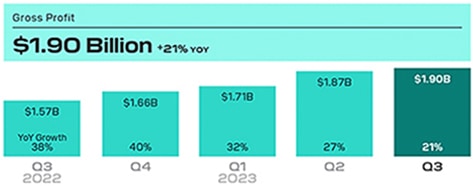
During the Q3 results, net revenue experienced a 24% YOY growth, escalating from $4.52 billion to around $5.62 billion. Bitcoin revenue surged from $1.76 billion to $2.42 billion YOY. Gross profit increased by 21% compared to the same period last year, rising from $1.57 billion to $1.9 billion.
Adjusted EBITDA stood at $477 million, in contrast to $327 million in the year prior. Block observed particularly robust growth in its payment platform, Cash App, and its POS options from Square.
Cash App revenue reached $3.58 billion, marking a 34% YOY growth, while Square revenue increased by 12% YOY to $1.98 billion. Jack Dorsey remarked that they have been relatively quiet recently due to their intense focus.
Key Revenue Details
Transaction Segment: The company’s transaction revenues reached $1.66 billion, reflecting a 9.3% increase from the previous year. However, this figure was slightly below the expected $1.68 billion.
Strong Square Ecosystem: Within the transaction revenues, the robust Square ecosystem contributed $1.54 billion, marking a 10% growth from the prior year.
Subscription and Services: Revenues from this category amounted to $1.49 billion, indicating a significant 25.3% surge year over year, surpassing the expected $1.46 billion. The solid performance of the Square ecosystem played a role, contributing $402 million to subscription and service revenues, up 21% from the previous year.
Hardware Segment: The company’s business generated $42.3 million in revenues, showing a slight decline of 2.4% from the previous year, missing the projected $45.9 million.
Bitcoin: Revenues from the Bitcoin category totaled $2.42 billion, representing a substantial 37.5% increase from the previous year.
These figures demonstrate the company’s varied revenue streams and its continued growth in different segments.
Block’s Q3 Earnings – Balance Sheet And Operation Details
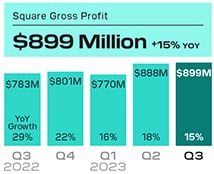
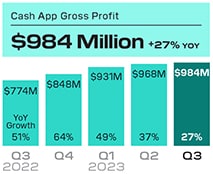
For the third quarter of 2023, the company saw its gross profit increase by 21.1% from last year, reaching $1.898 billion. However, the gross margin saw a slight decrease of 0.9% from the previous year, ending at 33.8%. Breaking it down, the Cash App was a standout, with its gross profit rising to $984 million, which is a 27% boost from the previous year. Similarly, Square’s earnings were up, with a gross profit of $899 million, marking a 15% increase from the year before.
When we look at the adjusted EBITDA, there’s a notable rise to $477.5 million, which is a 45.9% jump from last year. This is while keeping in mind that the non-GAAP operating expenses also climbed by 14.4%, reaching $1.44 billion.
There’s also good news regarding operating income. It saw a significant climb to $89.8 million, a substantial increase from the $32.2 million reported in the quarter last year. Turning our attention to the balance sheet, as of September 30, 2023, there’s a healthy cash and equivalents balance of $5.1 billion, up from $4.7 billion at the end of June. The short-term investments also saw an uptick, standing at $1.16 billion, compared to $1.12 billion in the previous quarter.
The long-term debt has remained more or less the same, with a slight increase to $4.118 billion from $4.114 billion in the previous quarter.
About Block
Block, Inc. concentrates on building comprehensive ecosystems tailored to specific customer groups. Operating across two primary segments, namely Cash App and Square, the company provides a range of services designed to meet the needs of businesses and individual consumers. Under the Square segment, Block enables businesses or sellers to process card payments, offering a suite of products and services that support their operational growth. This segment combines hardware, financial, and software services, creating user-friendly products and services.
On the other hand, the Cash App segment offers a variety of financial tools and services, empowering consumers to effectively manage their finances. With a focus on enhancing financial management, Cash App facilitates money transfers, savings, spending, investments, and receipt management. Additionally, Block’s TIDAL platform serves as a global hub for musicians and their fans, providing engaging content and experiences to foster stronger connections between artists and their followers.
The company also engages in the Bitcoin ecosystem through Spiral, an independent team dedicated to contributing to the open-source development of Bitcoin technology.
Conclusion
The company’s strategic adjustments to its earnings forecast, coupled with cost-saving measures and a focus on operational profitability, have cemented investor confidence.
The strong growth across both Cash App and Square segments is a testament to the company’s robust business model and its ability to adapt and thrive in a volatile economic environment. As Block continues to diversify its revenue streams and enhance its operational margins, it stands as a compelling example of resilience and forward-thinking in the fintech sector. The upward trajectory in its financials, backed by a comprehensive ecosystem of products and services, positions Block to not only weather potential economic downturns but also to seize new opportunities for growth and innovation.
Unlike many new corporate leaders, PayPal New CEO, Alex Chriss, has not hesitated to make significant directional changes early in his tenure. In the Q3 earnings call. Chriss, who took over as CEO after Dan Schulman on September 27th, emphasized his focus on achieving growth.
This marks a departure from Schulman’s emphasis on PayPal’s checkout service. Initially, this shift caused a decrease in investor confidence and a decline in the company’s stock value.
Key Takeaways:
New CEO’s Strategic Shift: Alex Chriss highlighted the importance of focusing on growth and moving away from the checkout service that Dan Schulman previously had priority on. Chriss’s leadership signifies a change in strategy aiming for an effective and growing organization.
Resilient Q3 Performance: Despite facing difficulties in the market and experiencing heightened competition, PayPal displayed a strong performance in Q3 of 2023. Some notable achievements during this period include a 15% rise in payment volume, an 8% increase in revenues, and a 20% growth in EPS. Moreover, the company exhibited good operating cash flow and free cash flow throughout this timeframe.
Strategic Overhaul: As part of its revamp, PayPal made notable changes to its operations, like divesting its logistics branch, Happy Returns to UPS. The company’s goal is to make operations more efficient and provide experiences for customers by implementing automation and enhancing the checkout process. Moreover, PayPal plans to utilize AI technology to engage consumers and improve its range of business solutions.
Financial Overview and Company Profile: PayPal provides an overview of its situation, including information about its cash holdings, investments, and debts. Additionally, the company demonstrates its dedication to rewarding shareholders through stock repurchases. Moreover, PayPal’s mission revolves around stimulating empowerment and focusing more on economic participation through its inclusive digital payment platform that serves millions of active account holders worldwide.
PayPal Stock Price On 12-18-2023 (11:00 am) ( Source Google Finance)
PayPal New CEO, Alex Chriss: Background
PayPal’s New CEO, Alex Chriss assumed the position of CEO on September 27, replacing Dan Schulman when PayPal was head-on with various challenges in the fintech industry. The company has faced a decrease in its stock value due to decreasing investor interest in fintech companies, tough competition from Apple, and slower growth in its branded checkout business over the past few years.
Given Chriss’s extensive experience at Intuit, he is expected to lead PayPal’s recovery. However, analysts on Wall Street caution that reviving the company might take a long time and extensive efforts.
The year 2023 proved difficult for PayPal, as its stock mostly traded at low levels compared to the long-term average. While this made the stock more affordable, potential investors were still worried about uncertainties in the economy and reduced consumer spending. However, there was a positive market response to the plans of PayPal’s new CEO, Alex Chriss. He aimed to streamline the company’s resources towards its growth priorities to create a leaner, more efficient, and effective organization. Overall, market observers hold a confident view of the stock’s long-term prospects.
Regarding growth, one of the primary hurdles facing the company is intense competition. The market dynamics have significantly changed since PayPal’s separation from eBay approximately eight years ago, with consumers now having alternative options, such as Apple Pay, that provide a fast and convenient checkout experience. The payment systems of Amazon and Google continue to gain traction, posing challenges for PayPal, which heavily relies on e-commerce for revenue generation. It is essential to note that the termination of PayPal’s operating agreement with eBay a few years ago has impeded its growth.
PayPal’s Third Quarter 2023 Earnings Reflect Resilience Amidst Market Challenges
Following a more-than-expected third-quarter report, PayPal experienced a much-needed upturn in its stock value, which had been struggling since its peak in 2021. Despite its position as a leading figure in the payments sector, PayPal has faced challenges in sustaining its growth momentum during the pandemic surge, leading to ongoing struggles in its stock performance.
Speaking about it, Alex Chriss, acknowledged the obstacles ahead, highlighting the competitive pressures from firms like Block (formerly Square) and Stripe, as well as traditional financial service providers such as Fiserv and FIS. To address these challenges and improve financial performance, PayPal aims to streamline certain aspects of its operations. Chriss emphasized the need to address the company’s high-cost structure, which has been impeding its agility and clarity of focus.
On November 1, 2023, PayPal disclosed its third quarter of 2023 earnings, showcasing a robust performance with notable growth in both revenue and EPS. The company’s Overall payment volume reached $387.7 billion, marking a 15% increase and a 13% growth on an FX-neutral basis. Notably, net revenues stood at $7.4 billion, demonstrating an 8% growth and a 9% FX-neutral increase. The GAAP operating income saw a 4% rise, amounting to $1.2 billion, while the operating income (excluding GAAP) showed an 8% increase, reaching $1.6 billion.
GAAP EPS was reported at $0.93, compared to $1.15 in the third quarter of 2022, whereas the EPS for non-GAAP showed an impressive 20% growth, totaling $1.30 compared to $1.08 in the prior year. Additionally, the company recorded a significant operating cash flow of $1.3 billion and a free cash flow of $1.1 billion.
PayPal’s Strategic Overhaul – Enhancing Consumer Experience and Streamlining Operations
PayPal recently divested its logistics arm, Happy Returns, to UPS, as part of its strategy to streamline operations and focus on its core payments model. CEO Chriss emphasized the need to address duplication and manual work, intending to invest in automation for improved efficiency.
During his initial month in the role, Chriss engaged with various stakeholders to outline a plan that aims to revolutionize product development and reporting practices. This plan, to be unveiled in the upcoming earnings call, involves a comprehensive overhaul of the consumer experience, centering on a seamless checkout process that adds value to each transaction.
For consumers, PayPal intends to leverage its rich database to power a sophisticated shopping recommendation engine and enhance incentive marketing using AI technology. In the business segment, the company plans to accelerate the advancement of PayPal Complete Payments, an offering tailored for digital merchants. Utilizing consumer data for refining checkout form autofill is also a focus.
PayPal’s New CEO also highlighted the potential of generative AI in fostering meaningful connections between consumers and merchants, ensuring responsible use of this technology. The company anticipates recruiting seasoned professionals to reinforce its talent pool in the upcoming months, recognizing the need for enhanced execution speed in driving growth and delivering on its promising outlook.
Jamie Miller has been appointed as the new CFO of PayPal to aid the company under its new expense management approach led by the new leader, Alex Chriss. Previously serving as the global CFO at EY, Miller brings a wealth of experience from her previous roles at General Electric and Cargill. She takes over from Gabrielle Rabinovitch, who has been serving as acting CFO during the transition period. In Q3, PayPal’s net income saw a 23% decline, settling down to around $1.02 billion YOY, with the company’s Q4 performance falling slightly below expectations till now, as noted by Rabinovitch.
Expanding Service Offerings to Braintree Customers
In a bid to cater to larger companies associated with Braintree, Chriss intends to broaden the range of services offered. Describing Braintree’s position as a foothold for future growth, Chriss emphasized the company’s commitment to addressing additional customer needs, including fraud management, payouts, chargeback automation, and Forex services.
According to William Blair, the company’s long-term prospects remain substantial, particularly as it has transitioned from a traditional checkout button to a comprehensive E2E solutions platform for both consumers and merchants. While it’s still early, the company’s sharp focus on leveraging its wealth of data for enhanced operational efficiency is encouraging for the future, as management emphasizes its commitment to pursuing profitable growth.
While acknowledging the dedication of PayPal’s current employees, Chriss also expressed the intention to bring in new talent to help achieve his objectives. In the meantime, he is diligently working to gain a comprehensive understanding of the company, with plans to present a more detailed strategy to analysts during the upcoming earnings call in February.
Key Highlights Of Q3 Results 2023
PayPal exhibited a robust performance in the third quarter of 2023, marked by an 8% increase in net revenues, which grew to 9% on an FX-neutral basis. The company saw a 4% rise in GAAP operating earnings, amounting to $1.2 billion, and an 8% increase in operating income (non-GAAP), reaching $1.6 billion. The GAAP EPS was $0.93, down from $1.15 in the third quarter of the prior year, while the EPS for non-GAAP stood at $1.30, demonstrating a 20% growth YOY.
As of September 30, 2023, PayPal’s cash equivalents and investments amounted to $15.4 billion, with a total debt of $10.6 billion. During the third quarter of 2023, the company bought back approximately 23 million common stocks, delivering $1.4 billion in returns to stockholders.
The company generated $1.3 billion in cash flow from operations and $1.1 billion in free cash flow during the quarter. These figures include a $0.8 billion of adverse impact from European BNPL loans originated as HFS in the period.
About PayPal
PayPal offers a secure and efficient way to send money, pay and create online invoices, and establish a merchant account. With a core belief in the transformative power of accessible financial services, PayPal is dedicated to democratizing financial opportunities and empowering individuals and businesses to participate and thrive in the global economy. Their inclusive digital payment platform empowers 277 million active account holders to transact with confidence, whether online, through a mobile device, an app, or in person.
Through a blend of innovative technology and strategic partnerships, PayPal continuously develops improved methods for managing and transferring funds, providing users with flexibility and options for sending, receiving, and paying. Operating in over 200 markets globally, the PayPal ecosystem, encompassing Venmo, Xoom, and Braintree, facilitates transactions in more than 100 currencies, allowing users to withdraw funds in 56 currencies and hold balances in their PayPal accounts in 25 currencies.
Conclusion
PayPal’s New CEO, Alex Chriss, left an indelible mark by charting a clear course for the company’s future. Departing from the previous strategy, Chriss outlined his vision for prioritizing profitable growth, setting the stage for a more efficient and agile organization. Despite market challenges, PayPal’s robust third-quarter performance, including notable increases in overall payment volume and net revenues, showcased the company’s resilience and enduring potential.
Moreover, the strategic overhaul, evidenced by the divestment of Happy Returns and a commitment to streamline operations, underscores Chriss’s dedication to optimizing consumer experiences and refining business offerings through advanced AI technologies. With the appointment of Jamie Miller as CFO, PayPal is poised to fortify its financial management and steer the company’s trajectory toward sustained growth.
As PayPal continues to empower millions of users worldwide through its secure and accessible financial services, Chriss’s leadership, coupled with the company’s continued dedication to innovation and strategic partnerships, bodes well for its continued success and enduring prominence in the global digital payment landscape.
The recent news of Citigroup layoffs has startled the financial sector. Jane Fraser, the CEO, is spearheading this initiative to streamline operations and improve the bank’s stock performance. A comprehensive restructuring plan is currently underway, with a focus on simplifying the bank operations and giving Fraser oversight. This “reorganization” involves removing a layer of management and reducing leadership roles. While the exact number of job cuts and their financial impact are still uncertain, Fraser remains steadfast in her decision, stating that it aligns with the interests of shareholders.
Fraser’s strategic overhaul is part of her efforts to boost profits and address regulatory concerns. With Citigroup’s stock performance trailing behind its competitors, there is pressure to deliver results. Fraser’s decisive actions demonstrate her commitment to reshape the bank and steer it towards success. The workforce restructuring at Citigroup primarily targets support and technology departments.
Citigroup’s “Project Bora Bora”: Citigroup’s restructuring initiative, known as “Project Bora Bora”, has raised concerns among employees. Led by CEO Jane Fraser, the plan includes job reductions in divisions, particularly in support and technology roles.
Strategic Reorganization Focus: The strategic reorganization aims to streamline the bank operations by removing management layers and reducing leadership positions. This effort is focused on improving efficiency and enhancing the organization’s performance.
Support for Affected Employees: To assist employees during this transition, Citigroup has introduced severance packages that include extended healthcare coverage and job search support. These measures are designed to help those impacted by the Layoffs at Citi.
About Citigroup: Citigroup is a financial services company that operates across segments, serving diverse customer accounts and offering a wide range of banking and financial services worldwide.
Citigroup CEO Jane Fraser’s restructuring initiative, referred to as “Project Bora Bora “, is causing concerns as it aims to reduce the workforce by 10% across various vital divisions. This announcement has raised worries among the employees. The final count of CitiMortgage layoffs, which is expected to include executives facing cuts too (other than the 10%), particularly those in roles with overlapping responsibilities and operations staff supporting divested or restructured businesses, will be determined in the upcoming weeks.
Following the announcement of management changes on September 13th, Citigroup has reportedly started the process of laying off employees, primarily affecting support staff in risk and compliance management. Additionally, there is a risk of job loss for technology personnel involved in overlapping functions.
Conversations about potential layoffs Citi is already in progress, with individual discussions about departures underway. Executives in charge of revenue-generating operations have held meetings to clarify the changes and reassure their teams that the restructuring is aimed at reducing bureaucracy and prioritizing activities that generate more profits, as mentioned in the report. It’s worth noting that Citigroup currently has around 240,000 employees.
While the number of job reductions is uncertain, the main focus is on support and technology departments. In a memo to staff, Fraser emphasized that these departures will allow producers and dealmakers to focus more on clients and achieving outcomes. Fraser expressed determination for the bank to reach its potential, highlighting the bold decisions being made to fulfill commitments to all stakeholders.
The addition of new division heads, including Andrew Morton, Shahmir Khaliq, Gonzalo Luchetti, Andy Sieg, and Peter Babej, strengthens Citigroup’s restructuring efforts. These leaders will play a vital role in decision-making concerning the second and third tiers of management, contributing to the bank’s shift towards a more effective operational structure.
She has acknowledged that the main driving force for layoffs is the need to simplify the bank’s functioning. Fraser hopes to create a more effective and adaptable decision-making process by getting rid of a level of management and rearranging the organizational structure. This is a calculated move that will enable Citigroup to respond quickly to changes in the market, increase productivity, and eventually increase shareholder returns.
What Are The Affected Locations?
The bank continues to address a 2020 consent order from regulators, which requires the resolution of several “longstanding deficiencies” in its internal controls. The company’s official note emphasized that streamlining the organization would further support the implementation of its transformation, which stands as the firm’s top priority.
In recent years, Citigroup has made significant technology investments to enhance risk controls and compliance, aiming to comply with the consent order, as stated by a source. However, the company still retains numerous employees with overlapping roles and redundant technology systems.
The layoffs will have a significant effect across all of the regions where Citigroup has operations. Although precise information has not been made public, it is expected that the changes will result in fewer regional leadership positions outside of North America. The objective of this stage is to simplify processes and concentrate decision-making. Citigroup aims to enhance coordination, productivity, and consistency of the bank’s worldwide strategy through the consolidation of executive positions.
The job reductions form a component of a more comprehensive effort in organizational restructuring initiated by Jane Fraser. Citigroup wants to become a more agile and effective company by streamlining the bank’s processes, eliminating unnecessary management tiers, and reorganizing decision-making. Although the precise quantity of employment reductions and the economic consequences are still unknown, these modifications are per Fraser’s plan to simplify the bank and increase value for investors.
Severance For Those Affected
The company has implemented measures to support employees affected by the Citigroup layoffs 2023. The business has presented severance packages to facilitate the financial challenges during this transition. Benefits, including outplacement services, increased healthcare coverage, and assistance with job searching, may be included in these packages. Although it may not completely offset the impact of job loss, these efforts aim to offer some assistance and stability to those impacted.
Anticipated Job Cut Timeline
While an exact timeline has not been revealed, Citigroup has indicated that the job cuts will be rolled out gradually over an extended period. This phased approach aims to ensure a smoother transition and minimize any disruption to the bank’s day-to-day operations.
It is essential to recognize that while some job reductions may occur swiftly, others may take more time to execute, especially in cases where there are legal or regulatory obligations that require attention. Citigroup is dedicated to managing the process responsibly and ensuring that affected employees receive appropriate support and assistance throughout the transition period.
Market Reaction and Investor Outlook
Following the revelation of the reorganization plan and relatedCiti layoffs in 2023, there was a little uptick in Citigroup’s stock price. Shortly after the announcement, the price of the stock increased by 2% to $42.35 per share. The early reaction of the market suggests that investors could perceive the restructuring efforts as a constructive measure aimed at augmenting the bank’s efficiency and earnings.
It is important to remember, though, that Citigroup’s shares have already experienced difficulties as a result of a number of issues, such as increased interest rates and more stringent financial regulations during the previous year. From its peak in late 2021, the company’s share price has dropped significantly—by 46%. Even though the market’s initial response to the news of the reorganization is positive, it is still too early to tell how the bank’s stock will do in the long run.
About Citigroup
Citigroup Inc. is a diverse financial services company, serving approximately 200 million customer accounts across nearly 160 jurisdictions and countries. Its operations are structured into the following segments:
Institutional Clients
Global Consumer
Corporate and Other
The Global Consumer Banking segment offers standard banking assistance to retail consumers, including commercial banking, retail banking, Citi cards, Retail services, and retail banking.
The Institutional Clients Group segment serves institutional, corporate, clients with high net worth, and public sector entities globally, providing a comprehensive range of banking services and products. This segment includes equity and fixed-income trading, prime brokerage, foreign exchange, research, derivative services, investment banking, corporate lending, private banking, advisory services, trade finance, securities services, and cash management.
The Corporate and Other segment covers unallocated costs of global staff functions, various corporate expenses, global operations, and technology expenses, Corporate Treasury, specific North America and international legacy consumer loan portfolios, other legacy assets, and discontinued operations. Citigroup Inc., which was established in 1812, has its headquarters in New York.
Conclusion
The recent wave of Layoffs at Citi under CEO Jane Fraser’s guidance has stirred the financial sector. The emphasis on simplifying the organization, eliminating redundant rolls, and centralizing decision-making signals Fraser’s commitment to enhancing the bank’s efficiency and profitability. While the exact scale and scope of the job cuts remain unclear, the move reflects a determined effort to align the bank’s operations with the evolving market landscape and meet shareholder expectations.
As Citigroup continues its efforts to transform and optimize its global presence, the company remains dedicated to supporting its affected employees through severance packages and other assistance measures. As it progresses through this phase of change, Citigroup’s overarching goal remains focused on delivering sustainable value and maintaining its position as a leading global financial services provider.
SmileDirectClub, the D2C aligners company, has decided to shut down after filing for Chapter 11 bankruptcy protection. The announcement of the global operations winding down came abruptly, conveyed through a note on the company’s website on December 8th. This move follows closely on the heels of SmileDirectClub’s filing for Chapter 11 bankruptcy protection less than three months ago.
The sudden shutdown has left some customers with concerns about completing their ongoing treatment plans and addressing outstanding bills. Unfortunately, those seeking information are met with a notice on SmileDirectClub’s website stating that customer care support is no longer available for existing customers. The company expresses regret for any inconvenience caused by this situation.
Key Takeaways:
Financial Struggles and Chapter 11 Bankruptcy: SmileDirectClub’s recent decision to close down has come after facing difficulties and filing for Chapter 11 bankruptcy protection. This highlights the company’s struggle to secure capital for operations. The challenges were further compounded by a decline in stock value being delisted from the Nasdaq and a consistent lack of profitability.
Divergence from Medical Guidance and Legal Issues: The downfall of SmileDirectClub can be attributed to their deviation from expert guidance regarding teeth alignment and their choice to go public in 2019, which resulted in debt accumulation. Legal issues such as a patent dispute, regulatory obstacles, and a settlement over practices have also added to the company’s struggles in maintaining its position within the industry.
Impact on Customers: The sudden shutdown has left customers uncertain about treatments and outstanding bills. With customer support and aligner treatments being discontinued as pending orders being canceled, customers are understandably concerned about finding alternative solutions and possible refunds.
Consumer Rights and Refund Options: Customers are advised to explore refund options through credit or debit card providers, emphasizing the urgency of the situation. Suggestions include seeking chargebacks for payments made for services that are no longer provided and for credit card payments exceeding £100, considering a ‘section 75’ claim with the credit card provider.
Legacy of SmileDirectClub: The closure of SmileDirectClub signifies a shift in its journey as a pioneer in the consumer ‘Invisible’ teeth aligners market. Once known for providing an affordable way to achieve healthy teeth, the company has faced various challenges, including legal disputes and financial difficulties. As a result, they have had to discontinue their services, including their lifetime smile guarantee.
Background
Founded in 2014 by childhood friends Jordan Katzman and Alex Fenkell, SmileDirectClub entered the stock market with an IPO in 2019 with a valuation of $8.9 billion. Post-IPO, the company’s stock initially soared to over $18, only to later experience a decline, eventually becoming a penny stock and getting delisted from the Nasdaq.
While as a publicly traded entity, SDC faced challenges in turning a profit and grappling with lowering revenues. The company found itself entangled in a patent dispute with rival platform Candid, a legal battle that was eventually dismissed by a judge. Regulatory hurdles further complicated matters, and the company contended with disgruntled customers who accused it of false advertising and violations of FDA regulations.
So What Exactly Happened Behind The “Invisible Aligners”
SmileDirectClub, renowned for its clear aligners allowing at-home dental molds and online check-ups, has closed down, causing uncertainty among customers about the fate of their ongoing dental treatments. The orthodontics company, based in the US, offered an alternative approach with clear aligners, eliminating the need for in-person appointments.
Typically priced at around £1,800, the aligners provided a 4 to 6-month treatment duration. However, customers are now facing ambiguity as SDC has announced the incredibly difficult decision to wind down its global operations. The US-based company filed for Chapter 11 bankruptcy in late September, securing protection from creditors owed substantial amounts, totaling nearly $900 million in debt at the time of the bankruptcy filing.
Despite an extensive search spanning several months, SmileDirectClub revealed its inability to secure a partner willing to inject sufficient capital to sustain the company. The quest for financial support comes on the heels of the company’s public debut in 2019, where it boasted an $8.9 billion valuation. However, over time, its stock value plummeted, revealing consistent unprofitability and entanglement in numerous legal battles. In 2022, SDC reported a significant loss of $86.4 million.
Since its inception in 2014, SDC had an ambitious mission to revolutionize oral care by offering clear dental aligners directly to consumers through mail and major retailers, positioning them as a faster and more affordable alternative to traditional braces. Having served over two million people, the company faced not only financial challenges but also encountered resistance from both the medical community and legal entities.
The main reason for the downfall is said to be the divergent path the company took from the guidance provided by medical experts in the field of teeth alignment. In 2019, they made the decision to go public, a move that resulted in the accumulation of substantial debt. Despite having open orders, the company has, unfortunately, ceased all customer service operations. This situation has left customers with pending orders without the support they may require.
In a notable legal dispute, the District of Columbia attorney general’s office also sued SDC for deceptive practices, accusing the company of using NDAs to manipulate online reviews and prevent customers from reporting negative experiences to regulators. While SmileDirectClub denied the allegations, it settled in June, releasing over 17,000 customers from NDAs and agreeing to pay $500,000 to the District of Columbia. This legal episode added to the challenges the company faced in maintaining its foothold in the industry.
But What About Your Treatment And Deposits With SmileDirectClub?
If you’re currently undergoing treatment with SDC, the company has conveyed that aligner treatment is no longer available through their platform. During this change, SDC apologizes for any inconvenience caused and advises individuals in active treatment to contact a local dentist. For those wishing to continue their treatment outside the SDC platform, the recommendation is to consult with the treating doctor or a local dentist for guidance on future aligner treatment.
Additionally, SmileDirectClub has discontinued its previously offered lifetime smile guarantee, and customers with existing payment plans are expected to continue making payments. However, the company has not yet disclosed the process for customers seeking refunds.
Consumer rights experts suggest exploring the possibility of claiming a refund through credit or debit card providers. In situations where a company is facing financial challenges, acting promptly becomes crucial. Customers are advised to contact their card provider immediately, seeking a chargeback for the payments made for the service that is no longer provided. It is essential to emphasize the urgency of the situation, explaining that the business is undergoing financial difficulties and swift action is necessary.
While refunds may not be possible for services paid for some time ago, initiating the request promptly is recommended. For those who made payments in full or in part using a credit card and the transaction exceeded £100, there is an option to potentially reclaim the money through a ‘section 75’ claim with the credit card provider. If you used a different payment method, you likely won’t receive a refund unless the liquidators present an alternative solution for you. The company has also ‘regretfully’ canceled all aligner orders that have not yet been shipped.
About SmileDirectClub
SmileDirectClub, less than a less-than-a-decade-long aligner company, was a pioneer in providing remote teeth straightening at a cost that’s 60% lower than traditional braces. As the first and most widely recognized brand in the “at-home aligners” section, they offer a convenient and budget-friendly approach to achieving aligned teeth.
With SDC, In contrast to traditional metal braces and Invisalign treatment, there was no need for frequent visits to a dentist or orthodontist for bi-weekly checkups. Instead, you can conveniently take virtual scans from the comfort of your home every few weeks to ensure your teeth are progressing correctly. SmileDirectClub collaborated with registered dentists, orthodontists, and doctors, ensuring that each treatment case runs effectively and smoothly.
Conclusion
SmileDirectClub’s abrupt shutdown following its recent Chapter 11 bankruptcy filing, has left customers in a state of uncertainty regarding ongoing treatments and outstanding bills. The company’s trajectory, from a promising IPO to financial struggles and legal battles, ultimately led to its inability to secure sufficient capital for sustainability.
For customers affected by this closure, seeking refunds through credit or debit card providers is advised. The discontinuation of services and the cancellation of pending orders underscore the challenges faced by the once-prominent D2C aligners company, marking a significant turn in its less-than-a-decade-long journey.
In 2023, the United States witnessed more bankrupt companies than in the entire year of 2022 or 2021. Companies are facing difficulties due to the impact of high interest rates and a competitive job market.
As per the reports, there have been 459 instances of companies filing for bankruptcy until August 31, surpassing the figures from both 2022 (373 filings) and 2021 (408 filings). While this number is still lower than the peak of 639 filings recorded in 2020 during the downturn caused by the pandemic, this increase deserves attention. In August 2023, as many as 57 companies filed for bankruptcy, highlighting the ongoing economic challenges that businesses are grappling with. Today we will understand and analyze the notable recent bankruptcies.
Source: Statista – Bankruptcy filed in the United States(2007 to 2022), by chapter
Notable Recent Bankruptcies Key Highlights:
Surge in Corporate Bankruptcies: In 2023, the United States experienced a significant increase in bankruptcy companies, surpassing the totals of both 2021 and 2022. As of August 31st, there have been a total of 459 reported cases of bankruptcy, surpassing the numbers seen in the last decade.
Monthly Trends: Looking at the trends during August, the market witnessed 57 companies filing for Chapter 11 protection, which indicates the persisting economic difficulties. Although this number is lower than the figures in July, it still remains significantly higher compared to the majority of months in the two years.
Notable Cases:
Proterra Inc.: Filed for bankruptcy to optimize its value amid macroeconomic challenges and market headwinds.
Yellow Corp.: Bankruptcy resulted from a prolonged conflict with the International Brotherhood over a business modernization plan.
Bed Bath and Beyond: Filed for Chapter 11, with Overstock.com playing a crucial role in its partial revival.
Sectoral Trends: While healthcare recorded the highest number of bankruptcies in August, the consumer discretionary and industrial sectors surpassed it in the total number of bankruptcies filed throughout 2023.
Other Notable Bankruptcies:
WeWork: WeWork encountered difficulties due to its “ambitious” growth and internal leadership issues, resulting in the company filing for Chapter 11 bankruptcy protection in November 2023
Amyris Inc.: Amyris Inc. faced various challenges and chose to file for Chapter 11 bankruptcy in August with a strategic plan to sell some of its consumer brands to improve their financial standing
Western Global Airlines: Western Global Airlines sought bankruptcy protection as a means to manage their debt and maintain operations while working towards implementing a restructuring plan.
Surge in Corporate Bankruptcies in 2023
This year, the United States has seen a large number of corporate bankruptcies compared to the total filings in both FY 2021 and FY 2022. This reflects the challenges caused by high interest rates and a tight job market. According to reports from S&P Global, until August 31, there have been 459 bankruptcy filings in 2023 surpassing the numbers for both 2021 and 2022. It’s worth noting that this year-to-date figure is also higher than most of the preceding 13 years, with two exceptions.
Until August this year alone, 57 companies sought Chapter 11 protection. Although this bankrupt company’sfigure was lower than the 64 filings in July, it remained significantly higher than the majority of months in the preceding two calendar years.
Proterra Inc. filed for bankruptcy on August 7th stating that this step would help the company maximize its value by segregating its various product lines. Proterra focuses on manufacturing vehicles for use and providing EV technology solutions. They cited difficulties and challenging market conditions as the reasons that affected their ability to expand all of their product lines effectively.
Another notable bankruptcy filing occurred on August 6th, involving Yellow Corp., a trucking company that employed 30,000 freight professionals. The primary reason cited for the bankruptcy was an extended conflict with the International Brotherhood over a business modernization plan.
In its official statement, Yellow Corp. also revealed a pending lawsuit against the union, filed on June 26. The lawsuit alleged a breach of contract and claimed a loss of enterprise value exceeding $137 million in damages. The union responded on June 27, refuting the allegations and expressing its intent to employ all available legal resources to contest what it deemed meritless accusations from Yellow Corp.
Other significant bankrupt companiesinclude Bed Bath and Beyond, which filed for Chapter 11 in April. Overstock.com, Inc. played a pivotal role in the company’s partial revival by acquiring a substantial portion of its assets, including the intellectual property, online platform, and brand name. Overstock.com recently completed the rebranding process, launching the “new” Bed Bath and Beyond website, bedbathandbeyond.com, in the US at the start of September.
While healthcare recorded the highest number of bankruptcies in August, the consumer discretionary and industrial sectors surpassed it in the total number of bankruptcies filed throughout 2023. The consumer discretionary sector saw 57 bankruptcy filings in the first eight months of the year, followed by the industrials sector with 54 filings, and healthcare with 51.
Other Notable Companies That Filed Bankruptcies
WeWork: One of the most recent companies that filed for bankruptcy in November 2023, WeWork has taken a significant step by filing for Chapter 11 bankruptcy protection, marking a remarkable downfall for the office-sharing giant that once promised to revolutionize global workspaces. This move unfolds amid a period of tremendous upheaval in the commercial real estate market, fueled by the aftermath of the COVID-19 pandemic causing a surge in vacancies.
The primary catalyst for WeWork’s current challenges traces back to its ambitious expansion during its early years. Despite an attempt to go public in October 2021, a venture that followed a spectacular collapse two years prior, the company found itself entangled in a web of difficulties. The aftermath of this debacle resulted in the removal of Adam Neumann who was the founder and the CEO of the company at that time. Neumann’s erratic behavior and extravagant spending had unsettled early investors, contributing to WeWork’s tumultuous journey.
Amyris: In August, Amyris Inc. announced its Chapter 11 bankruptcy filing in a U.S. court, revealing plans to sell its consumer brands to enhance the company’s financial position. To support day-to-day operations during this process, Amyris secured a $190 million financing commitment. Importantly, the bankruptcy proceedings do not involve the company’s entities outside the U.S.
In its filing with the Delaware bankruptcy court, Amyris listed estimated assets in the range of $500 million to $1 billion and liabilities in the range of $1 billion to $10 billion.
Western Global Airlines: WGA has sought bankruptcy protection to reduce its debt following a financial strain on the cargo airline.
In the petition filed under Chapter 11 in Delaware, the airline disclosed assets of up to $500 million and debts of up to $1 billion. This filing enables Western Global to continue its operations as it pursues court approval for a restructuring plan, intending to alleviate its debt burden by over $450 million.
Reasons For An Increasing Number Of Bankruptcies 2023
The market in 2023 has experienced unexpected turbulence amid lingering uncertainty leading to companies that filed for bankruptcy. What sets this apart from last year is that the anticipated turbulence in 2022 was largely attributed to pandemic-related factors. The comprehensive federal relief provided during the peak of the pandemic brought solace to both corporations and individuals. While the economy was significantly impacted by widespread shutdowns, 2023 has witnessed a rebound marked by higher employment rates, stable or increased home values, and relief in the supply chain.
Nevertheless, there’s a prevailing belief among many observers that a looming recession is on the horizon, primarily due to the substantial debt accumulated during the pandemic. Although the economy appears to be stabilizing, the substantial amount of corporate debt with impending maturities cannot be overlooked. Given the impending debt maturity wall, organizations might encounter significant challenges in raising funds in the current high-interest-rate environment. Moreover, uncertainty persists in various industry sectors such as cryptocurrency, commercial real estate, and retail. The impact of student loan repayments could potentially lead to an increase in nationwide filings by individuals.
Conclusion
In 2023, the surge in companies that filed for bankruptcy in the United States signals a concerning economic landscape, surpassing the totals of 2021 and 2022. With 459 filings as of August 31, the challenges posed by high interest rates and a competitive labor market are evident. Notable cases like Proterra Inc., Yellow Corp., and Bed Bath and Beyond underscore the diverse factors contributing to this trend. The unexpected turbulence in 2023, coupled with the looming recession concerns, highlights the complex dynamics influencing corporate financial stability.
Kroger, a known supermarket chain in the United States that has been around since 1883, has recently broadened its range of digital services offerings, including its easy-to-use mobile app. This convenient platform allows customers to effortlessly order groceries for pickup or delivery, giving them flexibility when it comes to shopping.
To enhance payment options for customers, Kroger is now expanding its acceptance of Apple Pay. Several of its stores are now equipped to process payments through Apple’s platform. Additionally, its subsidiary chain, Fred Meyer, is also gradually implementing support for this service. It’s worth noting that Kroger was initially cautious about adopting Apple Pay across all of its stores. However, recent developments indicate a shift in the company’s stance, and now Apple Pay at Kroger is common.
Let’s explore why Kroger was initially reluctant to adopt Apple Pay, highlight the advantages of this collaboration, and discuss how it could impact the future of payments in the retail industry.
Key Takeaways:
Kroger’s Adoption of Apple Pay Amid The Rising Digital Payment: Kroger was initially reluctant to embrace mobile payment solutions such as Apple Pay. But, they have recently changed their stance and now customers can use Apple Pay in some Kroger stores and in their subsidiary chain, Fred Meyer. This decision reflects the increasing demand for payment options and demonstrates Kroger’s willingness to adapt to evolving technology trends.
Preference for Digital Wallets Among Young Generations: There is a trend towards using online payment methods nowadays, particularly among younger consumers. Around 53% of them prefer using digital wallets over traditional payment methods. Although PayPal remains the top choice, other options like Apple Pay, Samsung Pay, and Google Pay are also becoming increasingly popular. This indicates a growing dependence on mobile payment solutions.
Kroger’s Strategic Motive for Implementing Kroger Pay: At first, Kroger made the decision not to accept Apple Pay mainly because they wanted to promote their payment system called Kroger Pay. The idea behind this is to encourage customers to use the Kroger app and digital wallet, which helps build customer loyalty and collect important data for marketing purposes while also reducing transaction processing costs.
Perceptions and Concerns Surrounding Digital Wallets: Although digital wallets provide convenience and security, there are still some Americans who hesitate to use them. They express concerns about tracking expenses and the safety of their personal information. Opinions on the safety of wallets are split, with younger generations feeling more confident.
Apple Pay At Kroger: Kroger’s Adoption of Apple Pay Amid The Rising Digital Payment
Kroger decided to incorporate various payment methods and recently announced its acceptance of Apple Pay at its stores in August this year. While it remains unclear how many Kroger stores are currently facilitating Apple Pay or whether NFC payments will be extended to all of the 2,700+ Kroger stores under various names.
For users of Apple Pay, this decision was met with enthusiasm, as they could now utilize the payment system at one of the largest supermarket chains in the US. Kroger Apple Pay was also seen as a positive step toward the future of digital payments, underscoring the convenience and security advantages offered by mobile payment systems.
Kroger’s step comes after a significant rise and preference towards digital payment. A recent survey on digital payment usage in the US revealed that 53% of participants favor digital wallets over traditional payment methods, such as cash or debit and credit cards. This preference is particularly noticeable among younger consumers, who are at least twice as likely to opt for digital wallets compared to their older counterparts.
Among those using digital wallet applications, 69% of respondents reported using PayPal the most, making it the top choice. Other popular mobile wallet options include Apple Pay (with 53% hold), Samsung Pay (with 52% hold), and Google Pay (with 56% hold), as highlighted in the study. P2P apps are also gaining traction, with 52% of participants utilizing Cash App and 49% using Venmo for digital payments. Notably, the majority of users access digital wallets primarily through smartphones (with 68% hold) and smartwatches (with 41% hold).
Why Kroger Didn’t Accept Apple Pay In The Past?
Initially, the Apple Pay Kroger decision seemed puzzling. However, a closer examination reveals a strategic motive. Kroger has introduced its contactless payment solution known as “Kroger Pay,” an exclusive digital wallet app tailored for Kroger and its associated stores.
Several factors contribute to Kroger’s preference for its proprietary payment system:
Enhanced Customer Loyalty and Retention: By providing its distinct payment solution, Kroger encourages customers to download and utilize the Kroger app. This not only simplifies the payment process but also integrates seamlessly with Kroger’s loyalty rewards program, offering customers a convenient and rewarding shopping experience.
Gathering Data: Employing its payment system enables Kroger to gather crucial customer data, aiding in the customization of marketing strategies, and promotional activities, and the enhancement of insights into consumer shopping patterns.
Expense Reduction: Transaction processing fees can impose substantial costs on retailers. By utilizing its in-house system, Kroger has the opportunity to negotiate more favorable rates or cut down on transaction expenses.
Understanding The Perceptions of Digital Payments And Its Impact
Despite the widespread use of digital wallets, they may not suit everyone’s preferences. A notable 14% of Americans still opt not to use digital wallets. When asked to specify the primary reasons for their reluctance, respondents pointed to difficulties in tracking expenses with digital wallets (with 11% hold) and concerns regarding security (with 10% hold). This indicates a recognition among consumers of how digital wallets can impact their money management capabilities.
Interestingly, while PayPal remains the most popular digital payment processor, it is also perceived as the least trustworthy, according to a quarter of the survey participants. The prevalence of phishing scams on mobile payment apps, mainly PayPal, might contribute to this sentiment.
Opinions are divided on the overall safety of digital wallets, with 36% of respondents believing they are more secure and 30% expressing concerns about their safety. As is evident, younger generations, including GenZs (with 53% hold) and millennials (with 40% hold), tend to feel more secure using digital wallets.
Despite potential risks, digital payment apps generally offer heightened protection against fraudulent transactions. This is primarily due to the advanced security measures employed by digital wallets during purchases. For example, instead of directly sharing your card details with a merchant, digital wallets utilize a process called tokenization to safeguard your payment information during transactions.
While security remains a concern for many Americans, survey participants indicate that the crucial issue is how digital wallets align with existing financial practices and influence spending behaviors.
About Kroger
Kroger, or Kroger Co, is a renowned grocery retailer operating both physical and online stores, specializing in the distribution of a wide range of products. With a widespread presence across the US, Kroger manages various types of stores, including drug stores, supermarkets, marketplace stores, jewelry stores, and multi-department marts.
The company’s diverse product portfolio encompasses organic and natural sections, general merchandise, pharmacies, and pet centers, as well as perishables like fresh organic products and seafood. Additionally, Kroger offers home fashion, apparel, electronics, furnishings, toys, automotive products, home goods, and living essentials. Under different banners such as Harris Teeter, Baker’s, Fry’s, Dillons, Fred Meyer, QFC, Little Clinic, and Home Chef, Kroger retails private label products. The company’s headquarters are located in Cincinnati, Ohio, in the US.
Conclusion
The recent acceptance of Apple Pay at Kroger marks a significant progression in its digital service offerings, aligning with the increasing preference for seamless digital transactions. While initially hesitant, Kroger’s decision reflects a strategic response to customer demand and the evolving landscape of digital payments.
With the introduction of its proprietary Kroger Pay and its emphasis on data gathering and customer retention, Kroger aims to enhance customer experiences and reduce transaction costs. Despite concerns about digital wallet security and usage, the shift towards digital payment methods signals a growing trend, especially among young generations, emphasizing the importance of flexibility and adaptability in managing personal finances.
Field services software provider WEX recently unveiled its acquisition of Payzer, a cloud-based business management software company. The deal, valued at approximately $250 million, includes provisions for additional contingent payments amounting to up to $11 million.
WEX plans to finance this acquisition through its revolving credit facility and available cash resources. The transaction’s completion is expected before the close of 2023, subject to customary closing conditions. Upon finalization, WEX aims to enhance its product suite, presenting a new, scalable Software as a Service (SaaS) solution to its extensive customer base, which spans nearly 150,000 small field service companies. This strategic move positions WEX for further growth and innovation in the evolving landscape of business management software.
Key Takeaways
WEX’s decision to acquire Payzer is a strategic move aimed at expanding its product offerings for over 150,000 field service companies.
The acquisition, valued at $250 million with a $11 million contingent payment, will be financed through WEX’s revolving credit facility and available cash.
By integrating Payzers software solutions into WEX’s platform, the goal is to streamline operations for HVAC, plumbing, and roofing businesses.
While WEX expects growth from this acquisition, it acknowledges the need to consider uncertainties and risks as outlined in filings.
This acquisition demonstrates WEX’s dedication to improving efficiency and seizing mutually beneficial market opportunities.
WEX’s Acquisition Of Payzer Marks A Milestone In Global Commerce Platform’s Expansion Strategy
The global commerce platform, known for making business operations easier, has officially announced that it has completed an agreement to acquire Payzer.
Payzer is a growing company that provides cloud-based management software for field services. This acquisition will help WEX in its growth strategy by expanding its product range and creating opportunities for cross-selling. As a result, WEX will be able to offer a SaaS-based solution to its customer base, which includes almost 150,000 small businesses involved in field services.
WEX had previously revealed the agreement to acquire Payzer on October 26th, 2023. WEX is a business platform dedicated to simplifying the complexities of managing businesses. The company has built an ecosystem that offers solutions to its global clients. By leveraging their data and expertise in simplifying benefits, facilitating transactions, and transforming mobility solutions, WEX is committed to helping companies navigate complexities effortlessly and achieve their full potential.
Melissa Smith, the CEO of WEX, shared her excitement regarding the acquisition of Payzer. She expressed her enthusiasm for introducing an innovative offering to their Mobility customers through Payzer. Melissa highlighted that Payzer’s outstanding service and extensive range of features bring together payment solutions and software as a service (SaaS). She believes that Payzer perfectly exemplifies its ability to identify a growing market with a customer base that aligns well with its existing network. Ultimately, this acquisition will enable them to provide a product and service package tailored to meet the needs of their customers.
Transaction Details and Operational Synergy
As per the definite agreement, WEX will acquire Payzer for a sum not surpassing $250 million, along with a potential additional payment of up to $11 million, contingent upon performance criteria involving factors like working capital. WEX will utilize its revolving credit facility and available cash to fund the acquisition. The completion of the transaction is subject to standard closing conditions and is expected to occur before the conclusion of 2023.
WEX stands out as a leader in mobility solutions, catering to over 600,000 customers and managing approximately 19 million vehicles on its Mobility platforms. On the other hand, Payzer operates as a comprehensive management SaaS provider of field service, offering various features, including dispatching, scheduling, invoicing, customer communications, supply ordering, maintenance agreements, and sales proposals.
Initially focusing on serving HVAC, plumbing, and roofing small businesses, Payzer integrates all these solutions into an easy-to-use and user-friendly software package accessible through both desktop and mobile applications. Moreover, Payzer has strong partnerships with key original equipment manufacturers (OEMs) in its industries, streamlining the customer-supplier relationship for its clients.
WEX Financial Results
The complete revenue for Q3 of 2023 experienced a 6% rise, amounting to a solid $651.4 million compared to the $616.1 million previously in Q3 of 2022. This revenue growth comes at $31.9 million in adverse effects from spreads and fuel prices, along with a $5.3 million favorable effect from forex rates.
On a GAAP basis, the net income due to shareholders surged by a solid $62.5 million, resulting in net earnings of $18.4 million, equivalent to $0.42 per share (diluted) for the Q3 of 2023. This compares to a net loss of around $44.1 million, which is $1.00 per share (diluted), for Q3 of 2022.
The non-GAAP metric, revised net income due to shareholders, reached $176.8 million of Q3 of 2023, which is $4.05 per share (diluted), marking a 15% increase per share (diluted) compared to $157.8 million, which is $3.51 per share (diluted), for the exact period in the previous year. The GAAP operating income margin for the Q3 of 2023 reached 26.8%, contrasting with 3.5% for the exact period in the preceding year. The adjusted operating income margin stood at 41.8% in Q3 of 2023, compared to 39.1% for the prior year’s comparable period. Please refer to WEX’s official site for more information.
Forward-Looking Acknowledgements By WEX
The press release by WEX has forward-looking announcements, including discussions about the anticipated advantages of the acquisition. Any information in this press release unrelated to historical facts constitutes forward-looking views. The usage of terms such as “believe,” “anticipate,” “could,” “continue,” “expect,” “estimate,” “may,” “intend,” “project,” “plan,” and “will.” Other similar expressions are intended to identify forward-looking statements, although not all forward-looking statements necessarily include these specific words.
The forward-looking information has both unidentified and identified uncertainties, risks, and some additional factors that could potentially lead to significant discrepancies between the actual results or performance and the future results or performance indicated or implied by these views These factors include WEX’s ability to finalize or effectively integrate the acquisition and realize the expected benefits of the acquisition.
Other risks and uncertainties are outlined in WEX’s Item 1A of the Annual Report on Form 10K for the ending year 31 December 2022, submitted on 28 February 2023 to the SEC, as well as Quarterly Reports of WEX’s on Form 10 Q for periods ending 31 March 2023, and 30 June 2023, filed with the SEC on 27 April 2023, and 27 July 2023, respectively, along with subsequent filings with the SEC. These forward-looking acknowledgments are relevant as of the date of this press release, and it is advised not to rely on these statements excessively. WEX disclaims any responsibility to update forward-looking acknowledgments due to new information, future events, or other factors.
WEX Inc. operates as a technology-driven company providing corporate payment solutions. Within its fleet solutions portfolio, the company caters to a diverse range of clients, including large and small businesses, government fleets, and over-the-road cardholders. The Fleet Solutions segment focuses on offering payment solutions for fleet vehicles, along with transaction processing and information management services.
Additionally, it provides account and account retention services, authorization and billing inquiries, maintenance services, credit and collections services, merchant services, analytics solutions, and various ancillary services and tools aimed at helping fleets manage expenses and capital requirements.
WEX has built a robust ecosystem that seamlessly integrates personalized solutions for its global customer base. Leveraging its comprehensive data and specialized expertise in simplifying benefits, reinventing mobility, and facilitating seamless transactions, WEX is dedicated to enabling companies to navigate complexity effortlessly and achieve their full potential.
About Payzer
Payzer and Payzеrware are trademarked brands owned by Payzer, LLC, in North Carolina. Since 2012, it has been offering mobile payment processing services. Payzеr serves as a provider of Software-as-a-Service (SaaS) payment solutions for businesses, providing a range of financial tools to facilitate the growth of contractors’ businesses.
Its mobile and cloud-based platform enables businesses to accept credit and debit card payments at the point of sale. Moreover, it allows companies to issue debit purchasing cards to their employees and subcontractors, facilitating direct money transfers to these cards and enabling the tracking of company purchases. Douglas Little and Joe Giordano founded the company, and its primary focus lies in delivering financial solutions for contractors with transparent pricing and no hidden fees. The company caters to a diverse array of industries, including pool services, plumbing, roofing, and more.
Conclusion
WEX’s acquisition of Payzer marks a significant milestone in expanding its global commerce platform. It aims to enhance its product suite to benefit a vast customer base comprising small field service companies. The strategic integration of Payzer’s cloud-based management software with WEX’s offerings is expected to streamline operations for businesses in the HVAC, plumbing, and roofing sectors.
When you’re considering career options to find the right fit for yourself, several important factors come into play. These factors typically include the requirements and your interests, but there is something beyond these factors; it’s crucial to take earning potential as well into account as you evaluate your career choices, especially if you’ve invested time and resources in education.
Having a basic knowledge about the highest paying jobs in the USA in 2024 can provide the initial guideline and motivation for the best career paths. So let’s explore some of these opportunities. But before we proceed further, here are a few tips to help you get started.
Tips For Getting Highest Paying Jobs
Achieving the highest-paying jobs involves a strategic approach. Here are the steps you can take:
Strategic Education: Invest in advanced degrees or certifications pertinent to your field. For executive corporate-level roles, consider pursuing an MBA, and for a career in the healthcare industry choose a specialized practice to be a physician or surgeon.
Skill Development: Sharpen essential skills such as leadership, strategic thinking, communication, decision-making, and problem-solving. Seek mentorship from seasoned professionals to enhance your capabilities.
Networking: Establish a robust professional network by attending industry events, joining executive organizations, and connecting with peers and mentors. Networking opens doors to opportunities.
Proven Track Record: Showcase your ability to deliver results and lead teams effectively in your current role. Emphasize your achievements and leadership experiences on your resume and during interviews.
Continuous Learning: Stay informed about industry trends, emerging technologies, and leadership best practices. Engage in lifelong learning through executive education programs in relevant fields to remain updated and adaptable.
Average Salary In The US
Let’s discuss the average annual salaries across the US. The nationwide average annual salary stands at $59,428, providing an overview of the income landscape. On the other hand, the average rate is $28.34, which is much lower and we will be going to discuss this further. These distinct yet interrelated figures offer a comprehensive portrayal of the earnings of an average job. And when you see the highest paying jobs listed below, you can clearly comprehend the difference in pay wage, which gives you a clear view and understanding of which future prospect you want to follow. .
For a more detailed look, here are the states with the highest average salaries:
New York: Average $74,870 (annually)
California: Average $73,220 (annually)
Massachusetts: Average $76,600 (annually)
Conversely, certain states present lower average salaries:
Arkansas: Average $48,570 (annually)
West Virginia: Average $49,170 (annually)
Mississippi: Average $45,180 (annually)
These figures contribute to understanding the diverse economic landscapes across different states.
Top Highest Paying Jobs In 2024
Let’s see what are the highest-paying jobs right now and how they differ vastly from these national averages.
1. CEO
Average Annual Salary: $828,645
This decade is for CEOs, a Chief Executive Officer holds the highest executive position in a company generally, is tasked with making crucial corporate decisions, overseeing overall company resources and operations, and serving as the primary liaison between the board of directors and corporate functions. Often, the CEO is also the public face of the company.
The CEO is elected by the board and shareholders, reporting to the chair and the board, both appointed by shareholders.
While a bachelor’s degree is typically the minimum requirement for becoming a CEO, many individuals in this role hold advanced degrees such as a master’s or Ph.D. These degrees can be in various fields, although CEOs commonly pursue business, finance, and engineering.
2. CFO
Average Annual Salary: $435,559
The Chief Financial Officer (CFO) holds a crucial position in the C-suite. To become a CFO, significant industry experience is essential. Most individuals reaching this role possess advanced degrees and certifications, such as a graduate degree in finance or economics, along with the Chartered Financial Analyst (CFA) designation. A background in accounting, investment banking, or analysis is also advantageous.
3. Cardiologist
Average Annual Salary: $3,24,919
A cardiologist is a specialized physician with expertise in heart and blood vessel diseases. Their role involves both treating existing heart conditions and providing preventive care to reduce the risk of heart diseases.
Following a 4-year medical school program, cardiologists undergo 3-years of residency in general internal medicine, followed by a minimum of three additional years of focused training in their cardiology specialization. This extensive training equips them with the knowledge and skills needed to address a wide range of cardiovascular issues.
4. Anesthesiologist
Average Annual Salary: $426,800
An anesthesiologist is a medical doctor (MD or DO) specializes in the practice of anesthesia. These physicians focus on perioperative care, developing anesthetic plans, and administering anesthetics to patients. The educational journey to become an anesthesiologist involves completing college, followed by medical school (four years), an internship (one year), and a three-year residency in anesthesia. Some may choose to pursue additional training through a fellowship.
Anesthesiologists play a crucial role in ensuring the safety of patients undergoing surgery. Their primary responsibility is to provide care that prevents patients from experiencing pain and distress during medical procedures.
5. Orthodontist
Average Annual Salary: $152,003
Orthodontics, a specialized branch of dentistry, focuses on diagnosing and treating “bad bites” or malocclusion. Common orthodontic treatments encompass braces, clear aligners, and retainers. The alignment of your teeth significantly influences your oral health. By enhancing the interaction between your upper and lower teeth, the risk of oral health issues like cavities, gum disease, and excessive wear can be minimized.
For those aspiring to become orthodontists, the journey begins with completing a bachelor’s degree, followed by dental school leading to a DDS or a DDM. Subsequently, a specialized post-doctorate degree in orthodontics must be pursued.
6. Psychiatrist
Average Annual Salary: $250,814
A psychiatrist, a medical doctor holding a DO or MD degree, specializes in mental health, including substance use disorders. Psychiatrists are equipped to assess both the physical and mental aspects of psychological issues.
People seek psychiatric assistance for various reasons, ranging from sudden issues like frightening hallucinations or panic attacks to persistent challenges such as enduring feelings of anxiety, sadness, or hopelessness that disrupt daily functioning.
Becoming a psychiatrist requires completing medical school, obtaining a state license through a written examination, and completing a four-year psychiatry residency. In essence, it typically takes 12 years of education after high school to become a general adult psychiatrist and up to 14 years for those aiming to specialize in child and adolescent psychiatry.
7. Surgeon
Average Annual Salary: $432,383
A surgeon is a medical professional specializing in the assessment and treatment of conditions that may necessitate surgery, involving the physical alteration of the human body. Surgeries serve various purposes, such as diagnosing or addressing diseases and injuries. In the operating room, surgeons lead a team of fellow doctors and nurses to ensure the smooth execution of procedures. Different surgeons focus on specific areas of the body, employing diverse techniques.
The journey to becoming a surgeon is lengthy and demanding, comprising:
Attaining an undergraduate degree, typically in pre-med or a related science-oriented field.
Passing the MCAT (Medical College Admission Test) is essential for aspiring surgeons.
Proceeding to four years of medical school.
Upon graduation, doctors must choose their preferred specialty area and secure a residency program.
8. Periodontist
Average Annual Salary: $257,477
A periodontist is a dentist specializing in preventing, diagnosing, and treating periodontal disease (chronic inflammation that affects supporting bone and gums, commonly known as gum disease) and in the placement of dental implants. Periodontists undergo extensive training, including an additional three years of education beyond dental school, covering various areas.
To become a periodontist, one must earn a DDS or DMD degree from an accredited dental school. Before applying to dental school, obtaining a four-year bachelor’s degree is a prerequisite. Additionally, achieving board certification involves passing an oral or written examination administered by the American Board of Periodontology.
9. Physician
Average Annual Salary: $241,126
A physician, often referred to as a medical doctor, primarily focuses on the non-surgical treatment of patients’ conditions. Despite the emphasis on non-surgical approaches, various medical specializations involve unique procedures related to their fields. Physicians typically work in hospital settings, collaborating in teams of varying sizes.
The journey to becoming a certified doctor requires several years of study and internship or residency. The duration can range from 7 to 15 years, depending on the type of physician. The stages of becoming a physician include obtaining an undergraduate degree, taking the MCAT exam, completing 4 years of medical school, and undergoing residency training.
10. Airline Flight Engineer, Copilot, and Pilot
Average Annual Salary: $119,800
Working in the aviation industry often involves spending extended periods away from home, but it also comes with a substantial paycheck in many instances. The Bureau of Labor Statistics combines the roles of Airline Flight Engineer, Copilot, and Pilot into a single category.
The pilot, usually the most experienced in operating an aircraft, supervises other members of the flight crew. The copilot serves as the second in command during flights, assisting the captain with cockpit responsibilities.
Flight engineers conduct preflight checks, monitor cabin pressure, assess fuel consumption, and perform other essential duties. However, due to increased automation in modern aircraft, there are fewer opportunities for flight engineers than in the past. Airline pilots typically hold a bachelor’s degree and possess an Airline Transport Pilot certificate from the Federal Aviation Administration. Many start their careers as commercial pilots, accumulating thousands of hours of cockpit experience before securing employment with an airline.
11. Dentist
Average Annual Salary: $192,754
A dentist is a healthcare professional specializing in the diagnosis and treatment of oral health conditions. Dentists play a crucial role in maintaining the health of teeth and gums through regular check-ups and cleanings. Additionally, they perform various oral health treatments, such as dental fillings, crowns, and bridges.
In the U.S., you may encounter two different titles following a dentist’s name:
DDS
DMD
Both titles indicate that the dentist graduated from an accredited dental school, and individuals with DDS or DMD degrees undergo the same training, capable of performing identical dental procedures. The path to becoming a dentist typically spans eight years, comprising four years to earn an undergraduate bachelor’s degree and an additional four years to obtain a DDS or DMD in dental school. For those interested in specialization, completing a dental residency is also necessary.
12. Internal Medicine Physician
Average Annual Salary: $241,126
Internal Medicine physicians, also known as Internists or Doctors of Internal Medicine, specialize in managing complexity within adult medicine. They are specifically trained to address diagnostic challenges, handle severe long-term illnesses, and assist patients with multiple, complex chronic conditions, providing comprehensive and longitudinal patient care.
Internal Medicine physicians dedicate at least three of their seven or more years of medical school and postgraduate training to learning how to prevent, diagnose, and treat diseases affecting adults. Following the completion of their basic internal medicine training, many physicians enter practice as “internal medicine physicians,” or “general internists,” They are equipped to handle a broad spectrum of illnesses comprehensively.
13.Obstetrician
Average Annual Salary: $314,401
An obstetrician is a specialized physician who focuses on delivering babies and providing care to individuals during pregnancy and postpartum. They address medical conditions unique to pregnancy and perform surgeries related to labor and delivery. It’s important to note the distinction between gynecologists, as obstetricians specifically care for pregnant individuals and deliver babies, while gynecologists concentrate on the female reproductive system without handling pregnancies. Often, healthcare providers integrate both fields, forming the discipline known as obstetrics and gynecology, or Ob/Gyn.
Residency training in Obstetrics spans four years, with rotations covering obstetrics, gynecology, gynecologic oncology, and infertility among others.
14.Nurse Anesthetist
Average Annual Salary: $212,444
A nurse anesthetist is a healthcare professional responsible for administering pain medication (anesthesia) to patients before, during, and after surgery. They manage medications to ensure patients remain asleep or pain-free during surgical procedures and continually monitor all physiological functions of the patient’s body.
Nurse anesthetists, also known as CRNAs (certified registered nurse anesthetists), are nurses with advanced training in anesthesia administration. To qualify, they must hold either a Doctor of Nursing Practice (DNP) or a Doctor of Nursing Anesthetics Practice (DNAP), and they need certification from the NBCRNA. This makes nurse anesthetists highly skilled medical professionals entrusted with critical responsibilities and earning a salary significantly above the average.
15.Pediatrician
Average Annual Salary: $222,124
A pediatrician is a medical doctor specializing in the care of infants, children, adolescents, and young adults. Their expertise lies in diagnosing and treating medical conditions specific to these age groups, covering a diverse range of health-related services from wellness screenings to managing complex medical issues. Pediatricians typically perform various procedures, including physical exams, administering vaccinations, treating injuries such as fractures and dislocations, etc,.
To become a pediatrician, one must complete a 3-year residency program in pediatrics after finishing medical school. Some pediatricians initiate general care practices after residency, while others pursue fellowship programs for additional training in pediatric subspecialties.
Before starting their practice, pediatricians must obtain a state license, with specific requirements varying by state. Many pediatricians also opt for board certification, engaging in ongoing professional education throughout their careers. This commitment ensures they stay updated on the latest advancements in pediatric medicine.
16. General Practitioner
Average Annual Salary: $227,890
General practitioners play a crucial role in healthcare, conducting physical exams and reviewing medical histories to assess patients. They may order tests, recommend treatments, or refer patients to specialists. In the evolving landscape of telehealth services, general practitioners can also provide consultations via phone or video calls. In emergencies, they deliver life-saving treatment until emergency services arrive.
Working within a broader healthcare team that includes nurses, pharmacists, and psychiatrists, general practitioners contribute to holistic patient care. They are pivotal in preventive medicine and health education.
Becoming a general practitioner involves seven to 15 years of training, covering a broad spectrum of knowledge. The process includes earning a bachelor’s degree, preferably in a relevant science field, achieving a satisfactory score on the Medical College Admission Test (MCAT), completing four years of medical school, and engaging in a three- to seven-year residency focused on their specialty.
17. Enterprise Architecture Manager
Average Annual Salary: $149,667
Enterprise Architects hold a vital role in aligning an organization’s IT strategy with its strategic goals. Analyzing business properties and the external environment, they define business needs and oversee the design and implementation of technology infrastructure. This includes assessing the current state of technology, processes, and services to identify areas for improvement and planning future development.
While a master’s degree is not mandatory for enterprise architects, many have degrees in computer science or IT management. Some choose to pursue graduate-level programs tailored to the role of an Enterprise Architect.
18.Quantitative Analyst
Average Annual Salary: $127,634
Quantitative analysts, often referred to as “quants,” play a vital role in the financial industry. They employ mathematical and statistical techniques to assess financial instruments, study financial markets, and analyze the behavior of market participants. These professionals can be found in various sectors, including investment banks, hedge funds, wealth management companies, commercial banks, insurance firms, management consulting firms, financial software companies, and accountancy firms.
For a sustained career as a quantitative analyst, a graduate degree in a quantitative field such as economics, finance, statistics, or mathematics is typically required. Degrees in engineering, theoretical physics, computer science, or other fields providing advanced training in mathematical modeling and quantitative techniques may also be considered.
19. Vice president
Average Annual Salary: $494,900
The vice president (VP) of a company holds a significant leadership position, usually ranking second or third in command. Responsible for overseeing internal operations and stepping in when the president is unavailable, the VP plays a crucial role in decision-making and may sign agreements or partnerships with other companies, depending on the company’s structure.
Specific certifications are not usually mandatory for a vice president role, but substantial managerial experience is a key qualification. Employers often seek candidates with a minimum of five years of experience in high-level managerial positions.
20. Director of Information Security
Average Annual Salary: $188,743
An information security director plays a crucial role in an organization by leading and overseeing the information security function. Their primary responsibility is to safeguard the confidentiality, integrity, and availability of the organization’s information assets. This involves developing and implementing comprehensive strategies, policies, and procedures to identify and mitigate risks, ensure compliance with industry regulations, and respond effectively to security incidents. Collaborating with stakeholders across the organization, they aim to cultivate a security-centric culture aligned with business objectives.
Education requirements for information security directors vary, but a bachelor’s degree is typically the minimum. Graduates with a four-year cybersecurity or computer science can start in entry-level IT positions and progress toward director roles.
21. Enterprise Architect
Average Annual Salary: $167,857
As for enterprise architects, their role involves managing and enhancing an organization’s IT networks and services. They oversee the improvement and upgrade of enterprise services, software, and hardware, staying abreast of the latest trends and technologies to enhance business processes.
Enterprise architects engage in complex thinking to determine which legacy systems can be updated, what software or hardware can be replaced, and which services or products will support business operations across various departments. To qualify for this role, candidates need a strong educational background (Bachelor’s or Master’s in IT or computer science) and a minimum of 7 years of relevant experience.
22. Software Architect
Average Annual Salary: $146,023
A software architect is responsible for creating plans tailored to project-specific technical requirements and establishing technical standards for tools, platforms, or software coding. Their role involves determining the ideal processes and technologies for the development team. With broad technical knowledge, software architects are often sought after to troubleshoot coding issues, contributing to structured software solutions aligned with the organization’s technological needs and goals.
To become a software architect, a bachelor’s degree in computer engineering or a related field is essential. Additionally, possessing a deep understanding of software development concepts and coding skills is crucial, and a relevant degree equips individuals with the foundational skills required for this role.
23. Software Engineering Manager
Average Annual Salary: $156,100
A software engineering manager oversees the development, design, and maintenance of software applications. Managing a team of software engineers, they collaborate with product management and quality assurance departments to ensure the timely delivery of high-quality software solutions. Software engineering managers create project plans, set goals, provide technical guidance, and are involved in hiring, training, and mentoring software engineers. They also engage with stakeholders to address organizational and client goals.
Becoming a software engineering manager typically takes four to six years. In addition to developing strong coding skills for consistent software quality, individuals aspiring for this role need to understand the broader company strategy and cultivate positive relationships with upper management.
24. Data Warehouse Architect
Average Annual Salary: $128,475
Data Warehouse Architects play a crucial role in developing solutions related to data warehouses, collaborating with standard data warehouse technologies to craft plans that align with an organization’s goals or business requirements. Similar to architects designing buildings or naval architects creating ships, data warehouse architects design and launch data warehouses, tailoring them to meet specific client needs.
Aspiring data warehouse architects typically require a minimum of a Bachelor’s degree in Information Technology, Computer Science, or Electronics Engineering, coupled with practical experience in roles such as solutions architecture, software development, or database administration. While hands-on experience in data warehouse architecture is beneficial, it is not mandatory. Certification in data warehouse architecture enhances knowledge and competence, potentially influencing prospective employers. Proficiency in SQL, Data Modeling, ETL, and OLAP, with practical experience in at least one ETL tool like SSIS, is essential.
25. Site Reliability Engineer
Average Annual Salary: $1,51,484
SRE employs software engineering to automate IT operations, from production system management to incident and emergency response. This approach, rooted in the belief that using software code for oversight is more scalable and sustainable than manual intervention, is especially relevant as systems extend or migrate to the cloud.
Site Reliability Engineers need experience in both IT operations and software development. Many SREs hold bachelor’s degrees in computer science or engineering. In addition to education, aspiring SRE professionals should gain two to four years of related work experience.
26.CMO
Average Annual Salary: $352,281
A Chief Marketing Officer (CMO) is the top executive in charge of an organization’s marketing activities, with the primary goal of boosting revenue through increased sales. The CMO oversees various facets of marketing, including brand management, marketing communications, market research, product marketing, distribution channel management, pricing, and customer service.
The role of the CMO originated during the early business era when merchants recognized the need to distinguish their products from competitors. While initially focused on traditional advertising like print ads and TV commercials, the modern CMO has evolved significantly. Today, marketing leadership encompasses a broader spectrum, leveraging digital strategies and platforms.
27. Cloud Engineer
Average Annual Salary: $136,475
A Cloud Engineer is an IT professional responsible for maintaining and constructing cloud infrastructure, with specific roles including administration, cloud architecting, and development.
Cloud technology has become omnipresent, impacting various aspects of daily life, from streaming services to email platforms. For businesses, it offers benefits such as efficient backups, easy data storage, enhanced accessibility, and on-demand software updates for customers across devices. As a Cloud Engineer, you work behind the scenes to ensure the seamless operation of these systems.
To work as a Cloud Engineer, a minimum of a bachelor’s degree in an information technology-related field is required. Common majors include computer security, programming, digital automation, computer science, and computer networking. Many colleges and universities now offer specialized degrees in cloud computing to meet the growing demand in this field.
28. CIO
Average Annual Salary: $326,933
A Chief Information Officer (CIO) is a key executive responsible for managing, implementing, and enhancing the usability of information and computer technologies within a company.
As technology continues to evolve and reshape industries globally, the role of the CIO has gained prominence and significance. The CIO assesses how different technologies can benefit the company or enhance existing business processes, integrating systems to realize these improvements. A bachelor’s degree in the field of computer science or a similar discipline is usually required for employment as a CIO. This usually followed by a master’s degree in business.
29. Data scientist
Average Annual Salary: $144,512
A Data Scientist utilizes data to comprehend and explain various phenomena, aiding organizations in making informed decisions. Working as a data scientist offers analytical satisfaction, and intellectual challenges, and keeps you at the forefront of technological advancements.
To enter the field as an entry-level data scientist, you generally need at least a bachelor’s degree in data science or a related computer field.
30. Optometrist
Average Annual Salary: $141,009
An optometrist is a healthcare professional specializing in primary vision care. Although not medical doctors, they are licensed to practice optometry, conduct eye exams, prescribe glasses and contact lenses, detect eye abnormalities, and treat specific eye conditions.
To become an optometrist, one typically follows these steps:
Obtain a bachelor’s degree in pre-medicine or sciences by going to college.
Clear the OAT and apply to a doctor of optometry program, which lasts four years.
Obtain an OD and complete the NBEO exams.
Apply for and secure a license to practice optometry.
31. Solutions Engineer
Average Annual Salary: $130,644
A Solutions Engineer engages with customers to understand their needs, collaborating with various departments, including network engineers, support, and operations, to implement plans to enhance the customer experience. They balance project aspects such as safety and design, conducting research on advanced technology to find cost-effective solutions.
Typically employed within large companies, Solutions Engineers often start as Technical Architects and progress through their careers. A bachelor’s degree, commonly in Computer Science, Software Engineering, or related engineering fields, is a prerequisite for the position. Success in this role is often attributed to individuals with a comprehensive understanding of both the operational and scope aspects of projects.
32. Pharmacy Manager
Average Annual Salary: $168,746
Pharmacy managers play a crucial role in overseeing the daily operations of a pharmacy, including the dispensing of prescription medications and guiding clients. Their responsibilities extend to managing the pharmacy staff, overseeing inventory, and ensuring the secure storage of prescription drugs and controlled substances. Additionally, they may review prescription details for accuracy.
Requirements for Pharmacy Managers:
A doctor of pharmacy degree (PharmD) accredited by the Accreditation Council for Pharmacy Education.
A bachelor’s degree in business administration or an equivalent qualification is preferred.
State-approved license to practice as a pharmacist.
33. Corporate Controller
Average Annual Salary: $166,791
Working as a corporate controller offers opportunities across various industries, accompanied by a favorable job outlook and competitive salary. Corporate controllers derive satisfaction from applying financial expertise to inform critical decision-making, often influencing an organization’s future significantly.
Corporate controllers are responsible for overseeing all financial aspects, including payroll, bookkeeping, accounting, and budgeting. They collaborate with other leaders to make decisions fostering the company’s growth. In larger companies, they may engage with banking institutions and government bodies to ensure sound investments.
Regular meetings with the board of directors to provide financial updates and educate other employees on current financial policies are common for corporate controllers. To secure a position as a corporate controller, a minimum of a bachelor’s degree, typically in finance or a related field, is required. However, many roles may demand a more advanced degree, such as an MBA. Earning an MBA not only expands knowledge and skills applicable to various roles but also opens doors to prestigious positions, increased responsibilities, and more competitive salary ranges.
34. Podiatrist
Average Annual Salary: $225,975
Podiatrists, also known as podiatric physicians or doctors of podiatric medicine, specialize in addressing issues affecting the feet or lower legs, including injuries and complications from conditions like diabetes. Unlike traditional medical schools, podiatrists undergo a 4-year program at a podiatric medical school as part of their education. Following graduation, they embark on a residency that aligns with state requirements, providing diverse experiences in various medical specialties. Podiatric medicine graduates must complete a podiatric medicine and surgery residency (PMSR), consisting of a minimum of 2 years for board certification.
To obtain a license, podiatrists must graduate from one of the nine accredited podiatric schools and colleges and successfully pass the National Board Exams. Additionally, podiatrists have the option to pursue certification in specialized areas such as orthopedics, primary care, or surgery.
35. Associate General Counsel
Average Annual Salary: $264,828
AGC plays a vital role in a company’s legal department, guiding the organization through legal risks and ensuring compliance with the law. They offer legal counsel on various matters, including contract negotiations, and may represent the organization in legal disputes, collaborating with external counsel for complex issues. Typically reporting to the general counsel, they may also supervise other attorneys and legal staff.
Qualifications to become an Associate General Counsel:
Law degree: Candidates should have a qualifying law degree or completed the Graduate Diploma in Law.
LPC: Completion of the LPC or its equivalent is necessary.
Solicitor qualification: Candidates must be admitted as a solicitor in the country with a current practicing certificate.
Relevant experience: Several years of experience as a solicitor, preferably in corporate or commercial law or an in-house legal department.
Business acumen: Associate General Counsels need a deep understanding of a company’s business operations and strategic objectives to provide legal advice aligning with its goals.
36. Financial Planning and Analysis Manager
Average Annual Salary: $101,985
The role of a Financial Planning and Analysis Manager is crucial for individuals and businesses as it involves setting clear financial goals, creating a roadmap for achievement, and effectively managing resources. This includes analyzing income, expenses, investments, and risks to develop a well-structured financial strategy.
Proper financial planning contributes to financial security, wealth accumulation, and preparedness for unforeseen events, ensuring a stable and prosperous financial future. A minimum requirement, typically in finance, accounting, or a related field, with at least seven years of experience in finance, accounting, or a relevant field.
37. NPs
Average Annual Salary: $143,496
Nurse Practitioners (NPs) are increasingly becoming the preferred health partners for millions of Americans. By combining clinical expertise in diagnosing and treating health conditions with a focus on disease prevention and health management, NPs offer a comprehensive perspective and a personal touch to healthcare. They conduct physical exams, diagnose and treat diseases and health conditions, and have the authority to prescribe medication. To become a nurse practitioner, one must attain a graduate-level degree of education.
An NP is a nurse with a graduate-level degree of education. The additional training, skills, and experience in advanced practice nursing grant NPs the authority to perform many of the same services as doctors, going beyond the scope of registered nurses.
38. Corporate Counsel
Average Annual Salary: $159,930
A Corporate Counsel is a lawyer dedicated to working exclusively for a single business or organization. They typically provide legal advice, protection, and interpretation for their employer. The responsibilities of a Corporate Counsel are directly tied to the specific needs of the business or company that employs them. While many lawyers work for various clients, a Corporate Counsel devotes all their time and energy to a single employer, focusing on providing legal protection and services to individual employees and the company as a whole.
For those aspiring to a career as a Corporate Counsel, the initial step involves obtaining a Juris Doctor and passing a state bar exam. To pursue a Juris Doctor through a law school, a Bachelor’s degree is a prerequisite. Having studied corporate law or specialized in this field during undergraduate or law school can be particularly beneficial for prospective Corporate Counsels.
39.Analytics Manager
Average Annual Salary: $137,717
Analytics managers play a crucial role in converting raw data into valuable business insights, essential for informed decision-making and strategic planning. Utilizing their extensive industry knowledge, they extract pertinent insights and employ sophisticated statistical models and algorithms to formulate strategies for effective data analysis.
As leaders in people intelligence, they enhance organizational decision-making on people-related matters, integrating their data with broader organizational datasets to influence and contribute to strategic decision-making.
Requirements:
A Master’s Degree in data-related and Business Intelligence field.
Over 8 years of experience in data, BI, and analytics.
More than 3 years of leadership or management experience in business.
Proficiency in market research.
40. Actuary
Average Annual Salary: $372,667
Actuaries play a crucial role in evaluating the financial impacts of risk and uncertainty. They utilize mathematics, statistics, and financial theory to analyze potential events’ risks, assisting businesses and clients in devising policies that minimize associated costs. Actuaries are particularly vital to the insurance industry, managing and assessing risks related to insurance policies, financial investments, and other ventures with potential risks.
To become certified professionals, actuaries require a bachelor’s degree and must pass a series of exams. Typically, they pursue degrees in actuarial science, mathematics, statistics, or a related analytical field.
41. Software Engineer
Average Annual Salary: $128,130
Software engineering, a branch of computer science, focuses on designing, developing, testing, and maintaining software applications. Software engineers apply engineering principles and programming language knowledge to create various software solutions, ranging from computer games to network control systems. They not only build their systems but also enhance, maintain, and test software developed by their peers.
For a career in software engineering, a minimum education requirement is a Bachelor’s degree in computer software engineering, computer science, or mathematics. While pursuing a Master’s degree can enhance skills and knowledge, it is not mandatory for entry-level positions.
42.Physician Assistant
Average Annual Salary: $118,328
A PA is a healthcare professional who collaborates with doctors to provide medical treatment. PAs are present in various primary care and specialized medical fields, with their duties determined by the supervising doctor and influenced by state laws.
In some U.S. rural areas, PAs play a crucial role in delivering healthcare to entire communities. As technology progresses, their significance may grow, especially in addressing the needs of an aging population. Consequently, the demand for physician assistants is steadily rising.
To start on a career as a physician assistant, individuals must begin with a bachelor’s degree from an accredited university or college, focusing on science coursework. Some schools offer pre-PA degrees. Following this, students complete a PA program accredited by the ARC-PA, usually taking around 2 years. During the program, they undergo clinical rotations totaling at least 2,000 hours and receive a master’s degree in PA studies. PAs must successfully pass the PANCE exam.
43. Plant Manager
Average Annual Salary: $192,367
A Plant Manager oversees the daily operations of a plant, encompassing production, manufacturing, and adherence to policies and procedures. They design processes to optimize stewardship, safety, quality, and productivity. Plant Managers, also known as Plant Operators, supervise all aspects of plant operations, including maintenance, receiving, and production. They bear responsibility for the plant’s capital improvement, ensuring its physical upkeep. Collaborating closely with the production team, they aim to enhance profitability and production in the manufacturing plant.
While a minimum of a bachelor’s degree in business or engineering is required for a career as a plant manager, larger companies may demand an MBA degree for managerial positions.
44. System Engineer
Average Annual Salary: $77,313
Systems engineers play a crucial role in developing and overseeing complex systems designed to solve problems, guiding the entire lifecycle from system creation to production and management of the end product or solution. These systems can encompass various elements like products, people, services, information, natural components, or processes, depending on the specific job requirements. As part of their responsibilities, systems engineers troubleshoot issues and communicate with all stakeholders involved in the implementation and utilization of the system.
Systems engineers are integral to nearly every major industry, spanning healthcare, transportation, manufacturing, and software development. Typically holding a computer science degree in the bachelor’s or software engineering, a Systems Engineer should also possess knowledge and experience in performance tuning of application stacks (e.g., JBoss, Tomcat, Ruby, and Apache).
45. Midwife
Average Annual Salary: $121,632
A midwife is a healthcare provider with training in offering obstetric and gynecological services, covering primary care, prenatal and obstetric care, and routine gynecological services such as annual exams and contraception.
While midwives are not typically physicians, they often collaborate with obstetricians and gynecologists (Ob/Gyns) in a hospital setting to ensure comprehensive care when needed. Midwives are recommended for low-risk pregnancies or cases with mild complications. Two common courses in Nursing and midwifery are ANM (Auxiliary Nursing Midwifery) and GNM (General Nursing Midwifery). ANM is a two-year full-time diploma program primarily focused on the healthcare industry.
46. Java Developer
Average Annual Salary: $102,390
A Java Developer is a programmer responsible for designing, developing, and managing Java-based applications and software. Given that many large organizations use Java for implementing software systems and backend services, the role of a Java developer is highly sought after in today’s job market.
Professionals from diverse backgrounds can cultivate the skill set required to become successful Java developers. Employers often prefer candidates with a Bachelor’s or Master’s degree in Computer Science, Computer Engineering, or a related field. Hands-on experience in software development, particularly in Java, significantly enhances the prospects of securing a well-paying Java developer position.
47. Full Stack Developer
Average Annual Salary: $103,366
A full-stack developer plays a key role in building and maintaining both the front-end and back-end of a website. Understanding the skills, salary expectations, and the path to becoming a full-stack developer is crucial. This versatile developer is proficient in building both the front end (the visible and interactive parts of a website) and the back end (the behind-the-scenes data storage and processing). Since full-stack developers engage in all stages of the development process, they require expertise in both areas.
These developers can work in-house or for a computer development company focused on engineering websites, software, and other components for various businesses. The skill set of these developers includes proficiency in Frameworks and Front-end Languages (such as CSS, HTML, and JavaScript), Frameworks and Backend Technologies (including ExpressJS, NodeJS, Flask, Django, and C++), and Database Management Systems (such as SQL SERVER, MySQL, MongoDB, PostgreSQL, and Oracle Database).
48. Mathematician
Average Annual Salary: $101,134
A mathematician is an individual who employs a profound understanding of mathematics in their profession, primarily to address mathematical challenges. Mathematicians open their wings for data, numbers, structure, quantity, models, space, and change. Some mathematicians specialize in applied or practical mathematics, where they apply mathematical principles to real-world problems. For instance, a statistician compiling employment statistics can be categorized as an applied mathematician.
These professionals often utilize existing mathematical knowledge to interpret information, and their skills find relevance in various settings, ranging from architecture offices to zoological parks. Theoretical mathematicians focus on the theory of mathematics rather than its practical application. To start on a career as a mathematician after high school, individuals are required to pursue undergraduate and postgraduate degrees in mathematics courses and gain practical experience through internships.
49. Economist
Average Annual Salary: $94,920
An economist is an expert who analyzes the relationship between a society’s resources and its production or output. Economists examine societies at different scales, from small local communities to entire nations and even the global economy.
The insights and research findings of economists play a crucial role in shaping various policies, including tax laws, interest rates, international trade agreements, employment programs, and corporate strategies. Economists typically need a master’s degree, while positions in business, research, or international organizations may necessitate a master’s degree or Ph.D. along with relevant work experience.
50. Aeronautical Engineer
Average Annual Salary: $81,890
Aeronautical engineers play a vital role in the development, design, testing, and construction of various manned and unmanned aircraft, along with associated systems such as helicopters, airplanes, airships, and drones. Their expertise involves the application of materials knowledge, mathematics, problem-solving skills, and research to transform conceptual ideas into practical designs suitable for real-world application.
These engineers bear the responsibility of researching, developing, and implementing new technologies aimed at enhancing aircraft performance and efficiency, spanning both unmanned and manned aircraft as well as military and civilian aviation.
Within the field of aeronautical engineering, there are diverse specializations available, covering areas such as instrumentation, communications, propulsion systems, navigation, robotics, and structural design. This breadth of expertise allows aeronautical engineers to contribute significantly to the advancement of aviation technology.
Conclusion
Understanding the highest-paying jobs can help you understand the present work trends and plan your career. Strategic education, skill development, networking, and a proven track record are pivotal for securing these positions.
Average salaries across the U.S. vary, reflecting economic diversity among states. The top highest-paying jobs in 2024 encompass diverse fields, emphasizing the significance of education, specialization, and experience. Whether in healthcare, finance, or technology, these roles offer lucrative opportunities for those seeking rewarding and well-compensated careers.
Global Payments Inc, a leading global provider of payment technology and software solutions, announced its financial results for the third quarter of 2023 on 31st October 2023. Global Payments’ Q3 2023 Financial Update reveals the results via live audio webcast, which was hosted by Global Payments’ management at 8:00 AM (EDT) on the same day to discuss these results. The company’s quarterly earnings stood at $2.75 per share, which exceeded the Zacks Consensus Estimate of $2.71 per share. This marks a growth from the earnings of $2.48 per share YOY.
The Global Payments’ Q3 2023 Financial Update revealed an earnings surprise of 1.48%. During the last quarter, market analysts predicted that this digital payment company would report earnings of about $2.58 per share. However, they pleasantly surprised everyone by delivering earnings of $2.62, increasing by 1.55%. It’s worth noting that Global Payments has surpassed the consensus EPS estimates on many occasions over the four quarters.
Earnings Surpass Estimates: Global Payments has reported more than expected earnings for Q3 2023, with earnings per share at $2.75 compared to the estimated $2.71 per share. This indicates a 1.48% surprise earnings, highlighting the company’s resilience and strong financial management.
Robust Financial Growth: Despite the tough macroeconomic conditions, Global Payments has demonstrated impressive financial performance. The company experienced an 8.3% increase in GAAP revenues, an 8.5% rise in adjusted revenues, and an 11% growth in adjusted EPS compared to the year prior, showcasing significant year-on-year growth.
Operational Success: Global Payments achieved notable success, demonstrating a rise of 9.6% year-over-year increase in adjusted operating earnings. Additionally, they effectively managed costs and improved their operating margin by 50 basis points, highlighting their commitment to operational efficiency as well.
Positive Outlook and Future Projections: CEO Josh Whipple expressed confidence in the company’s outlook. He anticipates a growth rate of 7% to 8% in revenue for the year ahead and expects an expansion of up to 120 basis points in the adjusted operating margins. Furthermore, the company projects an 11% to 12% growth in adjusted EPS compared to the last year.
Global Payments’ Q3 2023 Earnings Show Strong Growth Amid Economic Uncertainty
Global Payments’ Q3 2023 Financial Update on October 31st, 2023, surpassed expectations despite the macroeconomic environment. The company reported a net income of $361.83 million or $1.39 per share, showing a significant increase compared to the third quarter of the previous year when it was $290.45 million or $1.05 per share.
In terms of revenue, Global Payments recorded $2.48 billion in GAAP revenues for the quarter, marking an 8.3% rise from the period in 2022 when it was $2.29 billion. Adjusted EPS also experienced an uptick, climbing by 11% to reach $2.75 compared to $2.48 in 2022.
Furthermore, adjusted net revenues showed a growth of 8.5% YOY, reaching $2,232.4 million. The company’s operating margin also improved significantly, rising from 16.9% in the year before 22.5%. Adjusted net revenues witnessed an increase as well, reaching $2.23 billion compared to $2.06 billion in 2022. Moreover, the adjusted operating margin expanded by 50 basis points.
Furthermore, adjusted net revenues reached $2,232.4 million, demonstrating an 8.5% increase from the same period last year. Notably, the company’s operating margin improved, rising to 22.5% from 16.9% in the previous year. Adjusted net revenues witnessed a substantial uptick, reaching $2.23 billion compared to $2.06 billion in 2022. The adjusted operating margin expanded by 50 basis points to 45.7%.
As Global Payments’ Q3 2023 Financial Update, the President, Cameron Bready, expressed satisfaction with their strong third-quarter performance, which exceeded their expectations despite the ongoing uncertain macroeconomic climate. He emphasized the resilience of their business model and their ability to execute consistently across various market cycles, which solidifies their confidence in their strategic approach and the positive outcomes it yields.
Bready also highlighted the significant strides they’ve made in integrating with EVO Payments, anticipating approximately $135 million in yearly synergies resulting from this integration. He conveyed optimism about the future in collaboration with EVO Payments, emphasizing their collective strengthening of competitive advantages and leadership in the payments industry.
In addition, Bready emphasized their unwavering commitment to enhancing the commerce experience for their customers worldwide as the Global Payments’ Q3 2023 Financial Update. He underscored their distinct technology-driven strategies, continual execution, and focused approach, all of which contribute to sustainable growth and the creation of substantial value for all stakeholders.
Dividend And Other Financial Summary
As the Global Payments’ Q3 2023 Results Beats the Estimates, The Board has approved a dividend of $0.25 per share, scheduled to be paid on December 29, 2023, to shareholders of record as of December 15, 2023.
In Q3 2023, the company’s consolidated income statements reflect a net income of $376.6 million, marking a 25.5% increase from the $300.2 million reported in the third quarter of 2022. The financial measures (excluding GAAP) table indicates an 8.5% rise in adjusted net revenue, reaching $2.23 billion, compared to $2.06 billion in the third quarter of 2022.
Operational Gains
Global Payments’ Q3 2023 Financial Updateshows a 9.6% YOY growth in adjusted operating earnings, reaching around $1,019.5 million. The adjusted margin for operations stood at 45.7%, marking a 50 BPS improvement from the year prior.
Total operating costs rose by 1% YOY, totaling $1,917.5 million. This increase was driven by higher selling, general, and administrative expenses during the quarter. Interest and other expenses amounted to $176.1 million, displaying a 30.3% increase YOY.
Global Payments’ Performance By Segment
Merchant Solutions:
The segment’s adjusted revenues reached a solid $1,728 million, marking a notable 19.2% increase YOY in Q3. This growth was attributed to a 33% surge in new integrated partners, a 20% rise in POS services, and robust expansion in Spain and Central Europe, showing mid-teens growth.
The segment’s adjusted operating income stood at a solid $847.7 million, demonstrating a solid 17% improvement YOY.
Issuer Solutions:
Adjusted revenues for the segment amounted to $519.7 million, displaying a 6.3% YOY increase in the quarter. This growth was driven by core issuer constant-currency expansion and a rise in traditional accounts.
Adjusted operating income for the segment totaled $246.6 million, indicating an 8.7% increase YOY.
Future Outlook
CEO Josh Whipple expressed satisfaction with the company’s robust financial performance throughout the third quarter and YTD period. He highlighted the achievement of a solid growth of 9% in net adjusted revenue, alongside a notable expansion in adjusted operational margins and an impressive 11% increase in adjusted EPS compared to the corresponding period in 2022.
Whipple emphasized the company’s positive outlook, citing promising trends within the business despite prevailing macroeconomic fluctuations and concerns in Forex rates. The company maintains its projection of net adjusted revenue ranging from around $8.6 billion to $8.7 billion, indicating a 7% to up to 8% growth YOY. Additionally, they anticipate an expansion of up to 120 BPS in adjusted operating margin for the year 2023. The CEO also forecasted adjusted EPS to fall within the range of $10.39 to around $10.45, reflecting an 11% – 12% growth compared to 2022 or roughly 17% excluding dispositions.
Whipple concluded by stating that the company’s 2023 outlook remains optimistic, taking into account the sustained momentum within the business, while also considering the potential impact of a more cautious economic environment amidst the ongoing uncertainty.
Global Payments Inc. is a company that specializes in providing software solutions and payment technology. Its operations are divided into several segments, including Issuer Solutions, Merchant Solutions, and Consumer and Business Solutions. For Merchants, Global Payments offers global customers software solutions and cutting-edge payment technology. It also delivers a range of value-added services such as specialty POS solutions, engagement, and analytic tools, as well as reporting and payroll services, all designed to boost customer demand.
The Issuer segment focuses on providing financial institutions and other service providers with solutions to streamline their card portfolios and reduce technical complexity and overhead. This segment also prioritizes delivering a seamless experience for cardholders in a unified platform, along with commercial payments and е-Payables solutions that facilitate B2B payment processes for governments and businesses.
Under its Consumer and Business Solutions segment, Global Payments offers various financial services, including general-purpose reloadable payroll cards, prepaid debit cards, and DD accounts. These services are tailored to support underbanked individuals and businesses in the United States, operating primarily under the branding of Netspend. Established on January 31st, 2001, Global Payments is situated in Atlanta, GA.
Conclusion
Global Payments’ impressive performance in Q3 results 2023 reflects the company’s resilience and strategic process in the face of an uncertain macroeconomic climate. With its earnings surpassing estimates and strong financial growth evidenced through increased revenues and margins, the company has demonstrated its ability to navigate challenging market conditions effectively.
The integration with EVO Payments has resulted in significant synergies, further strengthening their competitive position and industry leadership. Additionally, the company’s commitment to enhancing the commerce experience for customers worldwide underscores its dedication to providing innovative and customer-centric solutions.
Moreover, the company’s positive outlook, as highlighted by CEO Josh Whipple, indicates a strong trajectory for future success and growth. With promising projections for net adjusted revenue, operational margin expansion, and adjusted EPS, Global Payments remains well-positioned for sustained momentum and continued value creation for its stakeholders.
Overall, Global Payments’ consistent focus on technological innovation and customer-centric strategies positions it as a key player in the evolving landscape of payment technology and software solutions, solidifying its role as a leading global provider in the industry.