Author Archives: hostmerchantservices

Amazon Excludes Venmo As A Payment Option

Amazon Excludes Venmo As A Payment Option

Amazon has decided to discontinue the option of using Venmo as a payment method starting from January 10, 2024. This change comes over a year after Venmo was initially introduced as a means to cater to the payment preferences of Amazon customers. Although Amazon will still accept Venmo credit and debit cards, it will no longer be possible to link Venmo accounts for payments on Amazon. However, those who have already integrated Venmo into their Amazon wallets will still have a limited time window to continue using this payment method.

The decision to discontinue Venmo came after an announcement made in October 2022 where both Amazon and Venmo highlighted their collaboration as an option for users looking to streamline their purchases on the e-commerce platform. With this change, Amazon is now shifting its focus towards viable payment methods while gradually phasing out the direct use of Venmo accounts. As Amazon excludes Venmo as a payment option let us understand its implication for Amazon users.

Key Takeaways
  • Amazon’s Decision: Amazon is discontinuing the direct use of Venmo accounts for payments on its platform starting January 10, 2024. This change follows a partnership announced just 14 months ago and indicates a strategic shift in Amazon’s payment methods.
  • Impact on Users: Current Amazon users who have already linked Venmo to their accounts will have a limited window to continue using this payment option until the specified date. Amazon advises users to update their payment methods to avoid disruptions in one-time and recurring payments, including Prime memberships and subscriptions.
  • PayPal’s Response: While PayPal, Venmo’s parent company, acknowledged the change, they emphasized their ongoing collaboration with Amazon and reassured customers that other Venmo-related payment methods, such as Venmo credit and debit cards, will still be accepted on the platform. PayPal’s stock saw a slight decline following the announcement.
  • End Note: The decision comes at a challenging time for PayPal, with its stock value dropping by 16% over the past year. This move by Amazon adds to the competitive pressures PayPal faces, particularly with Stripe strengthening its relationship with Amazon and progressing towards an IPO.

Amazon Excludes Venmo: Understanding The Reason Behind This Decision

Amazon has informed its users that they will no longer be able to use Venmo as a payment option. The company clarified that while direct Venmo payments will cease, they will continue to accept Venmo debit and credit cards. This change aligns with a separate announcement from Venmo itself, indicating a shift in their partnership dynamics. According to Amazon, recent updates have led to the decision that Venmo can no longer be added as a new payment method. However, for users who already have Venmo linked to their Amazon accounts, this payment option will remain accessible until the specified date of January 10, 2024.
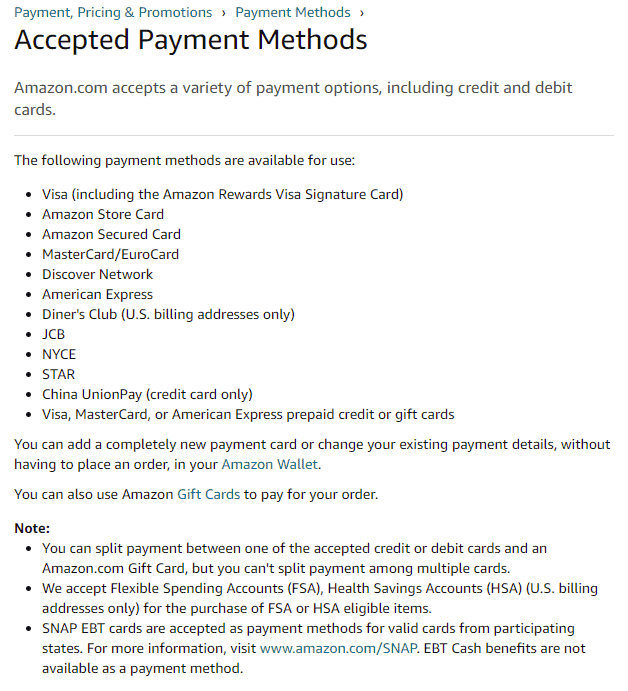
list of acceptable payment systems on Amazon

Source: Amazon

The decision to remove Venmo as a payment option on Amazon has caught many by surprise, especially since the exact reason behind it hasn’t been disclosed. While some speculate it might be due to slower-than-expected adoption, it’s puzzling given Amazon’s initial enthusiasm in introducing Venmo as a checkout option last October. Venmo, known for its quick money transfers between users, seemed like a fitting addition to Amazon’s various payment choices at that time.

And despite PayPal’s efforts over the past ten years to incorporate Venmo into its overall business strategy after acquiring it, this move by Amazon is a setback after just 14 months of partnership. For Venmo, this partnership was a step toward diversifying beyond P2P transactions, potentially increasing its revenue through transaction fees from retail sales. While the collaboration was announced in 2021, it wasn’t until October 2022 that the integration became active.

Earlier attempts as well by PayPal to boost Venmo’s popularity among teenagers didn’t pan out as hoped. Now, with Amazon dropping Venmo as a payment choice, PayPal faces another challenge in its growth plan. They reassured customers that numerous other payment methods remain available for convenience.

PayPal’s spokesperson, Joshua Criscoe, in a recent interaction, said that Venmo and Amazon have decided to deactivate Venmo as a payment method on Amazon for now. However, customers can still link Venmo cards to Venmo accounts for Amazon payments. Criscoe emphasized PayPal’s strong relationship with Amazon and expressed optimism about its future growth. Following this announcement, PayPal’s stock experienced a slight decline, too.

Steps For Subscribers To Avoid Disruptions

Amazon’s changes will affect one-time purchases and recurring payments like Prime memberships and other subscriptions. If you’ve set up Venmo as your go-to method for these payments, Amazon cautions there could be hitches.

To avoid any issues, switching your payment details before the mentioned date is a good idea. Simply log into your Amazon account, head to the “Memberships and Subscriptions” section, and make the necessary updates.

While Venmo, along with PayPal, will no longer be a payment option on Amazon, the platform continues to offer a diverse array of payment methods to accommodate its users. Customers can conveniently make purchases using various gift cards, including Visa, Amazon, American Express, and MasterCard. Additionally, payments can be processed directly through checking accounts.

Amazon’s range of accepted payment methods extends to major credit card options such as Prime Visa, Visa, Amazon Secured Card, Amazon Store Card, Discover, MasterCard/EuroCard, JCB, China UnionPay, and American Express. It’s important to note that specific payment options may be applicable only for certain types of purchases. For customers with a US billing address, Amazon offers the flexibility to utilize FSA or HSA for eligible items. Moreover, in select states, the platform also accepts SNAP EBT cards, allowing users to purchase groceries seamlessly.

PayPal Facing Troubles From All Sides

PayPal has been facing challenges recently, reflected in a 16% drop in its stock value over the past year. Adding to the pressure, Stripe, another payment processor, has been strengthening its ties with Amazon and is moving forward with plans for an IPO.

In an effort to face these challenges, PayPal appointed a new CEO, Alex Chriss, in September. Chriss has been actively working to strengthen partnerships within the tech and finance industries. One notable achievement under his leadership was a collaboration with Apple. In October, PayPal announced that customers could link their PayPal or Venmo cards to Apple Wallet. Additionally, PayPal ventured into the realm of stablecoins earlier in the year, a move that caught the attention of the SEC, resulting in a subpoena.

About Amazon

Amazon.com, Inc. is a prominent player in the industry selling a wide range of consumer products and subscriptions both online and in physical stores worldwide. The company operates across three segments – International, AWS, and North America. Amazon offers a selection of products from both its inventory and third-party sellers. They sell devices like Fire tablets, Kindle e-readers, Rings, Fire TVs, and Echo smart speakers. Additionally, Amazon creates media content and provides platforms for creators such as musicians, authors, and Twitch streamers to showcase their work and make sales.

In addition to their presence, Amazon offers a suite of services through AWS, including cloud storage, computing capabilities, analytics tools, and machine learning solutions. They also handle product fulfillment services for sellers while providing content subscriptions and advertising services. Amazon Prime’s membership program offers benefits to subscribers. Established in 1994 with its headquarters located in Seattle, Washington; Amazon caters to a clientele comprising sellers, consumers, enterprise developers, advertisers, and content creators.

About Venmo

venmo business accounts

Venmo was established in 2009 as a straightforward solution for sending money through text messages. By the end of 2010, they introduced an app to make transactions even easier. Initially, Venmo mainly focused on person-to-person (P2P) payments and simple transactions like paying for food trucks. However, they have since expanded their services to allow users to make in-person payments to various merchants. Users have the flexibility to fund their Venmo accounts and link them to bank accounts, debit cards, or credit cards. At present, more than 2 million merchants accept Venmo payments. Venmo employs the most advanced security measures and specialized algorithms to prioritize user safety to protect information and prevent unauthorized activities.

The user-friendly Venmo mobile app is available on both iOS and Android platforms, enabling users to transfer funds from their Venmo balance into their bank accounts. In terms of ownership history, Braintree acquired Venmo for $26.2 million in 2012 before being acquired by PayPal in December 2013. Today, Venmo operates as part of the PayPal family.

Conclusion

The decision made by Amazon to remove Venmo as a payment option reflects the changing interest in e-commerce partnerships and the strategies they employ. Although the exact reasons behind this move have not been disclosed, it highlights how online retail is an environment where alliances can shift based on factors like user adoption rates and strategic business decisions. While this transition may cause some inconvenience for Amazon users, they have a range of alternative payment methods available to ensure minimal disruption. It also serves as a reminder of the importance of reviewing and updating payment settings, especially when changes are announced.

On the other hand, for PayPal, the Venmo situation adds to a series of challenges highlighting the highly competitive nature of the payment processing industry. As both Amazon and PayPal steer through these shifts, they continue exploring opportunities for growth and innovation to provide consumers with secure payment options. Overall, this development demonstrates how fluid the digital payment ecosystem is, emphasizing adaptability and foresight as qualities. Moving forward, it will be fascinating to observe how these industry players continue to evolve and shape the future of transactions.

freedompay

FreedomPay Teams Up With Citi Retail Services To Enhance Consumer Choice At POS Through Citi Pay

FreedomPay and Citi Retail Services have partnered to revolutionize how consumers shop. By integrating with the products of Citi Pay, this collaboration will enhance the point of sale experience for merchants, thereby expanding the array of lending solutions available to shoppers.

This unique synergy combines the strengths of FreedomPay, a leader in commerce technology, and Citi Retail Services, globally recognized for their payment expertise. The result is a user-friendly association for both merchants and consumers. This collaboration marks a shift in point of sale (POS) lending introducing choices and flexibility. By joining forces, these industry leaders demonstrate their commitment to innovation and pave the way for an exciting chapter in improving the retail experience.

Key Takeaways:
  • Revolutionizing Consumer Experience: The collaboration between FreedomPay and CRS signifies a groundbreaking effort to revolutionize the consumer experience at the point of sale. By integrating Citi Pay embedded digital payment products, this partnership introduces a new era of choice and convenience, elevating the overall journey for merchants and consumers.
  • Empowering Consumer Financial Control: The strategic alliance empowers consumers with unprecedented control over their funding decisions by offering real-time choices in lending solutions at the point of sale. This flexibility not only enhances the shopping experience but also aligns with the growing demand for personalized and adaptable payment options.
  • Diversification of Payment Offerings: With the integration of Citi Pay products, merchants can diversify their payment offerings, including options like Buy Now, Pay Later (BNPL), or credit cards. This transformative partnership aims to simplify Citi Pay solutions for merchants and customers, expanding the availability of financing options in the retail sector.
  • Customer-Centric Shopping Experience: The collaboration emphasizes creating a customer-centered shopping experience by seamlessly integrating Citi Pay Credit and Citi Pay Installment Loan into merchants’ checkout experiences. This approach bridges the gap between flexibility and seamless digital transactions, aligning with the evolving expectations of modern retail consumers.
  • Anticipation for Ongoing Opportunities: Terry O’Neil’s anticipation for ongoing opportunities reflects the commitment to continuous innovation and expansion. As the collaboration progresses, integrating embedded digital payment products is expected to unlock new avenues for both FreedomPay and Citi Retail Services, shaping the future of POS transactions in the retail industry.

FreedomPay and Citi Retail Services’ Strategic Alliance

FreedomPay and Citi Retail Services' Strategic Alliance

Image source: FreedomPay

FreedomPay and Citi Retail Services are uniting to revolutionize the consumer experience at the point of sale through Citi Pay embedded digital payment products. This strategic alliance merges FreedomPay’s cutting-edge technology with Citi’s extensive payments expertise, culminating in a seamless and user-friendly journey for merchants and consumers. By introducing choice and convenience, the collaboration elevates the customer journey, offering diverse payment options and lending solutions at the point of sale.

This transformative partnership not only grants consumers the flexibility to choose their preferred lending solutions on the spot but also enhances overall shopping satisfaction. Empowering consumers with control over their funding decisions, the collaboration enables merchants to diversify their payment offerings, including options like BNPL or credit cards. This innovative venture signifies a pivotal step towards enhancing the dynamics of consumer transactions and establishing a more enriched retail market.

Chris Kronenthal, President at FreedomPay, expressed enthusiasm about collaborating with Citi Retail Services. He stated that working together to introduce Citi Pay’s products signifies their commitment to providing advanced commerce technology. This partnership aims to empower consumers with personalized choices for lending solutions. Kronenthal emphasized their dedication to enhancing consumers’ and merchants’ overall shopping experience.

About FreedomPay

The partnership aims to simplify Citi Pays by using digital payment products available to merchants and customers. This will help expand the availability of financing options in retail. This collaboration signifies a commitment to empowering consumers with informed buying decisions by allowing them to tailor their financing choices according to their financial preferences. Integrating Citi Pay’s products into the FreedomPays platform will create a customer-centered shopping experience. It will bridge the gap between flexibility and seamless digital transactions in the changing world of retail commerce.

Terry O’Neil, Head of Connected Commerce and Strategic Growth for Citi Retail Services, highlighted the partnership with FreedomPay to seamlessly integrate Citi Pay Installment Loan and Citi Pay Credit into merchants’ checkout experiences. This collaboration aims to simplify the process for merchants, irrespective of their scale or size, in offering new payment alternatives and increased choices to their consumers. O’Neil anticipated the ongoing opportunities this partnership would unlock as they expanded their ingrained digital payment offerings in the upcoming years or months.

About FreedomPay

FreedomPay offers a comprehensive commerce platform tailored for businesses seeking versatile cashless payment solutions. Founded by Tom Durovsik in 2000, the company has established itself as a trusted provider in various sectors, including retail, hospitality, gaming, healthcare, financial services, and education. Its white-label approach sets FreedomPay apart, allowing clients to customize the platform to align with their specific requirements.

Regarding security, FreedomPay has earned validation from the PCI Security Standard Council for P2PE. Additionally, the platform boasts NFC, DCC, and EMV capabilities, further enhancing its robust security features. These certifications underscore the company’s commitment to safeguarding transactions and customer data, providing peace of mind to its global clientele. Beyond security, FreedomPay enhances the overall customer experience by streamlining cafe operations and improving speed and convenience. The platform offers value-added services such as guest loyalty programs and online purchasing options. These features not only drive customer engagement but also contribute to increased sales and customer satisfaction.

About Citi Retail Services

Citi Retail Services

Image source: Citi Retail Services

Citi Retail Services (CRS), a privately held company under the leadership of CEO Bill Johnson introduces a new era of private label and co-branded cards that transcend traditional buying power augmentation. Beyond financial transactions, these innovative programs prioritize communication and collaboration to forge lasting loyalty, foster community, and fulfill the commitment to elevated customer support.

Partnering with CRS extends beyond a transactional relationship; it establishes a strategic alliance that uplifts your consumer, commercial, specialty, or franchise-oriented business. With a track record of serving global giants, regardless of scale, CRS offers tailor-made solutions ranging from conventional plastic to cutting-edge digital wallets. Differentiating from competitors like Celerant Technology led by Ian Goldman, CRS epitomizes a commitment to uniqueness, ensuring that its solutions align seamlessly with your business and customer requirements.

Conclusion

The collaboration between FreedomPay and CRS represents a transformative leap in reshaping the consumer experience at the point of sale. By seamlessly integrating the products of Citi Pay into FreedomPay’s advanced commerce technology, this partnership introduces unprecedented choices and flexibility for merchants and consumers. The strategic alliance signifies a commitment to innovation, empowering consumers with personalized lending solutions and enhancing overall shopping satisfaction.

This groundbreaking venture not only streamlines the checkout experience for merchants but also brings forth a new era of consumer-centric transactions. The introduction of Citi Pay Credit and Citi Pay Installment Loan into merchants’ checkout experiences underscores the commitment to simplifying the process and providing increased payment options.

As both companies continue to expand their embedded digital payment products, this collaboration is poised to unlock ongoing opportunities, setting a benchmark for integrating technology, finance, and consumer choice in the dynamic landscape of retail commerce. Chris Kronenthal and Terry O’Neil’s enthusiasm reflects a shared vision of shaping the future of retail, where flexibility, innovation, and a seamless shopping experience are at the forefront.

IRS Mileage Rates 2024

The year 2024 is upon us and as we drive forward the Internal Revenue Service (IRS) has announced the updated mileage rates for this year. The IRS recently announced the updated mileage rates for 2024 with slight changes compared to last year. Specifically, the mileage rate for business travel has increased by 1.5 cents per mile. However, 1 cent per mile is decreased for medical and moving purposes.

These annual adjustments matter for businesses planning their budgets for the upcoming tax year. Companies must align their mileage reimbursement policies with these new IRS mileage rates for 2024.

What Are IRS Mileage Rates?

The IRS mileage rate is the amount you get reimbursed when you use your personal vehicle for work-related trips. This rate covers various vehicle costs, such as maintenance, depreciation, and fuel. It applies to vehicles like cars, vans, and trucks.

Typically, this reimbursement is calculated for each mile driven for business purposes. Instead of per-mile calculations, some companies might offer a set monthly payment to employees who frequently use their cars for work. For contractors and self-employed individuals, business-related mileage can be deducted from their annual taxes. Likewise, businesses can count employee mileage reimbursements as a deductible business expense.

The IRS Mileage Reimbursement Rates for 2024 are as follows:

  • For business travel, the rate is $0.67 per mile, up by $0.015 compared to 2023.
  • For medical or moving purposes for qualified military members, it’s $0.21 per mile, a decrease of $0.01 from last year.
  • Charitable organizations will continue to use the set rate of 14 cents per mile, which remains unchanged.

These rates, effective from January 1, 2024, are crucial for calculating the costs you can deduct when using your vehicle for these specific purposes.

How Is The 2024 Mileage Rate Different From The 2023 Mileage Rate?

There have been some changes in the mileage reimbursement rates between 2023 and 2024. Specifically, the rate for business-related driving has increased slightly from $0.655 per mile in 2023 to $0.67 per mile in 2024. On the other hand, the rate for moving-related and medical driving has slightly decreased from $0.22 per mile in 2023 to $0.21 per mile in 2024. Meanwhile, the rate for driving on behalf of organizations remains consistent at $0.14 per mile for both years.

How Is The 2024 Mileage Rate Different From The 2023 Mileage Rate?

Here’s a simple comparison of the federal mileage reimbursement rates for both 2023 and 2024:

PurposeRate for 2024Rate for 2023
Business-Related Driving$0.67$0.655
Medical and Moving Purposes$0.21$0.22
Service of Charitable Organizations$0.14$0.14

Understanding Standard Mileage Rate For Businesses

If you’re a self-employed individual or work, as a contractor it’s important to have an understanding of the mileage reimbursement rate. This rate plays a role in your planning as it determines the amount you can potentially deduct from your taxes for using your car for business-related purposes.

It’s worth noting that not all car uses are eligible for tax deductions. For example, regular commuting to your workplace doesn’t qualify as mileage. However, when it comes to business-related trips things change. Trips made for meeting clients, attending business meetings or even traveling to job sites can be considered for mileage rate.

When calculating these deductions you have two options. You can choose to use the mileage rates the government sets or deduct the actual expenses related to using your vehicle. This includes expenses such, as vehicle repairs, parking fees, depreciation, and even gasoline costs. However, it’s crucial to understand that you cannot claim deductions based on the standard mileage rate and the actual expenses – double dipping is not allowed.

Difference Between Actual Expenses And Standard Mileage Deductions For Businesses

Difference Between Actual Expenses And Standard Mileage Deductions For Businesses

There are two main methods for calculating your vehicle’s deduction – actual expenses and standard mileage. Let’s understand both:

1.    Actual Expense:

The Actual Expense method means you add up all the real costs you had for your vehicle during the year. These costs must be related to your business to count as tax deductions. Here are some things you can deduct if you used them for business:

  • Car insurance
  • Lease payments
  • Maintenance like oil changes and tire rotations
  • Gasoline
  • Depreciation
  • Registration and licensing fees
  • Buying new tires
  • Tolls
  • Registration Charges

If you haven’t tracked which costs are for business use, that’s okay. You can figure out the business portion by estimating how much you use the vehicle for work. First, total all your yearly costs. Then, multiply that by the percentage of time you use the vehicle for business.

2.    Standard Mileage

Determining the expenses associated with driving can be relatively straightforward if you opt for the standard mileage deduction method. Here’s how it operates; simply multiply the miles you’ve traveled for business purposes by a rate established by the IRS—this rate factors in costs such as fuel, vehicle maintenance, and depreciation. However, it’s crucial to maintain a record of the miles driven for business reasons. This record is evidence to substantiate your deduction claims in case the IRS requests verification.

But remember there’s a catch. You can only utilize the mileage deduction if you either own or lease the vehicle used for business purposes. If your business involves using various vehicles things can become more complex. The rules governing deductions for multiple vehicles can necessitate more attention to detail. Therefore, these guidelines must be grasped to ensure accurate deductions are made.

To figure out your business mileage for the year, first, find out how many total miles your vehicle was driven. Next, calculate the percentage of time the vehicle was used for business. For example, if it’s used for business half the time, you’d multiply the yearly miles by 50%. After that, multiply this business mileage by the standard mileage rate.

Choosing Between Actual Expenses and the Standard Mileage Rate: What’s Best for You?

Deciding between tracking your actual car expenses or using the standard mileage rate for tax deductions depends on your preference and how detailed you want to be in your record-keeping. Regardless of your chosen method, it’s essential to maintain an accurate log of your car’s mileage for deductible purposes. This means regularly noting the miles traveled for medical, charitable, or business activities.

If you track actual expenses, your record-keeping will extend beyond just mileage. You’ll also need to document other costs such as maintenance, service, insurance, and fuel. Thankfully, there are various apps available that can help you keep track of these expenses efficiently.

However, it’s crucial to understand that you can’t mix and match methods. If you decide to use the standard mileage rate, which is designed to encompass all the costs associated with operating a vehicle, you can’t separately deduct other vehicle-related expenses. The IRS standard rate is structured to cover everything from fuel and maintenance to depreciation and insurance, so it’s designed to simplify the deduction process for taxpayers.

How Do You File For Mileage Rate For Businesses?

If you own a business or work for yourself, you’ll need to report your vehicle expenses on a specific tax form called Schedule C. Here’s a breakdown of what you’ll need to do:

1. Record Expenses: On Schedule C, you’ll focus on Part II, Line 9. Here, you can choose between two options – claim the standard mileage rate or calculate your vehicle expenses.

2. Provide Vehicle Details: In Part IV of Schedule C, you’ll share basic information about your vehicle. This includes:

  • When you started using the vehicle for business.
  • The total distance you drove the vehicle, breaking it down into:
    • Business-related trips
    • Commuting to work
    • Personal use or other reasons
  • Whether the vehicle was available for personal use outside of work hours.
  • If you or your spouse have another car you use for personal reasons.
  • Any supporting documents you have for your expenses. This could be a mileage logbook or other records that show how you calculated your deductions.

3. Choose Your Method: You can complete Schedule C on paper or online. If you prefer the online route, you can use the IRS e-file system or hire a professional tax service to assist you.

Other IRS Mileage Rate Types

Other IRS Mileage Rate Types

Understanding Standard Mileage Rate For Service Of Charitable Organizations

If you use your personal vehicle for charitable work, you can claim a deduction for the miles driven, as long as the organization hasn’t already reimbursed you. Here are some key points to remember:

  • The travel should be for a recognized charitable group.
  • It shouldn’t be for personal fun or vacation.

The mileage rate set for charitable driving is $0.14 per mile, which hasn’t changed since 1998. However, if you prefer, you can deduct the actual costs of gas and oil instead. But remember, other car-related expenses like insurance or maintenance aren’t deductible.

You can still deduct parking and toll fees, whether you choose the standard mileage rate or actual expenses.

If you’re traveling for charity but not in your car, you can deduct expenses like airfare or meals for trips longer than a day. To claim these deductions, keep good records. Maintain a mileage log for your car and save fuel receipts if you opt for actual expenses. Also, hang onto receipts for other travel costs you plan to deduct.

How Do You File For Mileage Rate For Service Of Charitable Organizations?

When it comes to claiming mileage deductions for charitable work, you’ll need to follow specific guidelines to ensure you’re doing it correctly. If you’ve volunteered for a charity and used your vehicle, you can deduct the mileage. However, it’s crucial to keep accurate and timely records. Here’s what you should keep track of:

  • Mileage Logbook: Maintain a detailed logbook that records each trip you make for the charity. Include dates, destinations, and the number of miles driven for each trip.
  • Fuel and Oil Costs: If you’re deducting actual vehicle expenses instead of using the standard mileage rate, keep receipts or records of fuel and oil expenses related to your charitable work.

Understanding Standard Mileage Rate For Moving Related Deductions

The IRS considers moving expenses as costs you face when you move for a new job or get transferred to a different location. However, from 2018 up until 2025, the TCJA Act removed the ability for most people to deduct these costs from their taxes. But there’s an exception: active-duty military members can still claim moving expenses if they move due to a military order for a permanent change in their assignment.

Here’s what a permanent change of station means for military personnel:

  • Moving from your home to your first duty location.
  • Shifting from one permanent duty location to another.
  • Returning home from your last duty location within a year after leaving active service, as joint travel rules allow.

How Do You File For Mileage Rate For Moving Related Deductions?

Armed Forces members can claim moving expenses as a deduction on their federal taxes using IRS Form 3903. When it comes to tax deductions for moving expenses it’s crucial to understand the types of costs that qualify. There are areas where you can claim deductions; moving, storage, and travel. Specifically, when moving your household belongings, you can deduct various expenses. This includes costs for packing materials transporting a trailer using storage facilities and even insuring your items.

It’s important to note that these deductions only apply to expenses incurred within a specific timeframe. To be eligible the costs must occur within 30 days after your belongings have been moved from your residence and before they arrive at your new home. By keeping these guidelines in mind, you can ensure that you accurately claim the deductions to which you’re entitled.

Understanding Standard Mileage Rate For Medical-Related Deductions

If you have used your car for purposes there are various options for potential tax deductions. Specifically, you can deduct the mileage when you drive to hospitals, appointments, or other healthcare facilities. Moreover, if you are responsible for transporting a family member or another person to receive care those miles can also be deducted.

This applies even if you drive someone with a health condition as part of their prescribed treatment. In addition to mileage, you can also claim expenses such as parking fees and tolls. However, if you prefer not to deduct the mileage an alternative is to claim out-of-pocket expenses directly related to using your car like gas and oil costs. It’s important to keep in mind that these expenses must be specifically connected to your trips and cannot include car maintenance or repair costs or insurance premiums, in this context.

How Do You File For Mileage Rate For Medical Related Deductions?

Understanding the medical mileage deduction involves more than just tracking the miles you drive for healthcare purposes. The IRS provides guidelines in Publication 502 that detail which expenses qualify and how they are limited based on your income. When it comes to income limitations for this deduction, there are two main categories based on age:

  • Under 65 Years Old: If you’re employed and under the age of 65, your deductible medical expenses, including mileage, must exceed 7.5% of your adjusted gross income to qualify.
  • 65 Years and Older: For those who are 65 or older, the threshold increases to 10% of your adjusted gross income.

To calculate your deductible miles, you’ll subtract your qualified medical miles from your total annual mileage. It’s important to note that deducting medical miles doesn’t reduce your overall yearly mileage count; both types of miles continue to add up over time.

Furthermore, it’s not just doctor visits that contribute to your medical mileage. Trips to diagnostic centers, therapy sessions, and even picking up prescriptions all count toward your deductible medical miles. Keeping track of these various trips ensures you can accurately claim this deduction while staying compliant with IRS guidelines.

Transportation-related expenses may also qualify for deductions if they relate to medical care. However, it’s crucial to understand that these deductions typically apply only when the medical care is of significant importance, such as treatments for life-threatening conditions. Eligible expenses might include costs for taxi, plane, bus, or train tickets taken for medical visits, expenses for ambulance services, or even vehicle costs for a parent required to accompany a child to medical appointments.

Factors Affecting Rate Changes In 2024

Understanding the factors that influence changes in business mileage rates can help you better navigate your expenses. As of January 1, 2024, the standard mileage rate for business purposes has been adjusted to $0.67 per mile, up from the mid-2023 rate of $0.015. Several factors have contributed to these adjustments:

  • Fuel Price Fluctuations: In 2023, we saw a significant shift in fuel prices. After a spike in the summer of 2022, fuel costs have decreased by more than 20%. This reduction directly impacts driving expenses, making it more affordable to travel by car for business purposes.
  • Vehicle Acquisition Costs: Although the price of buying a new car has been going up, the rate of increase has slowed down. Unlike years prior, when prices skyrocketed the average cost of a vehicle has only risen by about 1.5% annually. This represents the smallest increase we’ve witnessed in seven years, which brings some relief to businesses when investing in vehicles initially.
  • Depreciation Concerns: Economic factors like inflation and supply chain challenges have led to a surge in demand for used vehicles. This increased demand for pre-owned cars has led to lower resale values for new vehicles. As a result, the vehicle depreciation rate has risen, making it more expensive to own and operate a car over time.

The IRS sets a standard rate for business mileage that helps employers reimburse their workers for using personal vehicles on the job. This rate works well for those who don’t drive a lot for work, around 5,000 miles or less each year.

However, for those who drive more, the IRS rate might not cover the actual costs of using a car for work. Costs like gas, maintenance, and even where someone lives can change how much it costs to drive to work. This means some workers might get too much or too little money to cover their expenses.

A method called the Fixed and Variable Rate (FAVR) is recommended to make things fair for everyone, especially those who drive a lot. FAVR considers the real costs of having a car and buying fuel, and it adjusts for where workers live and work. This way, everyone gets a fair amount to cover their work-related driving expenses.

Conclusion

The IRS has updated the mileage rates for 2024, affecting various sectors including business, medical, moving, and charitable services. While the business travel rate has seen a modest increase, the rates for medical and moving purposes have seen a slight reduction. These adjustments are pivotal for businesses and individuals alike, impacting budgeting and tax deductions for the year.

Understanding and applying these rates ensures accurate financial planning and compliance with IRS guidelines. Whether it’s for calculating business expenses or charitable activities, being aware of these standard rates helps make informed decisions and maximize eligible deductions.

Frequently Asked Questions

Q: What Sets The Flat Rate Apart from the Per-Mile Rate?

Many businesses offer flat monthly allowances as a car reimbursement for employees who frequently use their own vehicles for work. While flat rates can simplify the reimbursement process and help adhere to legal requirements, they may not always be the most cost-effective option.

In fact, using flat rates could potentially lead to overcompensation for mileage, which might result in additional tax implications. Hence, many organizations opt for a per-mile rate, aligning with the standard IRS mileage rate, as it often proves more economical and avoids overpayment.

Q: What Expenses Does the Business Mileage Rate Include?

When employees use their personal vehicles for work-related tasks, the IRS mileage rate serves as a comprehensive reimbursement guideline for all types of automobiles, including cars, vans, pickup trucks, and panel trucks.

This rate encompasses both variable and fixed vehicle operation expenses. Variable costs cover routine maintenance like oil changes, tire rotations, fuel, and repairs. In contrast, fixed costs, such as insurance, registration, lease payments, and vehicle depreciation, are also considered. It’s essential to note that tolls, parking fees, and geographical variations are not factored into the IRS mileage rates.

Q: How Should Businesses Prepare for Rate Changes in 2024?

As 2024 approaches, businesses and individuals alike must prepare for any impending rate adjustments proactively. Key steps to consider include:

  • Monitoring and promptly reviewing the updated IRS mileage rates.
  • Ensuring that accounting or reimbursement software is updated to reflect the new rates.
  • Informing and educating employees about these rate changes, particularly those who frequently use their vehicles for business-related activities.

Q: Are Receipts Necessary for Claiming Mileage Deductions?

Maintaining a detailed mileage logbook is essential if you opt for the standard mileage deduction method. This logbook should be securely stored with your tax records for reference.

However, if you decide to itemize your vehicle-related expenses for deductions, you will need the mileage logbook and must also retain receipts for each deductible expense you plan to claim.

Key Tech Trends And Stories To Keep An Eye On In 2024

Key Tech Trends And Stories To Keep An Eye On In 2024

As we are in 2024, it’s clear that technology’s rapid evolution won’t be slowing down. The advances that made 2023 a standout year, like machine intelligence and blending the digital with the real world, will keep transforming our lives.

One key focus for the upcoming year will be balancing innovation with environmental responsibility. The goal isn’t just to advance technologically and minimize and even reverse environmental harm. From advancements like foldable phones to integrating AI into software and AR & VR, 2024 promises even more excitement. Here are some of the major tech trends to watch in 2024.

Summary: Key Tech Trends
  • Generative AI’s Rise: Generative AI, epitomized by tools like ChatGPT, is moving beyond the realm of specialized applications to become a staple in everyday tools. Its integration into search engines and office software signals its growing importance in enhancing efficiency and productivity.
  • Foldable Phones: The mobile tech arena is poised for a significant shift with the mainstream adoption of foldable phones. As prices become more accessible, these innovative devices are expected to dominate smartphone lineups, offering users both novelty and functionality.
  • AR & VR: While companies like Apple are betting big on mixed-reality headsets, the mass adoption of AR and VR technologies remains a challenge. Despite advancements, factors like high costs and limited content will likely delay their integration into daily life.
  • Self-Driving Cars: Self-driving cars’ trajectory is marked by optimism and hurdles. Although advancements in Level 3 driver assistance technology are promising, the widespread rollout of fully autonomous vehicles may face delays due to regulatory, technological, and public trust issues.

Generative AI Will Continue To Captivate Attention

Generative AI Will Continue To Captivate Attention

In 2023, generative AI became a household name. Now, in 2024, will see its true value. For many, the idea of artificial intelligence might be daunting, conjuring fears of job loss or other concerns. But its benefits are becoming clearer as generative AI becomes a regular part of tools we use, like search engines and office software.

Think of it as having a super-smart assistant available all the time. When used right, it boosts our efficiency and helps us work better and faster. Here are some AI-centric techs  you can expect in 2024:

AI-Powered PCs

This year, tech companies started discussing the concept of the AI PC. Essentially, these are laptops equipped with a special kind of processor called a neural processing unit, or NPU. This NPU works alongside the regular CPU and GPU to manage AI tasks.

While chipmakers had thought about adding NPUs for a while, the buzz around generative AI, especially after the debut of ChatGPT, pushed the idea forward. This buzz made companies see AI as something that doesn’t just rely on cloud computing.

The future success of these AI PCs depends greatly on having great apps that users will love. Big names like Intel, AMD, Qualcomm, and Nvidia are gearing up for what looks like a major showdown in 2024. They’ve all revealed their plans, but the real game-changer will be how well they put them into action.

AI Smartphones

Google recently introduced a new advanced language model named Gemini. This model understands language, has visual and auditory capabilities, and improves learning skills. What’s interesting is Google has designed a version to work right inside their Pixel 8 Pro phones. Instead of relying on cloud servers, this model runs on a specialized chip within the device. This move sets Google on a promising path for 2024.

On another front, Apple is gearing up to roll out similar AI features. They’re expected to unveil these in the spring and launch them for iPhones by the fall. Apple’s CEO, Tim Cook, highlighted how they already use AI in features like Live Voicemail and fall detection. He also hinted at Apple’s efforts to enhance Siri using their generative AI technology.

Foldable Phones – The Next Big Trend In Mobile Tech

Foldable Phones – The Next Big Trend in Mobile Tech

As we roll into 2024, foldable phones are gearing up to become the new normal. With prices expected to become more affordable soon, more people are likely to hop on the foldable phone bandwagon. In 2022, only a few brands dipped their toes into the foldable phone pool. Fast forward to 2023, and these unique devices started making up a bigger chunk of smartphone lineups. In 2024, nearly every brand is expected to offer a foldable option, and the early adopters are looking to grab a bigger slice of the market pie.

But the innovation doesn’t stop there. Rollable screens teased us in some concept phones, hinting at what’s to come. Motorola might steal the spotlight with its upcoming ‘bendable phone.’ It features a plastic OLED screen known as FHD+pOLED, which will come in a 6.9-inch display that can flex into a U shape and even double as a smartwatch.

AR And VR At The Front Of Tech

AR And VR At The Front Of Tech

In the middle of the year, Apple revealed its much-anticipated mixed-reality headset, the Vision Pro, set to launch in 2024. CEO Tim Cook talked about a shift into “spatial computing,” merging our real world with digital data. Priced at $3,499, the Vision Pro is packed with cutting-edge tech, benefiting from Apple’s years of research in various fields like sensors and displays.

However, it’s worth noting that virtual reality headsets, including those from Meta, have been around for a while. Even with Meta’s CEO, Mark Zuckerberg, betting on mixed reality, these gadgets haven’t taken off with the masses. Recent sales figures for such devices have been lukewarm at best.

So, while there’s excitement around Apple’s upcoming release and Meta’s new Quest 3, challenges like steep pricing, limited content, and complexity mean it might be a while before mixed reality becomes a part of our daily lives.

Self-Driving Cars Will Boost Again In 2024?

Self-Driving Cars Will Boost Again In 2024?

The world of self-driving cars often swings between extreme pessimism and optimism. Elon Musk of Tesla frequently predicts rapid advancements, which don’t always pan out. Meanwhile, Cruise, a self-driving taxi company, faced setbacks, including losing its license in California and public trust after mishandling an accident.

Some critics say the whole idea of driverless cars has been a flop. Even Cruise’s new leader, Mo Elshenawy, acknowledges they’re going through a tough phase with less funding. But stepping back, it’s clear the reality of self-driving cars is more nuanced as we head into 2024.

Looking at the passenger cars segment, a noteworthy advancement, pending regulatory approval, is the broader availability of Level 3 driver assistance technology packages. Mercedes has already introduced this on specific models in Germany, California, and Nevada. Level 3, per the Society of Automotive Engineers, enables highly automated “hands-off, eyes-off” driving, with other automakers like BMW and Polestar gearing up to offer it.

Major players such as BMW, Ford, Honda, Mercedes, Toyota, and Tesla are actively working on advanced driver assistance technologies, a precursor to fully self-driving vehicles.

However, there’s a growing acknowledgment that the timeline for the widespread rollout of fully autonomous vehicles might be more extended than initially anticipated. Predictions claiming imminent arrival are becoming less common.

A pivotal development in the autonomous truck sector could be a substantial increase in driverless, heavy-duty, long-haul vehicle testing. Kodiak, for instance, has outlined plans for driverless trials in 2024.

Conclusion

In 2024, technology continues relentlessly, blending innovation with environmental responsibility. Generative AI, like AI-powered PCs, takes center stage, promising efficiency gains. Foldable phones and advancements in AR and VR hint at a seamless digital-real world integration. While self-driving cars show promise, challenges remain, underscoring that true autonomy may be further down the road. As we navigate these trends, it’s evident that the tech landscape is vibrant and promising, yet still evolving.

Google Pay Pilots BNPL Service With Zip In The First Quarter Of 2024

Google Pay Pilots BNPL Service With Zip In The First Quarter Of 2024

The retail world is changing, thanks to Buy Now, Pay Later (BNPL) services like Affirm and Zip. These options let shoppers buy items and pay later, making shopping easier. Now, Google Pay pilots BNPL with Zip in the current quarter of 2024. Google Pay is teaming up with Affirm and Zip to add BNPL directly into Google Pay. More people are picking BNPL, especially during holiday shopping. This partnership aims to make paying more straightforward and enhance the shopping experience for customers.

In this latest move, now Google Pay users can pay in installments for online transactions in the US. The collaboration allows Android users to utilize Google Pay at checkout on select merchant apps and websites to opt for Zip or Affirm as their payment method. Affirm plans to launch its BNPL feature on Google Pay in the first quarter of the upcoming year, while Zip is set to conduct a test integration in January.

Key Takeaways
  • Google Pay Enters the BNPL Arena: Google Pay is integrating with BNPL services like Zip and Affirm, allowing users to pay for purchases in installments. This move signifies Google’s intent to provide more payment options and enhance the user experience, particularly on Android devices.
  • Merchant Revenue Boost: Collaborating with established BNPL services offers merchants a potential revenue increase. Affirm has reported a 60% surge in average order values with its services, indicating that such partnerships could be lucrative for businesses.
  • Strategic Expansion Plans: Google Pay’s initial trial phase aims to broaden its reach by including more merchants and additional BNPL services. The company is aligning its offerings with user preferences and market trends, ensuring a seamless integration into the broader retail landscape.
  • BNPL Market Growth: The Buy Now, Pay Later sector is witnessing exponential growth, with projections indicating a staggering increase by 2024. This surge, fueled by changing consumer behaviors and financial challenges, presents a significant opportunity for retailers and payment platforms alike.

Google Pay Pilots BNPL With Zip And Affirm As BNPL Move Gets Momentum

Starting in the first quarter of 2024, Google Pay users on Android will have the option to use Zip and Affirm’s “Buy Now, Pay Later” services when shopping at certain online stores. This new feature lets shoppers divide their payments into smaller, manageable chunks. For example, if someone picks Zip, they can review the terms and conditions and then follow a simple process to finish their purchase. After getting approval, they can use Zip’s pay-over-four-month plan for items priced at $35 or more.

Google Pay is testing out BNPL features for the first time in a small trial, with plans for a broader launch a few months down the line. Drew Olson, the Senior Director of Google Pay, mentioned that teaming up with these payment service providers offers users more ways to pay and gives businesses an extra way to boost their sales.

During the trial phase in January, when shoppers click the Google Pay online checkout button on certain merchants’ Android apps, a promotional banner will appear on Google’s home screen, informing them about the availability of the Zip BNPL option. If the user decides to change their payment method, they’ll see a list of BNPL providers with additional details about their offerings. Opting for Zip, users can review terms and conditions before completing the purchase through a few simple steps. Once approved, customers can conveniently spread out their payments for purchases.

Olson further explained that they’re collaborating with established BNPL services that already have a broad presence in the market. These services are familiar to merchants who are already using Google Pay. He emphasized that this collaboration allows them to expand payment choices for users without needing a direct link to BNPL providers.

Providing such options, Olson pointed out, can boost a merchant’s revenue. Affirm has observed that merchants using its services see a 60% increase in average order values compared to other payment methods. For BNPL providers, partnering with Google Pay means reaching more users who may explore BNPL options with different merchants down the line.

Affirm

Olson highlighted that this approach aligns well with the seamless Google Pay experience that users are already accustomed to. Olson mentioned that as they move past the initial testing phase in the first quarter of the upcoming year, Google plans to expand by including more merchants, additional BNPL services, and exploring new business sectors for the full launch.

Google’s move to work with two BNPL providers isn’t surprising, considering Amazon teamed up with Apple Pay Later and Affirm for last year’s Black Friday event. Google Pay might be testing the waters to see which option users prefer, but they’re probably aiming to attract a broader audience familiar with either Zip or Affirm.

It’s interesting to see Google keeping a close eye on its rivals. Apple introduced Apple Pay Later in October, and Amazon joined forces with Affirm. With Google Pay stepping into the BNPL scene, we can expect a surge in its popularity in 2024, especially as people manage their post-holiday budgets amid rising living costs.

The Growth Of BNPL Is Evident And Stronger Than Ever!

The 2019 pandemic worsened existing financial challenges, leading to more missed payments and reduced credit card usage in the US This decline created space for new payment methods like BNPL to step in. BNPL services offer an alternative to traditional credit cards. They let consumers buy items and pay for them in set installments, often without extra interest or hidden charges.

In 2019, the BNPL market in the US was valued at a few billion dollars. However, it’s predicted to skyrocket, growing by an impressive 1,200% by 2024. This rapid rise of BNPL presents a clear opportunity for retailers aiming to stay competitive—they just need to seize it.

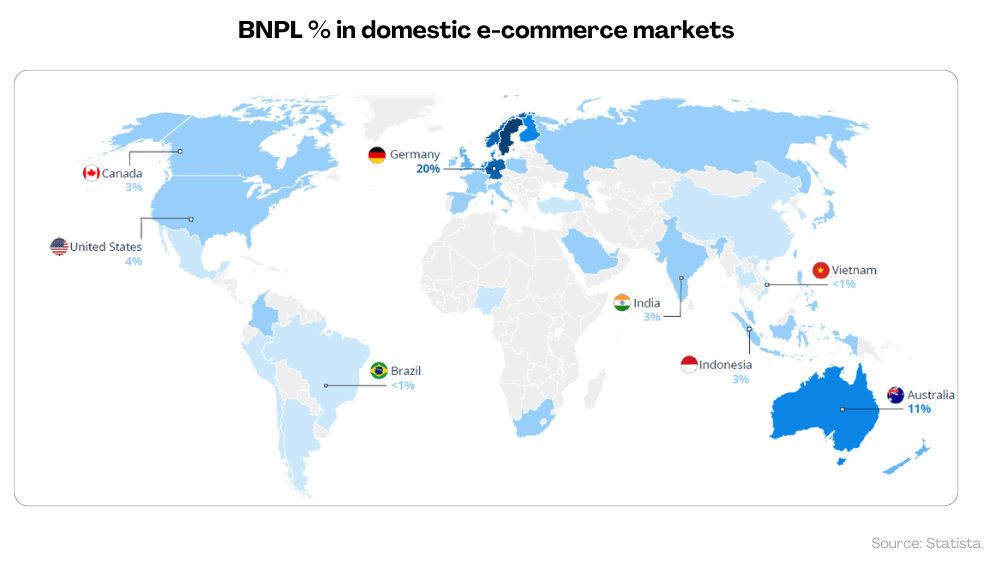
domestic market of bnpl

Plus, the recent adoption of big-name BNPL services further boosted its existence. Apple is introducing its own BNPL service with Apple Pay Later. Plus, during the Black Friday sale last year, Amazon partnered with Affirm and Apple Pay to offer BNPL to its customers on a large scale. According to recent data from June 2023, about 360 million people globally were using BNPL services. With this industry booming, experts predict it could be worth a staggering $3.27 trillion by the year 2030.

About Google Pay

Google Pay serves as a digital wallet that lets you handle various transactions right from your phone. You can send money to friends, pay bills for utilities like electricity and phone services, and even recharge your mobile. Available on both iOS and Android, this app-based platform has evolved over the years. Starting as Google Wallet in 2011, it underwent several name changes like Tez and Android Pay before settling as Google Pay in 2018. With Google Pay, you can shop online, manage bills, and make in-store purchases all in one place.

About Google Pay

Today, Google Pay stands out as a leading choice for mobile payments, making up 26% of online transactions last year. With over 150 million users in 42 countries, it’s a go-to option for people who want a simple and efficient way to handle their payments with just a tap or swipe.

About Zip

Zip is a tech company from Sydney, Australia, founded in 2013 by Niamh Mc Enaney, Peter Gray, and Larry Diamond. Specializing in digital retail finance, Zip helps consumers and small to medium businesses in countries like New Zealand, Australia, the US, and Canada. They offer “Buy Now, Pay Later” options both online and in stores, along with other financial services. Originally called ZipMoney Limited, the company switched to its current name, Zip Co Limited, in 2017. Zip offers clear and adaptable payment choices, empowering customers to manage their money wisely while aiding businesses in their growth. Committed to ethical lending, Zip operates as a regulated credit provider.

Google Pay Pilots BNPL With Zip And Affirm As BNPL Move Gets Momentum

The company offers a range of financial services. For consumers, they provide flexible credit lines through Zip Money and Zip Pay, as well as installment plans through platforms like Spotii, QuadPay, PayFlex, and Twisto. They also extend loans to small and medium businesses through Zip Business. While Zip’s success is closely linked to the BNPL sector, many of its services, such as QuadPay and Zip Pay, don’t charge interest on unpaid amounts. A significant portion of Zip’s revenue comes from customers, primarily through account fees and interest. On the other hand, their installment services earn money by charging merchants, compensating for the risk of non-payment, and encouraging more frequent transactions from consumers.

About Affirm

Affirm, a fintech services company, specializes in offering installment loans to consumers right at the POS. Driven by a mission to create transparent financial products, Affirm aims to empower consumers and enhance their lives. The company envisions transforming the banking industry, making it more accountable and accessible. Affirm provides an alternative to traditional credit cards, allowing shoppers to make purchases at the point of sale and opt for straightforward monthly payments.

In contrast to payment methods with hidden costs and compounding interest, Affirm ensures transparency by showing customers the exact monthly payments upfront, without surprises or additional fees. With partnerships spanning over 2,000 merchants, Affirm offers shoppers the convenience of using its services at checkout across various sectors, including renowned brands in retail, travel, home furnishings, electronics, personal fitness, beauty, and apparel.

Conclusion

The integration of BNPL services into Google Pay marks a significant shift in the payment landscape, responding to the growing consumer demand for flexible payment options. As Google Pay collaborates with BNPL giants like Affirm and Zip, it not only enhances the shopping experience for users but also provides businesses with an avenue to increase sales.

This strategic move by Google Pay reflects the broader trend in the retail sector, where BNPL services are gaining momentum, especially in a post-pandemic world characterized by changing financial behaviors. With the BNPL market poised for exponential growth, retailers and payment platforms must adapt and innovate to meet evolving consumer preferences, ensuring a seamless and inclusive shopping experience for all.

Adobe And Figma End The $20 Billion Merger Due To Regulatory Roadblocks

Adobe And Figma End The $20 Billion Merger Due To Regulatory Roadblocks

Adobe has decided to cancel its planned acquisition of design software company Figma for $20 billion. The reason cited is the difficulty in getting approval from both the EU and the United Kingdom. The UK’s CMA (Competition and Markets Authority) had previously indicated that a significant part of Figma would need to be sold off, making the acquisition less appealing.

Last month, the European Commission had also expressed concerns about the deal. Additionally, company representatives had discussions with US officials in an attempt to salvage the agreement. This proposed acquisition, announced in September 2022, faced challenges due to increasing regulatory scrutiny over large tech companies acquiring potential competitors.

Key Takeaways
  • Regulatory Scrutiny Halts Transformational Deal: Adobe’s $20 billion purchase of Figma was halted primarily due to regulatory challenges from the EU and the UK. Both countries raised concerns about potential anti-competitive effects, leading Adobe to abandon the deal.
  • Gap Between Corporate and Regulatory Views: The cancellation underscores a significant divergence between corporate ambitions and regulatory oversight. While Adobe and Figma saw the merger as a means to enhance collaboration, regulators perceived it as a threat to competition and innovation in the design software market.
  • Financial Implications and Market Reactions: Figma stands to benefit from a $1 billion termination fee, reinforcing its financial stability and potential for future growth, including a speculated IPO. Conversely, Adobe’s stock saw a modest rise post-announcement, indicating investor optimism despite the failed acquisition.
  • Antitrust Regulators Score a Win: The collapse of the Adobe-Figma deal adds to a string of victories for antitrust regulators, who have been vigilant in preserving competition and innovation. The decision aligns with a broader trend of increased scrutiny over large tech mergers, signaling a proactive approach to maintain market diversity.

Figma’s CEO Expresses Regret Over Collapse of $20 Billion Deal with Adobe

Adobe has decided to cancel its planned $20 billion purchase of Figma, a design collaboration platform. The reason given is the challenges in securing approval from regulatory bodies in both Europe and the UK. This decision halts what was expected to be a transformative acquisition in the software industry.

While Adobe and Figma viewed the deal as a step toward enhancing collaborative creativity, regulators in multiple countries viewed it differently. To Figma’s CEO, Dylan Field, this highlighted a significant gap between corporate and regulatory perspectives on competition.

The collapse of this deal adds to a series of wins for antitrust regulators. Regulators raised concerns about Adobe’s dominant position in the design software industry when they opposed the acquisition of Figma. Buying Figma, which has gained popularity surpassing Adobe’s XD, made regulators anxious about potential stifled innovation if Figma couldn’t grow on its own.

Designers echoed these concerns after the merger announcement in September 2022. Despite these concerns, Adobe defended its position during the investigations. Authorities suggested that Adobe should divest significant source code, assets, and engineering resources to ensure fair competition. Given this growing pressure, Adobe found it challenging to finalize the deal while securing all desired Figma assets or maintaining its app offerings amid antitrust concerns.

Figma's CEO Expresses Regret Over Collapse of $20 Billion Deal with Adobe

Image source: Figma

Reports suggest that Adobe had not offered “satisfactory solutions” to address these concerns, leading to the deal’s end. In a joint statement, the companies acknowledged that they couldn’t find a feasible way to secure the required regulatory approvals in the EU and the UK. Consequently, due to the deal’s cancellation, Adobe is obligated must give a reverse terminating fee to Figma, which is $1 billion.

In a recent statement, Shantanu Narayen, CEO of Adobe, mentioned that although Adobe and Figma have differing views on regulatory decisions, both companies have chosen to pursue their goals separately. Despite their initial vision to collaborate on shaping the future of productivity and creativity, each company remains confident in its ability to seize significant market opportunities. Both Adobe and Figma remain committed to their mission of revolutionizing the digital experience for everyone.

In a separate statement, Rao contended that Adobe and Figma weren’t direct competitors at the moment. He pointed out that Adobe XD, which could be seen as Adobe’s closest offering to Figma, had struggled to gain traction recently. Rao emphasized that Adobe believed there was little customer overlap between the two companies. Furthermore, he stated that neither competitors nor customers had raised any significant concerns about the proposed acquisition.

On the other hand, In an official announcement, Dylan Field, the CEO and co-founder of Figma, states that both Figma and Adobe have mutually decided to call off their planned acquisition. Despite investing countless hours with global regulators to explain the distinctions between their businesses and the markets they cater to, they couldn’t envision a route to gaining regulatory approval.

Dylan further stated that when they announced this agreement 15 months ago, they aimed to enhance what Adobe and Figma could offer their respective user communities. Although they’re moving forward independently now, both companies remain enthusiastic about exploring future collaboration opportunities for their users.

Understanding The Reason Behind Regulatory Scrutiny

Margrethe Vestager, the Executive Vice-President overseeing competition policy, noted that both Adobe and Figma are prominent players in the software industry. They currently vie for market share in interactive product design software, essential for creating mobile apps, websites, and various digital offerings. Vestager also pointed out the potential for Figma to become a direct competitor to Adobe in photo and graphic editing tools, which are widely used for image creation and modification.

Understanding The Reason Behind Regulatory Scrutiny

Image source: Adobe

Both companies stand out for their innovation and market success. Figma leads the way in interactive design software, while Adobe dominates the field of photo and graphic editing with its renowned Illustrator and Photoshop programs. If the acquisition had gone through, it would have effectively eliminated existing and potential future competition between them. Vestager’s team found that this would likely result in higher costs, diminished quality, or fewer choices for consumers. The focus isn’t just on present-day competition but also on preserving opportunities for innovation and rivalry in the future.

The collapse of the Adobe-Figma deal adds to a series of wins for antitrust regulators. Both the European Commission and the UK’s CMA were gearing up to challenge the acquisition formally. Meanwhile, the U.S. Justice Department has been considering its stance on the matter after discussions with both companies.

In a separate development, the European Union’s antitrust body has raised objections to Amazon’s proposed $1.7 billion acquisition of iRobot, known for its Roomba vacuums. On a different note, Microsoft successfully finalized its $68.7 billion purchase of game company Activision by making some adjustments to the deal, satisfying UK regulatory requirements.

Adobe’s Missed Merger with Figma: A Silver Lining for Most Stakeholders Involved?

While the failed Adobe-Figma deal might disappoint some private investors hoping for a successful exit, the situation has its silver linings for the key players involved. Figma isn’t walking away empty-handed; they’ll receive a hefty $1 billion termination fee. This financial boost is noteworthy, especially considering Figma’s recent growth and financial health.

Over the past year, the company has expanded its workforce significantly and is projected to increase its annual revenue by 40%, surpassing $600 million. Moreover, Figma has maintained a positive cash flow. This crucial factor could make it an attractive option for an initial public offering (IPO) in the coming years, which they are said to be considering around 2025.

Upon hearing the news, Adobe’s stock went up by 1.8%, indicating that investors view this outcome positively. Remember, when the acquisition was first announced in September 2022 at a high valuation, many were skeptical. This Figma deal was initially viewed as a strategic move for “the future of work.”

However, concerns about the hefty price and potential profit margins caused Adobe’s market value to drop by over $30 billion. Even those who supported the deal now see a silver lining in its failure. After all, Adobe’s XD, which was intended to compete with Figma, wasn’t a major focus for the company to begin with.

Lastly, let’s consider the regulators who opposed the Adobe-Figma deal. They’ve faced criticism in the past for not scrutinizing mergers enough, leading to the elimination of potential rivals in the market. This deal was seen in a similar light to Facebook’s acquisition of Instagram in 2012. The regulators’ concerns also influenced their actions against Microsoft’s purchase of Activision Blizzard and Meta’s buyout of the virtual reality firm Within.

For instance, Facebook once assured the European Commission it wouldn’t combine user data from its services, but later did so, resulting in a hefty fine. By halting the Adobe-Figma deal, regulators might have redeemed themselves somewhat. With Figma continuing to operate independently, there’s hope it could become the strong competitor to Adobe that the regulators wanted to preserve.

About Adobe

About Adobe

Adobe, based in San Jose, California, is a renowned American software firm specializing in multimedia and creative tools. Established in 1982 by John Warnock and Charles Geschke, the company’s name is inspired by Adobe Creek.

In its early days, Adobe focused on digital fonts before venturing into consumer software in the 1980s. Today, Adobe stands as a global frontrunner in digital marketing and media solutions. The company’s suite of tools empowers users to craft innovative digital content, distribute it across various platforms, and refine their strategies for optimal results. Simply put, Adobe assists businesses in creating, managing, and maximizing content across diverse channels and devices.

About Figma

Figma, headquartered in San Francisco, is a collaborative design platform tailored for teams working on product development. Built for seamless online use, Figma streamlines the design process, enabling teams to create, review, and finalize designs more efficiently. Whether the aim is to centralize design tools, enhance visibility, or facilitate teamwork across different time zones, Figma enhances creative workflows and ensures everyone stays aligned.

Trusted by industry leaders like Slack, Microsoft, and Airbnb, Figma has been reshaping the landscape of design by making it more inclusive and accessible to all since its inception in 2012.

Conclusion

The termination of the proposed $20 billion merger between Adobe and Figma due to regulatory hurdles signifies a complex interplay between corporate ambitions and regulatory oversight. While both companies had envisioned a partnership that could redefine the future of design software, the regulatory channel prioritized maintaining a fair and competitive market.

Figma emerges with a $1 billion termination fee, strengthening its financial position and paving the way for potential future efforts, including a speculated IPO. Adobe’s stock market response indicates investor optimism despite the missed opportunity, reflecting a belief in the company’s resilience and adaptability. As the design software industry continues to grow, the failed merger serves as an important reminder of the complex balance between innovation, competition, and regulatory scrutiny.

Frequently Asked Questions

Walmart BNPL by Affirm

Walmart Introduces Affirm’s Buy Now, Pay Later Option at Self-Checkout

Walmart is stepping up its game by adding a new payment choice at self-checkout stations in over 4,500 stores across the US. Now, shoppers can use Walmart BNPL provided by Affirm, a service known for its clear and flexible payment plans that let you buy now and pay later.

Affirm’s payment options come with different interest rates, from 0% up to 30%, based on your credit and where you are shopping. You can pick from various repayment schedules, like paying in monthly installments over three, six, or twelve months. This setup is great for folks who want to manage their spending without worrying about hidden fees or penalties for late payments.

Shopping with Affirm at Walmart is incredibly easy. Once you’ve finished scanning your items at the self-checkout, simply choose Affirm as your payment option. Then, just head over to the app or website, provide some information, and make a decision on your payment plan. Once you’ve been approved, scan the barcode that’s generated. You’re all set! It’s a process that enhances your Walmart shopping experience.

Key Takeaways
  • Walmart Expands Payment Options: With Affirm now available at self-checkout stations in over 4,500 Walmart stores, shoppers have a flexible way to manage their purchases. This move underscores Walmart’s commitment to enhancing the customer experience and catering to diverse payment preferences.
  • Affirm’s Growing Influence: The collaboration with Walmart amplifies Affirm’s presence in the retail landscape. As the company partners with more major retailers like Amazon and Target, it solidifies its position as a leading ‘Buy Now, Pay Later’ service, appealing to a significant portion of American consumers.
  • Consumer Demand for BNPL: The rise of Buy Now, Pay Later services reflects a growing consumer preference for flexible payment options. Affirm’s recent study underscores this trend, revealing that a majority of Americans value the ability to use BNPL services, emphasizing its importance in today’s retail environment.
  • Evolution of BNPL Services: The Buy Now, Pay Later market is expanding rapidly, with projections indicating substantial growth in the coming years. As businesses and consumers alike recognize the benefits of BNPL, it’s clear that this payment model is reshaping the retail landscape, offering a convenient and accessible alternative to traditional payment methods.
Walmart And Affirm Team Up For Flexible Payment Options

Walmart BNPL – Team Up With Affirm For Flexible Payment Options

If you’re getting ready for holiday shopping, there’s some good news for you. Now, at over 4,500 self-checkout Walmart stores, you have the option to pay for your purchases in installments with the BNPL option. Thanks to Walmart’s expanded partnership with Affirm, you can spread out your payments in four to six parts. Pay monthly whether you’re shopping online using the app or visiting Walmart Vision and Auto Centers.

After this collaboration was announced, Affirm’s stock received a boost. This not only helps Affirm expand its customer base but also strengthens its relationship with Walmart. Do you remember back in 2019 when Walmart started offering affirmed pay-over-time options in 4,000 Supercenters across the United States? Well, this new development takes that partnership to heights. You can buy pretty much anything you’d find at Walmart, from clothes and gadgets to toys and more.

Pat Suh, the Senior Vice President of Revenue at Affirm, highlighted some interesting findings. A recent study by Affirm showed that a significant 54% of Americans want the option to use BNPL services when they’re checking out at stores. Even more striking, a whopping 76% of shoppers said they might delay or skip buying altogether if Affirm wasn’t available.

Affirm showed that a significant 54% of Americans want the option to use BNPL

With this in mind, Affirm’s extended partnership with Walmart is no surprise. By offering their straightforward ‘Pay Later’ options at Walmart’s self-checkout stations across the United States, Affirm aims to empower even more shoppers. This move is smart and introduced at the right time, especially with the holiday season around the corner, helping people manage their budgets better while still enjoying their shopping.

If you opt to use Affirm at a self-checkout kiosk, simply open the Affirm app or go to Affirm’s Buy In-Store, Pay Later page on your smartphone. Enter the total amount for your desired items, which should be within the range of $144 to $4,000.

Next, select a pay-over-time plan that suits you, ranging from three to 24 months. Proceed to complete your checkout at the kiosk. Upon approval, you’ll receive a unique barcode. Simply scan this barcode at the self-checkout kiosk to finalize your purchase.

Affirm Focusing On Expanding Partnerships With Leading Retailers In Major Spree

In recent years, Affirm has broadened its reach by offering its buy now, pay later services through collaborations with major retailers. In August 2021, Amazon partnered with Affirm to provide installment payment services for select purchases exceeding $50. Shortly thereafter, Target joined the fray, incorporating both Affirm and Sezzle installment payment options for its customers, enabling Affirm usage for purchases totaling $100 or more.

As Affirm continues to build its network of retail partners, the company is not only focusing on its predominant online presence but is also making strides in attracting customers in physical stores. In October last year, Affirm’s CFO, Michael Linford, highlighted the introduction of the Affirm card. This move aligns with Affirm’s strategy to expand its influence in brick-and-mortar sales.

The Rise and Growth of Buy Now, Pay Later Services

Affirm Focusing On Expanding Partnerships With Leading Retailers In Major Spree

The BNPL trend has come a long way since gaining popularity in 2020. Now, these services are not only gaining traction but also becoming profitable. Experts predict that by 2026, BNPL could make up about a quarter of all online shopping transactions worldwide. That’s a big deal! And by 2023, it is expected to be valued at more than $70 billion in the North American market alone.

So, what’s driving this boom? BNPL services let you split big purchases into smaller, more manageable payments. Plus, some plans offer zero interest, making it even more appealing for consumers. It’s no wonder people are loving the flexibility these services offer.

But it’s not just consumers jumping on the BNPL bandwagon. Businesses are also seeing the benefits, of using these services for everything from day-to-day expenses to major investments. And it’s not just about retail anymore; BNPL options are expanding into areas like healthcare and even grocery shopping. With both traditional banks and new fintech companies entering the scene, the BNPL market is heating up. It’s clear that this payment option is not just a passing trend—it’s here to stay.

About Walmart

Walmart, Inc. is a major player in both wholesale and retail sectors, known for providing a wide range of products and services at consistently low prices. The company operates through three main business units: Walmart International, Walmart US, and Sam’s Club.

Under the Walmart US umbrella, you’ll find familiar brands like Walmart, Walmart, and Walmart Neighborhood Market, along with their online platform walmart.com. The Walmart International division oversees various retail formats such as supermarkets, supercenters, and warehouse clubs, but primarily outside the US. Meanwhile, Sam’s Club focuses on membership-based warehouse stores. Founded in 1945 by Samuel M. Walton and James L. Walton, the company has its headquarters in Bentonville, AR.

About Affirm

Founded in 2012, Affirm Holdings, Inc. is a US-based financial tech company making waves in the “buy now, pay later” (BNPL) section. With a robust presence, Affirm serves millions of consumers and partners with over 200,000 merchants. The company provides flexible payment options for both online and in-person shopping. Whether it’s through an online payment link, a virtual card, or a physical card, Affirm offers multiple avenues for customers to manage their purchases. On the business side, Affirm earns revenue by charging interest to shoppers and service fees to merchants.

When it comes to assessing loans, Affirm takes a comprehensive approach. They consider traditional credit scores, delve into other relevant financial data, and even harness the power of machine learning to make informed decisions.

Conclusion

Walmart’s introduction of Affirm’s BNPL option at self-checkout stations marks a significant step in enhancing the shopping experience for consumers. This partnership not only amplifies Affirm’s presence but also underscores the growing demand for flexible payment solutions.

As the BNPL trend continues to gain momentum, both consumers and businesses stand to benefit from its convenience and adaptability. With Affirm’s extended reach across major retailers and the broader retail landscape embracing this payment model, it’s evident that Buy Now, Pay Later is evolving from a trend to a mainstream financial tool, reshaping the future of commerce.

Online Retailer Zulily Shutting Down Its Operations

Online Retailer Zulily Shutting Down Its Operations, To Liquidate Assets

Online retailer Zulily shutting down its operations to liquidate assets was a surprise to many. Zulily’s shutting down led to the layoffs of numerous employees after attempts to turn the business around fell short.

Founded in 2010 by Mark Vadon and Darrell Cavens in Seattle, the platform has attracted millions of daily visitors looking for unique finds for clothing, home decor, toys, and gifts, all at discounted prices, it announced on its website that it’s working to fulfill all current orders and aims to complete this within the next two weeks. For orders that can’t be fulfilled, Zulily is focused on providing refunds. They’ve also provided a contact for customers who haven’t received their orders or refunds yet.

Key Takeaways
  • Closure and Job Losses: Zulily, a once-prominent online retailer, is shutting down its operations. This decision has led to the loss of over 800 jobs across three states: 292 in Seattle, 273 in Nevada, and 274 at its fulfillment center in Lockbourne.
  • Asset Liquidation: The company is in the process of selling off its remaining stock to settle its debts. Douglas Wilson Cos., a San Diego-based firm, will oversee the liquidation process to maximize returns for Zulily’s creditors.
  • Legal Action Against Amazon: Zulily has filed a lawsuit against Amazon, accusing the tech giant of unfair business practices. Specifically, Zulily alleges that Amazon pressured suppliers to offer less favorable terms to Zulily, thereby undermining its ability to compete effectively.
  • Community Impact: Zulily, which was once a significant presence in Seattle’s tech community, has faced challenges in recent years. The closure impacts employees and creditors and raises questions about the future of smaller e-commerce platforms in a market dominated by giants like Amazon.
Zulily Shutting Down

Image source: Zulily

Zulily Shutting Down, Causing Over 800 Job Cuts

Zulily, the online retail platform, has announced its closure, surprising both its customers and employees. Based in Seattle, the company stated on its website that it’s working to fulfill existing orders and aims to address any outstanding issues, including refunds, on January 22. They’ve also provided a contact for customers with concerns about their orders or refunds.

Once a standout in e-commerce, Zulily is now in the process of selling off its stock to settle debts as it prepares to close its doors. The company began winding down its operations recently after a 13-year stint that once captivated the tech world. However, it struggled to keep up with giants like Amazon and other online shopping platforms. Just before announcing its final sale, Zulily let go of over 800 staff members, with 292 positions in Seattle, 273 in Nevada, and another 274 jobs at its fulfillment center in Lockbourne.

In a statement on its website, Zulily confirmed it’s moving forward with a structured closure. The company has initiated an Assignment for the Benefit of Creditors (ABC), handing over the liquidation process to a third-party trustee. Douglas Wilson Cos., a firm from San Diego, will oversee the winding down and sale of Zulily’s assets, aiming to get the best outcomes for the company’s creditors. It’s worth noting that Douglas Wilson Companies is overseeing the process for Zulily.

Ryan C. Baker, Douglas Wilson Companies’ vice president, emphasized that choosing to wind down Zulily wasn’t taken lightly. Due to the tough business competition, Zulily faced and its financial challenges, immediate action was deemed necessary.

In another statement, Ryan highlighted their aim to handle the Zulily situation efficiently while ensuring the best outcomes for the company’s creditors. Baker mentioned that they’ve assembled a skilled team to manage claims and promptly respond to any queries or worries from both Zulily’s customers and creditors. Understanding the challenges these situations bring, they’re dedicated to being responsive and dependable in their role as the Assignee.

Once a notable presence in Seattle’s tech community, Zulily even sponsored the Seattle Sounders in 2019. Lately, the company gained attention for its vigorous advertising on social media.

Zulily’s move toward liquidation resulted in numerous job cuts across various states this past year. In a significant development last May, Regent, a private equity firm, acquired Zulily from its previous owner, Qurate Retail Group, known for QVC and HSN. This acquisition led to Zulily being separated from QVC, Inc.’s financial arrangements, with an outstanding debt of around $80 million settled by Qurate Retail at the time of sale.

Qurate Retail Group

Image source: Qurate Retail Group

Is Amazon The Reason Behind Zulily’s Shutdown?

Zulily’s closure follows the recent shutdown of Jane.com. Both struggled to compete with well-funded rivals like Amazon, Shein, and Temu. Just this month, Zulily filed a lawsuit against Amazon, alleging unfair business practices.

Ryan pointed out that the situation unfolded because Zulily had few options left.

Zulily has filed a lawsuit against Amazon, claiming the e-commerce giant used unfair tactics to undermine its business. Specifically, Zulily alleges that Amazon pushed sellers away from Zulily and restricted Zulily’s ability to offer competitive prices. These claims align with the FTC’s broader antitrust lawsuit against Amazon earlier.

The lawsuit alleges that Zulily’s suppliers felt pressured by Amazon’s pricing demands. Suppliers had to raise Zulily’s prices to match Amazon’s rates or stop doing business with Zulily altogether. Within just a year, about half of the suppliers selling on Amazon and Zulily chose to end their association with Zulily due to this pressure.

Zulily argues that its business model is straightforward – it buys products wholesale and sells them to consumers without extra charges. In contrast, Amazon operates a marketplace where retailers sell directly to consumers and pay additional fees for using the platform.

Amazon has refuted these claims from both Zulily and the FTC.

Wilson, from the legal firm handling the case, mentioned they’re reviewing the lawsuit and are committed to keeping it active. He emphasized that dropping the lawsuit isn’t on the table right now.

When Did Things Start To Tumble For Zulily?

Founded in 2010 by Mark Vadon and Darrell Cavens, who previously worked at the online jewelry store Blue Nile, Zulily saw rapid growth. By 2013, the company had attracted 12.6 million active customers and generated $331 million in revenue, a staggering increase of nearly 700% since its inception.

The company went public in 2013 with an initial valuation of $2.6 billion. By 2014, Zulily’s market worth climbed to $7 billion, backed by annual sales of $1 billion. Zulily expanded its workforce at the Nevada location, reaching around 1,000 employees, with plans to add another 600. That same year, the company revealed intentions to launch a new distribution center in Bethlehem, Pennsylvania.

Zulily’s growth momentum began to slow, and In a significant move in 2015, Liberty Interactive-QVC, later known as Qurate, acquired Zulily for an estimated $2.4 billion. Over time, challenges persisted, leading to the closure of its Pennsylvania facility and the unfortunate layoffs of approximately 500 employees in 2022.

Fast forward to 2023, the ownership of Zulily shifted to Regent, a private equity firm.

So, How Can You Reach The Team For Any Refunds Or Your Orders?

Zulily has established a dedicated team to assist customers, vendors, and other concerned parties. You can reach the Zulily ABC hotline at 8882025829, or for international callers, dial (+1) 7472886406. For more details and support, visit https://omniagentsolutions.com/ZulilyABC.

Image source: Omni

Customers can email ZulilyCustomersABC@OmniAgnt.com, while vendors and other interested parties can reach out to ZulilyABCInquiries@omniagnt.com.

Conclusion

Zulily’s decision to cease operations and liquidate assets underscores mid-sized e-commerce platforms’ challenges in a fiercely competitive market dominated by giants like Amazon. Founded with promise and rapid growth, Zulily’s journey reflects the volatile nature of the online retail landscape.

The closure, affecting over 800 employees and countless customers, also highlights the ripple effects of such business decisions on communities and stakeholders. As the company navigates its liquidation process and legal battles, it is a cautionary tale about the complexities and uncertainties inherent in the e-commerce sector. For those impacted, Zulily has provided dedicated channels for support and inquiries, aiming to mitigate the fallout from its closure.

Salesforce Acquires Spiff

Salesforce Acquires Spiff With Focus To Expand Its SPM Offering

Salesforce, known for its cloud software, is set to buy Spiff, a company specializing in sales commission tools. This move strengthens Salesforce’s sales offerings, giving users a more robust platform. Established in 2017, Spiff has been a game-changer in automating sales commissions. Spiff offers a user-friendly interface that simplifies the process for businesses to set up automated sales compensation plans. Salesforce acquires Spiff with a focus on expanding its SPM offering in the market.

These plans adjust automatically when team members meet their agreed-upon goals. With built-in compatibility for popular enterprise ERP and CRM systems, Spiff can manage complex commission setups. This includes various conditions that might activate payments. Sales reps also benefit from real-time visibility into their potential earnings.

They’ve helped businesses set up fair and clear commission plans that boost sales team morale and performance. Now, joining forces with Salesforce, Spiff aims to grow even more, bringing added value to Salesforce’s customers. However, The financial terms of the agreement were not publicly disclosed.

Key Takeaways
  • Strategic Enhancement of Sales Performance Management (SPM): Salesforce’s acquisition of Spiff is a deliberate move to strengthen its Sales Performance Management offerings. By integrating Spiff’s specialized tools for automating sales commissions, Salesforce aims to provide users with a more comprehensive and efficient platform for managing sales strategies and enhancing business growth.
  • Simplified Compensation Planning: Spiff’s user-friendly interface and capabilities in automated commission calculations offer businesses a simplified approach to setting up and managing complex sales compensation plans. This acquisition promises to bring this ease of use to Salesforce’s Sales Cloud users, enabling them to design fair and transparent commission structures with minimal hassle.
  • Collaboration and Insights for Revenue Growth: The acquisition aligns with Salesforce’s goal to foster better collaboration between sales, finance, and other departments. With Spiff’s integration, Chief Revenue Officers and teams can expect improved insights into revenue drivers and more effective management of incentive plans, ultimately driving sales performance and growth.
  • Continuation of Innovation and Flexibility: Spiff’s ongoing commitment to innovation, highlighted by its recent funding rounds and introduction of new features like Spiff Designer, indicates a forward-thinking approach. As part of Salesforce, Spiff’s adaptable and low-code solutions are expected to further enhance Salesforce’s offerings, allowing businesses to tailor the platform to their unique needs more effectively.

Image source: Spiff

Salesforce Acquires Spiff In An Undisclosed Deal To Boost ICM And SPM Solutions

Salesforce, a leading enterprise software company, has revealed its intention to purchase Spiff, a company specializing in innovative ICM software. The financial details of the deal have not been made public.

After the acquisition is finalized, Spiff’s team will become part of Sales Cloud. Their expertise will strengthen Salesforce’s SPM (Sales Performance Management) offerings. This move aims to give Salesforce customers a reliable platform for better visibility, enhanced sales strategies, and accelerated business growth. By integrating Spiff into Salesforce, will also enable Chief Revenue Officers (CROs) to collaborate more effectively with finance and sales teams. This collaboration allows for easier management of intricate incentive plans and provides insights into the key drivers of revenue growth.

Ketan Karkanis, GM at Salesforce, commented that the Spiff bridges the gap between what salespeople desire—clear compensation—and what sales managers seek—integrating compensation planning within CRM to align actions with business goals.

With Spiff, sales reps can see their commission details in real-time, helping them grasp their earnings better. The platform also handles intricate user roles, team setups, approval processes, and document management. Key features include its ability to grow with a business, easy integration options, and detailed analytics, making it straightforward for companies to set up compensation plans.

Sales Cloud

Image source: Sales Cloud

Both Salesforce and Spiff have a longstanding relationship, with over 70% of Spiff’s customers already using Salesforce’s Sales Cloud. When the acquisition is finalized in the starting months of 2025, Spiff’s team will officially become part of Salesforce.

Jeron Paul, CEO of Spiff, expressed enthusiasm about the company’s future and its role in ICM and SPM. He highlighted Spiff’s ongoing commitment to innovation and looks forward to contributing even more within the Salesforce environment.

Spiff is a flexible platform that lets businesses design their ideal pay structures with minimal coding. By adding Spiff to its portfolio, Salesforce enhances Sales Cloud with this adaptable feature. This flexibility makes it easier for users to tailor the platform to their specific needs, unlike older systems that can be rigid and complex.

While Salesforce offers robust tools, setting them up to fit unique business needs can be time-consuming. Customizing workflows or adding specific features often requires extra effort. However, Salesforce is committed to simplifying these tasks. Acquiring Spiff and refining tools like Salesforce Flow Builder are steps in that direction, aiming to make CRM setup more straightforward for users.

Image source: Salesforce

Based in Salt Lake City, Spiff has raised over $110 million since its inception six years ago. Salesforce’s venture capital arm, Salesforce Venture, has also been an investor. Beyond just investment, Spiff has been accessible on the Salesforce AppExchange for quite some time, indicating a deeper collaboration between the two firms.

Earlier this year…

Spiff announced a successful $50 million Round C Series funding. This round was led by Salesforce Ventures, with contributions from Norwest, Lightspeed, Album, and Kickstart Fund, among others. The funding was raised to help Spiff enhance its sales commission tools and address other intricate finance and sales tasks that traditionally relied on spreadsheets.

Additionally, Spiff also revealed its latest feature, Spiff Designer at the same time. This tool aims to simplify commission automation for finance and revenue teams. By combining the user-friendly nature of spreadsheets with advanced automation capabilities, Spiff Designer allows professionals in finance and sales operations to more efficiently manage and create their commission programs.

Salesforce Strengthens Low-Code Focus with Strategic M&A Acquisitions

Salesforce’s acquisition of Spiff fits into its broader strategy of bringing compatible companies into its fold, especially those focused on low-code solutions. This strategy is clear when you look at Salesforce’s recent acquisitions and where it’s investing.

For instance, in September, Salesforce bought Airkit, a platform that uses low-code to create AI-driven customer service tools. Airkit, based in Redwood City, California, was started by Adam Evans and Stephen Ehikian, who previously sold another startup, RelateIQ, to Salesforce for $390 million. Since its launch in 2017, Airkit received funding from various sources, including Salesforce Ventures. By 2020, they had secured $28 million in initial funding and a total of $68 million over six years. Just like Spiff, Airkit was also part of Salesforce’s AppExchange platform.

About Salesforce

Salesforce offers a cloud-based platform designed to craft meaningful customer experiences. Originating as a Software-as-a-Service (SaaS), Salesforce operates on a multi-tenant architecture, offering advantages like seamless API integration, scalability, and cost-effectiveness. It stands out as a top provider of Customer Relationship Management (CRM) solutions and extends its offerings with an Artificial Intelligence (AI) platform for areas like marketing automation, finance, and human resource management.

Whether for a small business or large corporations, Salesforce streamlines operations by providing employees with a unified customer view across various departments. These capabilities enable businesses to leverage cutting-edge technologies, identify potential customers, and enhance overall customer experiences. Currently listed on the NYSE and a part of the S&P 500 index, Salesforce boasts a market capitalization of $258.69 billion, showcasing its rapid growth in the competitive Cloud Computing landscape.

About Spiff

Spiff stands out as a sales compensation platform, streamlining commission calculations and boosting team motivation for enhanced top-line growth. With its user-friendly interface, real-time insights, and seamless integrations, Spiff empowers finance and sales operations teams to manage intricate incentive compensation plans independently. It brings transparency to sales teams, automating and optimizing commission plans to drive motivation among commissioned representatives. Spiff not only alleviates the challenges of commission management for the finance team but also fosters smoother collaboration between finance and sales, ultimately boosting overall sales performance.

Choose Spiff as your sales compensation software to unlock your team’s full potential. Tailored to help you achieve your goals, whether it’s boosting productivity or refining sales processes, Spiff is the solution you need.

Spiff integration

Image source: Spiff

Conclusion

Salesforce’s acquisition of Spiff marks a significant stride in its strategy to bolster its Sales Performance Management offerings. This strategic move enhances Salesforce’s capabilities by incorporating Spiff’s expertise in automated sales commission tools. With Spiff’s intuitive interface and robust functionalities, Salesforce customers can anticipate more streamlined processes and better visibility into their sales compensation strategies.

As Spiff’s team becomes an integral part of Salesforce’s Sales Cloud, the synergy between the two companies promises to deliver enhanced value, particularly for Chief Revenue Officers aiming for cohesive collaboration across departments. This acquisition not only signifies Salesforce’s commitment to innovation but also underscores its dedication to providing comprehensive solutions that drive business growth and optimize sales performance.

CFOs Are Cautious About Real-Time Payments

CFOs Adopt Cautious Strategy for Leveraging Instant Payments

A significant majority of CFOs want to adopt real-time transaction solutions, also known as instant payments, within the next two years. This indicates a substantial increase compared to the adoption rate, which is less than half.

As of September 1st, The Clearing House (TCH), the operator of the RTP Network that has been operational since 2017, reported that around 150,000 businesses are actively utilizing its network. Additionally, in July, the Federal Reserve introduced its instant payment rail called FedNow.

Despite these advancements, it is worth noting that real-time payments are still in their early stages. These solutions enable transfers of funds between consumers and businesses by allowing them to instantly send and receive funds from their bank or credit union accounts at any time of day or year. This ensures that recipients have access to these funds instantly. But CFOs are cautious about real-time payments, let’s see why.

Key Takeaways:
  • Growing Adoption of Real-Time Transaction Solutions: CFOs are cautious about adopting real-time payments for now but are planning to adopt real-time transaction solutions within the next two years, pointing to an increasing trend in the use of instant payments.
  • Real-Time Payments Enhance Transparency and Cost Efficiency: Real-time payments offer a transparent view of payment information, providing details like the recipient’s name and a thorough breakdown of the invoice. When compared to wire transfers, instant payments are more economical, often resulting in reduced transaction expenses.
  • Anticipated Functionality Enhancements: The inclusion of Request for Payment (RfP) in the RTP networks services and its future integration into FеdNows offerings showcase the expected enhancements in functionality. These improvements aim to provide access to transaction details and improved measures against fraud activities.
  • Improved Cash Flow Management: Real-time payment solutions give businesses control over their payments. This allows for timing and instant confirmation of payments, which helps with managing cash flow and could potentially lead to early payment discounts.

CFOs Are Cautious About Real-Time Payments in a Changing Financial Landscape

In the past, there was a lot of uncertainty when it came to online payments. It was difficult to know for sure if the money reached its intended destination. Now, both parties involved can easily track the payment journey. This is an improvement compared to the ways of delayed settlements and complicated notification processes with traditional ACH and wire payments.

CFOs Are Cautious About Real-Time Payments in a Changing Financial Landscape

The rise of embedded finance has made things much simpler for buyers. They can now order the inventory they need and settle invoices all on one single platform. Payment orchestration platforms offer Account Payable (AP) services that take away the burden from clients and companies dealing with outbound payments.

Real-time transaction solutions offer CFOs the ability to swiftly settle payments with their suppliers, providing the potential for enhanced efficiency. Despite this capability, many CFOs are exercising caution in adopting these systems within their back offices, assessing whether the benefits ultimately surpass the associated costs.

In July, the Federal Reserve introduced FedNow, an instant payment designed to enable businesses and consumers to transfer money immediately. This initiative seeks to broaden access to rapid payments for a larger network of financial institutions and their clientele. Similarly, TCH, a payment network owned by major financial institutions, initiated a comparable payment system back in 2017. Both services enable instantaneous clearing and settling, operating seamlessly 24/7. In contrast, other payment methods may take longer or may not be available 24/7.

One of the key attractions for CFOs regarding real-time payments is the ability to meticulously manage working capital. By leveraging these systems, companies can delay bill payments until the last possible moment, effectively retaining their cash for an extended period. Additionally, real-time payments can furnish finance chiefs with the assurance of precise settlement and clearance timings for their transactions.

But why is there still hesitation among CFOs about using this as a go-to service? Why CFOs Adopt Cautious Strategy for Leveraging Instant Payments?

The reason why CFOs adopt a cautious strategy about real-time payments is that while some may require this type of service based on the industry, not all B2B sectors may require the swiftness promised by FedNow and other similar services (like RTP by TCH), the potential for enterprises to leverage faster payments as a cash management tool is apparent. Some CFOs opt to hold onto their funds until the eleventh hour, still managing to make timely payments. However, altering long-established payment processes can be challenging, and a compelling business case is necessary to justify the transition effort.

Treasurers typically rely on the ACH system (which is also cheaper compared to instant payments) for batched electronic payments, like employee payroll, and traditional wire transfers for significant or crucial transactions.

Yet, neither system operates round the clock.

Digital payment ecosystems offer enhanced security compared to paper-based checks, eliminating the risk of mail losses. This secure environment incentivizes companies to modernize their payment practices. Suppliers increasingly prefer non-check payment methods, compelling buyers to adapt to these evolving preferences like instant payment (even if they have to pay a little extra).

FedNow and RTP Adoption Trends

A recent survey indicated that currently, 3% of treasurers are utilizing the FedNow payment system, with an additional 39% planning to join in the future. The remaining respondents were either uncertain or had no intentions of utilizing FedNow. The survey, encompassing 310 treasury executives, had almost 80% representation from publicly traded and private U.S. companies, with the rest comprising nonprofits and government agencies.

On the other hand, 12% of treasurers reported using TCH’s RTP network, with an additional 20% expressing their intent to adopt it.

Presently, the FedNow service is connected to over 120 banks and credit unions, while the RTP service by TCH is available at 400 financial institutions. It’s worth noting that there are approximately 9,000 banks and credit unions across the United States.

Reasons CFOs Should Consider Instant Payments

Transparent Information and Data

Information and Data within the ACH file typically include the payment amount, recipient details, and some basic particulars. However, the information obtained post-payment is often more restricted, as it relies on the recipient’s initiative to provide feedback through the network, which many suppliers do not consistently do.

Reasons CFOs Should Consider Instant Payments

Consequently, reconciling the payment becomes challenging since the payer may lack comprehensive information on the recipient, the exact payment amount, and the timing of fund reception. In contrast, a real-time payment incorporates crucial elements such as the supplier’s name and detailed invoice information, including an itemized breakdown of expenses. Real-time payments enable the transmission of payments along with this comprehensive data, facilitating seamless confirmation without requiring any additional action from the recipient.

Cost Efficiency

When compared to wire transfers, instant payments offer a significantly lower cost while maintaining, if not improving, the same rapidity. Traditional wire transfer charges generally range from $15 to $30, contingent on the financial institution. Instant or real-time payments, depending on the specific bank, can incur costs ranging from 25 cents to $1.

Similar to the use of commercial or procurement cards, incorporating real-time payments for a portion of back-office expenses can prove beneficial. These payments are not only more cost-effective than wire transfers but also offer a heightened value proposition compared to ACH transactions. 

Anticipating Enhanced Functionality

TCH recently announced the expanded availability of RfP through the RTP network. This enhancement enables businesses to request payments directly. For instance, payroll providers can leverage RfP to prompt corporate customers to fund payroll on the same day as payday, instead of the customary three to four days prior, leading to improved fund management for employers.

Furthermore, FedNow is set to include RfP in its services, along with additional risk management and operational enhancements focused on bolstering fraud prevention capabilities and ensuring streamlined access to account and transaction information. To leverage the benefits of real-time payments, businesses should proactively engage with their financial institution to determine their participation status in the program.

Currently, around 400 financial institutions are active on the RTP network, with community banks and credit unions constituting 90% of RTP participants. FedNow has boarded 108 financial institutions thus far.

Enhanced Control for Cash Flow

RTP provides businesses with the capability to manage the timing of their outgoing payments accurately, ensuring a better grasp of their cash flow, a critical aspect for small and mid-sized enterprises.

Additionally, RTP enables businesses to obtain instant confirmation of each payment’s receipt, facilitating improved cash flow management and the potential to leverage early payment discounts.

Enhanced Control for Cash Flow

Conclusion

The “digital” finance sector is experiencing a notable shift toward the adoption of real-time transaction solutions, as CFOs adopt a cautious strategy for leveraging instant payments within their operations. While the availability and advantages of real-time payments, such as enhanced transparency, cost efficiency, and improved cash flow management, are becoming increasingly evident, some finance leaders remain cautious in fully adopting these systems.

The cautious approach is driven by several factors, including industry-specific requirements, established payment processes, and cost considerations. Despite the benefits of real-time payments, CFOs are carefully evaluating the potential impacts on their current financial landscapes, assessing whether the benefits outweigh the associated costs and complexities of transitioning to these new systems.

As both the Federal Reserve’s FеdNow and TCH’s RTP Network continue to expand their services and functionalities, the potential for enhanced financial control and streamlined payment processes becomes more apparent with more and more people adopting this solution despite the current payment environment where CFOs Are Cautious About Real-Time Payments With the anticipation of additional enhancements and functionalities, businesses arе encouraged to actively engage with their financial institutions to explore the opportunities and benefits of integrating real-time payment solutions into their operations.