Author Archives: hostmerchantservices

TicketMaster Data Breach: Hack Affects Over a Half Billion Users

Over 500 million customers have been impacted by a significant Ticketmaster data breach after a cyber-attack targeted the website. Reports indicate that hackers have accessed customers’ names, phone numbers, and addresses globally, totaling 1.3 TB of stolen data. The group responsible, known as TheShinyHunters, is reportedly asking for a $500,000 ransom in exchange for the stolen database.

Key Takeaways
  • Massive Data Compromise: Over 560 million TicketMaster customers’ personal information, including names, phone numbers, addresses, order histories, and partial payment data, was stolen and is being sold by the ShinyHunters hacking group.
  • High Ransom Demand: The ShinyHunters are attempting to sell the 1.3 TB of stolen data for $500,000 on the dark web forum Breach Forums.
  • Ongoing Investigations: The Australian Department of Home Affairs and the FBI are collaborating with Ticketmaster to investigate the breach, with suspicions that the attack may have involved accessing a cloud-hosting service called Snowflake.
  • Security Concerns and Legal Context: This breach adds to Ticketmaster’s history of security issues and comes amid a legal challenge from the US Department of Justice and 29 states accusing Ticketmaster of monopolizing ticket sales and suppressing competition.

Massive Data Breach by ShinyHunters Exposes Over 560 Million TicketMaster Customers

Massive Data Breach by ShinyHunters Exposes Over 560 Million TicketMaster Customers

Yet another breach has been announced by a hacking group. A hacker group known as ShinyHunters has taken responsibility for a data theft incident that compromised the personal information of over 560 million TicketMaster customers. This group is allegedly selling this 1.3 TB of data on a well-known hacking forum, Breach Forum. The hacking incident and resulting data leak occurred alongside the relaunch of BreachForums. This dark website facilitates the buying and selling stolen materials and information that can be used to conduct hacks.

The group is trying to sell the data for a one-time fee of $500,000 (£400,000) to any interested buyer. If you’ve ever used Ticketmaster, the following details could currently be at risk of being sold to malicious entities by the ShinyHunters:

  • Name
  • Phone number
  • Address
  • Order history and purchase specifics
  • Email address
  • Partial payment data, including the last four digits of your credit card number and the card’s expiration date

With such data, hackers have ample opportunity to cause significant problems. Given the large number of affected individuals—over 500 million—a skilled hacker has numerous potential targets for extracting payment information and possibly accessing bank accounts.

This data breach might be the largest in terms of the sheer volume of affected individuals and the extensive data compromised. The Australian Department of Home Affairs reportedly collaborates with Ticketmaster to investigate the breach. Additionally, the FBI is said to have offered its help to Australian officials.

The specifics of how ShinyHunters executed its attack remain unknown. However, there are indications that the attacks may have targeted a cloud-hosting service known as Snowflake, which led to this major leak.

However, denying the news, Snowflake reported in its blog update that there is no indication the incident was due to any vulnerabilities, misconfigurations, or security breaches of its platform. Nevertheless, they did verify that a threat actor gained access to demo accounts using the credentials of a former employee. These accounts contained no sensitive data.

Ticketmaster has previously faced similar issues with online security breaches, including bad actors using bots to manipulate ticket sales and purchase tickets for resale. In 2021, Ticketmaster faced a $10 million fine for illegally accessing data from Songkick, a competitor. Employees of Ticketmaster had obtained login details and accessed SongKick’s computer systems without authorization. The ticketing company reported last January that cyber-attacks driven by bots disrupted sales for Taylor Swift concerts.

Talking about the hacking group, it’s not their first attack; ShinyHunters was responsible for a 2020 data breach at Mashable. They accessed a database linked to a defunct feature that enabled users to log into Mashable with their social media accounts. The breach compromised data such as email addresses but did not include passwords or financial information.

ShinyHunters also claims to have contacted Ticketmaster regarding the breach but says they have not received a response.

This announcement is part of a broader context where Ticketmaster is facing a legal challenge from the US Department of Justice and 29 states, accusing it of monopolizing ticket sales and suppressing competition.

Steps to Take If You’re Worried About the Ticketmaster Data Breach

Organizations that manage personal information must adhere to strict legal standards to prevent unauthorized access to this data.

If you’re a Ticketmaster customer and have been alerted that your data may have been compromised, it’s crucial to understand your rights. Also, if you suspect your data might be at risk and Ticketmaster hasn’t contacted you, you should contact them immediately to address your concerns.

The incident with Ticketmaster demonstrates the risks associated with data breaches, including the possibility of your information being sold on the dark web or used maliciously. It’s vital to remain vigilant for signs of phishing attempts designed to steal more personal information.

To protect yourself, there are several proactive steps you can undertake, including:

  • Please be sure to monitor any credit card accounts linked to Ticketmaster for unusual activity, as these accounts are at a higher risk of being compromised. Also, keep an eye out for any unauthorized transactions. For added security, you might want to request a new credit card number from your issuer.
  • It’s important to update your Ticketmaster account settings by changing the password and enabling two-factor authentication. Additionally, it’s a good idea to set up two-factor authentication for your email account in order to protect your Ticketmaster account and other personal information from scammers.
  • You should also think about enrolling in continuous credit monitoring. This type of service will notify you immediately if there are any attempts to open new accounts in your name. For example, WalletHub provides free around-the-clock monitoring of your TransUnion credit report.
  • Keep an eye on your tickets for upcoming events. Tickets can be quite valuable and are frequently resold online. Check your Ticketmaster account and email for any unexpected ticket transfer notifications.
  • Avoid unsolicited requests for personal information. Unexpected phone calls and emails asking for your personal data may increase. Remember, don’t provide any information if you didn’t initiate the contact.
  • Choose to freeze your credit rather than setting a fraud alert. Freezing your credit reports with Equifax, Experian, and TransUnion prevents fraudulent borrowing. A freeze restricts access to your credit reports, stopping new loans or credit lines from being opened in your name. In contrast, a fraud alert provides less protection.

About TicketMaster
About TicketMaster

Image source

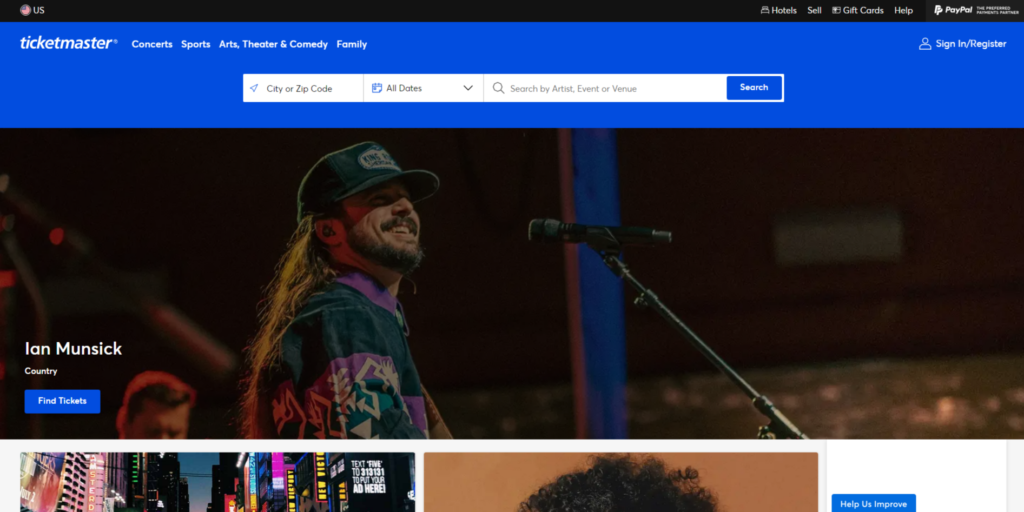
Ticketmaster is a leading ticket distribution company in the United States, specializing in selling tickets for a wide range of live entertainment events, including sports, concerts, family shows, theater, and more. The company operates on a large scale, selling tickets through about 3,300 retail outlets worldwide, 19 telephone call centers, and its website, ticketmaster.com. It serves over 10,000 clients, including venues, artists, and promoters.

In addition to its main operations, Ticketmaster manages TicketWeb, a site that caters to independent venues, and ReserveAmerica, which handles campsite reservations in North America. It also operates several regional ticketing service companies. Ticketmaster is a subsidiary of IAC/InterActiveCorp, owned by media entrepreneur Barry Diller.

Conclusion

The Ticketmaster data breach has affected over 560 million users, exposing personal information and posing significant security risks. The hacking group ShinyHunters is attempting to sell the stolen data, including sensitive customer details, for $500,000. Investigations by the Australian Department of Home Affairs and the FBI are ongoing, highlighting the need for strong cybersecurity measures.

Ticketmaster’s history of security issues and legal challenges further emphasizes the importance of safeguarding customer data. Users should take proactive steps to protect their personal information and remain vigilant against potential data misuse.
PayTech’s RCKT Mobile POS

BNPL Continues to Grow: 25% of Consumers Report Usage

Companies like Affirm, Klarna, Afterpay, and Sezzle have made BNPL increasingly popular, particularly among shoppers looking for more flexibility in paying for purchases. Here is an in-depth analysis of why BNPL continues to grow and surpass more conventional credit card usage to become the second most popular credit payment option, with 25% usage among American customers.

BNPL plans allow shoppers to split the cost of their order into smaller, interest-free installments. Many customers find this payment option appealing since it helps them manage their money better. The fact that these buy now pay later loans do not appear on your credit reports has nothing but fueled the ongoing attraction towards them.

Key Takeaways – Why BNPL Continues to Grow
  • Increasing Usage of BNPL Services: Buy Now Pay Later (BNPL) services are gaining popularity, with 25% of Americans using them in the past year. This trend is especially notable among younger generations and parents, who prefer the flexibility of splitting payments into smaller, interest-free installments.
  • Demographic Preferences: Younger consumers and parents are the primary users of BNPL services. For instance, 40% of Gen Z and 37% of parents with minor children reported using BNPL, compared to lower usage rates among older generations and those without minor children.
  • Upcoming Federal Regulations: Starting in May 2024, BNPL services will be subject to the same federal regulations as credit cards. These regulations aim to provide better consumer protection by addressing merchant disputes, refunds offered, payments suspended during investigations, and disclosure of fees.
  • Economic Context and Credit Card Debt: The rise in BNPL usage comes amidst high levels of credit card debt in the US. With total credit card debt at $1.115 trillion in early 2024 and many cardholders carrying month-to-month balances, consumers seek alternative payment options like BNPL to manage their finances.
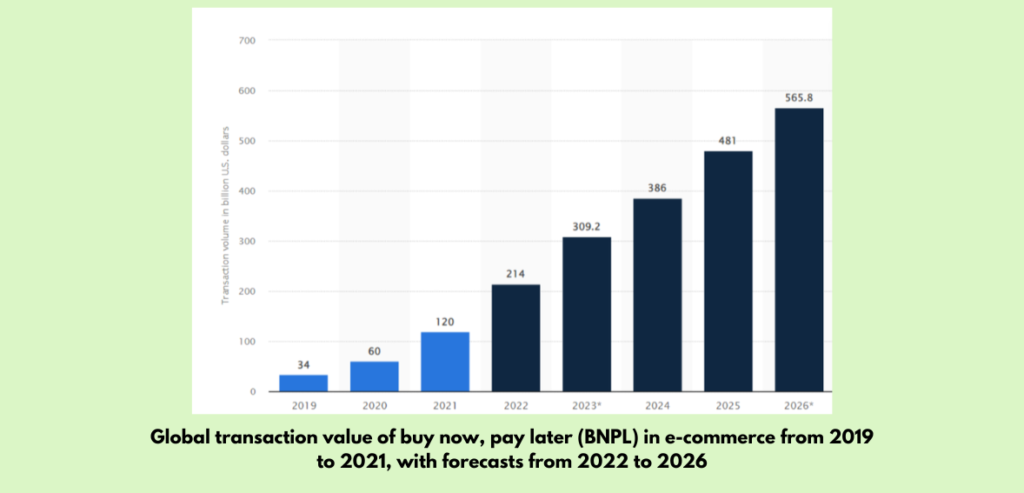
infographics of global bnpl growth year on year

Source: Statista – Global transaction value of buy now, pay later (BNPL) in e-commerce from 2019 to 2021, with forecasts from 2022 to 2026

Growing Popularity and Use of Buy Now, Pay Later (BNPL) Services

Buy Now Pay Later (BNPL) services are relatively new to the credit market, and their popularity is growing quickly. BNPL allows consumers to split a purchase into several smaller installments, usually over four or six months. The application process is quick and easy without requiring a credit check. This is a key benefit for people with poor or no credit. BNPL lenders typically don’t charge interest; they earn money by charging merchants 3% to 6% of the purchase price.

A recent NerdWallet report showed that 25% of Americans used Buy Now Pay Later in the past year, with younger generations and parents being the most frequent users. Meanwhile, 66% of respondents used credit cards during the same period. NerdWallet surveyed 2,061 US adults in early April.

Sara Rathner from NerdWallet agreed that it has unquestionably gained popularity. She explained that BNPL programs often bypass the need for a credit check or application process, simplifying how consumers can start using them.

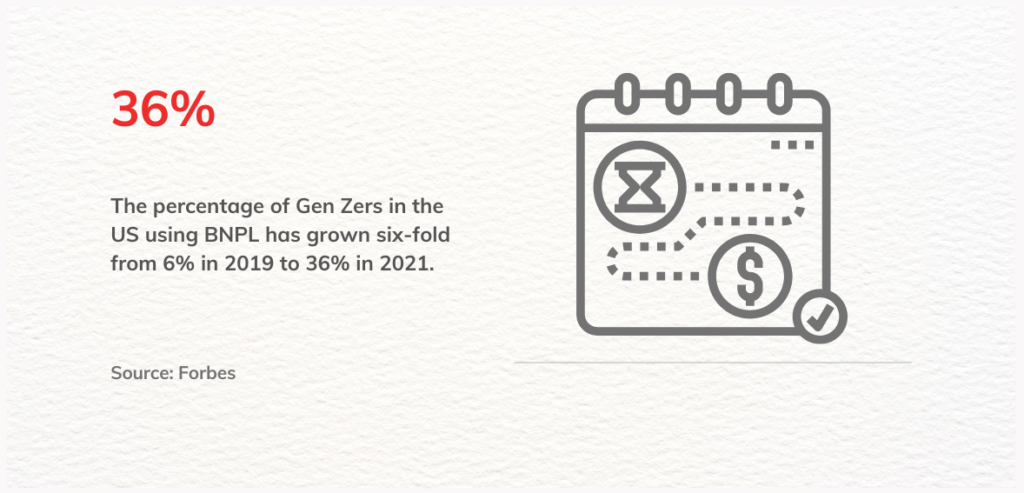
Further breaking down this, 25% of consumer groups and 37% of parents with minor children reported using BNPL services over the past year, in contrast to 20% of individuals without minor children. Among different age groups, 40% of Gen Z (ages 18-27) and 36% of millennials (ages 28-43) have utilized BNPL services during this period, compared to 20% of Gen X (ages 44-59) and 12% of baby boomers (ages 60-78).

BNPL and Gen Zers infographics about bnpl

Source: Forbes

In the last year, 8% of Americans resorted to BNPL options to cover essential expenses, including groceries and personal care products. Unlike credit cards, which often provide cash back or other rewards, BNPL services usually do not offer these advantages.

Rathner mentioned that as the prices of necessary goods continue to rise, Buy Now Pay Later has become a popular method for covering these expenses. Although this form of credit has been crucial for many, anticipated changes to the payment terms are expected soon.

New Federal Regulations Will Make BNPL More “Consumer-First”

According to the Consumer Financial Protection Bureau’s (CFPB) announcement last month, BNPL companies will be forced to abide by federal regulations covering the use of credit cards in the US beginning in May 2024. Buy Now Pay Later customers will soon have the same federal protections as credit card users.

Under the new legislation, Buy Now Pay Later firms—dominated by fintech businesses like Affirm and Klarna—must investigate merchant disputes, offer refunds for returned goods or canceled services, suspend payments while ongoing, and disclose fees on bills.

Many analysts find that this change is beneficial to consumers. It is a positive step towards providing better protection for consumers who use BNPL services, which have gained significant popularity in recent years. By aligning BNPL firms with the same standards as credit card companies, the CFPB aims to ensure that consumers feel secure and well-informed when using these services.

Klarna also stated in response to the CFPB’s announcement. In it, Klarna indicated that the company already provides its users with the protections mentioned by the CFPB.

Sebastian Siemiatkowski, the CEO and co-founder of Klarna, commented that there may be value in instituting some degree of regulation around the buy-now-pay-later industry. However, he noted that such regulation should be considered in the context of whether these products are ultimately in the best interest of consumers, as compared to traditional credit cards.

New Federal Regulations Will Make BNPL More “Consumer-First”

Credit Card Debt Trends and Challenges in the US in 2024

In the first quarter of 2024, Americans’ total credit card debt amounted to $1.115 trillion, as the Federal Reserve Bank of New York reported. This is a decrease from $1.129 trillion in the final quarter of 2023, which was the highest since the New York Fed began tracking this data in 1999. It’s unlikely that this downward trend will continue throughout the year, considering that over 44% of credit card holders carry balances month to month, a trend that many experts find concerning.

Reducing this debt is challenging. Delinquencies have gone up to their highest level since 2011, and 8% of cardholders surveyed have been in debt for a year or longer. Despite this, the industry views these figures as a retrieval of pre-pandemic norms. Lenders had anticipated an increase in delinquencies, which were kept unusually low during the COVID-19 pandemic by federal stimulus payments. Nonetheless, the issue persists at the individual level.

Credit Card Debt Trends and Challenges in the US in 2024

Low-income households, parents with minor children, and younger consumers are experiencing the most significant financial strain. Approximately 38% of cardholders earning $100,000 annually or more carry a balance, compared to 56% of those earning $50,000 or less.

Parents of minor children are also more likely to have incurred late fees over the past year, with 61% reporting such fees compared to 28% of adults without children. As changes to Buy Now Pay Later (BNPL) arrangements are anticipated shortly, consumers must understand the terms of such financing options fully.

Rathner emphasized the importance of being informed about one’s rights before making any financial commitments.

Conclusion

The popularity of Buy Now Pay Later (BNPL) services continues to rise, offering consumers an alternative to traditional credit cards. With 25% of Americans using Buy Now Pay Later, particularly among younger generations and parents, this payment method has become a significant part of the credit landscape. However, with new federal regulations set to take effect in May 2024, Buy Now Pay Later services will soon have to provide the same consumer protections as credit cards. This regulatory shift aims to enhance transparency and security for users.

As consumer credit evolves, individuals must stay informed about the terms and implications of their payment choices to manage their finances effectively.

How Can AI Help Improve SEO for Your Website

There was a time when SEO professionals could fill their content with keywords and quickly ascend to the first page of search results. Thankfully, those days are behind us. As search engine algorithms continue to evolve, so do technological advancements. Artificial intelligence (AI) is increasingly prominent in search engine results pages (SERPs). So, how can AI help improve SEO for your website?

Google’s algorithm is continuously improving, and so is consumer discernment. Therefore, you have the power to create content that not only appeals to search engines but also engages audiences. This involves thorough topic and keyword research, analyzing audience data, and crafting content that is both captivating and capable of ranking well.

The good news is that SEO is becoming less monotonous, thanks to the addition of AI tools. The SEO AI sector is rapidly advancing, and your competitors are likely already integrating these innovative tools.

What Is Artificial Intelligence?

What Is Artificial Intelligence?

Artificial intelligence (AI) involves creating computer systems that can perform tasks traditionally requiring human intellect, such as decision-making, pattern recognition, and speech understanding. AI is a broad term that covers various technologies, including machine learning, natural language processing (NLP), and deep learning.

While “AI” is a common term for these technologies, there is some debate about whether they truly constitute artificial intelligence. Some experts suggest that what is often termed AI today is actually sophisticated machine learning, which they consider merely an initial step toward real AI.

Despite philosophical debates about the existence of “true” intelligent machines, the term AI is generally used today to describe technologies powered by machine learning, such as ChatGPT and computer vision. These technologies allow machines to undertake tasks traditionally done by humans, such as generating text or analyzing data.

In the business world, AI has shown that it can increase revenue. More and more businesses are using AI, with a 25% increase in its use each year. It is being used in more parts of businesses than before. Companies that use AI say they make more money in the areas where they use it, and 44% say they spend less because of AI.

Understanding AI SEO

Understanding AI SEO

AI has seamlessly integrated into many aspects of daily life, from fitness and food to shopping and travel, and it is similarly transforming SEO. AI-driven SEO utilizes tools to scrutinize keywords and website performance, guiding strategies to enhance search rankings. AI assesses data, compares competitor pages, and recommends elevating a brand’s online presence.

For instance, Google’s AI-powered RankBrain and BERT (Bidirectional Encoder Representations from Transformers) algorithms are fundamental in shaping search results and optimizing them to be more relevant and accurate. This capability also enables the creation of effective SEO strategies through comprehensive data analysis and interpretation.

Plus, AI assists marketers in identifying emerging keywords and topics, understanding consumer purchasing trends, and efficiently targeting markets.

How Can AI Help Improve SEO for Your Website?

How Can AI Help Improve SEO for Your Website?

AI can help SEO your website in several direct and indirect ways. With AI-powered tools at your back, these tasks will be streamlined and help you be at your best SEO game:

  1. Content Creation

In 2024, creating compelling and high-ranking content will be easier than ever, thanks to advancements in generative AI. This technology involves algorithms capable of producing new content across various digital formats and relies on extensive data training. With minimal input from users, these algorithms can generate fresh content automatically.

AI suggests relevant topics, optimizes headlines, and drafts initial content versions. It evaluates high-performing content across the web to suggest effective strategies that enhance your content’s visibility and ranking.

Prominent examples of generative AI include ChatGPT, Jasper AI, and Writesonic, which are instrumental in refining content to suit different stages of your marketing funnel. The focus of content creation has shifted from merely producing quantity to generating quality content that is genuinely useful to the audience. AI plays a crucial role in achieving this goal by ensuring the relevance and value of the content produced.

  1. Keyword Research

Keyword research can be a tedious and time-consuming process, but AI tools have significantly simplified it by offering features like analysis assistants. These tools evaluate anchor text usage, keyword variations, and semantic search terms, making it easier to:

  • Gain a deeper understanding of your audience.
  • Identify search terms frequently used by your target audience.
  • Increase relevant organic traffic to your website.
  • Customize your content strategy to meet your audience’s needs.

AI-powered tools streamline the three critical phases of keyword research—discovery, analysis, and implementation—by quickly processing vast data sets.

These advanced keyword research tools help pinpoint the most effective keywords for your site by providing rapid insights into keyword relevance, search intent, and competitive dynamics.

Platforms like Semrush enhance keyword research by allowing you to identify keyword opportunities, analyze competitors’ keywords, and compile keyword lists swiftly. Another innovative tool, Twinword Ideas, leverages AI to track search trends and deliver the most effective keywords, reducing the need to sift through extensive keyword lists manually. This AI-driven approach ensures a more targeted and relevant selection of keywords for your strategy.

  1. Content Optimization

Content optimization involves enhancing your current material to maximize its potential for achieving specific goals, such as obtaining high rankings in search engine results pages (SERPs) to attract relevant organic traffic.

It can be frustrating when you have invested significant effort in creating numerous blog posts related to your product, but the traffic levels are stagnant.

One approach could be manually investigating why specific articles aren’t performing well by analyzing Google Analytics data and reviewing your distribution strategies. You might then attempt to improve the content yourself.

Alternatively, you could utilize an AI tool that precisely identifies ways to enhance the quality of your content.

For example, Surfer SEO is a data-driven application that provides insights and analyses to help optimize web content for better search engine visibility. It suggests improvements in natural language processing, content length, keyword density, backlinks, and other crucial on-page elements. Another tool, MarketMuse, leverages AI to support content creators, marketers, and SEO experts in developing high-quality, topic-relevant content.

MarketMuse analyzes the content landscape for specific topics, identifies gaps, and provides actionable recommendations for enhancement. It offers guidance on keyword incorporation, content structuring, and competitive analysis to optimize content effectively.

  1. Voice Search

As internet usage transitioned from desktops to mobile devices, a similar shift is now happening toward voice searches. AI-powered speech recognition technologies utilize NLP to effortlessly convert spoken language into text, thereby reaching a broader audience that might have been inaccessible otherwise.

Consider the way you search for a recipe using traditional text search compared to voice assistants like Siri or Alexa. You might type “orange chicken recipe” into Google, whereas younger users may simply tell their iPhones, “Hey Siri, how to make orange chicken.” These slight variations in phrasing gradually shift search terms from “recipe of orange chicken” to “How can I make orange chicken at home?” As voice-activated searches become more common, voice SEO (VSEO) is becoming an essential element of SEO that can no longer be overlooked.

Voice-to-text and dictation tools are increasingly popular as accessibility options for those who are unable to type. Integrating AI-driven voice search into your SEO strategy can place you ahead of competitors who may still be hesitant to adopt this technology.

For instance, tools like Long Tail Pro are instrumental in identifying long-tail keywords, which are specific phrases with higher conversion rates than shorter, more generic keywords.

Schema markup, or Schema.org, enhances how search engine bots comprehend your content by defining your website’s semantic vocabulary. Voice search is inherently conversational, using AI and NLP principles to better interpret and respond to user inquiries.

AI-enhanced content creation tools like Grammarly can help produce more engaging, conversational content by suggesting tone adjustments and identifying complex passages.

  1. Web Development and Design

Developers frequently employ AI tools to aid in software coding, enabling them to produce high-quality products more efficiently. For instance, Google Vision has assisted developers with image labeling, enhancing the accuracy of Google Image search results by associating textual descriptions with photos and objects.

Even novice web designers can benefit from AI-driven website builders. These tools help integrate keywords into image descriptions, meta descriptions, and other behind-the-scenes content. Platforms like Wix have integrated AI into their editing tools, offering automatic content optimization. This allows users to maximize the value of their existing content effortlessly.

  1. Backlink Analysis

Consistent analysis of backlinks is crucial for enhancing this important ranking factor. How? by identifying potential new, high-quality link sources in your competitors’ backlink profiles.

This process would require extensive online searches for sites linking back to your brand and those of competitors. However, employing AI-powered analytics tools for backlinks or link-building tools can streamline this labor-intensive task.

Utilizing AI for detailed competitive backlink analysis enables businesses to understand their competitors’ backlink strategies deeply. AI-powered tools can reveal competitors’ tactics, pinpoint deficiencies in your link profile, and provide valuable insights to guide more effective and strategic link-building initiatives.

  1. Website UX

User experience (UX) is increasingly central to search engine optimization (SEO), emphasized by Google’s announcement that from 2021 onwards, page experience will be a major ranking factor. Page experience refers to a group of signals that gauge a user’s satisfaction when interacting with a web page, focusing on the content’s value and the overall user experience it provides. This means web pages that fail to deliver a positive UX are less likely to rank well.

In this context, the role of artificial intelligence (AI) is significant. AI helps search engines emulate human-like judgment to assess whether a web page will likely offer a good user experience based on factors like relevance, authority, structure, ease of navigation, loading speed, and mobile compatibility. Suppose a website can offer a personalized and enjoyable user experience. In that case, it increases the time spent on the site and the likelihood of the content being shared, signaling to search engines that the content is valuable and should be ranked higher in search engine results pages (SERPs).

Conclusion

AI has revolutionized SEO by streamlining processes and providing deeper insights into content creation, keyword research, optimization, voice search, web development, and backlink analysis. The advancements in AI tools allow marketers to generate high-quality content, identify effective keywords, enhance on-page elements, and adapt to new search behaviors like voice search.

By leveraging AI, businesses can stay competitive and ensure their SEO strategies are both efficient and effective. As AI continues to evolve, incorporating these technologies into your SEO efforts is crucial for maintaining and improving your website’s search engine rankings.

Frequently Asked Questions

How does AI enhance keyword research and content creation for SEO?

AI streamlines SEO by automating tasks like keyword research and content creation. Tools like Frase and RankIQ analyze large amounts of data quickly, suggest related keywords, and help craft SEO-optimized content, ensuring it meets your audience’s needs.

Can AI improve the speed and performance of my website?

Yes, AI can improve your website’s technical performance. AI algorithms optimize image sizes, manage site code for faster loading times, and predict site downtimes, leading to a smoother user experience and better SEO rankings.

How does AI help with link building and meta-tag optimization?

AI tools like Alli AI automate meta tag generation and link building by analyzing large databases to recommend potential link partners. This saves time and optimizes your website’s SEO elements more effectively.

What role does AI play in voice search optimization?

AI helps tailor content for voice search by making it more conversational and aligned with common voice queries. Tools like Frase can generate content that addresses specific questions and phrases used in voice searches, improving your ranking in these searches.

Top Marketing Books Every Business Owner Should Read

Top Marketing Books Every Business Owner Should Read

Many experts argue that becoming a leader in marketing within your industry depends on creating exceptional and memorable content. Others stress the importance of using data to succeed. A few believe focusing on customer experience is the key to achieving marketing excellence. Each perspective holds some truth. However, your goal is to determine the best combination of these approaches to propel your business forward.

This may seem daunting, but it is entirely achievable if you invest time collecting insights and deciding which strategies to implement. You can start this week by exploring one or more of the recommended marketing books. Each book presents a unique take on marketing and communication in today’s landscape. Remember to take notes as you read—your next breakthrough idea might be a page-turn.

What Are the Best Marketing Books for Business Owners

The top marketing books cover essential topics like consumer behavior, advertising, copywriting, sales, pricing, and branding. These books offer insights into what drives consumer purchases, how to connect with potential customers, and how to generate excitement about your product.

If you’re new to marketing, starting with the basics is wise. The first ten books on the list provided should cover these fundamental areas. As you gain more experience in your marketing career, you should strive to excel in a specific marketing domain—whether it’s SEO, content marketing, advertising, email marketing, or social media.

Being a marketing generalist is valuable, but excelling in an area that particularly interests you can make you more attractive to employers. Now, let’s dive into some of the top marketing books:

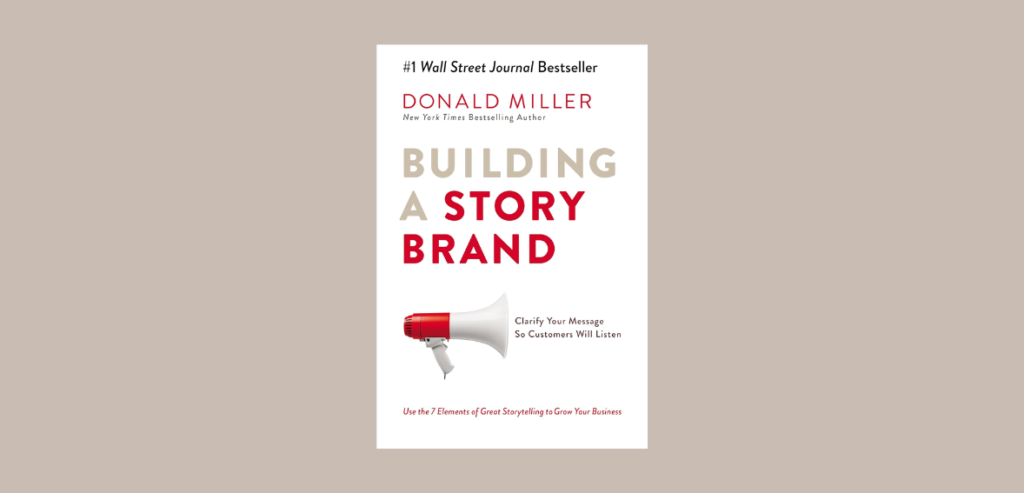
1. Building a StoryBrand: Clarify Your Message so Customers Will Listen

~Donald Miller
Building a StoryBrand: Clarify Your Message so Customers Will Listen

Building a StoryBrand uses timeless storytelling elements to refine brand messaging. Often, marketers bombard potential customers with unnecessary or irrelevant details instead of addressing what the customer actually cares about.

Consider this scenario from Miller’s book: “Imagine your customer is a hitchhiker. You stop to offer a ride, and his only concern is where you’re headed. Instead, as he approaches, you start sharing your mission statement, recounting how your grandfather constructed this car, or raving about your 1980s alternative music playlist. Your passenger isn’t interested in these details.”

The essence of StoryBrand is crafting clear and engaging stories in which the customer is the protagonist or “hero,” and the brand acts as the “guide” to assist them in navigating challenges and reaching their aspirations.

Whether you’re marketing a garage band or a political figure, “Building a StoryBrand” will revolutionize how you communicate your identity, activities, and the distinct value you bring.

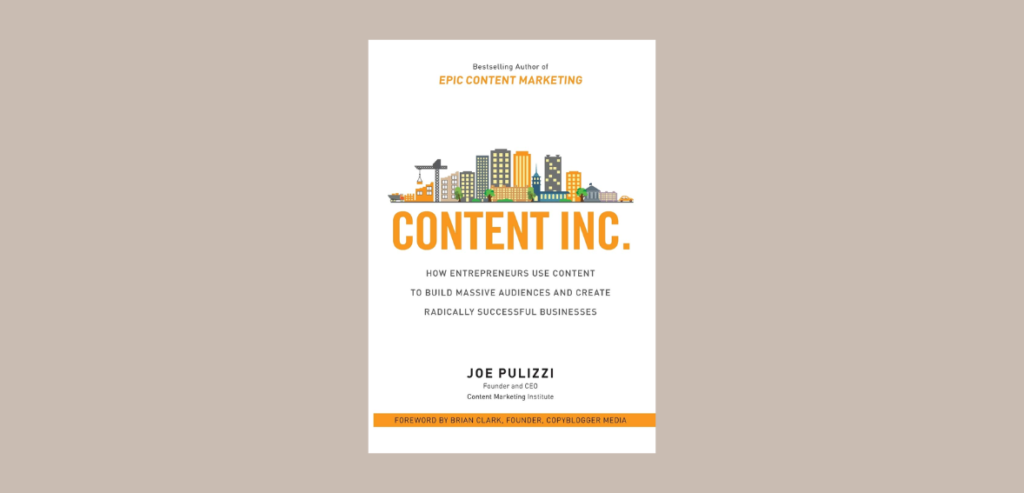
2. Content Inc.: How Entrepreneurs Use Content to Build Massive Audiences and Create Radically Successful Businesses

~Joe Pulizzi
Content Inc.: How Entrepreneurs Use Content to Build Massive Audiences and Create Radically Successful Businesses

Content Inc. offers valuable guidance for new entrepreneurs aiming to cultivate an online target audience. The book outlines effective strategies for creating a business model that attracts future buyers and devises successful SEO tactics.

Additionally, it serves as a resource for entrepreneurs aspiring to become significant industry figures by navigating the online business landscape. Marketing professionals in larger corporations seeking to drive change will also find this book beneficial.

Content Inc. presents practical techniques for building a substantial target audience through content marketing. It is well-organized, and the methods are straightforward to implement.

This book is ideal for startup entrepreneurs who aim to attract new customers, craft impactful content marketing, and offer products that meet their audience’s needs. It provides a roadmap for establishing a base of future buyers before moving on to sales.

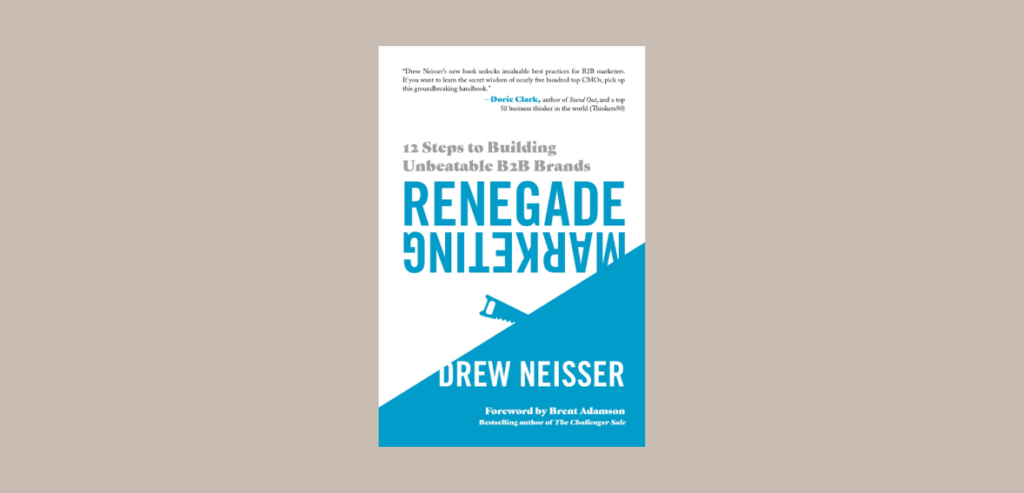
3. Renegade Marketing: 12 Steps to Building Unbeatable B2B Brands

~Drew Neisser
Renegade Marketing: 12 Steps to Building Unbeatable B2B Brands

Drew Neisser’s Renegade Marketing offers a groundbreaking approach to marketing. It urges brands to forge genuine customer relationships by embracing risk and innovation. This shift from conventional marketing strategies aims to boost brand growth and customer loyalty.

Drew Neisser, a seasoned strategist and author, brings extensive firsthand experience from his time in business-to-business marketing, including work with major brands like IBM and various start-ups and midsize companies. Through interviews with over four hundred leading marketing professionals, Neisser identified CATS as the traits of successful marketers:

  • Courage,
  • Artistry,
  • Thoughtfulness,
  • Scientific approach.

These traits underpin the strategic framework presented in Renegade Marketing. Neisser has developed a twelve-step formula that dramatically streamlines B2B marketing efforts and helps companies establish a dominant presence in their market.

4. Epic Content Marketing: How to Tell a Different Story, Break through the Clutter, and Win More Customers by Marketing Less

~Joe Pulizzi
Epic Content Marketing: How to Tell a Different Story, Break through the Clutter, and Win More Customers by Marketing Less

Another hit by Pulizzi, Epic Content Marketing, outlines structured approaches and success stories that illustrate how to convert potential customers into actual customers, encouraging them to act while maintaining a respectful approach.

This insightful book highlights how major corporations like Coca-Cola, LEGO, and John Deere have boosted their sales. It acts as a manual for creating and distributing specialized content that attracts and retains customers, ultimately leading to increased profits and growth.

This compelling marketing book introduces a novel concept: it advocates viewing content as part of an overarching series rather than standalone pieces. By developing a sequence of connected content it helps establish a clear, coherent narrative that enhances the impact and effectiveness of the content.

5. Positioning: The Battle for Your Mind

~Al Ries and Jack Trout
Positioning: The Battle for Your Mind

Positioning is celebrated as a seminal work in marketing literature, introducing an innovative method for connecting with an audience overwhelmed by media. The book explores how to craft a distinctive “position” in the minds of potential customers, a strategy that accounts for a company’s strengths and its competitors’ characteristics.

As the pioneering text on communicating with a media-saturated and skeptical public, “Positioning” presents a transformative strategy for establishing a brand’s place in a consumer’s mind, acknowledging both the company’s and its rivals’ strengths and weaknesses.

The book highlights critical principles: the power of clear and simple messaging; the difficulties of altering a brand’s position once established; positioning is defined by the perception it creates in the consumer’s mind rather than the product’s tangible qualities; the role of consistent repetition in reinforcing a brand’s market position; and the necessity of distinguishing a brand through a unique selling proposition (USP).

6. Influence: The Psychology of Persuasion

~Robert B. Cialdini
Influence: The Psychology of Persuasion

Influence, a definitive text on persuasion, unravels the psychology behind why people agree to requests and how to harness this knowledge effectively. Authored by Dr. Robert Cialdini, a leading authority in the fields of influence and persuasion, this book distills thirty-five years of comprehensive, evidence-supported research and a three-year intensive study on behavioral change into a widely praised guide.

In this book, Cialdini delves into the reasons people consent and presents ethical methods for utilizing these insights in both professional and personal settings.

He outlines six key principles crucial for crafting compelling marketing materials. With engaging narratives and practical examples, he simplifies these intricate marketing ideas, making them accessible to a broad audience. The principles laid out in “Influence” are designed to catalyze significant personal transformation and contribute to your overall success. Applying these principles to print campaigns enables marketers to create impactful content that connects with viewers and prompts them to act.

7. Scientific Advertising

~Claude C. Hopkins
Scientific Advertising

Scientific Advertising, published in 1923, is a seminal work in advertising authored by Claude C. Hopkins, recognized as the pioneer of modern advertising methods. This book remains incredibly relevant over a century after its release, proving essential for marketers at any career level.

This title is celebrated for being the first to document critical marketing strategies such as split testing, loyalty programs, and coupon-based tracking. It provides a comprehensive guide to refining advertising efforts through systematic testing and analysis.

The book addresses various advertising topics, from formulating advertising laws to specific tactics like mail-order advertising, crafting effective headlines, understanding consumer psychology, strategic planning, budget management, and exploring advanced topics like negative advertising and testing advertising campaigns.

8. 10x Marketing Formula: Your Blueprint for Creating Competition-Free Content That Stands Out and Gets Results

~Garrett Moon
10x Marketing Formula: Your Blueprint for Creating Competition-Free Content That Stands Out and Gets Results

For inbound and content marketing enthusiasts, the “10x Marketing Formula” is a must-read. This innovative approach comes straight from the insights of Garrett Moon, co-founder of Co-Schedule. Consider exploring an introductory post on the subject to get a feel for the book’s strategies. The premise is simple yet profound: instead of relying on incremental gains, successful marketing strategies often hinge on bold, transformative leaps that can significantly elevate your results.

The book delves into crafting, evaluating, and refining a marketing strategy that is not only predictable but also ambitious. It emphasizes the importance of making daring moves—though they might not always succeed, their success can be transformative for your business.

Much of the book highlights content marketing, a top strategy for scaling SaaS businesses. Moon has rigorously tested these strategies on the CoSchedule blog and extensively addresses social media marketing.

If you’re devising a digital marketing strategy for a SaaS business, this book is a critical read. Despite not always appearing on “best marketing books” lists, its value is undeniable and worth your attention.

9. Hooked: How to Build Habit-Forming Products

~Nir Eyal
Hooked: How to Build Habit-Forming Products

Why do certain products become immensely popular while others fail? What drives our habitual engagement with some products? Is there a recognizable pattern to how technologies become addictive? Nir Eyal addresses these inquiries by introducing the Hook Model—a four-step method ingrained in many successful companies’ offerings to promote consumer behavior subtly.

“Hooked” draws on Eyal’s extensive consulting, research, and hands-on experience. He crafted this book as the practical guide he wished he had during his days as a startup founder, providing not just theories but concrete strategies for creating superior products. This book is tailored for designers, marketers, product managers, startup founders, and anyone interested in how products shape our actions.

The book outlines the Hook Model, which includes four crucial stages: Action, Trigger, Investment, and Variable Reward. Eyal thoroughly explores each component, employing examples from well-known companies like Facebook, Twitter (now X), and Pinterest to show how they engineer products that users continually engage with. He also integrates findings from psychology and behavioral economics to bolster his points, making “Hooked” both actionable and thoroughly researched.

10. Pink Goldfish: Defy Normal, Exploit Imperfection, and Captivate Your Customers

~David J. Rendall and Stan Phelps
Pink Goldfish: Defy Normal, Exploit Imperfection, and Captivate Your Customers

In an overcrowded market, it’s tough for companies to stand out, and genuine differentiation is becoming scarcer. “Pink Goldfish” offers a fresh, seven-part framework based on over 200 case studies for gaining a competitive advantage by leveraging, rather than correcting, imperfections.

The problem with many organizations is that they are simply boring. Even the best products can falter if marketed in a lackluster way. “Pink Goldfish” proposes a seven-step path to distinctiveness, emphasizing the importance of being different.

Embrace the unique aspects of your business and amplify them in a way that’s compelling to customers. This book will change how you view your flaws and can serve as a vital resource for marketing teams looking to foster creativity and break away from the norm. If you’re seeking a guide to inspire innovative thinking within your team, “Pink Goldfish” is the book for you.

11. How Not to Suck at Marketing

~Jeff Perkins
How Not to Suck at Marketing

Clear, straightforward, and enjoyable to read. Whether you’re beginning your marketing career or eyeing executive or C-suite roles, you’ll discover plenty of straightforward advice and insights gained from real-world experience. Marketing as a discipline is expanding in both scope and significance, and Jeff effectively combines strategic marketing insights with actionable advice to excel (i.e., avoid failing).

“How Not to Suck at Marketing” hones in on vital skills needed by today’s marketers. While digital tools provide instant feedback, successful marketing plays a long game. This book guides you through crafting your marketing strategies and advancing your career with practical advice.

Reading “How Not to Suck at Marketing” will equip you to create effective campaigns, inspire your team, and enhance your marketing prowess. It’s time to stop doubting your marketing abilities and start progressing towards becoming a seasoned professional.

12. The Hype Handbook: 12 Indispensable Success Secrets from the World’s Greatest Propagandists, Self-Promoters, Cult Leaders, Mischief Makers, and Boundary Breakers

~Michael F. Schein
The Hype Handbook: 12 Indispensable Success Secrets from the World’s Greatest Propagandists, Self-Promoters, Cult Leaders, Mischief Makers, and Boundary Breakers

With “Hype,” you can harness the power of hype to captivate your audience without overwhelming them. In “The Hype Handbook,” Michael Schein surrounds the strategies used by history’s greatest hype-builders, dissecting their promotional prowess and offering insights into leveraging basic psychology for your own endeavors.

You will learn how shameless propaganda can be used to achieve positive outcomes in social and personal contexts. Influencers have long understood the potency of hype, but mastering the art of hype is essential in today’s world, where persuasion and propaganda hold unprecedented sway.

Michael F. Schein guides you through generating and harnessing hype for noble purposes, whether it’s fostering genuine business success, aiding others, or instigating positive societal change. Learn to identify and implement the twelve key hype-producing strategies outlined in the book to infuse your endeavors with excitement and engagement, regardless of your background or resources.

“The Hype Handbook” equips you with the knowledge and techniques to effectively wield the tools of persuasion, empowering you to achieve personal and professional triumphs.

Conclusion

Mastering marketing involves blending various approaches to create a strategy that drives your business forward. By exploring the recommended books, you can gain valuable insights into content creation, data utilization, customer experience, and more. Each book offers a unique perspective on essential marketing principles, helping you understand and connect with your audience effectively.

Whether you’re new to the field or looking to specialize, these resources provide the knowledge and tools needed to excel in the competitive landscape of modern marketing. Start reading today and discover the ideas that could transform your marketing efforts and lead to significant business growth.

eCommerce ERP : Top 6 Market Leaders

Strategies to Master Your Marketing Funnel

As a business owner or marketer, you know that customers can discover your business through various channels such as advertisements, word of mouth, and digital marketing. But did you know that developing strategies to convert these initial contacts into loyal customers can be challenging? Understanding your customers and mapping out their interactions with your business becomes crucial. This is the key to developing an effective marketing funnel strategy.

By understanding your customers, the marketing funnel becomes a more valuable tool, empowering you to make informed decisions to enhance their experience throughout their journey. In this article, we will discuss the different stages of the marketing funnel and how to construct one. We will also provide you with actionable tactics that can be applied at each stage to optimize engagement and conversion. So, get ready to take your marketing strategies to the next level!

What Is a Marketing Funnel?

What Is a Marketing Funnel?

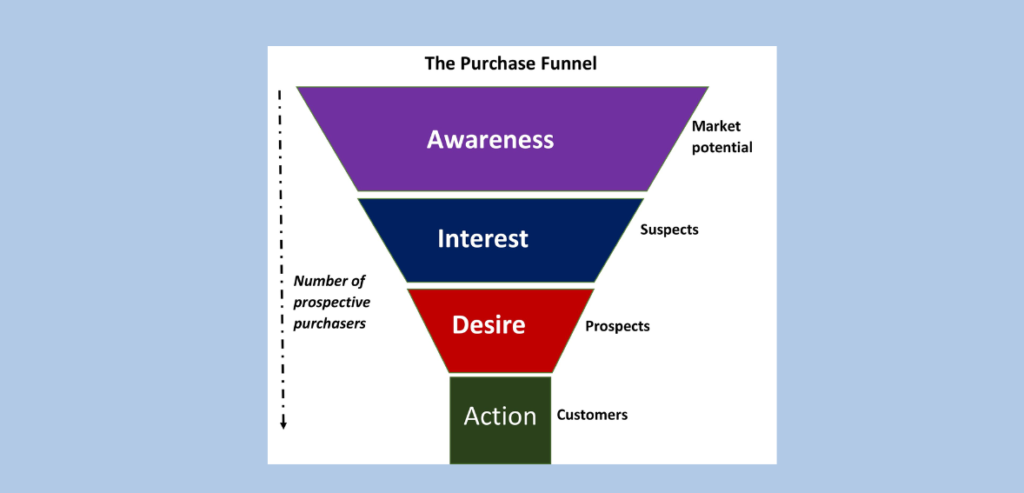
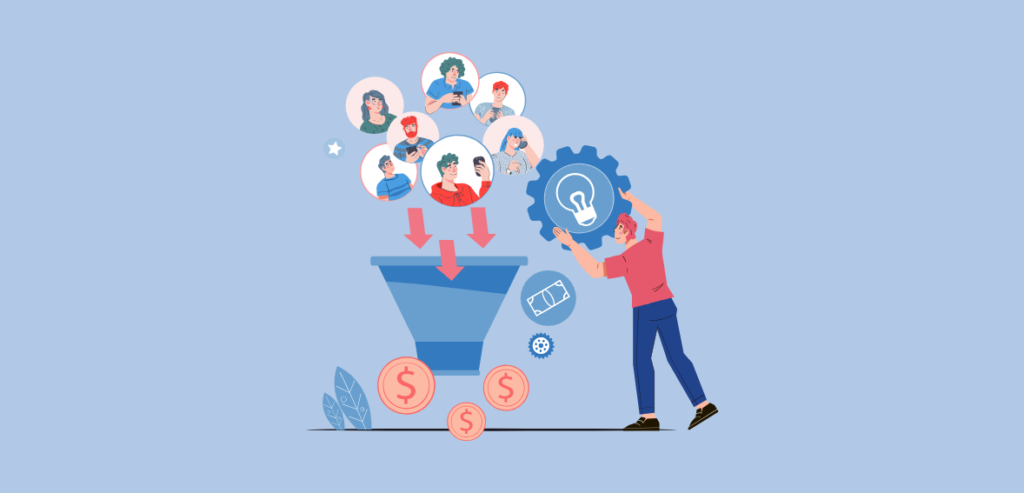
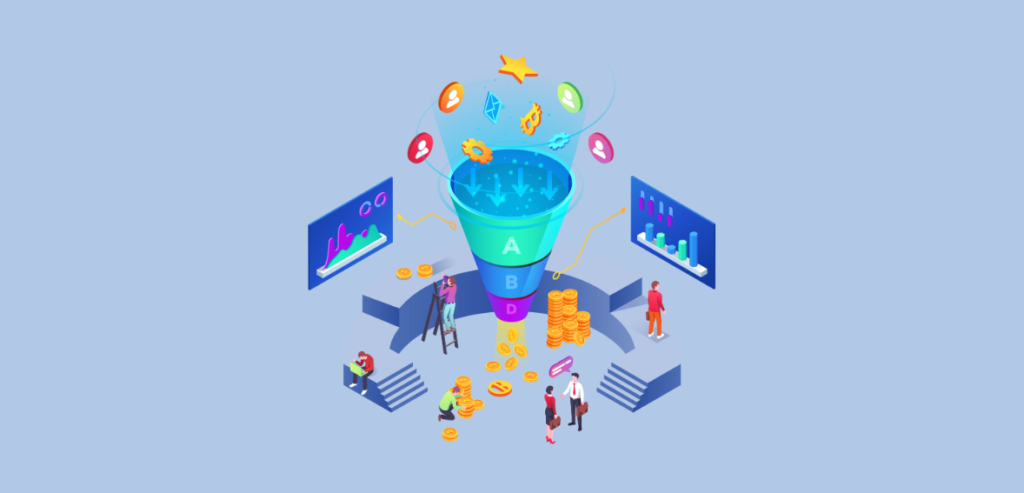
The marketing funnel serves as a model for visualizing the journey of converting leads into customers from a marketing and sales perspective. The concept likens this process to a funnel, where marketers initially cast a wide net to attract as many leads as possible, then gradually nurture them through the buying process, narrowing the field at each funnel stage.

Ideally, this model would resemble a cylinder, where every lead becomes a customer. However, marketers must make the funnel as cylindrical as possible by maximizing lead conversion. AIDA (Awareness, Interest, Desire, Action) is one of the most common models, but it’s not the only one. Here’s a breakdown of the AIDA model:

  • Awareness – This stage occurs when an individual learns about your brand, product, or service.
  • Interest – At this point, an individual shows interest in your offer.
  • Desire – Also referred to as “Consideration,” this is when an individual evaluates your product or service closely.
  • Action – This final stage, often called “Conversion,” happens when an individual decides to become a customer.
AIDA

Image source: Wikipedia

Different models may have varying numbers of stages, each with distinct names and specific actions taken by both the business and the consumer. The section below will present an overview of the most common and relevant stages, actions, and terms associated with the marketing funnel.

Why Is the Marketing Funnel Important?

The customer journey is a complex progression through the marketing funnel. People might move back and forth between stages, linger in one stage, or behave unpredictably. It would be unfeasible for any marketing team to account for every possible variation in customer behavior.

As such, the marketing funnel provides a simplified customer journey model, offering businesses a framework to refine their marketing strategies. It ensures that marketing efforts are applied effectively at each funnel stage.

Certain stages of your marketing funnel might be overlooked without such a structured approach, leading to gaps where potential customers are lost—often called a “leaky” funnel. For instance, your website might attract significant traffic, but there’s a clear issue if visitors aren’t signing up for your email list. The marketing funnel highlights such problems, guiding you toward solutions.

Here are some advantages of implementing a marketing funnel for your business:

  • Enhance analytics tracking: A marketing funnel facilitates the monitoring and analysis of analytics, allowing you to identify which stages of the customer journey are most effective at driving conversions and which areas need improvement.
  • Simplify the customer journey: By clearly outlining the steps in the customer journey, you make it easier for customers or prospects to take the desired actions.
  • Refine your marketing strategy: With distinct stages defined in your marketing funnel, you can pinpoint and implement adjustments to enhance your overall marketing approach.

Different Marketing Funnel Stages

Different Marketing Funnel Stages

You can break down a marketing funnel into any number of stages you see fit, but typically, most marketers adhere to three key stages:

  • Top of the Funnel (TOFU): Awareness

At this initial stage, the funnel is at its widest, handling the largest volume of leads. Your objective here is to maximize outreach and attract as many people as possible. Offers in inbound marketing at this stage should be free, easily accessible, and primarily educational, such as blog posts, videos, and eBooks.

  • Middle of the Funnel (MOFU): Consideration

In this phase, the funnel narrows as you begin to sift through the initial influx of leads, weeding out those less aligned with your target. The goal is to engage prospects more deeply by providing targeted content that educates them about your offer.

At this stage, a visitor transitions into a potential customer once they seriously consider your proposition. Common MOFU activities include promoting webinars and encouraging the download of case studies, eBooks, whitepapers, and research reports.

  • Bottom of the Funnel (BOFU): Conversion

This final stage of your funnel targets your most qualified leads. Here, you present conversion opportunities that will likely be attractive to them. This stage must be the most persuasive for your online marketing funnel to succeed.

The number of leads decreases at the bottom of the marketing funnel, but their conversion likelihood increases. Approach these leads as if they are on the verge of making a purchase. Common BOFU activities include offering live demos, product trials, vendor comparison charts, and customer testimonials.

Creating a Marketing Funnel: Strategies to Maximize the Results

Creating a Marketing Funnel: Strategies to Maximize the Results

To establish an effective marketing funnel, start by developing a landing page. This initial contact point introduces potential customers to your business. Your landing page should clearly outline your product or service and highlight its benefits to make a strong impression on visitors. Ensure the content here is engaging and convincingly communicates the value of your offering.

Next, collect email addresses from visitors and offer something valuable in return, like a white paper, templates, free access to exclusive content, or discounts and coupons. After acquiring a prospect’s contact information, it’s crucial to maintain communication and provide content tailored to their needs, helping to address any potential objections.

When the nurturing phase has set the stage, move to close the sale. To seal the deal, you can offer incentives such as discount codes, free trials, or product demos. Continue to engage with the customer post-purchase to educate them further about your offerings and strengthen your relationship. Regular interaction fosters customer loyalty.

Finally, constantly refine and improve your marketing funnel. Always be on the lookout for enhancements that can optimize the process.

Here’s how to craft a marketing funnel, customizable to fit your specific needs:

1. Focus on Your Customers

With limited resources, it’s crucial for your team to avoid wasting time and money on digital marketing efforts aimed at individuals who have no interest in your products.

Being customer-centric means truly understanding your customers and forming emotional connections with them. This involves acquiring accurate customer insights and delivering the right information and experiences at the opportune moments.

  • Seek opportunities to craft valuable customer experiences.
  • Leverage customer data to comprehend purchasing behavior, interests, and engagement levels.
  • A customer-centric company designs processes that enhance customer support and enrich experiences throughout their purchase journey.
  • Utilize customer lifetime value metrics to categorize customers according to their behavior.

2. Define Your Goals

As eager as you might be to dive into your digital marketing efforts, it’s important to pace yourself. Begin by gaining a deep understanding of your audience. The next crucial step in your marketing funnel strategy is to clarify what your business aims to achieve.

Converting customers is challenging without clear objectives because they may not understand what you ask them. Setting specific goals at the outset of your digital marketing journey is essential.

Consider your marketing funnel in three segments, from top to bottom, and set objectives for each phase:

  • Top of the Funnel: Aim to increase website traffic.
  • Middle of the Funnel: Focus on enhancing engagement rates.
  • Bottom of the Funnel: Work on improving conversion rates.

While it’s tempting to aim for success in all areas, it’s more effective to select a specific goal for each marketing activity and develop a detailed plan—for instance, targeting a 20% increase in sales by year-end.

3. Implementing Effective Media Strategies at Each Stage

It’s essential to customize your marketing strategies for each specific stage of the funnel. Different parts of the funnel—top, middle, and bottom—require tailored approaches to propel prospects to the next level.

At the top of the funnel, the goal is to maximize reach and brand awareness. Large companies might use television ads, while startups often use cost-effective social media campaigns. As potential customers show interest, it’s crucial to maintain visibility on review sites and search engines during the middle stage of their decision-making process. In the lower funnel, digital retargeting ads and email follow-ups are pivotal to encouraging site engagement.

However, converting sales is just the beginning. Encouraging repeat purchases through email promotions and customer loyalty programs is key. Additionally, motivating customers to leave positive reviews and share their enthusiasm for your brand on social media helps transform them into brand ambassadors. Leveraging positive word-of-mouth is a cost-effective way to acquire new customers compared to expensive top-of-funnel advertising.

4. Create Captivating Content

Your goal is to generate excitement about your brand and products. Consider why customers should be interested in your company and how your products address their needs. These insights will guide your content strategy for this phase.

Also, conduct competitor research. Examine their landing pages, social media presence, and blog posts to understand how they attract prospects. Analyze these elements to identify successful strategies and opportunities for improvement.

Use social listening tools to monitor your competitors’ social media activities. Pay attention to the type of content they post, the engagement levels they achieve, and their overall strategy. Draw inspiration from these findings to enhance your own content strategy. Remember, having a plan is just the start—you also need to know how to capture attention and spark interest.

5. Cultivating Interest and Desire

The AIDA model we discussed above distinguishes between “interest” and “desire,” but practically, they often merge into a single concept.

The key to sparking both interest and desire lies in crafting compelling content. To attract and engage potential customers effectively, ensure your marketing materials deeply resonate with their needs and provide distinct solutions. Start by capturing their attention with educational content such as in-depth blog posts, webinars, or instructional videos that inform them about your offerings. Boost engagement by using reviews and testimonials for social proof and to foster trust. Additionally, employ content targeted with specific middle-of-funnel keywords to position your brand as the ideal solution to their problems.

Once interest is piqued, cultivate it into a robust desire for your products or services. Use powerful storytelling to create a more profound connection, illustrating “before and after” scenarios or customer success stories to demonstrate the clear benefits of your offerings. Clarify your unique selling proposition to differentiate your product from competitors using comparison guides or detailed case studies. Further, enhance the desire to purchase by providing personalized experiences based on the customer’s previous interactions with your brand, making them feel uniquely valued.

6. Capture Leads

Develop strategies to gather contact information from leads, such as email addresses or phone numbers, using techniques like the “give and take” approach. For example, offering gated content in exchange for their details can facilitate further engagement.

Employing effective calls to action (CTAs) throughout your channels is also an excellent method.

When using a call to action (CTA), it’s essential to experiment with different CTAs to see which yields the best results. Consider your audience’s position in the sales funnel when choosing a CTA, and remember to test different wording, colors, and placements to maximize conversion rates.

You can also send them straightforward, actionable emails highlighting how your products or services can resolve their issues. Consider offering additional incentives such as free trials, demo videos, competitor comparison guides, and product samples to nurture leads into becoming paying customers.

7. Maintain Customer Loyalty

Effective marketing goes beyond just attracting customers; it’s equally important to keep them. Acquiring new customers can be up to five times more expensive than retaining current ones, making customer retention a crucial skill to develop.

Plus, your existing customers are about 50% more likely to try your new products, providing an excellent opportunity for you to test different retention strategies. For instance, you might reinforce the value of your product to loyal customers or inform them about new updates and features.

Here are some key strategies to keep those valuable loyal customers engaged:

  • Upselling: Engage with customers post-purchase by offering a similar product at a discount. This communicates that you value their business and can boost your revenue.
  • Encourage User-Generated Content: After a purchase, ask customers via email to share a photo and review of their product. Reward those who do with a discount code for their next purchase. This strategy generates fresh content for your marketing, drives return visits to your site and enhances customer loyalty.
  • Implement a Loyalty Program: Encourage customers to return by offering rewards for repeated purchases. For example, Girlfriend Collective, an apparel brand, has a loyalty program that offers benefits like free shipping and early access to sales based on a customer’s lifetime spend.

8. Monitor and Optimize

It’s crucial to monitor key metrics in any marketing campaign. These include customer engagement, conversion rates, click-through rates, brand awareness, marketing qualified leads, sales qualified leads, and cost per lead. Regularly tracking these metrics allows you to identify successful strategies and areas that need improvement.

Utilize the data and insights you gather to refine your marketing funnel. This might involve adding new content, altering the focus of existing content, or adjusting your automation triggers to achieve optimal results.

Conclusion

Mastering your marketing funnel involves understanding your customers and strategically guiding them from awareness to conversion. By recognizing the different stages—Awareness, Consideration, and Conversion—you can create targeted content and employ specific tactics to engage and nurture leads.

This approach helps convert leads into customers, retains them, and builds loyalty. Regularly analyzing key metrics and optimizing your strategies ensures that your marketing funnel remains effective. By focusing on customer needs and continuously refining your approach, you can maximize the potential of your marketing efforts and achieve sustainable business growth.

Frequently Asked Questions

How to Create a Wikipedia Page for Your Business

How to Create a Wikipedia Page for Your Business

Wikipedia is a well-known online resource frequently visited by many to gain information as an information repository. Despite its reputation for sometimes harboring inaccuracies, it remains a valuable platform for readership. In December 2023, it attracted approximately 4.3 billion global visitors. The significant traffic presents substantial business opportunities, which prompts organizations to consider establishing a Wikipedia page for their company. Today, we will explore creating a Wikipedia page for your business through a few simple steps.

Wikipedia Page

What Is Wikipedia?

Wikipedia is a free online encyclopedia that anyone can edit. It was developed collaboratively by a community of users known as Wikipedians. The platform allows registered and unregistered users to modify content, although article creation requires registration. The term “wiki” refers to the server technology that facilitates web content editing directly through a browser.

Co-founded by Jimmy Wales and Larry Sanger in January 2001, Wikipedia began as a supplementary project for Nupedia, a more traditional encyclopedia. Wikipedia quickly expanded, surpassing its predecessor in breadth and depth.

Although Wikipedia operates without overt corporate funding, which might suggest a neutral stance, the open-editing nature allows for personal biases and misinformation to seep into articles. Despite efforts by administrators to verify and cite accurate sources, not all inaccuracies are caught. This has led to caution against using Wikipedia as a definitive source in academic and professional contexts due to potential reliability issues.

How Can Your Business Benefit from Wikipedia?

How Can Your Business Benefit from Wikipedia?

Other than the fact that Wikipedia is a completely free source of marketing, here are some other ways how your business can benefit from it:

  • Control Over Your Brand Narrative:

Creating and managing a Wikipedia page for your business allows you to shape the narrative surrounding your brand. You can portray your business in a favorable light, showcasing its achievements and providing a detailed account of its history and offerings.

Working with a reputation management company can help ensure that your Wikipedia page’s content is compelling and accurate.

  • Building Trust:

Trust is a critical factor in any business’s success. A presence on Wikipedia can enhance your brand’s credibility with your audience.

Although Wikipedia is not always suitable for scholarly purposes, it is regarded as a relatively trustworthy source for general information. Featuring your business on Wikipedia signals to customers and stakeholders that your brand is reputable.

  • Search Engine Visibility:

Wikipedia pages often appear near the top of search engine results on platforms like Google, enhancing the online presence of your business. By collaborating with a reputation management firm, you can optimize your Wikipedia page for search engines to ensure it ranks highly for pertinent keywords.

  • Value of Backlinks:

Backlinks from Wikipedia are highly advantageous for businesses, enhancing a website’s credibility, visibility, and organic traffic. As the fifth-most visited website globally with a domain authority score of 100—the highest achievable—links from Wikipedia are highly esteemed and can elevate your site’s reputation.

You should look for relevant Wikipedia articles that contain broken links or lack citations and offer links from your website to address these gaps. Strategically placing relevant links can not only secure valuable backlinks but also increase traffic to your site.

Opportunity for Organic Brand Awareness:

As previously mentioned, Wikipedia ranks highly in Google search results, often appearing as a primary source of information. Consequently, a Wikipedia page about your brand typically appears at the forefront of relevant searches and may even be featured in the Google Knowledge Graph panel at the top-right corner of search pages.

This visibility provides current and prospective customers, as well as potential investors, with easy access to well-structured and credible information about your brand. This exposure is often more influential and convincing than sponsored ad links to your website.

8 Easy Steps to Create a Wikipedia Page in 2024

Before you begin creating a Wikipedia page for your business, it’s crucial to ensure that your business meets Wikipedia’s notability criteria.

Wikipedia requires that organizations or products be notable, which means there must be verifiable evidence that they have been recognized by reliable sources that are independent of the organization or product itself.

To be eligible for a Wikipedia page, your business needs to be substantiated by substantial, independent, and credible sources. Once you have established that your business qualifies, you can proceed with the following steps:

Step 1: Create an Account

Before you begin creating pages, having a registered account on Wikipedia is essential. This is advisable as it prevents your IP address from being publicly visible in the edit history. If Wikipedia detects any inappropriate edits from an unregistered user, they might block the associated IP address.

A registered account not only adds to your credibility but also helps build trust with the website, which is crucial for the sustainability of your page. With an account, you gain access to a personal user page where you can post a brief biography and photos and a talk page that allows you to interact with other Wikipedia users.

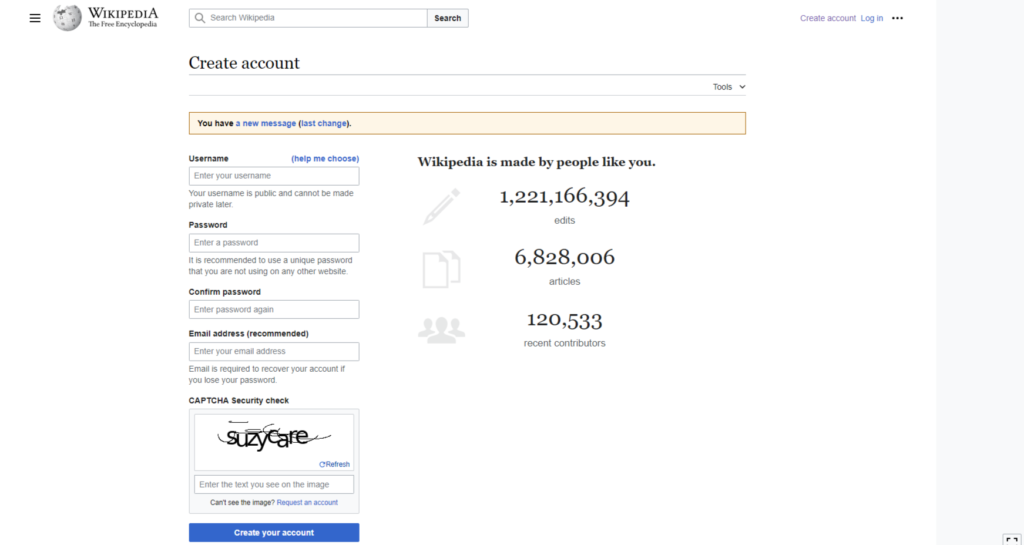
To create an account, visit the Wikipedia homepage and click on “Create account” at the top right corner. Fill in the required fields with your username and password, then click “Create your account” to complete the registration process.

Step 2. Contribute to Existing Pages

The next step would typically involve creating your new page using Wikipedia’s Article for Creation (AfC) submission template. This template simplifies the formatting and submission process. However, due to manual reviews, each submission has a three-month waiting period.

An effective way to expedite this process is to establish yourself as a credible contributor by actively editing existing articles. This helps you become an autoconfirmed user and demonstrates your familiarity with Wikipedia’s editing standards and practices. Gaining a reputation as a knowledgeable and trustworthy contributor is crucial for the eventual acceptance of your page.

Starting by editing existing articles is advisable. This approach allows you to showcase your reliability and expertise, facilitating your promotion to an autoconfirmed user. This status grants you the ability to edit pages without immediate review or approval.

Typically, user accounts on the English Wikipedia that are at least four days old and have made a minimum of 10 edits (including any that have been deleted) achieve autoconfirmed status. Engaging with existing pages before submitting your company page can be highly advantageous, as it often eliminates the lengthy wait for manual review of new articles.

Therefore, take your time and contribute thoughtfully to the Wikipedia community. Once you attain the necessary status, you can create your company page.

Contribute to Existing Pages

Step 3. Research

Thorough research is important before you start writing your Wikipedia page. Begin by exploring existing Wikipedia content related to your brand and industry. Use the search feature on Wikipedia to look up relevant industry keywords, your competitors, and your brand name to see if there are existing pages where your brand could be mentioned.

Then, gather a list of references, including publications, articles, and mentions of your brand, as these will be necessary to cite as sources on your page. Also, examine the pages of your competitors for valuable insights. They include details such as the brand’s history, product lineup, founding date, revenue figures, service areas, and trademarks. This information will help you structure your page.

If a page about your brand already exists, consider enhancing it with additional information. Use the search bar to navigate and find any related content that might influence your page creation or updates.

Step 4. Create an Outline

After collecting sufficient information about your company, begin structuring the outline for your text. Start by providing a basic introduction, which should include a history of your company and an overview of the products or services offered.

Organize your information into clear, manageable sections. These should be easily navigable through a table of contents on every site page.

Proceed to elaborate on your products or services in greater detail. Ensure your descriptions are thorough and informative, maintaining a neutral and objective tone. Remember, a Wikipedia page is intended for information, not promotion. Lastly, ensure that reliable sources can support all content on your Wikipedia page. Avoid including any information that cannot be substantiated with citations.

Step 5. Draft Your Page

When creating your Wikipedia page, using a style that differs from standard blogs or articles is crucial. Reflect on the Wikipedia pages you have read and aim to replicate their structure by following fundamental principles:

  • Neutrality: Maintain a neutral tone throughout your page, focusing on factual information rather than emotional expressions.
  • Simplicity: Use clear, straightforward sentences and avoid complex jargon to make your content accessible.
  • Originality: Interpret and rephrase information from your sources instead of copying it directly, maintaining the uniqueness of your content.
  • Verifiability: Support all your claims with citations from reliable sources, demonstrating the credibility of your information.
  • Objectivity: Avoid biased language and promotional content to ensure the text remains unbiased and factual.

Taking these steps seriously is crucial, as promotional content and lack of notability are common reasons for rejection. Review your draft with an unbiased third person (your employee may also have a biased view) for a fresh perspective and further refinement.

Step 6. Create Your Page

After writing your page and having it reviewed, proceed to Wikipedia’s “Writing an article” section. You will find a blue button labeled “Article wizard: an easy way to create articles.”

You will then be taken to Wikipedia’s Article Wizard. Here, you can start building your page immediately by clicking “Next” or practicing editing in Wikipedia’s sandbox first.

Click on “Next.”

You can include as much detail as you deem necessary. Remember, using citations is critical to the credibility of your page. Citations help establish trust in the information you present, so ensure you use reliable sources to substantiate your claims.

Step 7: Submit Your Page

Once you have completed all the necessary steps, you are ready to submit your company’s Wikipedia page. After submission, you must wait for Wikipedia’s review process.

This process can take several months and may require multiple attempts before successful completion. A volunteer reviewer will examine your draft and decide whether to move it to the main article space. If the article requires further improvements, you will receive feedback on how to enhance it. Keep in mind that reviews may take time since all Wikipedia editors are volunteers.

Step 8: Maintaining Your Wikipedia Page

Publishing your page is just the beginning. To ensure your page remains relevant and accurate, update it as your company progresses.

Again, anyone can edit Wikipedia pages. While the site generally ensures that edits are appropriate, some inaccuracies can slip through, particularly for smaller businesses.

Make it a habit to check your Wikipedia page every few months to ensure its accuracy and add any new mentions or publications. This will help keep Wikipedia reliable and ensure your brand is presented accurately and positively.

Conclusion

Creating a Wikipedia page for your business offers valuable opportunities to enhance your online presence, build trust, and increase visibility in search engine results. By following the steps outlined, from ensuring notability to maintaining the page, you can effectively establish and manage your brand’s narrative on this influential platform.

Regular updates and active participation in the Wikipedia community are essential to keeping your page accurate and relevant. Although the process may be time-consuming, the potential benefits, such as improved search engine rankings and increased credibility, make it a worthwhile investment for your business.

Frequently Asked Questions

WorldPay and Amex Announce New Partnership to Boost UK Business

WorldPay and AmEx Announce New Partnership to Boost UK Business

WorldPay and AmEx recently announced a new partnership. This strategic partnership between American Express (AmEx), a US-based integrated payments company, and Worldpay, a leading provider of payment processing solutions, will enhance payment options for small businesses and increase their market share in the UK.

This enhanced collaboration is not just a business move but a strategic decision. It focuses on enabling seamless transactions for small businesses, especially in accommodating American Express card members. The agreement underscores American Express’s commitment to growing its UK market presence and increasing the availability of services to its card members, demonstrating its long-term vision and dedication to its stakeholders.

Key Takeaways
  • Enhanced UK Market Reach: American Express and Worldpay’s new agreement aims to expand the number of UK venues accepting Amex cards, building on a 46% increase in locations from 2021 to 2023.
  • Support for Small Businesses: Worldpay will provide small businesses with easier onboarding, streamlined settlement processes, and single-point service contact. This will not only encourage more businesses to accept Amex cards but also boost consumer spending, thereby enhancing the overall business performance.
  • Increased Cardmember Spending: Amex Cardmembers, who spend significantly more annually and frequently than non-Cardmembers, will now have more locations to use their cards, aligning with American Express’s strategy to broaden its market presence. This will not only enhance the convenience for Cardmembers but also contribute to the growth of small businesses.
  • Strategic Growth Amid Challenges: Despite the current challenges, American Express remains optimistic about the future of this partnership. They are confident in their long-term prospects and continue to invest in expanding merchant acceptance and enhancing customer experience. This is not just a short-term venture but a commitment to a strong and enduring partnership.

Worldpay and Amex Partnership to Expand Merchant Acceptance in the UK

Worldpay and Amex Partnership to Expand Merchant Acceptance in the UK

Image source

American Express has entered into a new agreement with payment solutions provider Worldpay to enhance its market reach in the UK. This partnership aims to increase the number of venues where Amex cardholders can purchase, following a 46% rise in Amex-accepting locations from 2021 to 2023.

As a trusted partner of American Express, Worldpay will provide further opportunities for small businesses to accept payments via American Express cards. This initiative is anticipated to boost consumer spending at small businesses and streamline their checkout processes.

Worldpay merchants will benefit from a more streamlined process, including a one-settling process that simplifies their financial management, an easier onboarding experience that reduces administrative burden, a sole point of contact for service that ensures prompt and efficient support, and a single statement for transaction reconciliation that enhances transparency and control.

Dan Edelman, VP and UK General Manager for Merchant Services at American Express, remarked that as their Cardmember base expands in the UK, they have been significantly increasing their merchant coverage. He noted that this new strategic agreement will further boost their efforts, enabling thousands of additional small businesses nationwide to benefit from accepting Amex cards. Edelman highlighted that Amex Cardmembers, on average, spend 3.9 times more annually and 3.2 times more frequently than non-Cardmembers.

The initiative reflects American Express’s broader strategic approach to expanding its market presence and increasing the number of locations where its cardmembers can use their cards.

American Express’s global presence has grown dramatically, as seen by the more than threefold increase in the number of locations that accept its cards since 2017.

Chris Wood, General Manager of SMB International and US Direct at Worldpay stated that they are delighted to offer more opportunities to their merchants in the UK and Ireland through their collaboration with American Express. This initiative taps into the spending power of loyal Amex card members. Wood emphasized that consumers desire the flexibility to pay as they prefer. By facilitating a broader range of payment options for their merchants, they are enhancing how they can serve their customers.

Worldpay, benefiting from its longstanding partnership with American Express, aims to assist merchants in expanding their payment options, ultimately helping them better serve their customers and grow their businesses. The goal is to make it easier for small businesses to accept American Express cards, thereby capturing more customer spend and enhancing the consumer payment experience.

The recent agreement is expected further to solidify the long-standing relationship between American Express and Worldpay. Although it still owns 45% of Worldpay, Fidelity National sold private equity funds run by GTCR, which is the majority of its share in Worldpay Merchant Solutions, earlier this year.

In its latest earnings report, American Express observed a slight slowdown in growth within its small-business segment, marking a minor setback in an otherwise robust performance. The company attributed this slowdown to higher interest rates and a decrease in payment volume, which are industry-wide challenges rather than to credit risk. Despite these challenges, Amex CEO Steve Squeri remains optimistic about the long-term prospects of small businesses amidst high inflation and slower economic growth.

About WorldPay

About WorldPay

Worldpay International Group, formerly known as Vantiv UK Group, is a leading provider of payment processing solutions. The company enables its customers to execute and manage payments, optimize operations, control risks, and handle banking functions. It caters to a wide range of industries, including gaming, financial services, healthcare, government, retail, payment facilitators, and the petroleum sector. With its advanced payment processing technology and solutions, Worldpay is committed to leading developments in global expansion, data analytics, optimization, and integrated payments.

Worldpay is recognized globally for its advanced payment processing technology and solutions. Operating robust and secure platforms, the company facilitates accepting various payment types across multiple channels. With over 30 years of innovation in card payments, multi-currency processing, online transactions, and contactless technology, Worldpay is committed to leading developments in global expansion, data analytics, optimization, and integrated payments. On average, the company processes over 31 million mobile, online, and in-store transactions, equating to about 400 transactions per second.

About Amex

About Amex

American Express is a global services company that offers a diverse array of products and services. These include charge and credit card offerings, expense management solutions, consumer and business travel services, and stored value products such as traveler’s cheques and other prepaid items.

Additionally, American Express provides network services, merchant acquisition, processing, servicing, and settlement, as well as point-of-sale, marketing, and information services tailored for merchants. The company also offers a range of fee services, which encompass market and trend analysis, consulting services, fraud prevention solutions, and the design of customized customer loyalty and rewards programs.

Conclusion

The enhanced partnership between American Express (AmEx) and Worldpay marks a significant step forward in facilitating smoother transactions for small businesses across the UK. This collaboration not only broadens the acceptance network for American Express Cardmembers but also promises a richer customer experience due to streamlined processes.

By integrating services such as a single statement for transactions, one settlement process, and an easier onboarding journey, the partnership aims to ease the operational burdens on small businesses, allowing them to focus more on growth and customer engagement. Furthermore, the strategic move is set to capitalize on the higher spending habits of AmEx cardholders, potentially boosting the revenue of small businesses. This initiative underscores a robust commitment from both American Express and Worldpay to enhance the commercial landscape for SMEs in the UK, offering them substantial support in a competitive market.

In a broader context, this agreement aligns with American Express’s global strategy to increase its footprint, ensuring that its card members enjoy extensive usability of their cards worldwide. This partnership not only strengthens the bond between American Express and Worldpay but also paves the way for future collaborative ventures that could further transform the payment ecosystem for small businesses.

Best Pawn Shop POS

Using Customer Acquisition Cost (CAC) to Improve Marketing Strategies

Many startups fall into a common trap, which unfolds as follows: Starting by as they allocate a significant marketing budget across various channels, ranging from billboards to Google Ads. However, a few months later, upon reviewing the performance data, the team discovered that not all channels effectively attract customers.

Consequently, rather than spreading their efforts thinly, they focus on the channels where their target audience is most engaged. This pivot is driven by the goal of optimizing Customer Acquisition Cost (CAC).

By pinpointing where their potential customers are most active—whether on certain social media platforms, tech forums, or online communities—the startup adopts a more targeted approach. This strategy ensures that each dollar spent will likely engage an interested audience.

This example underscores the importance of understanding and refining CAC. Mastering this aspect can significantly enhance a business’s ability to acquire customers sustainably. This guide delves into the nuances of customer acquisition cost, offering strategies for reducing expenses, cost-effective ways to onboard customers, and much more.

Understanding Customer Acquisition Cost (CAC)

Understanding Customer Acquisition Cost (CAC)

Customer Acquisition Cost (CAC) encompasses the expenses incurred during marketing efforts such as social media marketing, online advertisements, and content marketing strategies. Every dollar spent on converting leads into loyal customers contributes to the CAC.

To elaborate, CAC represents the total cost involved in acquiring a single customer. This includes the salaries of marketing and sales personnel, advertising expenditures, marketing costs, and expenses related to promotional events.

Understanding your CAC is vital because it directly influences your overall profitability. It helps you determine the revenue required from each customer to achieve profitability. Simply put, if the cost of attracting customers exceeds the revenue they generate, your business operates at a loss.

CAC can vary significantly between companies, influenced by the pricing of their products and services. For example, acquiring corporate customers typically costs more than attracting individual consumers. Additionally, different strategies may be more effective with different types of customers.

The Significance of Customer Acquisition Cost (CAC)

The Significance of Customer Acquisition Cost (CAC)

Customer Acquisition Cost (CAC) is a vital metric for several reasons. It:

  • Enhances your marketing and sales strategies.
  • Enables further analysis of your sales journey to help set your budget.
  • Offers insights into potential inefficiencies in your sales funnel.

Effective lead management and sales prospecting can lead to a competitive CAC.

However, bottlenecks at any stage of your funnel, such as a shortage of leads, might cause your company to incur higher costs in progressing leads to the next stage. Monitoring acquisition costs by each funnel stage can identify areas of your sales process that need improvement.

Implementing a robust Customer Relationship Management (CRM) strategy and maintaining a comprehensive database is crucial for tracking and optimizing CAC. These measures are instrumental in understanding your sales pipeline metrics and achieving your sales targets.

How Is it Different from Customer Lifetime Value (CLV)?

CAC and CLV are critical metrics for gauging a business’s financial health. CAC quantifies the expense of attracting a new customer, while CLV represents the total expected revenue from a customer throughout their association with the company. This involves calculating a customer’s revenue over their lifetime and subtracting the associated costs to determine their net contribution to the company’s profits.

Ideally, a customer’s lifetime value (CLV) should exceed their acquisition cost (CAC). A scenario where CAC outweighs the revenue a customer generates indicates losses, signaling a potential need for revising acquisition strategies or improving customer relationship management. The balance between these metrics significantly affects a company’s profitability and viability.

The CAC to CLV ratio, often considered healthy at 3:1, is a benchmark for assessing financial efficiency. This ratio suggests that a customer’s revenue should be three times what it costs to acquire them. A decrease in this ratio could imply that spending on acquisition is too high compared to the returns, necessitating strategic adjustments. On the other hand, a much higher ratio may present an opportunity to amplify growth efforts and outpace competitors. These metrics are essential for optimizing strategies that enhance long-term business profitability.

Calculating Your Customer Acquisition Costs

Calculating Your Customer Acquisition Costs

To determine your Customer Acquisition Cost (CAC), use this formula:

CAC = (Total expenditure on customer acquisition / Total Number of customers acquired)

Typically, the total expenditure on customer acquisition includes expenses such as:

  • Salaries for sales and marketing teams
  • Advertising expenses (such as LinkedIn ads, YouTube videos, banner ads)
  • Software and equipment costs for your sales and marketing departments
  • Costs related to hiring external agencies or public relations

For instance, if your expenditures were as follows: Salaries ($8,000), Agency fees ($3,000), Google Ads ($12,000), YouTube Video Ads ($3,000), and Meta Ads ($2,000) for gaining 800 new customers, your CAC would be calculated as:

CAC = (8000 + 3000 + 12000 + 3000 + 2000) / 800

CAC = $33000 / 800

CAC = $41.25

Computing your CAC monthly to match revenue to the monthly cohorts correctly is advisable. This accounting is crucial because it allows you to account for variables such as trial periods, during which it might take time for trial users to convert to paying customers. Analyzing your costs month-on-month can also help you accurately assess your Return on Advertising Spend (ROAS) and the overall effectiveness of your marketing strategies.

Calculating Customer Acquisition Cost by Marketing Channel

Calculating CAC by marketing channel involves a few key steps, with the goal of understanding how much it costs to acquire a new customer through each specific channel. Here’s a detailed overview of how to perform these calculations:

  • Identify Costs and Channels: Begin by identifying all marketing channels being used, such as PPC (Pay-Per-Click), email marketing, and content marketing. For each channel, calculate the total costs associated with that channel over a specified period. This includes direct expenses like ad spending and allocated costs, such as shared use of technology or staff time if distributed across channels​.
  • Determine New Customers Acquired: Next, track how many new customers each channel has brought in during the time you evaluate the costs​.
  • Calculate CAC for Each Channel: Divide the total cost for each channel by the number of new customers it has helped acquire. This gives you the CAC per channel. For instance, if $3,000 was spent on Facebook advertising and it brought in 45 new customers, the CAC for this channel would be $66.67 per customer​.
  • Review and Adjust: It is crucial to review your CAC calculations for each channel regularly. This helps you understand which channels are most cost-effective and reallocates budgets to optimize overall marketing spend.

Factors Affecting Customer Acquisition Cost

Various factors shape Customer Acquisition Cost (CAC). Recognizing these influences can effectively refine your marketing and sales tactics. Here are key elements that may affect your CAC:

  • Target Audience: The interests and demographics of your target audience significantly influence your CAC. Some segments might be costlier to engage due to intense competition, while others could be more economical because of lower competition or specialized niche markets.
  • Marketing Channels: Each marketing channel incurs different costs. Whether it’s paid advertising, content marketing, social media, or organic search, the expenses and effectiveness of these channels will substantially sway your CAC.
  • Competition: Intense competition can drive up marketing costs as businesses compete for the same customers, increasing overall acquisition expenses.
  • Industry: The industry you operate in can affect your CAC. Highly competitive sectors may see fiercer competition, raising the costs and challenges of acquiring new customers.
  • Geographic Location: The marketing costs can also vary by geographic area. Advertising rates and operational costs differ by region, country, and city.
  • Product Quality and Offerings: Offering a superior product or service with competitive pricing can help lower CAC. A high-quality product generally requires less persuasion, easing the customer acquisition process.

Strategies to Enhance Customer Acquisition Cost

Improving your customer acquisition cost (CAC) is essential for achieving a more favorable Lifetime Value to CAC ratio, ideally near 3:1. Here are several effective strategies to consider:

  • Enhance Customer Value:

Increase the perceived value for your customers by addressing their needs and desires. Gather and act on customer feedback, whether it involves refining existing products, introducing new features, or offering complementary products. Tailoring your offerings to meet customer demands can encourage longer retention.

  • Use Data-Driven Approach

Leveraging data-driven marketing approaches is essential in optimizing Customer Acquisition Cost (CAC). Businesses can identify and improve critical touchpoints by analyzing customer behavior and preferences through techniques like customer journey mapping, streamlining the path to conversion. A/B testing further aids by allowing companies to determine which campaign elements are most effective empirically.

Additionally, attribution modeling provides insights into which marketing channels most significantly impact customer acquisition, enabling more strategic budget allocation toward the most effective channels. These data-driven strategies collectively enhance the efficiency of customer acquisition efforts.

  • Optimize Conversion Rates:

Focus on making the conversion process as seamless and intuitive as possible. Enhance your website for easy mobile interactions, test and clarify your website copy, and develop a streamlined sales process that allows customers to make purchases at any time without direct interaction.

  • Streamline the Sales Process:

Shortening the sales cycle can lead to more sales opportunities within a year. Implementing customer relationship management (CRM) software can significantly enhance customer interactions and reduce CAC. CRM tools help build stronger relationships by analyzing key customer data, such as buying patterns, product preferences, and geographical locations, which aids in attracting similar prospects.

Additionally, these systems facilitate sending customer surveys, gathering valuable insights to meet their needs better and further decrease CAC.

  • Develop a Customer Referral Program:

Leverage the networks of your existing customers. If a customer refers to someone who then becomes a customer, the CAC for that referral is essentially zero. Implement a referral program that motivates your customers to participate actively, which can help reduce your overall CAC over time.

  • Enhance Your Landing Pages

Ensure the website experience provided to your customers is top-notch. A consistent message should exist between your marketing efforts and the narrative your landing pages present. The imagery and content should align perfectly to convey a unified message. Your landing page’s design needs to be clean and user-friendly, clearly articulating the benefits of your product or service. Visitors should quickly grasp what your brand offers and how it benefits them.

This approach fosters trust with customers, reduces customer acquisition costs, and boosts conversion rates.

  • Target “Premium” Customers

Identifying and focusing on high-value customers is crucial for enhancing CAC. By pinpointing customer segments with higher lifetime value, businesses can allocate resources more effectively. Customizing marketing strategies to appeal to these valuable segments boost acquisition and optimizes return on investment.

  • Refine Your Sales Funnel

An effective sales funnel streamlines your customer’s purchasing process. It encompasses the company’s methods for guiding potential customers from initial interest to final purchase. Implementing a robust sales funnel provides valuable insights into prospective customers’ preferences and thoughts. This makes identifying and understanding why a customer might abandon a purchase easier.

Conclusion

Understanding and optimizing Customer Acquisition Cost (CAC) is crucial for any business aiming to achieve sustainable growth. Businesses can focus their efforts on channels that yield the highest returns by analyzing where marketing dollars are most effectively spent. This not only reduces unnecessary spending but also ensures that marketing strategies are aligned with customer behavior and preferences.

Effective CAC management involves ongoing assessment and adjustment, enabling businesses to identify inefficiencies and refine their sales funnels. Ultimately, a well-managed CAC strategy can lead to more effective customer acquisition, higher profitability, and a stronger competitive position in the market. This guide offers comprehensive insights and strategies to help businesses master their CAC and drive long-term success.

Frequently Asked Questions

Fidelity National Information Services (FIS)

FIS Looks to Grow by Acquisition

Fidelity National Information Services (FIS), a leading financial services technology provider, aims to grow by focusing on strategic acquisitions. This push for expansion comes at a reasonable time, especially after the recent sale of a significant portion of WorldPay to GTCR, which substantially reduced the company’s debt from $19.1 billion to $10 billion. With this financial restructuring finalized, FIS actively seeks to expand through mergers and acquisitions. Let us analyze how FIS looks to grow by acquisition and how it will impact the fintech industry.

Key Takeaways
  • Shift to Smaller Acquisitions: FIS is pivoting towards smaller, strategic acquisitions instead of large-scale transactions. The focus is on enhancing revenue growth through targeted investments in key sectors like payments, digital banking, and commercial lending technology.
  • Annual Acquisition Budget: FIS has allocated approximately $1 billion annually for acquisitions. The goal is to find businesses generating $150 million to $200 million in revenue, targeting products or businesses with established EBITDA and revenue rather than developing new products in-house.
  • Operational Focus: CEO Stephanie Ferris emphasizes sharpening execution, maintaining focus, and enhancing delivery processes. This approach aims to leverage existing products and improve operational efficiency to accelerate revenue growth.
  • Financial Health and Growth Targets: FIS’s strong financial performance, including consistent earnings and increased share repurchase programs, underpins its strategic measures. The company aims for annual adjusted revenue growth of 4.5-5.5% and improved EBITDA margins from 2025 to 2026, reflecting confidence in its financial stability and growth potential.

FIS Looks to Grow by Acquisition

FIS Shifts Focus to Strategic Smaller Acquisitions Under CEO Stephanie Ferris

FIS Looks to Grow by Acquisition

All image source

Just a few months after sealing a major transaction in her career by selling a 55% stake in the Worldpay business to GTCR, a Chicago-based private equity firm, Stephanie Ferris, CEO of Fidelity National Information Services (FIS), emphasizes that the company’s ambitions are not yet satisfied. Now operating as a leaner entity, FIS is shifting its focus back to acquisitions.

Previously, FIS had indicated plans to target smaller acquisitions, particularly within its capital markets division, opting to steer clear of billion-dollar transactions. FIS’ CFO, James Kehoe, noted that while grand-scale acquisitions are not on the horizon, the company is keen on making smaller, strategic purchases to enhance revenue growth. The strategy involves accelerating top-line growth through selective, smaller-scale acquisitions, making it highly improbable for a billion-dollar buyout to occur anytime soon.

Under CEO Stephanie Ferris, FIS is honing its focus on key sectors such as payments, digital banking, and commercial lending technology. The company’s strategy emphasizes multiple smaller acquisitions over large transactions, enhancing adaptability and ease of integration within its current operations.

Ferris noted that FIS is setting aside approximately $1 billion annually for acquisitions, targeting small, complementary products that are either outside their current portfolio or that cannot be developed in-house swiftly. Unlike last year’s acquisition of Bond Financial Technologies, a banking-as-a-service startup, which was primarily an acquihire, FIS now seeks to invest in products or businesses that already established EBITDA, revenue, and a robust business model.

 FIS is setting aside approximately $1 billion annually for acquisitions

Ferris elaborated on the company’s operational strategy, pointing out that creating new products isn’t necessary at this stage. For a company to capture FIS’s attention, it should generate between $150 million and $200 million in revenue. Below this threshold, FIS considers it not a full-fledged business but merely a product lacking a sufficient customer base.

“We have all these products. We need to sharpen our execution, maintain focus, and enhance our delivery processes,” she said. Ferris believes that by continuing on this path, FIS can accelerate revenue growth in the banking sector.

FIS has demonstrated strong financial performance, consistently exceeding earnings expectations over multiple quarters, highlighting the success of its strategic measures. In the previous year, the company posted revenues of $9.8 billion, with its banking sector division contributing $6.7 billion and the capital markets division adding $2.8 billion. Furthermore, FIS increased its share repurchase program by $500 million, raising the total to $4 billion by the end of 2024. This move reflects its confidence in its financial health and stability.

At its Investor Day in 2024, FIS outlined its medium-term financial plans, setting ambitious targets for revenue and earnings growth. The company plans to leverage its strong foundational technology, crucial to the global financial system, to sustain and grow profit. It expects annual adjusted revenue growth of 4.5-5.5% and improvements in adjusted EBITDA margins of 40-60 basis points annually from 2025 to 2026.

Under Ferris’s leadership, FIS is focusing on disciplined capital management and strategic acquisitions, aiming to maintain and enhance its position in the fintech industry. This strategy emphasizes utilizing core strengths and competitive advantages to spur innovation and growth within the evolving financial technology arena. It reflects a commitment to delivering significant returns to shareholders while seeking growth, embodying a balanced approach to value creation and stakeholder engagement in the competitive fintech space.

About FIS

About FIS

Fidelity National Information Services Inc. (FIS), headquartered in Jacksonville, Florida, is a global provider of financial services technology and outsourcing services, employing over 55,000 people worldwide. As a leader in the industry, FIS focuses on various sectors, including retail and institutional banking, payments, asset and wealth management, risk and compliance, and outsourcing solutions.
The company offers payment processing, banking software, and technology outsourcing services. With its extensive portfolio of solutions, global reach, and deep expertise, FIS supports over 20,000 clients. Recognized as a Fortune 500 company, FIS is also listed on the Standard & Poor’s 500® Index, underscoring its pivotal role in powering the financial sector.

Conclusion

Under the leadership of CEO Stephanie Ferris, FIS is poised for growth through strategic acquisitions. After significantly reducing its debt by selling a stake in WorldPay, FIS is now focusing on smaller, targeted acquisitions with an annual budget of $1 billion. This approach aims to enhance revenue growth in key areas like payments, digital banking, and commercial lending technology.

The company seeks established businesses that generate substantial revenue and avoid the need for in-house development. With substantial financial health and consistent earnings, FIS aims for annual adjusted revenue growth of 4.5-5.5% and improved EBITDA margins by 2026. This strategic direction underscores FIS’s commitment to leveraging acquisitions for sustained growth and innovation in the financial technology sector.

Quarterly Restaurant Report for Spring 2024

Square Unveils Quarterly Restaurant Report for Spring 2024

Square has recently published the latest Quarterly Restaurant Report, which provides a detailed analysis of the current trends shaping the food and beverage industry. Drawing on data from its merchants, the report offers insights into evolving consumer dining preferences, changes in spending patterns, and the impact on restaurant wages.

The quarterly restaurant report for the Spring 2024 edition highlights significant shifts in the sector, shedding light on emerging dining trends, the dynamics of payroll costs, the influence of technological advancements on operational efficiency, and more. Keep reading to learn more about what the restaurant industry holds in 2024.

Key Takeaways
  • Increase in Payroll Costs for Full-Service Restaurants and Bars: The report highlights a significant rise in payroll expenses for bars and full-service restaurants, with wages increasing by 66% from 2017 to 2024. This is due to the employment of more highly skilled workers for tasks that are difficult to automate. In contrast, cafes and quick-service restaurants (QSRs) have leveraged technology to reduce operational costs.
  • Impact of Tip Credit Regulation Changes: The “One Fair Wage” Ordinance in Chicago is set to eliminate the city’s tip credit system by 2028, mandating incremental increases in the minimum wage for tipped employees. This change will result in a 76% increase in the minimum wage for these employees, affecting payroll structures and operational costs for restaurants.
  • The shift in Consumer Dining Patterns: The report notes a shift in consumer dining behavior, with a decline in weekday lunch outings and an increase in weekend dining. This change is attributed to the rise in remote work, which has led to higher restaurant traffic on weekends and sustained popularity of happy hour gatherings post-pandemic.
  • Regional Preferences for Spirits: Consumer preferences for spirits show regional variations, with vodka and tequila being particularly popular. Cities like Los Angeles, Miami, and San Antonio strongly prefer tequila, suggesting that restaurants in these regions can expect increased demand for tequila-based drinks during the summer.

Square Releases Spring 2024 Quarterly Restaurant Report Highlighting Industry Trends

On May 14, 2024, Square unveiled its latest Spring Quarterly Restaurant Report. This report offers an in-depth look at the evolving dynamics and trends within the restaurant industry as it progresses.

A key finding of the report is the significant rise in payroll expenses for bars and full-service restaurants, which is linked to the employment of more highly skilled workers. These workers are required for tasks that are challenging to automate. The report reveals that over the past seven years, there has been around 66% increase in the pay for restaurant and bar employees, from $10.96 in 2017 to $18.17 in 2024. This increase is also 26% higher than in the retail sector.

Square Releases Spring 2024 Quarterly Restaurant Report Highlighting Industry Trends

The report also examines payroll expenses as a percentage of revenue, noting that these costs have increased more rapidly in certain sub-sectors than in others. While bars (38%) and full-service restaurants (40%) have experienced a rise in payroll costs since 2019, cafes (42%) and quick-service restaurants (38%) have seen a decrease.

Talking about it, Ming-Tai Huh, Square’s Head of Restaurants, explained that full-service restaurants and bars depend increasingly on highly skilled employees to carry out difficult tasks, leading to higher payroll costs. In contrast, cafes and quick-service restaurants (QSRs) face a different scenario. These establishments can leverage technology more effectively to automate and streamline operations, thereby reducing operating costs for both the front and back of the house.

The report also sheds light on the implications of changes in tip credit regulations.

To provide some context, on October 6, 2023, the Chicago City Council approved the “One Fair Wage” Ordinance. This legislation mandates gradually eliminating the city’s tip credit system over five years. Under the ordinance, employers must incrementally raise the minimum wage for their employees each year without offsetting these increases with tips earned. Full implementation is set for June 30, 2028, when employers can no longer apply a tip credit to wages.

According to the report, this legislative change is expected to increase the minimum wage for tipped employees by 76%, from around $9 to around $15.80 per hour for businesses with 21 or more employees. The first of these increases will take effect in July this year, with annual increases to follow until the ordinance is fully enacted in 2028.

As of last month, over 60% of restaurant workers in Chicago were earning a base wage of $15.80 per hour. Currently, the median restaurant worker in the city earns $16.12 per hour before tips and overtime and $21.70 when tips and overtime are included.

Chicago restaurant wages infographic

Source: Square

Ara Kharazian, the research lead and principal developer of the Square Payroll Index, noted that 22 states have already increased their minimum wages this year, and more are expected to do so in the upcoming months. Additionally, numerous state and local governments are drafting legislation to phase out tip credits. In an industry characterized by narrow profit margins, restaurants can enhance staff efficiency through technology, allowing employees to devote more time to customer interactions rather than repetitive, manual tasks.

The report indicated that although remote work has become widespread, the happy hour tradition continues to thrive, with end-of-day gatherings slightly surpassing pre-pandemic levels. There has been a noticeable shift in consumer behavior, with a decline in weekday lunches and a rise in weekend dining, mirroring the evolving balance between work and leisure.

Analyzing restaurant and bar traffic from 4 to 6 p.m., happy hour has remained robust, even slightly exceeding the levels seen in 2019 as of 2023.

Ara points out that consumers are reducing their restaurant spending, and total expenditures have actually risen. The more significant shift is in consumer behavior. Before COVID-19, people often ate lunch near their workplaces and went out for drinks after work during the weekdays. However, with the increase in remote work, restaurant spending has now moved predominantly to weekends, experiencing peak traffic.

The report highlights a competitive edge in consumer preferences for spirits, with vodka and tequila jockeying for prominence despite regional differences. Los Angeles, Miami, and San Antonio strongly prefer tequila, with New York City and Houston also favoring this spirit. Whether in a margarita or other cocktail forms, restaurants in these cities can expect a busy season ahead.

Annually, restaurant spending surges at the end of March when patio season begins, continuing robustly through early September before a natural decline prior to the holiday season surge post-Thanksgiving. This trend is especially pertinent as restaurants prepare for the summer rush, a time marked by increased dining out driven by warmer weather and outdoor activities.

About Square

square POS for golf course

Square is an online banking system run by Block, Inc., that supports businesses of all sizes. It facilitates several business operations and enables companies to accept credit card payments by utilizing cell phones as point-of-sale registers.

The platform provides tools for business owners to sell products, manage inventory, process transactions, schedule appointments, engage with customers, process online orders, and more. It caters to various industries, including food and beverage, retail, home and repair services, and fitness and beauty.

Square’s offerings include enabling online sales, providing BNPL options through Afterpay, building customer loyalty, managing appointments, and facilitating staff recruitment and payroll. Additionally, it integrates financial services tools at the point of sale, allowing merchants to obtain business loans and manage their finances effectively.

Conclusion

The Spring 2024 Quarterly Restaurant Report by Square highlights significant trends in the food and beverage industry. Notably, there has been a substantial rise in payroll costs for bars and full-service restaurants due to the need for skilled labor, while cafes and QSRs have reduced costs through technology. Changes in tip credit regulations, particularly in Chicago, will impact wage structures.

Additionally, consumer dining patterns are shifting, with remote work leading to increased weekend dining and sustained happy hour popularity. Regional preferences for spirits, particularly tequila in certain cities, present opportunities for targeted marketing. These insights underscore the evolving landscape and challenges faced by the restaurant industry in 2024.