Author Archives: hostmerchantservices

Apple and OpenAI Announce Partnership

Apple and OpenAI Announce Partnership

Apple unveiled several new developments at its Worldwide Developers Conference this year, including a significant collaboration with ChatGPT. The Apple OpenAI partnership was announced with the goal of integrating ChatGPT into Siri.

The integration will be accessible at no cost in macOS Sequoia and iOS 18 later this year, with no need for an account, and Apple assured that it will not log user queries. ChatGPT will also be incorporated into Apple’s system-wide writing tools. Users who subscribe to ChatGPT’s paid service can connect their accounts to use premium OpenAI features within Apple’s operating systems.

During WWDC 2024, Tim Cook presented Apple’s partnership with OpenAI, but specifics about the arrangement were not fully disclosed. Apple reportedly plans to establish revenue-sharing arrangements with OpenAI. Under this arrangement, a percentage of the money that OpenAI makes from its services on Apple platforms would go to Apple.

Key Takeaways
  • Apple-OpenAI Partnership for ChatGPT Integration: Apple announced its partnership with OpenAI to integrate ChatGPT into Siri and system-wide writing tools across iOS 18 and macOS Sequoia. Users will have free access without needing an account, and premium features will be available for ChatGPT subscribers.
  • Privacy and User Consent: Apple emphasized privacy, assuring that user queries will not be logged and IP addresses will remain hidden. Users need to provide consent before their data is shared with ChatGPT. This integration aims to enhance user experience while maintaining strict privacy controls.
  • Revenue Sharing and Future Collaborations: Apple and OpenAI are exploring revenue-sharing agreements where Apple earns a portion from ChatGPT subscriptions through its platform. Apple also hinted at potential future partnerships with other AI companies like Google, aiming to provide users with a variety of AI models to choose from.
  • Expanded AI Capabilities with Apple Intelligence: Besides the ChatGPT integration, Apple introduced Apple Intelligence, featuring advancements in generative AI technology. This includes transcribing calls, enhancing photos, summarizing notifications, and more, showcasing Apple’s commitment to advancing AI in its ecosystem.

Apple OpenAI Partnership: Apple’s New AI Strategy

Apple announced its comprehensive AI strategy at the WWDC event on June 10, 2024. This strategy includes integrating a new feature, Apple Intelligence, across its applications, enhancing Siri, and forming a partnership with OpenAI to incorporate ChatGPT into its devices.

The company aims to show investors that it remains a strong competitor in the artificial intelligence sector despite some challenges in keeping pace with Microsoft, which gained an early advantage by investing in OpenAI.

The new AI capabilities were presented during Apple’s WWDC, where the company also introduced the latest operating system for its Vision Pro mixed-reality headset and iPhone. Apple plans to integrate ChatGPT into the iPhone with the upcoming iOS 18 software, set to release in the fall and into MacOS and iPadOS.

The Apple-ChatGPT integration will allow users to access ChatGPT’s features, such as image and document analysis, directly within the operating systems, eliminating the need to switch applications. Siri can utilize ChatGPT’s capabilities when needed. Apple requires user consent before sending any queries or data like documents and photos to ChatGPT. Siri then responds. Furthermore, ChatGPT will be included in Apple’s system wide Writing Tools to assist users in content creation. Users can also employ ChatGPT’s image tools to produce various styles of images to complement their text.

artificial intelligence Apple OpenAI partnership

In terms of privacy, when using ChatGPT through Siri and Writing Tools, OpenAI does not store requests, and users’ IP addresses remain hidden. Users can opt to link their ChatGPT account, subject to ChatGPT’s privacy policies.

During the announcement of the integration, Craig Federighi stated that users could access ChatGPT for free without needing to create an account. He assured that requests and information would not be stored. He added that Apple plans to broaden collaborations with other firms, starting with complimentary access to OpenAI’s GPT-4o, released last month. Federighi emphasized that users have control over when ChatGPT is activated and that permission will be sought before sharing any information.

This agreement could lead to future revenue-sharing opportunities and support a beneficial partnership, advancing the use of AI in consumer technology. Currently, OpenAI’s standalone ChatGPT app for iOS lets users subscribe to ChatGPT Plus via Apple’s In-App Purchase system. This arrangement could allow Apple to earn up to a 30% share of the subscription.

Initially, the collaboration is not likely to generate substantial revenue for either company. Apple and OpenAI will not exchange funds for this integration. The main benefit is the increased visibility and integration of ChatGPT within Apple’s extensive ecosystem.

The news arrives amid a period of rapid expansion and some notable challenges in the AI sector. AI assistants and chatbots, including those from OpenAI, have faced several issues, such as plagiarism and the generation of incorrect, made-up, and biased content. There have also been claims that OpenAI used the voice of actress Scarlett Johansson without her authorization.

Meanwhile, Apple is dealing with a lawsuit from the Justice Department and 15 states, alleging that the company has misused its market dominance to suppress competition and retain its customer base. The implications of Apple’s recent collaboration with OpenAI in this legal context remain to be seen.

Following Apple’s announcement, OpenAI CEO Sam Altman expressed on X his enthusiasm about the partnership to integrate ChatGPT into Apple devices later this year, suggesting that users will find it appealing.

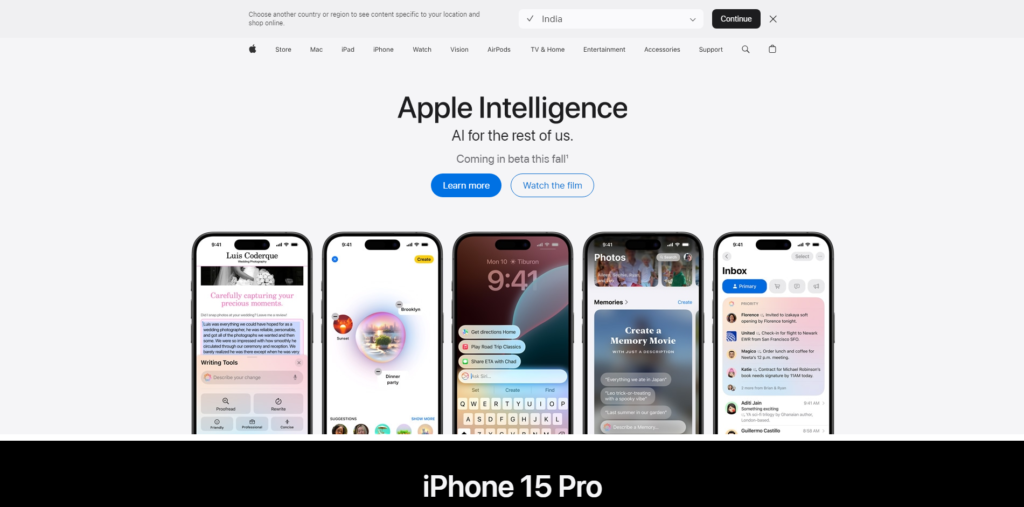
Additionally, Apple is introducing a feature called Apple Intelligence, which represents its latest advancements in generative AI technology. This includes capabilities for transcribing phone calls, enhancing photos through AI, and improving interactions with Siri. The system is also designed to summarize notifications, text messages, and content from documents and the web.

Emphasizing user privacy, Apple executive Federighi introduced a new feature called Private Cloud Compute, aimed at protecting user data. Apple plans to launch these features later this year.

And after the main presentation, Apple’s Federighi suggested in a discussion with reporters that Apple could also form AI partnerships with other companies. Federighi mentioned their goal to allow users to select their preferred AI models, which are fundamental technologies behind chatbots and image generators. This approach might even include collaborations with Google despite their competition in smartphone operating systems.

Federighi also mentioned potential future integrations with AI models such as Google Gemini. He clarified that these are not being announced immediately but represent the company’s intended path.

About Apple
Apple website

Image source

Apple Inc. is a global company that designs, manufactures, and sells various technology products, including personal computers, smartphones, wearables, and tablets, among other devices. Its product line includes the iPhone series of smartphones, iPad tablets, Mac computers, and accessories such as Apple TV, AirPods, Beats products, Apple Watch, and HomePod. Apple also provides support services through cloud-based services and AppleCare. It operates the App Store, which offers apps and digital content, including music, books, games, videos, and podcasts.

The company also provides several subscription services like Apple Arcade, a gaming service; Apple Music, offering curated music and radio stations; Apple Fitness+, a tailored fitness program; Apple TV+, featuring original content; Apple News+, a news and magazine subscription; Apple Pay, a payment system; and Apple Card, a co-branded credit card. Apple licenses its intellectual property as well. The company caters to individual consumers, SMBs, and education, government, and enterprise clients. It sells products directly through its retail and online stores and third-party carriers, wholesalers, and resellers. Founded in 1976, Apple is based in Cupertino, California.

About OpenAI
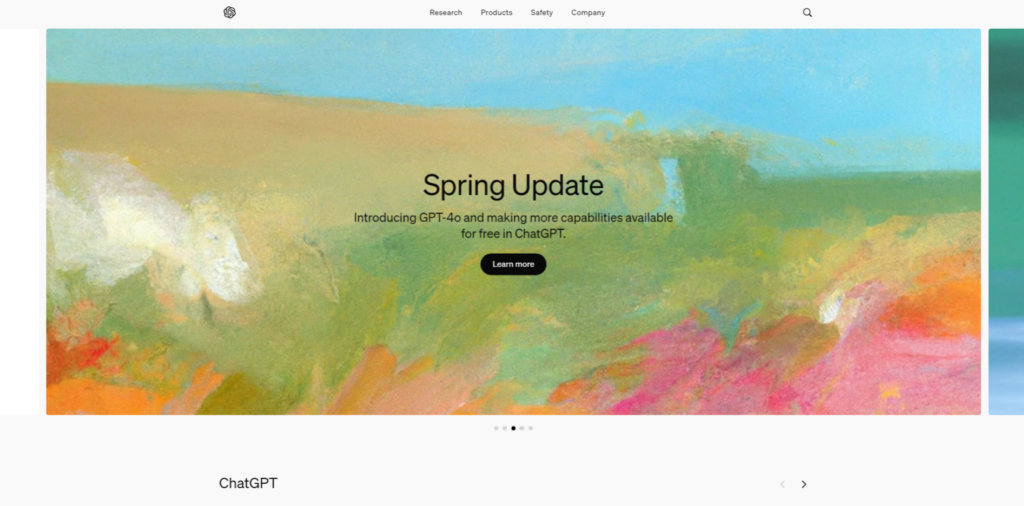
Open AI

Image source

OpenAI, Inc. is a private company that specializes in artificial intelligence research and deployment, aiming to develop AI that benefits all of humanity. Established in 2015 by Elon Musk, Ilya Sutskever, Greg Brockman, Sam Altman, Wojciech Zaremba, and John Schulman, OpenAI focuses on building and managing AI technologies.

The company is involved in policy, education, and outreach to help users enhance their capabilities and acquire knowledge through advanced autonomous systems that excel in tasks with economic value. Additionally, OpenAI functions as an investment entity, targeting early-stage AI startups that are primarily involved in healthcare, climate change, and education. The headquarters of OpenAI, Inc. is in San Francisco, California.

Conclusion

Apple’s partnership with OpenAI marks a significant step in its AI strategy. It enhances Siri and introduces new capabilities through ChatGPT integration. This collaboration, unveiled at WWDC 2024, promises users access to advanced AI features without requiring an account while prioritizing user privacy and consent.

With ChatGPT embedded in iOS 18 and macOS Sequoia, Apple aims to bolster its competitive position in the AI sector. Although initial revenue impacts may be minimal, the increased visibility and integration within Apple’s ecosystem will drive future growth. As Apple navigates legal challenges and market competition, this partnership highlights its commitment to leveraging AI advancements for improved user experience and technological innovation.


Capital One Joins Forces with Payment Giants Adyen and Stripe to Enhance Payment Security

Capital One Joins Forces with Payment Giants Adyen and Stripe to Enhance Payment Security

The tension between established banks and fintech companies has been ongoing for years. Occasionally, however, they choose to collaborate rather than compete. In a notable partnership, Capital One has joined forces with payment leaders Stripe and Adyen, also its competitors, to introduce a no-cost product focused on fraud prevention, as announced last week.

Together, they have developed an open-source tool called Direct Data Share (DDS). This API enables merchants and others involved in the payment process to exchange real-time transaction data for each purchase.

As eCommerce fraud losses are projected to exceed $300 billion by 2027, the companies believe working together can effectively address this issue.

Key Takeaways
  • Strategic Partnership for Enhanced Fraud Prevention: Capital One has partnered with Stripe and Adyen to introduce Direct Data Share (DDS), an open-source tool designed to prevent fraud in online transactions. This collaboration marks a significant move in the financial industry, where traditional banks and fintech companies work together to enhance security measures.
  • Real-Time Data Sharing to Reduce Fraud and False Declines: DDS allows merchants and other payment processors to exchange real-time transaction data through an API, improving fraud detection accuracy and reducing false declines. This initiative helps merchants protect against fraud without incurring additional costs, aiming to mitigate the projected rise in e-commerce fraud losses.
  • Collaborative Benefits and Improved Authorization Rates: The partnership leverages each company’s strengths: Stripe’s Radar product provides fraud scores to enhance transaction authorizations. In contrast, Adyen benefits from higher authorization rates and fewer chargebacks. This synergy helps Capital One’s cardholders experience fewer false positive declines and reduces fraud, benefiting all parties involved.
  • Potential for Industry-Wide Adoption: While the DDS initiative represents a significant advancement in fraud prevention, its long-term success depends on widespread adoption across the financial industry. If other banks and networks implement similar open-source APIs, the security and efficiency of e-commerce transactions could improve dramatically. Conversely, limited adoption may restrict the initiative’s potential impact.

Capital One Introduces DDS to Combat Fraud in Partnership With Stripe and Adyen

Capital One, Adyen, and Stripe have introduced DDS, a free, open-source tool designed to combat fraud. This initiative aims to improve real-time authorization decisions, thus reducing fraud-related losses and false declines for merchants. Capital One seeks to improve its market standing and create a safer banking environment for its customers.

The timing of this strategic partnership is important. Global fraud losses are expected to increase to $343 billion by 2027. Fraudulent activities and declines lead to substantial financial losses and damage the reputation and customer trust of affected merchants.

Jon Borman, head of fraud strategy at Capital One, explained that while the company has developed models to protect customers against fraud, they were limited by insufficient data. To address this, Capital One created an open-source initiative, DDS. Borman described this as an API that enables merchants or others involved in the payment process to transmit real-time transaction data, which is particularly valuable for e-commerce transactions. He noted that these are less secure than in-store purchases where the user verifies the credit card chip.

DDS works by funneling transaction data through Capital One’s API every time an online purchase occurs, enhancing the bank’s ability to thwart fraud for a broader range of merchants and customers. By collaborating with payment platforms like Stripe and Adyen, Capital One utilizes DDS to function as a data clearinghouse, spotting fraud trends across different networks.

Borman added that if a fraudulent IP address is identified via Stripe, that information can be used to prevent fraud in transactions processed by Adyen and vice versa. This collaboration is anticipated to decrease false declines as well, where valid transactions are mistakenly identified as fraudulent, and provide merchants with better protection without additional charges. Capital One’s DDS solution has already shown its effectiveness, enabling over $1 billion in merchant transactions that could have been declined otherwise.

The partnership also prompts questions about Capital One’s plans for its Discover network.

Expansion of Collaboration and Shared Goals in Fraud Prevention

Capital One started working with Stripe on this initiative in early 2023 and expanded the collaboration to include Adyen more recently.

Borman noted that Stripe and Adyen are also focused on combating fraud for both financial benefits and to curb criminal activity. This realization sparked a moment of clarity at Capital One, leading to the recognition that they share similar business models with these firms, which could enhance their joint efforts against fraud.

In the case of Stripe, Capital One can now receive fraud scores from Stripe’s Radar product through its API, which they believe will enhance the accuracy of transaction authorization.
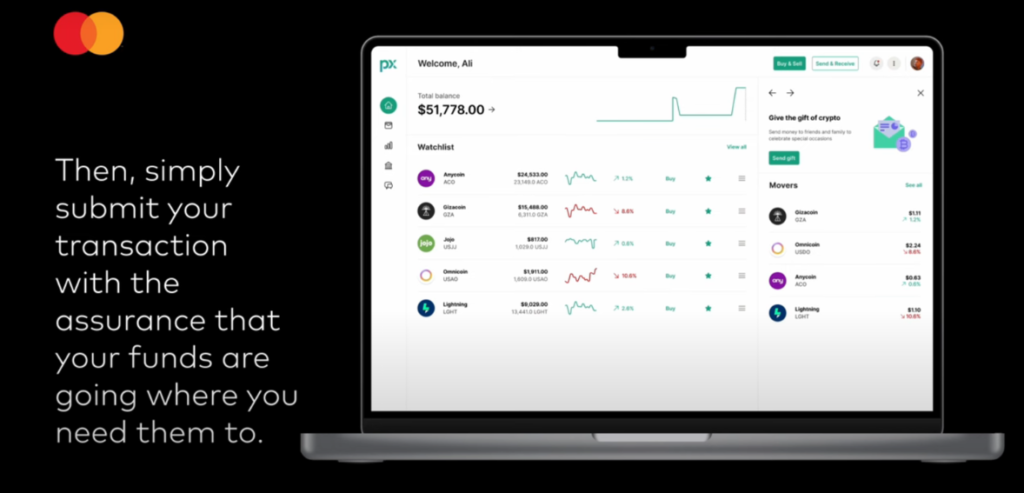
Trevor Nies, Adyen’s SVP and global head of digital, mentioned that when Capital One proposed a solution to boost authorization rates, Adyen quickly agreed to it.

Borman expressed enthusiasm for the partnership, highlighting that it brings mutual benefits: Adyen’s merchants enjoy higher authorization rates and fewer chargebacks, while Capital One’s cardholders experience reduced false positive declines and less fraud.

The DDS initiative represents a major advancement, but its long-term success will hinge on broader adoption. If other banks and networks implement similar open-source APIs, the results could dramatically improve security and efficiency in ecommerce. Conversely, if DDS remains confined to Capital One, its potential to prevent widespread fraud could be limited.

About Capital One

Capital One

Image source

Capital One Financial Corporation is a financial services holding company for Capital One, National Association. It offers a range of financial products and services across the US, the United Kingdom, and Canada. The company operates through three primary segments: Credit Card, Commercial Banking, and Consumer Banking. Capital One accepts various deposit types such as money market, checking, savings, negotiable order of withdrawal accounts, and time deposits. Its lending options cover credit card loans, as well as retail and auto banking loans. Additionally, the company provides commercial and multifamily real estate loans and industrial and commercial lending.
Capital One also issues credit and debit cards and offers capital markets services, advisory, depository services, treasury management, and direct online banking. It serves a diverse clientele, including small businesses, commercial customers, and individual consumers through digital platforms, branches, cafés, and additional distribution networks located in states such as Louisiana, New York, Maryland, Texas, New Jersey, California, and Virginia. Founded in 1988, Capital One’s headquarters are in McLean, Virginia.

About Stripe

Stripe Chargeback Protection: A Guide to Managing Stripe Disputes

Stripe, founded in 2009 by brothers John and Patrick Collison, handles online payment processing for various businesses. Over the last year, Stripe introduced a charge card program that assists fintechs in offering expense cards to their clients. Its customer base includes significant companies like Amazon, Uber, and OpenAI. Additionally, Stripe has enhanced its checkout system by providing access to over 100 different payment methods and enabling merchants to offer multiple one-click checkout options such as Google Pay and Apple Pay.

Companies ranging from emerging startups to established public firms like Salesforce and Facebook utilize Stripe’s software to process online payments and manage complex financial operations. Stripe supports new businesses in their initial growth and revenue generation while helping established companies expand into new markets and develop new business models.

About Adyen

Adyen

Adyen N.V. runs a payments platform that serves regions including the Middle East, Europe, North America, Africa, Latin America, and the Asia Pacific. The company’s platform offers an integrated payments stack that encompasses gateway, processing, risk management, acquiring, settlement services, and issuing.

Additionally, it provides a back-end infrastructure for payment authorization. Adyen caters to various sectors such as mobility, digital, marketplaces, and platforms, food and beverages, retail, hospitality, and subscription services. Founded in 2006, Adyen is based in Amsterdam, the Netherlands.

Conclusion

The collaboration between Capital One, Stripe, and Adyen marks a significant step in tackling e-commerce fraud, potentially leading to a more secure payment environment. Introducing the Direct Data Share (DDS) tool showcases how industry leaders can join forces to combat a common threat. By sharing real-time transaction data, they aim to reduce fraud-related losses and improve authorization decisions, benefiting both merchants and consumers.

Such initiatives are crucial as global fraud losses are projected to soar. However, the broader adoption of similar open-source APIs will determine the long-term success of DDS in the fight against fraud. If widely embraced, this could set a new standard for security in the financial industry.

eBay Will Stop Accepting Amex Payments Due to High Fees

eBay Discontinues AmEx Payments Due to High Fees, Offers Alternative Options for Customers

Starting August 17, eBay will stop accepting Amex payments due to concerns about inflation and the increasing financial pressures on consumers and small businesses. eBay argues that tighter regulation is needed to encourage competition among credit card networks and decrease the costs associated with processing transactions for buyers and sellers.

The company also noted that most of its users are open to using other payment methods. eBay attributes this change to the high fees American Express charges for credit card transactions. Despite technological improvements and eBay’s investments in fraud prevention and customer security, the costs of processing credit card payments continue to rise, a trend eBay attributes to insufficient competition in the market.

Key Takeaways
  • High Transaction Fees Drive Policy Change: eBay’s decision to stop accepting American Express cards for direct payments stems from the high fees associated with these transactions. The company argues that limited competition in the credit card sector contributes to these increasing costs and advocates for stricter regulations to promote competition and reduce fees.
  • Alternative Payment Methods Remain Available: Despite discontinuing American Express, eBay will still accept other major credit cards like Visa, Mastercard, and Discover, along with digital payment methods such as Apple Pay, PayPal, Venmo, and Google Pay. Research indicates that most eBay customers are open to using these alternative payment options.
  • Impact on Consumers and Small Businesses: eBay has highlighted concerns about the effects of inflation and rising costs on consumers and small businesses. The company believes that encouraging competition among credit card networks through stricter regulations can help reduce transaction costs, benefiting both merchants and customers.
  • Context of Broader Industry Trends: eBay’s move mirrors broader industry trends where online retailers are challenging payment processors over high transaction fees. Similar actions have been seen with other major retailers, such as Amazon’s previous confrontation with Visa. Additionally, eBay’s decision follows a precedent set by Costco Wholesale Corp., which ended its partnership with American Express in favor of Visa in 2016.

eBay Will Stop Accepting Amex Payments Due to High Fees

eBay has decided to stop accepting American Express cards for direct payments, citing excessively high fees. This decision highlights a widespread problem with increasing credit card transaction fees attributed to limited competition in the sector. eBay has pointed out that unchecked transaction fee rises result from this insufficient competition. The company suggests that stricter regulations encourage more competition among credit card networks, potentially reducing the costs of processing transactions.

eBay will still accept Visa, Mastercard, and Discover, and digital payment methods like Apple Pay, PayPal, Venmo, and Google Pay. Despite technological improvements and enhanced fraud prevention and customer protection measures by companies like eBay, credit card transaction fees remain high due to limited competition.

eBay Merchant Accounts

The company’s statement expressed concerns about inflation and rising costs affecting consumers and small businesses, emphasizing stricter regulations to encourage competition among credit card networks and reduce transaction costs for merchants and customers.

eBay is informing its customers about the upcoming changes to ensure they are ready for a smooth transition starting August 17. The company has a range of widely used and secure payment options on its platform. Research indicates that most eBay customers are open to using alternative payment methods to continue their transactions on the marketplace.

American Express has long been a payment option for eBay customers. In response to eBay’s recent decision, American Express expressed disappointment, stating that this move would restrict payment options for consumers and deprive them of the benefits, security, and rewards associated with using their cards.

According to their research, American Express also mentioned that the costs associated with accepting their card in the US are on par with the fees eBay incurs for comparable cards from other networks. They argued that eBay’s choice to eliminate American Express as a payment option contradicts their declared aim to enhance competition at the point of sale.

Recently, online retailers have grown more aggressive with payment processors regarding the fees charged for accepting payments. A notable example occurred about two years ago in the U.K., where Amazon threatened to stop accepting Visa due to what it described as excessive fees. Ultimately, both settled their dispute without any interruption in service.

Similar to other payment processors, American Express collects a percentage of each transaction processed through its network. The specific fee depends on the industry, and the rates paid by the largest merchants are generally kept confidential.

The two companies, AmEx and eBay, have been discussing merchant discount rates, also known as interchange fees. These fees are applied every time a card is used in a transaction and have consistently caused concern for merchants. If recent reports are to be believed, retailers paid over $172 billion in card-processing fees last year.

Confident about the decision, eBay stated that its internal research indicates a strong willingness among the majority of its customers to use alternative payment options to keep buying and selling on its platform.

Also, eBay is not alone in ceasing to accept American Express cards. Costco Wholesale Corp. also terminated its credit card partnership with American Express in 2016 after approximately 16 years. This transition shifted Costco to Visa’s credit card network and replaced their co-branded American Express cards with Visa cards issued by Citigroup.

Presently, eBay hosts 2 billion listings and has 132 million active buyers globally, connecting buyers and sellers across 190 markets. This network supports small business expansion and generates economic opportunities for various communities.

About eBay

eBay Chargebacks

eBay Inc. and its subsidiaries manage online marketplace platforms that link buyers and sellers across the United States, Germany, China, the United Kingdom, and other international locations. These platforms facilitate the listing, selling, and purchasing of various products. Established in 1995, the company is based in San Jose, California. eBay operates through several platforms, including the Marketplace, StubHub, and Classifieds.

The Marketplace platform consists of the website www.ebay.com, its localized versions, and mobile applications. The StubHub platform offers ticket sales service on www.stubhub.com, along with its regional versions and associated mobile applications. The Classifieds platform oversees a collection of brands like mobile.de, Kijiji, Gumtree, Marktplaats, eBay Kleinanzeigen, and more.

About American Express

American Express Revenue Sets New Record in Latest Quarter, Up 13% to $15.4 Billion

American Express Co. provides charge and credit card products and travel-related services. It is structured into several segments: Global Commercial Services, Global Consumer Services Group, Corporate, and Global Merchant and Network Services, among others. The Global Consumer Services Group segment offers a variety of proprietary consumer cards worldwide.

The Global Commercial Services division provides proprietary cards for small businesses and corporations, as well as services related to expense management, payment management, and commercial financing products. The Global Merchant and Network Services division oversees a global payments network that processes card transactions, works with merchants, and provides marketing programs, services, and data analytics. The Corporate & Other division encompasses corporate functions and various other businesses and operations. Founded on March 28, 1850, by William G. Fargo, Henry Wells, and John Warren Butterfield, AmEx is headquartered in New York, NY.

Conclusion

eBay’s decision to cease accepting American Express cards starting August 17 addresses the high fees and chargebacks imposed by AmEx and the broader issue of increasing credit card transaction fees due to limited competition. The company advocates for stricter regulations to foster competition and reduce costs for both merchants and consumers. eBay reassures its users that alternative payment methods such as Visa, Mastercard, Discover, and various digital payment options will still be available.

This move aligns with industry trends of retailers challenging high processing fees and mirrors similar actions by companies like Costco. While American Express expressed disappointment, eBay remains confident that its customers will adapt to the new payment options, ensuring continued transactions on the platform.

Banned Ingredients That Will Get Your Business Declined for Merchant Services

House Passes Bill Banning Central Reserve Digital Currency

The US House of Representatives approved a bill that prevents the US Federal Reserve from developing a digital dollar, a type of central bank digital currency (CBDC) that has been under consideration for several years.

The bill garnered bipartisan support, with 216 in favor and 192 against, and was backed by a majority of Republican members and three Democrats. It is now on its way to the US Senate for a vote and, if successful, will be sent to President Joe Biden for his signature, effectively becoming law.

Key Takeaways
  • Bipartisan Support: The House passed the CBDC Anti-Surveillance State Act with a 216-192 vote, showing bipartisan support, including backing from three Democrats. The bill aims to prevent the Federal Reserve from developing a digital dollar without congressional approval.
  • Symbolic Move: The bill is mostly symbolic since the Federal Reserve has not proposed issuing a CBDC and has stated it would only proceed with congressional approval. However, it reflects concerns about potential government overreach and financial surveillance.
  • Legislative Uncertainty: The bill’s fate in the Senate, under Democratic control, is shrouded in uncertainty. However, if it does secure passage and the President’s signature, it would curtail federal oversight of cryptocurrencies and foster a more decentralized digital currency landscape. This potential outcome could significantly impact the financial and economic policy.
  • Divergent Views: Supporters, including House Majority Whip Thomas Emmer and Chairman Patrick McHenry, emphasize privacy and free market principles. Opponents, like Congresswoman Maxine Waters, argue it could hinder competitiveness and innovation in the global digital currency race.

House Passes CBDC Anti-Surveillance State Act with Bipartisan Support

House Passes CBDC Anti-Surveillance State Act with Bipartisan Support

The House of Representatives passed bipartisan legislation that would prevent the Federal Reserve from establishing its own central bank digital currency (CBDC) unless it receives explicit authorization from Congress. The CBDC Anti-Surveillance State Act was approved in the chamber by a vote of 216 (in favor) —192 (against), mostly along partisan lines.

The action is largely symbolic since the Federal Reserve has not proposed plans to issue a CBDC and has consistently stated that it would only proceed with congressional approval. Nevertheless, Republicans, including former President Trump, have expressed worries about the government’s potential misuse of a CBDC. Three Democrats—Mary Peltola (Alaska), Jared Golden (Maine), and Marie Gluesenkamp Perez (Washington)—joined all Republican members in supporting the bill.

The bill, known as the CBDC Anti-Surveillance State Act, was spearheaded by House Majority Whip Thomas Earl Emmer Jr. (R-Minn) and supported by Republican House Financial Services Committee members. The process before it becomes law is still lengthy. The Senate must pass it and may face a potential presidential veto. Still, if it does, it will significantly limit the federal government’s ability to regulate cryptocurrencies, potentially leading to a more decentralized and market-driven digital currency landscape. However, it remains uncertain whether the bill will be considered in the Senate, which Democrats control.

Emmer stated that for over two years, efforts have been focused on informing, building support, and passing this critical legislation, prohibiting unelected officials from introducing a financial surveillance tool that could significantly weaken American values.

He emphasized that his legislation guarantees that digital currency policy in the United States is determined by the American public, ensuring that any development in digital money upholds their values of privacy, individual sovereignty, and free market competitiveness. He believes these principles are essential for the future global digital economy.

Chairman Patrick McHenry (R-N.C.) stated that any issuance of a Central Bank Digital Currency (CBDC) would require authorization from Congress to ensure it aligns with American values. He emphasized that a CBDC should be open, private, and permissionless; otherwise, it risks resembling a surveillance tool similar to those used by the Chinese Communist Party (CCP).

Central Bank Digital Currency

McHenry also mentioned in a press release that the CCP utilizes a CBDC to monitor the spending habits of its citizens, using this data to support a social credit system that either rewards or penalizes individuals based on their actions. He argued that this kind of financial surveillance is inappropriate for the United States.

Congresswoman Maxine Waters (D-Calif.), the ranking Democrat, criticized the bill during a House floor speech and in a press release. She argued that the bill would hinder competitiveness and innovation internationally and weaken the federal agency essential to controlling inflation.

Waters further noted that the bill would position the US as the first nation to prohibit a CBDC despite 134 countries and currency unions currently exploring or implementing such digital currencies. She pointed out that China is already advancing in this area, likening the competition in CBDC development to a space race.

TD Cowen, an investment bank, has noted that the House’s bill opposing a Central Bank Digital Currency (CBDC) could have broader implications.

The bank considers such a prohibition to be detrimental to the international dominance of US banks and the global influence of the U.S. dollar. This concern arises because the ban would affect both wholesale and consumer use of CBDCs, potentially giving digital currencies like the Euro an advantage in global trade. This advantage would occur as stablecoin digital dollars could depreciate during a redemption run, whereas a digital Euro would likely not face similar risks, providing our audience with a clear understanding of the potential outcomes.

What Is the Fed’s View?

What Is the Fed’s View?

The Federal Reserve has clearly stated it is “nowhere near” making a recommendation or adopting a CBDC. Federal Reserve Chair Jerome Powell has communicated to lawmakers that any adoption of a CBDC would involve the banking system.

In March, Powell stated that the Federal Reserve does not wish to create individual accounts for Americans. He emphasized that currently, only banks hold accounts at the Federal Reserve, and this arrangement will remain unchanged.

Although the Federal Reserve has considered the potential for issuing a CBDC and released a report analyzing its advantages and disadvantages last year, central bank officials have generally been dismissive of the idea. Furthermore, Powell has declared that the Federal Reserve would only issue a CBDC with the approval of Congress.

Conclusion

The House’s approval of the bill, which bars the Federal Reserve from developing a central bank digital currency (CBDC), is a pivotal moment in the continuous discourse on digital currency regulation. While its impact is largely symbolic given the Federal Reserve’s current stance on CBDCs, the bill underscores the concerns about potential government overreach and financial surveillance, issues of paramount importance.

The bill’s bipartisan endorsement is a testament to the shared priority placed on privacy and individual sovereignty in financial matters. As the legislation progresses to the Senate, its future remains to be determined, particularly under a Democrat-controlled chamber. If it does pass, it will shape the trajectory of digital currency development in the US, favoring a decentralized and market-driven approach over federal control.

Paying in Cash? Prepare for Added Charges as More Businesses Implement Cash Transaction Fees

Paying in Cash? Prepare for Added Charges as More Businesses Implement Cash Transaction Fees

While some businesses find it cost-effective to accept only cash to sidestep credit card fees, others find handling cash transactions troublesome and are moving away from it altogether. New kiosks are being introduced that convert cash into rechargeable cards. These reverse ATMs allow customers to deposit cash and receive a debit card, deducting a fee of 1.5% to 2.5% from the deposited amount.

Previously, using cash for purchases could result in in-store discounts, helping consumers avoid credit card processing fees. However, customers using cash are now facing additional charges. Today, paying in cash might incur fees ranging from $1 to $6, similar to those traditionally associated with credit card swipes or using an out-of-network ATM.

The rising costs of transactions in the U.S., including the new fees on cash payments, are becoming a significant issue for consumers.

Key Takeaways
  • Rising Cash Transaction Fees: Customers paying with cash increasingly face additional fees ranging from $1 to $6, similar to those for credit card transactions, as businesses adjust their payment processing strategies.
  • Growth of Reverse ATMs: Reverse ATMs, which convert cash into prepaid debit cards at a cost, are becoming more common in venues like stadiums and shopping centers. These machines charge fees of 1.5% to 2.5% of the deposited amount, adding costs for cash users.
  • Impact on Cash Users: The shift towards cashless transactions and the associated fees for cash payments present challenges and additional expenses for those who prefer or rely on cash transactions despite cash still being a widely used payment method.
  • Operational Costs for Businesses: Handling cash incurs significant operational, treasury, and loss prevention costs for businesses, driving some to adopt cashless models to reduce expenses and streamline payment processes.

The Growing Trend of Cashless Transactions and the Impact of Reverse ATMs

The Growing Trend of Cashless Transactions and the Impact of Reverse ATMs

The trend toward cashless transactions is growing. This shift is driven by the convenience and efficiency of digital payments, which are becoming more popular among businesses and consumers. However, this trend can introduce unforeseen challenges and expenses for those who prefer or depend on cash. One such challenge involves using reverse ATMs, which convert cash into prepaid debit cards, typically at a cost to the user.

Reverse ATMs, also known as cash-to-card kiosks, are machines that allow users to deposit cash in exchange for a prepaid debit card. These cards can then be used for in-store and online digital transactions. The process is straightforward: users insert cash into the machine, which then loads an equivalent amount onto a card. This technology is increasingly found in places like shopping centers, sports stadiums, airports, and event venues.

While reverse ATMs provide a useful service for converting cash to digital currency, they often include additional fees. For example, recently, at Yankee Stadium, investor and philanthropist Noa Khamallah encountered such a “trend” when trying to make purchases at cashless concession stands. He was guided to a kiosk for “plastic money.” Khamallah inserted $200 into a reverse ATM, which charged a $3.50 fee, and issued a debit card with a balance of $196.50. Although this fee might seem minor, it can accumulate over time, particularly for those who use the service frequently.

Reverse ATMs have become widespread in cashless establishments and restaurants nationwide to accommodate those who still prefer cash. However, individuals looking to pay for items like taxes, parking tickets, tolls, and phone bills often find that these services have been outsourced to companies that typically impose a fee.

For instance, Companies like RedyRef have significantly increased the deployment of these machines to places, including restaurants, carnivals, and stadiums. This shift is influenced by a general move away from cash and by-laws in some states that prohibit cashless businesses. Fees for using reverse ATMs may apply and vary by state and venue.

Fees for using reverse ATMs may apply

This situation effectively penalizes those who opt to use cash. Although using cards and mobile devices to make purchases is increasingly common, cash still represented 16% of all payments in 2023, making it the third most preferred payment method.

Jonathan Alexander, executive director of the Consumer Choice in Payment Coalition, expressed concern over the necessity to remind retailers about the legitimacy of cash, stating that it is shocking to have to assert that U.S. currency should be accepted everywhere.

Government entities and companies handling utilities, cable, and wireless services have also started outsourcing cash payment processing. For those who prefer to use cash for payments such as bills, rent, or fines, services like PayNearMe facilitate these transactions at retail locations like 7-Eleven, Walmart, and Walgreens. Customers simply show a cashier a personalized barcode to process their cash payment. Last year, PayNearMe handled over $4 billion in such transactions.

Currently, there are no federal laws mandating that businesses accept cash. However, some states like Rhode Island and Colorado, as well as cities such as New York, have outlawed cashless stores after many shifted to card-only transactions to limit the spread of COVID-19, accelerate service, and reduce theft. In 2023, legislation was proposed in both the House and Senate that would require businesses to accept cash for all in-person transactions below $500, provided they do not charge fees for using payment devices like reverse ATMs. These bills have yet to be approved.

The push for cashless transactions also stems from multiple benefits. Businesses find that digital payments can simplify their processes, lower the risk of theft, and decrease the need to handle cash. Consumers enjoy the quickness and ease of contactless payments, eliminating the need to carry cash or concern over losing credit and debit cards. Yet, this transition also prompts concerns about accessibility and fairness.

Many businesses also avoid cashless transactions due to charges that come along while handling cash transactions.

Understanding the Charges of Handling Cash Transactions

Understanding the Charges of Handling Cash Transactions

Handling cash presents multiple costs for businesses in the US, spanning from operational activities to loss prevention measures. Let’s explore these costs in detail:

  • Operational costs:

Operational costs are a significant burden when handling cash. Preparing cash envelopes can consume up to 40 minutes per day if a cashier is responsible for 80 to 100 envelopes, with each taking about 30 seconds. Additionally, both cashiers and managers need 5-10 minutes to balance cash at the end of a shift.

Store managers also spend around 45 minutes preparing bank deposits, the duration of which depends on the cash amount and the number of transactions. Other operational costs include secure transportation of cash or handling deposits through employee accounts.

  • Finance and Treasury Costs:

Treasury and finance also contribute to the financial strain. Maintaining a bank account typically costs about $35 per month. There are also fixed and variable fees for deposits, including costs per deposit ticket and fees that vary based on the deposit amount.

Sweep fees for transferring funds between accounts average $.30 each, and non-sufficient funds (NSF) fees, typically $35, are incurred if transfers are made without adequate funds. The labor involved in reconciling daily sales and bank sweeps significantly affects the need for full-time employees and their costs.

  • Loss Prevention Costs:

Loss prevention costs arise from discrepancies between the cash registered from sales and the actual deposits, which usually amount to about 0.1% of total sales. Stores face risks of robberies, which may also target managers en route to banks and incur costs related to adjustments for counterfeit cash made by banks. Additional expenses come from investigating internal cash handling discrepancies, often involving interviews and requiring travel.

  • Additional Costs:

Additional costs include internal losses that may lead to the dismissal of staff involved, with subsequent hiring and training of replacements. Following robberies, some employees might resign or require counseling, adding further to the costs.

Conclusion

The rise in cash transaction fees and the shift toward cashless systems are reshaping how consumers and businesses handle payments. While digital payments offer convenience, those who prefer cash face new financial burdens, including fees from reverse ATMs. The operational, financial, and security costs of handling cash are prompting many businesses to adopt cashless models despite cash still being a significant payment method.

This shift highlights the need for balancing convenience with accessibility, ensuring that all consumers, including those who rely on cash, are not unfairly penalized. As the landscape of payment methods evolves, ongoing discussions about regulation and fair access to payment options will be crucial.

An Inflation Whopper: Big Mac Inflation Exaggerated

An Inflation Whopper: Big Mac Inflation Exaggerated

In a blog post published recently, Joe Erlinger, president of US McDonald’s, responded to recent online complaints regarding the $18 price for a Big Mac meal, including the sandwich, fries, and a drink. He clarified that this price is specific to only one location.

Rising fast food prices are significantly impacting American consumers. While chains like Burger King and Wendy’s concentrate on keeping prices low, a notable burger company is addressing public discontent. McDonald’s is working to balance its pricing strategy to address the concerns of customers upset by the higher Mcdonald’s prices, much like its competitors and other retail businesses.

Image source

Key Takeaways
  • McDonald’s Addresses Price Misconceptions: President Joe Erlinger clarifies exaggerated claims about McDonald’s prices, stating that $18 Big Macs are sold at only one location out of over 13,700 in the US. This emphasizes the company’s commitment to accurate information.
  • Consumer Dissatisfaction Impacts Spending: Rising fast food prices reduce consumer spending and slow down fast food sales, highlighting the impact of price hikes on customer behavior and restaurant traffic.
  • McDonald’s Affordability Efforts: CEO Chris Kempczinski emphasizes customer affordability, highlighting McDonald’s history of value pricing and plans to introduce a $5 value meal to attract customers.
  • Understanding Inflation with the Big Mac Index: The Big Mac Index serves as a tool to measure purchasing power parity (PPP) among nations, indicating inflation trends. Recent studies show that while Big Mac inflation has increased, it hasn’t matched the rapid rise seen in the Consumer Price Index (CPI), underscoring the complexity of food price dynamics amidst broader economic factors.

McDonald’s Addresses Exaggerated Claims About Rising Prices

McDonald’s Addresses Exaggerated Claims About Rising Prices

McDonald’s president, Joe Erlinger, is concerned with recent claims suggesting that the company has been raising its prices beyond inflation rates. In a rare open letter to US customers, he stated that reports of excessively high fast food pricing have been overstated.

In his letter, Erlinger acknowledged that $18 Big Macs are real but specified that they are sold at only one of the over 13,700 locations in the US. He expressed frustration and concern over how this information has been widely circulated and misrepresented in viral social posts and inadequately researched reports, leading many to mistakenly believe these are typical prices.

He also addressed rumors about the average Big Mac price in the US, clarifying that it has not doubled since 2019 but increased from $4.39 to $5.29, marking a 21% rise. Erlinger emphasized the company’s commitment to providing accurate information, noting their responsibility to the nearly 90% of the US population they serve annually.

People are expressing their dissatisfaction with rising fast food prices online. This isn’t just talk; customers are also reducing their spending. Due to frustration with high prices, diners are eating out less frequently and spending less when they do, which is leading to a slowdown in fast food sales and a decrease in customer traffic.

Joe Erlinger is addressing these concerns because McDonald’s is increasingly viewed as a symbol of rising fast food prices, a perception that could negatively impact both sales and the company’s reputation.

big mac inflation

McDonald’s CEO Chris Kempczinski emphasized the importance of affordability for their customers. He said that they wrote the book on value and that they are dedicated to continuing to be industry leaders.

To attract customers, the burger chain is reportedly considering introducing a limited-time $5 value meal to the menu.

The average cost of a Big Mac combo in the US is now $9.29. The Egg McMuffin’s price has risen to $4.29, showing a 23% increase from its 2019 price of $3.49. Additionally, the price for a 10-piece McNuggets meal has climbed to $9.19, up 28% from $7.19.

Joe Erlinger pointed out that over 95% of McDonald’s locations in the US are operated by franchise owners who set their own menu prices. This independent pricing allows for many items to increase in cost at a rate lower than inflation, keeping prices competitive in the quick-service restaurant industry. He also mentioned that over 90% of US franchisees provide bundled meals priced at $4 and even lower.

Understanding Inflation With The Big Mac Index

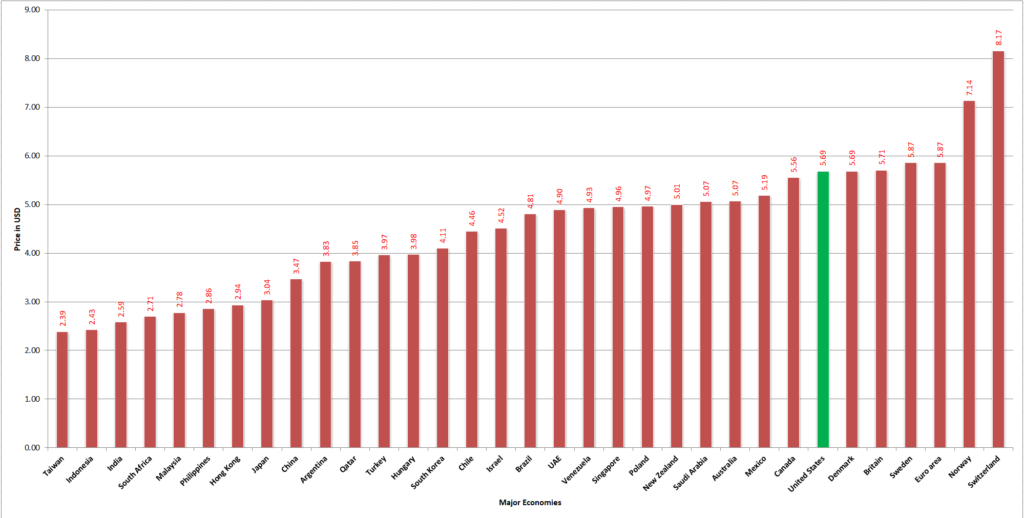
Global Big Mac Index

Global Big Mac Index: source

To clarify, the Big Mac index was introduced by The Economist magazine in 1986 as a tool to measure PPP among nations, using the price of a McDonald’s Big Mac as a standard.

Purchasing Power Parity (PPP) is an economic theory that suggests exchange rates will eventually adjust to ensure that an identical basket of goods costs the same in different countries. In this case, a Big Mac is used as the basket of goods. The cost of a Big Mac includes labor, materials, taxes, transportation, and other elements, providing a useful measure of inflation.

Recent research shows that since 2012, the price of a Big Mac has consistently exceeded the Consumer Price Index (CPI), yet it has not increased at comparable rates. Yet, as inflation began to rise in 2021, the price of the Big Mac did not climb at the same pace as the CPI.

The study examined Big Mac and CPI inflation rates in January and July of each year starting from 2018. It noted that both rates were around 1% at the beginning of 2021. From this time onwards, the CPI inflation rate started surpassing the Big Mac rate, climbing to a high of 8.5% in July 2022, whereas the Big Mac inflation rate remained lower at 4.5%.

Since that time, the inflation rate for Big Macs has continued to rise, while the CPI inflation has begun to fall. By July 2023, Big Mac inflation exceeded 8%, while the CPI was just over 3%.

It’s important to understand that the CPI includes a wide variety of items, such as energy and clothing prices. The Big Mac price changes tend to mirror shifts in the cost of dining out. The index for food away from home, including the Big Mac index, saw greater increases than the CPI for all items after July 2022.

The CPI’s food away from home category encompasses costs from restaurants and similar establishments. Despite the general decline in the overall CPI, rising food prices continue to play a significant role in the inflation figures.

Conclusion

In response to public dissatisfaction with fast food prices, McDonald’s USA President Joe Erlinger addressed exaggerated claims about the cost of a Big Mac meal, clarifying that the $18 price only applies to one specific location. He highlighted that the average price of a Big Mac has increased modestly, from $4.39 to $5.29 since 2019. Erlinger emphasized McDonald’s commitment to affordability and accurate information.

Despite rising fast food prices, largely due to inflation and individual franchise pricing decisions, McDonald’s aims to remain competitively priced and customer-focused. The company is considering introducing a $5 value meal to attract customers and maintain its reputation as a leader in value within the fast food industry.

Consumer Agency to Regulate BNPL-Like Credit Cards

Consumer Agency to Regulate BNPL-Like Credit Cards

On the 22nd of April, 2024, the Consumer Financial Protection Bureau (CFPB) issued an interpretive rule. This rule will allow the consumer agency to regulate BNPL providers, similar to those governing traditional credit card issuers. The rule includes digital user accounts that offer credit access, such as loans under the BNPL model.

It states that providers marketing loans as BNPL must follow consumer protection standards outlined in federal law and regulations. This includes rules about billing disputes, product refunds, service cancellations, and disclosure requirements like periodic billing statements. The CFPB introduced this rule to provide clarity on the obligations that market participants with specific business practices must adhere to, considering the diverse loan offerings within the BNPL sector.

Consumer Agency to Regulate BNPL- Key Takeaways
  • Extension of Credit Card Regulations to BNPL Lenders: The Consumer Financial Protection Bureau (CFPB) has issued an interpretive rule that requires Buy Now, Pay Later (BNPL) providers to adhere to consumer protection standards similar to those for credit card issuers. This includes handling disputes, issuing refunds, and providing periodic billing statements.
  • CFPB’s Justification and Market Concerns: The CFPB’s decision is based on the view that BNPL loans function similarly to credit cards in many respects, such as offering credit services and charging merchants transaction fees. The Bureau aims to introduce consistency and clarity to the BNPL market, addressing issues like consumer disputes and the lack of standardized disclosures.
  • Mixed Industry Reactions: BNPL providers have responded differently to the CFPB’s rule. Affirm supports the initiative, emphasizing the need for consistent industry standards. Conversely, Klarna criticizes the approach, arguing that BNPL and credit cards are fundamentally different products and should not be regulated in the same manner.
  • Implementation and Public Feedback: The rule will take effect 60 days after its publication in the Federal Register. The CFPB has opened a comment period until August 1, 2024, to gather public input and refine the regulatory approach to better align with modern financial technologies and consumer credit models.

Background

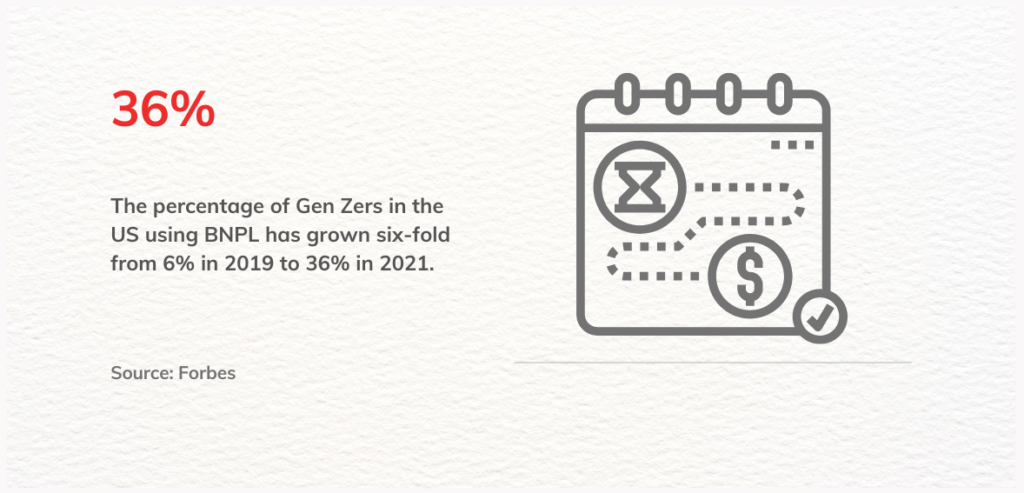
bnpl infographics

The CFPB started investigating BNPL programs in 2021 due to rapid market growth and concerns over increasing debt and the handling of consumer data.

In 2022, a CFPB market analysis revealed that BNPL usage surged during the pandemic. Five companies issued 180 million loans totaling more than $24 billion in 2021, marking a nearly tenfold increase from 2019. The analysis found that over 13% of BNPL transactions involved returns, with consumers disputing or returning $1.8 billion worth of transactions among the five firms.

The report highlighted issues such as the absence of standardized disclosures and difficulties in dispute resolution. Since the report’s release, the CFPB has engaged in various activities to deepen its understanding of the market. These include identifying common business practices, conducting supervisory examinations, and other forms of market monitoring and investigation.

Last year, the CFPB shared insights on the financial profiles of BNPL borrowers. In March 2024, the CFPB published its Consumer Response Report for 2023, which documented consumer difficulties with merchants over BNPL issues, including not receiving items and problems canceling loans. The CFPB continues to field complaints about refunds and disputed transactions as BNPL products remain popular among various demographic groups.

CFPB Extends Credit Card Protections to BNPL Lenders

Last month, the CFPB announced its intention to apply certain consumer protection rules from the credit card industry to BNPL lenders. This move aims to increase regulation in the rapidly growing BNPL sector. Companies such as Klarna, Afterpay, and Affirm collaborate with retailers to offer finance options for customer purchases, with repayment made in installments. Despite its growth, this sector has not been subject to a comprehensive federal regulatory framework.

Consumer Financial Protection Bureau

Image source

Under a new interpretive rule issued by the CFPB, BNPL lenders must now resolve customer disputes, issue refunds for returned products, and provide periodic billing statements—requirements that align with those mandated for credit card companies under the Truth in Lending Act (TILA).

Rohit Chopra, the Director of the CFPB, stated that consumers should receive the same protections whether they use a BNPL or credit card service, citing established laws and regulations that support this policy.

Rohit further highlighted that consumers who opt for BNPL at checkout are often unsure about receiving refunds for returned products or whether the lender will assist if the product isn’t as promised.

The CFPB believes this initiative will introduce consistency to the market and is set to become effective 60 days after its publication in the Federal Register. Affirm responded positively, stating that the CFPB’s move to promote consistent industry standards is encouraging.

In their statement, Affirm also called on other BNPL providers to fulfill the industry’s commitment to offering a more flexible and transparent payment alternative compared to traditional methods.

However, Klarna expressed concerns, stating it is perplexing that the CFPB overlooks the key differences between credit cards and BNPL services. Klarna argues that regulating BNPL as if it were a credit card—comparing two fundamentally different products—will not address issues related to consumer credit card debt.

what is bnpl

The bureau defended its approach of regulating BNPL (Buy Now, Pay Later) providers in the same manner as credit card companies. It stated that BNPL loans are often used similarly to credit cards for both in-person and online purchases. Additionally, like credit cards, BNPL loans involve credit services and payment processing, and they also result in transaction fees charged to merchants, according to the press release.

A CFPB spokesperson explained that the agency conducted a thorough review of how current laws and regulations pertain to the emerging BNPL lending model. After careful examination, it was concluded that specific elements of the TILA and its implementing regulations are applicable to BNPL loans as they are presently structured.

An “interpretive” law allows an agency to offer the public its initial interpretation of existing laws concerning a specific issue.

Understanding Interpretive Rule

The CFPB recently issued a rule that redefines digital user accounts used for BNPL credit. Under this rule, these accounts are categorized as “creditors” or “card issuers” under Regulation Z subpart B. This includes any account that allows purchasing on credit through non-traditional means such as websites, apps, or browser extensions, aligning them with “credit cards” as described in Regulation Z and TILA. These digital accounts, designed for repeated use, meet the “time to time” usage criteria set out in Regulation Z, even if they do not incorporate the usual credit card fees or interest charges.

BNPL plans, typically arranged as closed-end loans to be paid in up to four installments without additional finance charges, must now provide consumer protections similar to those of traditional credit cards. These protections include:

  • Resolving disputes initiated by consumers and halting payments while disputes are resolved;
  • Issuing credits and processing refunds when consumers return goods or cancel services;
  • Sending regular billing statements akin to those provided with standard credit cards.

The rule requires BNPL providers to follow subpart B, which includes regulations on cardholder liability and the solicitation of credit cards, among other rules. While BNPL products do not fall under “open-end credit” definitions, the new rule mandates that BNPL services manage disputes, process returns, and cancellations, and provide transparent billing statements, similar to traditional credit card companies.

However, BNPL providers are not held to some of the regulations affecting credit card companies, such as caps on penalty fees or assessments of a consumer’s payment capacity.

The CFPB has opened a comment period for public input on this interpretive rule until August 1, 2024, aiming to adjust regulatory practices to better suit modern financial technologies and evolving consumer credit models.

Conclusion

Most major BNPL companies already adhere to protections similar to credit card protections, yet the new rule aims to standardize these across the industry, a CFPB official explained to journalists. The rule targets the commonly used “pay in four” installment plans but won’t enforce all credit card regulations, such as evaluating a consumer’s repayment capacity.

The CFPB believes that applying these consumer protection standards will ensure greater consistency and fairness in the BNPL sector, ultimately benefiting consumers by providing clearer guidelines and enhancing trust in these financial products. The new rule is expected to take effect 60 days after its publication, with the public comment period open until August 1, 2024.

A Look Behind the Bankruptcy and Consequences

What Happened to Synapse? Synapse Bankruptcy Freezes Customer Funds

Life comes with its share of costs—rent, mortgage, groceries, gas, and leisure activities all add up. However, what impact does losing access to one’s finances have? Currently, this is the situation for numerous Americans. Thousands of personal and business bank accounts have been frozen for weeks due to an ongoing conflict between the fintech startup Synapse and its banking partners over disputed customer balance amounts.

So what happened to Synapse? Let us analyze and understand Synapse’s bankruptcy and its effect on customers.

What Happened to Synapse? Key Takeaways of Synapse’s Bankruptcy
  • Frozen Accounts Affecting 200,000 Users: Synapse Financial Technologies’ bankruptcy has left over 200,000 customers unable to access their funds due to ongoing disputes with banking partners.
  • Judicial Intervention: A US Bankruptcy Court Judge appointed an independent Chapter 11 trustee to manage Synapse, aiming to restore access to customer funds, although the timeline remains uncertain.
  • Operational and Legal Issues: Synapse’s collapse followed a series of operational failures, management disputes, and legal conflicts with key partners like Mercury and Evolve Bank, leading to widespread service disruptions.
  • Regulatory and Consumer Impact: The situation underscores the vulnerabilities in fintech operations, prompting calls for increased regulatory oversight to protect consumers and ensure the stability of fintech services.

Image source

Synapse Financial Technologies’ Collapse Leaves 200,000 Fintech Users Without Funds

In the wake of Synapse Financial Technologies’ collapse, more than 200,000 fintech clients have lost access to their money. Since last year, disagreements over disputed customer balance numbers have arisen with many partners for Synapse, an Andreessen Horowitz-funded business that serves as a middleman between consumer-facing fintech brands and banks backed by the FDIC.

Judge Martin R. Barash of the US Bankruptcy Court (Central District of California) agreed during a recent hearing to hand control of Synapse over to an independent Chapter 11 trustee, removing the incumbent management.

Barash emphasized that his main concern is to restore consumer access to their funds, although he did not specify how soon this might occur. Previously, he attempted but failed to involve federal banking regulators to help resolve the issue. “Getting end consumers their money is the most critical thing right now,” he said, expressing the urgency of the situation. Additionally, he expressed how extremely upsetting it bothered him to hear from people who are struggling to pay for their homes or buy food.

Synapse Financial Technologies' Collapse Leaves 200,000 Fintech Users Without Funds

Michael Gottfried, an attorney representing Yotta Technologies, one of the affected fintechs, described the situation as a “house on fire,” underscoring the severity of the crisis for those cut off from their money.

The conflict escalated in April when Synapse filed for bankruptcy after losing several key partners. On May 11, Synapse disabled access to a critical technology system used by lenders to manage transactions and account details. Consequently, users of multiple fintech services have been left without access to their money.

Evolve stated in a release last week that Synapse’s shutdown has “unnecessarily put end users at risk by impeding our ability to verify transactions, confirm user balances, and adhere to legal requirements.” As a bank, Evolve is obligated to ensure all customer deposits are precisely accounted for, a process that could be time-consuming.

Despite the freeze on customer deposits, Evolve confirmed it remains financially stable. Other institutions partnered with San Francisco-based Synapse include Tennessee’s Lineage Bank and Yotta, a savings rewards company that offers prizes to incentivize customers to save.

The impact of Synapse’s operational issues might expand. According to court documents, Synapse estimated it had about 100 customer relationships affecting approximately ten million Americans before declaring bankruptcy. However, banking regulators argue this estimate is significantly inflated, expecting the number of affected individuals to be in the thousands or tens of thousands.

Synapse’s creditors were advocating in court for the bankruptcy to be converted to Chapter 7, which would have resulted in the company’s liquidation. During court proceedings, representatives for Synapse’s customers expressed concern that liquidating the company could further exacerbate the disruptions to accessing funds.

How US banking regulators might influence the situation arising from Synapse’s collapse is still being determined. Synapse is not a bank, so its regulation does not fall under the Federal Reserve or the Federal Deposit Insurance Corporation (FDIC). Additionally, since no banks associated with Synapse have failed, there is no basis for FDIC deposit insurance coverage.

The Consumer Financial Protection Bureau (CFPB), which holds law enforcement powers, might investigate Synapse’s operations and its effects on consumers.

Both traditional bankers and consumer advocates have often criticized the business model of fintech companies, which operate similarly to banks but without regulatory safeguards, as customer funds are held somewhere else.

A Look Behind the Bankruptcy and Consequences

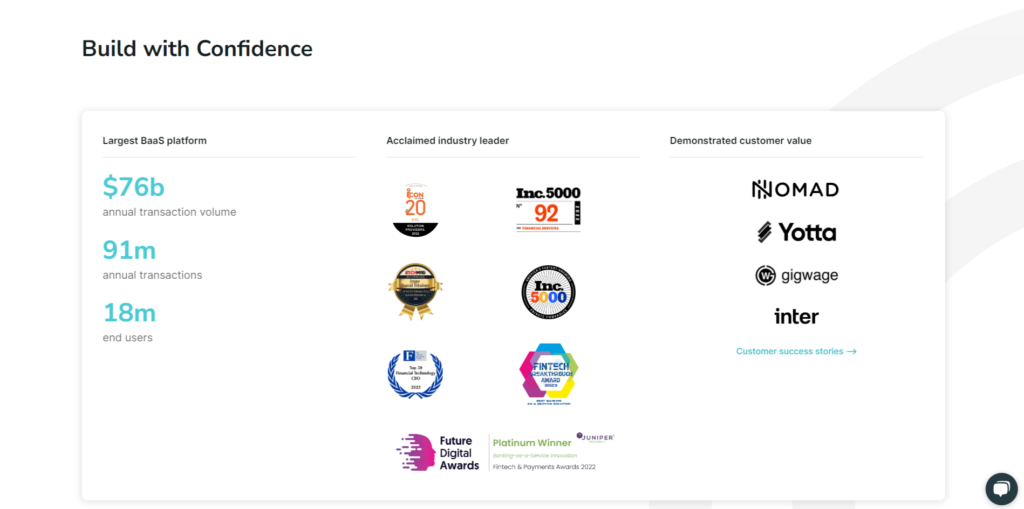
Synapse, founded in 2014, pioneered the “banking-as-a-service” (BaaS) industry. For startups, obtaining the necessary charters and permissions and developing systems to accept deposits, grant loans, and issue debit cards is relatively inexpensive and time-consuming. In 2022, Synapse made the Inc. 5000 list of Fastest Growing Private Companies, ranking in the top 100 Financial Services companies. With 200 employees, the company served 18 million end-users, a 64% increase from the previous year, handled $91 million in transactions annually, an 82% increase, and processed $76 billion in transaction volume, up 43% from the previous year.

Despite its rapid growth, Synapse has yet to achieve profitability, and there are ongoing concerns about its aggressive management style dating back to 2020. The CEO, Pathak, an expatriate from India, was known for his impulsive decisions to dismiss engineers for not working quickly enough. Engineers reported issues with faulty code and disorganized customer databases, leading some neobanks to sever ties with Synapse due to these operational problems.

In the summer of 2022, Evolve, a bank established a century ago in Tennessee, decided to end its sponsorship of Synapse and withheld a $17 million payment to cover a $14 million discrepancy in one of the FBO accounts. The separation process has been protracted and remains unresolved, attributed to Synapse’s difficulties in reconciling account ledgers—an essential banking function typically not complicated by discrepancies and suspicious circumstances.

At the same time, Synapse faced a significant issue with its largest client, Mercury, a fintech company providing bank accounts to small businesses and holding $3 billion in deposits. Mercury claimed that Synapse had underpaid them in “rebates” that should have increased with the rising federal funds rate. This dispute led to ongoing legal action, with Mercury alleging in one lawsuit that Synapse was insolvent and requesting that its assets be frozen to ensure funds would be available should Mercury win the case.

Additionally, Mercury chose to bypass Synapse by forming a direct partnership with Evolve Bank. This move, which circumvented the need for Synapse’s involvement, posed a threat to the banking-as-a-service (BaaS) business model. The combination of public insolvency accusations and this strategic shift contributed to a severe crisis for Synapse.

Synapse had been seeking a buyer for several months before striking a deal with TabaPay, a provider of financial services to fintech companies. To facilitate this transaction, Synapse filed for Chapter 11 bankruptcy reorganization, with TabaPay agreeing to purchase Synapse’s assets for $9.7 million—a sum considerably lower than the venture capital funding Synapse had previously received.

Initially, the plan under Chapter 11 was for Synapse to sell its operational assets to TabaPay, which would have absorbed many of Synapse’s approximately 100 employees and taken over client services.

However, this deal ultimately collapsed. On May 11th, Evolve Bank & Trust, an Arkansas-based bank partner of Synapse, suspended individual consumers’ access to their accounts and debit cards. Evolve stated it was unable to access necessary records at Synapse to verify account balances.

Despite the challenges and reduced staff, Synapse continued to play a crucial role in managing substantial customer funds. During court proceedings, another sponsor bank, Lineage, reported that Synapse managed funds for the benefit of others (FBO) accounts with assets valued between $60 million and $80 million. This did not include the assets held in the Evolve FBO and other bank relations. Liquidating Synapse involves disentangling these complex banking relationships. The overseeing bankruptcy judge, Martin Barash, described the situation as a “hot mess.”

Following TabaPay’s withdrawal from the acquisition, Lineage, which was under a federal consent order for its dealings with fintechs, ceased processing payments for clients of Synapse. Some clients, like Juno, transitioned to Evolve. Concurrently, on May 11, the Synapse dashboard that Evolve used to manage customer accounts malfunctioned. This led to a sudden halt in access to fintech app accounts, with all direct deposits and transactions being returned to the senders.

What Should the Affected Parties Do?

If you’ve been affected and need to file a complaint, contact the FDIC by phone at 1-877-275-3342 or online.

If you want to provide input on fintech regulations, contact the Consumer Financial Protection Bureau by phone or online.

About Synapse

What Happened to Synapse?

Image source

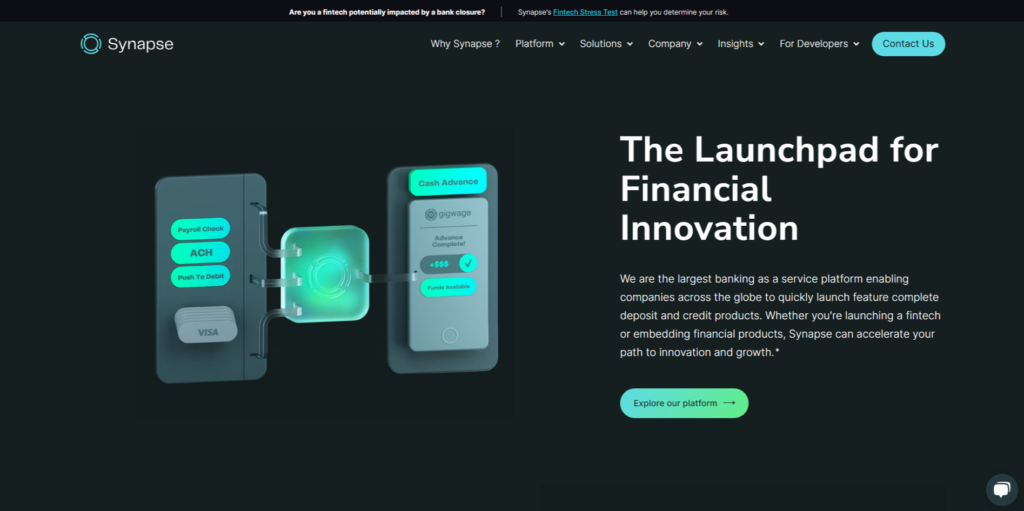
Synapse Financial Technologies Inc. operates as a banking-as-a-service (BaaS) platform, specializing in creating banking software solutions. The company provides an array of API products across payment, deposit, lending, investment, and finance sectors, enabling clients to develop and launch their banking products.

Synapse aims to simplify the process for users to create and implement financial applications, often referred to as the “AWS of banking.” Their offerings encompass a range of products, including lending, credit services, wealth management, online payment processing, embedded finance, and card solutions.

Conclusion

The collapse of Synapse Financial Technologies has significantly disrupted the lives of over 200,000 users who have lost access to their funds. Amidst ongoing bankruptcy proceedings and disputes with banking partners, the company’s operational failures have left many struggling to meet basic financial needs. The appointment of a Chapter 11 trustee aims to address these issues, yet the timeline for restoring access to customer funds remains uncertain.

As the situation evolves, affected parties should stay informed and consider reaching out to regulatory bodies like the FDIC and the CFPB for assistance and to voice concerns about fintech regulations. This case highlights the vulnerabilities in fintech operations and the critical need for robust regulatory oversight to protect consumers.

Mastercard Crypto Credential Goes Live, Adds New Partners

Mastercard Crypto Credential Goes Live, Adds New Partners

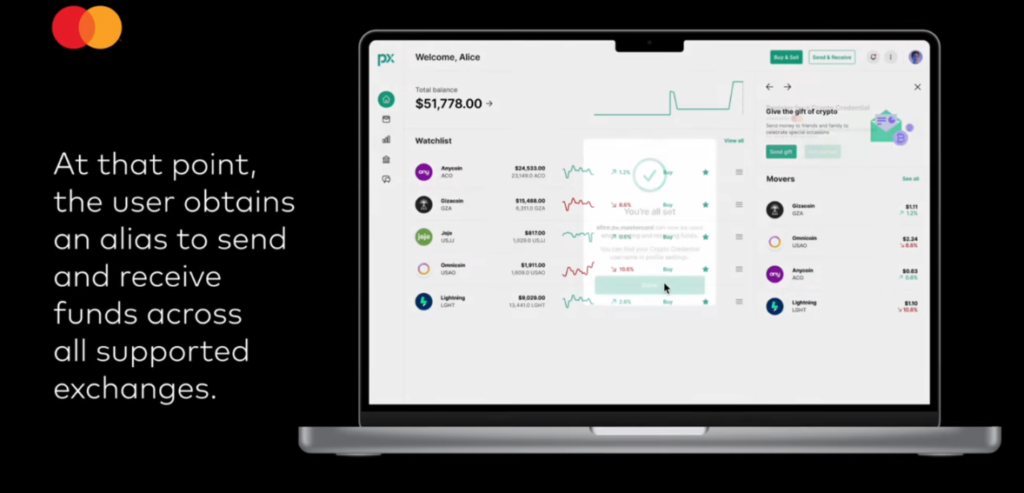
Mastercard has reached a new milestone in its cryptocurrency initiatives. Its Crypto Credential offering, introduced at Consensus 2023, is now operational. With their Mastercard Crypto Credential aliases, users of cryptocurrency exchanges can send and receive cryptocurrency, saving them time by eliminating the need for a complex alphanumeric address.

Mastercard Crypto Credentials make verifying how customers and organizations interact on blockchain networks more accessible. Users no longer need to use the more complicated blockchain addresses to complete transactions; instead, they can use simpler identifiers.

The Mercado, Lirium, and Bit2Me exchanges have activated live transaction capability. This enables secure and straightforward blockchain transactions in European and Latin American markets.

Key Takeaways
  • Simplified P2P Transactions: Mastercard’s Crypto Credential pilot program enables easier peer-to-peer cryptocurrency transactions using simplified aliases, eliminating the need for complex blockchain addresses.
  • Enhanced Security and Compatibility Checks: The program verifies the recipient’s alias and wallet support for the specific digital asset and blockchain before completing transactions, preventing potential fund loss.
  • Global Reach and Partnerships: The service is available in 13 countries across Latin America and Europe, facilitated through partnerships with several crypto exchanges, including Mercado, Lirium, and Bit2Me.
  • Future Expansion and Regulatory Compliance: Mastercard plans to expand the program to include NFTs and blockchain ticketing while ensuring compliance with regulatory standards to enhance transparency and security in blockchain transactions.
Mastercard Crypto Credential Goes Live

Mastercard Introduces Crypto Credential for Simplified P2P Transactions

Mastercard began its Crypto Credential pilot program on May 29, 2024, to streamline peer-to-peer (P2P) bitcoin transactions. Now that the application is up and running, users can transfer and receive cryptocurrency using simpler aliases instead of complicated blockchain addresses.

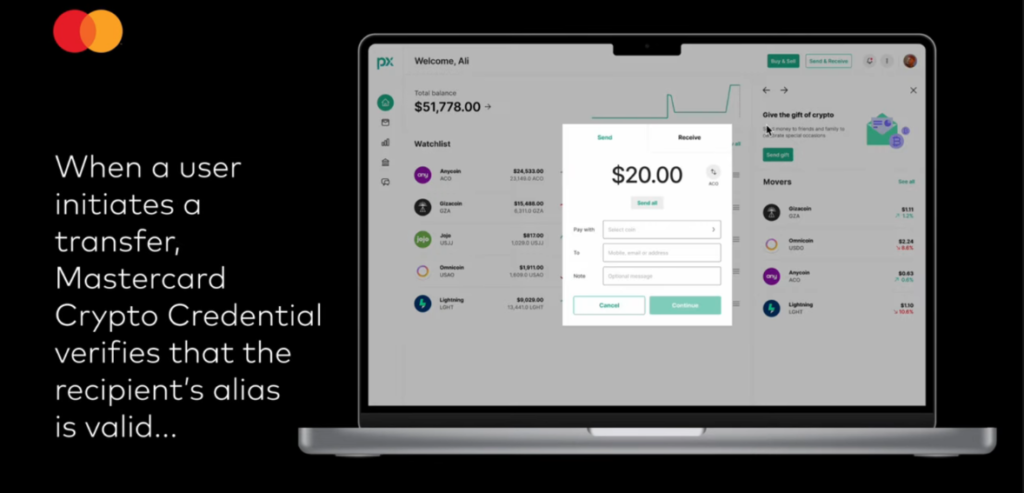
When a transfer is started, the Mastercard Crypto Credential ensures that the recipient’s wallet offers the particular blockchain and verifies the legitimacy of the recipient’s alias. If the recipient’s wallet does not support the asset or blockchain, the transaction is stopped, and the sender is notified, thereby averting potential fund loss.

Mastercard has enabled this service in partnership with several crypto exchanges, including Mercado, Lirium, and Bit2Me, to facilitate secure blockchain transactions between Latin America and Europe. This service is available to users in 13 countries, allowing them to conduct cross-border and domestic transfers across various blockchains and currencies. Countries include:

  • Uruguay
  • Switzerland
  • Spain
  • Portugal,
  • Mexico
  • Guatemala
  • France
  • Chile
  • Brazil,
  • Peru
  • Paraguay
  • Panama
  • Argentina

Walter Pimenta, Mastercard’s Executive VP of Product and Engineering for the Caribbean and Latin America, stated that Mastercard remains committed to enhancing its standards, partnerships, and technology to deliver simple, secure, and safe payment solutions.

Mastercard Crypto Credential Goes Live, Adds New Partners

He underlined the need to enable verifiable and reliable interactions across different public blockchain networks in light of the growing interest in blockchain and digital assets in Latin America and worldwide. Pimenta was excited to work with a vibrant collection of partners to further the development of the Mastercard Crypto Credential.

Mastercard elaborated that adding new partners like Foxbit and integrating with Lulubit through Lirium extends the scope of its pilot program, offering wider access to consumers. It is poised to expand its applications to include non-fungible tokens (NFTs) and blockchain ticketing, depending on market demand and regulatory compliance. Mastercard highlights that this initiative represents a major advancement in utilizing blockchain technology for mainstream financial transactions, focusing on safety and ease of use.

Talking about it, Ricardo Dantas, CEO of Foxbit Group, stated that collaborating with a leader like Mastercard strengthens their dedication to meeting market demands. They aim to provide solutions that enhance the user experience in the rapidly evolving cryptocurrency sector.

This collaboration significantly enhances their presence in the crypto market. Their joint efforts, which include partnering with Mastercard Crypto Credential and launching the Foxbit Card, align seamlessly with their mission to increase the accessibility and usability of crypto, giving their customers more options to control and optimize their digital finances.

Mastercard Crypto Credential also aims to authenticate interactions between consumers and businesses on blockchain networks. It ensures that users adhere to specific verification standards and verifies that the recipient’s wallet can accept the transferred asset. The service simplifies the process for consumers by automatically determining which assets or blockchains the recipient supports through metadata exchange. This is intended to increase trust and reliability in transactions.

tractions on Mastercard Crypto Credential

All image source: Youtube

Furthermore, it facilitates the exchange of Travel Rule information for cross-border transactions, meeting regulatory requirements that enhance transparency and help prevent illegal activities.

Mastercard’s initiative reflects a broader trend among traditional financial institutions to integrate blockchain technology and cryptocurrencies into their offerings. For instance, Visa is investigating methods to facilitate Ethereum gas fee payments through its cards, utilizing the ERC-4337 standard and a specialized smart contract known as “paymaster” to manage off-chain gas fee payments.

The launch of Mastercard Crypto Credential marks a significant development in digital finance. Mastercard fosters broader adoption of cryptocurrencies by streamlining blockchain transactions and offering a secure, user-friendly platform.

About MasterCard

Mastercard Inc. (Mastercard) is a payment and technology company that authorizes, clears, and settles payment transactions. It provides a variety of payment solutions, including debit, credit, commercial, and prepaid cards; real-time account-based payments; digital payments; and transaction services for both cross-border and domestic transactions. Additionally, it offers payment system security.

Mastercard also delivers value-added services like rewards and loyalty programs and advisory services, including analytics, implementation, and consulting. The company serves financial institutions, individuals, businesses, digital partners, governments, merchants, and other organizations across the Middle East, Americas, Europe, Africa, and Asia-Pacific. Mastercard is based in New York, US.

Conclusion

Mastercard’s launch of the Crypto Credential pilot program marks a significant advancement in digital finance. This initiative streamlines cryptocurrency transactions using simplified aliases instead of complex blockchain addresses. It enhances transaction security and user experience and prevents potential fund loss by verifying wallet compatibility before transfers. The service supports cross-border and domestic transfers, operating in 13 countries with partners like Mercado and Bit2Me.

Mastercard is working with new partners and has plans to expand into NFTs and blockchain ticketing. This shows their commitment to integrating blockchain technology into mainstream financial transactions. By ensuring safe, simple, and secure interactions, Mastercard is helping to drive broader adoption of cryptocurrencies and strengthen its position as a leader in the evolving digital finance landscape.

Visa Pay-by-Bank Services for the US

Visa Pay-by-Bank Services for the US

With technological advancements and the implementation of instant bank payment systems, pay-by-bank or paying directly from bank accounts could become as prevalent as using debit or credit cards in the US. This method is already widespread across Europe and many other regions.

Merchants benefit from reduced fees if they encourage customers to switch from credit cards to bank payments. Many consumers are already comfortable using direct bank payments for transactions like bill payments, and new technologies are enhancing this experience. However, paying by bank is less common in retail and eCommerce shopping. Nonetheless, recent technological improvements are minimizing obstacles and making it more practical. In a significant move, Visa, a leading card network, is now gearing up to introduce pay-by-bank services in the US.

Key Takeaways
  • Visa Introduces Pay-by-Bank Services in the US: Visa is expanding beyond traditional card services to offer direct bank-to-bank payment options, aiming to complement its existing debit, prepaid, and credit card offerings.
  • Reduced Fees for Merchants: Merchants could benefit from lower transaction fees by encouraging customers to use direct bank payments instead of credit cards, especially for bill payments, subscriptions, and loan repayments.
  • Success in Europe with Tink: Visa’s pay-by-bank model has seen significant adoption in Europe, driven by Tink, a payment platform owned by Visa. Tink’s partnerships and the growing trend towards open banking have facilitated this success.
  • Improved Efficiency and Security Over ACH: Visa’s pay-by-bank services aim to surpass ACH transactions in terms of quality, addressing issues like fraud and processing delays and offering a more efficient and secure payment method for large, infrequent transactions.

Visa Expands Beyond Cards with New Pay-by-Bank Services

Visa Expands Beyond Cards with New Pay-by-Bank Services

Visa has traditionally focused on its card services. Still, the company is now expanding to offer other types of money transfer services, aiming to complement its existing debit, prepaid, and credit card offerings.

The pay-by-bank model facilitates direct payments from a consumer’s bank account to a business’s bank account, eliminating the need for a credit or debit card. These transactions can cover any purchase but are commonly used for bills, subscriptions, and loan repayments.

In Europe, the adoption of such services has grown, highlighted by the success of Tink, a payment platform owned by Visa. Tink has introduced its pay-by-bank method through partnerships with several companies, signaling a strong move towards open banking, a system that allows more direct transactions between banks and businesses without intermediaries.

Although these developments could pose a competitive challenge to Visa’s traditional card business, the company is integrating these new services into its portfolio. The upcoming introduction of pay-by-bank services in the US aligns with the Consumer Financial Protection Bureau’s (CFPB) push towards a regulatory framework that supports more open banking services. This indicates a significant shift in how financial transactions could be conducted in the future.

Jack Forestell, Visa’s inaugural Chief Product and Strategy Officer, stated that the company has been diligently setting up the necessary infrastructure for launching its pay-by-bank service. This groundwork includes establishing connections with banks and forming agreements with banks and processors to ensure robust capabilities for customer authentication and linking. He mentioned that Visa has signed on some pilot customers and is now prepared to launch the pay-by-bank service.

A2A payment

Visa’s established reliability and security will be incorporated into the new pay-by-bank services, according to Forestell. He described the service as a straightforward digital process that customers will encounter in specific scenarios. Sellers will offer the option to pay via bank, powered by Visa. Users will simply click a button, authenticate with their bank, and the payment will be processed, he explained during the conference. Forestell noted that these services are likely to be used in areas where account-to-account transactions are common, particularly for large payments.

Forestell also highlighted certain areas where these services are useful—such as rent, loan payments, healthcare, life insurance, education, and long-term care. These are typically larger, infrequent payments. Although there is some use of cards in these sectors, the adoption rate remains relatively low.

Typically, such payments are conducted through ACH transactions, which have increased. However, Forestell believes that Visa’s pay-by-bank services could surpass ACH in quality.

Forestell pointed out that ACH transactions are problematic and inefficient, often due to issues with fraud and delays in processing. These delays disrupt the payment process, and he argues that Visa could overcome these challenges by offering a method that is both more efficient and secure. He suggests that these improvements could lead to higher transaction volumes and enhance the services provided by financial and commercial partners.

In Europe, Visa’s pay-by-bank services have experienced significant growth, especially following the acquisition of Tink. Over the last two years, payment initiation volumes have significantly risen. Furthermore, Tink has partnered with companies like Splitwise, Payop, and TransferGo to extend the use of pay-by-bank services.

About Visa

Update on Visa MasterCard Settlement

Visa is a multinational payments technology corporation that facilitates the use of digital currency in place of conventional cash and cheques by tying together customers, companies, banks, and governments in more than 200 countries and territories. With the ability to process over 24,000 transactions per second, the company’s sophisticated processing network is renowned for its dependability, convenience, and security, which includes safeguarding against consumer fraud and ensuring merchant payments.

Although Visa does not provide credit, issue cards, or set rates and fees for customers, its technology innovations allow financial partners to offer a range of payment choices, such as credit, debit, and prepaid cards. Customers now have more payment options thanks to these advancements.

Governments worldwide are switching to digital currencies to reduce overhead costs and increase efficiency when distributing rewards and making purchases. Visa is making it easier for people to use digital currency and mobile technologies for financial management, online shopping, international transfers, and access to basic financial services by extending the reach of electronic payments beyond big cities to rural, unbanked areas. This expansion facilitates everyday financial operations and boosts economic growth.

Conclusion

Visa’s move to introduce pay-by-bank services in the US represents a significant evolution in payment options, aligning with technological advancements and consumer preferences. This new service is set to reduce transaction fees for merchants and enhance security and efficiency compared to traditional ACH transactions.

Building on its successful European model through Tink, Visa is poised to leverage its existing infrastructure and reliability to expand these services domestically. As Visa integrates these direct bank payment methods into its portfolio, it underscores a shift towards more direct, efficient, and secure financial transactions, potentially transforming the payment landscape in the US.