Author Archives: hostmerchantservices

The Rise of Contactless Payments and Innovations for 2024

The Rise of Contactless Payments and Innovations for 2024

In recent years, especially following the pandemic, there has been a significant increase in contactless payments and innovations in the US. More consumers choose this method for its safety and speed over traditional card payments and cash transactions. The ease and security provided by contactless payments have changed how US merchants conduct business, setting a trend toward less reliance on cash.

The Rise of Contactless Payments and Innovations

The use of contactless and tap-to-pay technology is increasing significantly. Currently, nearly 90% of U.S. consumers utilize contactless payments, with the market expected to expand at an annual growth rate of 19.1% through 2030. Adoption rates are exceptionally high in several regions, with the United Kingdom at 93.4%, Singapore at 97%, and Australia at 95%,. Mastercard reports that half of all global face-to-face transactions now use contactless methods, which will likely continue.

These transactions, recognized for their speed, security, and broad acceptance, involve customers completing purchases by tapping NFC-enabled cards or smartphones on a payment terminal. They offer a straightforward transaction process.

90% of U.S. consumers utilize contactless payments

Contactless payment operates through technologies like radio-frequency identification (RFID), near-field communication (NFC), or quick response (QR) codes. These methods allow payments by tapping or waving a card, smartphone, or wearable over a compatible reader, eliminating direct contact with the terminal and promoting a quick, clean way to pay.

Available in multiple forms, such as mobile wallets, cards, wearables, and apps, contactless payment appeals to those who tend to leave their wallets or phones behind. With just a wearable, they can still complete transactions.

In RFID payments, a chip and antenna in the card emit a signal to an RFID reader nearby, which then processes the payment. For NFC payments, the card or device must be close to an NFC-enabled reader, which captures and processes the payment details.

Contactless Cards Leading the Way in Contactless Payments?

The global adoption of contactless payments has been primarily driven by the increased issuance of contactless cards, which has outpaced mobile wallets in most markets. Even in countries like Russia, where contactless cards and mobile wallets were introduced around the same time, contactless card transactions have significantly outnumbered mobile wallet transactions. This trend is also observed in other major markets such as the UK, Canada, and the U.S.

For instance, in the U.S., Visa has noted a sharp rise in contactless card usage, with over 300 million contactless-enabled Visa cards now in circulation. Over 75% of all point-of-sale (POS) terminals in the U.S. are contactless-enabled. This surge in contactless card usage has been driven by consumer demand for convenience and faster checkout experiences, particularly in everyday segments like groceries and transit systems. A similar pattern is evident in the UK and Canada. EMV technology adoption and infrastructure upgrades have made contactless payments even more accessible, further boosting card-based transactions over mobile wallets.
Contactless Cards Leading the Way in Contactless Payments?

This does not mean mobile wallets lagging in the “contactless transactions” race. Consumers often stick with familiar methods, and in many cases, cards provide similar convenience without requiring additional steps like downloading and setting up an app, but this is evolving, in fact in 2021, over 40% of US smartphone users made a contactless payment, with projections suggesting that this number will almost double by 2027.

Covid-19 as a Catalyst for Growth

Contactless payments emerged well before the COVID-19 pandemic, with initial developments dating back to 2008. Originally adopted as a health precaution in 2020, these payments have reshaped the payments industry.

The pandemic changed consumer behavior towards making purchases. As people became more health-conscious, the tap-and-go feature of contactless payments gained favor. A Mastercard survey indicated that 82% of Americans view contactless payments as cleaner than traditional methods. This shift in preference continues to persist, with many people now avoiding cash and direct contact with payment terminals. In fact, during the pandemic, 47% of consumers stated they would avoid stores without contactless payment options.

By 2023, contactless payments made up about 25% of all card transactions in the U.S., a significant rise from only 3% in 2017—an increase of over 800% in six years. This surge can be attributed to the public’s increased concern about virus transmission and related governmental policies. For instance, many banks and card issuers worldwide increased the transaction limits for contactless payments during the pandemic.

Covid-19 as a Catalyst for Growth

By 2023, the volume of contactless transactions reached approximately 17.9 billion, a substantial growth from 4.7 billion transactions recorded in 2019.

The integration of contactless payments into public transit systems further represented a significant change, particularly after the pandemic. In New York, the Metropolitan Transportation Authority’s OMNY system allows travelers to pay fares using contactless cards, smartphones, and wearable devices. By 2023, over 35 million uses were recorded, and 75% of all in-person transactions in the city were contactless. Additionally, more than 30 U.S. cities have over 60% of transactions conducted through contactless methods, showing a significant shift in how public transport fares are paid.

Improvements in anti-fraud technologies have significantly contributed to the broader adoption of contactless payments. Tokenization, which replaces sensitive payment information with unique identifiers, has minimized fraud. This technology, combined with EMV chip and NFC technologies, helps reduce card skimming risks, enhancing security for both users and merchants while boosting transaction approval rates and the secure storage of payment information.

Quick Transaction Times, Enhanced Security, and Broad Acceptance Among Retailers – More Reasons for Adoption in 2024 and Beyond

Other reasons why contactless payments have become increasingly popular is due to these reasons:

1. Efficiency and Quicker Transactions:

Contactless payments expedite the checkout process. Transactions take only seconds, as there is no need to swipe, insert, or enter a PIN. This reduces line lengths and increases transaction speed, benefiting consumers and businesses. Retailers experience quicker service and increased turnover.

2. Enhanced Security:

Contactless payments are secure, employing NFC and RFID to safeguard transactions. Each transaction is protected by a unique code, preventing theft of payment details. More significant transactions may require additional verification and steps, such as:

  • Dynamic Data Authentication (DDA): Each payment generates a one-time cryptographic code that prevents the reuse of transaction data, thwarting potential fraud.
  • Tokenization: The tokenization process substitutes sensitive payment information with a unique token during each transaction, rendering the data unusable for anyone outside of that transaction.
  • Secure Element (SE): A robust, tamper-resistant chip within devices securely stores card data, safeguarding sensitive information from theft or unauthorized access.
  • Biometric Authentication: Digital wallets often include biometric security such as fingerprint scans or facial recognition, enhancing protection against unauthorized access.
  • Real-Time Monitoring: Payment systems continuously monitor for unusual activity, enabling prompt detection and response to suspicious actions.
  • Contactless Payment Limits: To reduce the risk of significant loss through fraud, tap-to-pay transactions are subject to limits on the amount that can be spent without additional authentication.
  • Two-Factor Authentication (2FA): Requiring a second form of verification, such as a one-time code sent to the user’s mobile device, provides an additional layer of security.

This security has built strong trust among consumers, with about 90% of U.S. consumers feeling confident in the safety of contactless methods.

3. Retail Adoption:

This was also a significant move that surged the adoption of contactless payment during the pandemic. By 2023, more than 70% of U.S. retailers, including major brands like Starbucks and Walmart, had implemented contactless payment systems.

Smaller businesses also upgraded their payment methods to accommodate this growing preference, making it widely available.

4. Advancements in Mobile Wallet Technology:

The proliferation of mobile wallets like Apple Pay, Samsung Pay, and Google Pay has also contributed to the rise of contactless payments.

These platforms handle payments and integrate loyalty programs and transit passes, providing a more integrated user experience. Apple Pay, for instance, is a leading contactless method in the U.S., and a substantial number of iPhone users are adopting it.

Impact on U.S. Merchants from Contactless Payments

The adoption of contactless payments has significantly changed the way U.S. merchants operate. A primary advantage is the faster checkout process. By allowing customers to tap their cards or smartphones, these payments considerably shorten waiting times at registers. This is particularly useful in busy places like grocery stores and fast-food restaurants, helping businesses handle more customers efficiently.

Contactless payments also improve customer satisfaction by offering a quicker and easier way to pay, which can lead to repeat business and increased customer loyalty. Additionally, the convenience of these payments encourages quick purchasing decisions, as customers can swiftly complete transactions without the hassle of cash.

Businesses see a reduction in operational expenses. With fewer cash transactions, there’s less need to manage cash drawers and address cash-related issues such as discrepancies or theft. Moving to digital payments also reduces the costs of handling physical money. Plus, contactless transactions typically register a higher average spending per transaction. Studies suggest that customers spend 15-20% more in transactions using contactless methods than traditional ones, potentially boosting a retailer’s total sales and revenue.

Security is another major benefit. Contactless payments employ advanced encryption and tokenization, reducing fraud risk more effectively than older methods like card swiping or entering a PIN. This enhanced security is advantageous for merchants as it helps prevent fraud and protect their business and customers.

Expansion of Contactless Payments in the U.S. in 2024 and Beyond

Contactless payments in the U.S. will grow quickly in the second half of 2024. Tap-to-pay methods, mobile wallets, and devices such as smartwatches and smart rings are already popular. This trend is fueled by consumer preferences for quick, secure, and easy payment options and by the advantages merchants gain from shorter checkout times and reduced transaction fees.

A significant development in this area is Visa’s Tap to Phone initiative. This solution allows small and medium-sized businesses to turn their smartphones or tablets into payment terminals, avoiding the need for traditional POS equipment. This particularly appeals to smaller merchants looking to cut initial costs while offering digital payment options. The technology is currently being tested in several U.S. cities, including Washington D.C., with plans for a nationwide rollout.

In scenarios such as vending machines and parking meters, where minimal interaction is needed, contactless-only terminals make sense. These settings benefit from the lower technological investment compared to traditional readers that require a chip or magnetic stripe. As contactless payment adoption grows, more merchants are likely to adopt these readers.

Looking ahead, it’s expected that contactless payments will broaden to include more devices and new formats. Future systems could integrate wearables, mobile phones, and even biometric verification like facial recognition or fingerprint scans for making payments and processing them. The ongoing development in this sector will prioritize user-friendliness, security, and broader access to digital payment options for consumers and sellers.

Conclusion

The rise of contactless payments has transformed the way transactions are made in the U.S., driven by consumer demand for speed, security, and convenience. With rapid technological advancements, this payment method has shifted from an optional luxury to a widely adopted standard. Large and small merchants are benefiting from operational efficiencies and reduced costs associated with contactless payments.

As innovations such as Visa’s Tap to Phone and the expansion of wearables and biometric verification continue to evolve, the future of contactless payments looks promising. The U.S. is poised for further growth in this area, ensuring a secure and seamless payment experience for consumers and businesses alike.


Payment Solutions for the Gig Economy: Addressing the Needs of Freelancers and Contractors

The gig economy has grown substantially, with an estimated 76.4 million freelancers in the United States as of 2024. This number represents a consistent annual increase of at least 2 million freelancers since 2017 and is projected to surpass 90 million by 2028.

The flexibility of the gig economy provides significant advantages for freelancers, particularly the ability to achieve financial stability on their terms. This self-directed work model is also beneficial for companies. Hiring freelancers allows businesses to adjust their workforce size as necessary, reduce costs by avoiding permanent employment expenses, and access a vast talent pool.

However, gig economy payment processing to freelancers can be problematic. Traditional methods like checks or money orders are often too slow, and cash payments are impractical for long-distance arrangements. Thankfully, more efficient payment solutions are available. Continue reading to discover effective methods for compensating freelancers promptly and securely.

What Is a Gig Economy?

What Is a Gig Economy?

The gig economy is a labor market sector characterized by short-term, flexible jobs, often coordinated through digital platforms like apps or websites. Workers in this economy are independent contractors, not permanent employees, and are paid per task instead of a regular salary. This structure provides flexibility in work hours but typically lacks employee benefits such as health insurance or paid leave.

Jobs within the gig economy include various services such as ride-sharing (Uber, Lyft), food delivery (DoorDash, UberEats), and freelance roles in writing, design, and software development. It also encompasses asset-sharing services like property rentals through Airbnb. Digital platforms have significantly contributed to the growth of this sector by simplifying the process of connecting freelancers with short-term jobs or clients.

Many individuals are drawn to the gig economy for the flexibility it offers in scheduling and the potential to work from different locations, including remotely. For some, it serves as an additional source of income, while for others, it is their main financial support.

The Rise of the Gig Economy

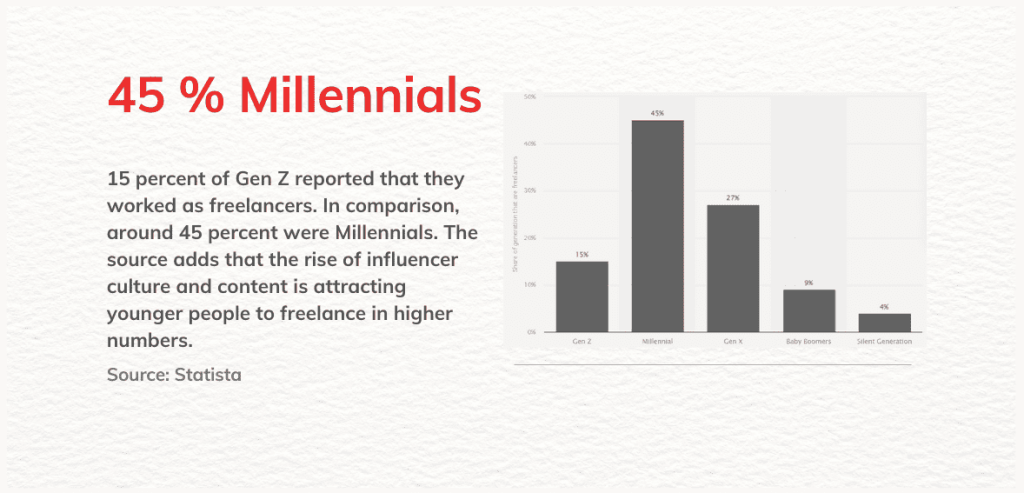
infographics: 15 percent of Gen Z reported that they worked as freelancers. In comparison, around 45 percent were Millennials. The source adds that the rise of influencer culture and content is attracting younger people to freelance in higher numbers.

Source: Statista

The gig economy has expanded significantly over the last ten years, influenced by various economic, technological, and social factors. This growth is primarily fueled by the widespread availability of digital platforms like Uber, Fiverr, and Upwork, which link gig workers with potential clients. Technological advances, particularly in remote collaboration tools, have simplified the process for individuals to freelance or pursue side jobs from almost any location.

Economic factors also play a crucial role in this growth. The flexibility of gig work attracts many, especially younger individuals and immigrants, who view it as an opportunity for financial independence. For some, gig jobs supplement their primary income; for others, they become a main source of earnings due to economic needs. The COVID-19 pandemic has had a significant impact, forcing many into freelancing as they lost traditional jobs, and rising inflation has driven more people to seek gig work for extra income.

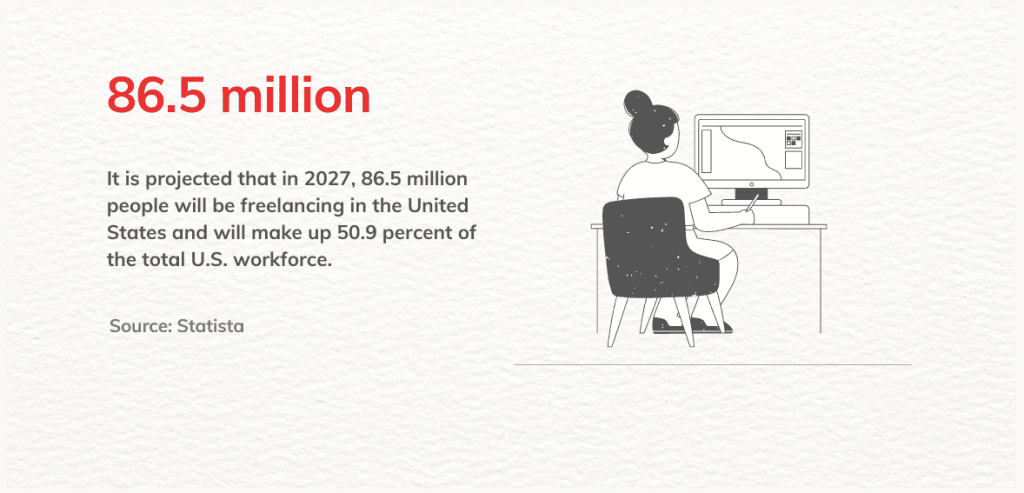
infographics: It is projected that in 2027, 86.5 million people will be freelancing in the United States and will make up 50.9 percent of the total U.S. workforce.

Source: Statista

Companies see the advantage of hiring independent contractors to tap into specialized skills without the commitment of full-time hires. This strategy helps businesses control costs and adjust their workforce size as necessary.

The Challenges with Paying Gig Workers

Several gig economy payments-related obstacles can affect their cash flow and overall business operations. Common issues include:

  • Delayed or Inconsistent Payments:

Freelancers frequently face delays in receiving payments from clients. This can be especially problematic when payments are made via checks or other slower methods like mailed invoices, which can take weeks to process.

Freelancers who rely on regular payments for their living expenses or business costs may experience financial strain when payments are delayed by 30, 60, or even 90 days. While setting clear payment terms and sending reminders can help, freelancers often have limited control over when clients actually pay their invoices.

  • Costly International Transactions:

Freelancers working with clients in other countries often face high fees for international payments. Banks and transfer services charge varying fees for international wire transfers, which can be substantial. For instance, U.S. banks such as Fifth Third Bank charge up to $85 for outgoing transfers, and others like Wells Fargo and Bank of America charge between $40 and $65.

Additionally, freelancers may incur intermediary bank fees, currency conversion costs (typically between 4% and 8%), and taxes, which all reduce their earnings. These costs make cross-border work more expensive and challenging to manage financially.

Costly International Transactions
  • Currency Conversion Fluctuations:

Freelancers paid in foreign currencies can see their earnings decrease due to fluctuations in exchange rates. The freelancer may receive less than expected if a currency weakens after a payment agreement.

Some banks and payment platforms offer automatic currency conversions, but their rates are often less competitive, further reducing the freelancer’s income. Using specialized platforms like Payoneer can sometimes provide more favorable exchange rates and quicker transactions.

  • Tax Management and Record Keeping:

Handling taxes is another challenge, especially for freelancers with international clients or multiple revenue streams. U.S. freelancers, in particular, must navigate forms like the 1099-K and W-8BEN-E, depending on their residency and income sources.

Accurate record-keeping, understanding tax deductions, and complying with regulations add complexity to their workload. Many freelancers outsource tax preparation or rely on accounting software to track earnings and ensure proper tax filing.

How Modern Payment Innovations Are Shaping the Future of the Gig Economy?

How Modern Payment Innovations Are Shaping the Future of the Gig Economy?

Modern payment innovations have significantly transformed the gig economy by enhancing the efficiency, flexibility, and security with which freelancers and gig workers manage their finances. These innovations’ solutions stand out as pivotal elements driving this change. They offer faster, more accessible solutions than traditional payment methods like cash or checks.

  • Digital wallets, including popular platforms like PayPal, Venmo, and Cash App, have become vital for gig workers to manage and receive payments securely and conveniently via smartphones. The ease of use provided by these platforms has led to their widespread adoption. The mobile payment market is projected to grow to $12.06 trillion by 2027, reflecting an increasing consumer preference for cashless transactions. This growth is particularly relevant in the gig economy, where workers depend on swift and efficient payment methods.
  • Cross-border payment solutions effectively tackle the complexities of international transactions within the gig economy. Notable companies such as TransferWise, Payoneer, and Revolut provide freelancers with multi-currency accounts, enabling receipt of payments in various currencies while minimizing conversion costs. These platforms also offer competitive exchange rates and quicker transaction settlements, thus improving the overall efficiency of international payments.
  • Instant payout solutions like those provided by Stripe or Square enable workers to access their earnings immediately, enhancing liquidity and reducing dependence on traditional bank processing times. In 2022, there was a 41% increase in global real-time payments, underscoring a shift toward immediate fund access. This capability is especially beneficial for gig workers who frequently experience unpredictable cash flows.
  • For gig workers who operate in physical settings, mobile point-of-sale (mPOS) systems deliver a practical solution for processing payments anywhere. Services like Shopify POS, Square, and SumUp equip freelancers with compact, portable card readers that pair with smartphones or tablets, allowing them to process credit and debit card payments on-site. This adaptability is especially valuable for retail, food service, and event professionals, facilitating seamless financial transactions in mobile environments.
  • Furthermore, cryptocurrencies such as Bitcoin and Ethereum are gaining traction as payment options, especially among gig workers engaged in international markets. These digital currencies facilitate decentralized, low-fee, and borderless transactions, appealing to international freelancers seeking financial autonomy. With the global blockchain market anticipated to reach $39.7 billion by 2025, cryptocurrencies are expected to play an increasingly prominent role in the payment landscape.
  • Freelance management platforms combine payment processing with comprehensive project management tools to streamline the entire workflow for freelancers. Platforms such as Upwork, Freelancer.com, and Fiverr facilitate employer funding of escrow accounts, enable secure payment releases upon project completion, and allow efficient invoice tracking. These freelance payment systems also manage tax withholdings and compliance, significantly reducing the administrative load on freelancers and enhancing their focus on project execution.

Top Payment Solutions for Freelancers and Contractors

Here are various payment methods for freelancers, focusing on their transaction fees and suitability based on ease of use:

1. PayPal

Fee: 2.9% + $0.30 per transaction; up to 4.4% for international transfers.

Effective for rapid, reliable payments on a global scale. PayPal facilitates instant payouts, though these come with fees, and is widely recognized in many countries. The main drawback is the elevated fees for international transactions.

2. Payoneer

Fee: Ranges from 0% to 3%, plus 2% for conversions to foreign currencies.

Payoneer is a viable option for low-cost international payments. It supports local bank accounts in various currencies, making it beneficial for freelancers dealing with clients abroad and a solid alternative for PayPal for substantial international transactions.

3. Skrill

Fee: 3.99% for currency exchanges.

Skrill is suitable for low-expense transactions and secure payments. It is useful for freelancers requiring quick payment processes and those who operate internationally, although it imposes certain limits on high withdrawal amounts.

4. Escrow

Fee: 6.5% of the transaction value.

Escrow is ideal for larger payments that need secure handling. It secures funds until project completion, adding a layer of protection for all involved parties. Escrow is particularly useful for sizable projects where mutual trust is crucial.

5. Wire Transfer

Fee: Varies from $0 to $50, based on the banks and geographical regions involved.

Traditional yet less common. Wire transfers are reliable and suitable for large transactions, especially international ones, but tend to be slower and may incur higher fees compared to other methods.

6. Debit/Credit Card

Fee: Typically between 3% and 5%.

It is ideal for quick, direct payments and is widely used on Upwork, Freelancer, and Fiverr platforms. While suitable for international transactions, they might attract higher fees.

Strategies for Reliable Payment as a Freelancer

For freelancers, consistent and prompt payment can be a challenge, but implementing certain strategies can increase your chances of getting paid on time:

  • Implement a Time Tracker: Utilize a time tracker, such as Apploye, to keep accurate records, especially for projects billed by the hour. This ensures you can bill clients accurately and transparently. Time trackers like Clockify or Toggl also let you generate reports and invoices directly from the hours logged, simplifying the process of demonstrating your work to clients and facilitating payment.
  • Always Use a Contract: A contract is crucial for establishing clear client expectations. It should detail payment terms, project scope, and deadlines. A contract legally commits clients to the agreed terms, which helps reduce the risk of delayed payments or disputes.
  • Opt for Simple Payment Methods: Choose widely recognized and easy-to-use payment methods, such as PayPal, Stripe, or bank transfers. Digital wallets like Google Pay and Venmo provide easy payment solutions for clients worldwide. Using well-known, straightforward payment platforms helps minimize complications and encourages clients to pay quickly.
  • Use Professional Invoice Software: Employing professional invoicing tools like Invoicely or Invoice Fly helps make the payment process more efficient. These platforms often feature the option to add payment links directly in the invoices, facilitating immediate payment with just a click. Making it easy for clients to pay increases the likelihood of swift payments.

Conclusion

The gig economy continues to grow, driven by its flexibility and the demand for specialized, on-demand services. However, the challenges freelancers and contractors face, particularly around timely and efficient payments, remain significant. Addressing these challenges requires adopting modern payment solutions catering to gig workers’ unique needs.

Digital wallets, cross-border payment platforms, instant payment services, and freelance management tools offer promising ways to enhance payment efficiency and security. By leveraging these innovations, freelancers can maintain better control over their earnings, reduce financial uncertainties, and thrive in the evolving gig economy.

Open Banking and Payment APIs and Their Impact on the Payment Processing Industry    

Open Banking and Its Impact on the Payment Processing Industry    

Open banking is significantly transforming the payments landscape. It can be compared to a significant software upgrade for traditional banking, enhancing functionality and efficiency throughout the financial system and creating numerous opportunities for businesses and consumers. What do open banking and Payment APIs mean for the payments industry, and why are startups and large banks eager to adopt them? Let’s explore how this significant change is reshaping the flow of money.

What Is Open Banking?

bank

Open banking is a system that encourages the distribution of financial information among banks and approved external services. This approach utilizes application programming interfaces (APIs), facilitating consumer data’s secure sharing and retrieval. The core of open banking is the belief that consumers and businesses should have increased control over their financial information.

Banks previously controlled access to financial information such as account balances and transaction histories, sharing it sparingly. This shift introduces empowering consumers and businesses to distribute their financial information and payment details to various financial service providers, including budgeting tools, investment platforms, etc.

The creation of payment APIs has been crucial to enabling open banking. These APIs allow different software systems to communicate, allowing external financial service providers to access customer data securely and effectively.

The adoption of open banking is expanding rapidly. In 2023, there were over 102 billion API calls related to open banking, expected to surge to 580 billion by 2027. Similarly, transaction values through open banking are anticipated to grow significantly, from $57 billion in 2023 to over $330 billion in 2027.

API calls statistics infographics

Source: Statista

The Evolution of Open Banking Throughout the Years

The history of open banking has seen significant milestones since the 1980s, transforming how customers interact with financial services. Open banking took root with Citibank’s early efforts in the 1980s to enable transactions from home, alongside similar innovations in Germany. By 1998, Germany’s Home Banking Computer Interface (HBCI) set a benchmark for secure electronic banking, evolving into Financial Transaction Services (FinTS) by 2002. In 2004, SOFORT enhanced digital payments by integrating HBCI with screen scraping technology.

In 2007, the European Payment Services Directive (PSD1) was introduced to standardize European payment services, enhancing competition and transparency. The industry’s growth also saw legal challenges, such as the 2009 Giropay vs. SOFORT case, emphasizing increasing security needs and the complexity of digital transactions.

During the 2010s, the U.S. experienced its open banking developments through companies like Plaid and Yodlee, although it faced a more fragmented regulatory environment than Europe. In the UK, initiatives like Midata in 2011 and the Open Data Initiative in 2013 empowered consumers with better control and transparency over their data. This culminated in the Competition and Markets Authority’s (CMA) 2017 directive, the CMA9, mandating open-source payment APIs for safe data sharing.

The introduction of the Second Payment Services Directive (PSD2) in 2018 marked a turning point. PSD2 required banks to provide third-party access to consumer banking data through APIs, enhancing innovation and security with Strong Customer Authentication (SCA). It has since expanded globally, with notable initiatives in India, Brazil, Australia, Bahrain, and Saudi Arabia, each introducing regulatory frameworks to advance its financial sectors.

These developments underscore the global trend towards more secure, transparent, and customer-focused financial ecosystems.

Understanding the Impact of Open Banking on the Payment Processing Industry in Today’s Market

Understanding the Impact of Open Banking on the Payment Processing Industry in Today’s Market

Open Banking is reshaping the payment processing industry by introducing efficient transaction methods, reducing costs, and improving user experiences. Open Banking enables third-party financial service providers to securely access and share customer financial data through APIs, leading to several industry advancements.

A primary effect of open Banking is the heightened market competition. It allows emerging fintech companies and competitor banks to easily enter the market, offering innovative payment solutions that compete with traditional banking systems. This competition increases the available payment options, such as direct account-to-account (A2A) transfers, which avoid conventional payment networks like card processors. These alternative payment methods typically offer quicker transactions and reduced fees by eliminating intermediaries. As competition intensifies, consumers and businesses could benefit from reduced costs and improved service options. Startups like Monzo and Revolut have already demonstrated this potential by offering more user-friendly, lower-cost financial services.​

Merchants benefit from open Banking as it decreases their dependence on conventional payment gateways. This leads to substantial cost savings and operational advantages by lowering transaction fees, enabling businesses to offer customers a 20% savings. Utilizing A2A payments lets merchants circumvent card networks and lower transaction fees, usually inflated by the multiple intermediaries involved in card-based transactions. Direct transfers from customers’ bank accounts to merchants through open Banking can slash transaction fees by up to 70% compared to traditional card payments.

Furthermore, open Banking minimizes fraud risks by using secure bank authentication methods instead of sharing sensitive card information. Real-time data sharing enables more sophisticated transaction monitoring, allowing for quicker identification of suspicious activity. Biometric authentication and continuous transaction monitoring also help reduce the risks of fraud and identity theft​.

Reducing fraud risks helps merchants prevent issues such as chargebacks, which are frequent in card transactions. The improved security and cost efficiency make open Banking an appealing choice for businesses aiming to enhance their payment systems.

Reducing costs can significantly bolster profit margins for merchants handling numerous transactions, particularly in cross-border transactions involving currency conversion and payment gateway fees. Additionally, open banking can expedite transaction times and enhance cash flow visibility, providing merchants with immediate insights into their financial statuses.

A Solution Impacting Multiple Industries

Open banking is reshaping various industries by enabling access to bank data via APIs and facilitating the creation of new financial services and innovations.

  • Traditional Banks:

Open banking allows traditional banks to broaden their digital services and strengthen their competitive position.

By adopting open banking technologies, these banks can deliver personalized services that improve customer loyalty and attract new clients. Many banks use these tools to refine customer interactions, enhance their financial product offerings, and accelerate digital transformation.

  • Fintech Startups:

Open banking levels the playing field for fintech companies by providing the necessary data and tools to develop innovative financial products. APIs grant these startups access to customer data previously exclusive to traditional banks, allowing them to create customized solutions that challenge existing banking models.

This financial technology shift promotes competition and encourages partnerships between fintechs and established financial institutions.

  • Independent Software Vendors (ISVs):

It enables ISVs to integrate financial services into their software platforms, offering instant bank transfers or real-time fraud detection features. These improvements are crucial for addressing the changing needs of both businesses and consumers, allowing ISVs to provide more comprehensive payment solutions.

  • Payment Service Providers (PSPs):

PSPs benefit significantly from open banking by broadening their payment options. While traditional PSPs primarily managed credit card processing, they can now facilitate bank-to-bank transfers and real-time payments. This expansion allows them to serve a wider customer base and reduce transaction fees.

  • Merchants:

Merchants benefit from open banking through enhanced payment solutions like direct A2A transfers.

These innovations lower transaction costs and quicken settlement times, improving cash flow and providing customers with a smoother shopping experience. Open banking also revolutionizes payment processing by enabling real-time payments and more efficient billing methods.

  • Independent Sales Organizations (ISOs):

ISOs, intermediaries in payment processing, can improve their services through open banking by offering more secure and flexible payment technologies. This financial technology helps them stay competitive in a fast-evolving market while providing merchants with the latest payment innovations.

Conclusion

Open banking is revolutionizing the payment processing industry by introducing greater efficiency, reduced costs, and enhanced security. Its impact is felt across various sectors, from traditional banks to fintech startups, ISVs, and merchants. Open banking fosters innovation and competition by allowing third-party access to customer financial data through secure payment APIs, offering more flexible and cost-effective payment options such as direct account-to-account transfers.

As the technology continues to evolve, businesses and consumers alike stand to benefit from faster transactions, reduced fraud, and more personalized financial services. The future of payments is increasingly shaped by the opportunities that open banking presents.

Increase Revenue for eCommerce: Using Modern Payment Solutions

Payments as a Revenue Driver: How eCommerce Companies Benefit from Modern Payment Solutions

Payments might seem complex, but ignoring them can be expensive for your business. Many merchants need help shifting to digital, and some overlook the importance of modern payment systems to increase revenue. Others attempt to integrate new technology with old systems, which can lead to ineffective outcomes and increased costs. Brands must reconsider integrating modern payment systems to serve their customers best and attract today’s tech-savvy consumers.

Digital eCommerce payment solutions provide innovative responses to challenges, streamline complexity, and make payment processes a strategic part of your business, often simplifying other financial tasks. Adopting new technologies can lead to numerous improvements and generate long-term value. Your customers also appreciate it when payments are straightforward. In this blog, you will find different ways modernizing payments can enhance your business.

The Transformation of Payment Systems

Historically, processing payments was considered a basic yet cumbersome aspect of business operations. Merchants depended on external gateways for credit card transactions, often involving high fees and delays in receiving funds. However, this landscape has shifted significantly with new technologies such as digital wallets, embedded payments, and buy-now-pay-later (BNPL) services. These advancements have altered the role of payment systems in eCommerce, making them essential for revenue generation.

Companies like Stripe and PayPal have transformed online payments by providing quick, secure, and adaptable options suitable for international customers. This enables businesses to offer specific payment methods like iDEAL in the Netherlands and PIX in Brazil, meeting the payment preferences of a global customer base. Such localized payment solutions are vital for businesses seeking to enter and succeed in varied markets with unique consumer demands.

The Transformation of Payment Systems

Meanwhile, BNPL services, popular among younger consumers, are reshaping purchase behaviors. Many in Gen Z prefer BNPL to traditional credit options because it allows them to spread the cost over time without interest, benefiting businesses with higher conversion rates and increased average order values. Similarly, the growing importance of digital wallets for online and in-store transactions illustrates a shift towards more convenient and user-friendly payment methods than traditional ones.

Furthermore, embedded payments integrate directly into platforms like social media and apps, introducing novel ways for businesses to connect with customers. The rise of social commerce, particularly on platforms like Instagram, enables small businesses to conduct transactions directly through social media, bypassing the need for independent websites or gateways.

These developments highlight how payment systems have evolved from operational costs to valuable strategic tools that help businesses enhance customer engagement, boost sales, and access new markets.

Understanding How eCommerce Companies Benefit from Modern Payment Solutions

1. Makes Real-Time Payments a Reality

The rollout of real-time clearing and settlement mechanisms across various markets, including eCommerce payments, has enabled almost instantaneous payment processing. This swift processing is likely to become standard for most consumers. Real-time payment platforms like FedNow allow organizations to offer innovative products and services previously unfeasible due to payment delays and inadequate payment data. Furthermore, these rapid payments encourage customers to abandon checks and other costlier payment methods.

Many organizations’ messaging systems were established before the capability to manage the volume of data needed for real-time services was necessary. By adopting cloud-native messaging, organizations can leverage the scalability of cloud platforms, which enhances the processing speed throughout the payment transaction chain. This improvement can lead to fewer processing errors due to immediate feedback upon payment initiation, distinguishing organizations that invest in these technologies from those that do not.

2. Adjusting to New Industry Standards Promptly

Adjusting to new standards such as ISO 20022 and PSD2 is essential for payment organizations as these frameworks keep evolving, requiring ongoing updates and compliance efforts. ISO 20022, first released in 2004, has been frequently updated, reflecting its increased relevance in global payments. While the advantages of adopting these standards—including enhanced data quality and improved cross-border transaction efficiency—are significant, the challenge for many organizations is the rapid implementation of these updates within their existing systems.

Older systems often face difficulties incorporating new message formats, hampering organizations’ ability to adapt quickly to standard updates like ISO 20022. Cloud-native integration offers a solution by enhancing flexibility and operational efficiency. It supports running multiple versions of the message standards simultaneously, enabling a smoother transition without necessitating a complete overhaul immediately. This phased approach minimizes compliance delays and allows organizations to test and implement changes more effectively without interrupting current operations.

 Adjusting to New Industry Standards Promptly

Furthermore, cloud-native systems aid in scaling up operations, helping organizations manage higher payment volumes while remaining compliant with newer regulations, such as those under PSD2. These advanced infrastructures also simplify the testing of new standards, reducing the effort typically required for adopting new message formats.

The shift to cloud-native platforms and the gradual introduction of new standards assist payment organizations in staying competitive, upholding regulatory compliance, and maintaining operational efficiency in a constantly evolving financial environment.

3. Scaling Becomes Easier and Sometimes More Affordable

As digital commerce expands and payment volumes hit new peaks worldwide, businesses are challenged to grow their payment infrastructures while staying profitable. Increasing competition and regulatory pressures leading to lower fees are also stressing existing payment systems.

A primary solution for these issues is the use of cloud platforms. These platforms allow organizations to scale their operations dynamically based on fluctuations in payment volume. This payment strategy ensures flexibility, ensuring that the infrastructure can manage sudden increases in activity without significant investments in physical hardware. Cloud services, for instance, offer automated scaling and monitoring, aiding companies in fulfilling the uptime demands of critical payment services. Automation tools improve operational efficiency by streamlining routine tasks and reducing the costs of managing extensive payment systems.

Another notable advantage is the option to select among various infrastructure providers, which can optimize hosting expenses. Utilizing cloud infrastructure helps businesses reduce operating costs while keeping up with the need to handle more transactions. Moving to cloud-based systems not only aids in scalability but also meets the changing requirements of the payment sector by facilitating immediate updates, enhancing fraud detection, and adhering to regulatory standards.

4. Helps Businesses Create More Revenue Streams

Traditionally, payments were viewed primarily as an operational expense for businesses, essential for completing transactions, but not seen as a revenue generator. This view has changed significantly in recent times. Now, eCommerce businesses can utilize payment processing to increase their income in various ways.

Many eCommerce platforms have introduced transaction fees that consumers or merchants must pay when using specific payment methods, such as credit card transactions. This approach creates a dependable income source for companies with high transaction volumes. For example, businesses can apply a markup to the fees they incur from payment processors by adding a surcharge to consumer payments. Even a modest surcharge, like 0.7% over the standard processing fee, can lead to substantial earnings when applied to many transactions.

eCommerce platforms enhance their services by integrating payment processing, providing customers with a smooth and integrated payment experience. Companies like Shopify use this strategy, combining payment processing with their eCommerce offerings. This integration improves the user experience and opens new avenues for revenue through monthly subscriptions or premium service options.

With the growth of global eCommerce, there is an increase in cross-border transactions, offering companies opportunities to profit from multicurrency payment options. These options make it simpler for eCommerce businesses to attract international customers and earn revenue from currency conversion fees. Additionally, adopting localized payment methods, such as Brazil’s PIX or iDEAL in the Netherlands, increases transaction acceptance rates, boosts sales, and further diversifies revenue streams.

5. Enhancing Customer Loyalty and Growth with Advanced Payment Systems

Enhancing Customer Loyalty and Growth with Advanced Payment Systems

Advanced payment systems play a crucial role in improving customer experiences, which is pivotal for both retaining existing customers and acquiring new ones:

  • Streamlined Checkout Process:

A key advancement in digital payments is minimizing disruption during checkout. In a digital marketplace where customers can easily abandon shopping carts, offering a quick, simple, and secure payment process is essential for securing sales and preventing customer loss.

Implementing one-click payments, digital wallets, and saved payment information simplifies the purchase process and encourages ongoing patronage. These improvements not only decrease cart abandonment rates but also build customer loyalty.

  • Customizable Payment Offerings:

Contemporary payment technologies enable businesses to provide a variety of payment methods that cater to individual customer preferences, including options like BNPL services, digital wallets, and cryptocurrencies.

Payment flexibility can boost conversion rates, particularly for expensive or optional purchases. For instance, BNPL options might prompt customers to proceed with purchases they might otherwise postpone.

  • Market Expansion through Local Payment Integration:

Entering new markets typically involves adapting payment solutions to meet local preferences. In regions with significant numbers of unbanked individuals, options like prepaid cards or mobile wallets can dramatically enhance transaction completion rates.

For example, introducing PIX in Brazil, an instant payment system, has become crucial for companies entering this market. Supporting local payment methods enables eCommerce businesses to serve a broader audience, enhance their international presence, and increase revenue.

6. Improves the Efficiency of Financial Crime Prevention

Enhancing the efficiency of financial crime prevention in digital payments is crucial given their rapid growth and complexity. The swift rise in digital payments has brought new challenges, particularly in compliance and fraud detection, as criminals leverage technology to exploit system weaknesses. Payment Service Providers (PSPs) are particularly affected, needing to update their systems to combat evolving threats like money laundering and fraud.

A practical method involves adopting cloud-native technologies and integrating the ISO 20022 messaging standard. Cloud-native infrastructures allow payment processors to update compliance and fraud detection rules dynamically, offering more flexibility than older systems. The ISO 20022 standard delivers more detailed data, enabling quicker identification of suspicious transactions than traditional payment methods.

Artificial Intelligence (AI) and Machine Learning (ML) represent the next step. By incorporating AI/ML, companies can improve the detection of financial crime patterns and reduce false positives, which often burden financial crime teams. AI can analyze large datasets continuously and refine detection models to spot trends that might elude manual reviews or fixed rules. For instance, real-time risk assessments with AI help pinpoint high-risk transactions, lowering operational costs and enhancing detection precision. These technologies also assist companies in meeting increasingly strict anti-money laundering (AML) and Know Your Customer (KYC) regulations.

AI also enhances back-office operations by optimizing fraud prevention workflows, accelerating payment validation, and lowering rejection rates for valid transactions. PSPs are implementing strategies that segment data by risk, allowing financial institutions to allocate resources more effectively to higher-risk areas.

These improvements highlight the importance of data governance frameworks to ensure the ethical use of AI, safeguarding customer information while enhancing compliance. Payment providers must continually evaluate and refine their AI models as these technologies advance to address new fraudulent strategies.

7. Leveraging Payment Data for Payment Optimization

Modern payment systems generate extensive data with each transaction, which can be utilized to enhance revenue in multiple ways.

This transaction data provides valuable insights into customer habits, preferences, and buying trends. Companies can use this information to tailor offers, suggest products, and craft targeted marketing strategies that encourage repeat business, increase revenue, and increase the average transaction value. For example, identifying a customer’s preferred payment method can lead to tailored incentives that enhance loyalty and increase sales conversions.

Payment platforms leverage this data to fine-tune transaction routing, ensuring payments are processed via the most effective and economical channels. This optimization can lower the costs associated with payment processing and boost authorization rates, resulting in more completed transactions and elevated revenue. Offering alternative payment methods when transactions are declined also helps companies capture sales that might otherwise be lost.

Plus, payment data is pivotal in boosting security measures, such as tokenization, where sensitive payment details are replaced with a secure token. This security enhancement reduces fraud and builds consumer trust, which is essential for sustaining high transaction volumes. Strengthening payment system security helps businesses reduce chargebacks and losses associated with fraud.

Conclusion

Modern payment solutions have transformed from a simple transaction tool into a strategic asset for eCommerce businesses. Companies can streamline their operations, enhance customer experience, and create new revenue streams by adopting new technologies like digital wallets, embedded payments, and real-time processing.

Plus, keeping up with evolving industry standards and utilizing cloud-native infrastructures ensures scalability and compliance in a rapidly changing environment. As these advancements continue, eCommerce businesses that embrace modern payment systems will be better equipped to meet customer demands, expand into new markets, and optimize their financial processes for long-term success.

The Challenges and Opportunities in Modernizing B2B Payments

The Challenges and Opportunities in Modernizing B2B Payments

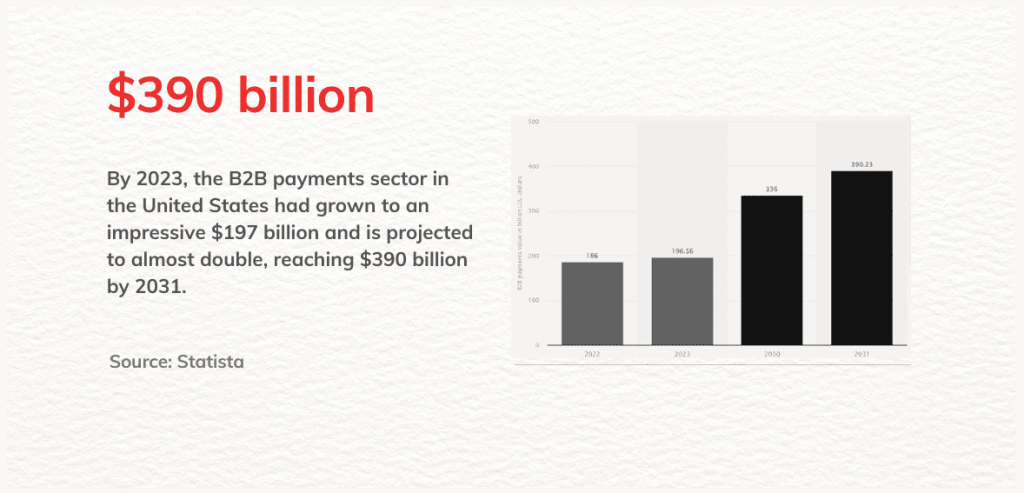
In recent years, the B2B industry has invested much of its technical budget in optimizing and modernizing B2B payments. These transactions vary widely, from simple cash exchanges to sophisticated tools like artificial intelligence and machine learning, each designed to meet the specific demands of business-to-business commerce. By 2023, the B2B payments sector in the United States had grown to an impressive $197 billion and is projected to almost double, reaching $390 billion by 2031.

Despite the growth, the processes involved in business transactions continue to pose challenges, presenting substantial opportunities for vendors in this space. This blog delves into the complexities of refining the methods by which companies manage financial transactions, providing a detailed analysis of both ongoing issues and the solutions that are starting to take shape.

Source: Statista

The Need to Modernize B2B Payments Infrastructure

Many small and medium-sized businesses (SMBs) continue to depend on manual procedures for their B2B payments and financial management. Around 40% of B2B payments in the US are conducted using paper checks, and 81% of businesses persist in this practice, even as interest in digital solutions increases.

This reliance often leads to uncertainties in cash flow management and squanders time on tasks that could be automated using available technology. If your company faces similar issues, consider exploring other business sectors that could benefit from updating your payment processes.

  • Improving Efficiency and Lowering Costs

Electronic B2B payments can significantly reduce the time spent on manual processes, replacing them with advanced financial technology solutions. B2B payment software efficiently tracks recurring payments and ensures transactions are completed on time, reducing human errors that could harm your company’s reputation.

  • Improving Compliance and Security

Implementing automated payment methods in your company enables real-time tracking and analysis of transactions throughout the payment process. Utilizing blockchain and AI technology helps boost transaction security and identify unusual activities that could result in financial losses.

Both the United States and European Union countries are adopting electronic invoicing within their jurisdictions to decrease the chances of financial fraud and to compel companies to upgrade their existing billing systems. Electronic invoice registries replace older software with updated, standardized systems that improve security and make the exchange of payment documents more efficient.

  • Imperative for Competing in the Market

Relying on outdated payment technologies today is risky and less competitive. Similarly to individual consumers, business-to-business decision-makers are drawn to digital transaction methods that significantly reduce transaction times and improve the overall customer experience.

91% of banks and insurers have begun adopting cloud technologies. These statistics indicate that lacking these advancements may reflect an obsolete approach to business-to-business payments.

Opportunities in Modernizing B2B Payments

Opportunities in Modernizing B2B Payments

In 2024, the need to enhance efficiency, security, and adaptability is driving significant modernization efforts in B2B payments within the competitive global marketplace. Here are the detailed forces behind this transformation:

Expansion of Real-Time Payments (RTP)

Real-time payments are becoming a norm in B2B transactions, providing businesses with the ability to execute faster and more transparent transactions. In the US, the introduction of platforms like FedNow in 2023 has been crucial in promoting real-time payments, which offer a substantial improvement over traditional methods such as Automated Clearing House (ACH) and paper checks, known for their multi-day processing times.

According to a report, global real-time transactions are projected to hit approximately 575 billion by 2028, with a compound annual growth rate (CAGR) of around 17% over five years. In the US, real-time transactions are expected to reach about 14 billion by the same year, marking a five-year CAGR of approximately 32%.

The appeal of RTP is growing rapidly as businesses prioritize quicker access to cash and enhanced liquidity management. The shift toward real-time transactions reflects a broader movement towards immediacy and precision in financial dealings.

Increased Digitization and Automation

Companies are increasingly turning to digital transaction solutions to simplify transaction processes, minimize manual labor, and enhance cash flow management. Automation is becoming particularly transformative in areas like accounts payable (AP) and accounts receivable (AR), where it helps reduce errors and increase processing speed. This move towards automation is supported by the adoption of technologies such as robotic process automation (RPA) and cloud-based payment systems.

These technologies facilitate real-time tracking and detailed reporting of payments, which are essential for better financial and compliance management. The trend indicates a shift towards more streamlined, error-free financial operations that can adapt more dynamically to changing business needs.

Growth in Cross-Border Payments

As global trade expands, the importance of efficient cross-border payments escalates. Traditional methods, often characterized by the involvement of multiple intermediaries, high transaction costs, and lengthy processing times, are becoming outdated. More streamlined and transparent solutions are taking their place, with innovations like blockchain technology and AI-powered platforms leading the charge.

In 2023, it is projected that the United States will have 69.8 million people making purchases from other countries, making it the second-largest group of international buyers globally. Additionally, the volume of cross-border payments was valued at $190.1 trillion in 2023, with expectations to increase to $290.2 trillion by 2030.

The market for cross-border e-commerce is also expanding quickly, anticipated to grow to $4,911.4 billion by 2030, driven by increasing consumer demand for international brands and a wider selection of products.

These advancements significantly enhance the efficiency and security of cross-border transactions, enabling businesses to engage with international markets more effectively and with reduced risk. This shift is critical for businesses looking to capitalize on global opportunities and navigate the complexities of international trade regulations and currency fluctuations.

In the evolving landscape of B2B payments, several trends are reshaping how businesses manage transactions, enhance security, and ensure compliance. Here’s an in-depth look at each key trend:

Virtual Cards

The use of virtual cards in B2B payments is increasing due to their enhanced security, control, and flexibility. Virtual cards provide businesses the ability to generate one-time-use or purpose-specific payment instruments, which are crucial in managing expenses and mitigating fraud risks. The application of virtual cards is becoming more prevalent in sectors such as travel, entertainment, and supplier payments.

By 2026, their use is expected to rise significantly, positioning them as an essential tool for corporate finance teams. The increasing reliance on virtual cards reflects a broader shift towards more secure and controlled financial transaction methods that adapt quickly to varying business needs.

Virtual Cards

Adoption of Artificial Intelligence (AI)

AI is significantly transforming B2B payments, especially in the realms of fraud detection, cash flow optimization, and transaction process automation. AI-driven systems enable businesses to lower risk, reduce errors, and enhance the efficiency of payments.

The deployment of AI in finance departments is on an upward trajectory, with expectations for continued growth in 2024 as companies further integrate advanced predictive analytics and payment automation solutions. This trend underscores a move towards smarter, data-driven approaches that streamline operations and bolster financial insights.

Regulatory Compliance and E-Invoicing

Global governments are advocating for the digitization of business processes, including B2B payments. For instance, the implementation of e-invoicing mandates in the US and Europe is compelling businesses to shift to electronic invoicing systems.

These systems offer better tracking of payments, reduce opportunities for fraud, and enable faster transaction processing. Such regulatory changes are major catalysts prompting businesses to overhaul their traditional payment systems. The push towards e-invoicing not only facilitates compliance with new regulations but also enhances operational efficiencies, leading to quicker, more transparent transactions.

Challenges in Modernizing B2B Payments

Challenges in Modernizing B2B Payments

The push towards digitalizing B2B payments in 2024 encounters several notable obstacles, despite increasing efforts to adopt more modern payment technologies.

Reluctance to Abandon Legacy Systems

A major barrier to the advancement of global B2B payments is the hesitance of some businesses, particularly medium-sized ones, to embrace new methods and technologies. These companies often lag behind their larger counterparts in transitioning to modern, automated systems.

This reluctance usually originates from leadership’s apprehension about undertaking substantial transformation projects, which demand significant investments of time, money, and other resources. Leaders are concerned that by the time they replace their old systems, the benchmarks for successful modernization will have evolved, potentially rendering their new systems outdated once again.

Additionally, the financial burden associated with implementing and maintaining new systems can be overwhelming, making less costly and familiar processes more attractive by comparison. There’s also a tendency to resist change due to concerns from risk and compliance departments about potential issues arising from abandoning proven manual systems.

Consequently, many businesses continue to depend on manual operations for B2B payments, leading to frequent manual interventions that not only heighten the risk of errors but also slow down the transaction process.

Standardization Difficulties

Although the use of digital wallets, real-time payments, and AI-enhanced payment solutions is increasing, the absence of standardized practices across different industries poses a considerable challenge. The specific needs of each industry and company complicate the deployment of uniform solutions.

Achieving system interoperability is essential for broad adoption but continues to be a difficult goal.

Security Risks

As companies update their payment infrastructures, they face heightened security risks such as fraud and cyberattacks. While digital transaction methods incorporate advanced security features, the complexity and frequency of cyber threats necessitate continuous updates to security measures.

Companies must ensure they have strong fraud detection capabilities and protect sensitive financial information, which is crucial as technologies like blockchain and AI are integrated.

Integration Difficulties

Incorporating real-time payment systems and sophisticated financial technologies, such as APIs, into existing infrastructures can be daunting. Many older systems are not equipped to support real-time transaction processing, which complicates the integration process, particularly on international platforms.

Challenges in Cross-Border Payments

Cross-border payments often encounter significant delays and frustrations due to the complex web of legal and regulatory requirements they must navigate. Regulations such as Anti-money laundering (AML) laws often cause substantial delays because they depend heavily on time-consuming manual processes. Given that delays are a common issue even in domestic B2B payments, with 52% in the US experiencing some form of delay, these additional hurdles in international transactions only amplify business frustrations.

Moreover, the inherently slow pace and increased costs associated with currency conversions for international payments further complicate matters. Inefficient handling of these issues results in slow and unreliable payments, which can severely impact cash flow and overall business performance. Companies without sufficient cash reserves to withstand periods of delayed or disrupted payments may find themselves forced to rely on expensive short-term financing options to bridge the financial gap.

Regulatory and Compliance Hurdles:

The regulatory environment for B2B payments is dynamic, with new requirements on electronic invoicing and data privacy emerging. Major compliance concerns include regulations related to AML, Know Your Customer (KYC) protocols, counter-terrorism financing (CTF), and data protection rules.

Adhering to these regulations demands considerable effort, particularly for businesses that operate in multiple countries with different legal frameworks, adding layers of complexity to compliance efforts.

Conclusion

Modernizing B2B payments presents both significant challenges and opportunities. Businesses, particularly small and medium-sized ones, often struggle with transitioning from legacy systems due to concerns over cost, complexity, and security risks. Manual payment processes, although familiar, introduce inefficiencies that can slow down operations and increase the likelihood of errors. However, the drive toward digital solutions, such as real-time payments, AI-powered payment automation, and enhanced security features, offers a clear path forward.

As global commerce evolves, embracing digital payment technologies becomes increasingly crucial for maintaining competitiveness, improving cash flow management, and reducing transaction delays. The ongoing advancements in cross-border payment solutions and regulatory compliance, particularly with e-invoicing, signal a shift toward a more streamlined and secure B2B payments landscape. Companies that adopt these innovations will not only enhance their operational efficiency but also better position themselves to capitalize on global opportunities in the years ahead.

How FinTechs Are Revolutionizing Cross-Border Payments?

How FinTechs Are Revolutionizing Cross-Border Payments

The need for efficient, secure, and cost-effective cross-border payment has never been greater. The world has become increasingly interconnected and fintech companies are at the forefront of this transformation, employing cutting-edge technologies to overhaul the traditional mechanisms of international money transfers.

This article explores how these innovations are not just enhancing transaction speeds and reducing costs but are also broadening access, ensuring compliance, and improving the overall transparency of cross-border payments.

What Are Cross-Border Payments?

What Are Cross-Border Payments?

Cross-border payments refer to financial transactions where the sender and recipient are in different countries. These transactions can involve individuals, companies, or financial institutions and play a crucial role in international commerce, supporting international trade, investments, and remittances.

Such transactions use a variety of payment methods including wire transfers, credit and debit cards, electronic funds transfers (EFTs), cryptocurrencies, and international money orders. Each method offers distinct advantages and limitations concerning speed, cost, and user convenience. For example, wire transfers are typically used for large amounts but may incur higher fees and longer processing times, whereas digital payment platforms can provide quicker transfers at reduced costs.

Cross-border payments are essential across many sectors, enabling not just international trade and investment but also personal transactions such as remittances. Additionally, they facilitate international charitable donations and help businesses manage payments to and from foreign partners and customers.

Different Types of Cross-Border Payments

Different Types of Cross-Border Payments

Cross-border payments refer to transactions where the payer and the recipient are in different countries. The development of payment methods has changed the way people and businesses handle international money transfers. Here are the main types of cross-border payment methods:

  • Bank Transfers: This traditional method is commonly used for international payments. Bank transfers, including wire transfers, involve shifting funds between banks in different countries. Sometimes, intermediary or correspondent banks are needed to facilitate the transfer if the involved banks lack a direct relationship. Transfers may take several days, and costs such as currency conversion fees may be incurred.
  • Credit Cards: Credit cards are a practical choice for cross-border payments, especially in e-commerce. When making a payment, users input their card details, and the card networks along with acquiring banks manage the currency conversion and transaction processing. These transactions typically involve higher fees due to the complexities of managing international payments.
  • E-Wallets: Digital wallets such as PayPal, Alipay, and Apple Pay are increasingly used for international payments. They hold payment information, like bank or card details, enabling swift and secure transactions. E-wallets simplify the payment process, allowing users to initiate transfers quickly from mobile devices, appealing to those prioritizing speed and ease of use.

Each payment method has its benefits and limitations. Bank transfers are secure but may be slow and expensive. Credit cards are broadly accepted but come with higher fees. E-wallets provide ease and rapid transaction times but might face restrictions based on location and currency acceptance. Choosing the right payment method depends on the specific requirements of your transaction.

Ways FinTech Is Revolutionizing Cross-Border Payments

Ways FinTech Is Revolutionizing Cross-Border Payments

Fintech companies are leading the charge in transforming cross-border payments. Notable companies such as PayPal, Wise, and Revolut provide easy-to-use platforms that allow both individuals and businesses to transfer money internationally with greater speed and reduced costs when compared to traditional banking methods. These platforms generally utilize a peer-to-peer system that aligns transactions between users to reduce the costs associated with currency conversion.

Additionally, fintech is increasingly focusing on mobile payments to leverage the widespread use of smartphones. Mobile money services contribute to financial inclusion by offering banking services to populations without traditional bank accounts, enabling them to participate in cross-border remittances and payments. This new wave of fintech payment providers is altering the way money is sent globally by consumers and businesses alike, using innovations and technology to make international payments more efficient, affordable, secure, and compliant.

  • API for Real-Time Rates:

Among the key trends in cross-border payments is the use of APIs (Application Programming Interfaces) for real-time currency exchange rates. APIs are crucial for the integration of fintech solutions with traditional banking systems, fitting smoothly into existing treasury infrastructures.

This integration provides treasurers with immediate access to exchange rates, allowing them to manage their currency risks more effectively and speed up the reconciliation process across their global accounts. This immediate access to rate information helps treasury departments control currency risks and enhance the efficiency of reconciliation processes.

  • Real-Time Cross-Border Payments:

Real-time cross-border payments represent a significant advancement in payment technology, with fintech companies leading the shift towards instantaneous transaction settlement. Traditional banking systems often struggle with delays, but fintech is circumventing these challenges by utilizing blockchain and smart contracts to expedite transactions. This technology allows funds to reach their recipients nearly instantly.

Despite over 60 countries either implementing or planning local real-time payment systems, international payments still face hurdles due to incompatible systems. To address this, several initiatives, including SWIFT GPI and Visa Direct, are actively working to establish real-time cross-border payment systems that resolve these interoperability issues.

  • Enhanced Transparency:

In terms of transparency, APIs not only facilitate access to real-time foreign exchange rates but also improve the clarity of transactions for all parties involved. Senders can check exchange rates before transactions, and both senders and recipients can monitor the progress of transactions as they occur, which minimizes the likelihood of mistakes and delays.

This increased transparency is particularly beneficial for businesses, enhancing the management of cash flows.

  • Virtual Accounts for Global Reach:

Virtual Account Management Systems (VAMS) have revolutionized how businesses handle international operations by centralizing account management. With VAMS, companies can eliminate the need for multiple local bank accounts across different currencies, streamlining global payments–cash flow management, minimizing risk, and enhancing liquidity.

Traditionally, businesses involved in international trade might maintain direct deposit accounts in various countries to facilitate transactions with local suppliers. This approach often leads to complex financial reporting, stagnant cash balances, and increased exposure to currency risks.

By adopting Virtual Account Management Systems, companies can simplify their financial structures into a single centralized account. This consolidation eliminates the need for numerous local accounts within the same markets, allowing for improved payment sequencing and detailed reporting of business-to-business transactions. Moreover, it simplifies the management of payment flows and the transfer or concentration of offshore funds. Ultimately, VAMS helps businesses optimize their liquidity, reduce risk exposure, and manage their operations in the most economically advantageous currencies.

Fintech innovation has significantly transformed the landscape of cross-border payments. Transactions that previously took days to complete and were costly and opaque can now be executed quickly, affordably, and with full transparency. As fintech continues to advance the mechanisms of cross-border transactions towards immediate real-time payment, it is poised to greatly simplify trade, making it more equitable and advantageous for all involved.

Key Advantages of FinTech in Cross-Border Payments

Key Advantages of FinTech in Cross-Border Payments

The transformation of the cross-border payments sector is driven by fintech companies using advanced technologies to provide faster, cheaper, and more transparent services. These companies have overcome several challenges of traditional banking, such as high fees and slow processing times, through technologies like APIs, blockchain, and digital wallets.

  • Cost Reduction: Fintech solutions are generally less expensive than traditional banks, which typically charge high fees for international transfers. By reducing the need for intermediaries and using more efficient technologies, fintechs can offer lower transaction fees.
  • Speed: Fintech platforms have significantly cut down the time required to process international transactions by implementing real-time payment systems and blockchain technology. Transactions that once took days can now be completed almost instantly.
  • Accessibility: Fintech increases access to financial services, allowing individuals without traditional bank accounts to engage in the global economy. Digital platforms and wallets enable international payments across geographic and economic barriers.
  • Transparency: Fintech platforms provide users with clear information about transaction fees, exchange rates, and processing times upfront, offering a stark contrast to the sometimes less transparent practices of traditional banks.

The cross-border payment market is expected to see significant growth, potentially reaching approximately $290 trillion by 2030, driven by factors such as e-commerce and increasing global trade.

What Is the Future Ahead?

Rapid advancements in fintech are reshaping the landscape of cross-border payments, with technologies like blockchain, artificial intelligence (AI), and machine learning at the forefront. These innovations are tackling persistent issues in global transactions such as high fees, delays, and security risks.

Blockchain technology is transforming cross-border payments by establishing decentralized, secure ledgers that facilitate faster and more transparent transactions, significantly cutting down the involvement of traditional intermediaries that often increase costs and processing times. Central banks and businesses are actively exploring blockchain-based solutions to enhance international payments and reduce fraud risks.

AI and machine learning are also influential. These technologies are enabling financial institutions to enhance payment processes by more effectively detecting fraud, predicting transaction patterns, and customizing user experiences. For example, AI can refine exchange rate calculations and adjust services to meet the specific demands of each customer or business. Additionally, AI helps ensure compliance with anti-money laundering (AML) and know-your-customer (KYC) regulations, further securing cross-border payments.

Real-time payment systems represent another significant advancement, with various countries implementing these systems to support almost instantaneous international transactions. However, there are still challenges to overcome, including regulatory compliance, ensuring compatibility between different payment networks, and managing cybersecurity threats. Despite these challenges, the ongoing integration of new technologies is likely to yield more efficient, cost-effective, and dependable cross-border payment methods in the near future.

Conclusion

Fintech innovations are rapidly changing the landscape of cross-border payments by addressing long-standing challenges such as high costs, slow processing times, and lack of transparency. By leveraging technologies like blockchain, real-time payment systems, and AI, fintech companies are making international money transfers faster, more affordable, and accessible to a broader population.

This transformation is not only benefiting businesses involved in global trade but also individuals who rely on remittances. As innovation continues, we can expect further improvements in efficiency, security, and compliance, shaping a future where cross-border payments are seamless and widely accessible.

Tokenization and Its Role in Securing Payment Data

Tokenization and Its Role in Securing Payment Data

Securing payment data is critically important for both businesses and consumers. As online transactions continue to rise, protecting sensitive information like credit card details is vital to avoiding data breaches and fraud. Tokenization, which substitutes sensitive data with unique identifiers known as “tokens” that are valueless outside their creation system. Thus it offers a reliable solution for securing payment data.

This technique reduces the risks linked with data storage and transmission by rendering the data useless if intercepted. This article overviews tokenization, examining its key role in protecting payment data, improving security, and helping comply with industry standards.

What Is Tokenization?

Tokenization is a method of data protection that involves substituting sensitive data, like bank accounts or credit card numbers, with a safe, randomly generated replacement known as a “token.” This token represents the original data but is void of any actual value or meaningful data, rendering it ineffective for hackers if captured. The original sensitive data is stored securely in a dedicated “token vault,” and the token is utilized during transactions or data handling instead.

Unlike encryption, which obscures data and can be reversed with a decryption key, tokenization uses irreversible methods. The token can’t be transformed back into the original data outside the secure system that produced it. This distinction from encryption enhances data security by ensuring that sensitive data isn’t exposed or directly processed during transactions.

Tokenization is widely adopted across various sectors such as finance, healthcare, and e-commerce that handle sensitive data. It is particularly beneficial for safeguarding payment processes and personal identification information (PII). For instance, during a payment, a customer’s credit card number is replaced by a token, enabling the transaction to continue safely without revealing the card details to potential online threats.

Overall, tokenization aids organizations in adhering to data protection regulations and minimizing the risk of data breaches, while enabling the safe use of tokenized data in transactions or analytical purposes without compromising security.

Understanding Tokenization’s Role in Securing Payment Data

Tokenization is essential for protecting payment data by substituting sensitive details, like credit card numbers, with non-sensitive tokens. These tokens, useless outside their originating system, offer no value to unauthorized interceptors.

During a transaction, a tokenization service generates a unique token to replace the actual payment data. The original information is securely stored in a token vault, and only the token is transmitted, minimizing the risk of data theft.

Unlike encryption, tokenization does not use reversible cryptographic methods. Therefore, tokens remain secure against reverse engineering, providing a solid defense against cyber threats such as data breaches or fraud. Tokenization can accommodate both single-use and multi-use scenarios, facilitating recurring payments safely.

Furthermore, tokenization aids businesses in meeting strict data protection standards like PCI DSS. It reduces the scope of compliance, as sensitive data is not stored or processed by the merchant, thereby lowering the costs of audits and the risk of regulatory fines.

As more businesses implement tokenization in various settings—from mobile payments to e-commerce and point-of-sale systems—it ensures the security of customer payment data across numerous transaction environments. This approach builds customer trust and enhances the overall security of digital payments, mitigating the likelihood of fraud and breaches.

How Does Data Tokenization in Payment Processing Work?

How Does Data Tokenization in Payment Processing Work?

Data tokenization in the context of payment processing is a security method where sensitive information, such as a customer’s credit card number, is replaced with a randomly generated token. This token acts as a placeholder for the original data but has no real value or significance. The process replaces the primary account number (PAN)—a 16-digit number—with a unique alphanumeric identifier during transactions. This is crucial as the token has no link to the customer’s actual account, which minimizes the risk of data compromise in the event of a security breach.

The tokenization process includes several key steps:

  • Transaction Initiation: A customer enters their card details into the system.
  • Token Generation: A payment gateway creates a token that substitutes the PAN. This token is transaction-specific but maintains a format that supports processing needs.
  • Secure Storage: The original credit card information is securely stored in a virtual vault controlled by the payment processor, and the token is used for transaction processing.
  • Transaction Completion: The payment processor receives the token, maps it back to the original credit card data, confirms the transaction’s validity, and then processes the payment. Access to the actual card details is limited to the payment processor at this stage.

The advantage of tokenization is that the token is useless outside its intended context, which adds a layer of security. Attackers, if they intercept the token, cannot link it back to the original card information. Tokenization is particularly beneficial for recurring transactions or subscription services, allowing repeated use of the token without direct storage of sensitive data.

This technique also supports compliance with standards like the Payment Card Industry Data Security Standard (PCI DSS) by reducing the storage and transfer of vulnerable card information, thereby narrowing the compliance obligations for businesses.

Example of Payment Tokenization

When a merchant processes a customer’s credit card, they replace the primary account number (PAN) with a token. For instance, the number 1234-4321-8765-5678 is substituted by a token such as 6f7%gf38hfUa.

This token ID is used by the merchant to maintain records linked to the customer; for instance, 6f7%gf38hfUa is associated with John Smith. The token is then sent to the payment processor, who reverses the tokenization to verify and process the payment, converting 6f7%gf38hfUa back to 1234-4321-8765-5678.

The payment processor is the only entity able to interpret the token, which appears random and is indecipherable to others. Additionally, this token is exclusive to the transactions with that specific merchant.

Benefits of Tokenization Payments Industry

Benefits of Tokenization Payments Industry

Tokenization brings several advantages to the payments industry, focusing on data security, regulatory compliance, and fraud prevention.

  • Data Protection and Security:

Tokenization enhances the security of payment systems by transforming sensitive information, such as credit card numbers, into harmless tokens. These tokens, if intercepted, hold no actual value, which prevents hackers from gaining access to the real card details that are securely stored away. This approach greatly reduces the likelihood of significant breaches in data security during transactions.

Furthermore, even if a data breach were to occur, the structure of the tokens makes it impossible for them to be decoded back into the original sensitive data. This level of protection is essential in securing transactions conducted both online and in physical stores, where sensitive information is frequently transferred or held.

  • Regulatory Compliance:

Tokenization aids businesses in meeting the PCI DSS requirements. It reduces compliance scope by lessening the amount of sensitive data merchants manage directly. This means merchants can bypass some PCI DSS requirements, like data encryption in transit or safeguarding stored cardholder data, as they no longer store sensitive information themselves.

As a result, achieving and maintaining PCI compliance becomes less costly, particularly for organizations dealing with recurring payments or large transaction volumes.

  • Convenience for Recurring Payments:

For companies that handle recurring payments, tokenization streamlines the process. Customers need to enter their payment details only once, after which tokens represent them in subsequent transactions. This not only improves the customer experience but also ensures that sensitive information is not continuously at risk.

  • Fraud Reduction and Chargeback Prevention:

Tokenization creates unique tokens for each transaction or channel (such as mobile apps), which means that even if a token is compromised, it cannot be reused elsewhere. This significantly cuts down on fraud and the related costs of chargebacks, making it very difficult for malicious actors to use stolen tokens for unauthorized transactions.

Comparing Tokenization and Encryption

Tokenization and encryption are two key approaches to safeguarding sensitive data. Although both offer protection, their methods, applications, and how they complement each other vary considerably.

Encryption involves converting readable information, or plaintext, into an encoded format known as ciphertext. This transformation is done using algorithms and an encryption key, which is necessary to revert the data to its original form. Encryption maintains confidentiality by ensuring that intercepted data is indecipherable without the key. However, if the key is compromised, the encryption can be reversed.

Tokenization, in contrast, replaces sensitive data with a randomly generated token. The token holds no meaningful relationship to the original data, which is stored securely in a “token vault.” Access to this vault is required to retrieve the original information, making tokenization irreversible without such access. Even if a token is intercepted, it cannot be used to recreate the original data, adding an extra level of security by reducing exposure to sensitive information.

What Are the Use Cases of Each?

Encryption is typically employed when sensitive data must be decrypted and used again. It works well in scenarios where users need regular access to the original data, such as in the protection of emails, files, and databases. It’s also better suited for safeguarding unstructured data and is often applied in cases involving the exchange of data with third parties, where decryption keys may be shared.

Tokenization is more effective in scenarios where the original data doesn’t require frequent retrieval. For example, it’s commonly used in payment systems where credit card information is tokenized for recurring transactions. Tokenization is especially useful for complying with regulations like PCI DSS, which govern the security of payment card data. It is most appropriate for protecting structured data, such as social security numbers or account details, though it is less efficient for large or unstructured datasets.

How Combining Tokenization and Encryption Strengthens Data Security

A combination of both methods can provide enhanced security. Encryption can protect the token vault, ensuring that even if a token is compromised, the sensitive data remains encrypted and secure. While encryption helps protect data in transit, tokenization minimizes the risk by removing sensitive elements from the system entirely, especially for stored data.

In practice, many organizations use encryption to secure large datasets, such as databases and email communications, while turning to tokenization to safeguard critical data like payment information. This dual approach helps ensure compliance with industry regulations and reduces the likelihood of data breaches.

Key Tokenization Standards and Regulations for Secure Payment Systems

Tokenization standards and protocols are important for keeping sensitive data secure, especially in payment systems. These standards ensure that tokenized data is safe, works across various platforms, and follows global security rules. Key areas to focus on include the EMVCo Payment Tokenization Specification and regulatory guidelines like PCI DSS.

  • EMVCo Payment Tokenization Specification

The EMVCo Payment Tokenization Specification is a framework widely used to improve payment security in payment systems. It’s managed by EMVCo, a group formed by major payment networks like Visa and Mastercard. This framework replaces sensitive payment information, such as the Primary Account Number (PAN), with a token during transactions. The token is useless outside its specific context, such as a certain device or merchant, reducing the risk of fraud if it’s intercepted.

The specification defines important roles, like Token Service Providers (TSPs), who create and manage the tokens. It also sets rules for how these tokens can be used across different systems worldwide, ensuring that mobile and digital payments are secure while working smoothly across platforms.

  • Regulatory Guidelines and Tokenization

Regulations like the PCI DSS shape how tokenization is used. While PCI DSS doesn’t require tokenization, it encourages its use to limit the exposure of sensitive data, making it easier to comply with security rules. By using tokenization, companies can handle fewer sensitive payment details, reducing the chances of a data breach.

PCI DSS also gives guidelines to keep tokenized systems secure. These include keeping token vaults safe, using strong access controls, and ensuring tokens can’t be reverse-engineered to recover the original data. Tokenization works alongside other PCI requirements, like encryption and multi-factor authentication, to add extra protection.

  • Secure Transactions Across Platforms

The combination of EMVCo tokenization standards and PCI DSS guidelines ensures secure and compatible transactions across different platforms. EMVCo allows tokens to be safely generated and processed by various financial institutions, while PCI DSS helps companies remain compliant with global security standards, reducing the chances of data breaches.

Conclusion

Tokenization has become a vital tool in protecting payment data in today’s digital landscape. By replacing sensitive information with valueless tokens, this method reduces the risk of data breaches, especially in payment systems. Tokenization not only enhances data security but also helps businesses meet regulatory standards like PCI DSS.

Its role in ensuring secure transactions across various platforms has made it a go-to solution for businesses handling sensitive payment details. As the digital economy grows, the adoption of tokenization continues to strengthen payment security and foster consumer trust.

Frequently Asked Questions

How Embedded Payments Are Shaping the Future of B2B Transactions

How Embedded Payments Are Shaping the Future of B2B Transactions

Embedded payments are reshaping the B2B transaction sector, pushing the fintech industry toward a future where technology meets user convenience. These integrated solutions incorporate payment processing directly into software applications, improving efficiency and focusing on user needs. The role of embedded payments in advancing financial services is clear, offering new ways to enhance customer interactions through technologies like APIs and cloud computing.

Significant growth is expected in the area of embedded payments in 2025 and beyond. This article will explore the factors fueling this increase and what it means for traditional banking systems and fintech collaborations.

What Is Embedded Finance?

Embedded finance involves incorporating financial services and products—like payments, lending, insurance, and investment—directly into non-financial platforms and applications. This integration allows users to access financial services within the platforms they already use frequently and trust, bypassing traditional banking interfaces or separate financial apps.

Embedded finance aims to integrate financial services seamlessly into the user experience across various digital environments. This can include e-commerce sites, ride-sharing apps, travel booking portals, and social media platforms. The objective is to create a smooth, uninterrupted experience where financial transactions and services blend into the user’s regular activities on these platforms.

embedded payments in b2b infographic

Source: Juniper Research

Open Banking vs. Embedded Finance: Key Differences

While both open banking and embedded finance modernize financial services through APIs, their scope and application differ.

Open banking focuses on allowing third-party providers to access customer banking data with consent. This is typically done under regulations like PSD2 in Europe, which mandate banks to share data via APIs. The primary goal is to foster competition and innovation in the financial sector. Open banking enables services such as personal finance management and account aggregation, giving consumers control over their financial data and allowing fintech companies to build new offerings on top of traditional banking systems.

Embedded finance, on the other hand, integrates financial services directly into non-financial platforms like e-commerce or ride-sharing apps. It goes beyond accessing data, and embedding services such as payments, lending, and insurance into everyday user experiences. Companies like Uber and Shopify can offer these services without users needing to leave their platforms or interact with a traditional bank.

Open Banking vs. Embedded Finance: Key Differences

In short, open banking enhances traditional financial products by improving data access, while embedded finance brings financial services directly into non-financial industries, creating new opportunities and simplifying transactions for users.

Types of Embedded Finance

Here’s a breakdown of the key types of embedded finance:

  • Embedded Payments: Platforms like Uber and Amazon integrate payment options directly within their apps, streamlining the transaction process. Services like Apple Pay and Google Pay store payment information securely, enabling quick transactions, while tools like Stripe help small businesses accept payments easily, reducing operational complexity.
  • Consumer Payments: Embedded finance simplifies payment acceptance across various channels—such as invoices, point-of-sale systems, and online checkouts. This feature is crucial for smaller businesses aiming to streamline their operations.
  • B2B Payments: For business transactions, companies can integrate payment solutions into existing systems like supply chain or CRM platforms, improving efficiency by managing accounts payable and receivable without relying on external banking systems.
  • Embedded Banking: Services such as Shopify Balance provide businesses with banking solutions, including loans and expense management, directly through their platforms. Lyft offers instant payment to drivers via branded debit cards, bypassing traditional bank accounts.
  • Embedded Lending: Platforms like Afterpay and Klarna allow users to apply for loans at the point of sale, offering instant credit approval for easier financing.
  • Buy Now, Pay Later (BNPL): Afterpay and Klarna enable customers to make installment-based payments directly on e-commerce platforms, spreading out payments and making large purchases easier to manage.
  • Embedded Insurance: Tesla and other companies offer embedded insurance within the sales process, simplifying the purchase of coverage by removing the need for third-party providers.
  • Embedded Investing: Apps like Acorns and Robinhood make investing more accessible by integrating it with other financial tools, allowing users to manage stocks and funds alongside their usual transactions.

The Transition from Traditional Payments to Embedded Finance

Types of Embedded Finance

The shift from physical cards to digital credentials is increasingly transforming B2B payments, as embedded finance grows in importance. While embedded finance long has been a norm in consumer e-commerce, it is now gaining momentum in B2B settings. This shift is critical as businesses seek more efficient ways to handle payments and working capital management.

Digital credentials, which include the use of tokens, enable businesses to facilitate payments securely without sharing sensitive information, such as credit card numbers, with trading partners. This B2B payment innovation improves both security and efficiency in B2B transactions, especially in complex supply chains that involve multiple stakeholders. These tools can integrate with invoicing, existing procurement, and streamlining processes, supplier management systems.

This shift to digital payments also changes how businesses view payments, no longer seeing them as just transactions but as integrated parts of broader business operations, improving decision-making and offering better relationships with suppliers. As the adoption of embedded payments continues to rise, businesses are better positioned to navigate the increasing complexity of global commerce, as well as benefit from real-time visibility into financial workflows​.

The Rise of Embedded Payments: A Rapidly Growing Industry Revolutionizing B2B Transactions

The Transition from Traditional Payments to Embedded Finance

Embedded payments, with a current global transaction value of around $16 billion, are expected to grow significantly, potentially reaching $140 billion within the next three years. These payments are commonly found in services such as Uber, where the payment process occurs automatically after a ride. Yet, systems like Apple Pay and Google Pay, which require actions such as biometric authentication from users, only partly represent embedded payments.

This expected increase in embedded payments is primarily fueled by the business-to-business (B2B) sector. B2B systems are beginning to integrate payment processes directly into accounting software, making tasks like bill payments more straightforward.

An example of this integration is the partnership between Crezco, a UK fintech company, and Xero, an accounting software provider. This collaboration demonstrates how embedded payments are improving efficiency in back-end operations across various industries, such as logistics, where delivery confirmation now initiates the payment process, updating the traditional cash-on-delivery system to a digitized version.

Open Banking is advancing by providing standardized API access to payment systems, which enhances transaction automation and efficiency. This development is expected to streamline operations, accelerate payment cycles, and reduce costs, especially in B2B transactions.

Previously, many businesses treated payments as a separate, inconvenient step occurring after the delivery of goods or services. Embedded payments revolutionize this process by integrating the payment function into business software and platforms like enterprise resource planning (ERP) systems, procurement portals, and supply chain management tools.

In this framework, payments become a core component of the digital systems that manage business operations. Incorporating payment functionalities allows businesses to automate financial tasks, improve the efficiency of the payment process, and immediately access information on payment statuses, approvals, and cash flow. This integration fosters quicker decision-making, enhances supplier relationships, and facilitates business expansion.

With more businesses in the B2B sector adopting embedded payments, credentials, and tokens, the approach to business payments is transforming. Payments are now seen as an automated, integral part of business operations, not as a separate, manual task to be completed after other activities.

Key Drivers Behind the Growth of Embedded Payments in 2025

Key Drivers Behind the Growth of Embedded Payments in 2025

The expansion of embedded payments in 2025 is influenced by several important factors that are transforming how various industries handle finances.

  • Industry Demand and Application: Real estate, automotive, and insurance sectors are increasingly integrating embedded finance to simplify transactions and improve customer interactions. These sectors handle large volumes of transactions, making embedded payments a practical choice for facilitating regular financial activities such as automated payments and providing immediate transaction visibility.
  • Commerce Evolution: The emergence of new buying methods, both online and offline, is increasing the need for embedded payment systems. As consumer behavior changes, financial institutions and companies are adopting embedded finance to cut operational costs and generate new revenue sources, often through partnerships with fintech companies (Maast Blog). This integration allows for the more direct incorporation of financial services into customer interactions, including self-service checkout systems and embedded lending.
  • Technological Advancements: Developments in API technology are simplifying the process for companies to integrate financial services into their platforms with little investment. These integrations are enhancing customer satisfaction and retention by enabling more straightforward, user-friendly payment methods. Furthermore, advancements like digital currencies and AI-driven fraud detection are improving the security and ease of use of embedded payments.

As these factors continue to influence the market, embedded payments are increasingly becoming crucial for businesses aiming to meet contemporary consumer expectations and boost operational efficiency.

Challenges and Opportunities in the Embedded Finance Market

The embedded finance market is experiencing rapid growth, evolving from basic payment and lending services to more intricate offerings such as insurance, payroll, taxes, and regulatory compliance solutions. The retail and e-commerce sectors are at the forefront of this transformation, benefiting from established digital infrastructures and the widespread adoption of payment systems. Additionally, industries like ridesharing and food delivery are effectively utilizing embedded finance to manage payments to gig workers, which also generates extra revenue through debit card transaction fees.

However, progress varies across sectors. The real estate industry, which relies on high-value transactions and traditional practices, encounters more significant challenges in adopting embedded finance solutions. Regulatory and legal hurdles remain substantial obstacles.

An emerging trend sees larger platforms exploring the option of building certain financial services in-house, particularly in areas like credit risk management and collections, to boost profitability. Despite this, these platforms continue to depend on third-party enablers for core infrastructure and regulatory compliance. These enablers are essential in helping platforms navigate the complex regulatory landscape, offering services like licensing and compliance management.

Traditional banks face disruption from the rise of embedded finance, as it shifts customer relationships away from them. This shift creates opportunities for banks to reposition themselves by investing in technology or forming partnerships with platforms. By leveraging their regulatory expertise and resources, banks can play a significant role in embedded finance through services like Banking-as-a-Service (BaaS), which allows other platforms to embed financial services within their ecosystems.

The ongoing expansion of embedded finance is set to transform how consumers and businesses interact with financial services, driven by continuous investments and innovations within the market.

Conclusion

Embedded payments are revolutionizing B2B transactions by integrating financial services directly into business operations, enhancing both efficiency and user experience. As businesses move away from traditional payment processes to digital payments, they are increasingly adopting technologies that facilitate seamless transactions within their existing systems. The rapid growth of embedded payments, projected to reach significant market values in the coming years, is driven by a combination of industry demand, evolving consumer behaviors, and technological advancements.

However, this transformation is not uniform across all sectors. Industries such as real estate face unique challenges due to regulatory hurdles, while others like retail and e-commerce are leading the charge in adopting embedded finance. Traditional banks, while disrupted by this shift, also have the opportunity to reposition themselves through strategic partnerships and technological investments.

As we look ahead, the importance of embedded payments in shaping the future of financial transactions cannot be overstated. By embracing these innovations, businesses can streamline their financial workflows, enhance customer interactions, and remain competitive in an increasingly complex global market. The evolution of embedded payments promises to create a more integrated and efficient financial landscape, ultimately benefiting both businesses and consumers alike.

real-time payment icon

Real-Time Payments: What’s Next in 2024?

Real-time payments (RTP) enable consumers to execute direct, bank-to-bank transactions within seconds, avoiding the slower and more involved methods typical of traditional card payments and wire transfers. RTP networks simplify the payment process for consumers and accelerate revenue access for businesses.

Globally, instant, real-time payments are increasingly common, although in some regions, like the US, they are less developed compared to markets such as the United Kingdom and the European Union. However, this is changing as major US payment market players like banks, key card networks, and the Federal Reserve are working to extend faster payment options more widely.

What advantages does RTP offer, what can we learn from more established markets about potential uses in the U.S., and how are leading entities working to expand RTP’s reach?

What Are Real-Time Payments?

Real-time payments, also referred to as immediate or instant payments, are transfers where funds immediately appear in the recipient’s account and are correspondingly deducted from the sender’s account. These payments are operational around the clock, every day of the year, enabling transactions to occur at any moment, including during weekends, holidays, and times when banks are closed. The transaction limit for RTP is $1,000,000.

Are ACH transfers, wire transfers, and mobile payments considered real-time payments?

No, they are not. Although ACH transfers, wire transfers, and mobile payments are widely used for transactions among businesses, consumers, and private individuals, they differ from real-time payments due to the networks they use, the parties involved, and the time it takes to process these transactions.

What is Real-Time Payment infographics

Source: Aci Worldwide

For example, ACH transfers are not immediate; they can take up to five business days to clear, and even same-day ACH transfers need several hours to reflect in the recipient’s account. Wire transfers, which occur directly between banks and not via a real-time payment network, can take up to two days to reach the recipient’s account.

Mobile payments, meanwhile, also involve a settlement period; funds transferred to a merchant using digital wallets like Google Pay, Apple Pay, or Samsung Pay are not immediately available in the merchant’s account.

Source: Mage A

It’s important to note that once a real-time payment is made, it is final and irreversible, eliminating the possibility for either the sender or the recipient to cancel the transaction once initiated.

Examples of RTP Networks and Platforms Around the World

Real-time payment systems are changing how financial transactions work by enabling instant fund transfers at any time. These systems are increasingly important in the modern digital economy, where speed, convenience, and flexibility are crucial.

Key Real-Time Payment Systems:

  • United States: Created by The Clearing House, the RTP Network allows for immediate settlement of transactions between U.S. financial institutions.
  • United Kingdom: The Faster Payments Service (FPS) has enabled quick transactions since 2008.
  • India: The Unified Payments Interface (UPI) processes over 9 billion transactions monthly as of 2023, driving real-time payments in India.

Examples of global real-time payment products:

  • SWIFT: Originally for international transfers, SWIFT now offers real-time payment capabilities.
  • PayPal: Facilitates instant payments for both personal and business users across its global network.
  • FedNow: Launched by the Federal Reserve, this service provides instant payments for U.S. financial institutions, supporting a range of transaction types such as transfers and bill payments.
  • Faster Payments (UK): Allows fast online, mobile, and phone-based transactions between UK banks.
  • Zelle (US): Enables quick transfers between U.S. bank accounts.
  • Paytm (India): Offers services like direct merchant payments, bill payments, and peer-to-peer transfers.
  • Alipay and WeChat Pay (China): Dominating China’s digital payments market, these platforms offer instant transactions for various consumer needs.

These systems not only speed up payments but also improve security by using technologies like tokenization to protect sensitive data. Their 24/7 availability allows users to manage finances without being constrained by banking hours.

global real-time payment data infographic

Source: Statista

However, each system has unique benefits and challenges that reflect specific market demands and regulations. For example, FedNow and RTP are U.S.-focused with higher transaction limits, while Paytm and Alipay serve large user bases with a broader range of transaction sizes.

Which Banks in the United States Provide RTP?

Over 460 banks are currently involved with the RTP payment system. The complete list of these banks is available on The Clearing House website. The RTP system is expanding, similar to FedNow, as more financial institutions join. Presently, about 70% of financial institutions, including several well-known ones, are part of RTP. These include:

  • Bank of America
  • JD Bank
  • American National Bank
  • Navy Federal Credit Union
  • Century Bank
  • Citizens National Bank
  • Citibank
  • Signature Bank
  • PNC Bank
  • Fifth Third Bank

In addition to these, many local credit unions and banks also support RTP bank transfers, such as State Bank of NW Missouri, Jacksonville Firemen’s Credit Union, and Indiana University Credit Union.

Key Trends Shaping the Growth of Real-Time Payments in 2024

In 2024, real-time payments (RTP) are expected to see significant growth due to rising demand, technological improvements, and broader global use. As these payments increasingly become a part of consumer and business transactions, certain trends are poised to influence the market.

The US is set to catch up with countries like India and Brazil in adopting real-time payments, driven by the expansion of services such as FedNow, which recently surpassed over 900 bank partnerships. Alongside The Clearing House’s RTP network, FedNow is anticipated to accelerate the adoption of instant payments across various sectors.

The use of real-time payments is extending beyond consumer transactions to include business-to-business and cross-border payments. Industries such as insurance, hospitality, and logistics are adopting real-time payments to enhance cash flow and move away from traditional payment methods like checks and ACH. There’s also a growing interest in using real-time payments for international transactions, aiming to streamline and expedite global payments.

Regulatory changes and technological innovations are also shaping the RTP environment. In Europe, updates to the PSD2 and PSD3 directives are influencing the landscape, while schemes like SCT Inst and new global payment networks are facilitating the widespread use of instant payments. Furthermore, advancements in payment orchestration technology are improving the efficiency of transactions by enabling better coordination among various payment methods.

For sectors such as hospitality and the gig economy, real-time payments are becoming a strategic advantage in attracting and retaining talent. For instance, restaurants and service industries are increasingly offering real-time wage payouts to appeal to prospective employees, highlighting the competitive edge that instant payments can provide.

Does Faster Payment Processing Increase the Risk of Fraud Detection Failures?

Yes, with the speed of real-time transactions, there is less time to identify and prevent fraud. Since these transactions are completed within seconds, traditional methods of fraud detection—like batch processing or manual checks—are often inadequate.

Real-time payment systems are particularly vulnerable to types of fraud such as authorized push payment (APP) fraud. In APP fraud, scammers deceive individuals into making payments to accounts they control. Given the irreversible nature of these payments, it becomes challenging to retrieve the funds once lost, unless there are strong preventative mechanisms in place.

However, progress in fraud detection technology, including the use of machine learning and behavioral analytics, has enhanced the ability of financial institutions to detect anomalies instantly. These technologies help in quickly spotting suspicious patterns and potentially stopping fraudulent transactions in their tracks.

Regulatory efforts are also aiding in this fight against fraud. For instance, in the UK, the Confirmation of Payee system verifies the account holder’s name against the details provided before processing a payment, which helps prevent APP fraud. Furthermore, the Mule Insights Tactical Solution (MITS) is used to identify and halt accounts involved in money laundering, helping curb the flow of fraudulent funds.

Will RTP Adoption Mean the End of Checks?

Different Types of Checks Acceptable at the ATMs

Real-time payments (RTP) are rapidly gaining traction in the U.S., but they are unlikely to eliminate the use of checks soon. However, the use of checks has been in steep decline, dropping by 80% between 1991 and 2021, as RTP offers many advantages over traditional paper checks, particularly in terms of speed, cost, and efficiency. RTP allows transactions to be processed instantly, 24/7, which contrasts with checks, which can take several days to clear and come with higher processing costs.

Business-to-business (B2B) transactions, where checks still account for more than 50% of total payment value, could greatly benefit from real-time payments. These transactions often involve significant amounts and complex payment cycles, and checks are handled inefficiently due to processing delays. Deloitte estimates that RTP could replace trillions in check-based B2B payments by 2028, reducing inefficiencies in supply chains and improving cash flow for businesses. Moreover, RTP provides enhanced transparency and reduces manual reconciliation, addressing some of the biggest pain points in B2B payments.

Conclusion

Real-time payments (RTP) are poised for significant growth in 2024, driven by technological advancements and increasing global adoption. RTP offers clear advantages in speed, efficiency, and transparency, benefiting consumers and businesses alike.
While it won’t fully replace traditional methods like checks and ACH in the near future, RTP is reshaping the financial landscape, particularly in sectors like B2B, hospitality, and cross-border transactions. As the U.S. market continues to evolve, regulatory efforts and improvements in fraud detection will play a key role in ensuring the safe and widespread use of RTP.

Frequently Asked Questions

AI in Payment Processing in 2024

The Role of AI in Transforming Payment Processing in 2024

Artificial intelligence (AI) significantly influences payment processing, integrating technologies like digital assistants, automated learning modules, and chatbots across the industry. These AI tools are now fundamental to improving transaction efficiency, enhancing user interactions, and increasing the accuracy and speed of payment services.

Similarly, AI in payments is crucial in elevating the security and convenience of merchants and consumers. The adoption of AI has spurred innovations such as biometric payments, which provide secure and quick user verification. The use of algorithms and data analytics has become vital in the financial sector, optimizing risk management and fraud detection capabilities. Despite the challenges associated with implementing AI, such as privacy issues and infrastructure demands, the advancements it brings to payment processing are transforming the industry, making transactions safer and more user-friendly.

Evolution of Payment Processing

Evolution of Payment Processing

The evolution of payment processing has been a significant journey, starting from barter systems and advancing to today’s digital and decentralized methods. Initially, societies depended on the direct exchange of goods and services, known as bartering. This approach was straightforward but limited by the necessity for both parties to have what the other needed. As economies developed, the inadequacies of bartering led to the creation of commodity money, such as shells and precious metals, which provided a more standardized medium for exchange.
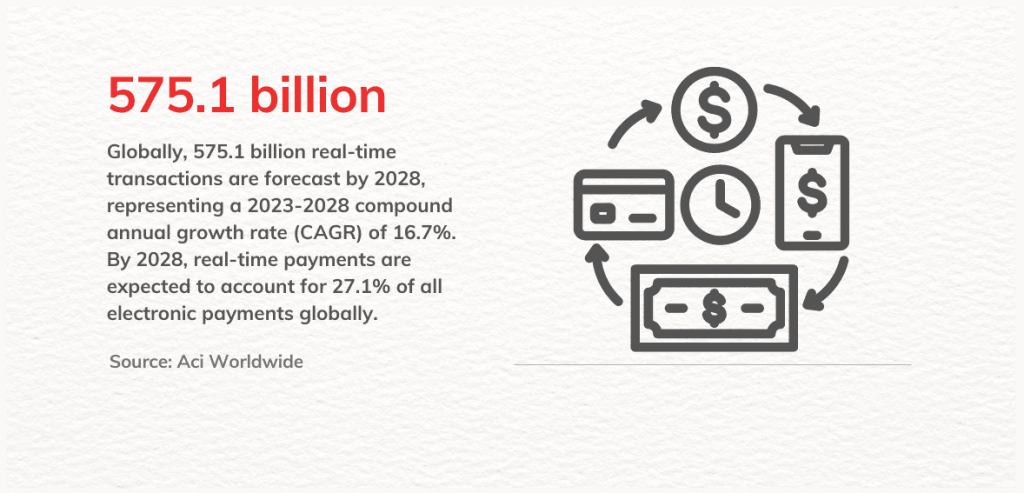
The advent of metal coins in the 7th century BCE and paper money in subsequent centuries further refined transactions. Coins, with their durability and divisibility, helped stabilize trade, while paper currency enabled governments and banks to support larger economic activities without relying on physical goods.
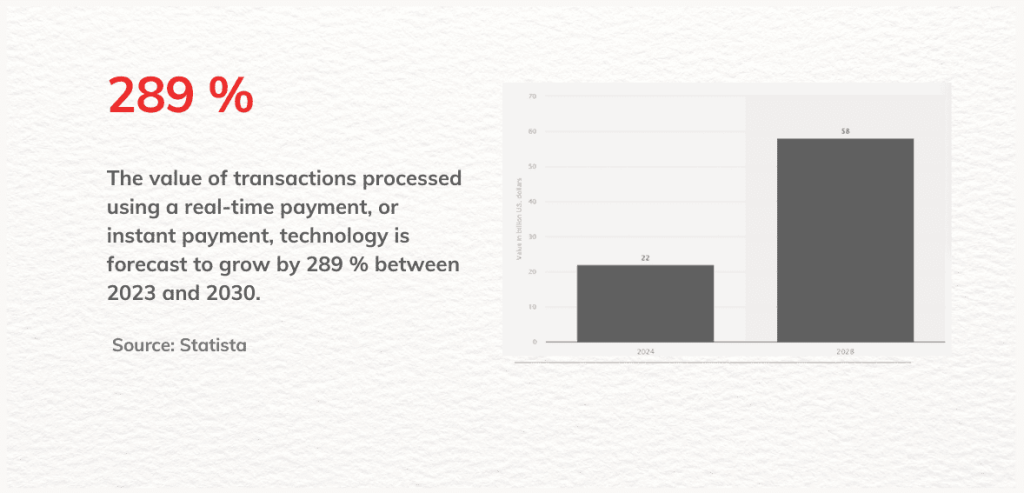
In the 17th and 18th centuries, as banking systems became more sophisticated, the use of checks and promissory notes added a level of security and convenience to payments. This development facilitated the modern banking services we see today, promoting safer and more consistent transfers.

The 20th century introduced credit cards in the 1950s, transforming consumer payments. Credit cards allowed for immediate purchases on credit, shifting the trust from the consumer to the card issuer and setting the stage for electronic payments, including debit cards and ATMs, which made banking more accessible.

The late 20th and early 21st centuries witnessed the digital revolution. Online banking, e-commerce, and mobile payment systems became prevalent. Digital wallets and contactless payments, allowing for transactions anytime and anywhere, became widespread. The introduction of cryptocurrencies like Bitcoin in the early 2000s initiated a move toward decentralized financial systems using blockchain technology, enabling transparent, secure, and borderless transactions.

Currently, the integration of artificial intelligence (AI) and the Internet of Things (IoT) is driving the future of payments by improving fraud detection and enabling payment processing automation for seamless transactions. AI and blockchain technologies are expected to continue enhancing the security and efficiency of the financial ecosystem.

Understanding the Role of AI in Payment Processing

Understanding the Role of AI in Payment Processing

AI is reshaping payment processing by automating online shopping and bill payment experiences. Recent research shows that 85% of financial services firms have adopted AI in some capacity, with 77% predicting it will be crucial to their operations within two years. AI enhances digital banking by delivering an improved customer experience similar to that of face-to-face interactions, but more efficiently and available 24/7. Customers no longer need to wait to speak with a human; instead, they can get immediate help from a virtual assistant or chatbot, utilizing natural language processing.

Furthermore, AI in payments processing includes computer vision to phase out traditional payment methods like physical currency and credit cards. Customers can store their account details digitally and make payments using their smartphones, through apps like Google Pay and Apple Wallet. Financial institutions are also adopting computer vision to enable online account opening, moving away from in-branch processes.

AI is particularly valuable in fraud detection. It leverages vast amounts of data to create user profiles for payment systems, analyzing transaction histories and behavioral patterns. AI quickly identifies unusual activity, prompting immediate alerts to either the customer or the bank to take preventive actions such as blocking the transaction or verifying it through communication methods like SMS or email. Additionally, machine learning algorithms are employed to sift through transactions efficiently, helping to spot and stop fraudulent activities swiftly.

Technologies Underpinning AI in Payment Processing

AI technologies are enhancing payment processing through improvements in security, efficiency, and customer interactions. Here is a breakdown of the primary AI technologies in use:

1. Computer Vision (CV)

Computer vision enables machines to process and understand visual data such as images and videos. In the payment industry, it facilitates automated document verification (e.g., identity cards, invoices) and facial recognition for secure transactions.

For instance, CV assists in authenticating users and verifying documents in Know Your Customer (KYC) procedures. This minimizes the need for manual checks and boosts the speed and accuracy of identity verification within payment systems.

2. Natural Language Processing (NLP)

NLP enables computers to comprehend, interpret, and react to human language. It drives chatbots and virtual assistants that manage payment-related inquiries and provide real-time customer support autonomously.

By processing human language, AI can address customer requests, such as accessing payment histories or account information, which simplifies support for payment platforms. Companies like PayPal use this technology extensively to decrease operational demands and enhance customer service.

3. Machine Learning (ML)

Machine learning is vital for analyzing transaction data to identify patterns, forecast future trends, and prevent fraud. ML algorithms analyze extensive historical data to detect unusual activities, like atypical spending patterns, which helps to stop fraudulent transactions promptly. Additionally, machine learning aids in tailored marketing by forecasting customer preferences based on their transaction history, enhancing user engagement.

There are different types of machine learning technologies:

  • Supervised Learning: Trains models on labeled data to predict outcomes, such as fraud detection or sales projections.
  • Unsupervised Learning: Discovers patterns in unlabeled data, useful for identifying customer groups or clustering similar transaction behaviors.\
  • Reinforcement Learning: Algorithms that improve through interaction with the environment, applicable in dynamic decision-making like real-time transaction approvals.

4. Predictive Analytics

Predictive analytics combines historical data with machine learning to anticipate future events, such as transaction volumes, risk of bad debts, and liquidity requirements. This technology supports better decision-making for cash flow management and risk assessment in real-time. It plays a crucial role in managing extensive transaction datasets to forecast trends, aiding businesses in planning operations more effectively.

Ways AI Is Transforming Payment Processing in 2024

Ways AI Is Transforming Payment Processing in 2024

1. Security and Fraud Prevention

As society moves towards being predominantly cashless, digital payment volumes are escalating. This increase has led to a higher risk of fraud, primarily from data breaches. AI-based payment systems are crucial in mitigating such risks by preemptively identifying and stopping fraudulent activities.

Traditional fraud detection systems use fixed criteria such as geographic location, transaction amount, and merchant type to flag transactions as suspicious. For example, transactions occurring in new locations, with unfamiliar merchants, or those exceeding usual amounts might be automatically marked as fraudulent.

Yet, this traditional method has its limitations. It struggles under the load of large volumes of transactions and often yields false positives. As digital transaction volumes grow, relying solely on these old methods is becoming less feasible. Instead, there is an increasing reliance on the sophisticated capabilities of AI.

AI dramatically enhances fraud detection. It excels in identifying patterns and anomalies that indicate fraudulent activity. Banks and financial institutions have been increasingly adopting AI to safeguard consumer transactions.

AI fraud prevention tools analyze vast amounts of transaction data to learn from historical patterns and user behaviors. They quickly identify any suspicious or abnormal activities, alerting the customer or the bank immediately. If an activity is flagged but turns out to be legitimate, customers can easily confirm their actions through email, phone, or text.

AI also considers multiple factors to calculate a risk score for each transaction. For example, transactions from merchants with positive histories receive lower risk scores, while those involving unusual time zones, IP addresses, or locations are deemed higher risk.

By integrating these insights, AI systems can more accurately distinguish between legitimate and fraudulent transactions. This capability is especially valuable given the broader range of scenarios and the higher volume of transactions in today’s digital world.

2. Invoice Management

Using AI for invoice management can greatly enhance the efficiency of accounts payable (A/P) processes by automating labor-intensive tasks like data extraction, invoice matching, and payment approvals.

AI technology can automatically extract necessary data from incoming invoices and align it with internal records, such as purchase orders and delivery receipts. This method, known as “three-way matching,” ensures consistency across documents before payments are released. Payment processing automation in invoices minimizes human error and helps prevent common issues in manual systems, such as overpayments, duplicate invoices, and fraud.

Furthermore, AI-driven systems streamline the routing of invoices to the appropriate approval channels, allowing for quick and effective payment authorization. Once an invoice is approved, these systems facilitate payment reconciliation, easing the workload on A/P staff. AI also supports real-time reporting, enhancing transparency into expenditures and cash flows, and enabling more informed financial decision-making.

3. Identify Trends and Patterns

Collecting and analyzing historical payment data allows for the identification of patterns and trends in user behavior. AI algorithms leverage this data to develop predictive models that estimate potential spending behaviors and provide insights into customers’ purchasing habits. This analysis aids businesses in understanding typical customer behaviors, such as average spending amounts and preferred times for purchases.

Another critical aspect is monitoring payment methods. AI algorithms examine this data to spot irregularities in transaction patterns, like abrupt changes in spending habits or the adoption of unusual payment methods. For example, if a user consistently uses a credit card but suddenly makes a large purchase with a new account, it could signal potential fraud.

AI systems monitor these patterns continuously, enabling the real-time detection of suspicious activities. They alert the user or the business immediately, helping to prevent fraud before it can cause significant harm. These systems not only identify potential threats but also recommend prompt measures to counteract fraud.

Plus, these algorithms continually evolve by learning from new data, enhancing their precision. This ongoing refinement reduces false positives, helping businesses preserve customer trust by ensuring that legitimate transactions are processed efficiently and fraudulent activities are curtailed.

4. False Card Declines

Addressing false card declines is essential for merchants, customers, and banks because these declines can lead to customer dissatisfaction and harm the bank’s reputation. False declines typically happen when legitimate transactions are incorrectly identified as fraudulent by inflexible, rule-based systems that depend on pre-set thresholds or broad fraud prevention strategies. This issue leads to roughly 3% in annual revenue losses for businesses due to erroneously rejected transactions.

AI-driven payment systems offer a remedy by utilizing sophisticated machine learning algorithms to sift through extensive transaction data for more precise anomaly detection. Instead of depending on static rules, AI models evaluate real-time data points such as user behavior, transaction history, and associated risk factors. This approach allows for a more adaptive response to suspected fraud, significantly reducing false positives and ensuring that valid transactions proceed without interruption.

Adopting these AI-enhanced systems helps companies alleviate operational challenges, cut revenue losses, and build stronger customer trust. Banks, merchants, and customers all benefit from faster, more reliable transactions, eliminating the irritation of false declines and fostering a smoother payment experience.

Customer Service

5. Customer Service

AI-powered customer service chatbots have significantly improved the efficiency of handling routine customer inquiries in the payment industry. These systems are capable of performing a diverse array of tasks, including providing real-time updates on shipments, addressing payment-related questions, and confirming routing and payment details. Automating these processes allows businesses to allocate human resources to more complex issues, enhancing both operational efficiency and customer satisfaction.

A major advantage of these AI-driven systems is their ability to swiftly confirm payment details, which facilitates smooth transactions and reduces manual errors. For instance, chatbots can monitor payment statuses, acknowledge successful transactions, and alert customers to any issues, thereby making the payment process more transparent and straightforward. They also enable customers to initiate disputes effortlessly, which are automatically directed for further investigation, speeding up the resolution process.

Moreover, these tools improve the customer experience by providing preemptive support, such as notifications about overdue payments or discrepancies. Many businesses have integrated these chatbots with widely used payment gateways to deliver secure, consistent payment management across various platforms, including websites and social media applications like WhatsApp and Facebook.

6. Enhanced Consumer Lending

Consumer lending is transforming, spurred by AI advancements that introduce new methods for financial institutions to evaluate credit risk and improve customer interactions. With U.S. consumer debt exceeding $17.8 trillion, the pressure is mounting on lenders to prevent defaults and make informed credit decisions. AI enables banks to analyze real-time consumer behavior data, providing a more comprehensive and dynamic assessment of a customer’s financial status compared to traditional models.

AI’s capability to process extensive data, from spending habits to payment history, allows banks to accurately predict a borrower’s likelihood of repaying a loan. This quick evaluation of creditworthiness helps banks extend higher credit limits to dependable customers and identify potential defaults early. Consequently, banks can modify loan terms or issue timely payment reminders to mitigate delinquencies, thereby reducing both risks and financial losses.

Traditional systems, based on rigid and rule-based evaluations, struggle to match this adaptability and precision. Many banks remain shackled to outdated practices, such as manual reviews or fixed criteria, which no longer suffice in the complex financial environment of today. In contrast, AI-driven solutions provide a scalable, personalized approach that not only enhances risk assessments but also accelerates the credit application process. By leveraging these technologies, banks can boost profitability and enhance customer experiences, securing a competitive advantage in the crowded market.

Additionally, AI extends its utility to debt collection, utilizing predictive analytics to identify early signs of financial distress, enabling banks to act swiftly. Automated communications via digital channels like emails and texts are favored by many borrowers, facilitating more effective debt recovery while preserving good customer relations.

Conclusion

AI has become a pivotal force in transforming payment processing, significantly enhancing security, efficiency, and customer interactions. As digital transactions continue to grow, the application of AI-driven technologies like machine learning, computer vision, and predictive analytics are crucial in adapting to the increasing demands of the payment industry.

While challenges remain, particularly in terms of infrastructure and privacy concerns, the benefits AI provides—such as improved fraud detection, optimized transaction processing, and enhanced customer service—are reshaping how businesses handle payments in 2024. The role of AI is not just a trend but a fundamental shift, making financial services more responsive, secure, and accessible for users worldwide. As adoption accelerates, the integration of AI is poised to continue driving innovation in payment systems for years to come.