


What Causes Inflation and Different Types
Posted: August 30, 2022 | Updated:
While the term inflation might make people nervous, there are many who don’t actually know what it means, much less how it works. Inflation is a natural expectation in a growing economy, to a degree, and can even be regarded +as good in some cases.
But in order to understand when inflation can be good, or why it is a natural part of a growing economy, we must first discuss what it is and how it works.
To that end, this article will explain what inflation is, the different types of inflation and their causes, and give you some tips to help protect you against inflation.
What Exactly Is Inflation?
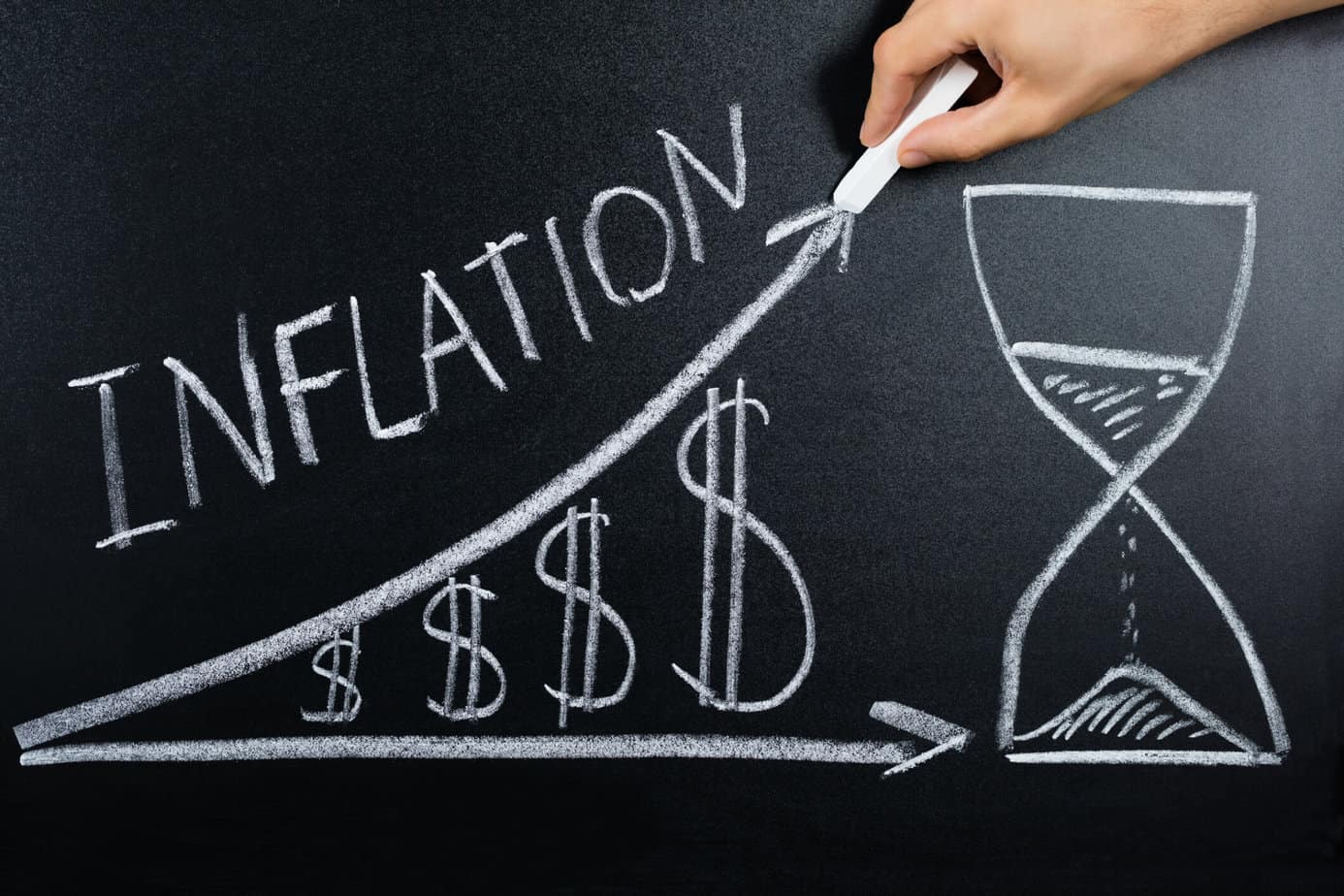
The concept of inflation can be described as the decrease in purchasing power over time due to a rise in prices. An increase in the average price of a basket of selected goods and services over time can reflect the rate at which purchasing power drops. These price increases, often expressed as a percentage, result in a unit of currency having less purchasing power in comparison with its prior value. Therefore, inflation reduces the currency’s value over time. Deflation, on the other hand, occurs when prices decline and purchasing power increases.
A market economy is characterized by a constant fluctuation in prices for goods and services. There are some prices that rise and some prices that fall. Generally, inflation occurs when prices are rising for goods and services, and not just for individual items; that is, you can buy less for $1 today than you could yesterday.
A greater weight is given to the prices of products we spend more money on, such as electricity, than the prices of products we spend less money on, such as sugar and postage. Households, however, have different spending habits: some own a car and eat meat, others only use public transportation or are vegetarians. Inflation is therefore determined by the average spending habits of all households combined.
When measuring inflation, all goods and services consumed by households are considered, including:
- Items that are used on a daily basis (such as food, newspapers, and petrol)
- Utilities (such as water, gas, and electricity)
- Goods that last a long time (such as clothing, computers, and washing machines)
- The provision of services (such as hairdressing, insurance, and rental housing)
The aim of inflation is to measure the overall impact of price changes on a wide range of products and services. This measure represents the increase in the price level of goods and services over time in an economy as a single value.
As prices rise, fewer goods and services can be purchased with one unit of money. As a result, the cost of living for the common person increases, decelerating economic growth. According to economists, sustained inflation occurs when a nation’s money supply grows faster than its economy.
What Causes Inflation?
Consumer expectations, money supply policies, and pressures on the supply and demand sides of the economy all contribute to inflation.
A large part of today’s high inflation rate is attributed to the Coronavirus pandemic. From 2018 to 2019, the consumer price index rose 2.3% – close to the Federal Reserve’s target inflation rate of 2%. However, due to the government efforts and measures taken to stimulate the economy during the pandemic, the annual CPI increased to 8.5%.
Another potential cause for inflation is currency devaluation. The devaluation of a currency occurs when it loses value in comparison with other currencies. As a result, imports become more expensive, and inflation can occur.
When the dollar devalues against the euro, it costs more dollars to purchase the same amount of euros. This means that importing goods from Europe may require a business to raise prices to cover the increased costs.
There are also certain policies that can lead to either a cost-push or a demand-pull inflation. The government can increase demand for certain products by issuing tax subsidies. A higher demand than supply could result in higher costs. A strict building code or even a rent stabilization policy could also inadvertently increase costs and create an inflationary environment by passing those costs on to residents.
Wage increases are another potential cause of inflation. However, higher wages are a controversial topic when it comes to inflation.
Despite the fact that higher wages may sound like a good thing for workers, some economists believe there can be some negative consequences, particularly when it comes to raising the minimum wage.
The more money workers earn, the more they can spend on goods and services. To cover higher production and labor costs, businesses may raise their prices in response to increased demand.
There are other experts who disagree. They point out that minimum wage increases in the past have not corresponded with inflation increases. If employers hire fewer workers, or productivity levels increase, inflation may be curtailed.
Generally, inflation is caused by one, or a combination of, the following factors:
- Oversupply of money can lead to inflation, which can lead to a decrease in currency value.
- Higher borrowing (debt) leading to higher taxes and additional currency printing.
- An increase in prices when demand (higher) exceeds supply (lower).
- Increased production costs resulting in higher prices.
- A fluctuating exchange rate also affects inflation.
Different Types of Inflation
Three types of inflation can be distinguished: demand-pull inflation, cost-push inflation, and built-in inflation.
Let’s examine each of them:
Demand-Pull Inflation
Most price increases are caused by demand-pull inflation. When consumer demand for goods and services is greater than supply, it causes a consumer surplus. As a result, producers cannot produce enough to meet demand and may not have time to build the necessary manufacturing to boost supply. The raw materials might also be scarce, or there may not be enough skilled workers to make it.
Sellers who don’t raise their prices will run out of stock, and eventually realize they now have the luxury of hiking prices. A large number of sellers doing this will result in inflation.
Demand-pull inflation can be caused by several factors. A growing economy, for instance, affects inflation because people spend more when they are confident and have better jobs.
Inflation is expected as prices rise. Because of that expectation, consumers are motivated to spend more now in order to avoid future price increases. As a result, growth is further boosted. Therefore, a little inflation is a good thing, a fact that is recognized by most central banks. Inflation targets are set in order to manage public expectations about inflation. Inflation has been targeted at 2% by the Federal Reserve and the U.S. Central Bank. Using the core rate removes the effect of seasonal increases in food and energy costs.
There is also discretionary fiscal policy, where the government either spends more or taxes less. Inflation and demand are both stoked by putting extra money in people’s pockets.
Cost-Push Inflation
Inflation caused by cost-push occurs only when there is a shortage of supplies combined with sufficient demand to increase prices.
Supply side factors contribute to inflation in several ways:
- The pandemic of 2020, for instance, disrupted global supply chains, causing cost-push inflation.
- Cost-push inflation can also be caused by monopolies, since they control the entire supply chain. It was for this reason that the Sherman Antitrust Act of 1890 outlawed monopolies.
- Damage to production facilities caused by natural disasters causes temporary cost-push inflation. This is what happened to oil refineries after Hurricane Katrina. Cost-push inflation is generally caused by the depletion of natural resources. In the case of seafood, overfishing has led to a reduction in supply and an increase in price.
- Supply can also be reduced by government regulation and taxation. As an example, U.S. tariffs in 2018 reduced steel imports. As a result, there were shortages of manufactured parts, and some producers raised their prices. Corn availability for food decreased as a result of subsidies to produce corn ethanol in 2008. As a result of this shortage, food prices increased.
- Lowering a country’s exchange rate can also lead to cost-push inflation in imports. As a result, foreign goods are more expensive than goods produced locally.
Supply-push inflation can also be caused by rising wages, according to some economists. As companies feel pressure to raise employee pay, they usually raise prices to absorb these costs. This isn’t a major source of inflationary pressure, as there isn’t strong evidence for it.
Built-In Inflation
As prices of goods and services rise, workers expect their salaries or wages to increase to maintain their living costs, which can cause what is known as built-in inflation. Built-in inflation can create a feedback loop of sorts. The costs of production rise as laborers demand higher wages, resulting in higher living costs. This increase in living costs might in turn lead to laborers demanding higher wages. As a result, each factor affects the other, forming a cycle. Built-in inflation, however, does not occur by itself. It can be influenced either by demand-pull inflation or by cost-push inflation.
How to Handle Inflation
You may find it harder to afford the things you used to be able to afford due to inflation. You can, however, protect yourself from rising inflation now by taking the following steps:
- Consider switching to a high-yield savings account: Your money may seem safe in a checking account, but inflation is eroding its value. You can earn a higher rate of return by investing your money in a high-yield savings account. Inflation might not make up for all losses in value, but you won’t lose as much as if you kept your money in a home safe or basic savings account.
- Make investments in the stock market: Investing in the stock market is another way to keep up with inflation. Despite volatility, an all-stock portfolio’s average annual return between 1926 and 2019 was 10.29%, according to Vanguard data. You can grow your money over time by smoothing out the rough edges in years with losses. You should keep in mind that investing entails risks, so you should be aware of what you are getting into before investing.
- Ensure that your portfolio is diversified: Investing doesn’t have to be all or nothing. You can minimize your losses if one investment does not perform well by diversifying your portfolio with stocks, bonds, and other assets. You can, for example, invest in hundreds of stocks simultaneously by investing in a broad market index fund.
Final Thoughts
At its core, inflation is a reflection of growing prices across the general basket of goods and services. If things cost more, the purchasing power of a currency decreases. Generally, inflation will be caused by a higher demand than supply of goods and services (demand-pull), or a shortage of supply (cost-push), but other factors such as wage increases can result in it as well (built-in). Inflation will naturally occur in a growing economy, which is why the Central Bank and the Federal Reserve have set targets for it. If you are worried about inflation eroding your purchasing power, you can try investing in stocks, switching to a high-yield savings account, or diversifying your current investment portfolio.