



Top Pharmacy Point-of-Sale Systems
Posted: November 19, 2024 | Updated:
Pharmacies require advanced point-of-sale (POS) systems beyond the capabilities of standard retail models to operate effectively. A specialized pharmacy point-of-sale system is essential for managing a drugstore’s complex needs, including inventory management and prescription processing. These systems must efficiently handle unique tasks such as curbside pickup and drive-thru services, integrating seamlessly with pharmacy management systems to track ID verification and capture signatures to comply with regulatory requirements.
This article explores the top POS systems designed specifically for pharmacies. We will examine the features that set these systems apart from general retail POS solutions, focusing on their ability to streamline pharmacy operations and improve customer service.
What Is a Pharmacy Point-of-Sale System?

A pharmacy POS system is a specialized tool that assists pharmacies with operational and sales needs. It enables employees to process transactions, manage inventory, and track sales efficiently. These systems play a critical role in ensuring smooth store operations by helping with real-time stock monitoring, generating accurate reports, and providing faster checkout experiences for customers.
In addition to basic POS functionalities, pharmacy POS systems are often integrated with pharmacy management software to cater to the industry’s specific needs. This integration allows for features like patient risk alerts, prescription management, and delivery tracking, ensuring compliance with regulations and improving patient care. By combining general retail functionality with healthcare-specific tools, pharmacy POS systems help streamline processes and enhance customer satisfaction.
Comparison of Top 6 Pharmacy POS Systems
Here is a list of the top six POS systems designed specifically for pharmacies. Popular “legacy” POS systems like Clover, Square, and Lightspeed Retail are not included.
1. PioneerRx
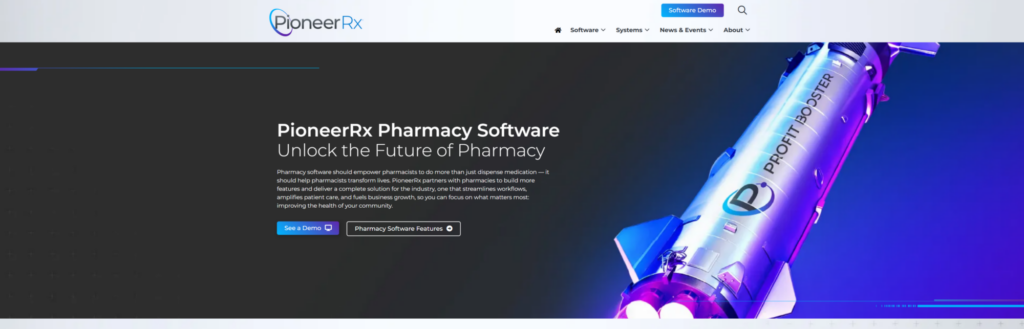
Image source
PioneerRx is a pharmacy software solution tailored for independent pharmacies. It is one of the best point-of-sale for pharmacies, featuring integrated eCare Plans for clinical service documentation, workflow automation, multiple wholesaler ordering, and customizable financial reporting.
The software also hosts “PioneerRx University,” a training portal offering courses for pharmacists, technicians, and clerks. It supports various interactive voice response (IVR) integrations, refill automation, and inventory management.
Key features of PioneerRx include automatic refills for maintenance medications and tools to identify high-risk patients for early intervention.
While PioneerRx offers functionalities like multiple wholesaler ordering and usage-based ordering, its multi-location inventory management might not be as comprehensive as that of some competitors, such as PrimeRx. This could be an essential factor for pharmacies with multiple locations.
Key Features of PioneerRx
- Integrated Pharmacy System: PioneerRx merges pharmacy management with POS capabilities. It supports medication adherence, patient risk assessments, and laboratory integrations. Users benefit from real-time prescription tracking, alerts, and automation that streamline checkout.
- Patient-Centric Tools: PioneerRx includes automated refill reminders, patient notifications, and loyalty programs to facilitate timely medication access. Additional services include drive-thru options, delivery, signature capture, ID scanning, and sales tracking for certain regulated substances.
- Enhanced Workflow: PioneerRx utilizes IVR systems to handle routine inquiries efficiently. It also supports combining prescriptions with over-the-counter items for quick retrieval and employs single barcode scanning to speed up transactions, thereby reducing wait times and enhancing service quality.
- Pharmacy-Focused Inventory and Ordering: The software optimizes inventory through usage-based ordering, low-stock alerts, and automatic reorder points. Integration with multiple wholesalers enables effective inventory management and consistent medication availability.
- Clinical and Financial Tracking: Certain pharmacy software systems offer comprehensive tools to track clinical outcomes and financial metrics. These systems allow pharmacies to view the profitability of each prescription dispensed and manage inventory precisely, ensuring that the pharmacy remains compliant with regulatory standards and financially sound.
- Automated Workflow and Patient Management: Advanced software platforms automate pharmacy operations, including patient care management, inventory, and workflow optimization. These systems are designed to improve efficiency and patient service by managing medication stocks and pharmacy resourcesmore effectively.
Pricing of PioneerRx
PioneerRx does not publicly list its pricing, as it varies based on each pharmacy’s specific needs. The costs involve both hardware and software components tailored to each pharmacy’s unique operational requirements. You would need to contact their sales team directly for a detailed quote.
2. PrimeRx
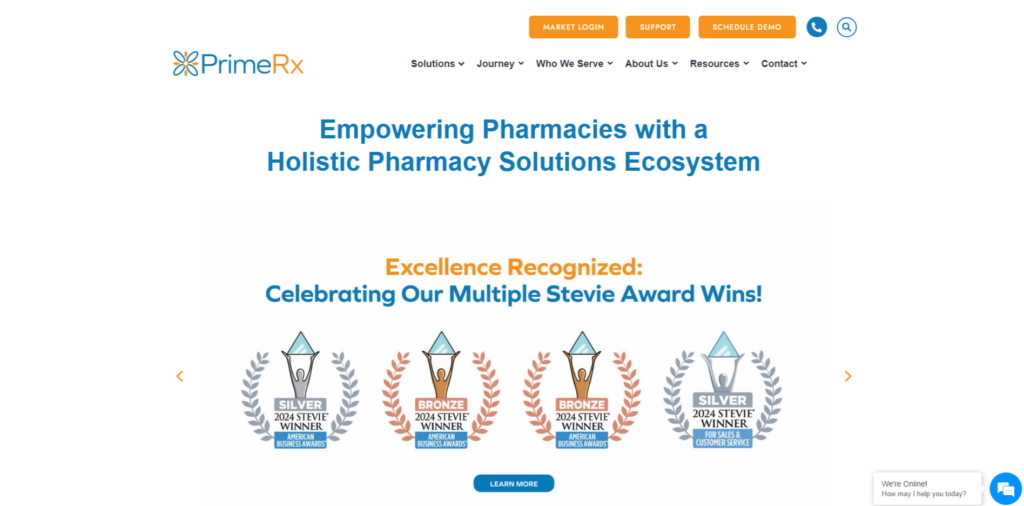
Image source
PrimeRx is a robust pharmacy management software designed to address the diverse needs of independent, retail, and multi-store pharmacies. Developed by Micro Merchant Systems, it provides a streamlined platform for handling essential operations such as prescription processing, billing, and inventory management. The software focuses on simplifying workflows while maintaining high levels of accuracy and compliance with regulatory standards.
Built to adapt to pharmacies’ unique requirements, PrimeRx supports efficient patient communication, ensures smooth claim processing, and enhances overall operational productivity. Its customizable interface and advanced automation capabilities make it a valuable tool for pharmacists who aim to deliver better patient care while managing their business effectively.
Key Features of PrimeRx
- Exceptional Customer Support: PrimeRx offers customer support seven days a week with extended hours, aiming to resolve 95% of issues on the first call.
- Multi-Pharmacy Support: The PrimeCENTRAL function allows for centralized management of multiple pharmacy locations. Users can generate detailed reports across all operations or concentrate on individual stores. This feature aids in inventory management by enabling stock level monitoring and adjustments. Centralized document storage provides authorized access to records across locations and allows for easy transfer of prescription information between sites for convenient refills.
- Delivery Management: PrimeRx features tools that work with MobilePOS to collect payments at delivery time. The system supports sending SMS or text messages from the in-store POS to collect payments beforehand. The optional PrimeDELIVERY module allows drivers to use a smartphone app, with all transactions syncing directly back to PrimePOS and PrimeRx.
- Automated Reordering: PrimeRx automates reordering by connecting to wholesaler systems. When inventory levels drop below a set threshold, the system automatically places a new order with the wholesaler, maintaining consistent stock levels.
- Dispensing Management: Features like bin management for prescription pickup, automatic inventory adjustments, and label queue management make dispensing processes more efficient. These tools reduce the need for manual entry, freeing up staff to focus more on patient care.
Pricing of PrimeRx
Similar to other pharmacy POS systems like PioneerRx, PrimeRx does not disclose its pricing publicly. The pricing for PrimeRx begins at around $300 as a one-time payment, but the cost can vary based on a pharmacy’s specific needs and the features included in the plan.
The software is available on a subscription basis and offers different tiers such as PrimeRx Essentials, PrimeRx Pro, and PrimeRx Plus, which cater to various operational scales and feature requirements. For precise pricing tailored to your pharmacy’s needs, it’s recommended to contact PrimeRx directly to request a personalized quote.
3. BestRx
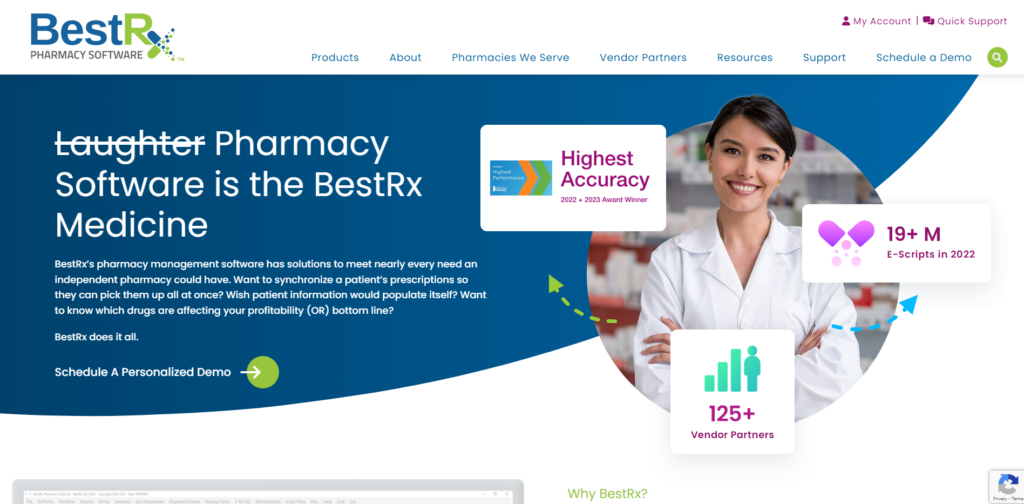
Image source
BestRx is a family-owned company that has provided effective management tools to independent pharmacies for nearly four decades. Their flagship pharmacy management system, BestRx, provides various features to simplify operations. These include customizable workflows, interactive patient profiles, and automated refills. This easy-to-use platform helps pharmacies improve patient care and manage daily activities efficiently.
Additionally, BestRx offers BestPOS, a POS solution tailored for pharmacies that work well with the BestRx system. Like PrimeRx, BestPOS includes a text-to-pay option and supports multiple payment methods such as credit cards, EBT, and gift cards. This flexibility is beneficial for patients. The system also features a customer loyalty program that allows pharmacies to offer customizable rewards to frequent customers. Furthermore, BestPOS includes advanced delivery options with integrations for UPS, FedEx, and EasyPost, plus a dedicated mobile app and electronic notifications to streamline delivery operations.
While BestRx and BestPOS provide robust tools for enhancing in-store functions, they lack online integration capabilities. This may be a drawback for pharmacies looking to expand or enhance their online presence. However, BestRx’s offerings are attractive for those focused on improving in-store efficiency and patient interactions.
Key Features of BestRx
- Electronic Signature Capture and Mobile Delivery Tracking: BestRx uses a signature pad to electronically gather signatures for prescriptions, HIPAA compliance, and credit card transactions, securely storing them for easy retrieval during audits. The software also has a mobile delivery tracking feature that lets pharmacies digitally monitor shipments, enhancing delivery accuracy and efficiency.
- Remote Payment Acceptance via Text: BestPOS, integrated with BestRx, offers a straightforward method for remote payment acceptance. Pharmacies can use a button on the main screen to text customers requesting payment. Customers can pay using various methods, including FSA cards, and upon payment, orders can be prepared for mailing, delivery, or pickup options like drive-thru and curbside.
- Web-Based Portal and Mobile App: BestRx provides a web-based portal and mobile app named “Your Local Pharmacy,” where patients can manage prescriptions and communicate with their pharmacy. This platform links to patient accounts at their local pharmacy, supports prescription management and refill requests, and directly integrates with BestRx software for efficient processing and enhanced patient engagement.
- Patient Care Management: BestRx enables the collection and storage of essential patient information, such as weight, blood pressure, and immunization records. These data can be shared with healthcare providers through integrations, supporting coordinated care and comprehensive health management.
- Compliance Tracking: BestRx integrates with MethCheck to electronically track pseudoephedrine-based drug sales, ensuring regulatory compliance. This integration manages date-of-birth verifications and captures necessary signatures for various transactions and compliance requirements, logging the date and time for each signature.
- Pharmacy-Specific Integrations: BestRx offers multiple integrations tailored to the pharmaceutical and medical industries. These include adherence packaging, data reporting, e-prescriptions, patient education, and telepharmacy services, all of which aim to improve pharmacy operations and patient care.
- Mail Order Management Tools: BestRx and BestPOS together facilitate mail order processes with features for automatic refills and mobile delivery tracking. The systems support two-way messaging for refill reminders and health campaigns. Additionally, BestRx partners with Pointy to display pharmacy products on Google and supports integrations with e-commerce platforms like Square, Lightspeed, and RetailSTARx for online store setup.
Pricing of BestRx
BestRx software and POS systems costs are based on a structured pricing model and require direct contact with the company for a personalized quote. The initial fees for BestRx software start at approximately $2,750, and depending on your specific needs, adding the BestRx POS system can range from $3,250 to $4,250.
Monthly maintenance fees are also associated with each system: around $90 for the POS system and $210 for the BestRx software. These systems also necessitate an on-site server for operation. During the first year, a discount may be available, but specific details should be confirmed directly with BestRx
4. Winpharm

Image source
Winpharm, developed by Datascan, is a pharmacy management software designed for independent retail pharmacies, hospital pharmacies, outpatient facilities, doctors, dispensaries, and long-term care establishments. Since launching in 1981, Winpharm has focused on enhancing pharmacy operations with features like automatic refill processing, medication therapy management, coupon management, and document management. The software supports communication through text, email, app notifications, and interactive voice response (IVR) systems, improving patient engagement and operational efficiency.
A key feature of Winpharm is its customizable workflow options, which allow pharmacies to adapt processes such as intake, data entry, and verification to meet their specific requirements. The software includes a verification module and an automated scheduler to manage daily tasks and follow-ups efficiently. Additionally, Winpharm integrates with various third-party systems, including QuickBooks and Google Maps, to aid in comprehensive pharmacy management.
The compounding module in Winpharm enables pharmacies to produce and manage compounded medications, monitor compound inventory, and automatically adjust pricing based on ingredient costs. This feature is handy for pharmacies focused on compounding services, ensuring precise and effective management of compounded prescriptions.
Key Features of Winpharm
- Comprehensive Compounding Support: Winpharm provides a compounding module that helps pharmacies create and manage compounded medications efficiently. This module aids in tracking compound inventory and automatically adjusts pricing based on ingredient costs, which is especially useful for pharmacies that focus on compounding.
- Customizable Workflow Management: The software allows pharmacies to customize workflows to meet their needs, including intake processes, data entry, and verification steps. This customization helps pharmacies streamline operations and improve overall efficiency.
- Integrated Communication Tools: Winpharm enhances patient communication using various methods such as email, SMS, in-app notifications, and IVR systems. This approach helps increase patient engagement and ensures they follow their medication schedules.
- Third-Party System Integration: Winpharm integrates with various third-party systems, including QuickBooks for accounting and Google Maps for location services. This capability helps streamline pharmacy management tasks by reducing the need for manual data entry and decreasing errors.
- Automated Refill Processing: Winpharm automates refill processes to ensure timely delivery of medications to customers, which supports patient compliance and reduces the burden on pharmacy staff.
- Comprehensive Verification Module: The software includes a verification module that synchronizes customer information with the POS system, scans and stores documents, and supports the addition of new drugs. This module improves accuracy and compliance within pharmacy operations.
Pricing of Winpharm
Winpharm is a pharmacy management POS system available for a one-time fee of $1,500. The total cost of ownership can vary significantly depending on additional factors such as hardware requirements, software upgrades, transaction fees, and any applicable setup or cancellation fees.
5. Liberty
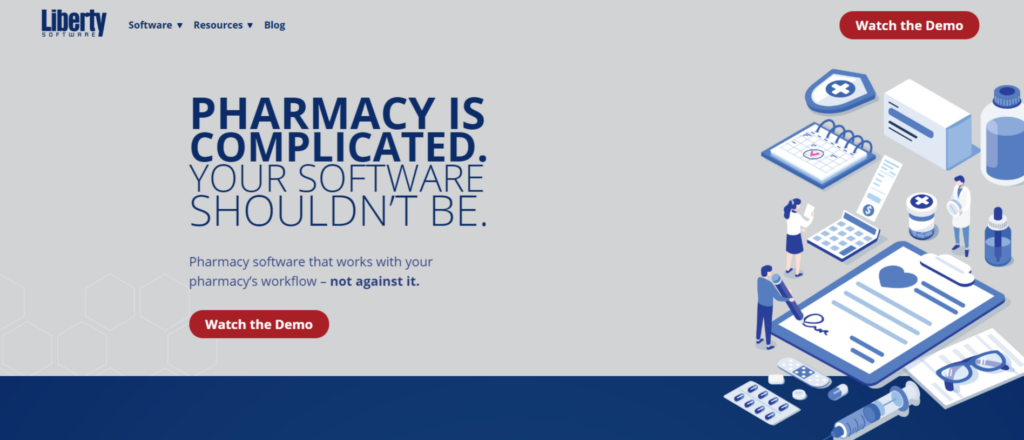
Image source
Numerous thriving pharmacies widely adopt liberty to streamline operations, enhance patient care, and expand their businesses.
The platform provides a range of functionalities, including customizable workflows, tracking for patient adherence, and integrated communication features such as texting, emailing, and voice messaging. It also includes tools for eCare plans, medication synchronization, and refill management, designed to optimize pharmacy processes and enhance patient care.
With a focus on user-friendliness, Liberty Software reduces manual labor and incorporates automation to increase efficiency. It features clinical decision support tools, safety checks, and extensive reporting capabilities, helping pharmacists make well-informed decisions and manage their operations effectively.
Established in 1987, Liberty Software has expanded its reach to serve thousands of pharmacies across the United States. It employs a team of pharmacists who contribute to software development and customer support, ensuring the software meets the practical demands of pharmacy professionals.
Key Features of Liberty Software
- Enhanced Prescription Validation and Safety Protocol: Liberty Software integrates an advanced prescription verification system featuring multiple layers of checks. These include assessments for potential drug interactions, patient history verification, quantity checks, and thorough pharmacist reviews.
- Sophisticated Automated Patient Communication: With Liberty Software, pharmacists have a robust automated communication system that sends timely notifications to patients. This includes emails and text messages for prescription refills, medication readiness updates, and delivery confirmations.
- Advanced Compounding Management Module: The platform offers specialized tools tailored to compounding pharmacies’ unique requirements. These tools facilitate efficient billing and invoicing and provide extensive reporting features for superior financial management and oversight.
- Robust Inventory Management and Automated Reordering System: Liberty Software provides a comprehensive inventory management system that tracks current stock levels within the pharmacy and automates the reordering process. The system is designed to trigger orders from multiple suppliers once inventory dips below set thresholds, ensuring that pharmacies maintain a continuous supply of essential medications without interruption.
Pricing of Liberty
Liberty POS for Pharmacies does not publicly list pricing details on its website. You’ll need to contact Liberty Software directly to obtain precise cost information.
6. Rx30
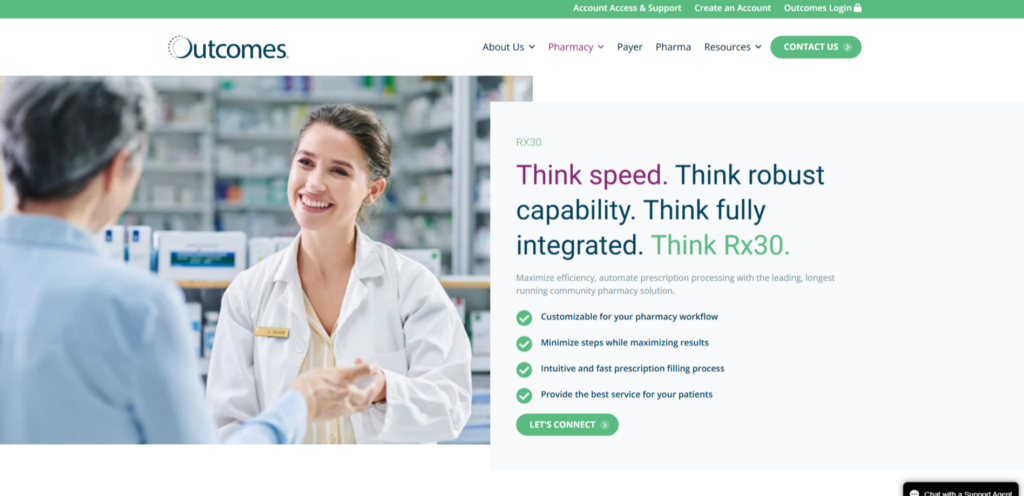
image source
The Rx30 POS system for pharmacies is a cloud-based system that helps pharmacies of varying sizes improve operations such as workflow management, prescription dispensing, claims adjudication/tracking, and POS transactions. It features a centralized dashboard that aids in managing workflow queues, prescription tracking, data verification, claims processing, and automated prescription refills.
A key element of Rx30 is its Clinical 360 platform, which is fully integrated and connects pharmacies with healthcare payors, providing broader clinical opportunities compared to standalone MTM services. As prescriptions are handled, the system alerts users to plan-sponsored clinical opportunities that can generate additional revenue and enhance patient outcomes within their usual workflow.
The integrated POS system improves the customer experience by ensuring compliance and increasing revenue. It supports electronic signature capture, ID scanning, detailed inventory management, price adjustments, and comprehensive reporting for business insights. The POS system also encourages customer interaction through gift cards and loyalty programs and includes patient engagement apps for drive-thru, delivery, curbside pickup, and mail-order services.
Key Features of Rx30
- Integrated Clinical Opportunities Platform (Clinical 360): Rx30 includes Clinical 360, which links pharmacies with healthcare payors, surpassing the clinical opportunities provided by standalone MTM services. This integration helps pharmacies improve patient outcomes and increase revenue as part of their regular workflow.
- Comprehensive POS System: The Rx30 POS system facilitates electronic signature capture, ID scanning, detailed inventory management, pricing updates, and extensive reporting for business insights. It supports customer engagement by integrating loyalty programs and gift cards while offering greater service flexibility through patient-focused apps for delivery, drive-thru, mail order, and curbside pickup.
- Customizable Workflow Management: Rx30 offers customizable workflow management tools, allowing pharmacies to adapt the system to meet their specific operational needs, thus improving efficiency and productivity.
- Extensive Data Services: Rx30 provides a range of data services, including cybersecurity training, PCI compliance information, and data backups to safeguard the security and integrity of pharmacy data.
- Mobile Applications and Add-Ons: Rx30 offers various mobile applications and add-ons, including patient communication apps, mobile refill requests, online patient portals, delivery apps, and signature apps. These tools offer added flexibility and help enhance patient engagement.
Pricing of Rx30
The Rx30 Pharmacy System does not publicly provide specific pricing details. The cost of the system depends on each pharmacy’s specific requirements. If you are considering implementing Rx30 in your pharmacy, it’s advisable to contact them directly to discuss your specific needs.
What to Look for in a Pharmacy POS System?
Pharmacies require specialized POS systems due to their unique responsibilities, such as handling prescriptions, safeguarding patient information, and ensuring compliance with strict legal regulations. When choosing a POS system for your pharmacy, focus on these essential features:
- Wholesale Distribution Support
Pharmacies that purchase medications directly from manufacturers need a POS system capable of managing bulk orders. The system should streamline purchasing by integrating with supply chain platforms. This feature ensures efficient inventory replenishment and accurate tracking of wholesale purchases, minimizing errors and ensuring that stock levels align with patient and business demands.
- Prescription Management
A pharmacy POS system processes and tracks prescriptions, ensuring accurate dispensing. It records all prescription details and integrates with systems to maintain compliance, reduce errors, and streamline patient service. This feature supports efficient refill management and ensures consistent record-keeping.
- Compliance Management
Compliance is critical for pharmacies. A POS system should offer features like ID and signature capture for controlled substances, HIPAA compliance to protect patient information and tools for tracking pharmacist counseling sessions. It should also ensure adherence to safety standards with child safety cap verification, helping the pharmacy comply with state and federal regulations.
- Advanced Inventory Management
A robust inventory management system is essential to meet pharmaceutical regulations. A suitable POS system should track drugs through the supply chain, maintain accurate stock records for at least two years, and manage hazardous waste disposal. These tools help prevent compliance issues and ensure proper handling of pharmaceutical products.
- Analytics and Reporting Tools
Effective reporting tools provide insights into daily operations. A pharmacy POS system should generate sales analysis, payment method breakdowns, tax compliance data, and cash flow summaries. These reports enable better decision-making, help track business performance, and ensure adherence to tax regulations, providing valuable metrics to streamline operations.
- Expiry Control
Medication expiry tracking is vital for pharmacies. A POS system with built-in expiry management can alert staff when products are near expiration and organize stock by batch or lot numbers. This feature prevents the sale of expired products, reduces waste, and ensures timely inventory usage, protecting both patients and profits.
- Customer Loyalty Programs
Retaining customers is essential for pharmacy success. A high-performing POS system should include loyalty programs, prescription refill reminders, and rewards for over-the-counter purchases. These features encourage repeat business, enhance customer satisfaction, and drive sales, building long-term patient relationships while supporting steady revenue growth.
- Software Integrations
Pharmacies rely on specialized software for billing and inventory. A pharmacy POS system must integrate with these platforms to ensure seamless operation. It should seamlessly connect with other pharmacy systems, such as electronic health records (EHR) and pharmacy management software, to streamline operations, inventory handling, and medical billing systems to process insurance claims, creating an efficient and unified workflow.
Conclusion
Selecting the best point-of-sale for pharmacies is critical for streamlining operations, ensuring regulatory compliance, and improving patient care. Each of the systems discussed—PioneerRx, PrimeRx, BestRx, Winpharm, Liberty, and Rx30—offers unique features tailored to pharmacies’ diverse needs. These include advanced inventory management, prescription handling, compliance tracking, and patient engagement tools.
To identify the best solution for their business, pharmacy owners should carefully assess their requirements, such as multi-location management, delivery capabilities, or integration with existing pharmacy software. While pricing varies and requires direct quotes from providers, investing in a pharmacy-focused POS system can significantly enhance operational efficiency and customer satisfaction, ensuring long-term growth and success in the competitive healthcare environment.