



Top 10 Shopping Cart Solutions for E-Commerce
Posted: August 06, 2024 | Updated:
A shopping cart is the backbone of any e-commerce platform’s seamless operations. This feature allows customers to pick and store products until they are ready to complete their purchase. Businesses aiming to provide a reliable shopping experience and user-friendly and secure shopping cart solutions are crucial in establishing customer trust and satisfaction.
Shopping cart solutions vary widely, offering comprehensive customer loyalty management systems to simple add-ons. Choosing the appropriate shopping cart solutions for eCommerce depends on various factors, including transaction volume and payment method preferences. We have compiled a list of the top 10 online shopping cart systems to assist you in finding the ideal option for your business.
What Is an E-Commerce Shopping Cart?
The e-commerce shopping cart suggests a simple online purchasing tool, but today’s versions extend far beyond that. Modern e-commerce shopping carts serve as comprehensive platforms for creating an online store, equipped with features including:
- Product catalog management
- Website creation tools
- Website Hosting
- Checkout and payment processing
- Marketing tools
This software has all the necessary features to create, manage, and operate an e-commerce site. E-commerce shopping cart software is widely used because the alternative—developing a store from scratch—is typically viable only for very large companies with significant resources.
These platforms simplify the process of launching an e-commerce site by providing a ready-to-use software package with all the essential tools for starting an online store, making it easier to sell products on the internet.
Why Are Shopping Carts Essential in E-Commerce?
Shopping carts are fundamental to the functionality of e-commerce sites. They do more than streamline the checkout process; they also assist both merchants and shoppers in several crucial tasks:
- Storing specific product details for customers, such as product name, SKU, size, color, and additional specifications.
- Maintaining and managing customer data and order history.
- Allowing merchants to manage inventory and update product details in a format that is easily accessible on various devices.
E-commerce shopping carts are far more complex than the physical carts used in traditional stores. They serve multiple roles — showcasing products, processing payments, and facilitating checkout.
Plus, these carts handle additional responsibilities like shipping logistics, inventory control, and customer information management, enabling merchants to re-engage customers, fine-tune their product offerings, and enhance the overall shopping experience.
For e-commerce operators, the primary objective is to drive conversions, encouraging visitors to complete a purchase. Achieving this requires selecting the appropriate shopping cart that meets specific business needs and includes all necessary features.
Top 10 Website Shopping Cart Software
Businesses require more than a solid e-commerce platform to satisfy their customers. A lengthy and complicated checkout process is a primary reason users abandon their shopping carts.
1. Shopify

Image source
Shopify is a leading e-commerce platform used worldwide, favored by both small and large businesses for establishing online stores. It offers a variety of templates and integrations, simplifying the process for brands to start selling online quickly. Businesses can manage their e-commerce operations entirely within the Shopify ecosystem.
Once operational, enhance your site with Shop Pay, a high-converting checkout solution. To improve the shopping experience, utilize features like custom storefronts, abandoned cart recovery, and product subscriptions. As sales volumes grow, Shopify’s POS system can process in-person transactions, while Shopify Fulfillment manages shipping and inventory.
- Shopify also hosts a large marketplace of third-party apps, allowing businesses to easily find plugins for additional needs, such as digital marketing.
- This platform is adaptable for various types of e-commerce ventures and is particularly user-friendly for startups and small businesses.
- It ensures security with Level 1 PCI compliance and 256-bit SSL certificates.
Shopify’s monthly pricing starts at $9, with different plans available after a free trial. These include Basic Shopify at $29.99 per month, Shopify at $79.99 per month, and Advanced Shopify at $299.99 per month.
2. Magento
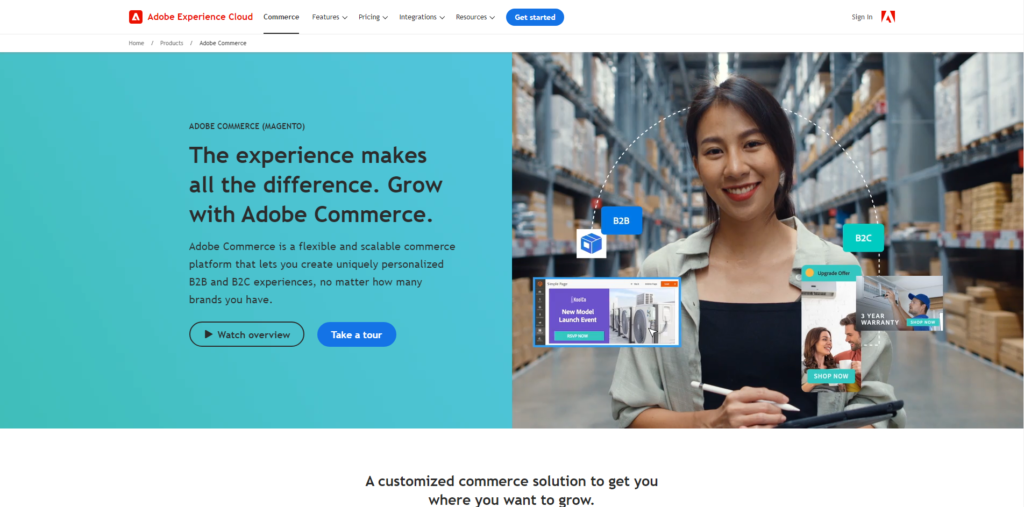
Image source
Magento is a notable choice among website shopping cart solutions, particularly beneficial for small businesses that aim to customize their website appearance to meet specific requirements.
Magento is built on open-source technology, allowing easy integration with your current website. This feature lets you modify your site without needing coding skills. Magento makes it easy to implement diverse shopping cart options that provide specific information to customers, improving their shopping experience.
Magento’s pricing structure and features are varied, enabling the creation of an online store that:
- It integrates with SEO optimization, supports multiple languages, and handles various currencies.
- Sends customized emails for each customer’s purchase.
- It allows you to develop a distinctive storefront that sets your brand apart.
- Offers tools to monitor product views and measure conversion rates.
Magento’s services are $29 monthly and include a complimentary 30-day trial.
3. PrestaShop
Image source
PrestaShop provides comprehensive shopping cart software. PrestaShop lets you choose from various professional themes to enhance the appearance of your store. It includes a globally secure SSL selling experience and offers multiple languages through translation add-ons, though these come at an additional cost from its extensive marketplace.
The software itself is detailed, featuring summary and confirmation pages and various payment options. PrestaShop is an attractive free choice for EU merchants due to its integrated tax features, which simplify configuring taxes based on location, product type, and shipping.
While the software is generally user-friendly, it is self-hosted, which may make the initial setup somewhat difficult. If you encounter issues during setup, customer support is available, or you can opt for a paid support package that includes various demonstrations.
Key features of Prestashop include:
- Built-in tax capabilities to facilitate global sales.
- Configurable one-page checkout.
- A large marketplace for additional features.
PrestaShop provides various pricing options, starting at $29 per month, with other plans available at $89 per month and the highest tier at $249 per month.
4. Ecwid by Lightspeed
Image source
Ecwid by Lightspeed provides a shopping cart solution with a permanently free option for small businesses seeking a straightforward online storefront for selling a limited range of products. The next, still affordable tier offers additional features such as coupon codes, e-goods, advanced SEO, and live chat.
Ecwid integrates with various marketing tools, including email platforms like Mailchimp, advertising on Google and Facebook, and external marketplaces such as Etsy, Amazon, and eBay. The platform’s user-friendly dashboard allows for easy monitoring of sales and marketing activities directly from its mobile app.
Key features include:
- Ecwid’s platform is seamless and user-friendly, connected to numerous marketplaces.
- Around-the-clock support helps quickly resolve any issues that may arise.
- The ‘Instant Site’ tool enables brands to launch a simple one-page standalone store during their initial setup.
- SSL security is standard with all paid plans.
- It is compatible with several other e-commerce platforms, like Squarespace and Wix.
- Offering over 50 languages, Ecwid provides extensive multilingual support.
Ecwid’s basic plan starts at $0 per month, and comprehensive features are available for up to $99 monthly.
5. Square Online

Image source
Square Online is a website builder ideal for businesses that use Square’s point-of-sale system to manage payments. It complements an existing website by adding capabilities to efficiently handle online orders, fulfillment, and shipping.
Businesses handling orders for home delivery and in-store pickup. The system’s shopping cart feature can automatically compute taxes and process payments through various channels, including Square, Google Pay, Apple Pay, Afterpay, and Cash App Pay.
Here are some key features of Square Online:
- Provides a robust free option suitable for startups and small enterprises.
- Allows configuration of smart tipping for pickup, local delivery, and self-serve orders.
- Shows real-time shipping rates during checkout.
- Includes an online tax calculator.
- Features customizable checkout fields.
Upgrading to a paid plan is necessary to access more advanced features such as abandoned cart emails and gift receipts. Pricing starts at $29 per month, with the Premium plan available at $79 per month.
6. Revel
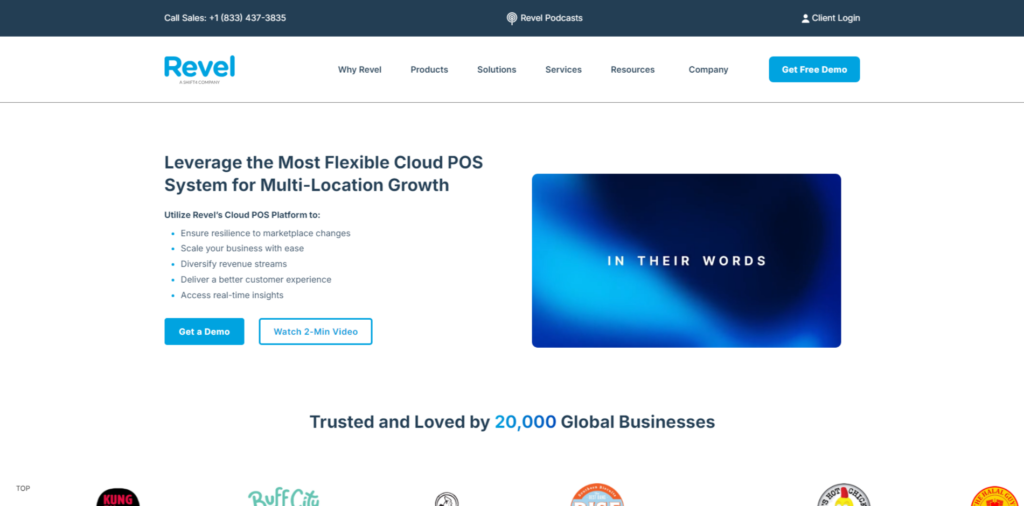
Image source
Revel Systems provides comprehensive point-of-sale software with a shopping cart solution, which is particularly suitable for businesses with physical stores and online storefronts that require robust management systems. The shopping cart solutions are part of their broader suite of services, including their Kiosk XT and Online Ordering XT solutions. This platform offers extensive features that handle various business operations, from order processing to customer relationship management.
Businesses that require a detailed inventory management system and those that want a POS that supports both in-house and online ordering systems. Revel is particularly beneficial for restaurants and retail stores because of its capability to manage everything from tableside orders to detailed inventory tracking.
Here are some key features of Revel Systems:
- Unlike more generic POS systems, Revel focuses on enhancing customer interactions through tools like personalized product recommendations and digital receipts.
- Revel simplifies staff management with a scheduler, time clock, and performance-tracking features. These make it easier to manage shifts and assess staff productivity.
- Businesses can track inventory down to the ingredient level and receive notifications when stock is low or when to reorder, ensuring efficient operations.
- The system supports a variety of payment methods, including major mobile wallets and contactless cards, secured through encrypted transactions.
To begin with Revel Systems, the platform starts at $99 per terminal each month, with additional charges for setup and possible discounts for multiple terminals. While Revel does not offer a free version, prospective users can request a demo to explore its functionalities before committing.
For those looking to expand or fully utilize an advanced POS system, Revel offers comprehensive onboarding services starting at $674, which include system setup, menu consultation, and staff training.
7. OpenCart
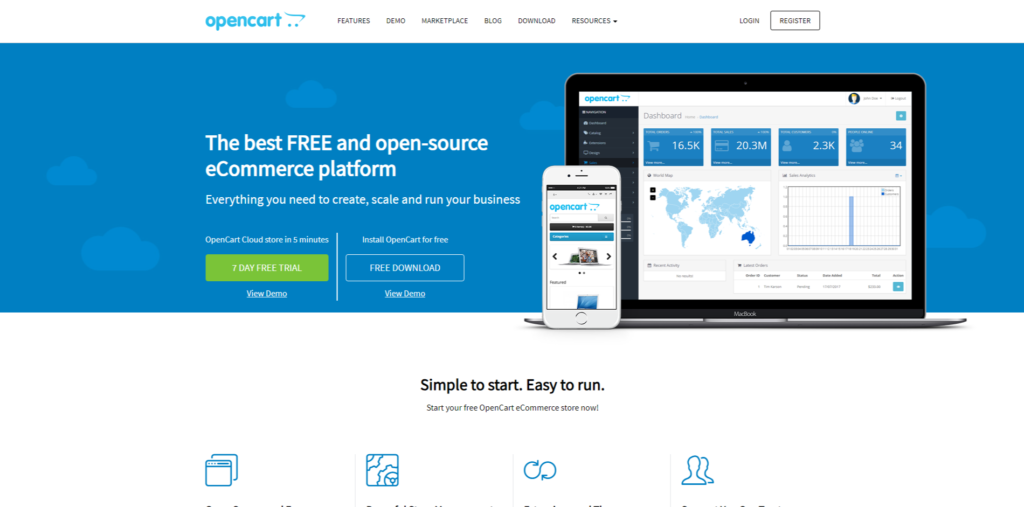
Image source
OpenCart is an open-source shopping cart solution with numerous free downloads and updates. The platform’s site builder uses a modular approach, enabling users to enhance their store’s capabilities. Its marketplace boasts over 13,000 themes and modules, covering payment providers, shipping, social media, accounting, and reporting, making it a highly adaptable choice for building a customized online store.
OpenCart supports unlimited categories and products, which can be organized using custom filters to help customers locate specific items quickly. Additionally, it features a built-in affiliate system that facilitates collaborations with affiliates and various payment options. Extension integrations are available for tools like WordPress, Mailchimp, Zoho, and Zendesk.
Key features of OpenCart include:
- Email notification tools for transactions such as refunds and new orders.
- An RSS feed to keep customers informed of site updates via email or RSS.
- Strong security protocols to encrypt and securely store vital customer data, accessible only by authorized personnel.
OpenCart offers a free 30-day trial with various plans at different price levels to accommodate your business’s specific needs.
8. Wix
Image source
Wix is a user-friendly website builder that offers drag-and-drop functionality. The platform also includes e-commerce features that allow users to add online selling capabilities to their websites. While the basic Wix website builder is free, a paid subscription is necessary to remove Wix branding and unlock advanced e-commerce tools.
With Wix, users can handle essential e-commerce functions such as order tracking, online payment processing, selling across multiple channels on more advanced plans, and automating customer communication via email.
Here are some key features offered by Wix:
- Wix features a drag-and-drop interface that simplifies website creation, making it accessible to users without programming skills.
- Offers a wide range of customizable, device-friendly templates to ensure your site looks professional on all screens.
- It supports functionalities essential for online businesses, such as order tracking, payments, and multi-channel selling. Advanced options like event ticketing and appointment bookings are also available.
- A comprehensive app market extends the functionality of websites with additional features like SEO tools and social media integration.
Wix’s pricing structure is designed to accommodate a variety of business needs and budgets, with plans for freelancers and small and medium-sized businesses. Prices range from a basic free option to more comprehensive plans costing up to $159 monthly.
9. WooCommerce
Image source
WooCommerce is an open-source shopping cart tailored for e-commerce. It offers extensive customization to align with your brand. As it is based on WordPress, integrating its plugin with your WordPress site is straightforward, allowing you to set up your online store quickly.
The plugin enables a range of functionalities including secure payment options, diverse shipping methods, live shipping rates, and immediate access to printable shipping labels. WooCommerce enhances the shopping experience by offering customizable blocks to streamline the checkout process, ensuring that customers provide accurate information, which helps guarantee the delivery of their orders.
Key aspects of WooCommerce include:
- Open-source nature allows for extensive modification and customization.
- Simple and cost-effective integration.
- Numerous plugins and add-ons are available for functions such as inventory management, accounting, email marketing, and payment processing.
- Multiple payment methods are supported.
- Strong community support, including dedicated Facebook groups and WordPress forums.
- Cost efficiency compared to many other e-commerce platforms.
WooCommerce’s pricing varies based on the features and customization you need, with plans ranging from $9 to $249 monthly to suit various requirements.
10. X-Cart
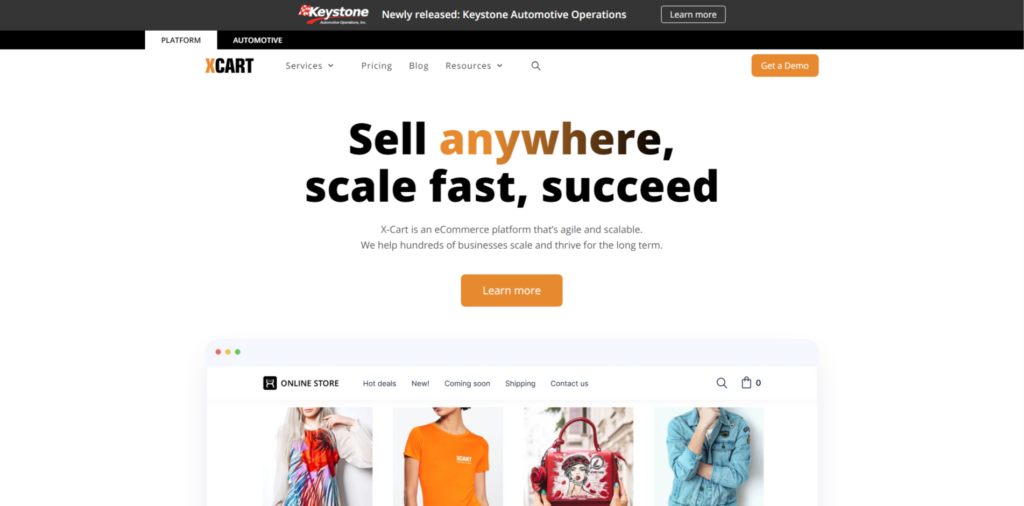
Image source
X-Cart is a free, open-source PHP-based shopping cart software designed for eCommerce platforms. One of its key strengths is its ability to integrate seamlessly with existing online transaction processing systems, making it highly compatible with current market standards. Over recent years, X-Cart has seen numerous updates, positioning it as a forward-thinking solution for future needs.
X-Cart web hosting focuses on enhancing the shopping experience, aiming to make online shopping more enjoyable and engaging. It features personalized greetings to create a welcoming atmosphere for every user, with each new visitor receiving a custom welcome message.
Key features include:
- SEO-friendly architecture.
- Multiple shopping cart configurations.
- Customizable templates due to its PHP foundation.
- Efficient customer and order management tools to swiftly resolve customer issues.
- Simple user interface for ease of navigation.
- Comprehensive search functionality, including product searches and item filters.
X-Cart’s pricing structure depends on the specific features your business requires, with plans ranging from $9 to $49 per month.
Conclusion
Selecting the right shopping cart solution is crucial for any e-commerce business aiming to provide a seamless customer experience and efficient operations. From feature-rich platforms like Magento and WooCommerce to more specialized solutions like Microsale and Revel Systems, the top 10 shopping cart solutions cater to a wide range of business needs.
Each platform offers unique functionalities, from comprehensive inventory management and customer relationship tools to robust payment processing and multi-channel integration. By carefully evaluating your business’s specific requirements, such as transaction volume, customization needs, and budget, you can choose a shopping cart system that enhances your e-commerce operations and supports business growth.