



The Impact of EBT on Reducing Food Insecurity in America
Posted: December 04, 2024 | Updated:
Food insecurity remains a serious challenge in the United States. In 2023, about 13.5% of households (roughly 18.0 million) experienced food insecurity at some point, up from 12.8% (17.0 million) in 2022. This rate – more than one in eight households – is historically high in recent years. Rising food costs have exacerbated the problem; for instance, U.S. grocery prices have increased by roughly 25% from 2019 to 2023.
Families facing low incomes, job loss, or high living expenses are increasingly strained. In this context, the Electronic Benefits Transfer (EBT) system, which delivers SNAP (formerly Food Stamps) benefits via debit-like cards, plays a critical role in helping households afford enough food. This article reviews the latest evidence on how SNAP/EBT helps mitigate hunger nationwide.
How SNAP and EBT Work Together to Support Food Access

The Supplemental Nutrition Assistance Program (SNAP) is the cornerstone of the nation’s food assistance efforts, providing monthly benefits that low-income families can use to purchase groceries. EBT is the electronic system that delivers SNAP benefits directly to recipients via a plastic benefits card.
When participants buy groceries at authorized stores, the SNAP amount is deducted from their EBT account, allowing families to use their benefits with privacy and convenience. The federal government funds all SNAP benefits and shares administrative costs with states, and SNAP is available in all 50 states (Puerto Rico, Guam, the Virgin Islands, and other U.S. territories operate separate block-grant nutrition programs). SNAP serves a very broad and diverse population.
In fact, in fiscal year 2022, about two-thirds of SNAP recipients were children, seniors, or people with disabilities, and 79% of SNAP households included at least one child, one older adult, or a person with a disability. (For example, nearly half of all SNAP participants are children.) SNAP helps many working families on low wages, as well as retirees and disabled adults on fixed incomes, stretch their food budgets. By increasing access to grocery dollars for these groups, SNAP, via EBT, directly addresses some of the most economically vulnerable populations.
Food Insecurity Hits Hardest in Low-Income and Minority Communities

Food insecurity affects millions of Americans, which is a rising trend as we highlighted earlier. In practical terms, many families must forgo meals, buy cheaper but less-nutritious food, or rely on food banks to cope. Low-income households and communities of color are especially hard-hit by these trends.
Key factors contributing to food insecurity today include:
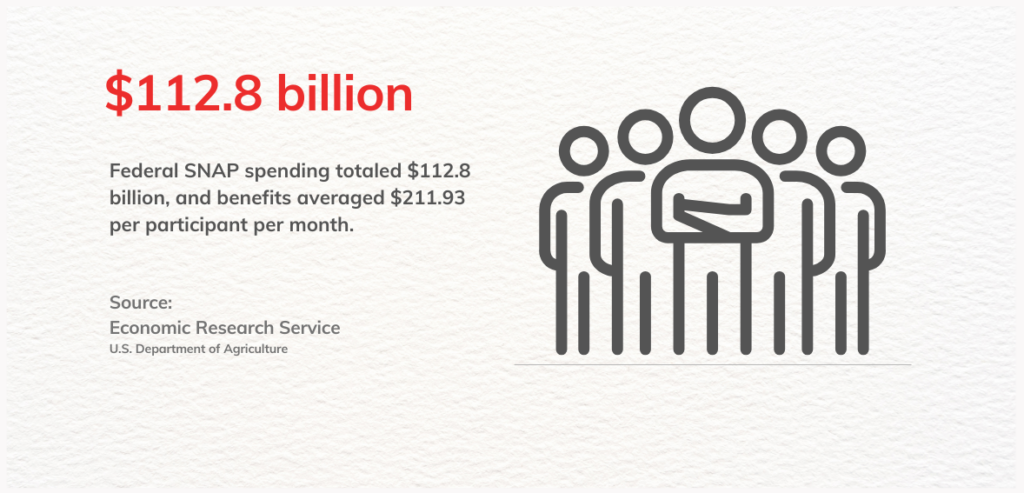
Source: Economic Research Service
1. Economic Disparities
Households with very limited incomes or sudden income losses often cannot afford adequate food.
Stagnant wages, underemployment, and the long tail of inflation (especially high grocery prices) mean many families face tough choices between food and rent, utilities or medical bills. When the economy weakens or jobless rates climb, food insecurity tends to rise sharply.
2. Geographic Barriers
In many rural areas and some city neighborhoods, affordable stores selling healthy food are scarce. These “food deserts” force residents to rely on convenience stores or fast food, which offer calorie-dense but nutrient-poor options.
By increasing the types of retailers that accept SNAP (including small grocers, farmers’ markets, and mobile vendors), EBT can help mitigate some of these geographic challenges.
3. Social Inequities
Systemic inequalities lead to higher food hardship rates in some demographic groups. For example, from 2016 to 2021, about 21.0% of Black-headed households and 16.9% of Hispanic-headed households were food insecure, compared to only 8.0% of non-Hispanic White-headed households. (Asian-headed households had even lower rates, approximately 5.4%.)
These disparities reflect broader income gaps, historical inequities, and differences in access to assistance. Because SNAP reaches many low-income and minority families, it plays a key role in narrowing racial/ethnic gaps in food access.
Food insecurity has serious consequences beyond hunger. Adults in food-insecure homes are more likely to suffer chronic health conditions (such as diabetes, hypertension, and high cholesterol) because budget constraints often force reliance on cheap, processed foods.
Uncertainty about food also takes a mental toll, with stress, depression, and anxiety being common among those worried about feeding their families. Children in food-insecure households are at higher risk of developmental delays, behavioral problems, and academic struggles. Ensuring steady access to nutritious food via SNAP and EBT can therefore yield benefits in overall health and well-being for individuals and communities.
SNAP Reduces Food Insecurity – And the Data Shows It

SNAP was explicitly designed to reduce hunger among eligible families, and research shows it has a large positive impact. For example, one nationwide analysis found that SNAP participation markedly lowers households’ likelihood of food hardship. Families enrolled in SNAP were roughly 28% less likely to report household food insecurity and 33% less likely to report child food insecurity, compared to similar eligible families who did not participate. In other words, receiving SNAP benefits significantly shrinks the gap between a household’s food needs and its budget. (On average, food insecurity rates drop substantially after just a few months of receiving benefits.)
EBT makes SNAP benefits easy to use; recipients simply swipe their SNAP card at checkout like a debit card. This convenience, along with reduced stigma, improves access. Indeed, current data show that about 12.6% of U.S. residents received SNAP in fiscal year 2023, with participation rates as high as 23.1% in some states and as low as 4.6% in others. Without EBT, distributing benefits via paper stamps or coupons would be far slower and more error-prone. By keeping administrative costs low, EBT ensures that nearly all SNAP funding goes directly to groceries – roughly 94 cents of every federal SNAP dollar is spent on food by recipients (as opposed to overhead). This efficiency means SNAP can reach more people quickly as needs rise.
Advocates point out that SNAP’s entitlement structure lets it adapt during downturns. For example, in 2020-2021, Congress temporarily boosted SNAP to meet pandemic needs. Emergency Allotments gave every recipient extra monthly allotments (up to $250), and a 15% increase in maximum benefits was authorized.
Researchers agree these measures blunted what otherwise would have been a sharp rise in food hardship. Higher SNAP benefits during the COVID-19 crisis have been credited with preventing a national food insecurity crisis. When extra allotments expired in 2023, food insufficiency (a related measure) quickly began to rise, exemplifying SNAP’s importance. That’s why higher SNAP funding translates directly into lower hunger, motivating calls to maintain and strengthen benefits (for example, by keeping the Thrifty Food Plan-based increases from 2021) in future policy reforms.
How P-EBT Helped Families During the Pandemic
The COVID-19 pandemic put many families in crisis, but SNAP (via EBT) proved a key line of defense. With schools closed, children lost access to free or reduced-price school meals. Congress responded with the Pandemic EBT (P-EBT) program, which provided families with children one-time EBT payments equivalent to missed school meals. Hundreds of billions of dollars flowed through P-EBT in 2020-21. Multiple studies now confirm that P-EBT sharply reduced food hardship. For instance, in areas with long school closures, P-EBT enrollment was associated with about a 22% reduction in children’s very-low-food-security rates and a 39% reduction in overall household food insufficiency.
In practical terms, families receiving P-EBT spent more on groceries, where one study found that in the six weeks following a P-EBT disbursement, households increased their food spending by roughly $18-$42 per child per week. These improvements in purchasing translated to better nutrition and security.
Even beyond the pandemic, research underscores SNAP’s broader health impact. Studies show that SNAP participants have substantially lower health care costs and better health outcomes than eligible non-participants. One national study estimated that enrolling in SNAP was linked to $1,400 less in annual medical expenditures per adult. Child development also benefits from stable nutrition. Children in SNAP families are statistically less likely to be obese and more likely to perform well academically than otherwise similar children. Continuous access to food helps prevent the “poverty-hunger-poor health” cycle by boosting the household food budget. SNAP reduces stress and enables more nutritious diets, which in turn lowers risks of chronic diseases and developmental delays in children.
EBT Offers Dignity and Flexibility for Older Adults and the Disabled
SNAP is especially vital for households with children, seniors, or disabled members. As noted, about two-thirds of all SNAP beneficiaries fall into these categories. In fiscal year 2023, 79% of SNAP households included a child, an older adult, or someone with a disability. Without SNAP, many of these families would face severe hunger. Among households with incomes near the poverty line, food insecurity can reach 1 in 4 or higher. By targeting benefits based on income, SNAP (via EBT) ensures that the neediest households get support.
For example, families with children often spend nearly all their SNAP benefits on groceries; in turn, this keeps children from going hungry and frees family resources for other essentials. Likewise, SNAP is crucial for older Americans on fixed incomes and for people with disabilities who cannot work full-time. Many such households spend a larger fraction of their income on food than the average family. EBT provides a dignified, flexible way to buy food, enabling seniors and disabled people to shop at ordinary grocery stores or farmers’ markets alongside others.
EBT Connects Families to Fresh, Local Produce
EBT has expanded the network of stores accepting SNAP, which helps alleviate shortages of healthy food in “food deserts.” Today, in addition to big supermarkets and chain retailers, thousands of small grocers, corner stores, farmers’ markets, farm stands and even online grocers accept EBT. This broader retailer base means that SNAP dollars can now be spent at venues that offer fresh fruits and vegetables, rather than only at convenience stores. For example, SNAP purchases at farmers’ markets have skyrocketed.
Nationally, spending of SNAP dollars at farmers’ markets (and farm stands/CSAs) jumped from $13.3 million in 2013 to $70.6 million in 2023 – a 431% increase. The share of SNAP recipients shopping at farmers’ markets has likewise grown. During the pandemic, farmers’ markets showed remarkable results, with SNAP spending there surging more than at supermarkets or convenience stores, and post-COVID declines were much smaller.
SNAP Boosts Local Economies and Food Systems

SNAP/EBT not only feeds families, it also stimulates local economies. Economists estimate that every $1 in SNAP benefits generates roughly $1.50 in total economic activity. This is because SNAP dollars are typically spent immediately on groceries, which boosts sales for retailers, wholesalers, and farmers. In rural counties, SNAP can be a particularly strong economic lifeline; it sustains farm businesses and keeps local grocery stores operating. In this way, SNAP helps sustain jobs and tax revenue in communities, especially important in regions where other forms of stimulus may be scarce.
EBT also makes benefit delivery much more efficient than the old paper stamp system. The electronic system virtually eliminates fraud from lost/stolen vouchers and cuts down on paperwork. As a result, nearly all federal SNAP funding goes directly to households for food. About 94¢ of every SNAP dollar reaches a family’s table, meaning administrative overhead and attrition are very low. This efficiency gives policymakers confidence that expanding SNAP benefits (when needed) will quickly reach those in need, rather than getting bogged down in bureaucracy.
Conclusion
The EBT-based SNAP system plays an indispensable role in reducing hunger and nutrition insecurity in America. By putting food dollars into the hands of families, it directly counteracts income gaps and high food prices. SNAP’s safety net is highly responsive, participation automatically expands during economic crises, and EBT ensures benefits are easy to use. During the COVID-19 emergency, for example, expanded EBT benefits (emergency allotments and higher benefit levels) largely prevented a mass hunger crisis even as unemployment spiked.
Likewise, the Pandemic EBT program effectively replaced lost school meals for tens of millions of children, cutting child food insecurity by over 20% where it was implemented. SNAP not only reduces food insecurity but also yields broad social benefits. Hunger relief improves health outcomes, lowers medical costs, and boosts children’s development. By expanding retail acceptance of EBT and by ensuring adequate funding, the program also helps stimulate local economies and create markets for healthy foods in vulnerable communities. Continuing to invest in SNAP – for example, through future Farm Bills that adjust benefits for inflation and extend SNAP access (including potentially to U.S. territories now on capped block grants) – can further drive down food hardship.
Frequently Asked Questions
-
What are SNAP and EBT, and how do they work together?
SNAP (Supplemental Nutrition Assistance Program) provides monthly food-purchase benefits to low-income households, and EBT (Electronic Benefits Transfer) delivers those benefits via a debit-style card that’s swiped at authorized retailers for groceries.
-
Who benefits most from SNAP/EBT?
About two-thirds of SNAP recipients are children, seniors, or people with disabilities, and nearly 80% of participating households include at least one child, older adult, or disabled member, helping the most economically vulnerable stretch their food budgets.
-
How does EBT help reduce food insecurity?
By making benefits easy to use – simply swiping a card at checkout – EBT lowers stigma and administrative costs, boosting timely access to nutritious food and reducing household and child food-insecurity rates by roughly 28–33%.
-
What was the impact of Pandemic EBT (P-EBT) during COVID-19?
P-EBT provided one-time EBT payments for missed school meals, leading to a 22% drop in child very-low-food-security and a 39% reduction in overall household food insufficiency in areas with prolonged school closures.
-
Beyond feeding families, how does SNAP/EBT benefit communities?
Every dollar in SNAP benefits generates about $1.50 in local economic activity, supports farmers’ markets (where SNAP spending rose over 430% from 2013 to 2023), and sustains retailers and jobs in food-desert areas.