


No Credit Card Here – Learn About World Currency
Posted: August 06, 2020 | Updated:
Currency refers to physical money, usually coins and paper banknotes, that is accepted as a medium of exchange for goods and services. Along with deposit money (bank account balances that can be transferred electronically or via checks), currency forms the nation’s money supply.
Historically, coins made of precious metals, such as gold or silver, have held intrinsic value. Still, today, nearly all modern world currency is fiat money – their value is established by government decree rather than being backed by a commodity. Governments designate their national currency as legal tender, meaning it must be accepted for payment of debts. Even in an era of credit cards and digital payments, understanding physical currencies remains essential, particularly for travelers or those involved in global transactions.
Currency Conversion Tools
When dealing with different currencies, it’s helpful to use currency conversion tools to check exchange rates. Many websites and apps provide up-to-date conversion rates for world currencies. For example, OANDA’s online currency converter lets you convert between all major currencies using daily market rates.
The XE Currency Converter app is another popular, all-in-one solution, offering live exchange rates for approximately 130 currencies, along with features such as rate alerts and money transfers.
Such tools are invaluable for travelers planning budgets, students studying abroad, or investors monitoring forex rates. With these converters, you can quickly find out, for instance, how many Japanese yen equal one US dollar or what one euro is worth in Indian rupees.
Do you know? Most conversion apps allow offline use with cached rates, which is handy when you have no internet access during travel.
Major World Currencies Dominating This Generation
1. Dollar
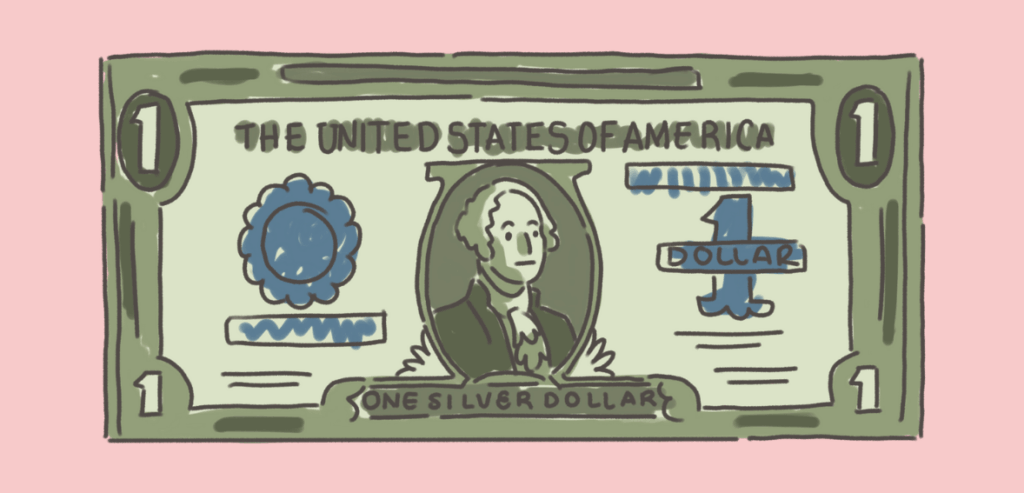
The dollar is one of the most widespread currency names. Several countries use their dollar (for instance, the Canadian dollar, Australian dollar, and Hong Kong dollar), and eight countries have adopted the U.S. dollar as their official currency (such as Panama, Ecuador, El Salvador, and others). The U.S. dollar (USD) itself is the world’s primary reserve currency and is accepted far beyond the United States.
The dollar sign “$” has become a familiar symbol worldwide for money. The origin of the term “dollar” is fascinating: it comes from Joachimsthaler, a large silver coin minted in 16th-century Bohemia (now Jáchymov in the Czech Republic). These thalers (or dalers) were popular coins, and the word evolved into “dollar.” Spanish silver pesos were also referred to as “Spanish dollars” in colonial times, and the name persisted in the Americas.
Today, when someone refers to “the dollar,” they often mean the U.S. dollar, but many other countries’ currencies (from the Canadian dollar to the Singapore dollar) share the name. It is the most widely used currency name globally, surpassing even the euro.
2. Euro
The euro (€) is the common currency of the Eurozone, uniting many countries in Europe under one monetary system. As of 2025, the euro is the official currency of 20 out of 27 European Union member states, including Germany, France, Italy, Spain, and now Croatia (which adopted the euro in 2023). This means that roughly 340 million people use the euro in their daily lives, making it one of the world’s most widely used currencies.
Additionally, several other European microstates and territories (Monaco, San Marino, Vatican City, Andorra, Kosovo, and Montenegro) also use the euro by agreement or custom, despite not being EU members. The euro was introduced in 1999 as a virtual accounting currency and launched as physical coins and banknotes in 2002, replacing legacy national currencies like the French franc, German mark, Italian lira, and others.
It quickly became a primary global reserve currency, second only to the U.S. dollar in international reserves and trade. The euro has simplified travel and trade within Europe by eliminating exchange hassles among Eurozone nations. However, EU countries that don’t use the euro (such as Poland, Sweden, or Hungary) continue to use their currencies until they meet the convergence criteria to join the eurozone. Overall, the euro’s creation represents an unprecedented monetary union, and it remains a pillar of the world financial system alongside the dollar.
3. Yen
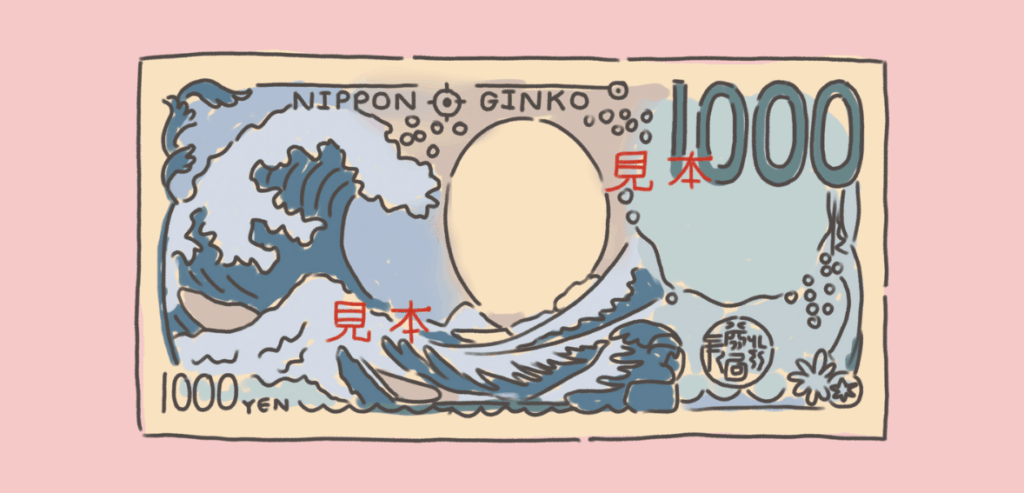
The Japanese yen (¥) is the official currency of Japan and one of the most significant currencies in the world. It is famed for being among the top three most-traded currencies globally, after the U.S. dollar and the euro. The yen (pronounced “en” in Japanese, though spelled with a ‘y’ in English) was introduced in 1871, replacing the complex feudal era system of money then in use. The name yen means “round object” or “circle,” similar to the Chinese yuan, since it was named during a time when silver coins (Spanish dollars) were circulating in Asia.
Today, the yen is a significant reserve currency as well – central banks worldwide hold yen as part of their foreign exchange reserves (it’s traditionally the fourth-largest reserve currency after USD, EUR, and GBP, accounting for about 5% of global reserves). For everyday use, the Japanese yen comes in banknotes (1,000 yen, 5,000 yen, 10,000 yen are common notes) and coins (1, 5, 10, 50, 100, 500 yen coins).
Notably, Japan does not use smaller currency units like cents; 1 yen is the smallest unit (though historically, 1 yen used to be subdivided into 100 sen, sen are no longer used). Large quantities of yen are counted in units of 10,000 – in Japanese, 10,000 yen is called ichi-man yen (1 “man”), so a price might be described as “5 man” meaning ¥50,000. Internationally, the yen’s value often fluctuates in tandem with Japan’s economic fortunes.
For instance, the yen is known as a “safe-haven” currency that can strengthen during global turmoil, yet at other times (like 2022–2023) it fell to multi-decade lows against the dollar due to low interest rates in Japan. The Japanese government and the Bank of Japan have even intervened in currency markets to stabilize the yen when needed.
Despite being challenged by China’s growth, Japan’s economy remains vast, and the yen’s role in global finance, from carry trades to being part of the IMF’s elite reserve currency basket (SDR) – remains crucial. For travelers, Japan remains a largely cash-oriented society in many respects, so having some yen on hand is essential – a reminder that even in our digital age, national currencies like the yen are still key to daily commerce.
4. Pound
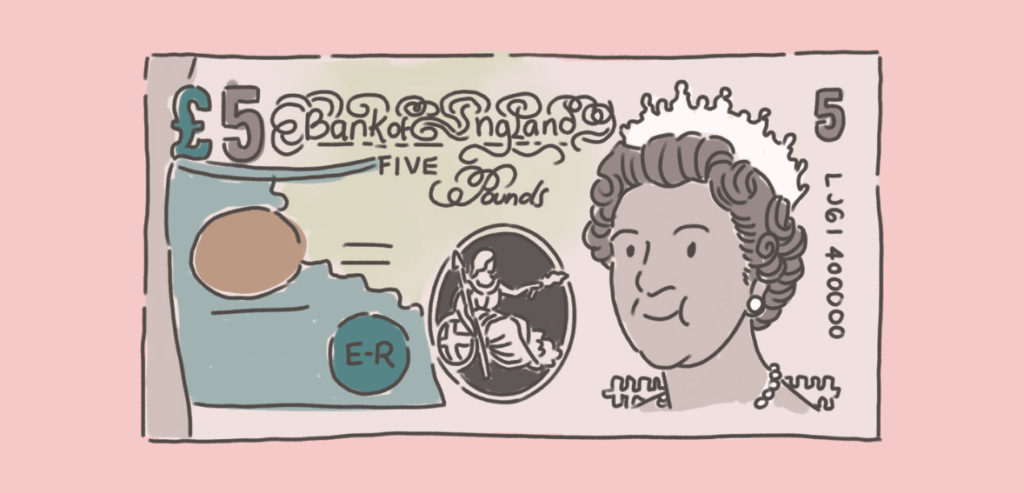
The pound is another old currency name deeply rooted in history. The British pound sterling (GBP) is the most famous, but several other countries also call their currency “pound.” Notably, Egypt, Sudan, South Sudan, Lebanon, and Syria all have currencies named the pound (likely due to British influence or translation).
The origin of the pound is the Latin phrase libra pondo, meaning “a pound by weight,” which referred to a unit of weight equivalent to a pound of silver. This is why the British currency symbol “£” is stylized from an “L” (for libra), and why the abbreviation for weight lb comes from libra as well.
Essentially, one British pound was historically equivalent to one pound weight of sterling silver, which set its value. Like the lira (discussed above), the pound shares the same root; in fact, the Italian lira and the French livre were also directly named after the libra weight.
The British pound is one of the oldest currencies still in use; it’s often called “sterling” in financial contexts and remains a primary world currency (the fourth most traded currency globally and one of the top reserve currencies by central banks). Over the years, Britain’s currency has had a significant influence on many regions.
For example, before the euro, Ireland used the Irish pound (punt), and several nations in the Middle East adopted a “pound” currency during the 20th century (e.g., the Palestinian pound, which evolved into the Jordanian dinar and the Israeli lira). Modern pounds, whether the UK’s or Egypt’s, are decimalized into 100 subunits (pence or piastres, respectively).
The pound’s enduring name reminds us that money’s value was once literally weighed – a concept that persisted even as actual silver coins gave way to paper and electronic money.
5. Dinar
The dinar is the name of the official currency in several countries, primarily in the Middle East and North Africa. The term originates from the denarius, a silver coin of ancient Rome, and the gold dinar coins of early Islamic caliphates. Today, eight countries use currencies called the dinar, including Algeria, Tunisia, Libya, Serbia, Jordan, Iraq, Kuwait, and Bahrain.
For example, the currency in Jordan is the Jordanian dinar, in Kuwait the Kuwaiti dinar, and so on. Historically, other nations – from Iran to the former Yugoslavia – have also used “dinar” for their currency. The longevity of the name reflects a shared cultural heritage: the caliph Abd al-Malik introduced an Islamic dinar in the 7th century, borrowing the name from the Roman coin.
Today’s dinars are fiat currencies like any other. Still, the strongest (such as the Kuwaiti dinar) are among the highest-valued monetary units in the world relative to the U.S. dollar.
6. Franc
The franc is a traditional currency name that originated in Europe and spread to other parts of the world. The word originates from the Latin “francorum rex,” meaning “King of the Franks,” which was used on medieval French coins. While France and neighboring countries switched to the euro in 2002, the franc is still used today in a few places. The most significant is the Swiss franc (CHF), the national currency of Switzerland and Liechtenstein, which is considered a stable and primary reserve currency.
In addition, about 20 African nations (mostly former French colonies) use currencies called the franc, specifically the West African CFA franc and Central African CFA franc, which are regional currencies pegged to the euro. These African francs share a common origin from French currency but are now issued by African regional central banks. The Swiss franc, meanwhile, has kept its independent value (it’s known for Switzerland’s low inflation and financial stability).
Historically, countries such as Belgium and Luxembourg also used the franc before adopting the euro. Though the French franc is now a historical currency, the legacy of the franc lives on in the name. Fun fact: Swiss banknotes feature four national languages and high-tech security designs, reflecting the franc’s importance in the modern era.
7. Rupee
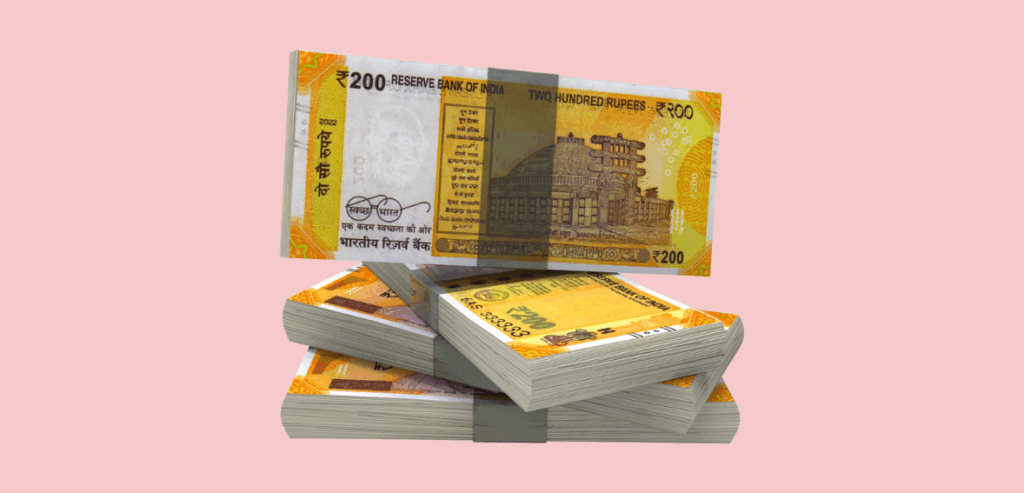
The rupee is the national currency in several South Asian and Indian Ocean countries. The most prominent are India’s rupee (INR) and Pakistan’s rupee (PKR) – currencies of two of the world’s most populous nations. Additionally, Nepal, Sri Lanka, Mauritius, Seychelles, and, until 2023, Bhutan use the rupee (or a variation of it) as their currency.
(Bhutan’s currency is officially the ngultrum, but it is pegged to the Indian rupee and “Bhutanese rupee” was often informally used; as of 2023 Bhutan has been transitioning to calling it the ngultrum exclusively). The Maldives uses the rufiyaa – a local form of the word rupee – and Indonesia’s rupiah is also linguistically related to rupee.
The word rupee comes from the Sanskrit rūpya, meaning “wrought silver” or “coined silver.” The first rupee coin is attributed to Sher Shah Suri around 1540 in northern India. Since then, the rupee (in various languages) became the currency of Mughal India, and later the British Raj, which further spread its use. Even after independence, India and its neighbors continued to use the rupee as their unit of currency.
One rupee is divided into 100 paise (in Pakistan and India), although due to inflation, the smallest coins of a few paise are now rarely seen. In everyday speech in India, the rupee is often called rupayaa or simply Rs., and the new symbol “₹” (introduced in 2010) is used as a modern emblem.
Do you know? The Indian rupee symbol (₹) is a blend of the Devanagari “र” (ra) and Roman “R”, underlining India’s cultural blend. Whether it’s the Pakistani rupee or the Mauritian rupee, these currencies reflect a common heritage of the subcontinent – and, yes, the word “rupee” in many languages means “silver coin,” a reminder of what gave money its value in the past.
8. Krone / Krona
Several Northern and Central European currencies have names meaning “crown,” derived from the Latin corona. These include the krone and krona. For example, Denmark and Norway use the krone, Sweden and Iceland use the krona, and the Czech Republic uses the koruna (a related word). All of these terms (krone, krona, koruna) translate to crown, a nod to the royal crowns that once appeared on their coins.
Despite some of these countries no longer being monarchies (the Czech Republic, for instance, kept the name koruna even after the Austro-Hungarian monarchy ended), the traditional currency names remained.
The Swedish krona (SEK) has been Sweden’s currency since 1873 and is sometimes referred to as the “Swedish crown.” It’s subdivided into 100 öre, though Sweden discontinued issuing öre coins and now rounds cash transactions to the nearest krona. Nearby, Norway’s krone (NOK) and Denmark’s krone (DKK) also date back to the 19th century and share a similar origin, meaning “crown.”
These currencies are separate but historically have been linked (Denmark, Norway, and Sweden formed a Scandinavian Monetary Union on a gold standard in the late 1800s). Outside of Scandinavia, the Czech koruna (CZK) is one of the few Central European currencies that the euro has not replaced, and its name continues the tradition of the crown. In summary, crown currencies remain in use in five European countries, reflecting a bit of royal history in their names.
9. Lira
The lira is a currency name that originates from the Latin libra, meaning a pound (by weight) of silver. The lira and pound share the same root. The British pound’s symbol, “£”, is an ornate L for libra, and similarly, the lira was used to denote a pound of silver in ancient Rome. Many currencies in Europe were historically referred to as lira or pound due to their weight-based origins. Italy, for example, used the lira for centuries until it switched to the euro in 1999–2002.
The Italian lira (along with the Maltese lira, San Marinese lira, and Vatican lira) all ceased to exist once the euro took over. Today, the most prominent currency with this name is the Turkish lira. Turkey’s lira evolved from the Ottoman lira introduced in the mid-19th century. Over the past few decades, the Turkish lira experienced high inflation, leading to a currency reform in 2005 that lopped off six zeros (1 new lira = 1,000,000 old lira).
Modern Turkish banknotes and coins are labeled simply “Turkish lira” again (the “new” was dropped in 2009). Turkey’s lira derives its name from libra, connecting it to the same tradition as the British pound and the pre-euro Italian lira. In local usage, other Middle Eastern currencies, such as the Lebanese pound and the Syrian pound, are also referred to as “lira” in Arabic, reflecting the French influence and the interlinked history of currency names.
10. Mark
The mark (or markka in some languages) is a historic currency unit that originally referred to a unit of weight for precious metals. In medieval Western Europe, a mark represented roughly eight troy ounces of silver. It was not a coin at first, but a way to measure bulk silver or gold – large payments would be reckoned in marks of silver. Over time, various countries adopted the mark as a unit of currency. For instance, in Germany, the gold mark (equivalent to 100 pfennig) became the currency of the newly unified German Empire in 1873.
The German mark (ℳ) went through turbulent times – after World War I, the paper mark suffered hyperinflation (famously requiring wheelbarrows of notes for basic goods). The Reichsmark was later replaced in the 1930s by the Deutsche Mark (DM) in West Germany in 1948. The Deutsche Mark developed into one of the world’s strongest currencies in the second half of the 20th century, symbolizing West Germany’s economic might.
When Germany adopted the euro in 2002, the venerable DM was retired (though Germans could still exchange old marks for euros at the central bank indefinitely). Another notable example is Finland’s markka, which was Finland’s currency until it joined the euro. Today, one of the only active currencies with “mark” in the name is the Bosnia and Herzegovina convertible mark (BAM), introduced in the 1990s. The Bosnian mark was pegged 1:1 to the German mark and later fixed at approximately 1.95583 BAM per euro when the DM gave way to the euro.
This illustrates how the legacy of the German mark endures in Bosnia’s currency system. In summary, “mark” as a currency harks back to an old weight measure but became associated with some very modern currencies, leaving a lasting historical imprint.
11. Peso
The peso (Spanish for “weight”) is the currency name used by several countries, primarily those that were once part of the Spanish Empire. Eight independent nations today use the peso as their monetary unit: Argentina, Chile, Colombia, Cuba, the Dominican Republic, Mexico, the Philippines, and Uruguay.
The term “peso” originally referred to the weight of precious metal coins. In colonial times, Spanish silver coins (eight-real coins, also known as “pieces of eight”) were widely used across the Americas and Asia; these coins were measured by weight and thus referred to as pesos.
The Spanish dollar (peso) was equivalent in size to the German thaler, which influenced currencies worldwide (even the Chinese called the coin a yuan, meaning a round object). Over the centuries, the former colonies kept the peso name for their national currencies.
For example, Mexico’s peso descends from the old Spanish colonial real and peso coins and is subdivided into 100 centavos. In the Philippines (a Spanish colony until 1898), the currency is the Philippine peso (piso in Filipino). The word peso means “weight,” highlighting that money used to be valued by the weight of silver or gold (much like the British pound originally meant a pound of silver).
Numerous other countries have historically used pesos–for example, Ecuador and El Salvador previously used their pesos before adopting the U.S. dollar in modern times.
Today’s pesos are all fiat currencies, but they share a common heritage. For instance, symbols for peso currencies often use the “$” sign (just like the dollar does), as the emblem was initially based on the Spanish coat of arms that appeared on those old peso coins. The persistence of the peso across continents shows the lasting influence of Spain’s monetary system.
12. Ruble
The ruble (also spelled rouble) is best known as the currency of Russia and Belarus today. It was also the name of the currency in the former Soviet Union and Imperial Russia before that. One ruble is subdivided into 100 kopecks. The word ruble has an interesting etymology – it comes from the Russian verb rubit’, which means “to chop or cut.”
This is believed to reference how rubles were originally pieces “chopped” from silver bars or coins. In medieval times, Russian traders would hack off chunks of silver (grivna bars) to create ruble pieces, hence the name. The ruble has been in use for approximately 500 years, making it one of Europe’s oldest continuous currency names.
Throughout its history, the ruble has undergone numerous reforms and redenominations, particularly during the turbulent 20th century. After the Soviet Union dissolved in 1991, many new countries replaced the Soviet ruble with their currencies (for example, Kazakhstan introduced the tenge, and Ukraine introduced the hryvnia). Russia itself issued new rubles in the 1990s to curb hyperinflation.
Today, beyond Russia and Belarus, the ruble name also persists in a few breakaway regions: Transnistria (a region in Moldova) issues a Transnistrian ruble, and the Russian ruble is used in parts of Georgia’s breakaway regions (Abkhazia and South Ossetia). The ruble’s value has fluctuated significantly – for instance, the Russian ruble fell sharply during the 1998 financial crisis, and more recently, it has been affected by sanctions and oil price swings.
Nonetheless, it remains the base currency of the world’s largest country. Culturally, prices in Russia are often quoted in rubles even if some high-value transactions (like real estate) might reference dollars or euros for stability. And if you’re curious: in Russian slang, a 1000-ruble note is called “a shtuka” (thing), and a 5-ruble coin was once nicknamed pyater rubley, showing how everyday language adapts to currency.
13. Yuan / Renminbi (Chinese Currency)
China’s currency is known by two names: renminbi (RMB), which means “the people’s currency,” and yuan (CNY), which is the primary unit of that currency (like “dollar” is to “US currency”). In practice, people use “yuan” to refer to amounts of Chinese currency (e.g., “50 yuan”), while “renminbi” is the official name of the currency system. One Chinese yuan – also called kuai in colloquial Mandarin – is divided into 10 jiao (角), and one jiao is 10 fen (分).
The People’s Bank of China issues the currency. The symbol for yuan (¥) is the same as the symbol for Japanese yen, since both words mean “round object” and historically referred to Spanish silver dollars that were round. In fact, in the 19th century, foreign silver coins circulated in China and were referred to as “yuan,” which led China to mint its silver yuan coins starting in 1889. Modern Chinese banknotes range from 1 yuan to 100 yuan. Internationally, the abbreviation CNY (Chinese Yuan) is used for trade and forex, while RMB is used in a more general sense.
An important detail is that China manages the value of its currency – for many years, the yuan was pegged tightly to the U.S. dollar, and even now it trades within a managed float range. This has been a point of contention in global trade, with debates about the yuan being undervalued to aid Chinese exports.
In recent years, the Chinese yuan has gained more recognition globally; it was added to the IMF’s special reserve currency basket in 2015, and China is encouraging its use in international trade. You might also hear the term “CNH”, which refers to yuan traded offshore (e.g., in Hong Kong) as opposed to “CNY” on the mainland – a result of China’s gradual move to open its currency.
Lastly, if you encounter the word “yuan” in other contexts, remember that in Chinese, foreign currencies are often referred to by their country’s name plus “yuan.” For example, the U.S. dollar is měiyuán (literally “American yuan”) in Chinese, and the euro can be called ouyuan (“European yuan”). So, yuan means “currency unit” in Chinese, much like “dollar” can generically mean money unit in English.
Other World Currencies
We’ve highlighted many major or historically significant currencies, but it’s worth noting that the world is a mosaic of currencies. There are over 180 distinct currencies in circulation globally that are recognized as legal tender. These range from widely used currencies like the South Korean won, Brazilian real, or South African rand, to lesser-known currencies of smaller nations (for example, the Fiji dollar or the Botswana pula).
Some currencies share names (as seen with the dollar, franc, etc.), whereas others are unique (such as the Thai baht or the Nigerian naira). A few interesting examples include: the Saudi riyal and Omani rial (currency names that, like dinar, trace back to Latin – riyal comes from regalis, meaning royal); the Iranian rial; the Brazilian real (which in Portuguese also means royal or real as in tangible); the Hungarian forint (named after Florence’s fiorino); and the Polish zloty, meaning “golden”. Many countries periodically update or redesign their banknotes for security and aesthetic reasons – for instance, the U.S. dollar has seen new colorized designs in recent decades to thwart counterfeiting.
Some countries have had to revalue their currencies due to inflation (like the Zimbabwean dollar, which was reissued and even abandoned for a time, or the Venezuelan bolívar). In a few cases, countries choose to share a currency or unilaterally use another country’s currency for stability – for example, the nations of the Eurozone sharing the euro, or Panama using the U.S. dollar. For a comprehensive list of world currencies, you can refer to the ISO 4217 standard, which assigns a unique three-letter code to each currency.
Resources like the World Atlas’s “Currencies of the World” or the interactive maps from international finance organizations can provide insight into what currency each country uses. Whether you’re a student, traveler, or investor, knowing the basics about foreign currencies – from their names and symbols to a bit of history – makes the world a little less bewildering when money matters come up.
Did you know? As of 2024, no country uses Bitcoin or cryptocurrency as its sole official currency, aside from El Salvador and the Central African Republic, which have adopted Bitcoin as legal tender alongside their fiat currencies. The vast majority of countries still rely on their traditional national currencies, many of which we’ve described above.
Additional Resources
For those interested in currency and money matters, here are a few valuable resources and tips:
- The International Organization for Standardization (ISO) publishes codes for all world currencies (ISO 4217). You can find lists of currencies by country via sources like the U.S. CIA World Factbook or the IMF’s annual reports. These lists display the currency name, symbol, and, typically, the central bank responsible.
- Suppose you handle paper money, especially U.S. dollars. In that case, you might want to check out the U.S. Secret Service’s guidelines on detecting counterfeit bills (the Secret Service was originally founded to combat counterfeiting).
- Similarly, many central banks (like the European Central Bank for euros or the Bank of England for pounds) have online guides on the security features of their banknotes.
- When traveling, remember to declare large amounts of cash at customs if required. Agencies like the U.S. Transportation Security Administration (TSA) and customs services provide rules on traveling with currency. It’s also wise to notify your bank or credit card company when traveling abroad, so your card isn’t blocked due to foreign transactions. Additionally, carry some local currency for places that don’t accept cards (“No Credit Card Here!” situations).
- Currencies can serve as an indicator of an economy’s health. Following financial news on exchange rates (via reliable outlets such as Reuters or Bloomberg) can provide insight into trends, such as a strengthening dollar or a volatile cryptocurrency market. Academic sites and finance portals often have sections dedicated to currency analysis (for example, Investopedia offers explainers on every major currency and historical crises).
Conclusion
Currency, whether coin, paper, or digital balance, remains the backbone of commerce, shaped over centuries from precious-metal standards to today’s government-backed fiat systems. From the U.S. dollar’s role as the world’s reserve currency to the euro’s unifying power across Europe, from the yen’s safe-haven status to the rupee’s centuries-old heritage of “wrought silver,” each unit tells a story of trade, empire, and innovation. Tools like OANDA and XE make navigating exchange rates simple for travelers, students, and investors alike, while offline features ensure you’re never stranded without local cash.
Beyond the familiar dollar, euro, yen, and pound, the planet’s “currency alphabet” includes dinars, francs, kronas, liras, pesos, rubles, and dozens more, each reflecting unique histories and economic realities. Whether you’re planning a trip, hedging a portfolio, or simply curious about the next banknote you’ll see, understanding how currencies evolve, convert, and interact opens a window onto global finance. Armed with reliable converters, up-to-date ISO codes, and awareness of local customs (like customs declarations or card-use limitations), you’ll be prepared for any “no credit card here” moment, confidently turning foreign bills into familiar value wherever you go.