



How to Sell Digital Art Online: Guide for Artists and Designers
Posted: November 04, 2024 | Updated:
Historically, artists used galleries, festivals, and auctions to showcase and sell their creations. In the new century, art has taken a new digital form, which we call digital art. Digital art can be sold online on multiple platforms like online galleries, ecommerce sites, and social media. In 2022, the online art market was valued at approximately USD 9.18 billion, with projections indicating a growth rate of 9.0% annually from 2023 to 2030. This growth highlights the increasing consumer interest in purchasing both digital artworks and physical art online.
For those new to selling digital art, we have compiled a comprehensive guide with detailed steps on effectively using digital artwork marketplaces and websites to distribute your art globally and tap into a broader customer base.
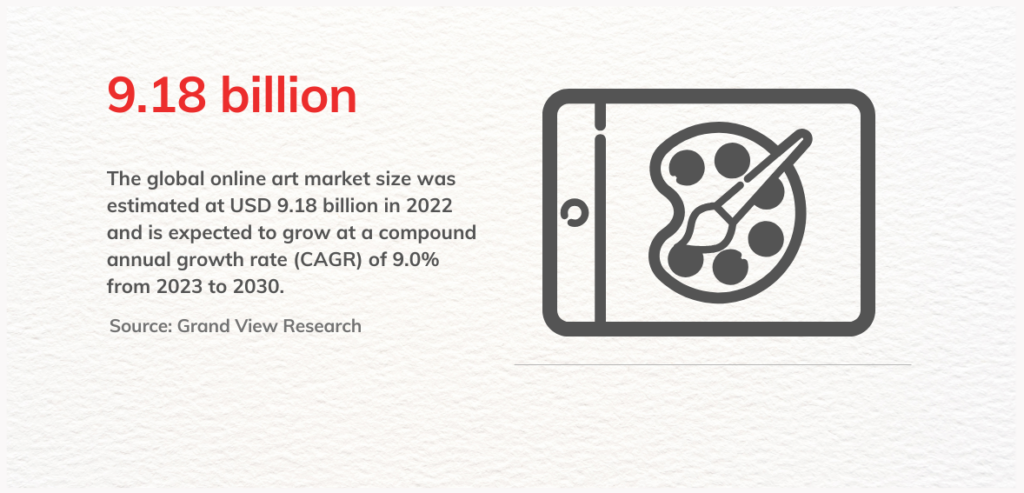
Source: Grand View Research
What Defines Digital Art?
Digital art refers to works that utilize digital technology during creation or exhibition. This broad field encompasses several forms:
- Mixed Media Art: This approach combines physical materials with digital components, such as scanned imagery, digital overlays, and various software manipulations.
- Digital Photography: This involves capturing images using digital cameras or scanning photographs, then modifying them with software to enhance or alter their appearance.
- Digital Painting: Digital painters use software that emulates traditional painting techniques, allowing the digital replication of media like oil and watercolors on virtual canvases.
- Computer Graphics: This category covers two-dimensional and three-dimensional graphics in various applications, from vector illustrations to pixel art and 3D models for animations and video games.
- Crypto Art/NFTs: This modern form uses blockchain technology to create unique digital tokens representing ownership and facilitating the secure sale and trade of digital artworks.
Digital artists must select appropriate file formats for their work, depending on whether it will be displayed online or printed. Photoshop, Illustrator, and Procreate offer robust options for creating, editing, and preparing digital artwork. Artists might use tablets and styluses for detailed work or large monitors for complex tasks like 3D modeling, depending on their specific needs.
Digital art can be intended for digital use, such as downloadable content, or physical production, including prints and customized merchandise. Artists can market their creations online, tailoring their sales strategies to their target audience, from offering instant downloads to providing on-demand printing services.
Is Selling Digital Art Profitable?
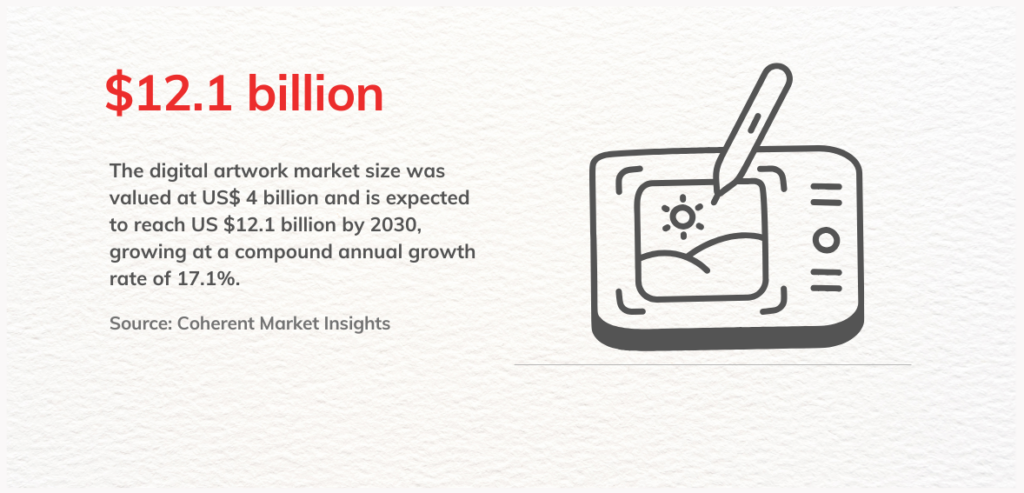
Now is an excellent time to venture into selling digital art if you are an artist dedicated to your craft. The digital art market has seen substantial growth due to the expansion of ecommerce, drawing a diverse array of collectors, investors, and art lovers. In 2023, online art sales in the US reached nearly $12 billion, almost doubling the figures from 2019 and marking a significant increase from pre-pandemic levels.
Ecommerce has simplified the process for artists to display and sell digital art online. Using digital artwork marketplace and platforms, artists can access a global audience, transcend geographical limitations, and connect with potential buyers from all corners.
These online platforms have also broadened the demand for various art formats, from digital downloads and physical prints to NFTs (non-fungible tokens). Artists often monetize their work by selling physical items like stickers, posters, or t-shirts with their designs or by offering digital files, including fonts, graphics, photos, and fan art, as downloadable content. Licensing digital artwork on book covers, album art, or advertisements can be lucrative. Artists can also earn from custom commissions clients request for personalized digital creations.
In terms of sales, established artists with a solid following typically command higher prices for their work. Although building a reputation and refining artistic skills may require time, these factors significantly influence your sales potential and the pricing of your art.
Essential Steps to Start Selling Digital Art Online
Selling digital art online can open up many opportunities for artists to reach audiences worldwide. Below, we will break down the essential process, from preparing your artwork and choosing the right platforms to setting prices and marketing your creations effectively.
1. Understand Your Target Audience
Before you start selling your digital art, it’s crucial to have a clear understanding of your target audience. This knowledge allows you to customize your artwork and marketing strategies to meet your potential buyer’s needs and preferences. Your audience might include corporate clients looking for artwork for commercial use, art collectors, fans of specific genres like anime or fantasy, or even fellow artists. Recognizing the diversity within your audience can make your marketing efforts more targeted and effective.

Conduct thorough market research to pinpoint current trends and popular purchases within your artistic niche. Platforms such as Reddit, Pinterest, and various art communities are invaluable. Additionally, conducting surveys can provide direct insights into your potential buyers’ preferences and interests.
Segmenting your audience is another effective strategy. You can tailor your marketing approach more precisely by categorizing potential buyers based on factors like interests, demographics, and purchasing behaviors. For instance, you might use certain popular social media platforms with specific segments to enhance your engagement with them. This personalized approach not only increases the relevance of your work to your audience but also boosts the effectiveness of your sales strategies.
2. Create a Strong Digitized Portfolio
A solid portfolio is essential for effectively selling digital art, as it displays your technical skills and unique style and range. When choosing a platform to host your portfolio, consider options like a personal website, a Behance profile, or an ArtStation gallery. Select one that allows you to manage your content quickly and caters to your target audience. It’s crucial to focus on quality over quantity; a concise selection of your best, high-resolution works will make a more substantial impact than a more extensive collection of mediocre pieces.
Organize your portfolio by grouping your art into categories such as portrait art, landscapes, or fan art, which helps potential buyers or clients navigate your offerings more easily. Additionally, including detailed descriptions with each piece—covering the inspiration, the creative process, and any other relevant background information can encourage a deeper emotional connection with viewers and give them insights into the creative mind behind the work.

How to Digitize Your Artwork?
To digitize your artwork, whether it’s a physical painting, drawing, or already-digital piece, follow these steps based on the method most suitable for your work:
- Camera Setup: Use a DSLR, mirrorless, or high-quality smartphone camera with clean lenses. Place the artwork on a wall or easel and align the camera directly in front to avoid distortion. A tripod is recommended to reduce blur and ensure consistent quality, particularly if photographing multiple artworks.
- Lighting: To create even lighting, use two soft lights placed at 45-degree angles to the artwork. Use softboxes or diffused lights to minimize harsh shadows and reflections. If using natural light, opt for overcast conditions to prevent harsh highlights and color shifts. Avoid wide-angle lenses, as they can warp the edges of your artwork.
- Post-Processing: After photographing, use photo editing software like Photoshop or Lightroom to tweak brightness, contrast, and white balance. I was using a neutral gray card when shooting, which can improve color accuracy.
If you scan your artwork, use a flatbed scanner with flat, non-textured artwork, like drawings, for the best results. Scan at least 300 DPI for web use or 600-1200 DPI for print quality. Save your scans as TIFF files for better detail preservation and editability. Scan large pieces in sections and digitally stitch them together using Photoshop. Clean the scanner glass and ensure the artwork is flat against it for the best scan quality.
Save your digital creations in high-resolution formats like PNG or TIFF to maintain quality for web viewing and printing. Adjust the color settings to sRGB for web display and CMYK for printing to ensure the colors appear as intended across different platforms.
3. Choosing the Right Platforms
Choosing the right platform to sell your art online is essential for reaching your target audience and managing your business effectively.
Marketplaces
Marketplaces make setting up your store and accessing an existing audience easy. They handle logistics, such as transactions and shipping for physical products. However, these platforms often come with fees and limited branding options. Here are some of the top choices
- Etsy: Celebrated for its dedication to unique, handmade, and vintage treasures, Etsy stands out as a top choice for artists who prize originality and craft. It offers a vast user base and robust marketing tools to help artists thrive in a vibrant digital artwork marketplace.
- ArtStation: Tailored for artists in the gaming and entertainment sectors, as well as those producing traditional art, ArtStation provides a dynamic community and significant industry visibility, making it an excellent platform for artists seeking to enhance their professional presence.
- Saatchi Art: As a renowned online gallery, Saatchi Art serves both emerging and established artists by offering unparalleled exposure to a discerning clientele and a gateway to the art world’s upper echelons.
- Society6: This platform enables artists to have their designs printed on diverse products, managing all aspects of fulfillment and logistics, thus allowing creators to focus solely on their artistic endeavors.
- Fine Art America: Known as the largest online art marketplace and a leading print-on-demand technology firm, Fine Art America supports artists in selling prints and various other products, supplemented by extensive marketing tools and direct sales capabilities.
- Zazzle: Zazzle empowers artists to personalize and sell their artwork on an extensive array of products, offering them the freedom to set their royalties, thus fostering a flexible entrepreneurial environment.
- Redbubble: Offering a print-on-demand service that stands out for its flexibility in profit-margin settings and a broad spectrum of products for artwork printing, Redbubble caters to artists seeking control over their earnings and creative expressions.
- Singulart: Focusing on providing global reach and personalized attention, Singulart is ideal for artists aiming to directly connect with art buyers around the world. It offers a platform that emphasizes artist exposure and customer engagement.
- Artfinder: Championing independent artists, Artfinder connects creators directly with buyers, fostering a community-driven atmosphere that supports personal interactions and the growth of artists’ careers in a supportive online environment.
Personal Website
Today, you can build a personal online art store that gives you complete control over branding, pricing, and customer engagement. This route allows you to tailor your storefront to suit your artistic style and brand, although it requires more work to drive traffic through methods like social media and search engine optimization (SEO). Here are some top platforms to consider:
- Squarespace: Known for its sleek, professional templates, Squarespace is ideal for artists looking to create visually appealing websites. It offers extensive e-commerce capabilities, integrated analytics, and customization options without requiring coding skills.
- Wix: This platform provides a user-friendly interface with a wide range of customizable templates, which is particularly beneficial for artists. Wix supports large file hosting, has built-in sales tools, and offers an app market to enhance the functionality of your art website.
- Shopify: A robust ecommerce platform that allows artists to set up their online stores with powerful customization options. Shopify suits those looking for a comprehensive solution with advanced features like analytics, various apps, and marketing tools.
- Weebly: A simple drag-and-drop website builder, Weebly allows anyone to create a professional website. It benefits artists due to its ease of use, e-commerce features, and SEO tools, which help them promote art effectively online.
- BigCommerce: Suitable for larger-scale operations, BigCommerce offers advanced marketing and SEO features without transaction fees. It’s an excellent option for artists who need a robust online art store with extensive customization and integration capabilities.
Additionally, if you want to sell digital art online as a unique item, consider NFT marketplaces like OpenSea or Rarible. NFTs provide a sense of exclusivity and ownership, which is attractive to collectors.
4. Securing Your Artwork
When creating and sharing artwork, the threat of scammers and art theft is real, posing risks such as your work going viral for unwanted reasons and impacting potential income from your art. Here’s how to safeguard your artwork from being misused or sold by unauthorized parties:
1. Watermarking
Watermarking is a straightforward yet powerful tool. You signal ownership and deter unauthorized use by placing a visible watermark over the artwork, such as your logo or name. The watermark should be strategically placed to be effective without distracting from the artwork’s aesthetic. Balancing prominence with subtlety is essential; a large, bold watermark will protect better but may detract from the viewing experience. Some artists embed watermarks in less visible areas, while others place them centrally to ensure they’re challenging to remove without affecting the image quality.
Advanced watermarking can also include invisible digital watermarks, which use metadata or hashing techniques to embed information within the file. This helps track original ownership and allows for easy identification in case of unauthorized use, though it requires specific software to embed and retrieve these watermarks.
2. Low-Resolution Previews
Uploading lower-resolution images online is a practical way to display your art without compromising its value. Low-resolution photos look fine on a screen but become pixelated and unsuitable for printing, discouraging high-quality reproductions. For example, a 72 DPI (dots per inch) image at 600-800 pixels wide is sufficient for online portfolios while being limited for reproduction. Higher-resolution files should be reserved for customers or licensed users. This practice is effective on websites, social media, and marketplaces where high-resolution images are otherwise easy to download.
3. Copyright and Licensing
Copyrights provide formal legal protection, allowing you to enforce rights over your creations. In most places, copyright is automatic upon creation, but registering your copyright with the relevant office, such as the US Copyright Office, provides additional legal backing, making it easier to claim damages or prevent unauthorized distribution. Registering popular or valuable works can be worthwhile for professional artists to avoid infringement and to allow legal action if needed.
Licensing agreements can clarify how others may use your work, specifying conditions for reproduction, distribution, or alteration. Licensing can be exclusive (one client can use the work) or non-exclusive (multiple clients can use the work). Licensing agreements can outline limitations such as reproduction for personal versus commercial use, establish terms for duration, and stipulate fees. Additionally, these agreements often include clauses preventing sublicensing or further distribution without your permission, helping you retain control over your work.
4. Additional Digital Safeguards
- Right-Click Disable and Social Media Tools: Disabling right-click on your website or using download restrictions on social media can help prevent straightforward copying, although these methods are not foolproof. Meta Rights Manager, for instance, is a tool available on platforms like Facebook and Instagram to manage content distribution. It allows you to track where your art appears and remove unauthorized copies if needed.
- Perceptual and Difference Hashing: These advanced methods involve creating unique “fingerprints” for your images. Perceptual hashing identifies near-duplicate images by evaluating overall patterns, while difference hashing compares pixel arrangements. These tools are helpful in tracking near-identical copies even when slight modifications are made, allowing you to catch infringers who alter the image slightly to bypass other safeguards.
5. DMCA Takedown Notices
If you find your work being used without permission, you can file a Digital Millennium Copyright Act (DMCA) takedown notice to request its removal from websites. You’ll need to provide the URL of the unauthorized usage and proof of ownership, including a copyright registration or a dated original file.
DMCA takedown notices can be issued through platforms where the work is displayed or by contacting the hosting provider. This process is often straightforward and cost-effective, allowing for quickly removing infringing content.
5. Choosing the Right Format
To choose the correct format for selling your digital artwork, you should consider the needs and preferences of your target audience and the advantages and requirements of each product format. Here’s an in-depth look at your options:
1. Digital Downloads
Offering your art as digital downloads is one of the simplest ways to reach customers quickly. This versatile format allows customers to use your work for wallpapers, home printing, or other creative applications. Many artists sell downloadable files on platforms like Etsy, Creative Market, or their websites, where digital goods can be directly downloaded after purchase.
The main advantage is that there are no production or shipping costs; once a file is uploaded, it can be sold repeatedly with no additional fees. Plus, digital files can be accessed by anyone with internet access, providing an immediate international customer base.
However, digital downloads face high competition, particularly in a digital artwork marketplace like Etsy. Focus on niche or high-demand styles to tailor your offerings to stand out.
2. Physical Products (Print on Demand)
With print-on-demand (POD) services, you can offer a wide variety of physical items—posters, mugs, apparel, etc.—with your artwork printed on them. This method allows you to sell tangible products without managing inventory, as POD providers handle production, packaging, and shipping.
Choosing a POD Partner:
- Product Quality: Choose a reputable POD provider to ensure quality. Order samples to verify colors, durability, and print accuracy. This quality check is essential for maintaining customer satisfaction and reducing returns.
- Product Selection: Different POD providers offer varied catalogs, from standard items like T-shirts and posters to niche items like wood prints or acrylic prints. Select a provider that offers products aligned with your brand and customer demand.
- Pricing and Profit Margins: Consider the provider’s pricing and shipping costs, as these affect your profit margins. High pricing or shipping fees can deter customers, so compare providers like Printful, Gelato, or Printify to find affordable options that suit your business model.
- Platform Integrations: Many POD services integrate with ecommerce platforms (Shopify, Etsy) to streamline order management and customer transactions. Ensure your provider integrates smoothly with your chosen platform for a hassle-free workflow.
POD products are ideal for targeting customers interested in decorative or wearable art products. This model allows you to cater to a diverse audience while focusing your time on creating new artwork.
3. Commissions and Licensing
Accepting custom commissions or licensing your designs for commercial use offers artists a more personalized and potentially lucrative path. Commissions involve creating customized artwork based on client specifications, while licensing allows other entities (e.g., businesses) to use your work for specific purposes like book covers or merchandise.
Commission Process:
- Promotion: Use your website, social media, or art platforms to announce commission availability. Highlight past projects to showcase your style and versatility.
- Client Agreement: Establish a clear contract that outlines expectations, timelines, and payment terms. Contracts help avoid misunderstandings and clarify payment schedules and revision limits.
- Client Collaboration: Provide clients with progress updates and consider their input on revisions to ensure satisfaction. After completion, deliver the final high-resolution files securely.
Licensing Options:
- License Types: Licensing terms can vary from limited personal use to exclusive commercial rights. Carefully outline usage restrictions to protect your work’s value.
- Revenue Potential: Licensing can be profitable for designs with broad commercial appeal. Artists may set royalty fees based on how frequently and widely the work will be used, and specific platforms like Adobe Stock or Freepik also offer licensing opportunities.
Commissions and licensing are excellent if you prefer working closely with clients or specialize in art with commercial applications, such as branding, portraiture, or design.
4. NFTs (Non-Fungible Tokens)
Selling art as NFTs offers a unique digital ownership model that has gained popularity in blockchain and cryptocurrency circles. NFTs are distinct digital assets representing ownership of your artwork on a blockchain.
Considerations:
- Market and Audience: NFT buyers are often tech-savvy investors or collectors interested in blockchain technology. NFTs are suited to artists who can create exclusive, interactive, or serialized pieces that appeal to this audience.
- Platforms: NFTs are sold on platforms like OpenSea, Rarible, and Foundation, which cater to the NFT community. Each platform has its requirements and fees, so compare these before listing your work.
- Volatility: NFTs are tied to cryptocurrency, making the market unpredictable. Prices may fluctuate due to market trends and blockchain fees, making this a higher-risk option.
Selling art as NFTs could be ideal if you’re comfortable with blockchain technology and target collectors within the crypto space. However, it requires a deep understanding of both digital art markets and cryptocurrency operations.
6. Set Up an Effective Pricing Strategy
Developing an effective pricing strategy for digital art is crucial and can be complex. Begin by assessing your artwork’s value, considering the time invested, skill level, complexity, and industry standards. It’s important that your pricing reflects the effort and expertise that go into your creations. Conduct market research to understand how similarly positioned artists are pricing their work on the platforms where you intend to sell. This ensures that your prices are competitive and neither underpriced nor overpriced compared to your peers.
Consider adopting different pricing models to suit various types of buyers and sales platforms. A fixed price model is straightforward, setting a clear price for each artwork or downloadable file. Auctions, which are especially popular on platforms for NFTs, allow the market to determine the value that can benefit unique pieces. Additionally, tiered pricing strategies can cater to different customer needs by offering various versions of your art at different price points, such as a basic version, a high-quality version, and one that includes additional content like a creative process video.
Remember to include production and shipping costs in your pricing if you’re using print-on-demand services. Starting with lower prices can attract initial customers and help you build traction, with the option to adjust prices upward as demand increases and your reputation grows.
7. Marketing Your Artwork
Marketing your art online is key to attracting potential buyers and establishing a strong brand presence. Here are some strategies that can help build awareness and drive sales:
- Social Media Marketing:
Utilize platforms such as Instagram, TikTok, Pinterest, and Facebook, each offering unique ways to engage with audiences. Instagram is perfect for sharing high-quality images of your work, utilizing hashtags like #DigitalArt and #ArtForSale to boost visibility. Instagram Stories and Reels provide a platform for sharing more personal content, like behind-the-scenes footage.
TikTok is great for quick, engaging videos that can go viral, helping you reach a broad audience quickly, especially younger viewers. Pinterest is ideal for linking your visual content directly to your sales pages, driving high traffic with attractive, keyword-rich pins. Across all platforms, consistency in your branding and active engagement with your followers is crucial for building a loyal community and enhancing your brand recognition.
- Email Marketing:
Developing a mailing list allows for direct communication with your audience, making it a powerful tool for sharing new artwork, exhibitions, or special promotions. Encourage sign-ups on your website by offering incentives like exclusive content or discounts. Regular updates, such as welcome emails or previews of new collections, can foster a connection and encourage sales.
Tools like Mailchimp and Constant Contact simplify creating attractive emails and managing your campaigns.
- Collaborations and Partnerships:
Collaborate with other artists, brands, or influencers to expand your reach. Partnering with influencers who share your artistic style can introduce your work to their followers, often through paid posts or joint activities like live streams. Brand partnerships, for example, with apparel or home decor firms, can also place your art in front of a wider audience and add an authentic extension to your brand.
- Paid Advertising:
Investing in paid advertising can target demographics most likely to purchase your art. Social media ads on platforms like Instagram and Facebook can be tailored to reach specific audiences based on detailed criteria such as interests, age, or location. Starting with a small budget allows for testing different ad formats and gauging their effectiveness without a large upfront cost.
Google Ads are also effective, especially for capturing traffic from users searching for art like yours. This helps increase visibility and drive sales.
Pro Tip: Build a community around your work, as it helps establish a loyal fan base that is likely to purchase your art. Be active on social platforms, engage with followers, and respond to comments and messages. People love buying from artists they feel a connection with. Running art challenges or giving away prints or merchandise can help increase your visibility and bring in new followers.
You should also set up a membership site where supporters can subscribe for monthly content, exclusive art, or insights into your creative process. Patreon is a popular choice for digital artists to build a loyal paying audience.
Tips to Sell Digital Art Online
Selling digital art online requires creative skill and strategic marketing and sales techniques. Here are some effective tips to help you sell digital art online:
- Invest in High-Quality Visuals: Since digital art is primarily displayed and sold online, high-resolution images are essential to represent your work’s details accurately. Consider using mockup templates from apps like Canva or Placeit to show how your art looks in physical settings, such as on walls or merchandise. This can give potential buyers a realistic view of the art’s appearance in their spaces.
- Optimize Thumbnails: In online marketplaces, artwork is often first encountered as a thumbnail image. Ensure your thumbnails are eye-catching and represent the work to improve click-through rates and attract more viewers.
- Utilize Multiple Sales Platforms: Diversify your online presence by selling on various platforms. Each platform, whether it’s Etsy, Redbubble, ArtStation, or DeviantArt, caters to different audiences and serves different types of digital art. Tailoring your strategy to each platform can enhance your visibility and sales potential.
- Explore Innovative Sales Models: Consider modern sales approaches like NFTs (non-fungible tokens), which cater to collectors looking for unique, blockchain-verified artworks. Alternatively, subscription models can provide a steady income stream, offering subscribers monthly access to exclusive content, tutorials, or behind-the-scenes glimpses.
- Ensure Secure Transactions: Use reliable payment gateways like PayPal or Stripe to provide secure and versatile payment options. Platforms like Etsy and Shopify also offer integrated payment processing, which can simplify transactions and enhance security.
- Maintain Professional Customer Relations: Prompt responses to inquiries and thoughtful customer interactions can foster loyalty. Utilize tools like LiveChat for real-time communication, and consider post-sale engagement, such as feedback requests, to enhance customer relationships and improve your service.
- Enhance Discoverability with SEO: To attract more visitors via search engines, optimize your online content with relevant keywords like “digital art” or “wall art.” Incorporate these keywords naturally in your product titles and descriptions. For sales through your website, use image alt tags to boost visibility in image searches.
- Regularly Evaluate and Optimize Your Strategy: Use tools like Google Analytics to track your sales performance and customer feedback. Regular analysis helps identify what resonates with your audience, allowing you to adapt your offerings and marketing strategies. To fine-tune your approach, experiment with A/B testing across different product listings or pricing strategies.
Conclusion
As the digital art market continues to increase, artists and designers are presented with ever-expanding opportunities to showcase and sell digital art online. The online art market, valued at billions and growing steadily, offers a plethora of platforms and methods to reach a global audience. From leveraging the power of social media to harnessing the potential of print-on-demand services and exploring innovative avenues like NFTs, artists have numerous tools to monetize their talents.
The steps outlined in this guide, from understanding your target audience and creating a compelling digital portfolio to selecting the right platforms and implementing robust marketing strategies, are designed to equip artists with the knowledge to navigate this digital realm effectively. Artists can create a sustainable and profitable online presence by understanding the nuances of digital sales, embracing the technological tools available, and continuously adapting to market demands. This enhances their visibility and connects them with diverse audiences and buyers globally, turning their passion into a thriving career in the digital age. Remember, success in selling digital art online is a blend of artistic talent, strategic marketing, and persistent adaptation to an ever-changing market landscape.