


Advantages of a POS System
Posted: September 16, 2022 | Updated:
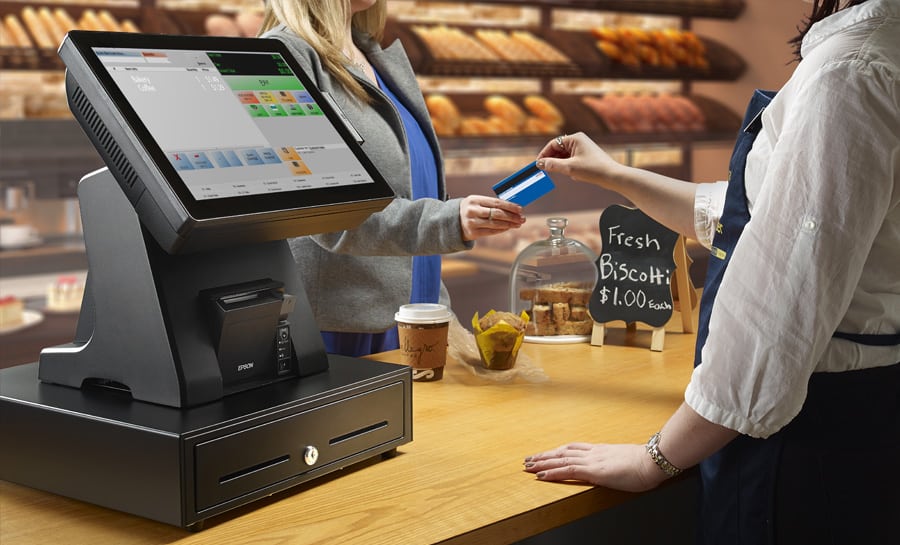
These days, brick-and-mortar businesses require a point-of-sale (POS) system. POS systems are replacing the traditional cash register in more and more businesses since it streamlines daily operations and, in some situations, can generate considerable revenue. Here are some important advantages of a POS system that can make things easy for any business.
From being valued at just under $10 billion in 2021, the POS industry is expected to increase at a healthy rate to $26.61 billion by 2028.
Understanding a POS system’s role is helpful, but it’s crucial to understand the advantages it may provide for your company and why it’s better than a traditional cash register.
This article will take a deeper look at the benefits of a POS system and why it’s better than a traditional cash register.
Advantages of a POS system over a Traditional Cash Register?
When it comes to the advantages of a POS system over a traditional system of cash registers, the POS system has an obvious edge.
In a traditional system, most retail establishments perform manual tasks, such as using cash registers or recording all transactions on paper. That manual approach risks becoming a mess and interrupting data flow. Moreover, it will require you to put in more effort and time.
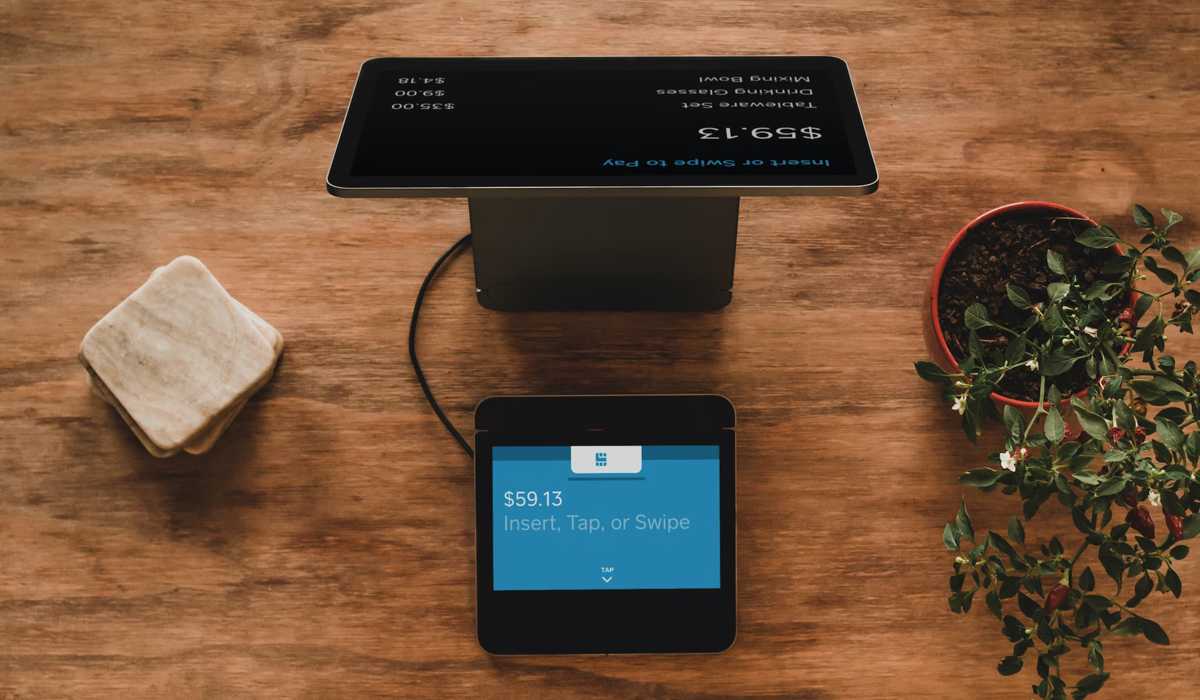
A POS system, on the other hand, automatically collects all of your sales data, including customers, inventories, and schedules. Consequently, customers and businesses typically find the sales process more convenient. Thus, one of the main advantages of POS is time savings.
Here are some more arguments in favour of adopting a POS system over a traditional cash register.
POS System Provides Faster Service
You can now use a POS system and other devices like a card swiper, printer, and barcode scanner to expedite the entire checkout process rather than manually do everything. Together, they function smoothly and precisely. These functions aid in lowering the time your staff spends on each transaction.
Simplify Accounting Process
Using old-fashioned cash registers, accountants must sort through dozens of receipts. However, to make later verification easier, POS will create and record these transactions in the system.
POS Has an Inventory Management System
You may quickly monitor the product quantities directly on the POS screen rather than physically inspecting the stocks in stores. Additionally, POS may keep track of the best-selling items, and you’ll know when to restock them when the supply runs out.
Provide Real-time Inventory Update
POS performs this function, although cash registers do not. It will get rid of the expensive hand count and the lengthy procedures.
Retailers Can Easily Look Up Transaction History
Staff members can quickly get specific information from POS if they want to know how much they sold the previous day. The same information can be found using a traditional register, but it requires hours of tedious work.
Advantages of Procuring a POS System for Your Business
Many retail businesses are considering using POS systems for their benefit. Significant numbers of people are looking for ways to grasp it better. Additionally, this software has a lot to offer the retail industry. Here are some significant advantages of POS systems for businesses.
Easy Invoice Management
In a business, managing several types of invoices requires the ability to identify them easily. You can keep track of and organize your invoices with point-of-sale software. Depending on the software, you can find invoices for sales, repairs, purchases, consignments, and rentals.
For your accounting operations, simple invoice management is crucial. The invoice includes crucial information for the customer, like the number of items sold, the transaction value, and the item description. It is proof that you did sell a product or a service.
If done manually, carrying out this follow-up would be difficult. In this way, the point of sale facilitates much quicker sales than done manually by enabling the issuance of invoices, the recording of purchase information, and data storage.
Improve Customer Service Experience
Instead of focusing just on logistical and backend requirements, businesses must also think about the customer experience. In a Talkdesk survey, nearly 60% of consumers said they expected better customer service than before the COVID-19 outbreak. More than half of Americans are also prepared to pay more for superior customer service. With an advanced POS, there are several ways you can improve your customer service process:
- Allows various payment methods: By providing e-wallet and PayPal payment options, merchants may speed up customer transaction times. You can avoid the awkward situation where clients have to search through their wallets for the right card.
- Saves the preferred payment method: This approach works quite well for small, service-based businesses with close customer relationships. When you save a returning customer’s preferred payment method in your POS, they don’t even need to pull out their wallets.
- Self-checkout: Although not everyone prefers self-checkouts, some people value DIY’s simplicity and speed. Self-checkouts can also reduce your labor expenses.
- Easy item lookup: Customers value receiving prompt responses when they have questions about the cost, whereabouts, or availability of a particular item. With a few clicks or a simple barcode scan, your sales staff and cashiers may access this data using POS systems.
- Cross-selling features: With cross-selling features, you can also offer similar products using your POS. Offering products that are connected to the item the customer is purchasing is made possible by cross-selling features. For instance, if a customer purchases a fishing rod, your salesperson can also suggest selling him lures. Customers may be more pleased with their purchases as a result.
Better Customer Order
You’ll probably place a new order if the item is popular with your customers. There’s a chance that one of your customers will want something that you don’t carry in stock. So you may enter the order in your POS and then keep the item after receiving it.
The software notifies your staff to remind them to get in touch with the customer after you’ve received the product. This function helps the store record and track customer orders. Better customer satisfaction can be ensured as a result, and it may occasionally provide extra revenue.
Personal Engagement with Customers
Direct customer interaction goes hand in hand with excellent customer service. With your POS data, you can create targeted marketing campaigns to communicate with potential customers more engagingly. 60% of shoppers polled in 2021 stated they were likelier to make further purchases after a personalized experience. These personalization initiatives are easier to manage and more impactful with a POS.
The best POS systems allow for more personalization than just adding the recipient’s name to emails; for example, when offering sales, discounts, or other forms of marketing, they can consider the customer’s past purchases.
Easily Add Customers to Your Loyalty Program
Your loyalty program encourages existing customers to promote your brand through repeat purchases and word-of-mouth advertising. A frequently cited statistic states that participants in loyalty programs typically spend 20% more than non-participants.
An effective loyalty program must be easy to join and use. With a user-friendly interface, POS systems make connecting clients to your loyalty program simple and allow them to receive rewards as they pay.
Better Control Over Purchasing and Supplier Order
Investing in equipment for your company is essential, which is why a POS system is required to handle your purchases from suppliers effectively. It enables you to monitor all of your placed orders.
Some POS programs feature an open API enabling you to communicate directly with your supplier. You may check all your invoices in your POS system when you place orders from your point of sale. This grants you control over purchases and allows you to monitor the products you order from suppliers.
Furthermore, an invoice that details your purchases will be given to you when you buy equipment from a supplier. The invoice covers purchased items, their price, number, description, and more.
A POS system also lets you plan your future purchases and the bare minimum of items you need for your business, making it easier to track your purchases and ensuring that you have the right amount of items in your store to reduce losses.
Better Employee Management
Without concrete data, employee time optimization might become challenging. Using a POS system may make it easier to keep track of your employees.
Using a POS system, you can view the sales by employee, the hours they worked, and the sales per time slot. Using this data, you can determine which employees are working well and which are not and when the business is busiest.
Furthermore, the use of POS software should be taught to your staff through training. When choosing POS software, it’s critical to check whether training is offered. Some companies provide training for you and your staff, while others do not.
Provide Real-time, Accurate Data
Key performance indicators (KPIs) can be monitored manually using spreadsheets and shared drives, but this can soon become time-consuming and cumbersome and divert your attention from other important business issues. A POS allows you to focus on more important operations like meeting customer needs, merchandising your sales floor, or creating new menu items by simply automating most of these tracking.
You’ll Encounter Fewer Errors
Your business operations can be more error-free with a POS system. You can get help from the system with various features to automatically decrease mistakes.
Scanning your items, for instance, makes counting your items easier when using inventory management. When a sale occurs, the system automatically modifies your inventory. You won’t have to update your products manually anymore, which can significantly lower the likelihood of accounting errors when you enter your inventory into the system.
On top of that, the point of sale automatically generates sales, accounting, and inventory reports, minimizing errors because you don’t have to prepare reports on your own.
Smart Inventory Management
As stated earlier, your inventory list is kept up to date by a POS system. By simply scanning the items with the product’s amount and categories as you receive your inventory, the POS system assists in adding the available products to the catalog. Once an item is sold, it is immediately removed from the catalog.
The entire procedure lets you determine how many items have been sold and how many are still available for the next day. At some point, it will be simple to take the required steps to enhance your inventory management.
Better Organization in Your Company
Your business might become more organized if you use a POS system. Being well-organized could increase your company’s productivity, as well as the ease with which you interact with customers and other businesses.
Your business needs to use one platform to carry out its operations because these features are integrated into the same piece of software. This includes managing your sales, inventory, clients, and vendors. In this aspect, POS systems provide a wealth of features. A system like this makes tracking your business activities and progress easier over each quarter. Setting your next company goals will be simpler if you are aware of your evolution.
Secure Your Data from Unknown Intrusion
A company’s data security is of utmost importance. Only those employees who have been permitted to view your data should have access to it. Your data is better protected against unauthorized intrusion with a POS system.
Almost all systems allow for two-factor user authentication. By doing this, unauthorized users’ access to your system is decreased. Furthermore, the administrator can easily permit or deny users access.
Improve Your Company’s Image
The clients’ image of your company may improve if you set up a POS system in your establishment.
The amount of time spent waiting is reduced when you have a POS system, and transactions can be completed quickly. These benefits can help you establish a firm foundation of trust, a solid reputation, and tangible credibility for your business.
Your customers may refer your business to their family and friends, which could lead to future business.
Bottom Line
It is a very wise choice to use a POS system for your company. However, if you don’t know why you need a POS for your company, you won’t be able to reap the full benefits that a comprehensive system can provide.
Once you know the advantages POS systems can bring to your company’s operations, you can start putting them into practice while closely monitoring how they are impacting your bottom line. Several POS systems are available today for a variety of business types. Due to the wide adoption of POS systems, there are a variety of options at competitive price points for your company to select.