


Uber is now letting riders pay with cash, but only its most seasoned, top-rated drivers will get the green light to accept these trips. As Uber tests cash trips, when a verified rider books through the app, they’ll receive a clear cash notification signaling that this option is available.
This move comes as millions of Americans remain shut out of traditional banking. In 2023, nearly 19 million U.S. households — about 14% — were underbanked, according to a Federal Deposit Insurance Corporation report. For many, cash isn’t just a preference — it’s a necessity.
Key Takeaways
- Uber launched cash payments in select U.S. cities to serve underbanked and unbanked riders—roughly 14% of U.S. households—who don’t have access to traditional banking or digital payment methods.
- Originally tested in Cincinnati and San Antonio, the pilot was expanded in April 2025 to include Dallas, Orlando, and Fort Myers, signaling strong demand and early success.
- Riders must complete identity verification, and only experienced, highly rated drivers can accept cash. Uber has restricted cash transactions between 11 pm and 6 am to reduce safety risks.
- Beyond inclusion, Uber’s cash rollout supports its competitive positioning in markets where cash remains dominant, like India and parts of the UK, helping it regain market share from local players.
Uber Tests Cash Trips in U.S. Cities to Serve Riders Without Bank Access
In just over a decade, Uber has reshaped urban mobility by pioneering a cashless, app-driven ride-hailing model. Yet, this digital-first approach has inadvertently excluded millions of Americans who lack access to credit cards or bank accounts. To bridge this divide, Uber launched “cash trips” in March 2025, initially in Cincinnati and San Antonio, and has now expanded the pilot to five U.S. cities. This move underscores Uber’s commitment to making transportation accessible to everyone, regardless of payment preferences or financial inclusion status.
An estimated 19 million U.S. households—around 14%—were underbanked in 2023, relying heavily on cash for everyday transactions, according to the Federal Deposit Insurance Corporation. Meanwhile, Uber reports that roughly 15% of American households prefer or need alternatives to digital payments. By integrating cash payments, Uber aims to eliminate a key barrier to mobility for this significant segment, offering a lifeline to those traditionally underserved by fintech innovations.
An Uber spokesperson said the company believes transportation should open doors for everyone. But they recognize a simple truth: not everyone has a bank account or credit card, and many still rely on cash. That’s why Uber is piloting a new cash payment option, aiming to make rides more accessible for all while creating better earning opportunities for drivers.
What began on March 11, 2025, as a limited experiment in Cincinnati and San Antonio has rapidly evolved. On April 23, Uber tripled the scope of its cash-based pilot, adding Dallas, Orlando, and Fort Myers, Florida, to the list of participating markets. This expansion reflects strong early interest from both riders and drivers and signals Uber’s resolve to test the waters in diverse urban environments before committing to a nationwide rollout.
Cash trips mimic standard Uber rides but with key adjustments. Riders must first complete a verification process, including ID checks and a selfie, to qualify for cash payments. Once verified, the app flags cash—based trips, and drivers know in advance that the fare will be collected in physical currency. Drivers tap “Collect Payment” at trip end and enter the exact amount received, and Uber handles any discrepancies by crediting overpayments or debiting underpayments from the rider’s account.
Uber’s cash feature is opt-in for drivers and restricted to “experienced, highly rated” partners to mitigate risks. Drivers can also opt out entirely through their app preferences if they prefer to remain cashless. To address safety concerns, Uber recommends secure storage of collected cash, frequent deposits, and use of in-app safety tools, such as “Record My Ride” and 24/7 incident reporting. These measures aim to balance earning opportunities with driver well-being.
For underbanked and unbanked riders, cash trips dismantle a critical barrier to app-based mobility. No longer constrained by the absence of credit cards, users can access reliable transportation at the same speed and convenience as digital payments. Uber’s policy of crediting any overpaid amount to the rider’s Uber Cash balance and managing shortfalls directly through the app ensures financial accountability without leaving either party out of pocket.
Uber’s cash experiment is far from its first. The company accepts cash in markets such as Brazil and piloted cash payments in Hyderabad, India, back in 2015 to challenge local leader Ola, which then commanded roughly 80% of India’s organized cab market. More recently, Uber extended cash payments across most UK cities—excluding London—after successful trials in Birmingham, Leicester, Nottingham, and Stoke, aligning its UK operations with international practice.
In the UK, a Treasury Committee report stopped short of mandating cash acceptance but labeled the shift to card-only services a “wake-up call” for policymakers. Cash campaigner Ron Delnevo of the Payment Choice Alliance praised Uber’s move as evidence they “now believe in the future of cash in the UK”. The report also highlighted vulnerable groups, such as survivors of domestic abuse, who rely on cash to avoid digital tracking, a dependence described as “life and death” by Sam Smethers of Surviving Economic Abuse.
Handling cash introduces new operational complexities. Drivers worry about personal security when carrying notes and coins, and Uber prohibits cash transactions between 11 pm and 6 am to further reduce risk. Riders must be verified, and drivers do not provide change—overages are credited electronically. These constraints, along with the need to safeguard cash, may limit adoption rates among both drivers and passengers until trust is firmly established.
Uber’s cash rollout also represents a strategic counter to entrenched local competitors. In India, players like Ola built their dominance on cash payments long before digital wallets gained traction, capturing roughly 80% of ride-hailing volume in 2025. By offering cash trips, Uber hopes to win back market share in regions where digital adoption lags and secure its position in emerging economies.
Uber has yet to disclose how long the U.S. pilot will run or when additional cities might gain access to cash trips. The company emphasizes that it is “carefully monitoring how it’s going and gathering feedback from riders and drivers” before deciding on a broader deployment. Early indicators from rider satisfaction and driver earnings will likely shape whether cash becomes a permanent fixture of Uber’s payment options portfolio.
About Uber
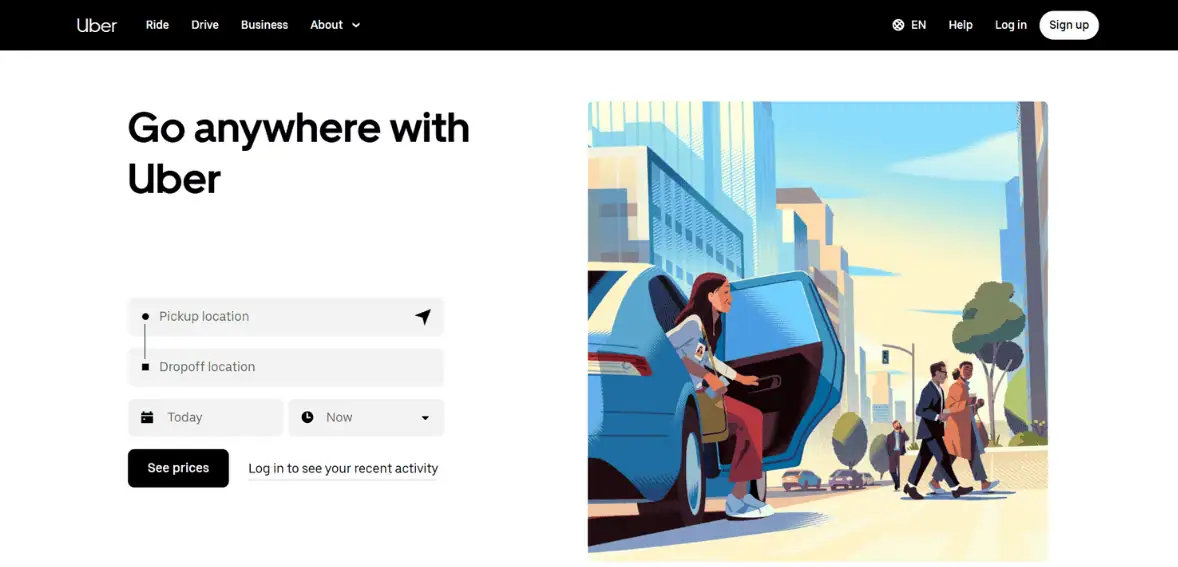
Uber Technologies, Inc., launched in March 2009 by Garrett Camp and Travis Kalanick, has grown into a global powerhouse in transportation and mobility. Headquartered in San Francisco, this publicly traded company now operates across 70 countries and 10,500 cities, linking more than 150 million active users each month with a network of 6 million drivers and couriers. From ride-hailing and food delivery to package drop-offs and freight logistics, Uber handles an average of 28 million trips every single day — and has completed over 47 billion trips since its service debut in 2010.
Following its initial public offering on May 10, 2019, on the New York Stock Exchange under the ticker UBER, the company has pursued growth and profitability, reporting US $43.98 billion in revenue, US $2.799 billion in operating income, and US $9.856 billion in net income for the 2024 fiscal year, with US $51.24 billion in assets, US $21.56 billion in equity, and 31,100 employees worldwide. In addition to its core ride-hailing service, Uber’s platform supports on-demand food delivery, courier services, and freight transport, and the company has committed to becoming a fully electric, zero-emission platform by 2040 as part of its long-term sustainability goals.
Conclusion
By reincorporating cash—the century-old bedrock of commerce—into its high-tech platform, Uber underscores a powerful lesson: true mobility requires inclusivity of all payment methods. As the cash trips pilot unfolds, it offers a compelling model for addressing digital inequality and expanding access to millions who have been sidelined by purely cashless ecosystems.
Whether this experiment blossoms into a global standard remains to be seen, but its potential to reshape the future of urban transportation is undeniable.