



FIS Debuts ‘Quantum Cloud’ Edition of Treasury Platform
Posted: June 02, 2025 | Updated:
FIS Unleashes Quantum Cloud Edition: A Game-Changer for CFOs Battling Market Volatility
Global fintech leader FIS has unveiled its cutting-edge treasury solution – Treasury and Risk Manager: Quantum Cloud Edition – purpose-built to empower CFOs and treasurers with unmatched control in an era of relentless financial turbulence.
This next-generation, cloud-native platform redefines enterprise treasury by delivering real-time cash visibility, scalable transaction processing, and seamless global connectivity. Designed for the complexities of today’s financial landscape, it fuels faster, smarter decisions, boosts agility in the face of risk, and accelerates money movement at enterprise scale.
With Quantum Cloud Edition, FIS isn’t just enhancing treasury operations – it’s setting a new standard for how finance leaders navigate uncertainty with confidence and precision.
Key Takeaways
- Quantum Cloud Edition is a cloud-native overhaul of FIS’s legacy treasury platform, rebuilt using microservices and containerized architecture. It’s designed to address common challenges CFOs and treasurers face, such as the need for real-time data, faster decision-making, and better risk control amid rising market volatility.
- The platform enables real-time cash and risk insights by connecting directly with ERP systems, banks, and market data providers through APIs. It dynamically scales computing resources to handle transaction spikes—supporting tens of millions of transactions per day—while reducing delays and manual reconciliation.
- Compared to traditional systems, implementations are 30–40% faster due to preconfigured environments, automation, and ERP integration kits. The subscription model reduces capital expenses, with pricing based on transaction volumes or user roles, making it more adaptable for both growing and mature organizations.
- Security and governance are embedded throughout the platform, with MFA, encryption, role-based access, and built-in compliance for standards like IFRS 9, ASC 815, GDPR, and SOC 2. FIS is also planning future enhancements, including AI for cash forecasting and fraud detection, as well as tools for ESG reporting and blockchain-based settlement.
Quantum Cloud Edition Introduces Scalable, Real-Time Tools for Cash, Risk, and Compliance Management
On April 29, 2025, FIS® (NYSE: FIS) announced the launch of the “Quantum Cloud” edition of its Treasury and Risk Manager platform. Known as Treasury and Risk Manager – Quantum Cloud Edition, this new solution is built in the cloud to meet the changing requirements of CFOs and corporate treasurers who need timely data, strong risk oversight, and rapid decision-making capabilities.
In recent years, many companies have moved their systems to cloud-based platforms to gain flexibility and scale operations more efficiently. A late-2024 EY survey found that while 65% of firms invested in cloud technologies, only 32% felt they fully achieved their goals, revealing a common struggle to realize cloud benefits. This is especially true for treasury teams, which rely on accurate data, fast transaction processing, and detailed risk analysis.
Legacy on-premises systems often slow down when transaction volumes spike or when new integrations are needed. As the market changes, fluctuating capital costs and regulatory demands make it harder for treasurers to stay on top of their strategies without a modern platform.
FIS has a long track record in treasury and risk management under its Quantum brand. Over 1,000 organizations worldwide have used the classic Quantum platform to manage cash, liquidity, risk, debt, investments, hedge accounting, and compliance. To keep pace with customer needs for cloud-first solutions, FIS re-engineered Quantum rather than just moving the old system to the cloud. The new version uses microservices, containerization, and automation to support faster updates and better performance.
At the heart of Quantum Cloud Edition is a microservices architecture that runs on a public cloud. This design lets the platform increase or decrease computing power and storage as transaction volumes change. During heavy workloads, such as month-end closings or large cash movements, additional resources are allocated automatically and then reduced when demand falls, keeping costs in check.
Each major function, like cash management or risk analytics, is packaged in its own container, allowing independent updates or rollbacks. A Kubernetes-based system manages these containers, checking their health and redistributing work if an instance fails. Automated testing and deployment pipelines cut release cycles to weeks or days instead of months.

Handling higher transaction volumes is a key focus. Quantum Cloud Edition can process tens of millions of transactions per day without slowing down. This is possible because workloads are split across multiple servers in the cloud, rather than relying on a single data center. An API-first approach makes it easier to connect with ERP systems like SAP and Oracle, bank APIs and SWIFT networks, and market data providers such as Bloomberg and Reuters. These APIs enable real-time data exchange – for instance, general ledger balances flow directly into the treasury system, and market rates update risk calculations every few minutes.
The Liquidity Hub component centralizes cash information in a single dashboard. It gathers data from ERPs, bank APIs, and treasury workstations so treasurers can view intraday cash positions across legal entities, currencies, and regions. Streaming technology updates cash balances as often as every five minutes, ensuring that teams see current liquidity, which is vital when markets are volatile or large payments are due.
An automated matching process reconciles bank statements, ERP entries, and internal records, flagging any mismatches for review. Rules-based workflows help teams quickly resolve exceptions, cutting down manual work and reducing the risk of errors.
Risk analytics in Quantum Cloud Edition provide ongoing calculations of metrics like Value at Risk (VaR), Earnings at Risk (EaR), and Cash Flow at Risk (CFaR) as market data moves. Users can set up stress scenarios – such as interest rate spikes or currency changes – to see how these events might affect profit and loss or the balance sheet.
Hedge accounting is automated for IFRS 9 and ASC 815 (US GAAP), with prebuilt templates guiding users through risk designation, hedge ratios, and effectiveness tests. This simplifies compliance tasks and audit readiness. Built-in controls monitor internal policy limits – like counterparty credit exposure or notional caps – and external regulations, sending alerts when positions approach set limits so treasury teams can act before problems grow.
For debt and investment management, Quantum Cloud Edition handles loan origination, servicing, and amortization, whether for revolving credit facilities or bond issuances. Interest accruals, covenant compliance, and schedule updates occur automatically. On the investment side, the system covers short-term and long-term instruments – money market funds, government bonds, corporate notes – providing real-time mark-to-market valuations that feed into cash forecasts. Automated accruals and reconciliation processes calculate interest and update the general ledger without manual intervention. Daily mark-to-market routines ensure investment values remain accurate with current market rates.
Security and governance are built in at multiple levels. Role-based access controls let organizations assign permissions by role – such as Treasury Analyst, Risk Manager, or CFO, and integrate multi-factor authentication (MFA) and single sign-on (SSO) through identity providers like Azure AD or Okta. Data is encrypted both in transit and at rest using AES-256 standards. The cloud setup spans multiple availability zones to keep systems running in case of a hardware failure, and disaster recovery plans aim for recovery time objectives under 24 hours. Regular automated upgrades and patches use blue-green deployment methods, allowing new features and fixes to roll out with minimal disruption and quick rollback if needed.
This design offers concrete benefits for CFOs and treasury teams. By gathering data from various sources into one cloud platform, users gain a clear view of cash and risk exposures in real time. This reduces the delays and blind spots that can occur when relying on monthly or weekly reports, letting teams make informed decisions faster. Companies experiencing rapid growth, acquisitions, or seasonal transaction spikes no longer need to plan for excess capacity months ahead. The cloud platform adjusts automatically, ensuring performance holds steady no matter the workload. Shifting to a pay-as-you-go model also cuts down on fixed IT costs, aligning expenses with actual usage.
Historically, rolling out a new treasury system could take nine to eighteen months, with on-premises hardware orders, software installations, and complex integrations. FIS reports that Quantum Cloud Edition implementations can be 30–40% faster, thanks to preconfigured cloud environments, automated ERP connectors, and guided onboarding wizards.
This means organizations start seeing better cash visibility and tighter risk controls sooner. Moving from capital-intensive data centers to subscription-based cloud costs makes budgeting more predictable. Licensing fees adjust to transaction volume or user count, and hosting charges reflect actual consumption. Bundling software, infrastructure, and support into one subscription simplifies budgeting and avoids surprise bills.
Public cloud providers often invest heavily in security measures that exceed what most companies can manage alone. Quantum Cloud Edition takes advantage of dedicated security operations centers (SOCs), ongoing vulnerability scans, penetration tests, and compliance checks for standards like GDPR, SOC 2, and ISO 27001. This shared security model relieves organizations of maintaining siloed controls and reduces the risk of data breaches.
During the announcement, JP James, Head of Treasury & Risk Management at FIS, commented that CFOs and treasury teams face a mix of challenges – rising capital costs, market swings, and expanding duties. He noted that the modern treasury platform must help users process company data, understand financial risks, and shape effective strategies. With this new offering, he said, FIS aims to give companies tools that help them steer through changing conditions and support growth.
To build Quantum Cloud Edition, FIS worked with major cloud providers such as AWS, Azure, and Google Cloud. Each deployment comes with a pre-built virtual private cloud that meets security requirements and identity and access management integration for centralized authentication. Managed database services optimized for high-performance workloads ensure that transactional and analytical tasks run smoothly. These partnerships help reduce setup errors and ensure compliance with data residency rules in different regions.
The platform’s data structure uses both relational and NoSQL databases to balance transactional reliability with speed. A transactional ledger database handles cash transactions, journal entries, and audit records with full compliance. Time-series databases store high-frequency market feeds and intraday cash balances, while document stores keep unstructured data like policy documents and risk modeling settings.
Microservices communicate through RESTful APIs and an internal messaging system – using tools like Apache Kafka or AWS SNS/SQS – to run processes asynchronously. For example, when an ERP publishes new cash entries, an ingestion service processes them, sends events to the message bus, and triggers workflows for cash forecasting or exception handling without delay.
To maintain uptime, the platform replicates services across different availability zones. If one zone has an outage, traffic shifts automatically to other healthy instances. For customers with strict recovery goals, cross-region data replication keeps a near-real-time copy of critical information in a separate location. Automated failover checks monitor service health, and if a primary instance fails, backup instances take over, preventing a single point of failure.
FIS also offers integration kits to help companies connect existing systems quickly. Prepackaged connectors for ERPs like SAP and Oracle, sample API libraries in Java, .NET, and Python, and configuration templates for common treasury tasks – such as cash concentration, forex netting, or debt issuance – reduce custom development needs and cut implementation risks.
Typical implementation follows four phases. First, a discovery and design phase lasting four to six weeks involves stakeholders from treasury, finance, IT, and risk to outline requirements and finalize the solution setup. Next, configuration and integration take about eight to twelve weeks, where core modules are set up, data connectors are configured, and workflows are tested.
User acceptance testing and training happen over four to six weeks, during which end-to-end functionality is verified and treasury staff learn the new processes. Finally, a two-to-four-week go-live period with hypercare support addresses any early issues. Overall, the timeline is 14–20 weeks, reflecting a 30–40% speed improvement compared to on-premises projects.
Pricing is designed to suit different company sizes and needs. License tiers are based on transaction volumes – bands cover up to one million, one to five million, five to ten million, and over ten million transactions annually. User-based licenses are available for those who prefer per-user fees, with roles like Analyst, Manager, or Administrator. Advanced modules – such as detailed liquidity planning, FOREX netting, or multi-entity consolidation – can be added on top of the core license. For hosting, most customers let FIS arrange cloud infrastructure, but some choose to deploy in their cloud accounts, paying only the software subscription.
Compared to providers that offer single-function tools, Quantum Cloud Edition covers a full range of treasury needs – cash and liquidity management, risk analytics, hedge accounting, debt and investment oversight, compliance reporting, and integrations with ERP, banking, and market data systems.
This integrated design cuts down on data silos and manual reconciliation, giving treasury teams a complete view of their positions and risks. FIS’s long history in the treasury space adds credibility, and its ongoing development of AI tools like FIS Treasury GPT and machine learning for anomaly detection shows a commitment to future innovation. Large organizations that need to handle very high transaction volumes benefit from FIS’s global cloud infrastructure and its ability to process tens of millions of transactions daily while preserving performance.
Several early adopter examples highlight the platform’s impact. A major European bank with ten million retail customers and two hundred thousand corporate clients switched from a legacy on-premises treasury system to Quantum Cloud Edition. Before the switch, the bank struggled with manual data uploads and lacked real-time integration with its SAP ERP.
After going live, the bank saw a 30% drop in the time spent on manual reconciliations, since bank API integrations and automated workflows took over. Treasury teams gained 24/7 visibility into cash positions across fifteen legal entities in ten currencies, helping them react more quickly when foreign exchange markets shifted. Risk teams could run new hedge scenarios twice as fast, speeding up management approvals.
A global manufacturing company operating in North America, Europe, and Asia faced difficulties consolidating cash forecasts for over fifty subsidiaries, each using different ERP setups. After implementing Quantum Cloud Edition, a central forecast model gathered data from five ERP systems, cutting forecast cycle time from ten days to three days. Built-in regulatory templates for IFRS 7 and local reports let the treasury team generate audit-ready documents in minutes instead of spending days assembling data. Shifting to cloud computing reduced the treasury IT budget by 20%, freeing funds for working capital improvements.
For CFOs and treasury teams dealing with fluctuating interest rates, supply chain issues, and geopolitical uncertainty, having real-time cash and risk insights becomes a key advantage. Quantum Cloud Edition helps users adjust quickly to market changes, start digital projects faster, and improve working capital management. Future updates are planned to add more AI and machine learning features – beyond FIS Treasury GPT – for cash flow predictions, fraud detection, and automated investment decisions.
FIS is also evaluating distributed ledger technologies for interbank settlements, trade finance, and intercompany reconciliations, which could cut settlement times and boost transparency. An expanded set of tools focused on environmental, social, and governance (ESG) factors – like ESG scoring, green bond tracking, and sustainability-linked loan support – will meet growing demand for sustainable finance.
With its shift to a cloud-native architecture, FIS aims to give clients a treasury platform that handles today’s needs, such as large-scale processing, real-time liquidity views, and compliance, while preparing for tomorrow’s advances in AI, blockchain, and ESG reporting. The Quantum Cloud Edition is set to expand that reach by offering a scalable, data-driven platform that helps treasury teams act on fresh information, improve efficiency, and manage risk more effectively.
About FIS
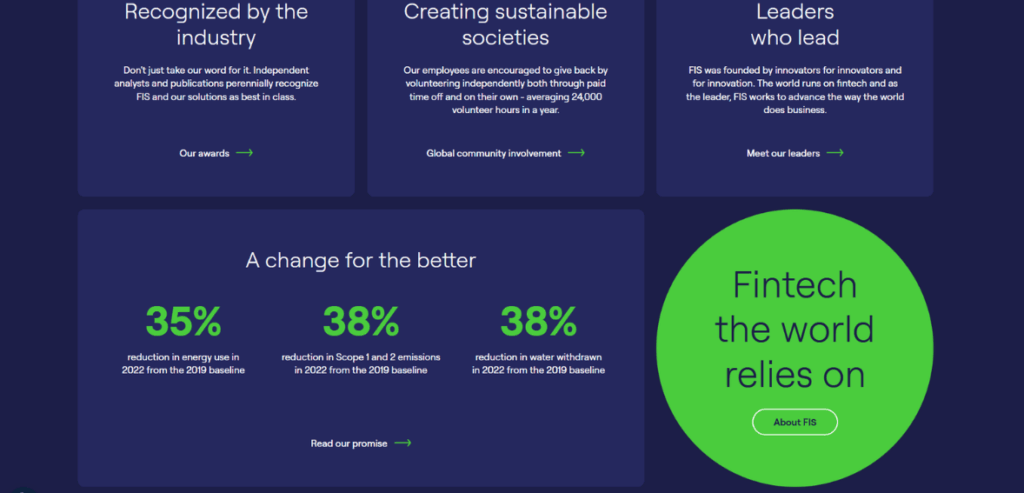
Fidelity National Information Services, Inc. (FIS) is a U.S.-based financial technology company founded in 1968 and headquartered in Jacksonville, Florida. It supports over 20,000 clients across banking, wealth management, and capital markets by processing about 75 billion transactions annually, moving close to $9 trillion. With a global workforce of around 50,000–55,000 employees, FIS provides secure, scalable technology for large financial institutions, mid-sized banks, and fintech startups.
The company operates through three main segments: Banking Solutions, Capital Market Solutions, and Corporate and Other. Its offerings include core banking systems, mobile banking platforms, payment processing, fraud management, trading systems, and retirement services. FIS has expanded through acquisitions such as SunGard and its former merger with Worldpay, helping clients update their technology, manage financial risks, and respond to changing market demands.
Conclusion
The launch of Treasury and Risk Manager – Quantum Cloud Edition marks a major step forward for FIS and its clients. By rebuilding its platform around cloud-native principles, FIS has created a solution that directly addresses the growing pressure on CFOs and treasurers to manage cash, risk, and compliance with more speed and precision. The platform’s scalable architecture, real-time data capabilities, and integrated toolset allow teams to respond faster to changing market conditions without overhauling their internal systems.
As organizations face tighter margins, regulatory shifts, and increasing operational complexity, the ability to gain instant insights and automate core processes is no longer optional. Quantum Cloud Edition is built with those realities in mind. Backed by FIS’s long-standing industry experience and partnerships with major cloud providers, it offers a practical and forward-looking foundation for enterprise treasury management, both for current needs and for what’s coming next.