



Selling Digital Products Online: A Beginner’s Guide
Posted: November 05, 2024 | Updated:
We interact with digital products every day without necessarily realizing it. Video games, audiobooks, online courses, and digital marketing tools are virtual goods available online. For artists, freelancers, and bloggers, selling digital products helps generate passive income. This comprehensive guide will walk you through the most popular digital products, platforms for selling them, and tips for launching your online business.
Global eCommerce sales are projected to hit $6.09 trillion in 2024, marking an 8.4% increase from the previous year, and are expected to rise to $7.06 trillion by 2026. This growth has made it simpler for retailers to transition from physical stores to online platforms. Merchants can now easily create websites, list their products online, handle payments, and expand their businesses from home. Digital transformation now extends beyond just the sales platform to the products themselves.
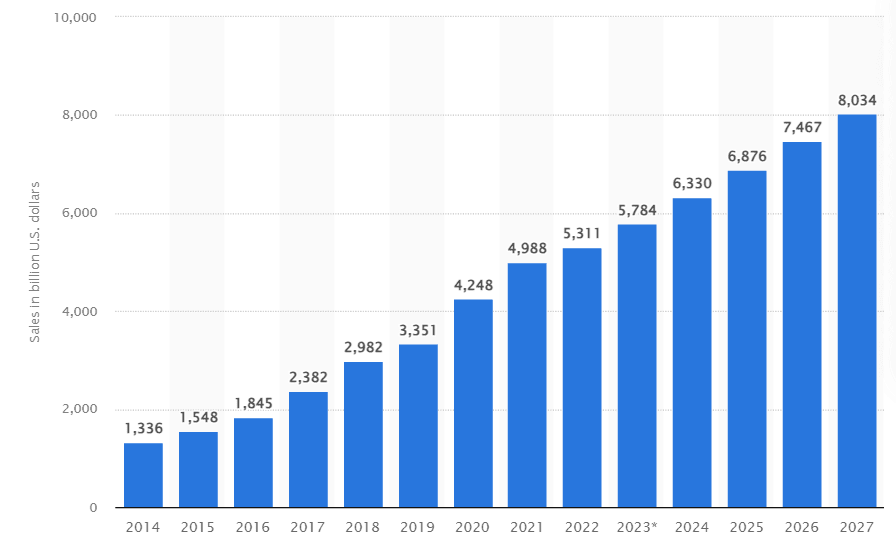
Source: Statista
What Are Digital Downloads?
Digital downloads are electronic files available over the Internet, eliminating the need for physical formats such as CDs, DVDs, or printed materials. These files include a wide array of types, such as eBooks, audio files (like MP3s), videos, software, and other forms of media. They are usually available for immediate access after purchase, allowing for quick use without the delay of shipping.
The primary advantage of digital downloads is convenience. They eliminate the need for shipping, offering a cost-effective and immediate way to access content. This method also lowers production and storage expenses, benefiting sellers and buyers. Plus, digital downloads eCommerce can be accessed on multiple devices, allowing users to use their purchases on various platforms, provided their accounts are verified on each.
How Does Digital Downloads Work?

Digital downloads function straightforwardly, enabling users to acquire files or content from online sources without physical media. Here’s a breakdown of the process:
- Choosing and Buying: Users select a digital product, such as an ebook, software, or media file, from an online store or digital goods marketplace. These platforms host a variety of content, from educational materials to entertainment and creative tools. While some content may be free, other items require payment through secure payment gateways that protect both the buyer and the seller.
- Downloading: After payment (or for free items immediately), users receive a unique link or are redirected to a download page. Clicking the link starts the file transfer from the server to the user’s device, with download speed varying based on file size and internet connection quality. Subscription services like Adobe Creative Cloud offer continuous access to regularly updated software or media.
- Saving and Using: Once downloaded, the file is stored on the user’s device and accessible anytime, even without internet access. DRM-protected content may have usage restrictions, limiting sharing or using it on other devices. Large files, like HD movies or comprehensive software packages, often require significant storage space, making cloud storage an attractive option for many.
- Security and Usage Rights: Some downloads are protected with encryption or digital rights management (DRM) to curb unauthorized sharing. These measures may restrict the number of devices that can access the file or impose other limitations to protect copyright, sometimes at the cost of user flexibility.
Selling Digital Products vs. Physical Products

Digital products and physical products have several distinct differences, primarily related to their form, distribution methods, and the customer experiences they provide.
Physical products are tangible items like books, clothing, or furniture that consumers can touch, see, and use directly. Before they reach consumers, these items undergo production, storage, and shipping processes, involving additional considerations such as packaging, inventory management, and shipping expenses.
The tangible nature of these products allows customers to interact directly with them, enhancing trust and perceptions of quality. However, selling physical goods can present challenges, including high shipping costs, storage expenses, and managing returns or exchanges, particularly when expanding internationally.
In contrast, digital products are intangible when sold online. These products are delivered online and downloaded directly to a consumer’s device, bypassing the need for physical shipping and allowing for immediate access. This delivery model is less costly and more scalable since digital items can be sold repeatedly without recurring production costs. Digital products also facilitate easier global distribution and are free from physical logistics.
Nonetheless, due to their intangible nature, digital products face issues such as the risk of piracy, potential compatibility problems with different devices, and difficulties in establishing their value. Additionally, marketing digital products often require significant effort to create perceived value, as they lack the direct sensory appeal of physical items.
Top Digital Products to Sell Online
1. Online Courses and Educational Products
Selling online courses and educational products is a highly effective digital business model driven by the increasing demand for remote learning and its inherent flexibility for creators and learners. The e-learning market is rapidly expanding, with projections suggesting it will grow to billions of dollars within the next decade, presenting a prime opportunity for experts to monetize their knowledge.
Platforms such as Coursera, Skillshare, and Thinkific enable anyone to create and share courses with a global audience, overcoming geographical barriers and broadening educational access worldwide. This model benefits creators by allowing them to manage their courses from any location and even automate large parts of their business to keep sales ongoing while they develop new content.
Starting an online course generally requires lower upfront costs than traditional businesses. Initial expenses might include a laptop, microphone, and course platform fees, with the main ongoing cost being the time invested in content creation. Online courses do not incur the same production costs as physical goods, meaning they can scale infinitely and yield high-profit margins. Creators can also enhance their offerings by providing webinars, downloadable tutorials, or podcasts, which can double as free content to attract an audience and build credibility before introducing paid products.
Additionally, creating courses provides personal satisfaction for those dedicated to sharing knowledge, allowing them to transform their expertise into a viable business. Creators can adjust pricing, bundle courses with other digital products like e-books, and tailor their business models to maximize revenue while enhancing their reputation as authorities.
2. Ebooks
Selling ebooks online is a profitable strategy for digital entrepreneurs due to their broad appeal, low costs, and easy access across various platforms and devices. Ebooks are popular with readers who want quick access to specialized knowledge or unique perspectives. This versatile format accommodates various subjects, from practical guides to niche interests and fiction.
Creating an ebook allows authors to compile expertise, stories, or instructional material that readers can use at their convenience. Several platforms, including Amazon Kindle, Gumroad, and direct-to-consumer websites, offer distinct benefits, enabling sellers to optimize earnings based on their choice of distribution. For example, selling through personal websites or platforms like Gumroad may lead to higher profit margins by avoiding the fees associated with major distributors. In contrast, platforms like Amazon provide extensive exposure to a worldwide audience. The choice of platform should align with the seller’s objectives—Amazon can deliver volume, while personal site sales might offer higher profit per transaction.
For an ebook to succeed, it must be well-presented, including professional cover design, proper formatting, and extras such as printable worksheets or video content. These elements can make an ebook stand out, mainly when similar content is free online. Establishing a unique selling proposition (USP) is crucial, as it identifies your ebook as a vital resource by highlighting your expertise or delving deeper into a topic than free materials. Offering bonuses like worksheets or videos can also attract buyers and increase the value, especially for educational or practical guides.
3. Digital Tools and Templates
Selling digital tools and templates online is profitable and appealing because they are versatile, have low overhead costs, and face high demand. These products are valuable for professionals, entrepreneurs, and creatives who look to save time and improve their projects. Products like plugins for media editors, graphic design templates, and business mobile apps are available for sellers targeting various industries.
Templates and tools offer solutions to common problems. For example, graphic design templates can make it easier to design brands or websites. At the same time, digital planners and media filters help users quickly personalize their visual content without needing advanced skills. Tools such as fonts, icons, and UX kits assist web designers in creating user-friendly interfaces efficiently. By providing customizable, ready-made assets, sellers meet the needs of busy professionals who require quality resources but may need more expertise or time to develop them independently.

4. Printable Digital Products
Printable digital products are attractive for online sellers because of their low production costs, straightforward distribution, and vast customization options. Creators can design items like planners, greeting cards, and educational materials that customers can easily download and print. This adaptability makes printable products suitable for various interests—from hobbyists and crafts enthusiasts to educators and children who enjoy coloring pages or activity sheets.
The advantage of printable products is scalability; a single digital file can be sold repeatedly without incurring extra production costs, allowing for high profit margins. These products also enable creators to connect with a global audience, as the only requirement for customers is access to a printer.
This accessibility is ideal for delivering products for children’s activities, business templates, and more. Additionally, by creating bundles or themed collections, sellers can improve the buying experience and prompt larger purchases. Customers often look for comprehensive, themed sets that fulfill specific needs or tastes, such as seasonal planners or party decoration kits.
5. Licensed Digital Content
Licensed digital content is an effective way for creators to earn passive income by allowing others to use their digital assets, such as stock photos, video clips, sound effects, and music. This business model creates a steady revenue stream as businesses and individual creatives purchase licenses to incorporate these assets into their projects, such as advertisements, media productions, or websites. Because high-quality, licensed content can maintain its popularity over time, creators can continue to earn revenue without needing to develop new assets frequently.
Creators can sell digital products online, such as licenses, through their own websites or through established marketplaces like Shutterstock or Adobe Stock. Selling directly allows creators more control over their offerings and the potential for higher profits, whereas the digital goods marketplace provides extensive exposure and handles the logistics of transactions.
These platforms accommodate various forms of content, from high-resolution images to videos, making them suitable for creatives targeting different niches. To protect their work, creators often implement measures like watermarks, password protection, or restricted download capabilities, which are essential for preserving the value of their content and preventing unauthorized use.
6. Music and Art
Digital products in the music and art sectors provide creators with several benefits—they are flexible, require no physical stock, and can adapt to various formats. Musicians have the opportunity to market original pieces, sound effects, and loops that can be utilized in projects by content creators, filmmakers, and marketers. They can also provide tools like sample packs and beat libraries to support budding musicians in accessing high-quality resources for their projects.
Visual artists can distribute their digital art in various formats, including wallpapers, printable art, and digital posters. This eliminates the need for physical inventory and enables them to connect with a worldwide audience without shipping costs. By showcasing their products, artists can attract customers seeking unique, downloadable items for home decor or mobile backgrounds. Digital platforms also allow artists to create and sell art bundles and themed collections, such as seasonal wallpapers or printable greeting cards, catering to diverse customer preferences. This versatility and low production cost make digital art a low-risk, scalable option.
7. Memberships
Memberships are a strategic digital product for creators aiming to consolidate their offerings and establish a steady revenue stream. By setting up a membership site, businesses and creators can provide access to an array of resources on a subscription basis, including online courses, coaching sessions, exclusive content, or a private community. This approach fosters continuous income and customer loyalty, as members often remain subscribed to benefit from ongoing resources and fresh content.
Furthermore, memberships allow creators to offer tiered services, such as exclusive webinars, discounts on digital products, or early access to new offerings. This structure gives members a feeling of exclusivity and personalized attention, which can enhance retention rates. Additionally, the adaptable nature of the membership model allows creators to expand their offerings or introduce new features gradually, avoiding the potential overload of individual purchases. For example, a fitness coach could include live training sessions, downloadable workout plans, and dietary guidance all within a single membership package.
A Step-by-Step Guide to Set Up and Start Selling Digital Products Online
1. Selecting and Developing a Digital Product for Sale
Consider the popular categories mentioned previously when choosing a digital product to market. You can develop your products or partner with existing brands through affiliate programs. Below are some guidelines and questions to help you develop your product ideas:
- Skills & Expertise: Assess any expertise, skills, or hobbies you possess that could be useful to others. You might offer beginner tutorials or templates if you excel at video editing.
- Related Products: If you already sell physical goods, consider digital products that complement them. For instance, a seller of fitness equipment might also offer digital workout guides.
- Building Community: Explore opportunities to connect with your customers. Hosting virtual cooking classes can engage your customers and add value if your business involves kitchen supplies.
- Leveraging Your Strengths: Draw on your talents. Photographers could sell unique stock photos, or edit presets. Similarly, designers can generate income by selling customizable templates for social media, websites, and productivity tools.
2. Validating Your Idea
Before you launch your product, you must confirm its market, saving you time and resources. Here are some methods to validate a product idea:
- Keyword Research: Tools like Google Keyword Planner and Trends can help you assess demand by showing the search volume and trends for relevant terms. High search volumes often indicate that there is market interest.
- Customer Feedback: Getting direct feedback from your target audience can provide valuable insights and confirm if there is genuine interest. This feedback allows you to refine your product based on actual needs rather than assumptions.
- Facebook Groups: There are groups for nearly every niche on Facebook, which can be a valuable resource for learning what potential customers are interested in.
- Industry Forums: Participating in forums related to your industry can help you understand what potential customers are looking for and what gaps you might fill.
- Google Trends: Use Google Trends to research your topics. Look for topics that have increased in interest over time, indicating a growing opportunity.
When considering selling digital goods, you can start on a small scale. Unlike physical products, which require significant initial investment in design, prototyping, and manufacturing, digital products have lower upfront costs.
If you plan to offer professional services, create a profile on platforms connecting service providers with clients. Although you might give up a percentage of your earnings, your initial costs and effort are reduced. These platforms provide a clear picture of the market and effective sales strategies. Customer reviews and referrals on these platforms can later support your website.
And if you’re writing a series of novels, consider launching them incrementally. Publishing the first book or even just a few chapters initially can help build an audience eager to see what happens next and likely to purchase subsequent releases.
3. Finding a Target Market
To define your target market, identify the key characteristics and needs of the group most likely to benefit from your product. Targeting everyone is ineffective; narrow your focus by segmenting your audience based on demographics (such as age, location, income), psychographics (like lifestyle and values), behaviors, and needs. This targeted approach allows you to customize your digital product to meet specific interests and challenges, enhancing your marketing effectiveness.
Begin by analyzing the value of your product and the problem it addresses. Consider questions such as, “How does this product simplify or enhance the lives of my customers?” For instance, if you provide online fitness courses, your target audience might include busy professionals or parents seeking convenient exercise options they can perform at home. Market research, customer surveys, and social media analysis can provide insights into customer behaviors and preferences. Additionally, examining what other companies offer can help you understand if similar audiences are already being catered to, allowing you to refine your strategy further.
4. Creating an Online Store
After defining your target audience and validating your product, the next step is to set up an online store. Choose an eCommerce platform such as Shopify, WooCommerce, or Etsy. These platforms provide templates that help you quickly establish a professional-looking site. Customize your store with visuals that reflect your brand, a concise message, and detailed product descriptions that demonstrate how your digital products fulfill the needs of your target market. Many platforms also offer integrated tools for managing customer interactions, payments, and order tracking, which streamline operations and enhance the customer experience.
To increase sales, ensure your website has user-friendly navigation, appealing visuals, and clear calls to action. Additionally, tools like Google Analytics can monitor customer activities on your site, offering insights that allow you to continually adjust and improve your offerings based on actual user data.
5. Increasing and Driving Traffic
To boost traffic to your online store, consider several effective strategies tailored to different aspects of digital marketing. Here is a breakdown of proven methods to enhance visibility and draw customers to your site:
- Search Engine Optimization (SEO):
Enhance your website by incorporating keywords relevant to your products using tools such as Google’s Keyword Planner or AIOSEO. This involves optimizing product descriptions, adding alt text to images, enhancing site loading speeds, and creating internal links. Additionally, producing high-quality content like blog posts or guides can improve your search engine rankings and drive organic traffic.
- Influencer and Blogger Outreach:
Collaborating with influencers, particularly those in your niche, can significantly increase brand exposure. Influencers provide genuine endorsements that resonate with their followers, boosting site traffic. Tools like Upfluence can help you connect with influencers whose audiences match your target demographic. Given the trust many consumers place in influencer recommendations, this method is highly effective for enhancing brand visibility.
- Affiliate Programs:
This approach allows other businesses or individuals to promote your products for a commission on each sale. Setting up an affiliate program with dedicated landing pages and tracking links motivates affiliates to promote your brand extensively, potentially increasing both traffic and sales.
- Lead Magnets:
To grow your audience, offer a free digital product, such as an eBook, guide, or discount, in exchange for email addresses. This strategy captures leads, allowing you to engage them later with promotions or news. Employing pop-ups, exit-intent popups, or embedded forms on your site are effective ways to showcase these offers, while email marketing can be used to nurture these leads.
- Email Marketing:
Utilize an email list to keep customers updated about new products, promotions, or events. Personalize emails based on customer behavior and segment them to target different demographics, enhancing engagement and conversion rates. Email marketing is highly effective, providing a substantial return on investment and helping maintain traffic and promote repeat visits.
- Content Marketing and Blogging:
Creating valuable content that addresses common questions or provides insights related to your products can establish credibility and drive consistent traffic. For example, informative blogs that extend beyond just selling a product, such as Medela’s blog for new parents, rank well in search results and draw in an engaged audience. This strategy not only drives traffic but also builds brand authority.
- Social Media Engagement:
Platforms like Instagram and Pinterest are excellent for showcasing product images and updates. Employ social media ads to reach a wider audience and encourage user-generated content by inviting customers to share their experiences. Additionally, social media serves as a platform for direct engagement with your audience, promoting traffic through shareable and interactive content.
Choosing the Right Platform for Digital Goods

When selecting an ecommerce platform for digital goods, it’s essential to focus on specific needs to improve operations and enhance the customer experience. Here are key elements to consider:
- Digital Storage: Digital products, especially media files, require significant storage space. Platforms like BigCommerce offer unlimited bandwidth and support for large files, helping to avoid the costs and challenges of limited storage. On the other hand, WooCommerce requires self-hosting, which involves managing your storage hosting. This can be more complex but offers scalability. Choosing a platform with unlimited or high-capacity storage is crucial to maintaining space as your product catalog grows.
- Shopping Cart and Checkout Experience: A streamlined shopping cart is vital for maintaining sales, as complicated checkout processes often lead to high cart abandonment rates. Providing an easy, distraction-free checkout process with options such as guest checkout can boost sales. Platforms like SamCart focus on simplifying the checkout process to enhance conversion rates, and BigCommerce offers one-page checkouts that help keep customers engaged through the purchase process.
- Payment Integrations: Supporting various payment gateways is crucial for accommodating customer preferences, especially for international sales. Platforms like BigCommerce and Shopify offer a range of payment options, including PayPal and Amazon Pay, giving customers the flexibility to choose their preferred payment method. Features like PayPal One-Touch can streamline the checkout process for repeat purchases by eliminating the need to re-enter payment information.
- Transparent Pricing and No Hidden Fees: Many platforms impose additional charges for storage, plugins, or transaction processing, which can accumulate. BigCommerce, for instance, does not have hidden transaction fees, even when using third-party payment providers. Conversely, Shopify charges a fee when external payment processors are used, which might disadvantage sellers who want greater control over their expenses.
Selecting the appropriate platform requires a balance of these essential features with your specific business needs and budget considerations.
Sales and Marketing Tips for Selling Digital Products
Whether you are a new business owner or are adding online digital products to your existing inventory, consider these strategies:
- Develop a High-Quality, Unique Digital Product
To differentiate yourself in a market saturated with free content, develop a digital product that specifically addresses the needs of your audience. Spend time learning what your target customers find valuable and create a product that provides solutions they cannot easily find elsewhere. This might include in-depth information, specialized templates, or unique design elements that offer practical value beyond what is available for free.
- Use Lead Magnets to Build Your Email List
A free version or sample of your product, like an ebook preview or a basic template, can help you grow your email list. A well-crafted lead magnet can capture the interest of potential customers, establish trust, and enable you to upsell or retarget them with promotions over time. This strategy is effective within a content marketing funnel, where your free product introduces your brand and adds value before you offer the main product for sale.
- Launch an Affiliate Program
Affiliates can significantly increase traffic and sales. Identify influencers or bloggers within your niche who connect with your target audience. Set commission rates based on each affiliate’s reach and engagement, offering higher rates to top performers with larger audiences. Even smaller creators with strong engagement rates can be valuable partners. Cultivating relationships with affiliates can strengthen long-term promotional efforts.
- Use Preorders to Drive Early Interest
Launching pre-orders with a discounted early bird offer can generate excitement before a full launch, securing initial sales. You can create urgency and reward early adopters by offering staggered discounts, such as 50% off for the first group of buyers and smaller discounts for later groups. This strategy also helps validate your product and gather early testimonials.
- Provide a Money-Back Guarantee
Offering a money-back guarantee can enhance buyer confidence by minimizing perceived risk. While you might receive some refund requests, having this policy demonstrates your confidence in your product. This assurance can improve conversion rates by reassuring customers they won’t lose out if the product doesn’t meet their expectations.
- Optimize for SEO and Content Marketing
SEO is an effective tool for promoting digital products over the long term. Perform keyword research to identify terms that align with your audience’s needs, then develop blog posts, tutorials, or guides that provide value based on those keywords. This can attract consistent organic traffic and direct users to your sales page or lead magnet.
- Leverage Social Proof and Testimonials
Feature customer reviews, ratings, and success stories prominently on your website to establish trust. Social proof, like testimonials and case studies, can affirm the value of your product. For example, video testimonials or detailed case studies can be compelling, helping potential buyers see the benefits others have gained from your product.
- Run a Limited-Time Challenge or Host a Webinar
Hosting a free challenge or webinar can generate interest and give a preview of your product’s benefits. A seven-day challenge on a theme related to your product, such as productivity or wellness, can engage participants with your brand. At the challenge’s end, you can offer a particular discount or extra content, encouraging sales from participants.
- Price Strategically and Offer Bundles
Pricing digital products can be tricky as their intangible nature can lead customers to perceive them as less valuable. Research your competitors to inform your pricing, but highlight your product’s unique benefits and results. Offering bundles or different pricing levels can enhance perceived value and accommodate various budgets.
- Consider Paid Advertising
Paid advertising on platforms like Google, Facebook, or Pinterest can quickly drive targeted traffic, mainly when immediate visibility is essential for new products. Start with a modest budget and monitor the results closely, as optimizing ads over time can maximize profitability. Use advertising to complement other marketing efforts rather than relying on it as your primary strategy due to the costs involved in sustained campaigns.
Conclusion
Selling digital downloads eCommerce provides a unique opportunity for creators and entrepreneurs to reach a global audience with minimal upfront costs and logistics. With options ranging from eBooks and templates to music and online courses, there’s an avenue for nearly any skill or expertise. As the demand for digital goods continues to rise, understanding the essentials of developing, marketing, and distributing these products effectively is essential.
Focusing on high-quality content, a streamlined buying experience, and targeted marketing can help you build a sustainable digital business that leverages your knowledge and creativity. Whether starting small or expanding an existing brand, the digital product market holds strong potential for growth and profitability.