



The Ultimate Guide to Hotel Payment Processing
Posted: September 01, 2022 | Updated:
Even though payment processing may not seem exciting, it is an essential component of the overall financial health of your hotel, especially as your hotel expands and more credit card payments are processed.
It is critical to understand that payments are at the core of your business. The absence of funds will prevent you from maintaining your property, paying your staff, or buying that high-tech pencil sharpener you’ve always wanted to have in your office.
Hotel operators lose hundreds of dollars each year due to payment mismanagement. The process of getting money out of your account can be a bit difficult, intricate, and even tedious at times.. There is, however, no reason this should be the case.
This article aims to give you all the information about hotel payment processing you will need to be informed when deciding on a provider. If everything goes according to plan, you can achieve several simultaneous objectives, such as better efficiency, revenue, cost savings, and customer satisfaction.
What is Payment Processing?
When cash ran the world, it was as easy as getting a bundle from your wallet to pay for what you needed. In recent times, however, the credit card has been hailed as the most convenient way of paying for hotel transactions. This presents a new set of challenges and complex interactions for hoteliers and clients.
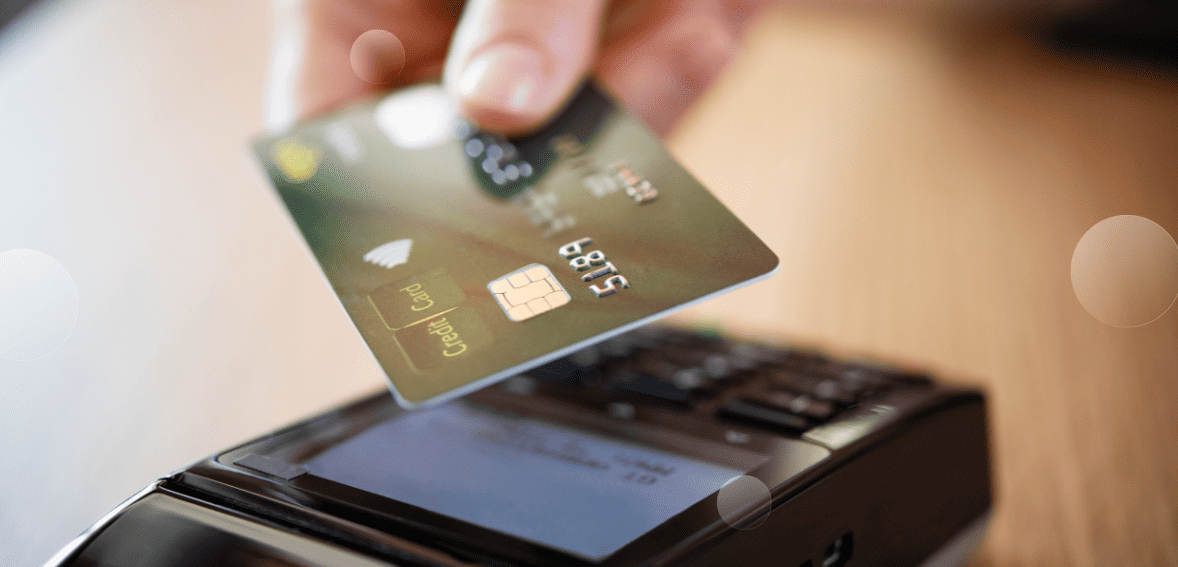
OTAs or online travel agencies like Agoda, Trip.com, Booking.com, and Hotwire accept only credit cards and virtual cards such as Apple Pay, Google Wallet, and PayPal. Nevertheless, with the evolution of booking processes, they’ve become more frictionless, and even payments on their properties have become contactless.
A hotel has a more difficult challenge when receiving money through a credit card transaction than receiving cash. Your bank or association that issued the guest’s credit card must be able to offer them a credit to cover the costs associated with making a payment. This is when they use your online booking engine or swipe their card at the front desk. There are several interchange fees associated with this type of credit. Instead, payment processors function as a go-between to collect the funds and ensure that the hotel can access the funds immediately.
Resulting from this, the hotel is charged a markup when the funds are transferred to the hotel. Hoteliers are often given chargeback protection as part of the services they receive in exchange for these fees.
Hotels are charged flat fees by the payment processors, percentage fees by the processors, or a combination of both fees because rates differ by the kinds of cards and the banks that issued the cards. You need to understand the price structure to ensure you pay a reasonable amount for credit card processing.
How does Hotel Payment Processing work?
Ideally, hotel payment processing is a straightforward process.

- A credit card is taken to pay for a guest’s accommodation.
- The front desk uses the card information via the computer system or taps and swipes the card on the device.
- The payment processor requests authorization for the charge by sending an electronic message to the customer’s bank via the credit card network.
- The bank responds by providing an authorization code or any other kind of payment security that it utilize. The front desk receptionist takes note of the code, and a receipt is printed out.
- During the process, the bank transfers payment into the hotel’s merchant account, which is later deposited into the merchant’s bank account. This process happens within a few minutes, and everything is satisfied.
While this sounds like a good and easy process, it doesn’t always go as smooth sailing. You must be ready for anything.
What factors are involved in Hotel Payment Processing?
Multiple parties are involved when working with credit card transactions, specifically hotel payment processes. They are:
- The issuing bank. Issuing credit cards and approving or declining transactions are the responsibilities of the guest’s bank, and the payment will be transferred directly to that bank as soon as the guest’s bank issues their credit card.
- The receiving bank. Upon receiving funds from the issuing bank, the hotel’s bank deposits them into the hotel’s account.
- The payment network. It is a point of contact between the issuing bank and the receiving bank. Several local and regional companies, such as AliPay and WeChat, compete in the Chinese market. Discover, American Express, MasterCard, and Visa are players in the market. Several e-wallets are gaining popularity today, including Apple Pay, Google Pay, and Microsoft Wallet.
- The payment processor. It provides the hardware and software necessary for payment processing and money transfer.
- The payment gateway. In the case of online payments, this business is responsible for gathering credit card information and securely transferring it to the payment processor for processing.
A payment processor, such as Stripe, Square, or PayPal, may serve as a payment gateway and a payment processor, for example. Cloudbeds, for instance, provides similar services to hotels and enables them to save money and eliminate the need to open a merchant account through technology firms such as Cloudbeds.
How do people pay for hotel accommodations?
There are multiple ways to pay for your hotel accommodations. They are:
Credit card
In the short term, a credit card is a plastic card provided by a financial institution, typically a bank. It allows a holder to borrow funds from the organization. Depending on the institution’s rules, cardholders must repay the money from their card with interest.
Debit card
When using a debit card, the consumer’s checking account is debited directly from the money spent. It is sometimes called a “check card” or a “bank card.” These cards can be used in several ways, such as for purchasing goods and services and obtaining cash from a financial institution or a merchant who accepts additional amounts to be added to your purchase.
Virtual payment
A virtual payment is a process of making a payment without the need to carry out a physical transaction. Mobile wallets or virtual cards are two of how they can be accessed. The concept of virtual credit cards is simply a temporary credit card number that a bank provides to enable individuals or companies to make online payments without disclosing the actual card numbers.
Cash
It is legal tender to trade products, debts, and services with cash, whether in the form of currency or coins. In addition to the asset values disclosed by a company, there may also be assets whose value can be quickly converted into cash.
Mobile wallet
An application called a mobile wallet, also known as a digital wallet, is an application that stores payment method information within a smartphone device. Examples include Apple Pay, Google Pay, and Samsung Pay. Users can make contactless payments by holding a mobile wallet over a payment terminal.
What are the leading payment transaction types?

Payment transactions are classified into three categories.
Card-present (CP) transactions
For this process to be successful, the consumer’s credit card, physical presence in the company, and credit card usage are crucial. The consumer must use their credit card, insert the chip, and enter their PIN, if necessary, to make the payment using their credit card.
Card-not-present (CNP) transactions
Clients can make an electronic or MOTO payment when they are not physically present at the firm, for example, when they make an online or MOTO payment. When a client gives the staff the card information, the team has to manually input the information or use saved information that has been previously recorded.
Contactless payments
When a client is present at the payment terminal but does not interact physically with the airport, then this will happen. When the consumer places their card, smartphone, or mobile wallet in front of the reader, they securely transmit and read encrypted information through the payment device.
Are there any ways that your hotel can make it easier for guests to pay online?
For hoteliers, navigating the hotel payments environment has been one of the most challenging aspects of their business since the dawn of the digital era.
A large part of this can be attributed to the fact that hotel payments disguise a highly complex and regulated system that encompasses the entire hotel distribution chain. This is due, in large part, to the point that online travel agents or booking engines, channel managers, property management systems, payment processors, payment gateways, and hotels are all involved in the process.
For a credit card payment to be completed, all parties involved have an essential role in capturing and transferring information about a credit card.
With technology propelling the digital revolution forward, you can prepare yourself more for future changes. There are three main approaches you can take to ensure your hotel is ready for online payments.
Two-way PMS Integration
A property management system is also key to streamlined online payment processing. A PMS is fantastic for automating all the processes involved with collecting, storing, and communicating guest information. If you don’t have one already, look for a PMS that offers an in-built booking engine, channel manager, and payment solution. Otherwise, check that it provides integrations to these systems. That way, any booking and payment information is transferred directly from your booking place, whether your website or an online travel agency, to your front desk.
Online Booking Engine
You must also accept online payments if you book a guest directly through a direct route, such as your website or social media page, for them to complete the booking process.
If your website is as convenient as possible for your potential customers, you’ll want to ensure that you have an online payment system. This will enable them to submit their credit card information promptly. In the same way, you can configure and charge a percentage of the reservation at the time of booking. In addition, you can set a flat rate when making a reservation.
This is what you can do with an online terminal. The hotel reserves the right to charge the entire amount of your reservation or hold your credit card data to process the payment later if the passenger fails to arrive or the hotel cannot process a card at check-in time.
Booking platforms don’t just allow you to book a reservation, but they also allow you to pay for it, which makes things easier for you. It is also beneficial to make sure that your booking system is capable of handling a variety of currencies. This will save your customers time and enable you to take more reservations in the future if your system can handle many currencies. Channel management must be integrated with your location management system to create a seamless experience for your site visitors.
Channel Manager
A channel manager is essential for online bookings to function effectively and to be supported by online payments. It is critical to note that the payment methods used by online travel agents vary depending on whether they are operating as merchants or agencies.
The guest is either required to pay at the time of booking or at the time of check-in when reserving via an online travel agency. Virtual credit cards are a frequent payment mechanism for merchants according to their business models.
Conclusion
Having the right tools and processes to allow your customers to experience a seamless, customer-centric payment experience is critical. Adding these types of processes can result in positive feedback, which will lead to more customers coming to you. The positive feedback loop will help you alleviate many of the daily operational concerns you currently deal with. Having learned more about processing payments at your hotel, now it’s time to take your new knowledge and implement it into your company.