



Restaurant Holiday Outlook for the 2024 Holiday Season
Posted: December 06, 2024 | Updated:
The holiday season presents a significant opportunity for restaurants to boost customer traffic and sales. Studies show that 66% of consumers prefer catering their entire holiday meal, while 89% are open to ordering just the main course from a restaurant. These trends highlight the growing demand for convenience during the holidays, creating a prime environment for restaurants to capitalize on.
Successful restaurant operators recognize the value of aligning their offerings with holiday dining trends to build brand visibility, attract new customers, and drive revenue. With 80% of diners willing to try a new restaurant when offered a discount or promotion, leveraging holiday-specific deals can attract new patrons and encourage customer loyalty. This restaurant holiday outlook explores the opportunities available during the 2024 holiday season.
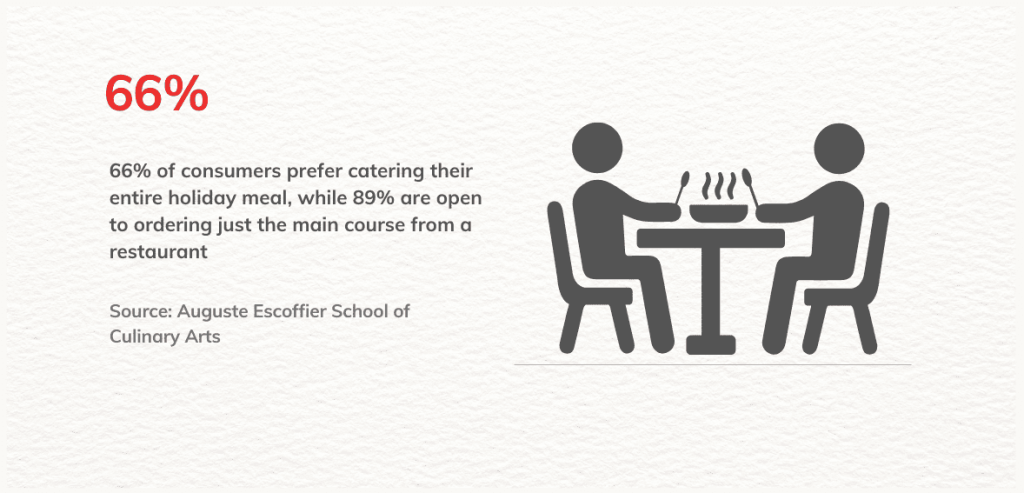
Source: Auguste Escoffier School of Culinary Arts
Restaurant Holiday Outlook and Consumer Spending
Mixed signals characterize the economic environment in 2024. While inflation rates have moderated, prices remain elevated, leading to cautious consumer spending. The term “vibe-cession” has been coined to describe this scenario, where consumers possess purchasing power but are selective in their expenditures, focusing more on essential items over discretionary spending.
Holiday sales forecasts reflect this cautious sentiment. Bain projects a 3% growth, Deloitte estimates between 2.3% and 3.3%, and the National Retail Federation anticipates a 2.5% to 3.5% increase—which equates to $977.6 billion to $989 billion. These figures fall below the pre-pandemic average growth rate of 5.1%, indicating tempered seasonal expectations.
Consumer Dining Preferences: Customers Balancing Between Home Meals and Restaurant Visits
Recent surveys reveal shifts in dining preferences during the holidays. A study by 84.51° indicates that 52% of consumers plan to reduce spending on restaurant dining, opting instead for home gatherings and grocery purchases. This trend suggests a pivot towards home-prepared meals, with consumers seeking cost-effective ways to celebrate.
Conversely, data from Tock shows that 68% of diners intend to engage with restaurants and bars during the holiday season, with over 60% planning to visit these establishments on New Year’s Eve. This indicates that while some consumers are cutting back, a significant portion still values dining out as part of their holiday experience.
Trends in Outsourcing Holiday Meal Preparations
Restaurants are experiencing increased demand for catering and takeout options as consumers look to simplify holiday preparations. Offering curated holiday menus for home consumption has become a strategic approach for many establishments. Catering services are expected to increase demand by 20-25% as more families opt for professionally prepared meals for gatherings. Offering diverse and customizable catering options can help restaurants meet this growing need.
Plus, 70% of consumers prefer online ordering for holiday catering. A seamless online catering ordering system can cater to this preference and boost sales. Consumer preferences for outsourcing holiday meals vary:
- Main Courses: 89% prefer to buy the main course from restaurants.
- Side Dishes: 86% prefer to buy side dishes.
- Appetizers: 74% prefer to outsource appetizers.
- Whole Meals: 66% would rather buy the entire meal.
- Desserts: 63% prefer to buy desserts, such as pies.
Despite the trend toward outsourcing, desserts are still the least likely to be purchased from restaurants, indicating a strong attachment to traditional homemade dessert recipes. The reasons consumers choose to rely on restaurants during the holidays include:
- Supporting Local Businesses: 88% see ordering from restaurants as a way to support local businesses.
- Reducing Stress: 82% say that buying prepared foods reduces holiday stress.
- Maximizing Family Time: 78% believe it allows for more quality time with family by reducing the time spent on cooking and cleaning.
How Much Do People Plan to Spend on Holiday Meals Out?
In 2024, Americans’ dining habits have shifted, showing distinct spending patterns and preferences changes, particularly during the holiday season. A survey from US Foods reveals that the average monthly spending per person on dining out has climbed to $191, up from $166 in 2023. This increase is primarily attributed to inflation affecting menu prices. In a shift from previous years, women now spend 33% more on dining out than men, compared to 2023, when men spent 19% more.
The survey also breaks down the spending per individual meal:
- $10–$20 per meal: 50% of respondents
- $21–$30 per meal: 24%
- $31–$40 per meal: 11%
- $41 and above per meal: 15%
These figures show that most Americans generally spend between $10 and $30 per meal when dining out.
Which Holiday Foods are Consumer Favorites?
Recent surveys have provided updated insights into Americans’ favorite holiday dishes, highlighting traditional preferences and emerging trends.
Thanksgiving Favorites
A 2024 survey revealed the following top Thanksgiving dishes:
- Turkey: Preferred by 74% of Americans, turkey remains the centerpiece of Thanksgiving meals.
- Mashed Potatoes: 67% of respondents enjoy mashed potatoes as a staple side dish.
- Stuffing: Favored by 64%, stuffing continues to be a traditional accompaniment.
Interestingly, cranberry sauce was identified as the least favorite dish, with 27% of participants expressing a dislike for it.
Christmas Preferences
For Christmas, roasted potatoes were the most popular dish, winning 76% of head-to-head matchups. Mashed potatoes followed closely at 75%, with turkey at 73%.
Regional Variations
Regional differences also influence holiday food preferences. For instance, apple pie is most favored in the Northeast, with 50% listing it as their top dessert, while pecan pie finds more support in the South, with 40% favoring it.
These insights suggest that restaurants should focus on traditional dishes like turkey, mashed potatoes, and stuffing during the holiday season to align with consumer preferences. Offering regional favorites can also cater to local tastes. Depending on clientele interest, less popular options, such as duck (33% favorability) and goose (28%), might be included selectively.
Additional Trends in Holiday Dining

The holiday season is critical for the restaurant industry, presenting opportunities and challenges. In 2024, restaurants are poised to experience significant growth in online sales, catering services, and gift card purchases. However, operators must adopt strategic measures to enhance customer experience and operational efficiency to capitalize on these trends. Several notable trends are shaping holiday dining in 2024:
- Increase in Online Sales
Online holiday sales are projected to rise by up to 24% year-over-year, driven by consumers’ preference for convenience during the busy season. This surge underscores the importance of robust online ordering systems and user-friendly digital platforms.
- Experiential Dining:
Despite economic pressures, consumers are willing to invest in unique dining experiences. Restaurants offering special holiday-themed events or exclusive menus are attracting patrons seeking memorable outings.
- Health and Safety Priorities:
Ongoing health concerns continue to influence dining choices. Establishments emphasizing safety protocols and offering flexible dining options, such as outdoor seating or private dining areas, are more likely to appeal to cautious consumers.
- Rise in Gift Card Sales
Gift card purchases are anticipated to grow by 15-20%, making them a valuable revenue stream. Promoting both digital and physical gift cards can capitalize on this trend.
- Increased Use of Technology
Around 50% of businesses plan to utilize technology to monitor deliveries and manage the holiday rush efficiently. Implementing integrated restaurant solutions can streamline operations and enhance customer satisfaction.
- Preference for Online Catering Orders
A significant 70% of consumers prefer online ordering for holiday catering. A seamless online catering ordering system can cater to this preference and boost sales.
Operational Challenges and Strategies
The restaurant industry faces several operational challenges during the holiday season:
- Labor Shortages: Staffing is critical, impacting service quality and operational efficiency. Investing in employee retention strategies and leveraging technology to streamline operations are essential.
- Supply Chain Disruptions: Fluctuations in supply availability can affect menu offerings and pricing. Maintaining strong supplier relationships and adopting flexible menu planning can help mitigate these disruptions.
- Technological Integration: Adopting AI and automation transforms restaurant operations, from reservation systems to personalized marketing. Embracing these technologies can enhance customer engagement and operational efficiency.
Conclusion
The 2024 holiday season presents both opportunities and challenges for the restaurant industry. While cautious consumer spending and a preference for home-cooked meals may temper expectations, there remains significant potential in catering, takeout, and special dining experiences. Restaurants can capitalize on these trends by offering targeted promotions, enhancing online ordering systems, and curating holiday-specific menus that reflect traditional favorites and regional preferences. Addressing operational challenges, such as staffing and supply chain disruptions, through strategic planning and technology integration will be crucial for success. By aligning their offerings with evolving consumer needs, restaurants can attract new patrons, strengthen customer loyalty, and drive revenue during the holiday season.