



The Wait Is Over: Amazon’s Discounted Storefront Haul Has Arrived!
Posted: November 20, 2024 | Updated:
Amazon has launched a new feature in its mobile app named “Amazon Haul,” which provides a selection of items, including clothes, household goods, electronics, and more, each costing less than $20. This initiative targets cost-conscious consumers, positioning Amazon as a competitor to affordable retail outlets such as Temu and Shein.
This new platform offers a wide range of unbranded products in categories such as fashion, lifestyle, home essentials, and electronics. These items are sourced from international sellers vetted by Amazon and are covered by Amazon’s “A-to-z Guarantee.” The delivery timeframe for these products ranges from one to two weeks. Additionally, the feature prominently displays reduced prices on various items.
Key Takeaways
- Launch of Amazon Haul: To compete with low-cost websites like Temu and Shein, Amazon launched a new storefront inside its app that sells unbranded goods for less than $20.
- Cost and Shipping Details: Items are shipped from a warehouse in China, with delivery times ranging from one to two weeks. Orders over $25 qualify for free shipping, while smaller purchases incur a $3.99 fee.
- Discounts and Return Policy: Customers can receive discounts for bulk purchases—5% off orders over $50 and 10% off those exceeding $75. Free returns are available for items over $3 within 15 days at various drop-off locations.
- Strategic Focus and Challenges: Amazon’s move targets price-sensitive shoppers. However, longer delivery times and potential increases in import costs due to regulatory changes could impact its strategy in competing with established rivals.
Amazon Haul: Affordable Shopping to Compete with Temu and Shein
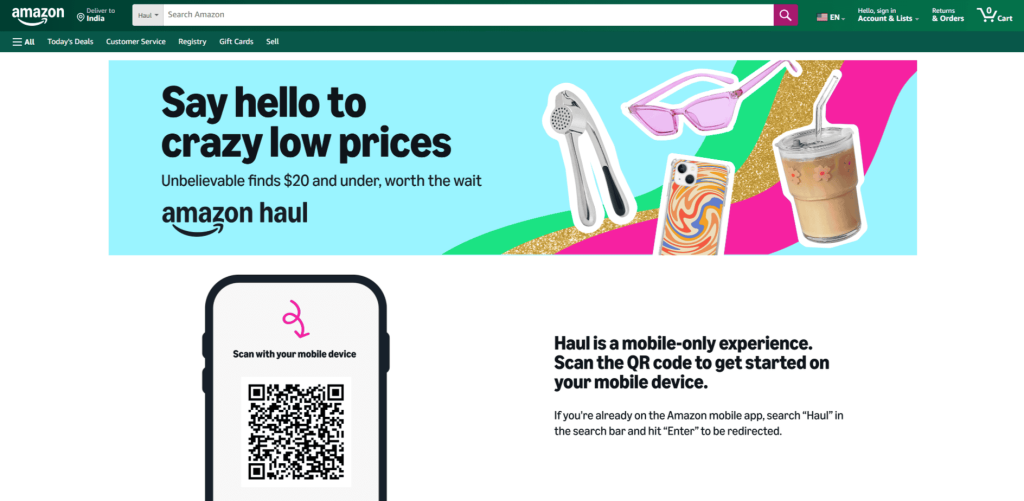
Amazon has launched “Amazon Haul,” a new online storefront with products priced at $20 or less. This move is designed to compete with budget retailers like Temu and Shein, known for their affordable products in clothes, household goods, electronics, lifestyle items, and more. Many products on Amazon Haul are priced under $10, with some available for as little as $1.
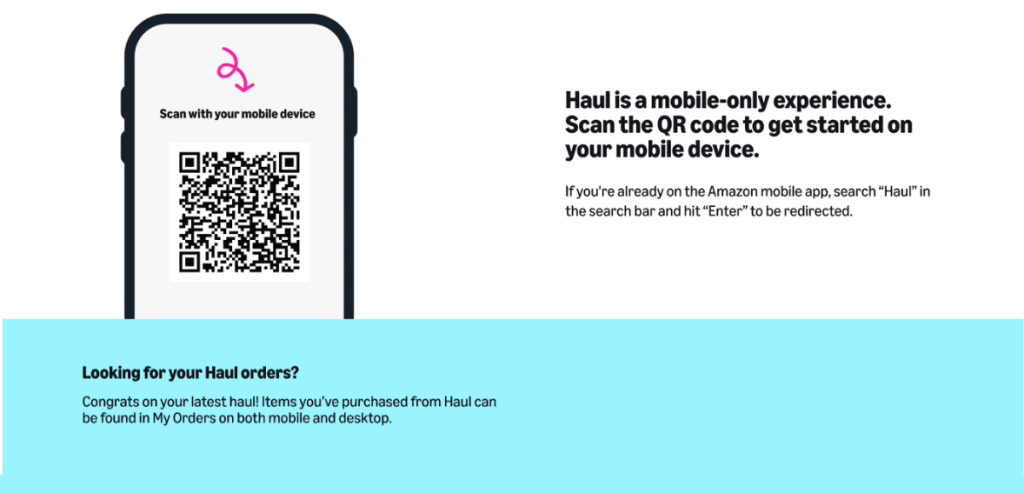
You can download the Amazon app for iOS and Android devices. Alternatively, you can visit www.amazon.com/haul on your mobile device’s browser. The storefront includes unbranded items like electronics, apparel, and home goods. For instance, it offers a phone case and a hairbrush, each for $2.99, and a sleeveless dress for $14.99.
To keep prices low, Amazon intends to distribute these products to U.S. customers from a warehouse in China. Expected delivery times range from one to two weeks. Orders exceeding $25 receive free shipping, while those below $25 are subject to a $3.99 shipping charge. This approach is Amazon’s strategic reaction to the growing popularity of Temu and Shein, which are known for their economical products. Nonetheless, both companies have been criticized for their environmental impact and are under regulatory examination for their business methods.
Shein primarily targets young women who are drawn to its affordably priced clothing. Temu, on the other hand, markets a wide range of items, including clothing, accessories, and kitchen gadgets, to price-conscious consumers.
Both Temu and Shein have been scrutinized for the environmental effects of their rapid fashion business models. They have also been questioned by lawmakers and regulatory bodies in the U.S. and abroad regarding several issues, including the characteristics of certain products available on their platforms.

Amazon has launched a new storefront accessible only through its mobile website and app and features a selection of unbranded products. Customers can purchase phone cases and hairbrushes for just $2.99 and sleeveless dresses for $14.99. Dubbed ‘Amazon Haul,’ this initiative highlights meager prices and budget-friendly activewear. The company guarantees customer satisfaction for all purchases within this collection through Amazon’s A-to-Z Guarantee. This assurance covers the condition of the products, ensuring protection against damages, defects, or discrepancies from descriptions.
Purchasing more through Amazon Haul can lead to greater savings. Orders totaling $50 or more receive a 5% discount, and those of $75 or more are reduced by 10%.
Additionally, Amazon offers free returns on all Haul purchases over $3 within fifteen days of delivery. Customers can return items at more than 8,000 drop-off locations across the U.S., including Amazon Fresh, UPS, Whole Foods Market, Staples, and Kohl’s.
Dharmesh Mehta, Vice President of Worldwide Selling Partner Services at Amazon, emphasized that customers appreciate discovering high-quality products at exceptionally low prices. He mentioned that Amazon collaborates with its selling partners to develop strategies to sustain these competitive prices. Mehta also pointed out that this initiative is in its initial phase, and Amazon intends to refine and enlarge it by integrating customer feedback in the coming weeks and months.
Additionally, Amazon may see an increase in the cost of importing goods from China. In September, the Biden administration introduced policies to curb the flow of inexpensive products from China. This strategy is designed to reduce U.S. dependence on Beijing, but it may result in higher prices for American consumers, many of whom shop with retailers like Temu and Shein. Moreover, President-elect Donald Trump has suggested a 60% tariff on Chinese goods, which could further impact costs.
Amazon is willing to test whether customers will accept longer delivery times in exchange for significantly lower prices. This strategy marks a departure for Amazon, which has previously established its leadership in the e-commerce sector by providing faster delivery times than its rivals. The company revolutionized online shopping by introducing free two-day shipping and has since reduced delivery times even further. Amazon currently provides same-day or next-day delivery in many areas, and in specific locations, customers can receive their orders within hours.
In September 2024, Amazon’s U.S. website traffic was relatively stable, showing a modest increase to 236.1 million unique visitors. By contrast, Shein has experienced consistent growth, reaching 52.5 million visitors. Meanwhile, Temu has seen a decline in traffic since a high of over 93 million visitors in June 2023, leveling off at approximately 71.5 million.
Conclusion
Amazon Haul is a calculated effort to attract budget-conscious shoppers while addressing competition from platforms like Temu and Shein. By offering low-cost, unbranded products across multiple categories, Amazon appeals to consumers, prioritizing affordability, even at the expense of longer delivery times.
With features like free returns, purchase discounts, and its trusted A-to-z Guarantee, Amazon enhances its value proposition for shoppers exploring this new storefront. However, rising import costs and regulatory challenges may influence its long-term sustainability. As Amazon fine-tunes this initiative, its success will depend on balancing low prices, customer expectations, and evolving market conditions.