



How Can I Increase Conversions on My E-Commerce Store in 2025?
Posted: November 28, 2025 | Updated:
The internet is vast, so e-commerce brands are understandably focused on improving conversions. The steps a business takes can vary, but it’s essential not to overlook key parts of the website. Because competition is high, even a minor issue can hold a store back and affect its online performance.
At the same time, minor adjustments can have a measurable impact. One test showed that increasing the size of a call-to-action button led to a 33% lift in bookings. Before making changes, it helps to know where you stand. Conversion rates differ by industry, but in 2025, the average typically falls between 2.5% and 3%. Track your current conversion rate and compare it with these benchmarks. Knowing your baseline and how it varies by device or traffic source gives clarity for future improvements.
Increase Conversions On E-Commerce Store – 14 Strategies To Follow in 2025
Ensure The Design is Persuasive
Despite several ways to increase conversions, one essential starting point is website design. Of course, an e-commerce store mustn’t compromise its brand. However, the design must persuade visitors to remain on a site.
A clean design with a prominent call to action will always perform better than a page cluttered with options and information. One study found a bold CTA button boosted conversions by 33%. Focus on your unique value proposition in the headline and subhead, and make the “Add to Cart” or “Buy Now” button unmissable.
Likewise, explicit product imagery that reflects the brand’s essence should be used instead of standard stock imagery. Avoid clutter; every extra button or block of text is friction. Keep the price and the primary CTA always visible without scrolling.
An e-commerce site that can keep visitors on the site longer is more likely to see increased conversions.
Ensure the User Experience is the Best it Can Be
The design of the website may entice visitors, but niggly navigation and slow loading pages will often be enough for a potential customer to look elsewhere for products or services. Not only must the site load quickly, but it must also be designed with mobile users in mind. 40% of shoppers will abandon a site that takes more than 3 seconds to load. Mobile optimization is crucial – in fact, only ~1% of shoppers feel most sites are fully mobile-friendly, and users are 5× more likely to abandon if pages aren’t optimized for mobile. Fortunately, this can be easily avoided by ensuring the user experience is as good as possible.
Use responsive design and test on real devices. Simplify navigation so people can quickly find products or information (e.g., size guides, shipping info). Intuitive menus, clear search, and easy filtering all help. Remember that if a visitor struggles to find what they’re looking for, they’ll leave – often for a competitor. Every element of UX (fast load times, logical flow, legible fonts, trust badges at checkout) should reassure the customer and remove doubts.
Advanced Product Page Optimization
Product pages are critical conversion points. Each one should clearly sell the product. Write scannable descriptions and highlight benefits (e.g., bullet points of key features). Include user-centric details (dimensions, compatibility, care instructions) so shoppers aren’t left guessing. Show multiple large images (zoomable, with alternate angles or lifestyle shots) to convey quality. If relevant, add a short demo or explainer video.
Keep the layout clean. Present the price and “Add to Cart” button prominently near the top (so users see them without scrolling).
Use trust signals on the page. You can show stock levels (“Only three left!”) to create urgency, or free-shipping badges. If the product has reviews or ratings, display the star rating and key testimonial snippets here. The goal is to make each product page answer every customer question so they feel confident clicking “Buy.”
Personalization & Smart Recommendations
Personalized shopping experiences significantly increase engagement and conversions. Modern e-commerce retailers use AI and data to predict what each shopper wants. Customized product recommendations (based on browsing or purchase history) can drastically boost sales. One report found that replacing generic suggestions with personalized recommendations can increase average order value by up to 369% and conversions by 288%.
Even beyond recommendations, tailor content like hero banners or email offers to match customer segments or preferences. Roughly 90% of top marketers say that personalization is directly tied to higher profitability.
Use tools that automatically show “Customers also bought” or “Recommended for you” sections, and personalize email marketing too (e.g., follow-up emails suggesting complementary items after a purchase). The data-driven beauty of personalization is that it serves each shopper what they’re most likely to want, and that clarity keeps them on your site and encourages them to buy.
Optimize Site Search and Discovery

Make it as easy as possible for high-intent shoppers to find products on your site:
- Enable predictive search: Support autocomplete suggestions and filters/facets (size, color, price, etc.) so users zero in on what they want. Shoppers who use on-site search tend to have much higher purchase intent. In fact, customers who use internal search are 4-6× more likely to convert.
- Use NLP and synonyms: Ensure your search understands natural language and common synonyms (like, it should match “couch” with “sofa.”) NLP-driven search bridges the gap between customer language and your catalog, reducing “no results” dead-ends.
- Consider visual search: Let customers search by image (uploading a photo) to find similar items. Visual search taps into shoppers’ intent when they can’t describe what they want and can shorten the path to purchase by surfacing relevant products more quickly.
- Personalize discovery: Use each user’s data to sort search results. If a shopper frequently buys running gear, prioritize new athletic products in their results. Personalized ordering and “recently viewed” suggestions boost relevance and conversions.
- Analyze search terms: Review what people are searching for. If specific terms yield no matches, consider adding those products or keywords. Continually refine your search data to better serve users.
Implementing a robust search (possibly with AI-powered software) makes discovery seamless. A well-tuned search experience means high-intent visitors find what they want quickly and are much more likely to buy.
Use Search Engine Optimization and Conversion Rate Optimization Together
When promoting an e-commerce store online, some may choose search engine optimization or conversion rate optimization. Both are important, but those wanting to increase conversion will find that using both methods is often the key to success.
SEO is often about being found online and is carried out via keyword research. However, this doesn’t mean that visitors will stick around after visiting the site. This is where CRO comes in.
Keywords need to be used in the content, but not so much that it becomes unreadable or bewilders visitors. Conversion rate optimization means using keywords in a way that still offers value to visitors, complemented by a clear call to action and an easy sign-up process.
Checkout & Payment Optimization

Streamline the checkout to reduce abandonment and boost completions. Key tactics include:
- Simplify the process: Minimize steps and fields. A one-page or one-click checkout can dramatically cut friction. Remove unnecessary questions and only ask for critical info. Offering an express checkout (like Apple Pay or Shopify Pay) can slash checkout friction; one A/B test showed a faster “Shop Pay” flow reduced cart abandonment by ~25%.
- Mobile-friendly checkout: Ensure the checkout layout adapts perfectly to small screens. Large buttons, easy tap targets, and auto-fill address forms help. (63% of checkouts will be on mobile by 2028, so this is essential.)
- Guest checkout: Always allow purchases without forcing account creation. Around 63% of shoppers will abandon if they can’t check out as guests. You can offer account creation as an optional step afterwards.
- Offer multiple payment options: Support more than just credit cards. Integrate popular digital wallets and “Buy Now, Pay Later” plans. (Digital wallet transactions grew 62% year-over-year in 2023.) The more payment options you offer, like PayPal, Apple/Google Pay, Klarna, etc., the more likely customers are to find their preferred method and complete the sale. In fact, 54% of customers will abandon checkout if only credit/debit cards are offered.
- Display trust signals: Show security badges (SSL icons, known payment logos) and reassure users that their data is safe. It’s no exaggeration that up to 25% of users have recently abandoned a purchase because they “didn’t trust the site” with their credit card info. Throughout checkout, include simple cues (a secure padlock symbol, “Trusted Payments” logos) to build confidence.
- Be transparent on costs: As soon as customers reach checkout, all fees (shipping, taxes) should be clear. Surprise fees kill sales. About 48% of shoppers drop out at checkout due to unexpected costs. Show estimated shipping on product or cart pages, and offer a free-shipping threshold if possible (e.g. “free shipping on orders over $X”). This honesty prevents sticker shock.
Implementing these checkout best practices creates a fast, user-friendly payment experience. When customers feel safe and the process is smooth, your conversion rate will improve.
Mobile-First & Performance Optimization
With mobile commerce surging, mobile-first design is mandatory. Ensure every page is responsive: text is legible without zooming, buttons are large enough to tap, and images/files are optimized to load quickly on mobile networks. About 63% of all e-commerce sales are projected to come from mobile devices. Slow or clunky mobile pages drive people away. Remember, users are 5× more likely to abandon if a site isn’t mobile-optimized.
Test your site across various devices and use tools like Google PageSpeed Insights to identify and remove bottlenecks. Compress images, leverage browser caching, and choose a fast hosting provider or CDN. A quick, smooth mobile experience keeps shoppers engaged and purchasing.
Take The Shopping Experience to Social Media Platforms

Very few businesses need to be informed about the popularity of social media, but many are surprised to discover how lucrative social media websites can be when increasing conversions.
Although nothing can replace an efficient e-commerce store, offering the same great products and services with the same branding on social media allows a business to connect with customers who might otherwise have been overlooked. Also, promoting products to a new audience and integrating social media make it easy to purchase, which can increase the likelihood of repeat purchases. So, set up shoppable posts and stores on platforms like Instagram, Facebook, TikTok, and Pinterest.
Research shows that about 51% of brands now sell via shoppable social posts and ads. Likewise, enable sales through other channels, and allow purchases directly from marketing emails or ads. 48% of companies now accept payments via email links. This means linking products in newsletters or even letting customer support agents place orders on behalf of users.
Make Sure to Promote Reviews and Feedback on the Website
An e-commerce store is about finding the right balance when delivering information to customers, but showcasing a brand’s excellence should be present in all e-commerce stores. Despite many e-commerce stores offering fantastic products and services, some mislead or take advantage of customers. Fortunately, those shopping online have become more knowledgeable about assessing the integrity of an e-commerce store.
An e-commerce store with a strong social presence will find more favor with customers than one without. Customers can be left on various platforms, but there will be no issues integrating reviews into the website.
Showcasing genuine reviews from others instills confidence in site users, increases the likelihood of a purchase, and helps build the social proof of an e-commerce store moving forward. You should also show star ratings, customer photos, and user-generated content. Also highlight any third-party endorsements (press mentions, industry awards).
Beyond reviews, make every element of trust clear. Use secure HTTPS, and display SSL or well-known payment logos near the purchase button. (Without trust badges, 35 to 60% of shoppers may abandon checkout. Include live support options (chat or help widgets) so customers can ask questions.
Be transparent about policies and clearly state shipping costs, return policies, and FAQs. Fear of hidden fees is a top abandonment trigger. Nearly 48% of shoppers abandon their carts at checkout due to unexpected charges. To avoid this, show any extra costs before checkout, and even consider a price-match or satisfaction guarantee.
Post-Purchase Experience & Retention
Conversion doesn’t end at “thank you.” A smooth post-purchase journey fosters loyalty and repeat sales. Right after a purchase, send order confirmation and shipping update emails. A warm thank-you email a few days later can work wonders. Following up with product recommendations (“We thought you might also like…”) adds value and prompts another purchase.
Implement loyalty or rewards programs to incentivize return visits. Even a simple points system for repeat buys can increase purchase frequency. Offer first-time discounts or credits on next orders to nudge customers back.
Make returns easy. A hassle-free return process is a strong trust signal. Because 67% of online shoppers check the return policy before buying, clearly outline how returns and refunds work. A smooth return also makes shoppers more likely to try again. In fact, 58% of customers won’t buy again after a bad return experience.
Collect feedback (via surveys or reviews) and actually use it to improve. If customers feel heard, they tend to stay loyal. Exceptional post-sale support (quick help with issues or questions) can turn even a minor problem into goodwill. By focusing on retention – through communication, loyalty perks, and stellar support – you turn one-time buyers into lifetime customers.
Use of AI, Automation & Omnichannel Strategies
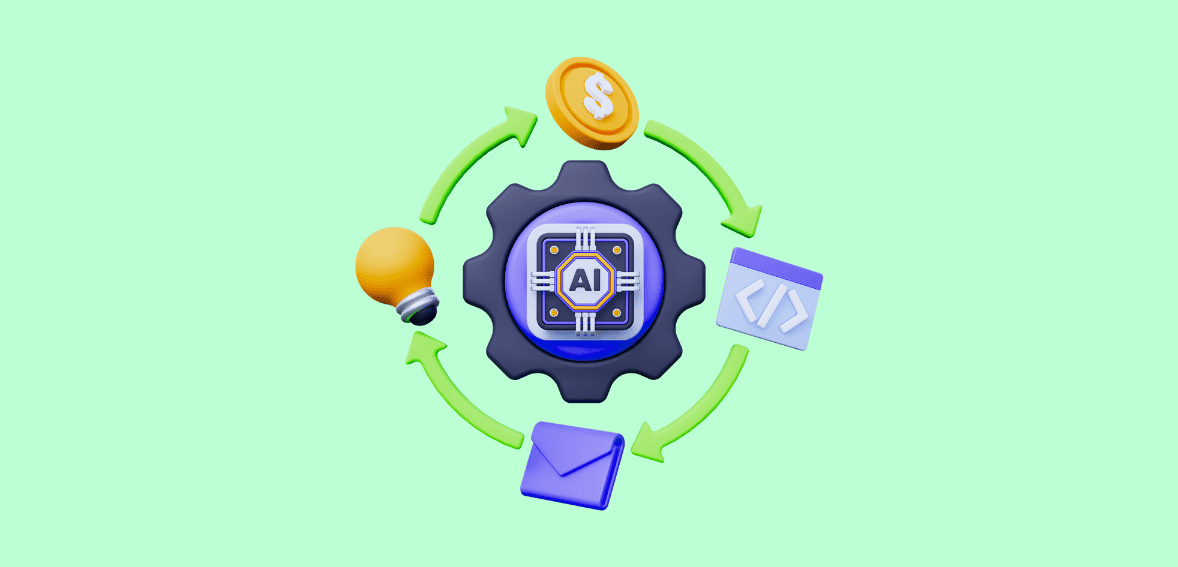
AI and automation are increasingly key to converting shoppers. Retailers using AI see shoppers buy faster and more often. Customers who used AI tools completed purchases 47% faster, and those engaging an AI chat bought at 4× the rate of those who didn’t. To leverage this:
- AI chatbots and virtual assistants: Provide instant answers to customers’ questions (product details, sizing, policies). When customers engage with an AI chat, conversion rates can jump dramatically. One study found that 12.3% of chat users converted, vs. 3.1% without chat. Chatbots can handle common concerns (“Is this item in stock?”) 24/7, reducing drop-offs.
- AI personalization engines: Use machine learning to tailor the entire shopping journey. This includes dynamic product recommendations on the site and in emails. Proper AI personalization can increase revenue substantially – up to 15% higher revenue through personalization at scale. Such systems adjust in real time (e.g., if a user suddenly browses umbrellas, show raincoat suggestions).
- Marketing automation: Automate email/SMS workflows for cart recovery, welcome series, or upsells. Abandoned cart emails are a proven tactic – they typically see ~41% open rates and can convert 50% of recipients. Use triggered campaigns with personalized discount codes or reminders to automatically win back sales and customers.
- Omnichannel selling: Integrate sales across channels. Many brands now support shoppable social posts (so users can buy directly from Instagram/Pinterest) and embedded checkout in ads and emails. Provide consistent inventory and pricing whether customers buy on your website, a mobile app, social media, or even in person. Unify customer data across touchpoints so that, for example, items left in an online cart can be recovered by an in-app notification or SMS.
Overall, use AI and automation to anticipate and instantly meet customer needs. This “always-on” optimization keeps your store performing efficiently, captures more sales, and provides convenience that shoppers appreciate.
Data-Driven Optimization & Analytics
Adopt a metrics mindset. Continuously test and measure every change.
- Use analytics tools (Google Analytics, Shopify reports, heatmaps) to find problem areas: High drop-off pages, confusing steps, etc. Analyze your conversion funnel to see at which step customers leave. If many exit on Cart vs Payment, focus on checkout speed; if they go on the Product page, improve page content.
- Run A/B tests: Even minor tweaks can yield gains. Shopify shares an example of a split test that found a one-click checkout reduced abandonment by 25%. Consistently A/B test significant changes (button text, layout, pricing display) and implement the winners.
- Track key performance indicators continuously: Conversion rates by channel, cart abandonment rate, bounce rate, average order value, and customer lifetime value, among others. Dashboards and real-time reports help spot issues – for instance, if cart abandonment suddenly spikes in one region, you can quickly investigate (a pricing glitch or payment issue might be to blame).
- Also, benchmark internally: Compare new vs returning customer conversions. If returning buyers convert at much higher rates, invest in loyalty. If new visitors are dropping off, maybe optimize the landing pages.
Abandoned Carts Should Be Treated as a Benefit
Don’t panic at abandoned carts; treat them as potential sales. It’s normal for 70% or more of carts to be abandoned. Instead, diagnose why (e.g., surprise fees, required login, site errors) and fix the site issues. Then use that data: follow up with abandons via email or ads. A well-timed recovery email (perhaps with a gentle discount reminder) can recoup a large share of those lost sales – industry data shows well-crafted cart emails often convert around 50% of opens.
Automate an “oops, you left something” email an hour after cart abandonment. Include an easy link back to checkout and consider a small incentive (free shipping or a 5-10% coupon). As the stats show, when done right, these reminders pay off handsomely. Use abandoned carts as a second-chance touchpoint. It not only recovers revenue but also signals your attentiveness, reinforcing a positive customer experience.
Conclusion
Improving an e-commerce conversion rate is an ongoing process of refinement. By combining persuasive design, seamless UX, powerful search, intelligent personalization, and solid analytics, you’ll ensure your store captures every opportunity. Use the data and strategies above as a roadmap, and keep iterating – that’s how leading online retailers succeed.
Frequently Asked Questions
Slow load times, confusing navigation, and poor mobile optimization are top offenders. With 40% of shoppers leaving after 3 seconds of delay, a fast, intuitive, mobile-first experience is one of the biggest conversion boosters.
How vital are personalized recommendations for boosting sales?
Extremely. Personalized recommendations can increase conversion rates by up to 288% and raise order values by 369%. Tailoring search results, product suggestions, emails, and homepage content to each user keeps shoppers engaged and buying.
What steps should I take to reduce checkout abandonment?
Streamline checkout to as few steps as possible, allow guest checkout, and offer multiple payment methods, such as Apple/Google Pay or BNPL. Since 48% of shoppers abandon due to unexpected fees, be upfront about shipping and total costs from the start.