



Voice Commerce and IoT Payments: Is Your Business Ready for Voice-Activated Shopping?
Posted: September 11, 2025 | Updated:
Voice-activated shopping isn’t a futuristic concept anymore – it’s here now, and it’s growing fast. Consumers are increasingly comfortable talking to smart speakers, phones, and other devices to search for products and even complete purchases. This trend, known as voice commerce, combines the convenience of voice assistants (like Amazon’s Alexa, Google Assistant, or Apple’s Siri) with online shopping.
At the same time, the Internet of Things (IoT) is enabling smart devices such as fridges, cars, and wearables to make purchases or payments on our behalf. The big question for businesses is: Are you ready to serve customers who shop by voice and through IoT devices? In this blog, we’ll explore the rise of voice commerce, how to optimize your business for voice search and ordering, and the new payment channels emerging from IoT devices.
The Growth of Voice Commerce

Voice shopping is experiencing explosive growth: Global voice commerce sales have increased from $4.6 billion in 2021 to an estimated $19.4 billion in 2023, and are projected to reach $81.8 billion by 2025. This staggering growth of over 320% in two years highlights how quickly consumers are embracing voice-activated shopping. The popularity of smart speakers and virtual assistants plays a massive role in this trend. 8.4 billion digital voice assistants are active worldwide in 2024 (on phones, speakers, TVs, etc.), a number expected to double to 16.8 billion by 2028.
With voice assistants now ubiquitous, more people are trying voice shopping for its sheer convenience.
Consumers are using voice for product research and purchases. Nearly half of U.S. consumers (about 49%) report using voice search to shop or find product information. Many start by asking their assistant questions like “What’s the best running shoes for flat feet?” or “Find me a good deal on wireless earbuds.” Voice searches tend to be conversational and often question-based, which aligns with how people naturally speak.
Crucially, a significant segment of shoppers also goes beyond just searching – roughly 22% of consumers have made purchases directly through voice commands, and about 17% have even used voice to reorder items they previously bought. In other words, millions of people are comfortable saying, “Alexa, buy more paper towels,” and trusting the device to handle the rest.
Smart speakers are fueling hands-free shopping. Devices like Amazon Echo (Alexa), Google Nest/Home (Google Assistant), and Apple’s HomePod (Siri) have brought voice commerce into many living rooms. It’s estimated that over 15% of U.S. digital consumers use smart speakers for voice shopping, and approximately 47.8 million Americans who own smart speakers are expected to make at least one voice purchase in 2024. People find it faster and easier to speak a command than to type on a screen – especially for routine purchases.
For example, someone cooking in the kitchen can say, “Alexa, add olive oil to my cart,” without needing to stop and grab a phone or laptop. Surveys show the top reasons consumers shop via voice are its speed and convenience, as well as the ability to multitask while shopping.
Major companies have already jumped on the voice commerce trend. Amazon leads the pack – Alexa enables voice ordering of millions of Amazon products, and 60% of online consumers in the U.S. say they’ve bought something using a voice-assistant at home. But it’s not just Amazon’s platform. Walmart partnered with Google Assistant to let customers add groceries to their Walmart cart by voice command on Google Home devices.
Shoppers could link their Walmart account and say things like, “Hey Google, add milk to my Walmart order,” making grocery shopping a conversational experience. Domino’s Pizza has also integrated voice ordering, allowing customers to place an order via Amazon Alexa or other assistants, as well as from specific car systems, simply by speaking. And Starbucks experimented with allowing customers to reorder coffee by voice through their mobile app or Alexa integration in Ford cars.
These examples show that voice-activated retail is not a niche novelty; it’s becoming a new commerce channel. Businesses of all sizes, from e-commerce brands to local shops, should anticipate that some of their customers will prefer to request products rather than navigate through menus.
Optimizing for Voice Search & Ordering

Voice queries are very different from typed searches – and businesses need to adjust their online content and shopping experience accordingly. When someone uses voice search, they tend to use natural, conversational language rather than terse keywords.
For example, a typed search might be “weather New York today,” but a voice query would be, “What’s the weather like today in New York?” This means optimizing for voice involves adopting a more human tone and anticipating the full range of questions customers might ask. Below are some strategies to ensure your product information and online store are voice-ready for search and ordering:
1. Use a conversational tone and long-tail keywords
Ensure that the text on your website (product descriptions, blog posts, FAQs) reflects the way people speak. Voice searches often include question phrases or complete sentences. For instance, instead of focusing only on the keyword “shipping policy,” include a question-and-answer like “How long does shipping take?” followed by a concise answer.
Incorporate natural-sounding phrases and FAQ-style content that directly answers common questions about your products or services. This increases the chance that a voice assistant will pick up your content to answer a user’s query. FAQ pages optimized with conversational questions are highly effective for capturing voice search traffic.
2. Target question-based searches and featured snippets
Try to provide clear answers to the who/what/when/where/how questions that relate to your business. Voice assistants like Google Assistant often read out a single result (usually a featured snippet) in response to a question. To earn that spot, structure some of your content in a straightforward Q&A format and answer questions concisely within the first few sentences.
For example, if you sell coffee makers, have a snippet on your site that answers “What is the best way to clean a coffee maker?” in a brief, step-by-step manner. Also use schema markup (structured data) for FAQ sections on your site – this code helps search engines understand your Q&A content and can improve the chances of your answers being used in voice results.
3. Ensure your site is mobile-friendly and fast
Many voice searches happen on mobile devices or involve quick, on-the-go queries. Google and other search engines tend to favor websites that load quickly and display well on mobile devices.
Optimize your website’s performance and responsiveness so that when a voice search leads a user to your page, it’s a seamless experience. This also helps your overall ranking, which indirectly impacts voice search visibility.
4. Optimize for local voice search (if applicable)
A large portion of voice queries are local, such as “Where is the nearest pharmacy?” or “Is [store] open now?”. Make sure your business’s address, phone, and opening hours are up to date on Google Business Profile, Apple Maps, and other directories that voice assistants pull data from.
Use natural language in your descriptions (e.g., “family-owned bakery serving fresh pastries” instead of just keyword stuffing). According to recent findings, 58% of consumers have used voice search to find local business information, like store hours or product availability nearby. By keeping your local SEO polished, you increase the chance that Alexa or Siri will mention your business when someone asks for a product “near me.”
5. Integrate with voice commerce platforms
Beyond search optimization, consider connecting your shopping system with popular voice assistants. This could mean developing a custom Alexa Skill or Google Assistant Action for your store. For example, a clothing retailer might build an Alexa Skill that lets loyal customers ask, “Alexa, ask [Store Name] to check my order status,” or “Alexa, ask [Store Name] to reorder my last purchase.”
Integration can range from simple (voice commands that direct users to your app or website) to advanced (full voice-enabled purchase flow). Amazon offers APIs for voice shopping, and many brands have taken advantage of this – for instance, Domino’s created an Alexa skill that allows customers to order their favorite pizza by voice. Similarly, Google’s platform once enabled ordering with Google Assistant for retailers like Walmart.
Even if you don’t build a custom skill, ensure your products are listed or compatible with major voice-commerce marketplaces. For example, if you sell through Amazon, optimize your product listings (titles, descriptions, keywords) so that Alexa can easily find and recommend them when users ask for a product in your category.
6. Streamline the voice ordering experience
If you offer voice ordering through your app or integration, design it to be quick and user-friendly. Voice shoppers typically want to accomplish tasks with minimal friction. Implement features like reorder prompts (e.g., “Would you like to repurchase this item?”), and use account data to recognize customers.
It’s wise to include confirmation steps to prevent mistakes – for instance, have the voice assistant read back the order and ask for confirmation (“Okay, two bottles of shampoo for $15, shall I place the order now?”). Additionally, allow users to set up a PIN or passcode for voice purchases if they are concerned about accidental orders (Amazon’s Alexa supports this feature). The goal is to strike a balance between convenience and a safeguard or two, ensuring customers trust voice ordering with their money.
IoT and Smart Device Payments – The Next Frontier
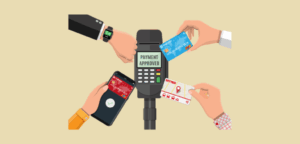
Voice commerce isn’t limited to smart speakers or phones. The Internet of Things (IoT) is turning many everyday devices into connected commerce tools. Imagine your refrigerator reordering milk when it’s running low, or your car paying for fuel and drive-thru orders via voice command.
And it’s starting to happen now, and it could create entirely new sales channels. Here’s a look at some emerging IoT payment scenarios and what businesses can do to stay ahead of the curve:
1. Smart fridges and home appliances reordering supplies
Several appliance makers and platforms have introduced features that enable the appliance itself to sense needs and initiate orders. For example, modern smart refrigerators can monitor their contents and inventory levels. Some have internal cameras and AI that recognize when staples (such as eggs or juice) are running low. These fridges can sync with grocery delivery services and automatically place an order for you – or at least draft one for approval.
One prominent system was Amazon’s Dash Replenishment service, which enabled devices (such as printers or refrigerators) to order consumables from Amazon when needed automatically. While Amazon retired the standalone Dash buttons, the auto-replenishment concept lives on. For instance, Brother “Smart Reorder” printers work with Amazon Alexa to automatically order new ink or toner when levels run low – no user action required.
In these cases, the voice assistant or IoT device acts on pre-set preferences. For merchants, this trend means that your products could be ordered without the customer even visiting a website or store – the appliance makes the decision based on pre-established rules. To stay competitive, consider partnering with IoT platforms or subscription services that facilitate auto-reordering. If you sell consumable goods (such as detergent, pet food, or printer ink), consider programs that allow customers to connect their devices to your product supply. Being part of an auto-replenishment ecosystem can secure you repeat sales whenever the device triggers a reorder.
2. Connected cars enabling voice payments on the go
Cars are becoming increasingly intelligent and connected, essentially transforming into mobile smart devices. Many new vehicles have built-in voice assistants (Alexa Auto, Google Assistant, or proprietary AI) that let drivers do things hands-free – including shopping and payments. Automakers and tech companies are exploring in-car voice commerce, which could become a $35 billion market in the coming years. What does this look like in practice? One example: specific Ford models integrated Amazon Alexa, so a driver could say, “Alexa, ask Starbucks to start my order,” and have their favorite drink ordered ahead at a nearby store.
By the time they arrive, the coffee is ready for pickup. Another significant development is the use of voice for fuel payments. Amazon has collaborated with ExxonMobil, allowing drivers at a gas station to say, “Alexa, pay for gas,” and the pump is activated and paid through Amazon Pay, eliminating the need for a physical card swipe.
In essence, your car’s assistant can handle the transaction. Quick-service restaurants are also piloting voice ordering in drive-thrus (some using AI to take your order via the intercom). For businesses, especially those in the food, fuel, or convenience retail sectors, it’s time to watch the connected car space. Partnerships between brands and car platforms (or navigation apps) could open new commerce channels.
For instance, a chain of cafés might integrate with a car’s voice system to let drivers order and pay safely while en route. The key is to be present where these voice interactions happen – whether through an official integration or ensuring your mobile app works with Apple CarPlay/Android Auto for easy use.
3. Wearables and voice-enabled gadgets for quick payments
Wearable devices, such as smartwatches and fitness trackers, are also becoming payment devices. We’ve seen the rise of contactless payments via devices like the Apple Watch and Samsung Galaxy Watch, where users can tap their watch to pay at a store. Now add voice to the mix – many of these wearables also have voice assistants (Siri on Apple Watch, Google Assistant on Wear OS, Alexa on certain earbuds or glasses). A user might not be able to do complex shopping on a tiny watch screen, but they could use voice commands for simple transactions.
For example, using a smartwatch, someone could say, “Hey Siri, send $20 to John for lunch” or “Hey Google, order me an Uber” and have it handled behind the scenes. The common theme is ultra-convenience: consumers can transact anytime, anywhere, on whatever device is handy. The statistics show that adoption is growing: roughly one in three smartwatch owners has used their wearable device to make a contactless payment in recent years, and that number is only increasing. Merchants should prepare for a world where payments may come from any device – a watch, a smart speaker, or even a smart ring – and the user may authorize it by voice or biometrics rather than typing a password.
4. New sales channels and opportunities
All these IoT payment scenarios create opportunities for forward-thinking businesses. If a smart fridge is auto-ordering groceries, brands have an incentive to be the default choice (similar to the battle for search rankings, but now for pantry restocks). If voice assistants in cars promote certain restaurants or stores, that’s a new marketing channel. We may see voice-based recommendation engines – for instance, a car assistant suggesting, “I see you’re on a long drive, would you like me to order coffee at the next service area?”
For merchants, staying ahead might mean integrating with IoT commerce platforms or middleware. There are companies specializing in connecting product vendors with IoT triggers (Amazon’s ecosystem is one, but others exist). Consider partnering with IoT solution providers relevant to your industry. A good starting step is ensuring you have robust APIs or e-commerce feeds that such platforms can tap into (so your inventory and pricing info can be accessed by, say, a fridge’s shopping app or a car’s assistant). Flexibility and openness to tech partnerships will be a competitive advantage.
5. Enable tokenized, secure payments for frictionless orders
With devices handling the ordering, you won’t have customers manually entering credit card details each time – it will rely on stored payment credentials. As a business, you should implement tokenized card-on-file systems for your customers. Tokenization means a customer’s actual card number is stored securely by a payment processor and replaced with a non-sensitive “token” that can be used for future charges. This is crucial for IoT and voice payments because it enables transactions to be initiated by a device with minimal user intervention while remaining secure.
For example, when a customer sets up voice purchasing on Amazon or Google, they link their account to a credit card, which is then charged in the background for any voice orders. You can mirror this by encouraging customers to create accounts on your platform with a saved payment method (and, of course, assuring them it’s safely encrypted/tokenized). That way, whether it’s a voice assistant reordering a product or a subscription IoT service triggering a sale, the payment flows smoothly.
Additionally, having a robust authentication method (like confirmed voice IDs or PINs for voice orders) can protect against unauthorized purchases. In short, security and convenience must go hand in hand. Customers will embrace voice/IoT shopping only if they feel their data is safe and the process is trustworthy.
Preparing Your Business for the Voice/IoT Era
The rise of voice commerce and IoT payments is transforming how consumers interact with merchants. It’s making transactions more effortless and embedded in daily life – sometimes happening without any visual interface at all. To ensure your business is ready, focus on these priorities:
- Adapt your SEO and content for voice – make information easy to retrieve in a spoken query.
- Integrate with popular voice and IoT platforms – whether it’s Alexa, Google Assistant, smart home services, or auto dashboards – to find the channels most relevant to your customers.
- Invest in technology and partnerships – this could mean upgrading your e-commerce software to support voice-enabled commands, or working with third-party IoT services that include your products in their automatic reordering programs.
- Prioritize a seamless payment experience – implement tokenization and store payment information on file (with user consent) so that repeat orders via voice/IoT are one-click (or rather, “one-word”) experiences. Ensure that you and your payment processors follow the latest security standards, as nothing will kill emerging technology faster than high-profile security failures.
- Educate and encourage your customers – as you roll out voice commerce features, inform them about these new capabilities. For example, if you launch an Alexa skill, promote it: “Now you can reorder via Alexa just by saying ‘Alexa, open [Store Name]’.” Often, there’s a novelty factor that can also drive engagement and loyalty if customers find it genuinely useful.
Conclusion
Voice-activated shopping and IoT-driven payments are no longer experimental ideas – they’re becoming part of everyday commerce. Consumers love the ease of simply asking for what they want and getting it, whether through a smart speaker at home or a smart device in their car or kitchen. For businesses, this shift presents both challenges and opportunities. The challenge is to keep pace with changing consumer behaviors and technological advancements.
The opportunity lies in tapping into new channels for sales and customer engagement that didn’t exist a few years ago. A business that optimizes for voice search might get featured as the answer to a question on hundreds of thousands of Alexa devices. A retailer that partners with IoT platforms could become the default supplier for auto-replenished goods in many households.