



Incredible Tips for Effective Small Business Content Marketing
Posted: July 15, 2024 | Updated:
Small business content marketing fulfills several objectives, such as improving your website’s visibility in search engine results, attracting new potential customers, engaging a specific audience, and boosting revenue.
Research indicates that 84% of marketers recognize content as a crucial business asset contributing to long-term return on investment (ROI). The average ROI from content marketing reportedly exceeds 170% profit. Yet, the main challenge is determining the correct type of content to produce. The decision-making process can be complex and confusing with many formats and platforms, especially for small businesses with limited resources.
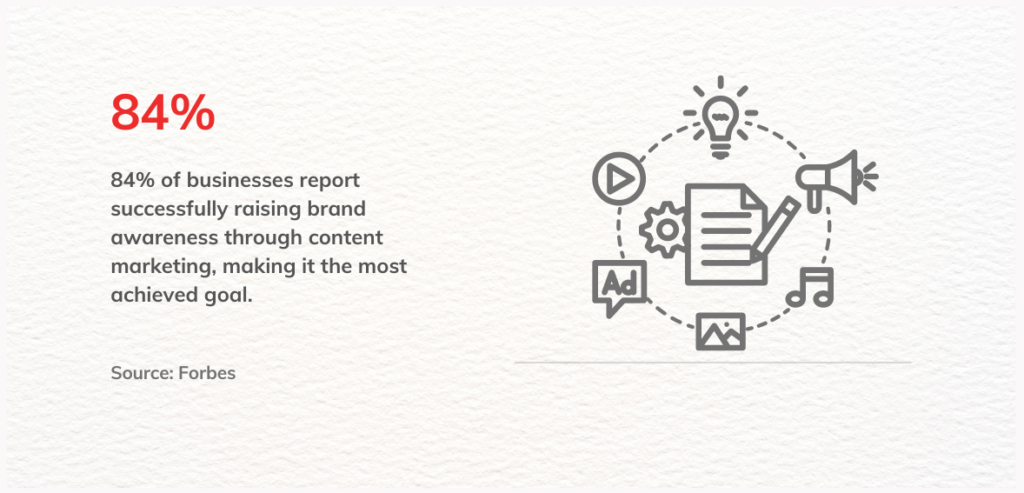
Source: Forbes
This article will define content marketing, identify effective content types for small businesses, and outline steps to create a successful content marketing strategy.
Understanding Content Marketing
Content marketing involves businesses developing and sharing informative materials such as videos, blog posts, and infographics. This strategy aims to generate interest in their products or services while primarily enhancing brand visibility rather than directly promoting specific items. Content marketing can also be an effective tool for introducing new products.
There are numerous advantages to content marketing compared to traditional advertising methods. Firstly, well-executed content marketing can capture wide attention, regardless of whether potential customers are initially aware of a brand, helping to drive web traffic and elevate brand recognition organically.
Furthermore, content marketing is cost-effective. Small businesses can produce high-quality content with minimal expenditure and distribute it on their blogs or social media platforms at no cost. Social media enhances the potential for exposure, as users can share the content, extending the brand’s reach without additional expense.
The Importance of Content Marketing for Small Businesses

Providing relevant and timely content positions your business as an authority in your field, enhancing recognition and establishing consumer trust, respect, and loyalty. Content marketing also helps you pinpoint and address your customers’ central issues, showing how your products provide solutions, which can lead directly to increased sales.
A significant advantage of content marketing is the creation of evergreen content—materials that remain relevant over time, such as blog posts on the history of your industry or infographics about a timeless process.
Content marketing is versatile, allowing you to repurpose materials across various channels and campaigns. For example, a blog post targeting specific community needs can be expanded into a YouTube video, which can be featured in the original blog post.
Investing in content marketing is crucial for businesses aiming to connect with their audience through search engines, social media, email, and other platforms. If you’re considering starting a content strategy, here are the ways it can benefit a small business:
- Building and Sustaining Brand Awareness: Content is a powerful tool for increasing visibility and keeping your brand relevant to your intended audience. Whether you’re just starting or are already established, consistently offering valuable content helps build trust and maintain your brand’s reputation.
- Engaging With Your Target Audience: Content marketing serves to both educate and entertain, allowing you to connect deeply with your audience. Whether through empathetic problem-solving or engaging humor, content marketing enables you to establish a significant relationship with your customers.
- Lead Generation and Sales on Autopilot: Though it takes time to see results, a robust content strategy can evolve into a self-sustaining lead generation system. Small businesses can use content to educate potential users and encourage sign-ups without direct sales involvement, creating a cycle that attracts and converts new customers autonomously.
10 Expert-Approved Content Marketing Tips and Strategies for Small Businesses

Content marketing can significantly boost website traffic for small businesses. Here are some effective content marketing strategies and tips designed to improve marketing outcomes for small businesses.
1. Know Your Audience
Successful content marketing focuses on a well-defined audience. Begin by identifying your ideal customer. Analyze your current customers to understand their concerns, how they discovered your business (through email, social media, Google search, or any other method), and their interests.
Compile detailed characteristics of your target audience to ensure your content is relevant and engaging. Use tools like Google Analytics and social media insights to gather data on your audience’s demographics and online behaviors. The better you understand your audience, the more effectively you can produce content that resonates with them.
For instance, if your target market includes educators who use software, these customers are interested in enhancing their teaching methods. Connect with your audience through impressive videos showcasing product demonstrations, tutorials, and success stories, or create brief, engaging videos or vlogs that address common productivity issues in small businesses. Alternatively, you can publish articles and blogs (which we’ll explore in more detail later) that offer quick tips and how-to guides, complemented by engaging graphics.
2. Identify Your KPIs
Your small business content marketing strategy needs to have a clear set of objectives. Establishing measurable goals and KPIs will assist you in crafting a more effective content marketing strategy that delivers greater results for your business. Goals help you assess the effectiveness of your content marketing efforts and identify opportunities for enhancement.
Some common objectives might include:
- Achievable improvements in search engine rankings
- Acquiring a specific number of email subscribers
- Boosting your website traffic by a set percentage
- Increasing unique page views
- Enhancing the referral rate
- Boosting the number of downloads
- Raising net revenue
- Improving conversion rates
Ensure your business content marketing goals are quantifiable, trackable, and contribute significantly to your business’s growth.
3. Focus on Blogging
It’s highly beneficial for small businesses aiming to deliver value, demonstrate their expertise, and enhance their website’s search engine optimization. View a blog as an integral part of your website. While your website should contain detailed information about your products or services, a blog allows you to discuss the practical applications of these offerings and how customers use them. It also provides a platform to cover topics related to your business and leverage current news stories to gain visibility.
Consistently producing quality blog posts that respond to your customers’ questions and interests can increase website traffic and improve your online visibility.
When beginning your blog, consider topics that would engage your target audience and are related to your business but not overtly sales-focused. Drawing on your experience as a small business owner, you can craft insightful, educational articles that address your audience’s inquiries. Consider these proven blog topic ideas for small business owners:
- Discuss your enthusiasm for certain facets of your industry.
- Offer your top tips for customers interested in your field.
- Create a comprehensive guide on a subject within your niche.
- Write informative guides addressing common challenges faced by your audience.
- Share stories of customer successes.
- Highlight innovative uses of your product.
- Conduct interviews with a team member or an expert within your industry.
- Answer common customer questions on your blog.
- Share your video content through blog posts.
- Simplify complex industry topics into easy-to-understand articles.
4. Using Social Media Your Target Audience Uses
Social media platforms are invaluable for small businesses, providing a direct line to a wider audience. Each platform caters to specific styles, purposes, and demographics, so it’s important to select those that align with your business and target audience. Engage your followers by sharing behind-the-scenes content, industry insights, and user contributions to build a dedicated community around your brand.
However, mere presence on these platforms is insufficient. It’s crucial to engage on the sites your audience frequents actively. How do you determine which social media channels are appropriate for your brand among the many available?
Start by identifying your target audience. Social media messaging is not generic; it targets a particular group of consumers with specific interests. Once you know whom you’re addressing, you’ll need to figure out how to connect with them.

Consider these tips when using social media for content marketing:
- Select the appropriate social media channels, as managing content across multiple channels requires significant time and effort. Only use the channels that align with your content marketing strategy.
- Social media platforms support different content formats. Review your content and match it to the appropriate social media channel.
- Gather all available customer data to understand where they spend their time online.
- Review your competitors’ social profiles to see where they interact most with their audience.
- Tools like Google Analytics can be used to monitor online consumer behavior.
Here are some platforms, along with the content formats that suit them best:
- Instagram: Best suited for high-resolution videos, images, and stories to capture and engage visually oriented audiences.
- Facebook: Optimal for one-minute videos, live streaming content, blog posts, and curated content that encourages engagement and community interaction.
- LinkedIn is ideal for sharing short informative videos, company updates, and professional blog posts catering to a business-focused audience.
- Pinterest: Works well with photo guides, infographics, and visually appealing posts such as videos and images designed to be saved and shared.
- TikTok: Highly effective for short, engaging videos that include challenges, dance routines, and quick tutorials.
These strategies will help you focus your social media efforts effectively. Additionally, be prepared to deal with social media trolls and handle them professionally. Depending on the situation, you might need to delete negative comments or block disruptive users. Providing excellent customer service is vital in social media—consider exploring additional tips on managing customer interactions effectively.
5. Setting Up Email Newsletters
Businesses today have numerous methods to connect with their customers, and despite being considered traditional, email marketing continues to be an effective strategy. A weekly or monthly email newsletter keeps a brand fresh in the minds of consumers, often yielding a high return on investment for marketing campaigns. Creating and sending email newsletters has been simplified with the development of various content creation and automation tools, making it easier to incorporate email marketing into a business’s overall strategy.

Several best practices should be followed to maximize engagement when crafting email content. Firstly, the subject line should be creative and compelling to increase the likelihood of the email being opened. Personalization enhances engagement further; utilizing a customer’s purchase history to send tailored recommendations or updates on sales and new products that might interest them can be particularly effective.
Additionally, transactional emails play a crucial role. These include a welcome email upon registration, follow-up emails post-purchase soliciting feedback, reminders for abandoned shopping carts, and re-engagement emails aimed at customers who haven’t made recent purchases, possibly offering incentives like discounts or free shipping. Such strategies ensure continuous customer interaction, fostering a stronger connection and enhancing customer retention.
6. Developing Content to Complement the Sales Funnel for Customers
It’s crucial to craft content that meets the specific needs of your customers at each stage of their purchasing journey. By understanding and utilizing a basic customer sales funnel and a tailored content strategy, you can identify which stage a customer is in and supply them with the pertinent information they need.
A marketing funnel outlines the path prospects follow to become customers, beginning with brand awareness and culminating in a purchase.
For small businesses, it’s essential not to produce content haphazardly. A well-thought-out content strategy should reflect the stages of your marketing funnel, which depicts a customer’s steps toward purchasing. This journey is a series of progressive stages that guide the customer closer to buying.
When crafting your content strategy, aim to develop materials corresponding to each phase of your customer’s journey. This approach makes the content more applicable to the customer, potentially increasing its effectiveness in boosting your sales.
For instance, start with content to capture attention and introduce your small business. Next, produce material that builds interest in what you offer. Follow this with content to encourage a decision to engage further, and finally, provide content that prompts the customer to act.
To implement these steps effectively, customize your content to address customers’ specific needs at various points in the funnel, such as providing introductory information for newcomers or more detailed content for those closer to a purchase decision.
7. Create a Content Calendar
Generating content ideas, crafting them, and maintaining a consistent publishing schedule can be challenging. To simplify this process, develop a content calendar. Marketers rely on these calendars for an overview of their content strategy, which aids in ensuring a steady release of material across their platforms.
Dedicate a portion of your week to content creation and set specific publishing days and times. It is crucial to establish a regular publishing routine and adhere to it as closely as possible.
Consider times that could maximize audience engagement when deciding on your posting schedule. Research suggests the average blog post garners the most traffic on Mondays around 11 a.m. On Instagram, the best time is on Thursdays, with most traffic at 4 a.m.
However, be flexible with your schedule as needed. Perform A/B testing to find optimal times for high traffic.
Utilize online tools to manage your content calendar effectively. Consider platforms like WordPress to manage blog content. Tools like Hootsuite, Sendible, and Buffer are useful for scheduling social media posts.
8. Add Your Business’s Unique Element in Content Marketing
The vast amount of content on the internet often results in repetitive messaging. Standing out can make a significant difference. Consider adopting a unique or bold approach to increase the likelihood of your content being shared and driving more traffic.
For example, a video series featuring customer testimonials can effectively build trust, demonstrate the value of your product or service, and personalize your brand.
For your skincare business, you could offer your audience a detailed guide on the science behind your product formulations. Explain the research involved, the choice of ingredients, and the skin benefits they provide.
As you focus on such detailed educational content, be prepared to engage with your audience. Respond promptly to any questions or comments on your website or social media platforms. Customers appreciate quick and informative responses.
9. Maximize Your Content’s Reach
Enhance the utility of your existing content by repurposing it into various formats. Transform a well-received blog post into a dynamic video, a visually appealing infographic, or engaging snippets for social media. This strategy extends the life of your original content and opens it up to new audiences who may prefer different types of media.
By diversifying the presentation of your content, you can cater to a wider range of preferences and increase engagement across different platforms. This approach ensures that your valuable insights reach as many people as possible in formats that resonate with them.
10. Work With Other Creators and Influencers
Working with influencers or other companies can expand your creative influence. Creating content together introduces new ideas and can help your small business reach different people. Seek partnership opportunities with brands and individuals who align with your values and have audiences that complement yours.
This approach isn’t about quick gains; it demands careful attention and time spent researching potential partners. While partnering with a well-known celebrity could quickly boost your visibility, not every business can secure a high-profile endorsement, and that’s perfectly acceptable. There are many influencers available. If your budget allows, hiring an influencer agency can be an excellent method to connect with reputable influencers who can help extend your small business’s visibility.
Why Is Quality Content Essential for Content Marketing?

Creating excellent content is crucial for engaging your users. If your website offers poor-quality content, visitors are less likely to remain engaged. However, the importance of high-quality content extends beyond user retention; it also plays a critical role in SEO.
Search engines like Google continuously improve their algorithms. Recently, Google announced advancements in identifying low-quality content through the “helpful content update.” This initiative aims to evaluate the prevalence of substandard pages on a website. If the general content quality is deemed insufficient, it could lead to lower search rankings for all your pages. Therefore, prioritizing high-quality content is more critical than ever.
How Do You Produce High-Quality Content?

Good content, irrespective of the platform, target audience, or format, should elicit two responses from your audience: an emotional response (like enlightenment or joy) and a behavioral response (such as engaging further or saving the content for later review). For instance, if you produce a humorous video, does it make people laugh? If you simplify a complex topic, do the comments reflect that people now understand it better? If it’s a personal story about acquiring a new skill, are people prompted to ask more questions?
If you’re already seeing these responses, you’re likely doing well. However, if not, you might need to enhance your content creation approach beyond just generating and posting ideas. This doesn’t mean you have to strip away all spontaneity and enjoyment; rather, it involves implementing a strategy that allows you to deliver content that connects with your audience consistently.
Here are five key principles to keep in mind as you prepare to develop content and before you adopt a systematic approach, ranked by their potential impact on your audience’s experience with your content:
- Making Content Engaging and Clear:
It is crucial to capture your audience’s interest quickly. Utilize compelling introductions to retain their attention. Following the initial engagement, your content should be straightforward and concise. If the content is educational, focus on clarity over complexity. For entertainment, leverage dynamic editing and platform-specific features to enhance viewer interaction and break the monotony of conventional formats.
- Evaluating Production Quality:
Ensuring high production standards is a practical yet critical aspect of content creation. When developing any content—whether a blog, a podcast, or a video—pay attention to the quality of audio, visuals, and editing. Achieving consistency in style, tone, and quality across all productions strengthens brand identity and meets your audience’s expectations.
- Ensuring Relevance and Value:
Your content should address the needs and interests of your specific audience, potentially defining your niche. For instance, Adam Karpiak uses humor and transparency in his LinkedIn content about recruitment, which resonates well with his followers. To better understand your audience, consider their frequent questions and infuse your responses with personal stories to add relatability and trust.
- Maintaining Originality and Authenticity:
Avoid merely replicating existing content. Your unique perspective is what distinguishes you. Jayde Powell, for example, maintains her genuine expression on LinkedIn, which has earned her a loyal following. Authenticity attracts; therefore, create content that truly represents your individuality, even if it deviates from conventional trends.
- Assessing Content Performance:
When assessing the impact of your content, look beyond simple metrics such as likes or shares. Consider deeper engagement like questions and feedback, which indicate the content’s value. Encourage your audience to offer feedback, which can be invaluable for future improvements.
Spend a few minutes checking these factors to evaluate your content’s effectiveness better. This approach will guide you in creating content that reaches and resonates with your audience.
Conclusion
Effective content marketing is crucial for small businesses aiming to enhance their online presence and boost sales. By developing content that aligns with each stage of the customer sales funnel, businesses can provide valuable information that meets the specific needs of their audience. This targeted approach not only improves user engagement but also fosters trust and loyalty among customers.
Quality content helps improve search engine rankings, drives web traffic, and supports long-term business growth. Small businesses should prioritize creating relevant, high-quality content and leverage various platforms to maximize their reach. Small businesses can achieve significant marketing success and sustain growth over time by continuously refining their content strategy and measuring its effectiveness.