


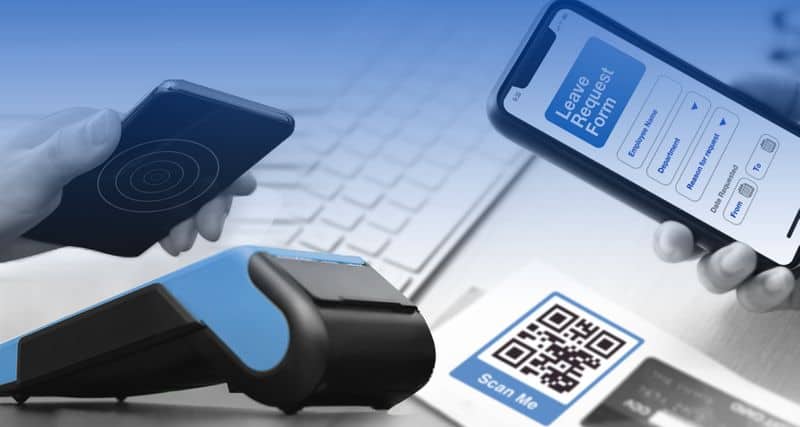
NFC vs QR Code
Posted: October 08, 2021 | Updated:
With the COVID pandemic still being a major concern of people, sharing essential information with the citizens through effective means has become a necessity for the government. People are now more concerned about their safety than ever before. A report published by Walker shows that customer satisfaction and their experience will become the major factor that sets a brand apart from the competitors in the market.
To improve customer experience, businesses have started embracing modern technologies that could connect the offline and the online world. Now, the question is “which one is better”? Should you rely on QR codes or are NFC tags a better alternative? Let’s have a look:
NFC and QR codes are an innovation in the modern eCommerce technologies. Both offer unique functions, but with the same goal – to offer a seamless and safe user experience to your customers. Let’s understand each product and later we will discuss the differences, features, and benefits.
What is NFC?
NFC stands for Near Field Communication, a system that enables uninterrupted and smooth communication between two electronic devices in close proximity. It consists of a small chip. The appearance may look a little dull, but the performance of these chips is pretty impressive. According to technavio, 25% of mobile payments will be processed by NFC in 2021.
User Cases and Compatibility
The best use of this technology is for electronic, contactless payments. You must have seen the customer queue at the supermarket, where each customer swipes their cards at the POS to complete the transaction. It is NFC. In addition to payments, NFC is used for sending media files, documents, directions, mobile numbers, and files in other formats.
Despite being new to the market, NFC has garnered a lot of attention among smartphone users recently. The technology is compatible with Android and iOS devices, in fact, the number of Android devices compatible with NFC has increased in the past few years.
iPhone users have also witnessed consistent growth in near-field communication technology. Some iOS devices are capable of reading the NFC code from the home screen without having to install any mobile app.
Why Use NFC?
NFC is not as old and popular as QR codes, but the technology is globally accepted for contactless payments. Its popularity has skyrocketed after the pandemic. Here are a few reasons why businesses should use NFC tags:
- A Wider Scope: the user case of NFC goes beyond contactless payments. Businesses have started using these tags for marketing. The NFC cards are designed for businesses looking for a smart way to share their contact details with their prospects. These cards direct your prospects to your website or email for easier and faster communication.
- Convenience: It only needs one tap from customers’ end to sign up for the company’s loyalty program. So, if the customer experience is concerned, nothing outperforms NFC tags. Customers can use the NFC tags to collect and redeem reward points with a single tap.
- Security: NFC is one of the safest technologies. It catches data from customers’ devices located within their acceptable radius.
What are QR Codes?
QR codes were launched as a better and powerful alternative to the barcode for inventory. It was designed in such a way that people could scan these codes from any angle with just about any device without any hassle. Introduced in 1994, the QR code reading has made a big impact not only in the inventory management market but it can be used in transferring digital information.
QR codes are small square-shaped boxes that can be scanned vertically and horizontally through any smartphone that has the barcode-reading function enabled. QR codes offer great flexibility. Like NFC, these codes can be used for making contactless payments at any retail store. You could also use it for location sharing and marketing.
Most businesses embed their website URL into these square boxes, allowing their audience to visit their website without having to memorize the URL. Similarly, QR codes are used to direct people to your blogs, landing pages, social media accounts, and other sales channels. Recently, many social media sites have embraced QR codes to enable a smooth and seamless information sharing experience for users.
Why Use QR Codes?
Over 9 million families scanned QR codes at least once in 2018, shows a report published by Statista. It is one of the most convenient ways to share information, transfer payments, and direct your customers to your commercial sites. Here are a few reasons why QR codes are better than NFC tags.
- Versatility: QR codes are used for all types of websites, social media accounts, and mobile apps. For instance, a QR code that directs your user to your mobile app link can increase your app downloads. You can also share QR codes for product links, your email, landing pages, and more to extend your reach.
- Ease of Use: QR codes can be scanned from any angle as long as you have a smartphone with QR code reading functionality enabled. Some mobile cameras have a built-in QR scanning feature, while others need to download an app to scan these codes. Either way, the scanning part is super simple.
- Customizable: QR codes are customizable. Businesses can use customized codes that match their brand’s logo and looks relevant to their business practices. You don’t have to settle for the traditional black and white square boxes for the QR codes. Add interesting colours, put a nice background, and design a nice QR code that is relevant to your brand.
- Security: Another major advantage of the QR codes is that they are used for the purpose they were designed for. They offer a high level of security to both customers and merchants.
Which One is Better?
Both NFC and QR codes deliver excellent performance when it comes to marketing, payment processing, and transfer of information. QR codes, however, are more advanced and relatively better than NFC. These codes can be scanned easily, allowing you to process your transaction in the fastest and easiest possible way.