


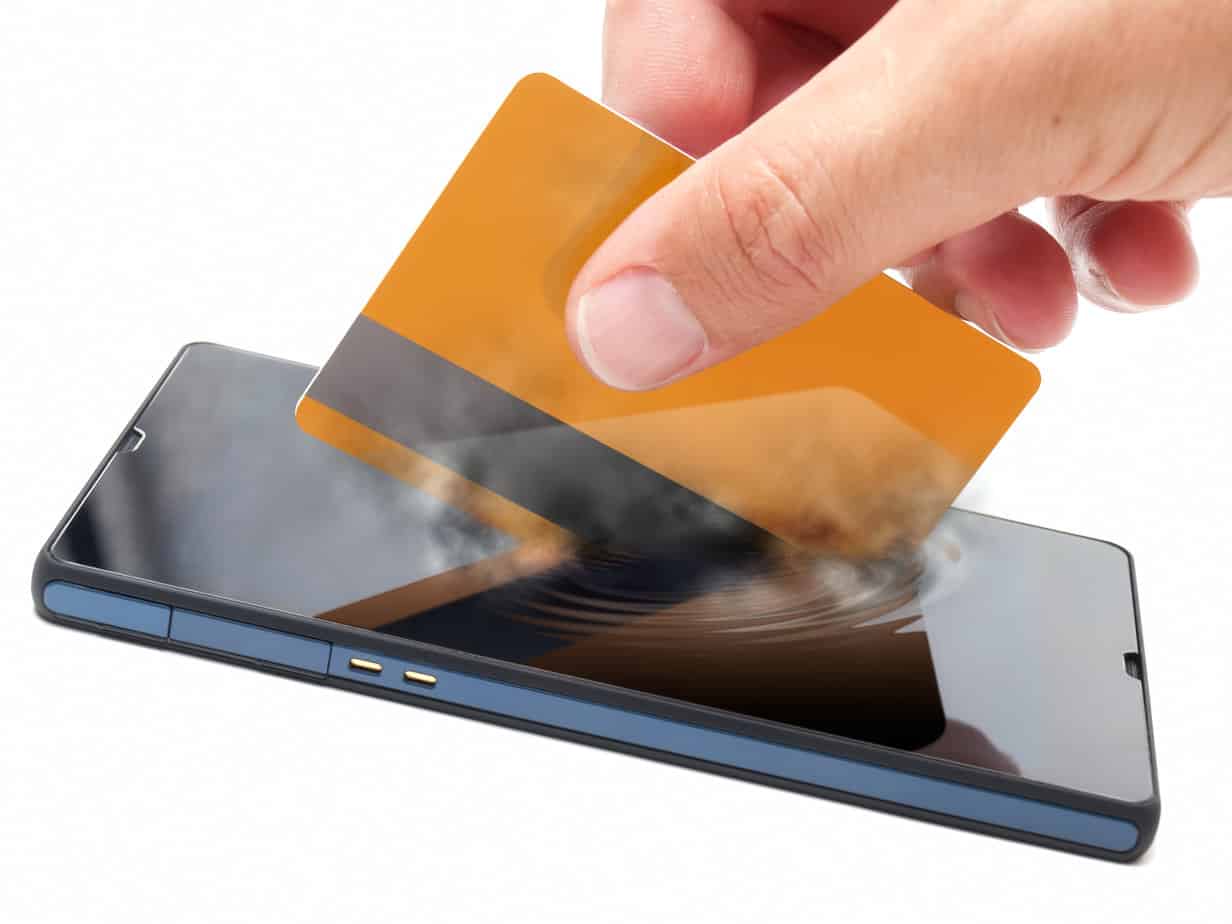
Mobile Payment Options [2023 Update]
Posted: July 25, 2012 | Updated:
Yesterday, The Official Merchant Services Blog reported that the Mobile Payment market was predicted to expand exponentially over the next few years. Analysis by research firm Juniper has been heady and bold since 2011.
A second research operation, Gartner, recently reported that worldwide mobile payment users increased 38 percent in 2011 — jumping from just over 102 million to 141 million. Gartner also predicts the continued growth to be staggering in the next few years, suggesting that by 2016 there will be 448 million users worldwide.
Michael Koploy of Software Advice addressed these statistics in a blog entry for Credit Card Processing Terminal manufacturer Verifone on July 23 and in doing so, offered up some really sound analysis of Mobile Payment Processing Solutions which we are going to summarize here.
There are, according to Koploy, four basic forms of mobile payment that people can use:
-
Smartphone Credit Card Sleds
These are some of the most commonly used m-payment gadgets. They can range from the Square “dongle” attached to a mobile device, to the extensive selection of iPhone, iPad and Android attachments that Host Merchant Services offers through their cutting edge Mobile Payment Technology Solutions. They run payment processing applications through the device and the “sled” that the merchant attaches to their device is what captures the payment information by swiping a credit or debit card through its scanner. -
Smartphone Barcode Apps
These solutions are pretty straightforward. They usually consist of an application on a merchant’s device that allows them to scan a barcode, or a QR Code. The QR Code scanning is becoming extremely popular, giving companies the ability to run marketing promotions as well as purchases through the use of the QR Code and its ability to capture information. Fandango’s Mobile Ticket program allows you to purchase your movie ticket through their application and then just scan the QR Code they send to your device when you arrive at the theater. This program has been gaining increased success and popularity this summer, and as we reported, set record highs for the company with the release of the blockbuster Avengers Movie. -
Smartphone Check-In Apps
these solutions are a bit more esoteric in terms of actual purchasing, and end up being utilized more for direct and focused marketing strategies. Essentially the merchant is utilizing an application that is a take on the “check-in” format you find on social media sites like Facebook. The information logs a consumer’s location; and for marketing purposes also tracks their purchases, allowing merchants to make note of the consumer’s buying history and market deals appropriately. PayPal has taken this technology a step further, allowing shoppers to check-in at a location and then the Point of Sale software then calls that customer up and confirms payment through PayPal by confirming the matching profile photo on the terminal screen with the shopper. Not necessarily the most direct style of mobile purchasing, but one that relies on a more secure form of identification and thus confirmation of purchase. -
Smartphone NFC Apps
This form of mobile payment technology is one of the most talked about and heavily depended upon solutions when you consider the future of mobile payments. As we reported yesterday, Near Field Communication (NFC) is a key mobile payment technology that leads research firms like Juniper to suggest the market will grow by hundreds of billions of dollars in the next few years. The technology itself is the most direct and convenient form of mobile payment. The consumer simply swipes their smartphone past a terminal at the point of sale and the transaction is charged to the consumer. It’s essentially the next step in the evolution of convenient payment processing.
Koploy then gives a rundown of what retailers need to accept any of the four types of mobile payments detailed above:
Smartphone Credit Card Sleds
The simplest option for new retailers, Koploy suggests that retailers need little hardware investment to prepare to accept payments this way. You just need the mobile device, the application on the device, and the sled-attachment itself.
PayPal Check-In Apps
Directly opposite the credit card sleds, Koploy suggests that the check-in apps are the most particular and tricky technology for retailers to implement. It runs directly through PayPal, and currently PayPal only partners with four POS software vendors to even support the integration of the check-in app as a sales option. Leapset, ShopKeep, Vend and Erply are the only choices right now and require heavy investment from retailers into the software to get it up and running. On the bright side, Koploy points out that the investment carries with it the buying history of those that utilize the check-in, giving the merchant access to a powerful marketing tool that extends beyond just the simple point of sale transaction.
Smartphone Barcode Apps
Koploy suggests these options are only available in the UK, and we here at The Official Merchant Services Blog can only conclude he means the Verifone options exclusively since we’ve personally experienced the aforementioned Fandango Mobile Ticket program — yes, I bought my own Avengers movie ticket through the mobile ticket app, right here in Delaware. It was a QR Code that was emailed to me, and I simply had to call it up and let the local Regal multiplex scan the code to let me into the theater. Going off of that, I’d conclude that this is one of the more competitive solutions for Mobile Payment Technology, but that the fandango example shows a larger investment in technology and devices is needed than the card sleds option.
NFC Payments
Koploy states that merchants have two hardware options for NFC Payment solutions. The first is a stand-alone terminal designed solely for NFC payments. The second is an integrated credit card machine that is NFC capable. This solution, thus, also requires a heavier investment in hardware, but as the NFC movement groans — powered primarily right now by the Google juggernaut the company’s massive investment in Google Wallet — the NFC options becomes a solid choice. The transaction method still needs to gain more traction in the U.S. but it’s convenience is what has analysts banking on NFC fueling the rise of mobile payments.
Final Words
I really like Koploy’s rundown of what’s out there, and find his article a really good resource. It helps give perspective on what’s out there right now, and provides useful insight into the future of mobile payment processing from a company that is very much tied into the market’s growth — Verifone makes credit card terminals and so they need to stay on top of the mobile payment technology tidal wave as the very concept of mobile payments could make the standard equipment Verifone puts out obsolete.
But I find myself extremely intrigued by the check-in app and the QR Code apps. The check-in app, as currently being used by PayPal, addresses the biggest concern that U.S. consumers have with mobile payments — security of the transaction. The two variables that have kept Mobile Payment growth in check the past few years in the U.S. are:
- It’s still being tested in small groups and in only select areas. So basically you can’t just roll up to your local Wal-Mart and start swinging your iPhone around trying to buy Pringles and Energizers.
- There are a lot of people who are worried that actually swinging your phone around to be scanned will open you up to identity theft and fraud as scammers and thieves will swipe the signal.
The Check-In App hinges on a check-in alert and requires visual identification for the sale to happen. This seems a tad more secure than swiping a phone and letting your information be captured.
Then there’s the QR Codes. These really intrigue me. Part of that is because I’ve already successfully used this technology myself, so have seen it in action. And the other part is that I’ve seen the codes everywhere and are seeing them utilized for a variety of purposes in terms of marketing products and promotional programs. The technology hinges on using devices that already exist and you don’t have to add any dongles or devices to your phone.
As always, my take on Mobile Payments is that the analysis is correct. I look at how ingratiated E-Commerce has become in the U.S. economy, and even though identity theft and credit card fraud remains somewhat rampant, E-Commerce is booming because of how convenient the process is. I feel the same holds true for the future of Mobile Payments and so the predicted growth in the industry will be realized. Being able to utilize your phone to be scanned by a QR Code reader, or an NFC chip reader, will just be that much easier for consumers who will be grateful to carry less things like cards and cash. And this Verifone blog demonstrates how much closer we are getting to mobile payment and virtual wallets becoming an everyday thing.